Connect with us

Business

FG to give Nigerian shipowners $25m each under new shipping fund

Published

on

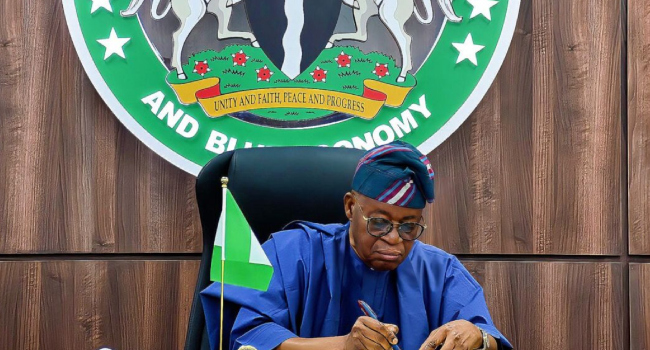
The Minister of Marine and Blue Economy, Adegboyega Oyetola, has revealed that the Federal Government will provide qualified Nigerian shipowners with up to $25m each, under the Cabotage Vessel Financing Fund, a move he said could strengthen indigenous shipping and create more than 30,000 direct and indirect jobs.

This comes as he also disclosed that disbursement of the long-awaited CVFF to qualified Nigerian shipowners to strengthen indigenous shipping and create thousands of jobs will soon commence.

Oyetola disclosed this in a post on his X handle on Monday, saying the government was finally moving to unlock the fund more than 20 years after it was established.

He said the initiative would help address one of the major challenges confronting Nigerian shipowners.

“After more than 20 years, we are finally moving to unlock the Cabotage Vessel Financing Fund (CVFF) for Nigerian shipowners. This is a major step towards building a stronger Nigerian-owned shipping industry, creating jobs and ensuring that more of the value generated from activities in our maritime space stays in Nigeria.

“Under the CVFF, each successful applicant will be able to access up to $25 million in financing to acquire vessels, subject to the applicable assessment and approval process. This is significant because access to affordable, long-term financing has been one of the major challenges limiting the growth of Nigerian-owned shipping companies”, the minister stated.

On how the fund would improve the competitiveness of indigenous operators, the minister said,  “With access to financing at very low interest rates, our shipowners can acquire modern vessels, expand their fleets and compete for coastal and offshore contracts that are currently dominated by foreign operators.

See also  VIDEO: Stop Buying Rolls-Royce, Use The Money To Build Industries Instead - Dangote Tells Wealthy Nigerians

“Our objective is to ensure that more Nigerian-owned vessels operate on Nigerian waters, more Nigerian businesses participate in our maritime economy, and more Nigerians benefit from the wealth our waters generate. Providing Nigerian shipowners with the financial capacity to acquire vessels is a critical step towards reducing foreign dominance in our maritime space.”

Oyetola said he had directed the Nigerian Maritime Administration and Safety Agency to accelerate the process of disbursing the fund to qualified applicants.

He stated, “I have, therefore, directed the Nigerian Maritime Administration and Safety Agency (NIMASA) to work closely with the 12 approved banks, known as Primary Lending Institutions (PLIs), to accelerate the disbursement of the fund to qualified applicants.

“NIMASA has so far received 92 applications. Of these, 20 have been forwarded to the Primary Lending Institutions, while one has so far been reviewed and forwarded for approval. To further speed up access, we have expanded the number of approved banks from five to 12 and launched the CVFF Application Portal to make the process more transparent, structured and accessible.”

The minister added that the expected impact of the fund extended beyond vessel acquisition, as increased indigenous ownership could stimulate several areas of the maritime economy.

He said, “The disbursement of the CVFF could help create a stronger indigenous fleet, which will in turn stimulate activity in shipyards, marine engineering, vessel maintenance, maritime logistics and other supporting industries. It could also create more than 30,000 direct and indirect jobs, while strengthening Nigeria’s ship-owning and shipbuilding ecosystem.

“This initiative is part of the Tinubu Administration’s commitment to unlocking the full potential of Nigeria’s Blue Economy, strengthening indigenous capacity and ensuring that Nigerians take a greater share of the opportunities in our maritime sector.”

See also  NNPC urged to revive refineries after Dangote snub

He also highlighted the government’s efforts to develop the human resources needed to support the maritime industry.

“Financing vessels is only one part of building a stronger indigenous maritime industry. We are equally investing in the people who will power this industry. So far, 222 seafarers have received free professional training, 333 cadets have completed their academic training and obtained degrees, while 135 cadets under the Nigerian Seafarers Development Programme (NSDP) have obtained their Certificates of Competency. In addition, 7,059 Nigerian seafarers have been placed onboard vessels to gain valuable sea-time experience.”

“We are determined to ensure that Nigerians own, operate and benefit from the economic activities taking place in Nigeria’s maritime space. We are building the capacity to make that happen — through vessel financing, skills development, indigenous enterprise and strategic investment in our maritime sector. The work continues”, the minister concluded.

The CVFF was established under the Coastal and Inland Shipping (Cabotage) Act of 2003 to support Nigerian shipping companies in acquiring vessels and developing indigenous capacity. Its disbursement has, however, been delayed for more than two decades.

The Federal Government launched the CVFF application portal in January 2026 and announced that successful applicants could access up to $25m in financing. NIMASA subsequently began receiving applications from interested operators.

NIMASA had disclosed in April that it received more than 60 applications within four months of opening the portal, with the agency promising that the disbursement process would be transparent and strictly monitored.

The latest figure provided by Oyetola represents an increase in applications to 92, although only one application has so far been reviewed and forwarded for approval, according to the minister.

See also  PHOTOS: Blue Band Margarine Advertisement in Nigeria, circa 1966

Source: punchng.com

FOLLOW US ON:

FACEBOOK

TWITTER

PINTEREST

TIKTOK

YOUTUBE

LINKEDIN

INSTAGRAM

Continue Reading
Click to comment

Leave a Reply

Your email address will not be published. Required fields are marked *

Business

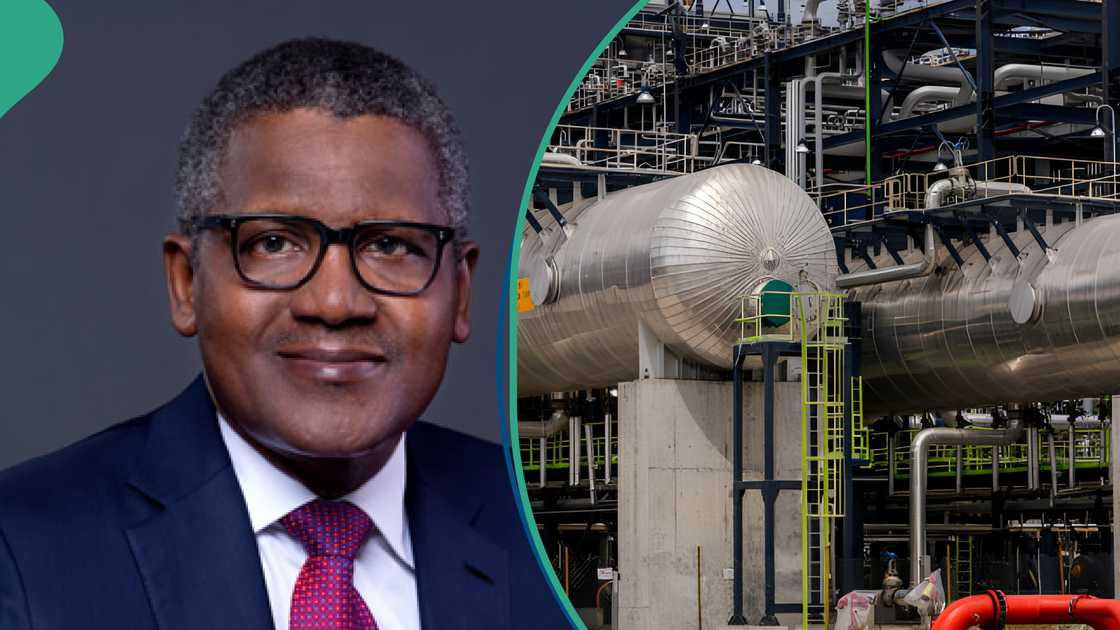
Step-by-step guide to buying Dangote Refinery shares

Published

on

The Dangote Petroleum Refinery and Petrochemicals FZE will open Africa’s largest-ever Initial Public Offering on Monday, September 14, 2026, giving Nigerians a chance to own equity in the refinery.

Dangote Group Chief Executive Officer, Aliko Dangote, signed the offer documents at a ceremony held at Eko Hotels and Suites, Victoria Island, Lagos, on Monday, September 7, 2026, alongside the advisers and issuing houses managing the sale.

The offer comprises 4.1 billion ordinary shares priced at N525 each, with the company targeting about N2.15tn to part-fund an expansion that would nearly double the refinery’s capacity to 1.4 million barrels per day.

Subscription opens at a minimum of 10 shares, costing N5,250.

Dangote said the low entry threshold was a deliberate choice to let ordinary workers — drivers, cooks and domestic staff among them — become shareholders, describing the offer as “the IPO for the people.”

Lagos-based Vetiva Advisory Services Limited is coordinating the capital raise, which follows approval from the Securities and Exchange Commission. The offer opens September 14 and is expected to close October 13, 2026.

For readers wondering how to actually take part, here is a step-by-step breakdown.

STEP 1: SET UP A BROKERAGE ACCOUNT

Ordinary shares on the Nigerian Exchange are bought through licensed stockbroking firms, not directly from the company.

If you do not already have a trading account, you will need to open one with a broker registered by the SEC and the NGX.

Most brokers now let you register online by submitting your Bank Verification Number, a valid ID and passport photograph as part of standard Know-Your-Customer checks.

See also  PHOTOS: Blue Band Margarine Advertisement in Nigeria, circa 1966

Before committing funds, confirm the broker’s registration status on the SEC or NGX website to avoid unauthorised operators.

STEP 2: LINK OR OPEN A CSCS ACCOUNT

Shares are not issued as paper certificates; they are held electronically in the Central Securities Clearing System. When you open a trading account, your broker will typically set up a CSCS account for you at the same time, or link an existing one. Any shares allotted to you in the IPO will be credited to this account once trading begins.

STEP 3: COMPLETE IDENTITY VERIFICATION

Your broker will ask for documentation to verify your identity and activate your account before you can subscribe. Requirements differ slightly from one brokerage to another, so follow whatever checklist your chosen firm provides rather than assuming a uniform process across the industry.

STEP 4: FUND YOUR ACCOUNT AHEAD OF THE OFFER

Once your account is active, deposit the sum you plan to invest. At N525 per share, the minimum commitment of 10 shares costs N5,250. The exact increment for applications above that minimum has not been detailed in public reporting so far, so confirm it against the final prospectus before deciding how many additional shares to apply for. Investors should have their funds ready before the offer opens on September 14 rather than scrambling once subscription begins.

STEP 5: WATCH FOR THE OFFICIAL OPENING

The offer opens September 14 and is billed to run until October 13, 2026. Given the scale of public interest already generated by Dangote’s private placement in July — reportedly oversubscribed by 270 per cent — investors should rely only on the final prospectus and offer documents published by the issuing houses for exact dates, application procedures and any changes, rather than dates circulating informally.

See also  Shell’s $5bn Bonga S’West project gets presidential support

STEP 6: SUBMIT YOUR APPLICATION THROUGH APPROVED CHANNELS

Applications will run through participating stockbrokers and any other platforms named in the official offer documents, which may include selected fintech and mobile investment apps. Specify how many shares you want, review the application carefully and submit before the deadline. The SEC has previously warned Nigerians against unauthorised parties soliciting money for Dangote Refinery shares outside verified channels, so cross-check any platform against the official list before paying anything.

STEP 7: AWAIT ALLOTMENT

Submitting an application does not guarantee the full number of shares requested. If the offer is oversubscribed — a real possibility given the scale of demand already reported — allotment may be scaled down, and any unallotted portion of your payment should be refunded according to the terms set out in the prospectus. Successful allotments are credited directly to your CSCS account.

STEP 8: TRACK YOUR HOLDINGS AFTER LISTING

Once the shares list on the Nigerian Exchange, you can monitor their value through your broker’s trading platform or app. Prices will move with company performance, investor sentiment and broader market conditions, and shareholders can choose to hold for the long term or sell through their broker whenever they wish, subject to prevailing market prices.

Before applying, investors should read the official prospectus and offer documents once published, and confirm details such as the exact offer price, subscription deadlines and approved application channels directly through the issuing houses, the Nigerian Exchange or the Securities and Exchange Commission.

Source: punchng.com

FOLLOW US ON:

FACEBOOK

TWITTER

PINTEREST

TIKTOK

YOUTUBE

LINKEDIN

INSTAGRAM

See also  NNPC urged to revive refineries after Dangote snub

Continue Reading

Business

Nigeria imports N1tn steel despite N7.2bn Ajaokuta spend

Published

on

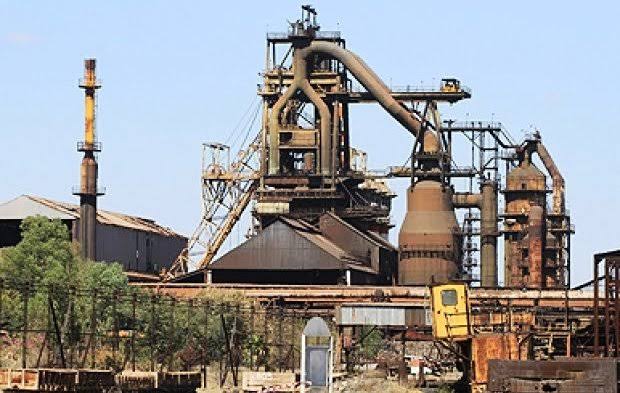
The Federal Government spent about N7.21bn running Ajaokuta Steel Company Limited between 2020 and 2025, even as the nearly 50-year-old complex in Kogi State remained largely dormant.

The expenditure spanned 501 transactions and covered taxes and other statutory obligations, pension and housing-fund contributions, maintenance, road works, and other infrastructure-related payments, according to spending records obtained from GovSpend and reviewed by The PUNCH on Monday.

GovSpend tracks and analyses Federal Government spending over time.

The spending occurred as Nigeria continued to rely heavily on imported steel, with the country’s iron and steel imports exceeding $1tn in 2025, according to data from the National Bureau of Statistics.

Nigeria’s iron and steel imports averaged about N526bn annually over the past six years, the NBS data showed. The figures represent officially recorded trade and exclude possible unrecorded or under-reported imports.

Ajaokuta was conceived in 1979 and built with Soviet backing as a cornerstone of Nigeria’s industrialisation drive.

The complex was designed to produce up to five million tonnes of steel annually, using the country’s iron-ore reserves to reduce dependence on imports and support industrial development.

Yet the spending records show that the company continued to incur substantial costs during the six years despite the plant’s inability to deliver the large-scale steel production for which it was designed.

In 2020, spending linked to Ajaokuta stood at about N795.4m across 57 transactions. The figure rose to N1.19bn in 2021, when 119 transactions were recorded, before falling to about N1.01bn in 2022.

See also  Oil Price Hits $120 As OPEC+ Raises Output By 206,000 Bpd

Spending increased to N1.36bn in 2023 and peaked at about N1.66bn in 2024 across 107 transactions. It then fell to approximately N1.20bn in 2025. The figures indicate that the expenditure was not a one-off intervention but a recurring cost associated with the state-owned steel company.

Some payments were routine obligations, including taxes, value-added tax, pension contributions, National Housing Fund contributions, and other statutory payments.

Others were linked to maintenance and infrastructure, including road rehabilitation, repairs to access roads, and the installation of solar street lights.

The records also show payments for infrastructure work in Lagos, including projects around Obalende, Okofaji, Olowogbowo and Isale Eko, as well as the rehabilitation of a 250-metre access road at Idoluwo Street on Lagos Island.

The payments raise questions about the scope of Ajaokuta’s responsibilities and why a steel company whose primary industrial asset is in Kogi State was involved in some infrastructure-related expenditure in Lagos.

The purpose of those payments and their relationship with Ajaokuta would need to be established through the relevant authorising agencies, contracts and procurement records.

The continued expenditure comes as the government renews efforts to revive the steel complex and attract investment into the long-delayed project.

The Ajaokuta Presidential Project and Implementation Team, inaugurated in May 2020, was established to accelerate the revival of the plant, coordinate a work plan and help structure the project for possible concession or implementation with private and international partners.

In July 2026, Ajaokuta Steel Company signed a reported 20-year gas supply agreement with the Nigerian National Petroleum Company Limited, with the Gas Aggregation Company of Nigeria and NNPC Exploration and Production Limited also involved.

See also  NNPC urged to revive refineries after Dangote snub

The agreement provides for three million standard cubic feet per day of firm gas and up to 47 million standard cubic feet per day of interruptible gas, according to reports. The supply is intended to support power generation and the eventual revival of the steel complex.

Ajaokuta’s Managing Director, Nasir Naeem Abdulsalam, who was appointed in April 2025 to lead the turnaround, said prospective investors had repeatedly identified gas availability as a major concern.

“Without gas, you can’t operate the steel plant,” Abdulsalam said, describing gas supply as critical to steel production and the independent power generation serving the complex.

There are limited signs of production at the site, with engineers operating a modular blast furnace producing manhole covers, utility poles and rail-track components for a small domestic market.

The limited output contrasts sharply with the scale of the complex, which was designed to produce millions of tonnes of steel annually.

The development comes as President Bola Tinubu’s administration seeks to expand domestic manufacturing and has set a target of 10 million tonnes of annual crude-steel production by 2030.

Nigeria continues to spend hundreds of billions of naira importing steel despite having a major steel complex built to support domestic production.

The Minister of Steel Development, Abubakar Audu, has estimated that Nigeria spends about $4bn, or roughly N5.6tn, annually on iron and steel imports.

Source: punchng.com

FOLLOW US ON:

FACEBOOK

TWITTER

PINTEREST

TIKTOK

YOUTUBE

LINKEDIN

INSTAGRAM

Continue Reading

Business

Oil marketers withhold N431bn levies— Auditor-General

Published

on

The Nigerian Midstream and Downstream Petroleum Regulatory Authority has come under fresh scrutiny after the Office of the Auditor-General for the Federation uncovered over N432bn in unpaid debts, statutory levies and other outstanding obligations involving petroleum marketers.

The bulk of the liabilities, N431.01bn, consisted of legacy National Transport Average and bridging allowance debts owed to the petroleum sector regulator by marketers, according to the recently released Auditor-General’s 2024 Annual Report on Non-Compliance and Internal Control Weaknesses in Ministries, Departments and Agencies.

The report obtained from the OAGF office and analysed by our correspondent on Monday disclosed that Federal Government Ministries, Departments and Agencies were linked to at least N1.39tn in recurring financial irregularities, control failures and breaches of public finance regulations in 2024.

The amount, representing the cumulative value of 30 monetary cross-cutting issues identified by the Office of the Auditor-General for the Federation, underscores the scale of recurring weaknesses in the management of public funds across government institutions.

The largest component of the audit queries was N882.75bn in unrecovered debts involving six MDAs, accounting for about 63 per cent of the total amount implicated in the cross-cutting issues.

The Transmission Company of Nigeria accounted for the largest portion of the unrecovered debts, with N446.70bn, according to the report. The Nigerian College of Aviation Technology, Zaria, recorded the least amount among the affected agencies, with N935.56m.

For the NMDPRA, the report showed that the massive outstanding debt had remained substantially unresolved years after it was incurred, with auditors stating that as of August 2025, there was no evidence that the position had changed.

The N431.01bn debt dwarfed other financial irregularities identified at the authority, including N1.06bn in outstanding statutory levies owed by 14 oil marketers and N217.84m in unremitted Industrial Training Fund contributions.

See also  Price Of Bag Of Dangote, BUA, Other Cement This Week

An analysis of the audit findings showed that the N431.01bn legacy debt accounted for virtually all the N432.29bn in major outstanding financial issues identified in the sections of the report relating to the NMDPRA.

The Auditor-General said the N431.01bn represented accumulated indebtedness arising from the National Transport Average, bridging allowance and legacy obligations.

A breakdown of the debt showed that the Depot and Petroleum Products Marketers Association of Nigeria accounted for N315.18bn, comprising N132.56bn in bridging allowance debt and N182.62bn in National Transport Average obligations.

The Major Energy Marketers Association of Nigeria accounted for another N106.30bn, while N9.53bn represented an unissued legacy debt in promissory notes by the Federal Ministry of Finance.

The report stated, “Section 47(1) of the Petroleum Industry Act (2021) states, “The Authority shall maintain a Fund (in this Act referred to as “the Authority Fund”) into which money accruing to the Commission shall be paid. Audit observed that: i. The sum of N431,012,935,018.88 was the National Transport Average, legacy debt and bridging allowance indebtedness to NMDPRA as at May 2023.”

It added that, “As at the time of this audit in August, 2025, nothing came to the knowledge of the auditors to have changed the position of the amount of the indebtedness, and There was no justification provided for non-recovery of the third parties’ indebtedness to the Authority.”

The auditors further said, “The above anomalies could be attributed to weaknesses in the internal control system at the Nigerian Midstream and Downstream Petroleum Regulatory Authority, Abuja.

The Office of the Auditor-General attributed the anomaly to weaknesses in the NMDPRA’s internal control system and warned that the situation exposed government funds to possible loss and diversion.

Although the NMDPRA acknowledged the outstanding liabilities, the authority described the N431.01bn as legacy receivables due from marketers.

Management said efforts were underway to reconcile the balances with the affected companies.

See also  NNPC urged to revive refineries after Dangote snub

“Management notes that the sum of N431,012,935,018.88 represents a legacy receivable due from marketers. Efforts have been made to engage the affected marketers for reconciliation and sign-off of the outstanding balances,” the NMDPRA said.

However, the Auditor-General rejected the explanation. “The management’s response to the issue has been noted; however, it is deemed unsatisfactory. Consequently, the findings remain valid until the recommendations are implemented,” the report stated.

The auditors recommended that the Authority Chief Executive should explain the non-recovery of the N431.01bn to the Public Accounts Committees of the National Assembly and recover and remit the money to the Treasury.

The report also warned that sanctions could apply for failure to collect and account for government revenue and gross misconduct if the recommendations were not implemented.

In another finding, the Auditor-General said 14 oil marketers owed N1.06bn in unpaid statutory levies on petroleum products. Under the Petroleum Industry Act, the NMDPRA is entitled to collect 0.5 per cent of the wholesale price of petroleum products sold in Nigeria from wholesale customers as part of its funding sources.

The audit found that N1.06bn remained outstanding as of January 24, 2025. “The sum of N1,059,622,848.29 was standing as the amount of indebtedness for the year 2024, by fourteen oil marketers,” the report stated.

The amount included penalties imposed on defaulting marketers, excluding Premium Motor Spirit. The NMDPRA, however, said it had recovered N3.19bn from total outstanding levies of N4.25bn covering January to December 2024.

The authority said, “Following reconciliation exercises, the Authority recovered N3.19bn of the N4.25bn outstanding 0.5 per cent Authority Levy for January-December 2024. The remaining balance of N1.06bn is being pursued through Demand Notices issued to the defaulting marketers.”

The auditors sustained the finding to the extent of the N1.06bn still outstanding and directed the authority to recover and remit the money to the Treasury. The report further found that the NMDPRA failed to remit N217.84m to the Industrial Training Fund in 2024.

See also  FG, NLC end pension fund dispute

According to the audit, the authority’s payroll for the year stood at N21.78bn, making it liable to remit one per cent of its total payroll to the ITF under the Industrial Training Fund Act. “The unremitted 1 per cent statutory Industrial Training Fund from the gross salary in the payroll of the Authority amounted to N217,841,922.18,” the report said.

The NMDPRA said it was in the process of settling the obligation. “The Authority is in the process of settling the outstanding 1 per cent Industrial Training Fund obligation. Evidence of payment will be submitted to the Office of the Auditor-General for the Federation upon completion of the remittance,” management said.

But the Auditor-General again described the response as unsatisfactory and maintained that the finding would remain until the money was remitted.

The findings come amid growing scrutiny of government agencies over revenue collection and remittance, particularly following repeated calls for stricter accountability in the management of public funds.

The NMDPRA was established under the Petroleum Industry Act 2021 to regulate Nigeria’s midstream and downstream petroleum sectors, including petroleum product distribution, transportation, storage and marketing.

The audit report now places renewed pressure on the authority to recover billions of naira tied up in legacy petroleum sector debts while strengthening its internal controls to prevent further revenue leakages.

However, some major oil marketers denied owing the agency when contacted for comments on the development, as they insisted that their obligations to the authority had been cleared.

Source: punchng.com

FOLLOW US ON:

FACEBOOK

TWITTER

PINTEREST

TIKTOK

YOUTUBE

LINKEDIN

INSTAGRAM

Continue Reading

Trending