Connect with us

Lifestyle

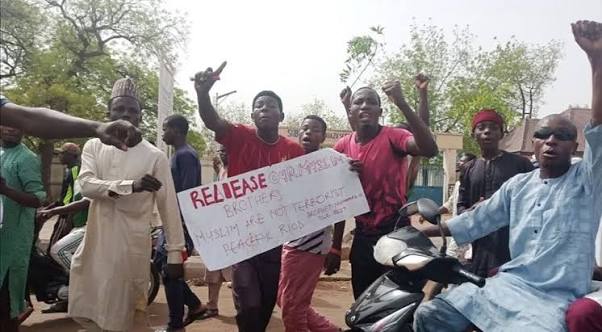
Protest in Sokoto over court order remanding Islamic cleric

Published

on

Tension briefly gripped parts of Sokoto metropolis on Monday as youths protesting the continued remand of an Islamic cleric, Dahiru Mai Barewa, clashed with security personnel.

The protesters, who demanded Mai Barewa’s release, reportedly blocked some roads and staged demonstrations in parts of the city before security operatives intervened to restore order.

The protest followed a court order directing the re-arrest and remand of Mai Barewa, who is facing allegations of issuing death threats against Islamic scholars, Sheikh Musa Ayyuba Lukuwa and Malam Murtala Bello Assada.

The development has drawn attention in Sokoto because of the religious dimension of the allegations and the support Mai Barewa enjoys among some youths and members of the community.

The youths opposed the court decision, insisting that their concerns should be addressed through due process and calling for what they described as “justice and respect for the rule of law.”

The situation, however, escalated when some of the protesters allegedly attacked security personnel in an attempt to forcefully secure Mai Barewa’s release from custody.

“They attempted to take the law into their own hands and forcefully free him from custody,” a source familiar with the incident said.

Security personnel were subsequently deployed to contain the situation and prevent further escalation, with the confrontation causing temporary disruption to movement in the affected areas.

Mai Barewa’s case stems from a series of videos in which he was allegedly seen making threats against Lukuwa and Assada. The videos reportedly generated concern among residents and prompted calls for security agencies to investigate the matter.

See also  Soyinka decries Seyi Tinubu’s ‘excessive’ security escort

According to reports, Mai Barewa linked his alleged threat against Sheikh Lukuwa to comments attributed to the cleric concerning the parents of Prophet Muhammad (SAW). He also reportedly referred to disagreements with some authorities in another video.

Assada had earlier said the alleged threats were reported to security agencies, claiming that Mai Barewa repeatedly threatened the clerics in several videos.

The matter subsequently became a subject of legal proceedings, with the court ordering Mai Barewa’s re-arrest and remand. His supporters have, however, opposed his continued detention and demanded his release.

The controversy has continued to attract public attention, particularly among religious communities in Sokoto, with supporters of Mai Barewa demanding his release, while others have urged authorities to treat the alleged threats seriously.

The latest protest has also renewed calls for restraint, with stakeholders urging residents to allow the courts and security agencies to handle the matter rather than resorting to confrontation.

“People should not take the law into their own hands. If there is a grievance, it should be addressed through the appropriate legal channels,” a stakeholder said.

Authorities have since restored calm in the affected areas, while residents were urged to remain peaceful and avoid actions capable of disrupting public order.

Source: punchng.com

FOLLOW US ON:

FACEBOOK

TWITTER

PINTEREST

TIKTOK

YOUTUBE

LINKEDIN

INSTAGRAM

Continue Reading
Click to comment

Leave a Reply

Your email address will not be published. Required fields are marked *

Lifestyle

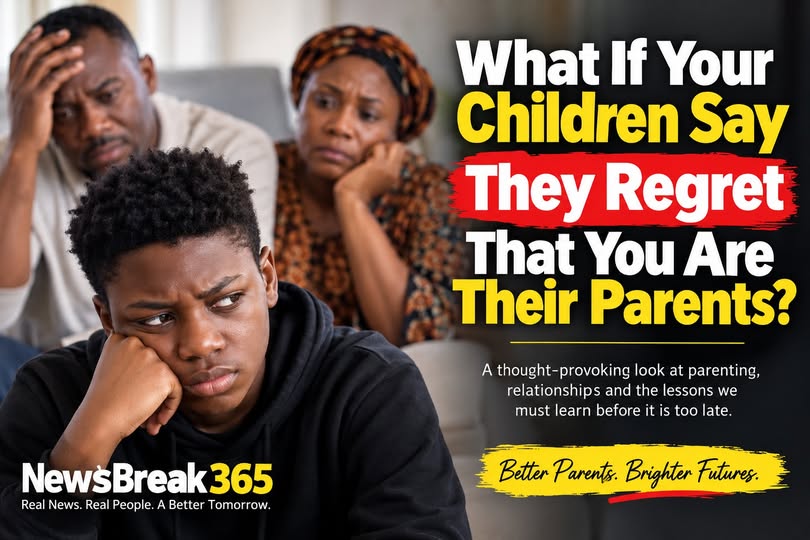
What If Your Children Say They Regret That You Are Their Parents?

Published

on

Imagine hearing your own child say, “I wish you were not my parent.”

That sentence can break a parent in ways that money cannot repair.

But before you become angry with the child, ask yourself a painful question: What did the child experience while growing up that made them feel this way?

Parenthood is not simply about giving birth to a child, paying school fees, providing food, or putting a roof over their head. Those things matter, but children also remember how they were treated.

They remember the words you used when they made mistakes.

They remember whether you listened to them or dismissed everything they said.

They remember whether home felt like a place of safety or a place where they were constantly afraid.

They remember whether you encouraged them to become themselves or forced them to become the person you wanted.

Providing for a child is not the same as raising a child

Some parents believe that because they sacrificed financially for their children, the children have no right to complain.

But raising a child involves more than financial responsibility.

A child may have everything materially and still feel emotionally abandoned.

A child may attend the best school and still feel unloved.

A child may have food on the table but never feel heard.

And sometimes, parents who believe they are being “strict” may not realise that their children experience that strictness as rejection, humiliation or fear.

But children also have responsibilities

This conversation should not become an excuse for children to disrespect their parents.

See also  Why I Sold Limousine Car Someone Gifted Me – Pastor Adeboye

Parents are human beings. They make mistakes. They can be tired, frustrated, financially pressured or emotionally wounded themselves.

Not every disagreement means a parent failed.

Not every punishment means abuse.

And not every child who says, “I regret having you as my parents,” is necessarily telling the whole story.

Children can misunderstand their parents. They can also make unfair judgments, especially when they are young.

That is why communication matters.

What kind of parent will your children remember?

One day, your children will become adults.

They may move away.

They may build their own families.

They may become successful.

And eventually, they will look back at their childhood.

The question is not only:

“Did I provide for my children?”

The deeper question is:

“How did my children feel when they were around me?”

Did they feel respected?

Did they feel safe?

Did they know they could talk to you?

Did you apologise when you were wrong?

Did you celebrate their achievements?

Did you allow them to have dreams different from yours?

Did you teach them discipline without destroying their confidence?

These questions can be uncomfortable, but good parenting requires uncomfortable self-examination.

Your children are not your property

Giving birth to a child does not give a parent unlimited ownership over that child’s life.

Children are individuals with their own personalities, talents, fears and ambitions.

Your responsibility is to guide them—not to control every aspect of who they become.

You may want your child to become a doctor, while the child dreams of becoming an artist.

See also  Soyinka decries Seyi Tinubu’s ‘excessive’ security escort

You may want them to live exactly as you did, while they want to create a different future.

Parenting requires wisdom to know when to guide, when to correct and when to let go.

Before it is too late

If your relationship with your children is already damaged, don’t wait for them to become adults before trying to repair it.

Talk to them.

Listen without immediately becoming defensive.

Ask them what hurts them.

And when you discover that you were wrong, apologise.

An apology does not make a parent weak.

Sometimes, the words “I was wrong” can heal years of emotional distance.

The goal of parenting should not be to make children afraid of you.

It should be to raise adults who can look back and say:

“My parents were not perfect, but they loved me, listened to me, corrected me and gave me the foundation to become who I am.”

Because one day, when your children are old enough to tell their own story, what will they say about you?

Will they remember you as the parent who gave them everything except peace—or the parent who gave them both provision and love?

FOLLOW US ON:

FACEBOOK

TWITTER

PINTEREST

TIKTOK

YOUTUBE

LINKEDIN

INSTAGRAM

Continue Reading

Lifestyle

You Got a Foreign Passport, Not a Crown: Citizenship Is a Privilege, Not Proof of Superiority

Published

on

Getting citizenship of another country can be a major milestone. But it does not make anyone a superior human being.

There is nothing wrong with being proud of the opportunities you have earned through immigration. Obtaining citizenship can represent years of hard work, patience, sacrifice, paperwork, and adapting to a new society.

But somewhere along the way, some people begin to confuse citizenship with superiority.

They acquire a European, American, Canadian, British, or other foreign passport—and suddenly begin looking at the people they left behind as though they have moved to a higher level of humanity.

You got a foreign passport, not a crown.

Citizenship Is a Privilege and an Opportunity

Citizenship can provide important benefits.

Depending on the country, it may provide greater security of residence, political rights, access to public services, easier international travel, and protection that may not have been available before.

Those are valuable privileges.

They should be appreciated.

But citizenship is ultimately a legal status. It does not automatically determine a person’s intelligence, wisdom, character, integrity, or human worth.

A passport can tell the world where you have citizenship.

It cannot tell the world how good a person you are.

You Changed Your Citizenship—Not Your Human Worth

Moving to another country can transform someone’s life.

It can provide access to better opportunities, education, employment, healthcare, infrastructure, and a different social environment.

But none of these things should become an excuse for looking down on other people.

The person who remains in Nigeria, Ghana, Kenya, South Africa, or another developing country is not automatically less intelligent or less valuable than someone who has moved to Europe or North America.

See also  Why I Sold Limousine Car Someone Gifted Me – Pastor Adeboye

Circumstances are different.

Opportunities are different.

Choices are different.

And people’s journeys are different.

A person’s passport should never become the measurement of their worth.

Be Proud of What You Build

There is a big difference between being proud of an achievement and using that achievement to establish superiority over others.

If you worked for years to obtain citizenship, you have every right to appreciate the achievement.

If your new citizenship allowed you to build a better life for yourself and your family, that is something worth being grateful for.

But perhaps the greater achievement is what you do with the opportunity.

Do you build a successful business?

Do you create jobs?

Do you educate your children?

Do you contribute positively to your community?

Do you help others?

Do you use your knowledge and experience to make your society better?

Those things say much more about a person than the colour or country printed on a passport.

A Passport Can Open Doors—But It Cannot Manufacture Greatness

A foreign passport can open doors.

It can make international travel easier.

It can provide opportunities.

It can provide rights and protection.

But it cannot manufacture character.

It cannot automatically give someone wisdom.

It cannot purchase integrity.

And it certainly cannot transform one human being into a superior species.

The real test is what happens after the door opens.

What do you do with the opportunity?

That is where genuine achievement begins.

Don’t Forget Where You Came From

There is also nothing wrong with remembering your roots.

Becoming a citizen of another country does not require you to hate the country you came from.

See also  The day Chief Obafemi Awolowo left the world (May 9, 1987)

You can appreciate your new home while respecting your origins.

You can criticize problems in your former country without believing that everyone who lives there is inferior.

And you can enjoy the benefits of your new citizenship without using your passport as a weapon against people who have not had the same opportunities.

Migration can change your location.

Citizenship can change your legal status.

But character remains your responsibility.

The Real Question

Perhaps the uncomfortable question is not whether you should be proud of your foreign citizenship.

The real question is:

What have you actually achieved with the opportunity that citizenship gave you?

If your passport disappeared tomorrow, what would remain?

Your knowledge?

Your character?

Your integrity?

Your skills?

Your businesses?

Your family?

Your contribution to society?

Your impact on other people’s lives?

Those are the things that cannot be taken away simply by changing a passport.

Final Thought

Be proud of your journey. Be grateful for your citizenship. Take advantage of every opportunity available to you.

But don’t confuse privilege with superiority.

A foreign passport may change where you can live, work, travel, and vote.

It does not make you better than the people you left behind.

Because at the end of the day, a passport can open doors—but it cannot manufacture greatness.

What do you think? Is obtaining foreign citizenship something to be proud of, or is it simply a privilege that should be appreciated without creating a sense of superiority? Share your opinion in the comments.

FOLLOW US ON:

FACEBOOK

TWITTER

PINTEREST

TIKTOK

YOUTUBE

LINKEDIN

INSTAGRAM

Continue Reading

Lifestyle

Italian priest quits Catholic Church, marries Kenyan woman in traditional ceremony

Published

on

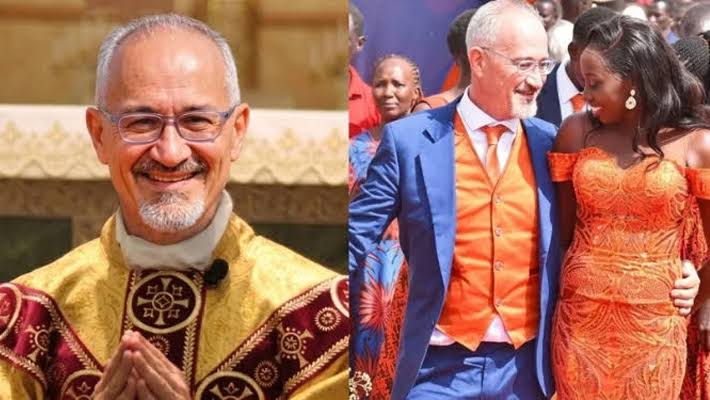
An Italian Catholic priest, Sandro Ferretto, has left the priesthood and married a Kenyan woman, Sharon Jepng’ok, in a traditional ceremony in Baringo County, Kenya.

Ferretto, 55, wed Jepng’ok, a Tugen woman from Baringo South, on September 6 at Seretion village, Kasiela — the same area where he served as a Catholic parish priest for 12 years, according to the Kenya Times, which broke the story alongside Kenyan outlet Tuko.co.ke.

The couple were joined through a Koito ceremony, a Kalenjin customary rite involving dowry negotiation and family blessings. Relatives, community elders, local leaders and Jepng’ok’s colleagues reportedly attended.

Ferretto was ordained a priest of the Diocese of Padua in Italy and began missionary work in Kenya in 2008, serving the Kasiela and Mochongoi areas under the Diocese of Nyahururu, according to diocesan records and Padua newspaper Il Gazzettino.

He was widely known in the community simply as “Father Sandro.”

He returned to Italy in December 2020 and, by 2023, was leading a pastoral unit of eight churches in Saletto, Borgo Veneto, in the Padua diocese.

In December 2023, Il Gazzettino reported that Ferretto had abruptly stepped down from that post after a final Mass, giving little notice to his own colleagues.

The Diocese of Padua, confirming his exit, said at the time that Ferretto “remains a priest and is not involved in any controversy,” describing the move only as a requested pause from pastoral duties.

He was said to be volunteering with a Padua-based migrant support group during that period.

He later returned to Kenya, where he reunited with Jepng’ok, whom he had met during his years as a missionary in Baringo.

See also  Overly Possessive About Money

Under Catholic canon law, priests of the Latin Rite are bound to celibacy and may not marry while remaining in active ministry.

A priest wishing to marry must first obtain laicisation — a Vatican-approved process that removes clerical status and typically includes a dispensation from the celibacy vow. Without it, a priest’s marriage is not recognised by the Church.

Neither the Diocese of Padua nor the Diocese of Nyahururu has issued a statement on the marriage.

Photos and video circulating from the ceremony, verified via Kenyan entertainment site Bana Media, show Ferretto and Jepng’ok dressed in matching orange-and-blue traditional attire with beaded gowns, taking part fully in the Koito dance rites before a crowd of well-wishers at Seretion village.

Source: punchng.com

FOLLOW US ON:
FACEBOOK

TWITTER

PINTEREST

TIKTOK

YOUTUBE

LINKEDIN

INSTAGRAM

Continue Reading

Trending