Connect with us

Politics

Tinubu eyes North’s 56 million voters ahead of 2027 election

Published

on

President Bola Tinubu and leaders of the All Progressives Congress will on Saturday kick off the President’s re-election campaign in Kaduna State, as the ruling party intensifies efforts to secure support across the North, which accounts for 56.01 million of Nigeria’s 103.43 million registered voters.

With 31 state governors and other party chieftains expected at the campaign flag-off, the APC is banking on what its leaders describe as a growing consensus among northern stakeholders and voters to secure Tinubu’s re-election in 2027.

The party has also set an ambitious target of mobilising 40 million votes through grassroots engagement, particularly among women, with its leaders expressing confidence that Nigerians will support the President for a second term.

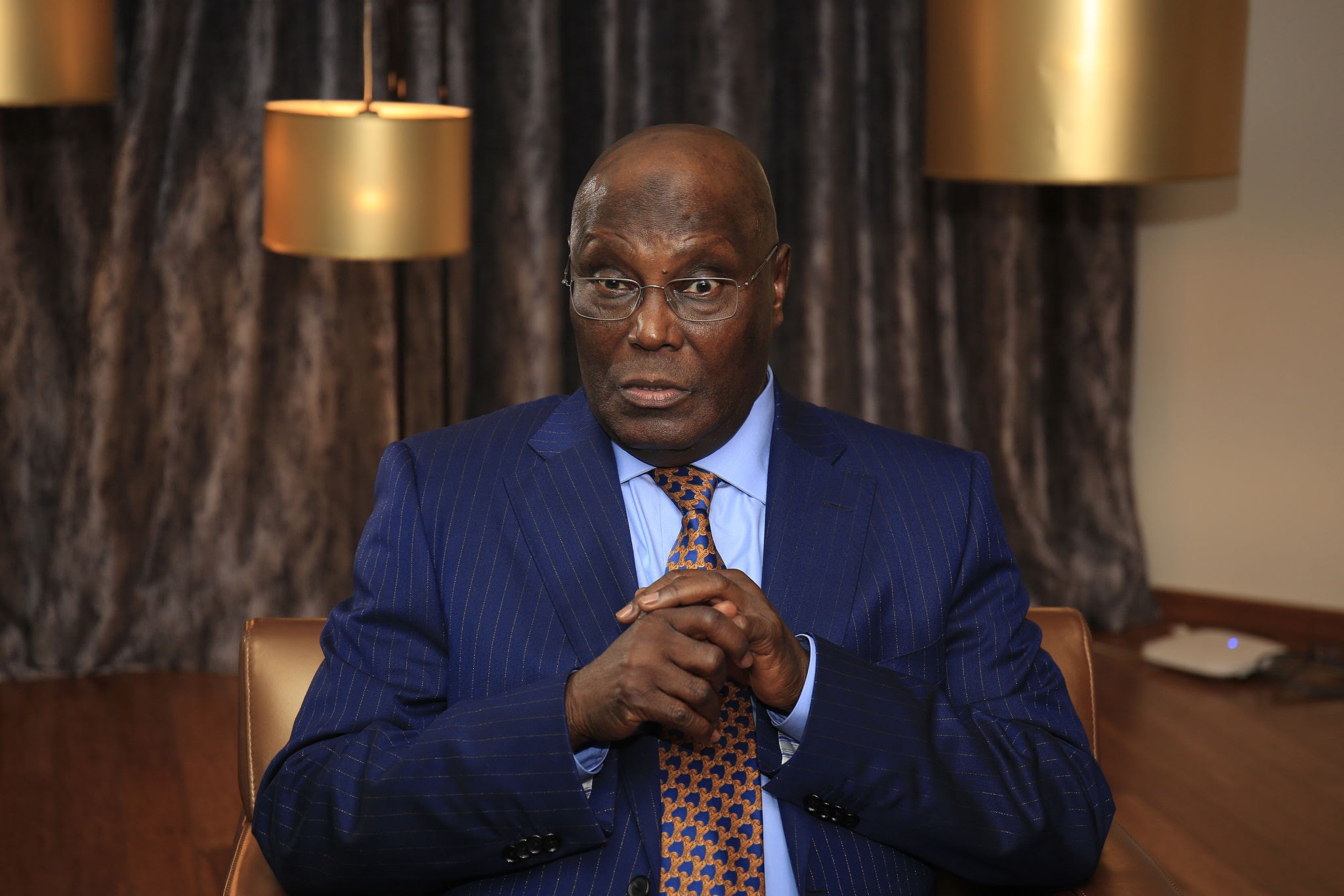
However, the opposition has challenged the APC’s optimism, arguing that economic hardship, rising living costs and persistent insecurity could undermine Tinubu’s re-election bid. The camp of former Vice-President Atiku Abubakar insists that Nigerians across regional and religious divides are prepared to vote out the ruling party.

The Kaduna rally is particularly significant given the North’s numerical strength in presidential elections and Tinubu’s loss in the state during the 2023 presidential poll.

Against this backdrop, party leaders and northern stakeholders, including Salihu Mustapha, a member of Arewa for Asiwaju and former APC National Vice Chairman for the North-East, said there was a consensus among stakeholders and voters in Kaduna State to support Tinubu’s re-election bid in 2027.

Similarly, APC chieftain and Head of the Presidential Campaign Council’s Stage Organisation and Management, Farouk Aliyu, expressed confidence that Tinubu would emerge victorious in the election.

However, the camp of former Vice-President Atiku Abubakar, the presidential candidate of the African Democratic Congress, dismissed Tinubu’s chances of winning a second term, insisting that northerners and other Nigerians were determined to vote the APC out of power.

Meanwhile, Oyo State Governor and presidential candidate of the Allied Peoples Movement, Seyi Makinde, has appealed to Nigerians to allow him to complete the South’s four-year presidential tenure.

According to the Independent National Electoral Commission, Nigeria has 103.43 million registered voters across the 36 states and the Federal Capital Territory.

Lagos has the highest number of registered voters, with 7.49 million, followed by Kano with 6.57 million and Kaduna with 4.66 million. Katsina has 3.88 million, Rivers 3.74 million, Oyo 3.59 million and Delta 3.53 million.

Other states include Benue, with 3.06 million registered voters; Ogun, 3.04 million; Bauchi, 3.01 million; Niger, 2.98 million; Anambra, 2.92 million; Plateau, 2.91 million; Edo, 2.87 million; Jigawa, 2.81 million; Borno, 2.77 million; Imo, 2.71 million; Sokoto, 2.63 million; Akwa Ibom, 2.57 million; Adamawa, 2.43 million; Osun, 2.33 million; Kebbi and Abia, 2.31 million each; Taraba, 2.25 million; Kogi, 2.23 million; Zamfara and Enugu, 2.22 million each; Nasarawa, 2.14 million; and Ondo, 2.12 million.

Cross River has 1.93 million registered voters, Kwara 1.92 million, Ebonyi 1.83 million, Gombe 1.77 million, Yobe 1.73 million, Bayelsa 1.20 million and Ekiti 1.06 million. The Federal Capital Territory has 1.73 million registered voters.

By geopolitical zone, the North-West has the highest number of registered voters, with 25.08 million, followed by the South-West with 19.61 million and the North-Central with 16.97 million. The South-South has 15.82 million voters, while the North-East and South-East have 13.97 million and 11.98 million, respectively.

INEC figures show that the three northern zones have a combined 56.01 million registered voters, representing 54.2 per cent of the national total of 103.43 million.

The North has historically played a pivotal role in determining the outcomes of Nigeria’s presidential elections, largely because of its sizeable voting population and turnout.

This was evident in the 2015 presidential election, when northern voters and political stakeholders contributed significantly to the defeat of then-President Goodluck Jonathan of the Peoples Democratic Party and the election of the late President Muhammadu Buhari of the All Progressives Congress.

The North’s electoral strength helps explain Tinubu’s decision to choose Kaduna as the starting point for his re-election campaign, despite losing the state in the 2023 presidential election. The President had earlier indicated plans to attend campaign rallies in only a few states.

See also  Lamido, Turaki, Makarfi lead PDP chairman race

Ahead of Tinubu’s visit and the arrival of other APC leaders, residents of Barnawa in Kaduna South Local Government Area witnessed a heightened security presence. Operatives of the Nigerian Army, Department of State Services, Nigeria Police Force, Nigeria Security and Civil Defence Corps and the state vigilante group, alongside personnel of the Federal Road Safety Corps, patrolled major roads with sirens blaring.

The heavily armed security personnel moved through the neighbourhood ahead of Saturday’s campaign flag-off, underscoring the security preparations for the political gathering.

Beyond the security arrangements, the campaign preparations have brought into focus a broader contest over public confidence, governance and the APC’s electoral prospects in Kaduna State.

While the ruling party projects confidence, pledging to deliver more than two million votes for Tinubu and insisting that it has a strong political base in the state, opposition figures argue that insecurity, poverty, rising living costs and alleged failures in public services could undermine its electoral ambitions.

The PUNCH gathered on Thursday that the presidential advance team, responsible for security, protocol, medical services and media, had been dispatched to Kaduna ahead of the event.

A source familiar with the arrangements said the APC and its state chapters were handling the funding and logistics for other attendees.

“The team have left already. All of them — media, security, protocol, medical and others. It’s a big campaign, so everything needs to be done properly,” the official said.

Another official, who requested anonymity because he was not authorised to speak on the matter, said the party and state chapters were jointly handling much of the campaign financing.

“It is the party and the states that are handling much of the campaign finance. But they are all working together,” the official said.

The Presidential Campaign Council was inaugurated at the State House on October 14, with Tinubu as chairman, Vice-President Kashim Shettima and APC National Chairman, Yilwatda, as vice-chairmen, and Senator Abdulaziz Yari as Director-General.

According to the campaign schedule released on October 14, subsequent rallies are scheduled to hold in Calabar on November 2, Gombe on November 3, Lafia on November 4 and Ado-Ekiti on November 5. The campaign activities will continue through January 2027.

The Kaduna State Local Organising Committee, chaired by Deputy Governor Hadiza Balarabe, said it had inspected the venue, Kaduna Flagship Stadium. The Minister of Defence, General Christopher Musa (retd.), led a security inspection on Wednesday.

Former APC National Vice Chairman for the North-East, Salihu Mustapha, told The PUNCH that northern stakeholders were rallying behind Tinubu, citing political appointments and increased revenue allocations to state governments.

He also claimed that the administration had made progress in tackling insecurity in the North, arguing that the situation had improved compared with previous years, despite persistent security challenges.

Mustapha said, “He has done a lot for the North, and you can see it in the political activities in the region. Northern politics is largely based on stakeholder consensus, not just heightened hostility on social media. Northern voters are not necessarily active on social media. The system works in such a way that every community has leadership, and the leadership internally determines where the votes go. And there is a consensus among northern leaders and voters to re-elect President Tinubu.”

He added, “We have our sons and daughters appointed to various offices in this country. The appointments are not lopsided. It is virtually a 50-50 balance. He has ensured that all our governors get enough revenue to pay salaries and create opportunities. Thousands of students are enjoying the NELFUND student loan scheme, and security policies are being implemented across the northern states.

“No matter how we want to put it, we have been able to overcome certain levels of insecurity. Insecurity is dynamic, and its patterns keep changing. So, it will interest you to know that there is virtually a seamless consensus in the North supporting Asiwaju. You have seen campaign organisations such as Arewa for Asiwaju. Northern Nigeria has decided.”

See also  Oyo abduction Update: Tinubu revealed why they tracked, arrested kidnappers’ families

Mustapha maintained that northern political leaders and voters were backing Tinubu’s re-election bid, expressing confidence that the President would not suffer the same fate as former President Goodluck Jonathan, who lost the 2015 election.

He said, “You can compare 2015 with 2027 and the APC government with the PDP government. During former President Goodluck Ebele Jonathan’s administration, the political structure and individuals in the North were against him. The situation is different today, as the political structure and people of the North are behind President Bola Ahmed Tinubu.

“They support him and will vote to re-elect him in January 2027 because of the laudable achievements of his administration. The North is behind him, and there is no cause for alarm. President Tinubu will not suffer the same fate as Jonathan.”

Similarly, APC chieftain and Head of the Presidential Campaign Council’s Stage Organisation and Management, Farouk Aliyu, said the party was optimistic that northern voters would support Tinubu’s re-election bid in 2027.

He acknowledged that the contest would be challenging but said the APC would intensify efforts to persuade voters to support the President.

“We will campaign everywhere in the North for the President’s re-election because he deserves another term. The North and even the South will vote for him again. We will appeal to the people, show them what the government has done and ask for their patience. We will explain to them that the reforms were not introduced to harm them but to protect them. There will be no problem, by the grace of God. It will be tough, but it is not insurmountable,” Aliyu said.

He added, “There are voters who will be hostile supporters of other parties. It is not just the APC. It all depends on where you are strong and where you are not strong. That has nothing to do with the APC alone. It has to do with the party’s selection of voters.”

Also, the Co-Chair of the APC Presidential Campaign Council’s Directorate of Women Mobilisation, Dr Betta Edu, said Nigerians would begin to enjoy economic prosperity if Tinubu were re-elected for a second term in 2027.

Edu argued that the country had passed the difficult phase of economic reforms and was approaching a period of prosperity under the Tinubu administration.

She spoke in Kaduna on Thursday when she led members of the directorate on a courtesy visit to the state Deputy Governor, Dr Hadiza Balarabe, who chairs the local organising committee for the APC campaign flag-off.

“We have gone through the reform phase already. Now it is time for prosperity. We are already at the gate of prosperity once President Tinubu is re-elected,” Edu declared.

The former Minister of Humanitarian Affairs and Poverty Alleviation also said the directorate was targeting about 40 million votes for Tinubu and Vice-President Kashim Shettima in the 2027 presidential election.

She said achieving the target would require sustained grassroots mobilisation and direct engagement with women across the country, rather than relying solely on large crowds at political rallies.

“Our plan as the PCC mobilisation directorate is to see that we can mobilise at least close to 40 million votes for President Bola Ahmed Tinubu. And we cannot do this without getting down to the grassroots,” she said.

Edu explained that the directorate would engage women in markets, communities and households to understand their concerns and communicate the administration’s achievements.

She urged APC women leaders and supporters in Kaduna State to intensify peaceful, door-to-door campaigns, stressing the need to persuade voters without intimidation or coercion.

Responding, Balarabe assured the delegation that the Kaduna State Government and the campaign flag-off committee were working to ensure a successful event.

She said several planning and coordination meetings had been held, adding that Kaduna’s strategic position in northern Nigeria placed a responsibility on the state to demonstrate its organisational capacity.

See also  Makinde meets Kwankwaso for 2027 strategy as PDP reconciliation falters

“We try as much as possible to take any assignment given to us seriously,” the deputy governor said.

However, the Special Adviser on Media to former Vice-President Atiku Abubakar, Paul Ibe, told The PUNCH that the level of hardship in the country had made Tinubu’s re-election bid untenable.

He argued that economic hardship affected Nigerians across regional and ethnic lines and would be a major factor in the 2027 election.

“There is a consensus on the level of suffering of the Nigerian people. This is not just about the North or the South. The issue is neither about North-Central, North-East and North-West nor is it about South-South, South-East and South-West. This election is a bread-and-butter issue: it is about the economy,” Ibe said.

“There is no petrol station in this country where there is disparity in the price of fuel sold to a Yoruba person, Hausa person or an Igbo person. There are no different prices in the market for goods sold to the hundreds of ethnic nationalities that make up Nigeria. Nigerians will express their frustration and the hopelessness of the situation at the ballot.”

Ibe added that the economic difficulties facing Nigerians cut across religious, regional and generational lines.

“The North and the South, Christians and Muslims and all shades of people, young and old are being affected by the suffering in the land. Even Nigerians who are not living on the shores of this country are wondering how those of us who do are coping with Tinubu’s handling of the nation’s affairs since he became President.

“We will be diminishing this argument if we limit it to either a North or South debate. Nigerians are feeling the pain, and they have resolved to vote out this government in 2027,” he said.

Meanwhile, the Minister of Health and Social Welfare, Prof. Muhammad Pate, has said there is no immediate need to cancel political campaigns, conferences or other large public gatherings following Nigeria’s confirmation of an imported Ebola case.

Pate, however, warned that the government would review the situation and consider appropriate restrictions if the outbreak worsened, stressing that any decisions would be based on scientific evidence and public health considerations.

The minister spoke on Thursday in Abuja during a press briefing on the government’s response to the case. He assured Nigerians that the patient was receiving treatment and showing encouraging signs of recovery.

Addressing the possibility of restricting political activities and public events, Pate said the government would not impose such measures without evidence that they were necessary.

“At this moment, there is no indication that requires us to alter the course of large gatherings that have been planned,” he said.

“But if the situation changes, we’ll make a determination; we’ll consult broadly with the right experts and make that determination.”

He also cautioned political leaders against politicising the outbreak, describing public health as a unifying concern that transcended political, religious and ethnic differences.

“If there is one issue that will unite Nigerians, it is health, because health has no political party, has no citizenship, has no nationality, has no tribe, no religion. It is a great unifier,” he said.

Group targets 10,000 supporters

Arewa for Asiwaju, a political support group backing President Bola Tinubu’s re-election bid, has set a target of mobilising 10,000 supporters from the 19 northern states and the Federal Capital Territory for the flag-off of his 2027 campaign in Kaduna State.

The group said the mobilisation was aimed at demonstrating its organisational strength and consolidating grassroots support for Tinubu’s second-term bid.

In a statement issued on Thursday, the group’s Head of Media Relations, Edwin Olofu, and Director-General, Mohammed Badaru, said the target reflected the movement’s determination to mobilise supporters across the North and the FCT.

Source: punchng.com

FOLLOW US ON:

FACEBOOK

WHATSAPP CHANNEL

TWITTER

PINTEREST

TIKTOK

YOUTUBE

LINKEDIN

INSTAGRAM

Continue Reading
Click to comment

Leave a Reply

Your email address will not be published. Required fields are marked *

Politics

2027: Atiku presses INEC to release 103m voters’ register

Published

on

Former Vice-President Atiku Abubakar has demanded the immediate publication of the preliminary voters’ register, warning that the failure of the Independent National Electoral Commission to display the list online could undermine confidence in the 2027 general election.

Atiku, in a statement on Thursday issued by the Director of Strategic Communication of the African Democratic Congress Presidential Campaign Council, Phrank Shaibu, said Nigerians were entitled to inspect the register, challenge questionable entries and correct omissions before the election.

“INEC has announced more than 103 million registered voters. Nigerians went to its portal to inspect the names and found an empty page. That is an outrage. A figure cannot answer an objection. A press announcement cannot tell a voter whether her name has been omitted. Show Nigerians the register,” he said.

The electoral umpire had announced a seven-day public scrutiny exercise from October 9 to 15, during which registered voters were expected to inspect the preliminary register and raise objections to false entries or report omitted names.

Atiku, however, said the commission’s failure to make the register available online violated the Electoral Act 2026 and raised questions about the credibility of the process.

“I cannot recall a more brazen invitation to distrust the voter register. INEC announced a seven-day exercise and then failed to make the register available on the portal provided for public scrutiny,” he said.

He cited Section 19(1) of the Electoral Act 2026, which requires the register to be displayed at registration areas and online, and urged INEC to publish the list by local government, area council and ward.

See also  Hundreds still missing after Boko Haram attack in Borno

The ADC presidential candidate in the 2027 election also demanded clarification over conflicting statements attributed to the commission’s chairman regarding the timing of the display.

“Worse still, INEC’s chairman reportedly said on October 5 that the public display had already been completed. Nigerians were subsequently told it would take place from October 9 to 15. Which statement is true? Where was the register published? For seven full days, or for no days at all?” he asked.

Atiku called on INEC to release the dates, links and access records relating to the alleged online publication.

He also raised concerns over the authentication of ballot papers, citing Section 63(2) of the Electoral Act 2026, which permits a returning officer to count a ballot paper without INEC’s official mark if satisfied that it came from a book supplied to the polling unit.

“What evidence will establish that origin? Who will verify it, and how will parties challenge a false claim?

“INEC must set out enforceable safeguards against counterfeit ballots, and the National Assembly must close any loophole that leaves the authenticity of a vote to an officer’s unsupported assurance,” he added.

The statement also said INEC had yet to respond to inquiries about the companies awarded contracts to print sensitive election materials.

Atiku said the ADC and its presidential candidate were stakeholders in the presidential election and had the right to demand information about the procedures that would determine its credibility.

Atiku said the President Bola Tinubu administration could not conceal the voters’ register and expect Nigerians to trust the electoral process.

See also  INEC list rekindles APC’s post-primary crisis ahead of 2027 elections

“You will not add an unseen voters’ register to their suffering and call it a route to another four years in office.

“You cannot hide their names from scrutiny and then ask them to trust the election conducted with that list. Nigerians have the right to inspect the register, challenge false entries and correct omissions. If that right is denied, we will challenge it in the open and through every lawful means available,” the statement further read.

He accused INEC’s conduct of creating room for manipulation by preventing voters from checking who had been added to or removed from the register and whether their own names remained on the list.

“That door must be shut now. Publish the register by local government, area council and ward. Explain the conflicting dates. Give voters the full opportunity the law provides to challenge false entries and restore omitted names,” he said.

Atiku also urged international partners, election observers and democratic institutions to press INEC to comply with the law before election day.

“Do not wait until election day to ask whether this contest is credible. Demand access to the voters’ register now. Ask how every ballot paper will be authenticated. Transparency before the vote is as essential as scrutiny of the results afterwards.

“The right to vote begins with the right to know that your name is on the list. INEC must stop hiding behind a blank screen. Publish the register. Open it to scrutiny. Answer the country,” he stressed.

Source: punchng.com

FOLLOW US ON:

FACEBOOK

WHATSAPP CHANNEL

TWITTER

PINTEREST

TIKTOK

YOUTUBE

LINKEDIN

INSTAGRAM

Continue Reading

Politics

My father’s political career inspired my senatorial ambition – Olunloyo

Published

on

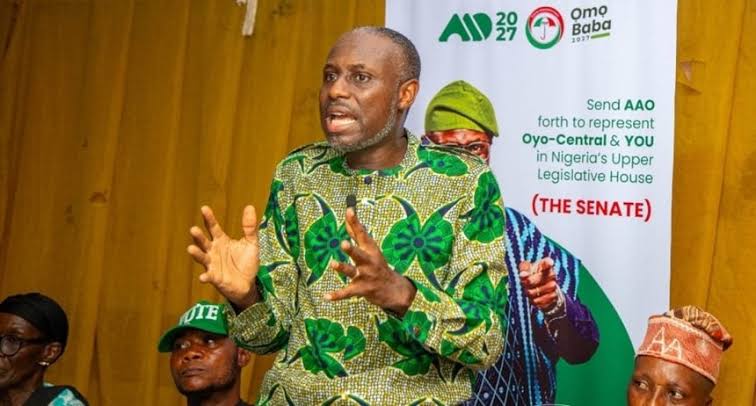
The Peoples Democratic Party’s senatorial candidate for Oyo Central, Ayobami Olunloyo, has said his late father’s political career inspired his ambition to serve the people and address the challenges facing his constituency.

Olunloyo, whose late father, Dr Omololu Olunloyo, was a former governor of Oyo State, said his early exposure to politics helped him understand its potential to improve people’s lives, hence his senatorial ambition.

Olunloyo’s father, who died on April 6, 2025, aged 89, was a renowned mathematician, engineer, politician and administrator who held several public offices.

The PDP candidate said he had been involved in politics for years, describing his participation as largely behind the scenes, while his current ambition offered him an opportunity to put his preparation for public office into practice.

Speaking with journalists in Ibadan, the Oyo State capital, Olunloyo said that, although he had been involved in politics behind the scenes, he had also prepared for public office by attending the School of Politics, Policy and Governance.

This combination, he said, had given him the necessary experience, exposure and expertise to vie for public office.

He said, “Politics has never been something that has been far from me. I’ve always been close to politics. And my father’s opportunity in politics was really one of my inspirations because, at a very, very early part of my life, I recognised that politics has the means to change lives.

“But beyond my family name, I also realised that I must take responsibility and attend to the several needs of the people of my constituency.”

See also  Insecurity: FG approves 94,000 new enlistments

Speaking on the challenges he intended to address, Olunloyo identified security, healthcare and education as fundamental needs of Oyo Central Senatorial District.

He said his policy framework was built around six pillars: work, education, food, healthcare, security and heritage, which, he said, should translate into tangible benefits rather than legislation without a direct impact on citizens.

On healthcare, he claimed that statistics showed that somebody died every 30 minutes in Oyo Central, attributing the deaths to factors including healthcare challenges and accidents. He did not identify the source of the figure.

He said the claim underscored the need to improve healthcare provision in the district, particularly primary healthcare services, so residents would not have to travel long distances to access care.

“Every 30 minutes, someone passes away in Oyo Central as a result of serial social issues of lack of basic social amenities. Before you refer somebody to University College Hospital, there must be a healthcare centre close enough to them,” Olunloyo said.

On education, Olunloyo said improving access should not be limited to building new schools but should include expanding existing facilities and increasing the number of children they could accommodate.

“Education is the antidote to poverty, so it must be accessible,” Olunloyo said.

He also identified security as a priority, arguing that effective responses to insecurity required stronger intelligence gathering, capable law enforcement and a police force sufficiently close to communities facing threats.

On flooding and drainage, the candidate said interventions should reflect the different needs of the district’s 11 local government areas.

He identified Akinyele and Oluyole as areas where, he said, flood and flash-flood warnings had been issued.

See also  Makinde joins presidential race, warns against one-party state ahead of 2027

“We will address issues in order of priorities. The 11 LGAs would be my focus. Each of the 11 local government areas has peculiar issues,” Olunloyo said.

He, however, acknowledged that a senator could not directly perform the functions of the executive arm, saying the role would include understanding the underlying problems, pursuing appropriate policies and working with relevant authorities.

Olunloyo said he would seek to make his representation accessible and accountable if elected, promising regular opportunities for constituents across the 11 local government areas to engage with him.

He said that within six months of being elected, the public would be able to assess a register of projects completed and those proposed.

On how he intended to defeat the incumbent senator, who is seeking re-election on the platform of the All Progressives Congress, he said his focus was on campaigning to constituents, whose votes would determine the outcome.

“The incumbent is not our focus. The people are our focus,” he said, adding that voters would decide whether they wanted to retain the existing style of representation or opt for a different approach.

He added, “The people should test us for accountability. We are promising radical transparency. We have values to serve the people, not ourselves.

“There is nothing bad in disclosing to constituents how much is allocated for constituency projects. People should see how their money is being spent,” he said.

While acknowledging his responsibility to deliver constituency projects, he said he would prioritise transparency in their implementation.

He argued that constituency projects should address practical needs, including healthcare, education, water and other basic amenities, while legislation should create longer-term opportunities for development.

See also  Makinde meets Kwankwaso for 2027 strategy as PDP reconciliation falters

On why he chose the PDP despite the party’s challenges, Olunloyo described it as a party with a record of governance and said he believed it had more to offer the country.

“The PDP is one of the only parties right now that is turmoil-free. The PDP is stable. The PDP is one of the greatest parties that Nigeria has experienced, and it is committed to returning to government to serve Nigerians,” Olunloyo said.

He said his choice of the PDP was based on his belief in the party and its capacity to serve the people, adding that his immediate focus was securing the opportunity to represent Oyo Central.

However, the claim comes amid recurring leadership disputes within the party.

In 2026, rival camps aligned with Nyesom Wike and Tanimu Turaki (SAN) contested control of the party, with court proceedings and disputes over recognition by the Independent National Electoral Commission forming part of the crisis.

INEC recognised the Wike-aligned leadership in March, while the Turaki camp continued to challenge the situation.

Source: punchng.com

FOLLOW US ON:
FACEBOOK

WHATSAPP CHANNEL

TWITTER

PINTEREST

TIKTOK

YOUTUBE

LINKEDIN

INSTAGRAM

Continue Reading

Politics

Who gets the gavel of the 11th Senate – Akpabio or Uzodimma?

Published

on

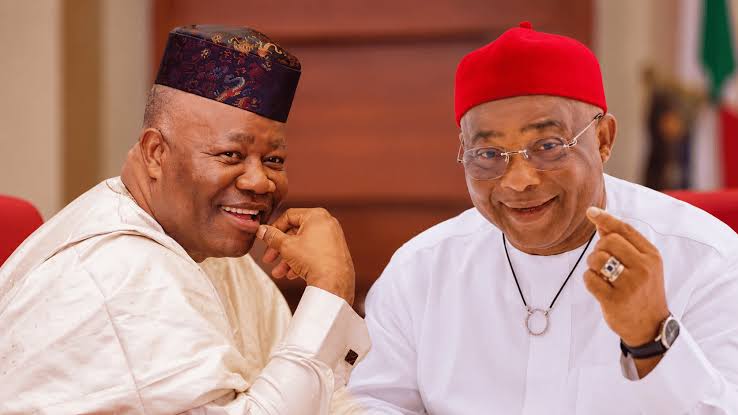
The battle for the presidency of the 11th Senate is gathering momentum ahead of the 2027 general elections, with incumbent Senate President Godswill Akpabio seeking another term, Imo State Governor Hope Uzodimma positioning himself for a return to the National Assembly, and the ruling All Progressives Congress facing competing interests over who should lead its legislative caucus, writes LAOLU AFOLABI

The race for the 11th Senate presidency is already generating political tensions, with incumbent Senate President Godswill Akpabio declaring “no vacancy,” Federal Capital Territory Minister Nyesom Wike opposing Imo State Governor Hope Uzodimma’s reported ambition, and Senator Adams Oshiomhole challenging a controversial amendment to the Senate Standing Orders that raised questions about eligibility for the coveted seat.

Former Zamfara State Governor Abdulaziz Yari, who challenged Akpabio for the Senate presidency in 2023, is also a significant figure in the unfolding political calculations. His appointment as Director-General of the APC Presidential Campaign Council for President Bola Tinubu’s 2027 re-election bid places him in a prominent position within the ruling party’s structure.

Although Akpabio has received public expressions of support from some serving senators, the contest for the next Senate presidency will ultimately depend on the composition of the 11th National Assembly and the votes of senators-elect when the chamber is inaugurated in June 2027.

Changing Senate leadership

Since the return to democratic rule in 1999, Nigeria’s Senate has had nine presidents: Evan Enwerem, Chuba Okadigbo, Anyim Pius Anyim, Adolphus Wabara, Ken Nnamani, David Mark, Bukola Saraki, Ahmad Lawan and Akpabio.

The frequent changes in the chamber’s leadership during the early years of the Fourth Republic reflected the political pressures and internal disagreements that have often accompanied the emergence of its presiding officers.

Enwerem, who became the first Senate President of the Fourth Republic in June 1999, was replaced by Okadigbo in November of the same year. Okadigbo was himself removed in August 2000, paving the way for Anyim, who served until 2003. Wabara succeeded Anyim but resigned in 2005, after which Nnamani led the chamber until 2007.

Mark’s emergence in June 2007 marked a period of relative continuity. He served through the sixth and seventh National Assemblies, from 2007 to 2015, becoming the first Senate President in the current democratic era to retain the position across two consecutive assemblies. His eight-year tenure remains the longest by any Nigerian Senate President.

Since Mark’s departure, the office has changed hands at four-year intervals. Saraki presided over the eighth Senate from 2015 to 2019, Lawan led the ninth from 2019 to 2023, and Akpabio emerged as Senate President when the 10th National Assembly was inaugurated in June 2023.

Akpabio’s ambition to return in 2027 would therefore put him in pursuit of a second consecutive term, a feat last achieved by Mark. If successful, he would become the second Senate President of the Fourth Republic to lead two successive assemblies.

2023 contest

Ahead of the inauguration of the 10th National Assembly, the APC endorsed Akpabio as its preferred candidate for the Senate presidency, being a Christian, since Tinubu and Vice President Kashim Shettima are both Muslims. Yari, a former governor of Zamfara State and senator representing Zamfara West, a Muslim, nevertheless pursued his ambition, attracting support from lawmakers who questioned aspects of the party’s leadership arrangement and its distribution of political offices.

Some analysts believe that Akpabio’s decision to become the first presidential aspirant to openly step down for Bola Tinubu during the APC presidential primaries in 2022 paved the way for his emergence as Senate President. His move reportedly opened the door for other contestants, including Kayode Fayemi and Ibikunle Amosun, to endorse Tinubu.

The contest for the Senate presidency culminated in a secret ballot on June 13, 2023, when Akpabio secured 63 votes against Yari’s 46 to emerge as Senate President.

“No vacancy” message

Akpabio has made it clear that he wants to retain the Senate presidency. At the inauguration of the APC Presidential Campaign Council in Abuja on October 14, he appealed to Tinubu to support his return and urged the President to discourage governors from seeking other political offices before completing their current responsibilities.

Although he did not name Uzodimma, the remarks came against the backdrop of reports that the Imo governor was positioning himself to succeed him.

Some serving senators have since declared their support for Akpabio’s return. During plenary on Thursday, October 15, Senate Chief Whip Tahir Monguno and Cyril Fasuyi expressed confidence that the incumbent and other principal officers would return to their positions after the elections, with Monguno declaring that there was “no vacancy” in the Senate presidency.

See also  Flood crisis: NEC slashes prevention fund by 50%, approves N83bn

Wike vs Uzodimma

Uzodimma’s entry into the Imo West senatorial race has brought his reported Senate presidency ambition into sharper focus. The governor, who chairs the Progressive Governors’ Forum, secured the APC ticket for the district ahead of the 2027 elections.

His political standing gives him access to governors and influential party figures. His second term as governor is due to end in January 2028, while the 11th National Assembly is expected to begin in June 2027. He could contest the senatorial election while still in office, but if elected and intending to take his Senate seat at the inauguration of the new assembly, he would have to address the constitutional restriction against a governor simultaneously holding another public office. His decision would therefore involve leaving the governorship before the end of his term.

The political dispute has been sharpened by Wike’s opposition. In September, the FCT minister declared that he would not support Uzodimma’s reported bid for the Senate presidency. He accused some governors of seeking to influence the emergence of the next National Assembly leadership by determining which candidates enter the legislature.

For Uzodimma, the immediate requirement is to win the senatorial election and establish the support needed to pursue a leadership position. For Akpabio, it is to defend his incumbency in a contest that could involve lawmakers and political interests beyond the current Senate leadership.

Oshiomhole’s rules controversy

The controversy over the Senate Standing Orders in May 2026 introduced another dimension to the contest.

The Senate amended its rules to restrict eligibility for presiding and principal offices to lawmakers who had served at least two consecutive terms. The change came as speculation grew that former governors and other political figures were considering a return to the Senate in 2027, with some reportedly interested in the presidency of the chamber.

The amendment attracted opposition from Oshiomhole, the senator representing Edo North, who challenged the procedure and its implications for prospective candidates. His confrontation with Akpabio during plenary brought the disagreement into public view.

Oshiomhole subsequently called on Akpabio to resign, arguing that the process and substance of the amendment raised questions about fairness and the integrity of the Senate’s leadership arrangements.

The Senate later rescinded the amendments following concerns that some provisions could conflict with the 1999 Constitution, particularly its provisions governing the election of presiding officers.

The reversal did not settle the contest for the 11th Senate presidency. It removed the disputed restrictions but left the broader political question unresolved: which candidates will win Senate seats in 2027, and which of them will secure the votes required to lead the chamber?

S’South/S’East permutation

The South-East and South-South regions took a particularly hostile position against the All Progressives Congress in the build-up to the 2015 general elections, largely because of the political tensions surrounding the late President Muhammadu Buhari, Bola Tinubu and other prominent APC figures.

In both regions, the party was heavily demonised as the Peoples Democratic Party, led by then President Goodluck Jonathan, sought to retain power.

Jonathan’s defeat by Buhari in the 2015 presidential election deepened the political divide, particularly in the South-East, where the PDP had enjoyed considerable support. More than a decade later, however, there appears to be a difference in how the two regions have related to the APC. While the South-South seems to have gradually softened its opposition to the ruling party, the South-East remains a difficult political terrain for it, with criticism of the APC and its leaders frequently featuring in the region’s political discourse.

The party’s electoral performance in the South-East illustrates the scale of the challenge. In the 2015 National Assembly elections, the APC failed to win a single seat in the region. Its fortunes improved in 2019, when it secured 12 seats — two in the Senate and 10 in the House of Representatives. In 2023, it won 13 seats, comprising six Senate seats and seven House of Representatives seats.

Its presidential vote also fluctuated significantly, rising from about 200,000 in 2015 to approximately 405,000 in 2019 before falling to around 127,000 in 2023. The figures suggest that the APC has made some gains in legislative representation, though translating those gains into sustained support in presidential elections remains a major challenge.

See also  Insecurity: FG approves 94,000 new enlistments

Winning more seats in the National Assembly is a starting point, but consolidating those gains will depend on whether the party can build a broader appeal beyond its existing supporters.

The votes from the regions may likely be a factor in the 2027 election. Wike, at the inauguration of the APC Presidential Campaign Council, challenged the governors to win their states for Tinubu. While the South-South is leaning more towards the ruling party, the South-East seems indifferent. Akpabio is from Akwa Ibom in the South-South, while Uzodimma is from Imo in the South-East.

Akwa Ibom State Governor Umo Eno, while declaring support for Akpabio, argued that the state should support the incumbent rather than encourage another aspirant from the Ikot Ekpene Senatorial District to replace him.

Eno said he would support another candidate from the district only if the person could assure him of becoming Senate President, a prospect he suggested was unlikely.

“This one that we have, let us support him,” the governor said, making a case for Akpabio’s return based on the possibility of continuity in the leadership of the upper chamber.

The governor’s position adds a state-level dimension to the contest. His argument also highlights the political value attached to the office in Akwa Ibom, where Akpabio’s return could preserve the state’s access to one of the country’s most influential legislative positions.

At a regional level, the South-South APC leaders had publicly expressed support for his leadership of the Senate. The question now is whether the leaders will continue in their support ahead of the 11th Senate.

Akpabio also framed his emergence as recognition for the South-South, noting that the region had not produced a Senate President for about 45 years before his emergence in 2023. At the APC South-South zonal congress in Asaba in March 2026, he urged the region to reciprocate the party’s support by delivering substantial votes for President Tinubu in the 2027 election.

Will Uzodimma ride on the support of South-East governors and the people of the region to emerge as Senate President? Will he count on the backing of fellow governors who are moving en masse to the Senate to unseat the incumbent Senate President?

Analysts weigh chances

A professor of Political Science and former Vice-Chancellor of the Federal University, Oye-Ekiti, Kayode Soremekun, believes the race for the presidency of the 11th Senate will depend largely on Tinubu’s preference, the political influence of the leading contenders and their ability to mobilise support among senators-elect.

Soremekun, who described the exercise as largely speculative at this stage, identified Akpabio, Uzodimma and Yari as figures whose political calculations could shape the contest.

He said Akpabio’s established presence in the Senate could give him an advantage over Uzodimma, who would be entering the chamber after serving as governor, should he win the Imo West senatorial seat and pursue the Senate presidency.

“The governor who is seeking to resign from his governorship and move into the Senate is a very interesting scenario. He will be coming in as an outsider, and to that extent, it is like he will be running against the wind,” Soremekun said.

He, however, cautioned against dismissing Uzodimma’s chances, arguing that financial resources and political networks could play significant roles in the contest.

“In Nigeria, what I can say is that money talks. The two of them, Akpabio on one hand and Uzodimma on the other, are heavily loaded,” he said, adding that their capacity to deploy political resources could influence the outcome.

He also identified Oshiomhole as a significant figure in the emerging contest, describing him as a visible presence in the Senate who combines membership of the political establishment with a public image of speaking for ordinary Nigerians.

Soremekun argued that Oshiomhole’s experience as a former governor and his political resources could make him relevant to the calculations surrounding the next Senate leadership.

The political scientist said Tinubu’s attitude towards the contenders would be one of the most important variables, particularly if the President secured re-election in 2027.

He suggested that the relationship between Tinubu and Akpabio could favour the incumbent if the President considered continuity more advantageous than a change in Senate leadership.

“The way he will go will depend on where his gratitude flows,” Soremekun said, referring to Tinubu’s possible preference between the contenders.

See also  Hundreds still missing after Boko Haram attack in Borno

He described the relationship between the President and Akpabio as particularly close, arguing that the Senate President’s record of supporting the administration’s proposals could strengthen his case for another term.

“In football, they say you don’t change a winning team. Why would he want to change when most of the time, Akpabio has been known to endorse virtually all his proposals?” he asked.

Soremekun also considered the implications of Yari’s possible emergence, recalling that the former Zamfara governor challenged Akpabio in the 2023 Senate presidency election but lost.

He said Yari’s religious identity could become part of the political debate if he entered the contest, particularly in a country where questions of religious representation often influence perceptions of political appointments.

Soremekun argued that some Christians might view the prospect of a Muslim occupying the Senate presidency alongside a Muslim President and Vice-President as a further concentration of the country’s highest political offices in one religious group.

Such concerns, he noted, could influence the calculations of political actors who consider religious balance important. However, whether this would materially affect Yari’s prospects would depend on the candidates, the political climate and the priorities of senators-elect.

Beyond the identities and calculations of the contenders, Soremekun challenged journalists and political observers to examine the records of the politicians seeking the Senate presidency and what they had delivered to their constituents.

He said the debate should not be limited to the manoeuvres of political elites, arguing that the public interest required a closer assessment of the performance of the contenders in their respective constituencies and their contributions to improving Nigerians’ lives.

“What is their record? What is the performance of all these various people in their constituencies? Beyond these intra-elitist games, what have they been able to do for the Nigerian people?” he asked.

The professor also referenced a recent criticism of Nigeria’s political class by playwright and scholar, Prof. Femi Osofisan, who reportedly described the country’s leaders as self-loving and wicked. Soremekun said the continued frustration expressed by an elder intellectual of Osofisan’s standing should prompt reflection on the state of governance.

A former member of the House of Representatives, Oghene Egoh, in an interview aired on Arise TV, argued that the contenders and their supporters should wait until the 11th Senate is constituted before beginning an intense struggle for its leadership.

Egoh said he could hardly recall a precedent for a Senate presidency contest attracting such attention before the relevant senators had been elected, pointing to the involvement of prominent political figures, including Oshiomhole and Uzodimma.

He acknowledged that the incumbent Senate President Akpabio might feel compelled to deploy his political influence in response to moves by people outside the Senate who were positioning themselves for the next leadership contest.

Although Egoh said he did not agree with the actions of the politicians involved, he described the manoeuvres as part of the realities of politics. He maintained, however, that both camps should wait until the 11th Senate emerges before seeking to determine who would occupy the presiding officer’s seat.

Political commentator and founder of TAF Africa, Jake Epelle, took a stronger position, arguing that the Senate presidency should not be treated as an inherited privilege or a position that can be allocated before elections.

“The Senate is not a monarchy, nor is it a hereditary throne,” Epelle said, criticising Akpabio and those supporting him over what he described as a disregard for constitutional principles.

He questioned the propriety of attempting to settle the contest before voters had elected the senators who would constitute the next chamber, arguing that such manoeuvres risked undermining the democratic process.

Uzodimma’s reported ambition to enter the Senate has also prompted questions about the implications for his tenure as Imo State governor, which is scheduled to end on January 15, 2028.

Responding to a question on X about what would happen if Uzodimma won the Imo West senatorial seat, House of Representatives member Akin Alabi said the governor would resign on June 14, 2027, paving the way for his deputy to be sworn in as governor.

Alabi further suggested that if the deputy subsequently became the APC candidate in the November 2027 Imo governorship election and won, the deputy would serve only one term.

Source: punchng.com

FOLLOW US ON:

FACEBOOK

WHATSAPP CHANNEL

TWITTER

PINTEREST

TIKTOK

YOUTUBE

LINKEDIN

INSTAGRAM

Continue Reading

Trending