Connect with us

News

Kwara Governor reveal why 75 people were killed in their communities

Published

on

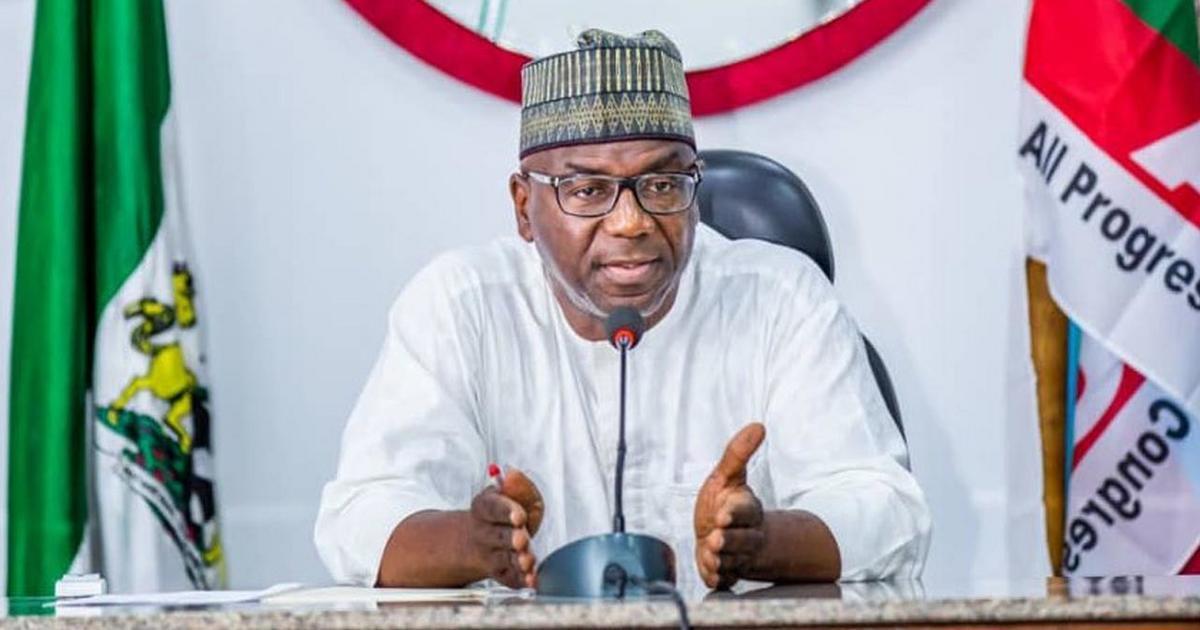
Kwara State Governor, AbdulRahman AbdulRazaq, has revealed that at least 75 residents were killed in a brutal attack on two villages for resisting extremists who sought to impose a “strange doctrine” on the area.

The governor, speaking during a visit to Kaiama Local Government Area, accompanied by security chiefs and cabinet members on Wednesday, described the massacre as a cowardly expression of frustration by terrorist cells.

The attacks reportedly targeted the villages of Woro and Nuku in Kaiama LGA on Tuesday evening, where gunmen allegedly rounded up residents, bound their hands, and opened fire indiscriminately.

Confirming the incident, the police spokesperson in the state, Adetoun Ejire-Adeyemi, said the attack on the communities began at about 6 p.m. on Tuesday.

Ejire-Adeyemi added that security agencies had since been deployed to the affected areas but noted that the number of casualties remained uncertain, while reports of missing persons are still under investigation.

However, AbdulRazaq said 75 residents were killed by the suspected terrorists during the attack.

A video posted on the Kwara Government X handle on Wednesday shows the governor standing in a traditional palace setting, flanked by military officers and local leaders, as he commiserated with survivors and announced federal support.

In the clip, AbdulRazaq emphasised the victims’ refusal to yield to the extremists’ teachings as the trigger for the violence.

He said, “We commiserate with you over the death of 75 of your subjects. May Allah grant them aljana Firdaus.

“And from the information I’ve been getting, this village refuses to succumb to a perverted form of Islamic doctrine.

See also  Hundreds storm EFCC headquarters, demand El-Rufai prosecution

“They (terrorists) are lying under their immolation, abiding by their Islamic faith. And these villagers, they don’t want any alteration.

“And because they refuse to change doctrine in their faith, they were attacked and massacred.

“It’s different from what we used to see, where subjects are kidnapped or ransacked. But this was just a pure massacre. And it’s something truly condemned.”

In response, AbdulRazaq announced that President Bola Tinubu has approved the immediate deployment of an army battalion under “Operation Savannah Shield” to launch counter-offensives against the perpetrators.

Continue Reading
Click to comment

Leave a Reply

Your email address will not be published. Required fields are marked *

News

Senate leader reveals that NASS will pass state police bill this week

Published

on

Senate Leader, Senator Opeyemi Bamidele, has said the National Assembly will this week pass the constitutional amendment bill seeking to establish state police, describing the reform as long overdue amid worsening security challenges. In this interview with ADEBAYO FOLORUNSHO-FRANCIS, the lawmaker representing Ekiti Central Senatorial District also explains why the Senate rejected calls to probe military spending and more

Why is the Senate not interested in addressing the motion to probe military spending amidst the rising insecurity across the country?

The issue of insecurity is one about which no serious, God-fearing public official can pretend any longer. It is a major issue. People may argue about whether the situation is getting worse or better. For me, the more important question is not simply to categorise it one way or the other, because sometimes things get worse before they get better.  Let me explain that in the context of what happened on the floor of the Senate last week. The motion in question sought to establish a national committee to probe all financial releases made to the military in the prosecution of this war. We did not think that was the right approach, and we will not pretend otherwise. In the first instance, our military are giving their best under extraordinarily difficult circumstances. Let us remind ourselves that this is not a conventional warfare. This same military faced Boko Haram terrorists in conventional battle and dislodged them. There was a time when these terrorists had their flags flying over communities they had captured — local governments in this country had become no-go areas under their control. When they sought to advance further, our military confronted them, defeated them in conventional battle, and reclaimed those territories. At that point, rather than continue engaging our forces in open combat, the terrorists dissolved into cells and adopted guerrilla tactics. For the first time in our nation’s history, a military trained for conventional warfare was suddenly required to fight an unconventional enemy. Nobody had envisaged this — not the nation, not the military itself. But they did not give up. They have sustained the fight at great sacrifice — sacrifice to our officers and soldiers who are losing their lives, sacrifice to the families of victims who have been killed or kidnapped, and sacrifice to a government that must manage highly sensitive information while remaining accountable to the public. When that motion came before the Senate, the question before us was whether we wanted to put our own military on trial in the middle of a war.

The Senate didn’t deem that necessary too?

No, that would have been the most unpatriotic course of action — out of order, out of tune, and a dangerous mismanagement of a sensitive national security situation. Furthermore, it is an established principle that you do not interrogate the cost of waging a war until the war is over. You do not pause in the middle of a conflict to ask: how much have I given you, how much have you spent, and how did you spend it? Priorities must be clearly understood, and our priority at this moment cannot be to probe our military. To be clear: we were not suggesting that the military should spend money without accountability. We have standing Senate committees — on the Army, Air Force, Navy, and Defence generally — that are specifically charged with that oversight function. They approve budgets, conduct oversight, and carry out both scheduled and unscheduled inspections. Members of these committees have travelled with service chiefs abroad to inspect military equipment procured on behalf of Nigeria, because much of what we are using to prosecute this war is not off-the-shelf material. Some items are ordered today but may not begin manufacturing for another three months. Before shipment, security consultants and committee members from both chambers conduct physical inspections. The same rigour applies on arrival at our ports and airports. We cannot, as a nation, announce every drone that arrives or detail its specifications and operational range. You cannot wage a war that way. A great deal is happening that cannot be debated openly on the floor of the Senate or the House of Representatives. Given that reality, agreeing to a motion to publicly probe the military would have been a dangerous diversion — and that is not where Nigeria’s focus should be today. What I can tell the Nigerian public is this: by the grace of God, we are making significant progress. I know that is difficult for many Nigerians to accept, especially those living through the agony of this crisis. But the increased tempo of attacks in various parts of the country is, in part, an expression of the frustration of our enemies. They are taking casualties at a scale they have not experienced before. Much is happening — through our own military operations and through the fruits of international counter-terrorism collaboration. We are fighting guerrillas who, for every member they lose, feel compelled to strike in retaliation — partly to wage a psychological war, partly to erode public confidence in the military, and partly to turn Nigerians against their own armed forces. We must not allow that to succeed. We must not allow political opponents who seek to weaponise this situation to deter us from sustaining the ongoing onslaught against terrorism.

Can you clarify why the Senate President raised the hope of senators who lost return tickets last week following their complaints?

I will address this directly. During our plenary session, we moved briefly into a closed-door session before returning to open plenary for the Senate President to report progress. In both settings, it was entirely normal for the Senate President, on behalf of the leadership, to congratulate those announced as winners in the primary elections — which is precisely what he did. It is equally normal for the leadership to take note of complaints from senators and members of the House of Representatives regarding irregularities they may have witnessed during the primaries. The best we can do, as leadership, is to engage the party’s leadership structure — the National Working Committee, the governors of the relevant states, and where necessary, Mr. President as the party’s national leader — to reflect those concerns. For my part, by the grace of God and the support of my constituents in Ekiti Central Senatorial District, no one ran against me. I was returned unopposed. The same was true of the Senate President and the Deputy Senate President. So this was not a personal matter for any of us in leadership — it was part of what we owe our colleagues. The fact is, some members were calling us even as their primary elections were underway. Some sent written petitions to the party and copied the leadership. There was no way we could have convened the first sitting of the Senate and pretended that these concerns did not exist. The Senate President’s statement was therefore appropriate — and entirely consistent with parliamentary practice and procedure. The party’s appeals committee has since sat, heard from all complainants and relevant stakeholders, and made its recommendations to the National Working Committee. That process will determine the final outcome. Whatever the Senate President said, he was not speaking personally — he was speaking on behalf of the leadership, and I have now explained the basis on which we acted.

See also  Jigawa assembly urges strict action against errant LG workers

What exactly is the bottleneck delaying state police and when will the constitutional framework be ready?

Our position on state police is very clear. We stand with Nigerians on this issue. A cross-section of the Nigerian public has made it abundantly clear that there cannot be a better time to establish state police than now — and that is where we stand. Our role as the elected representatives of the Nigerian people is to translate this popular desire into law. You can sing about it, debate it, or wish for it — but until it is legislated, it does not happen. That is where Parliament comes in. We have reached a firm conclusion that we will pass the constitutional amendment to make provision for state police, and I can tell you today (Tuesday) that this will come to fruition this very week. There is no reason for further delay. I should also speak to the work that has gone into this. There have been a series of intensive meetings involving the National Assembly team — led by the Chairman of the Senate Committee on Constitutional Review, His Excellency Senator Jibrin Barau, the Deputy Senate President, with myself serving as Vice Chairman — alongside the Chairman of the House Committee on Constitutional Review, His Excellency the Deputy Speaker, Benjamin Kalu. These meetings have involved the Office of the Attorney General, the Chief of Staff to the President, the Inspector General of Police, and other key stakeholders.

The consultations over the past week alone have been substantial, and that is the basis of my confidence in speaking to you today. What we are resolved to do is isolate the state police amendment from the broader constitutional review agenda so that we can vote on it as quickly as possible and transmit the bill to the 36 state Houses of Assembly. As you know, we require the approval of two-thirds of the state assemblies before the bill can proceed to Mr. President for assent. The President is fully aligned with us on this matter. The majority of our governors are also in support, and their respective assemblies are waiting for the bill to arrive. We will trigger that process within the week.

In the last few years, the 10th Assembly has continually been labelled ‘Rubber Stamp’ because of its close affinity with the Executive. Are you not worried about this?

We have worked collaboratively with the executive arm of government over the past three years. Some of our colleagues were labelled rubber stamps for doing so. But let me be clear: we knew we were not a rubber stamp Senate. The difference between the 10th Assembly and some previous assemblies is that we chose to resolve our disagreements privately rather than perform them publicly. We held numerous meetings with the National Working Committee of the APC, with Mr. President, with ministers, with the Chairman of the Federal Inland Revenue Service, and with relevant agencies — meetings during which we raised objections, pushed back, and reached agreement — before bills ever came to the floor. This happened with the four critical tax reform bills, among others. There were occasions when names submitted for screening were returned to Mr. President before we even read the covering letters into the record, because we identified eligibility issues or concerns that would have made confirmation impossible. The president would direct that the list be revised, a corrected list would be resubmitted, and the matter would proceed without public controversy. If we had engaged in that process and then staged a dramatic rejection on the floor, what would that have served — other than satisfying those who equate noise with independence?

We were not doing this to impress anyone or to avoid criticism. We were convinced it was the right approach for a period of unusual national challenge. Our position has always been that genuine collaboration between the arms of government — where it serves the overriding public interest — is not weakness. It is statesmanship.

Is it appropriate for Akpabio to speak for Senators across party lines?

Yes, he does have that standing, and I will explain why. We always say — and mean — that when you enter the hallowed chamber of the Senate, you remove whatever party uniform you wore to get there. You enter as a senator of the Federal Republic of Nigeria.

Six months ago, the Senate proposed an Anti-Terrorism Bill and death penalty for abductors. What became of it?

The anti-terrorism bill is something that means a great deal to us, and we have done what was required. Both Parliament and the executive are in complete agreement that it is the right thing to do. You will have noted some of the recent pronouncements from our courts, independently handing down death sentences to individuals convicted of kidnapping. Nothing less is appropriate. I sponsored the bill, and you can be assured it will be concluded. I should also note that some of the bills we have passed, and some currently in progress, require accompanying constitutional amendments. We have compiled a list of such bills so that both tracks can proceed simultaneously. However, as I said, we are deliberately isolating the state police amendment to ensure it is dealt with immediately. We will return to the other critical constitutional matters — including the bill on special seats for women in the legislature, and several other reforms needed to advance our democracy. We still have until June of next year, and we will address all of them in due course.

Nigerians are seriously facing economic hardship. What form of reforms and parliamentary interventions has the Senate proferred to cushion the effect?

Part of what we have done — and continue to intensify — is respond to the constitutional mandate under Section 14(2), which requires us to make laws that support the security and welfare of Nigerians as the primary purpose of governance. Looking at the laws we have passed and which have since received presidential assent, you will see that several have led to the creation of agencies and frameworks designed to address the welfare of ordinary Nigerians. The Nigerian Education Loan Fund was created by an act of Parliament, making student loans accessible. We established the Ministry of Livestock through legislation, addressing not only the economic dimension of farming and animal husbandry but also the security and social tensions that have arisen from the longstanding conflict between farmers and herders. Through the tax reform bills, we addressed the problem of double taxation and made life more bearable for Nigerians in the lower income brackets. For instance, anyone earning or below the new minimum wage — roughly N80,000 — will pay no income tax at all. The significance of this reform becomes clear when you consider the sheer number of Nigerians who fall within that income bracket. Similarly, companies with annual turnover below N50m are now able to operate without the burden of corporate taxation. Again, that bracket captures a very large proportion of Nigerian businesses. These are not cosmetic interventions. They are structural reforms aimed at cushioning the effects of the broader economic policies of this administration.

The perennial challenge of open grazing and farmers-herders clash is still out there. Is there any update on the proposed bill?

This is a question that reflects the concern of a great many Nigerians, and it deserves a candid answer. The government is putting measures in place, but the nature of this issue demands more than a policy announcement or a piece of legislation. It requires extensive consultation with all stakeholders. Open grazing is an emotive issue. It involves deeply held convictions about land rights, rights of passage, and centuries-old traditions. On one side, you have herders whose forebears have traversed certain routes for generations. On the other, you have farmers whose livelihoods are destroyed when cattle move through their fields. Both sides feel their rights are being violated. The government’s task is to resolve this — not just through the force of law, but through genuine engagement that brings all parties along. That distinction — between governing through dialogue and governing through decree — is precisely what separates a democratic government from a military regime. It takes longer. It can look, from the outside, as though nothing is happening. But things are happening, and I believe the Ministry of Livestock will soon be in a position to present its progress report to the public. The difference it makes, when the right framework is finally established, will be significant.

See also  Tinubu seeks Senate confirmation of Oyedele, Abe as minister, NUPRC chairman

A month ago, Akpabio came under fire over the amendment to the Senate’s Standing Rules and Ranking System, which many believe is targeted at certain persons. Do you share the same position?

Let me explain this clearly, because it is one of those matters that requires patient explanation. What the Senate has done is entirely consistent with global parliamentary practice, procedure, conventions, and traditions. It is what is known as ranking — a principle that governs not merely seating arrangements, but the priority of participation in legislative proceedings, including who is recognised to speak when multiple senators seek the floor simultaneously. The principle is straightforward: a senator serving a second or third term is assumed to have greater familiarity with the rules, greater experience of parliamentary procedure, and a higher responsibility to guide and stabilise the process. This assumption underpins the ranking system globally. The longer one serves in a legislative chamber, the more one is expected to understand its workings and to help steward its proceedings. Now, applying that principle to the specific amendment in question: in the United States Congress — which we cite as our model whenever it is convenient — you cannot simply walk in as a first-time member and seek to become President of the Senate or Speaker of the House of Representatives. The fact that such a rule did not exist in our Senate three years ago is not an argument against having it now. The law grows. Parliament’s function is precisely to amend and improve the rules under which it operates. The dress that fit us in 2023 may not fit us today — and Parliament is the tailor. On the suggestion that this amendment was designed to benefit a specific individual, or to predetermine the leadership of the 11th Senate: you cannot make a law that is targeted at an individual. Such a law cannot withstand constitutional scrutiny. What you can do is make a law that is durable, principled, and consistent with democratic best practice — and that is what has been done. I will also say this: I was not on the floor of the Senate when aspects of this amendment were passed. But on the very next legislative day that I returned, I brought a substantive motion to draw the Senate’s attention to provisions within the amendment that, in my view, were inconsistent with the Constitution. Under our Constitution, any act of Parliament that conflicts with its provisions is null and void. The Senate considered my motion and nullified those offending provisions. That is the system working as it should. One of those provisions concerned the requirement that a senator must first be sworn in before contesting to lead the Senate. The intent is clear: no one should use the Senate presidency as a fallback option — entering the chamber only to contest for leadership, and retreating to their previous office if unsuccessful, thereby vacating a senatorial seat they never intended to occupy. The law is plain on this: the moment you are sworn in as a Member of Parliament, you automatically relinquish any executive office you previously held.

In February last year, the Public Accounts Committee reported proposed a probe on the missing 178,459 police firearms and other alleged corruption cases proposed. To date, nothing has been heard of the probe. Has it been abandoned?

The Public Accounts Committee is a constitutional body — unlike most other Senate committees, the leadership does not establish it by discretion. In fact, there are only two constitutionally mandated committees: the Committee on Appropriations and the Public Accounts Committee. By law, practice, and procedure, the Appropriations Committee is controlled by the ruling party, while the Public Accounts Committee is chaired by a member of the minority opposition. This arrangement is by design — it is part of the transparency and accountability architecture of democratic governance. It is important that the work of the Public Accounts Committee not be misunderstood. Its proceedings are not necessarily structured as probes that must culminate in a named indictment or a penalty. The Committee functions as Parliament’s equivalent of an ombudsman or internal auditor. The executive arm has the Office of the Auditor General for that purpose, and I would encourage members of the public to read the Auditor General’s annual reports — the depth of scrutiny they contain is remarkable, and it is often from those reports that the Public Accounts Committees of both chambers draw their initial intelligence. The purpose, therefore, is to hold agencies to account — to animate them, to compel responsiveness. Not everything that happens in Parliament must happen in the open. Even when we move into executive session, we adhere to the parliamentary convention of reporting progress to the press — summarising, in broad terms, what was discussed behind closed doors. The Public Accounts Committee operates similarly. I am aware of a number of matters that the Public Accounts Committee engaged with at the start of this 10th Assembly, including some that were resolved through intervention — whether by the agency in question producing documentary evidence to counter the allegations, or through other legitimate considerations. There are times when a committee, in the course of its proceedings, must weigh the broader implications of its actions: What is the effect on current investors? What is the reputational consequence for the sector? Where does the matter stand under existing legislation such as the Petroleum Industry Act? Has the situation that gave rise to the original concern already been addressed under the current administration? These are legitimate considerations that, by their nature, cannot always be aired publicly. And when such considerations arise, they can slow down the visible progress of a committee’s work — creating the impression, from the outside, that nothing is happening or that a compromise has been reached. I want to be clear: no senator worth his office would want to be known for initiating a probe and abandoning it. That would imply compromise, and that is not what drives these outcomes. I will remind this gathering that I personally chaired an ad hoc committee in this 10th Assembly. Several of you in this room asked me, on the record, whether that probe would end the way previous ones had. I gave you my word. What happened beyond what the media was able to cover was substantial. Without the committee ever formally publishing its findings, a great deal transpired — and ultimately, that industry had to reckon with new leadership. That is the kind of behind-the-scenes collaboration between the legislature and the executive that produces real outcomes, even when the public record appears incomplete. The underlying interest, always, is the overriding public interest.

See also  Declare Diri’s seat vacant over PDP resignation, Kenneth Okonkwo urges INEC

Was the Senate tempted at any point to consider re-amending the Electoral Act following the public outrage and flaws raised by the opposition?

I will be candid. I personally listened to a former Electoral Commissioner (Mike Igini) analysing the new Electoral Act on one occasion, and while he made some valid points — points I would have been glad to have considered during a public hearing on electoral matters — some of his conclusions demonstrated a fundamental misunderstanding of the legislative intent behind several of the provisions he was critiquing. Regardless, that is part of the beauty of our democratic system and the principle of separation of powers. We make the law as the legislature. The President assents to the law or withholds assent. The judiciary interprets the law and determines its validity. If the courts have chosen to strike down certain provisions, then so be it — within the framework of competent judicial authority, that is how the system is supposed to work. When some of my colleagues suggested we should return to the National Assembly to amend the Electoral Act in the immediate aftermath of those rulings, I declined to support that course of action. I was not going to participate in amending an electoral law as Senate Leader, days before primaries and months before a general election, in the middle of an atmosphere where every party is accusing the other of manipulating the process and INEC is under enormous pressure from all sides. Any amendment to the Electoral Act must come after the elections have been concluded — and it must come with the explicit caveat that no amendment can have retroactive effect on elections already held. That is my firm position.

What is your position on the recent court’s declaration of N’Assembly’s N110bn SUVs and legislative allowances as unlawful?


Let me speak plainly on this, because my position has never changed and my colleagues are well aware of it. All allowances received by parliamentarians — at both the federal and state levels — should be published; published fully, publicly, and once and for all. I genuinely believe that if this were done, legislators might actually emerge as the greatest beneficiaries of that transparency.  Today, a constituent may come to me in need of N250,000 for his child’s school fees, and I am able to offer him N50,000 or N100,000. He walks away uncertain whether to be grateful, because he has no idea how many other people are making the same request of me or what my actual resources are. The mystery surrounding legislative remuneration breeds assumption — and assumption, in this case, does not favour legislators. There are two things I want to place on the record clearly. First: legislators do not set their own salaries. Our remuneration is determined by the Revenue Mobilisation and Fiscal Commission — it is not within our power to fix. Second: the vehicles allocated to senators and members of the House of Representatives are not personal property. They are official vehicles, provided to enable constituency work and legislative duties — no different in principle from the official cars provided to directors, permanent secretaries, and ministers across the executive arm of government. That distinction is almost never made in public discourse, and it should be. Parliamentary institutions are rarely popular, and this is not peculiar to Nigeria. In many countries, members of the executive branch find legislators inconvenient — because oversight is inconvenient. If you are genuinely holding agencies and ministries to account, you will attract enmity. That is the nature of the work. I will say this: the question of publishing legislative remuneration is one I believe must be addressed as we prepare for a new assembly. My position is clear. The Revenue Mobilisation and Fiscal Commission should publish — comprehensively — what every category of public officeholder earns: National Assembly members, state assembly members, ministers, and all other relevant categories. That settles the matter permanently. You may quote me on that.

What will you describe as the achievements and low points of this 10th Senate?

I am never eager to enumerate achievements in a country where so many of our people are burdened by insecurity, economic hardship, and daily struggles. Patriotism and modesty counsel against self-congratulation in such circumstances. But since you have asked, I will answer. The lowest point of this assembly was a period during which it appeared, to the outside world, that there was disorder on the floor of the Senate — that we lacked internal cohesion, that we had shown disrespect to the female gender, and that we were not functioning as a unified institution. During that period, the daily conversation in the media was not about legislation or governance — it was about the suspension of a senator, the appropriateness of the penalty, and the internal politics of the chamber. That was a painful distraction from the work we were doing. It overshadowed everything else, and for me, it was not a period I look back on with any satisfaction. As for our achievements — the Senate has done a great deal in working with the executive arm to stabilise the economy. We have made laws in virtually every sector: agriculture, education, health, banking and finance, securities and foreign exchange regulation. We have exercised oversight to ensure that agencies deploy appropriated funds as intended. And through the four tax reform bills — which I regard as genuinely revolutionary — we have laid a foundation that, in a matter of years, will begin to transform the non-oil sector of this economy in particular. On a personal level, I have sponsored more than 70 bills in this assembly, of which more than half are private member bills originating from my own legislative initiative. Seven of those bills have led directly to the establishment of at least six federal institutions, all within the past two years: The University of Agricultural and Development Studies, which has been signed into law and is now fully operational. The University of Agriculture and Technology in Ekiti State, which has also been established and is in operation. The Federal University of Technology and Environmental Sciences in Ekiti, now in its first academic session. The upgrade of the Federal Polytechnic, Ado-Ekiti, to the Federal University of Technology. The upgrade of Yaba College of Technology to Federal University of Technology status. And the Federal University of Science and Technology, Epe, in Lagos State, which has also been established. Beyond education, my first bill as a senator in this assembly was the bill to restore Nigeria’s original national anthem — which Mr. President assented to on the 11th of June, 2023, and which was sung as our national anthem the very next day, Democracy Day, the 12th of June. In different ways — fundamental and symbolic — the work of this Senate has been consequential. There is more to be done, and we intend to do it.

punch.ng

FOLLOW US ON:

FACEBOOK

TWITTER

PINTEREST

TIKTOK

YOUTUBE

LINKEDIN

INSTAGRAM

Continue Reading

News

Inflation, insecurity still major challenges despite reforms – FG

Published

on

The Federal Government on Tuesday acknowledged that inflation and insecurity remain major challenges facing Nigerians, even as it defended the economic reforms introduced by President Bola Tinubu’s administration over the past three years.

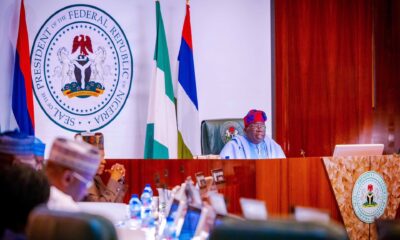
Speaking at a press conference to mark the 2026 Democracy Day celebration in Abuja, Secretary to the Government of the Federation, George Akume, said the government was aware of the hardship caused by its policies but argued that recent economic indicators suggested improvements in key sectors.

Akume stated, “The government, though with all hands on deck, would never claim that every challenge has been solved.

“While we pursue various reforms diligently, with purpose and with compassion, the government recognises that inflation has been painful, though it is on a downward trend.

“The government is similarly conscious of the fact that insecurity still threatens lives and livelihoods.”

The briefing, attended by members of the Federal Executive Council, formed part of activities marking 27 years of uninterrupted democratic rule and served as what the SGF described as an accountability exercise by the administration midway into its first term.

While acknowledging public concerns over the cost of living and security, the SGF insisted that government reforms were beginning to yield results.

“Evidence shows that the country is moving in the right direction,” he said.

Akume cited economic figures which he said reflected improvements in output and investment, noting that Nigeria’s Gross Domestic Product grew by 4.07 per cent in the fourth quarter of 2025 and 3.89 per cent in the first quarter of 2026.

The government also used the occasion to highlight the impact of its social intervention programmes, including cash transfers, student loans and consumer credit initiatives introduced since 2023.

See also  Presidential pardon: AGF orders multi-agency probe

According to him, more than one million students have benefited from the Nigerian Education Loan Fund, with over N184bn disbursed for tuition and upkeep.

He also said millions of households had been reached through the Renewed Hope Conditional Cash Transfer programme, while government-backed credit schemes had expanded access to formal financing.

The administration further defended its fiscal reforms, including tax measures signed into law in 2025, arguing that the policies were aimed at improving revenue generation and strengthening accountability in public finance.

On anti-corruption efforts, Akume said anti-graft agencies had continued to recover proceeds of crime and prosecute offenders, adding that recovered funds had contributed to financing the student loan scheme.


He also linked Nigeria’s removal from the Financial Action Task Force grey list in October 2025 to reforms in anti-money laundering and counter-terrorism financing frameworks.

“Accountability in this administration is sacrosanct,” he said.

Despite the government’s claims of progress, security featured prominently in the SGF’s remarks, with Akume conceding that the challenge remained unresolved.

“We continue to confront internal security challenges. Government will not pretend that insecurity will disappear today without the active support of all Nigerians,” the SGF stated.

He said the administration was expanding the capacity of the armed forces and other security agencies through increased recruitment and funding, while also strengthening cooperation with neighbouring countries and international partners.

Akume appealed to citizens to support security agencies through intelligence sharing and vigilance, describing security as a collective responsibility.

The SGF also used the Democracy Day platform to call for national unity amid ethnic and religious divisions.

See also  Federal High Court debunks report of ass@ssination attempt on Justice Omotosho after Nnamdi Kanu's life sentence

“In a country as diverse and plural as ours, development is strongest when trust is stronger than division,” he said.

He noted that the government continued to support interfaith dialogue through the Nigeria Inter-Religious Council and recently approved a National Values Charter aimed at promoting citizenship, tolerance and national cohesion.

In what appeared to be the clearest indication yet of the administration’s political calculations ahead of the next election cycle, Akume said the government intended to build on ongoing reforms and seek public endorsement in 2027.

“Our responsibility is to finish what we commenced in 2023, and as we go into the cycle for the 2027 general elections seeking a revalidation of our mandate, we shall scale what is working,” he said.

He added that the administration was willing to have its record subjected to public scrutiny.

“This government remains prepared to be judged by evidence,” Akume stated.

In his welcome address, the Minister of Information and National Orientation, Mohammed Idris, described Democracy Day as a moment of national reflection and tribute to those who contributed to the country’s return to democratic governance, stressing its importance in strengthening national unity and institutional resilience.


Idris stated, “Democracy Day occupies a unique place in our national calendar. It provides an opportunity for us to reflect on our democratic journey, celebrate the resilience of our institutions, and honour the sacrifices of patriots who stood firm in the struggle for democratic governance.

“As we gather today, we pay tribute to the memory and enduring legacy of Bashorun Moshood Kashimawo Olawale Abiola, whose commitment to democratic ideals remains an inspiration to generations of Nigerians.

See also  Sokoto now has 21 general hospitals, 824 health centres – Govt

“We also acknowledge the many Nigerians, including President Bola Ahmed Tinubu, who played significant roles in the pro-democracy movement and contributed to the restoration of democratic rule in our country.”

The minister noted that 27 years of uninterrupted democratic governance represent a major milestone in Nigeria’s political development, describing it as evidence of the country’s resilience and commitment to democratic values.

“Twenty-seven years of uninterrupted democratic governance is a milestone worthy of celebration.

“It is a testament to the determination of Nigerians to uphold democratic values, strengthen national institutions, and continuously strive for a more prosperous and united nation.”

He further stated that this year’s Democracy Day coincides with the third anniversary of the administration, offering an opportunity to assess progress and renew commitment to national development.

Those present at the press briefing included the Minister of Livestock Development, Idi Maiha; the Minister of Water Resources and Sanitation, Joseph Utsev, among others.

Nigeria has recorded 27 years of uninterrupted civilian rule since the start of the Fourth Republic in 1999. The period has seen sustained electoral continuity alongside recurring governance, economic, and security challenges.

Inflationary pressures have been shaped by currency depreciation, fiscal reforms such as fuel subsidy adjustments, global supply shocks, and broader structural constraints in the economy. Security threats, including insurgency in the North-East, banditry in parts of the North-West, and communal conflicts in several regions, have remained persistent concerns across successive administrations.

punch.ng

FOLLOW US ON:

FACEBOOK

TWITTER

PINTEREST

TIKTOK

YOUTUBE

LINKEDIN

INSTAGRAM

Continue Reading

News

11th Senate to consider six-year single term for president, governors – Lawmaker

Published

on

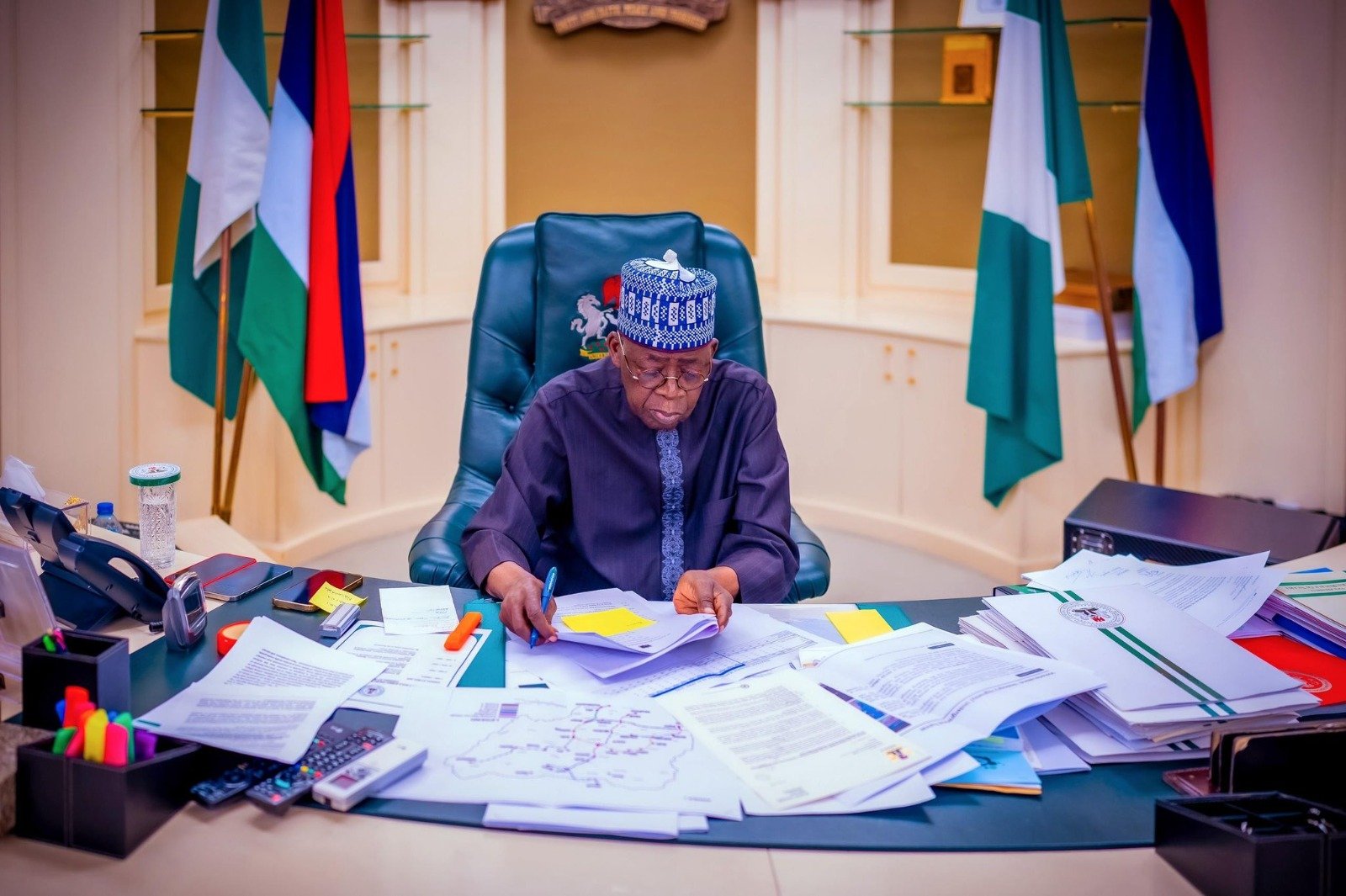
Senate Leader, Opeyemi Bamidele, has disclosed plans to sponsor a bill seeking to introduce a single six-year tenure for presidents and governors after the 2027 general elections.

Bamidele said the proposed legislation would be among the first bills he intends to introduce when the next Senate is inaugurated, arguing that it would enable elected leaders to focus on governance rather than re-election campaigns.

Speaking during an interview with reporters in his office on Tuesday, the lawmaker said the current two-term arrangement often compels officeholders to devote a significant portion of their first term to political calculations and preparations for re-election.

“One of the first set of bills that I look forward to moving, by God’s grace, when we come back for the 11th Senate, God willing, is for a bill that will only make it possible for anyone who wants to be president of this country, or governor in any part of this country, to spend only one term of six years,” he said.

According to him, a single tenure would eliminate distractions associated with seeking a second term.

“So that you don’t even have to worry about wasting almost one and a half years of your first term thinking and struggling and looking forward to how you’ll be re-elected,” Bamidele said.

“If you know you are there for six years, only one tenure, you put in your best from day one. You know this is the only chance that you have.”

The Senate Leader acknowledged that the proposal may not enjoy universal support but maintained that lawmakers have a responsibility to initiate reforms they believe would strengthen governance.

See also  Demolition notice: Ogun communities cry out, call for Gov Abiodun’s intervention

“That’s my opinion. It doesn’t mean everybody will agree with me. But it also does not mean that I am prevented from doing that because that has not been the law,” he said.

Bamidele stressed that laws are meant to evolve in response to changing realities and public needs.

“The essence of law, the essence of parliament, is that laws are like human beings; they grow,” he added.

The proposal, if formally introduced and passed by the National Assembly, would require constitutional amendments before it can take effect.

Continue Reading

Trending