Connect with us

News

Averting pandemic amid global funding crisis

Published

on

Far away from another pandemic, it seems. Earlier this month, the World Health Organisation issued its latest alarm about the deteriorating state of global health financing – a stark new reality as the world stands on the brink of a renewed pandemic threat.

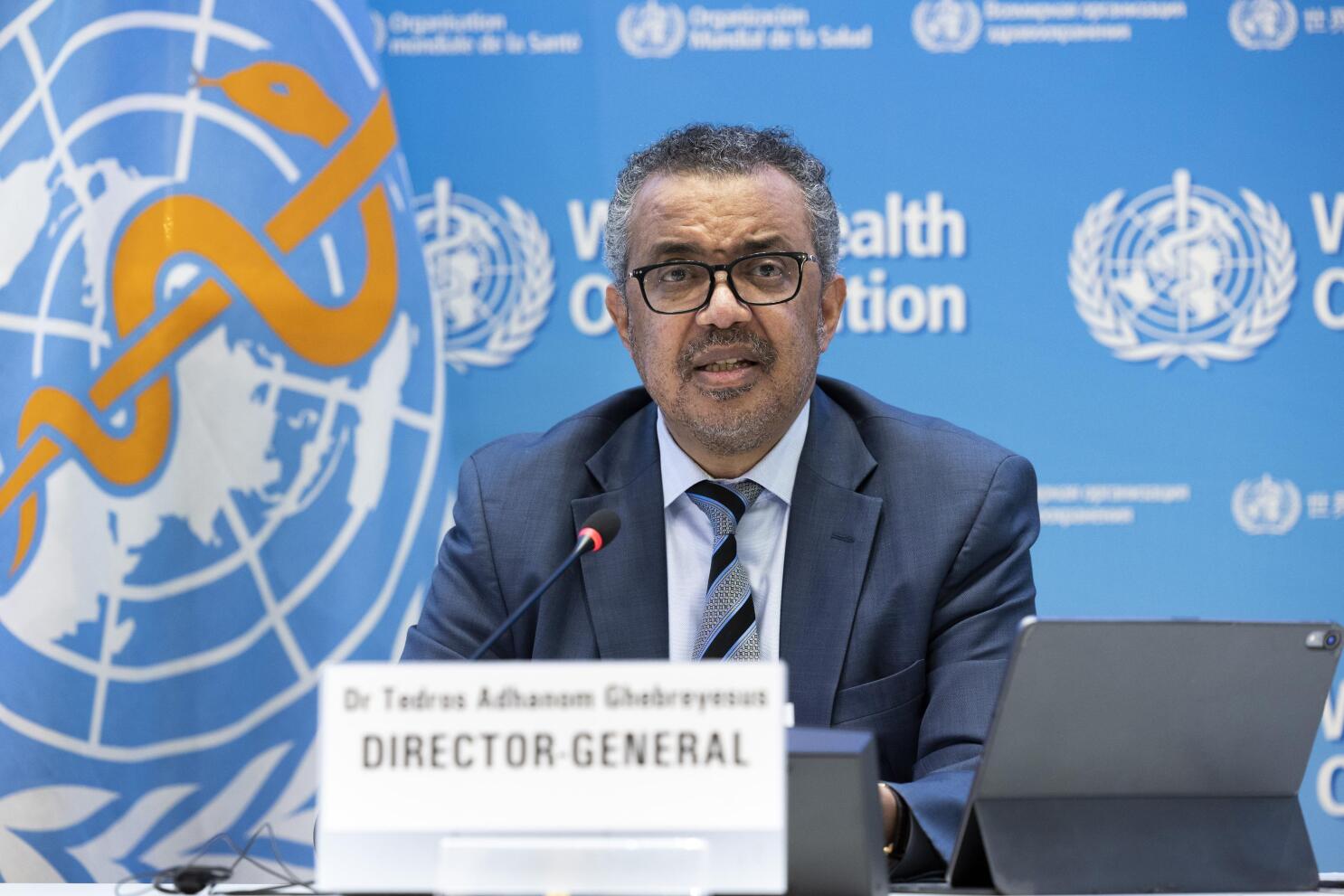
At the opening of the WHO Executive Board in Geneva on February 2, the Director-General Tedros Ghebreyesus, told health ministers and diplomats that sudden and severe cuts to bilateral aid “have also caused huge disruptions to health systems and services in many countries,” describing 2025 as “one of the most difficult years” in the agency’s history.

Indeed, the recent tragic death of renowned soprano singer, Ifunanya Nwangene, following a snake bite in her Abuja apartment—reportedly worsened by the unavailability of snake antivenom—has reignited concerns about the far-reaching consequences of inadequate healthcare funding in Nigeria.

According to WHO data, an estimated 4.6 billion people worldwide still lack access to essential health services, and 2.1 billion face financial hardship because of health costs.

Pandemics have repeatedly reshaped human history, exposing the strengths and weaknesses of societies while testing public health systems, economies, and governance structures.

They are not only medical emergencies but also social and economic crises that disrupt daily life, strain institutions, and deepen existing inequalities.

The rapid spread of infectious diseases across borders highlights how interconnected the modern world has become, making preparedness, surveillance, and timely response essential.

The COVID-19 pandemic is a recent and striking example of how devastating a global health crisis can be. It exposed gaps in healthcare funding, particularly in low- and middle-income countries where access to testing, vaccines, and treatment was limited.

See also  Flooding: Stop blocking gutters with garbage – Abia Govt cautions residents (PHOTOS)

Outbreaks such as Ebola in West Africa between 2014 and 2016 demonstrated how fragile health systems, misinformation, and delayed responses can worsen the toll of a pandemic.

Together, these examples underscore the importance of sustained investment in healthcare, public trust, and international cooperation to reduce the impact of future pandemics.

Meanwhile, a projected shortage of 11 million health workers by 2030 — more than half of them nurses — threatens the very backbone of pandemic prevention, detection and response.

These unsettling projections come amid a backdrop of dramatic shifts in international health financing. In January, the United States formally withdrew from the WHO, ending a role it has played for decades.

The US had previously been one of the largest contributors to the WHO’s budget, covering nearly a fifth of its funding. Its exit forced the agency to revise its finances, including planning for a 21 per cent budget reduction in the 2026–27 cycle, and to make staff and programme cuts across regions.

The ripple effects are already visible. WHO surveys conducted in 2025 across 108 low- and middle-income countries showed that funding cuts reduced key services, including maternal care, vaccination, emergency preparedness and disease surveillance, by up to 70 per cent in some settings. This is alarming.

Even more troubling, 70 per cent of countries reported disruptions to health emergency preparedness and response, and 66 per cent to public health surveillance, during the same period, according to WHO rapid assessments.

These disruptions translate directly into lives at risk. On the malaria front, recent WHO reports show that investments which once helped prevent more than 2 billion cases and nearly 13 million deaths are now jeopardised as planned preventive campaigns and distributions of insecticide-treated nets are delayed or derailed.

See also  Why Nigerian Govt pardoned Ibom Air passenger – Falana

These dips in global health aid, especially from major donors, could lead to millions of additional cases and deaths from tuberculosis and other infectious diseases over the next decade.

The lessons COVID-19 vividly echoed to the world are that pathogens do not respect borders. The Nigerian government needs to turn this funding crisis into an opportunity for investment in research and development to develop local production and standardisation of life-saving medicine.

In Nigeria, the federal and state governments need to invest in resilient health systems, from community clinics to national laboratories. There should be cuts in wasteful government spending, tackling the entrenched culture of corruption and developing the country’s healthcare system.

punch.ng

FOLLOW US ON:

FACEBOOK

TWITTER

PINTEREST

TIKTOK

YOUTUBE

LINKEDIN

TUMBLR

INSTAGRAM

Continue Reading
Click to comment

Leave a Reply

Your email address will not be published. Required fields are marked *

News

FG names 10-member panel to probe deaths of 37 NSCDC detainees

Published

on

The Federal Government has constituted a 10-member independent committee to investigate the deaths of 37 people detained by the Nigeria Security and Civil Defence Corps in Niger State over suspected illegal mining.

The Minister of Interior, Olubunmi Tunji-Ojo, announced the constitution of the committee on Saturday, following a directive by President Bola Tinubu for a comprehensive investigation into the incident.

The 37 detainees died on Thursday, September 17, 2026, while in the custody of the NSCDC Niger State Command.

The cause of the deaths has not been established, with authorities ordering investigations to determine the circumstances surrounding the incident.

In a statement signed by the minister, the government said the committee would establish the identities of the deceased and investigate their arrests, detention and the cause and circumstances of their deaths.

It would also determine responsibility, complicity, negligence and misconduct, as well as recommend appropriate action, compensation where applicable and measures to prevent a recurrence.

“Any attempt to destroy or conceal evidence, intimidate witnesses or obstruct the investigation will be treated as a serious offence,” he said.

The committee is chaired by retired Deputy Director-General of the Department of State Services, Jonathan Kure, while Professor Isa Hayatu Chiroma (SAN), former Director-General of the Nigerian Law School, will serve as secretary.

Other members include retired AIG Hosea Hassan Karma; Professor Olayinka Buhari, a professor of Histopathology and former Chief Medical Director of the University of Ilorin Teaching Hospital; a representative of the Minna Emirate Council; and a representative of the Niger State Government.

The committee also includes Alhaji Liman Sulaiman, National Secretary of the Miners Association of Nigeria; lawyer and human rights activist Deji Adeyanju; Mrs Zainab Suleiman Okino of Blueprint Newspaper; and public affairs analyst, Dr George Agbakahi.

See also  NBA faults EFCC as Osun account freeze sparks row

According to the statement, the committee may co-opt relevant experts, access facilities and documents, visit relevant locations and request memoranda from members of the public.

It has two weeks to complete its work and submit its report to the minister.

The minister also expressed condolences to the families of the deceased and appealed for calm while the investigation continues.

Source: punchng.com

FOLLOW US ON:

FACEBOOK

TWITTER

PINTEREST

TIKTOK

YOUTUBE

LINKEDIN

INSTAGRAM

Continue Reading

News

Oriire: Abductors fed us only when convenient for them – DSS witness tells court

Published

on

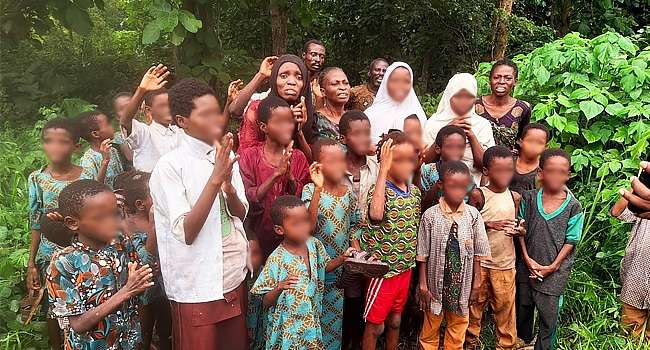
The witness of the Department of State Service, DSS in the ongoing trial of five alleged Ansaru terror group members on Friday, September 18 told the Federal High Court in Abuja that their abductors fed them only when it was convenient for them.

The witness code named AAA who was one of the victims of Orire school abduction said they were seriously traumatised during and after their ordeal that lasted 56 days.

Under cross examination by the counsel to the five accused persons Mr Bala Dakum, the witness said they were offered food by the abductors at their own convenient time despite the presence of little children of 18 months among them.

She admitted that the alleged kidnappers used the mobile phone of the victims to contact government officials but said she did not know the phone number of the government officials that were called.

She further told the court that upon their rescue by security operatives, she was interrogated by DSS operatives in their office and also while in the hospital.

Answering a question, the witness admitted that the three out of the five defendants on trial were with them in the forest while she got to know the other two during interrogation at the DSS office.

She also told the court that Michael Oyedokun and John Olaleye were killed at camp A and Camp B respectively but that she was not present at the scene where they were beheaded.

The witness further told the court that because she was not at the scene where the two teachers were beheaded, she did not know the specific kidnappers that carried out the killing.

See also  Tinubu pledges to sustain Buhari’s legacy

Meanwhile justice Salim Olasupo Ibrahim has fixed October 12 and 13 for continuation of trial of the five accused person.

FOLLOW US ON:
FACEBOOK

TWITTER

PINTEREST

TIKTOK

YOUTUBE

LINKEDIN

INSTAGRAM

Continue Reading

News

Protesters March Against Sunday Igboho’s Iru Ekun Security Outfit In Oyo, Allege Tribal Discrimination

Published

on

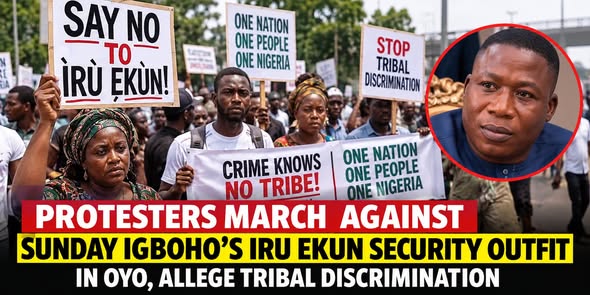
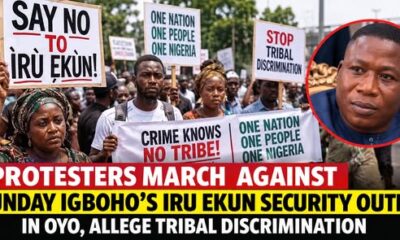
group of protesters on Friday took to the streets in Oyo State to demonstrate against the Iru Ekun Security Network, a private security outfit associated with Yoruba Nation activist Sunday Adeyemo, popularly known as Sunday Igboho.

The protesters, who carried placards, accused the security outfit of allegedly discriminating against people from some ethnic groups and called for equal treatment of all residents irrespective of their tribe or background.

Some of the placards displayed during the protest read: “Say No To Iru Ekun, Crime Knows No Tribe,” “A Criminal Is A Criminal. One Nation, One People, One Nigeria,” and “Our Diversity Is Our Strength.”

The demonstration comes amid growing public debate and criticism surrounding the activities and methods of the Iru Ekun Security Network, particularly concerns over the role of privately organised security groups and their relationship with formal law-enforcement agencies.

The latest controversy followed an incident in Oyo State in which Iru Ekun operatives were accused of obstructing police officers who were attempting to arrest a suspect in Ibadan.

A rights group, Vocalpoint Human Rights Initiative (VOHRI), on Wednesday warned against allowing Iru Ekun or any other private group to operate as a parallel law-enforcement institution.

The group said no individual or organisation should be allowed to determine who should be arrested or punished without lawful authority and due process.

The criticism also comes after reports of confrontations involving Iru Ekun operatives during security operations in Oyo State.

In June, members of the group reportedly came under attack during a surveillance operation in the Old Oyo National Park while searching for suspected kidnappers and armed criminals. Igboho subsequently vowed that the group would continue its anti-kidnapping operations in the South-West.

See also  Why Nigerian Govt pardoned Ibom Air passenger – Falana

Iru Ekun was established by Igboho as a community security initiative aimed at tackling kidnapping, banditry and other criminal activities across parts of the South-West.

At the launch of the Lagos chapter earlier this month, Igboho directed members of the network operating in Lagos, Oyo, Ogun, Ondo and Ekiti states to intensify efforts against criminality.

According to reports, Igboho said the group would confront anyone threatening peace and security regardless of ethnic or religious affiliation and urged its members to operate within the law.

However, critics have continued to question the structure, accountability and methods of the privately organised security network, particularly given the existence of established state security structures such as the police and Amotekun.

A recent commentary published by Nigerian Tribune also raised concerns about the regulation and oversight of Iru Ekun, while discussing Igboho’s growing involvement in regional security matters.

The protesters’ demonstration on Friday adds a new dimension to the debate, with the placards emphasising ethnic inclusiveness and warning against treating crime through a tribal lens.

The protesters called for security operations to be conducted without discrimination, insisting that criminality should be addressed based on individual conduct rather than ethnic identity.

Source: Saharareporters

FOLLOW US ON:

FACEBOOK

TWITTER

PINTEREST

TIKTOK

YOUTUBE

LINKEDIN

INSTAGRAM

Continue Reading

Trending