Connect with us

News

Averting pandemic amid global funding crisis

Published

on

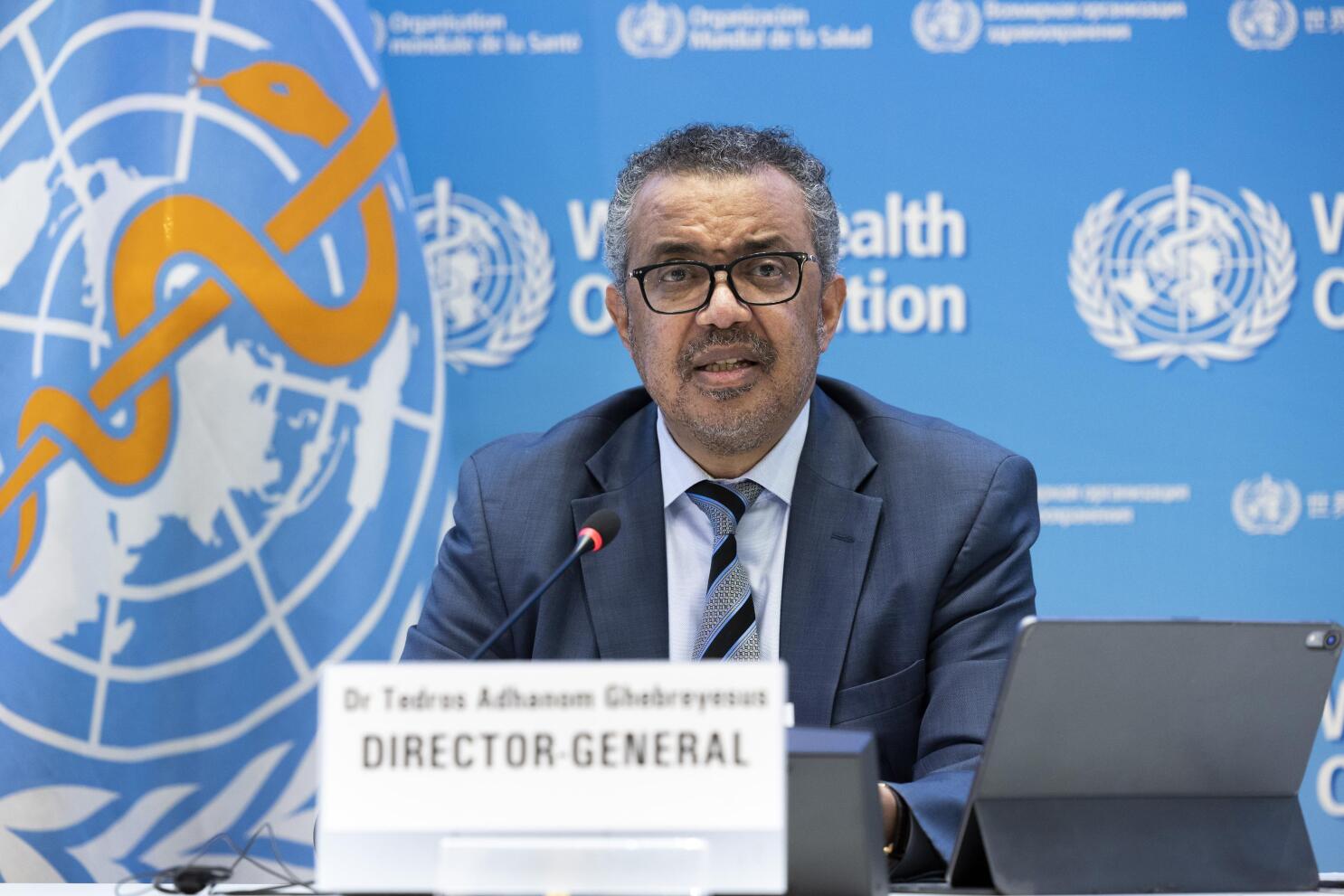
Far away from another pandemic, it seems. Earlier this month, the World Health Organisation issued its latest alarm about the deteriorating state of global health financing – a stark new reality as the world stands on the brink of a renewed pandemic threat.

At the opening of the WHO Executive Board in Geneva on February 2, the Director-General Tedros Ghebreyesus, told health ministers and diplomats that sudden and severe cuts to bilateral aid “have also caused huge disruptions to health systems and services in many countries,” describing 2025 as “one of the most difficult years” in the agency’s history.

Indeed, the recent tragic death of renowned soprano singer, Ifunanya Nwangene, following a snake bite in her Abuja apartment—reportedly worsened by the unavailability of snake antivenom—has reignited concerns about the far-reaching consequences of inadequate healthcare funding in Nigeria.

According to WHO data, an estimated 4.6 billion people worldwide still lack access to essential health services, and 2.1 billion face financial hardship because of health costs.

Pandemics have repeatedly reshaped human history, exposing the strengths and weaknesses of societies while testing public health systems, economies, and governance structures.

They are not only medical emergencies but also social and economic crises that disrupt daily life, strain institutions, and deepen existing inequalities.

The rapid spread of infectious diseases across borders highlights how interconnected the modern world has become, making preparedness, surveillance, and timely response essential.

The COVID-19 pandemic is a recent and striking example of how devastating a global health crisis can be. It exposed gaps in healthcare funding, particularly in low- and middle-income countries where access to testing, vaccines, and treatment was limited.

See also  Ex-soldiers resume protest over unpaid benefits

Outbreaks such as Ebola in West Africa between 2014 and 2016 demonstrated how fragile health systems, misinformation, and delayed responses can worsen the toll of a pandemic.

Together, these examples underscore the importance of sustained investment in healthcare, public trust, and international cooperation to reduce the impact of future pandemics.

Meanwhile, a projected shortage of 11 million health workers by 2030 — more than half of them nurses — threatens the very backbone of pandemic prevention, detection and response.

These unsettling projections come amid a backdrop of dramatic shifts in international health financing. In January, the United States formally withdrew from the WHO, ending a role it has played for decades.

The US had previously been one of the largest contributors to the WHO’s budget, covering nearly a fifth of its funding. Its exit forced the agency to revise its finances, including planning for a 21 per cent budget reduction in the 2026–27 cycle, and to make staff and programme cuts across regions.

The ripple effects are already visible. WHO surveys conducted in 2025 across 108 low- and middle-income countries showed that funding cuts reduced key services, including maternal care, vaccination, emergency preparedness and disease surveillance, by up to 70 per cent in some settings. This is alarming.

Even more troubling, 70 per cent of countries reported disruptions to health emergency preparedness and response, and 66 per cent to public health surveillance, during the same period, according to WHO rapid assessments.

These disruptions translate directly into lives at risk. On the malaria front, recent WHO reports show that investments which once helped prevent more than 2 billion cases and nearly 13 million deaths are now jeopardised as planned preventive campaigns and distributions of insecticide-treated nets are delayed or derailed.

See also  Peter Obi Faults $1 Billion Lagos Port Project

These dips in global health aid, especially from major donors, could lead to millions of additional cases and deaths from tuberculosis and other infectious diseases over the next decade.

The lessons COVID-19 vividly echoed to the world are that pathogens do not respect borders. The Nigerian government needs to turn this funding crisis into an opportunity for investment in research and development to develop local production and standardisation of life-saving medicine.

In Nigeria, the federal and state governments need to invest in resilient health systems, from community clinics to national laboratories. There should be cuts in wasteful government spending, tackling the entrenched culture of corruption and developing the country’s healthcare system.

punch.ng

FOLLOW US ON:

FACEBOOK

TWITTER

PINTEREST

TIKTOK

YOUTUBE

LINKEDIN

TUMBLR

INSTAGRAM

Continue Reading
Click to comment

Leave a Reply

Your email address will not be published. Required fields are marked *

News

Nigeria emerges Africa’s most spammed country as fraud calls hit 51%

Published

on

Nigeria has emerged as Africa’s most spammed country.

New data from Truecaller shows that in 2025, 51 per cent of all unknown calls received by users in the country were identified as spam or fraud.

This means more than one in every two unfamiliar calls is likely unwanted or potentially malicious.

The latest Spam and Fraud Report highlighted how unsolicited and deceptive calls are increasingly shaping mobile communication patterns across major markets.

The finding places Nigeria 8th globally and firmly at the top of Africa’s ranking, ahead of South Africa (30 per cent), Kenya (about 15 per cent), Ghana (around 11 per cent), and Ethiopia (roughly 9 per cent).

Indonesia leads the world with 79 per cent of unknown calls flagged as spam in 2025, followed by Chile at 70 per cent, a sharp increase from 51 per cent in just six months. Vietnam, Brazil, and India complete the top five most spammed countries globally. In several parts of South America and Southeast Asia, automated systems now generate more than 70 per cent of unknown calls.

What sets Nigeria apart is not just the volume of spam, but its composition.

The report said, “In many countries, spam is driven largely by financial impersonation scams or aggressive debt collection. In Nigeria, however, telecom and operator-related outreach dominates the landscape, accounting for 35 per cent of all spam calls, the highest concentration of any African market in the report. This is followed by telemarketing and sales calls at 10 per cent, while outright scam attempts make up 6 per cent.”

See also  Cows trample hiker to death in Austrian Alps

This structure creates a particularly confusing environment for users. When a significant share of unsolicited calls appears to come from telecom-related services or agents, it becomes difficult to distinguish between legitimate network updates, marketing campaigns, and fraudulent attempts.

The overlap effectively blurs the boundary between official communication and deception, increasing the likelihood that users either engage with suspicious calls or ignore important ones.

A similar pattern is seen only in Brazil, where operator-linked outreach also dominates spam activity, suggesting that telecom ecosystems in some large markets may be inadvertently contributing to the problem.

FOLLOW US ON:

FACEBOOK

TWITTER

PINTEREST

TIKTOK

YOUTUBE

LINKEDIN

INSTAGRAM

Continue Reading

News

Court frees man after 10 years in custody without conviction

Published

on

A Lagos State High Court sitting in Ikeja has discharged and acquitted Ibrahim Usman, who spent about 10 years in custody without conviction, after ruling that the prosecution failed to prove the charge of defilement against him beyond reasonable doubt.

Justice Rahman Oshodi, who delivered the judgment on Tuesday in Charge No. ID/4091C/2017, held that the prosecution’s case was manifestly weak and failed to establish the essential ingredients of the offence under Section 137 of the Criminal Law of Lagos State.

The court also faulted both the prosecution and custodial authorities, describing the prolonged detention as a grave institutional failure within the criminal justice system.

Usman was arrested on June 14, 2016, over allegations of unlawful sexual intercourse with a 13-year-old girl in February 2016 at Ipaja, Lagos. However, the prosecution did not file charges until March 2017.

The court noted that when the case came up for arraignment, authorities at the Kirikiri Maximum Security Custodial Centre repeatedly failed to produce the defendant before different judges despite several production warrants.

This persisted between October 2017 and February 2020, leading to the case being struck out on February 13, 2020, by Justice Sybil Nwaka (now of the Court of Appeal) for want of diligent prosecution after the defendant could not be produced in court.

It later emerged that the prosecution was unaware that the defendant remained in custody.

Even after the case was reassigned, custodial authorities again failed to produce him between December 2023 and January 2024, despite fresh court orders. He was eventually brought before the court on March 14, 2024.

See also  Army to establish new training depot in Abakaliki – COAS

Justice Oshodi described the conduct of the custodial authorities as persistently deficient.

“A production warrant issued by a High Court is a lawful command. The custodial authorities’ failure to comply with it in this case is a matter of grave institutional concern,” the court held.

At trial, the prosecution called only one witness, a medical doctor who merely interpreted a report prepared by another doctor who neither testified nor tendered the report in evidence.

Under cross-examination, the witness admitted he did not personally examine the alleged victim.

The court held that, in the absence of the medical report and testimony of its maker, the evidence could not sustain the charge.

Justice Oshodi further ruled that the prosecution failed to establish the age of the alleged victim and did not provide evidence linking the defendant to the offence, noting that key witnesses, including the complainant, were not called.

“The prosecution’s evidence was so manifestly insufficient that it required no answer,” the judge held.

The court also found that the defendant’s decision to rest his case on that of the prosecution was justified, as no prima facie case had been established.

Justice Oshodi emphasised that the delay was not caused by the court but by the prosecution’s failure to diligently pursue the case and the custodial authorities’ disregard for court orders.

He noted that systems such as the Lagos Criminal Information System were created to prevent such occurrences by tracking defendants across the justice system.

“The fate of this defendant illustrates what happens when such systems are not effectively utilised. He was detained at public expense for years without trial,” the judge said.

See also  Ex-soldiers resume protest over unpaid benefits

Justice Oshodi subsequently discharged and acquitted the defendant, ordering his immediate release from custody.

“The defendant is not guilty. I discharge and acquit him. He is to be released forthwith,” he ruled.

Continue Reading

News

Hantavirus scare triggers fresh COVID-style measures

Published

on

Passengers aboard the MV Hondius have adopted strict health protocols reminiscent of the COVID-19 era as authorities across multiple countries investigate an outbreak of a rare hantavirus linked to several deaths.

The New York Times reports that those on board the vessel are “…sanitising their hands repeatedly and awaiting their next socially distanced meal” as the ship sails across the Atlantic under heightened health surveillance.

The outbreak has prompted coordinated international responses, with Spain confirming plans to receive the vessel in the Canary Islands despite objections from regional authorities.

Spain’s health minister, Mónica García, said the ship would dock in Tenerife, where passengers would be able to return home if they are medically fit to travel.

However, the move has drawn criticism from local officials. Fernando Clavijo, head of the Canary Islands government, questioned the decision, saying, “There is no information that justifies why the vessel must sail for three days to the Canary Islands.”

Health concerns intensified after three passengers died and several others fell ill.

The World Health Organisation confirmed that the cases are linked to hantavirus, a rare group of viruses typically transmitted by rodents.

Despite the fatalities, the WHO Director-General, Tedros Ghebreyesus, sought to reassure the public, stating that “at this stage, the overall public health risk remains low.”

Medical evacuations have already taken place, with three individuals, including two with acute symptoms, flown to the Netherlands for treatment.

Authorities say the cases involve the Andes strain of hantavirus, which, while rare, can spread between humans through close and sustained contact.

South African health officials have since begun tracing individuals who may have been exposed.

See also  Remi Tinubu donates ₦110m to families of 22 deceased Kano athletes

The country’s health minister, Aaron Motsoaledi, said authorities had identified 62 contacts, adding that 42 people have already been traced and placed under observation.

On board the ship, passengers have been instructed to maintain distancing, wear masks and adhere to strict hygiene practices. Dining arrangements have also been modified, with seating spaced out and sanitiser stations installed throughout the vessel.

“Our days have been close to normal, just waiting for authorities to find a solution,” one passenger told The Times, adding that morale remained high despite the uncertainty.

Investigations are ongoing into the origin of the outbreak, with Argentine authorities examining whether the virus may have been contracted during earlier travel in South America.

According to a Harvard health advisory, hantavirus was first identified in the Hantaan River region of Korea and is commonly carried by rodents, with humans contracting it through exposure to their saliva, urine or droppings.

The advisory notes that while the disease is rare, it can be severe, particularly when it affects the lungs, kidneys or heart.

The advisory further states that human-to-human transmission is “unusual” and that infections are “not considered a significant risk to the public” due to their rarity and limited spread. However, the confined environment of a cruise ship may have created conditions for the limited spread now under investigation.

Symptoms of the disease often begin with fatigue, fever and muscle aches, followed by headaches, dizziness and gastrointestinal distress.

In more severe cases, patients may develop respiratory complications, including coughing and shortness of breath, as fluid accumulates in the lungs.

punch.ng

FOLLOW US ON:

FACEBOOK

TWITTER

PINTEREST

TIKTOK

YOUTUBE

LINKEDIN

INSTAGRAM

See also  Ex-soldiers resume protest over unpaid benefits

Continue Reading

Trending