Connect with us

News

Court halts Chimamanda son’s inquest amid Lagos AG intervention row

Published

on

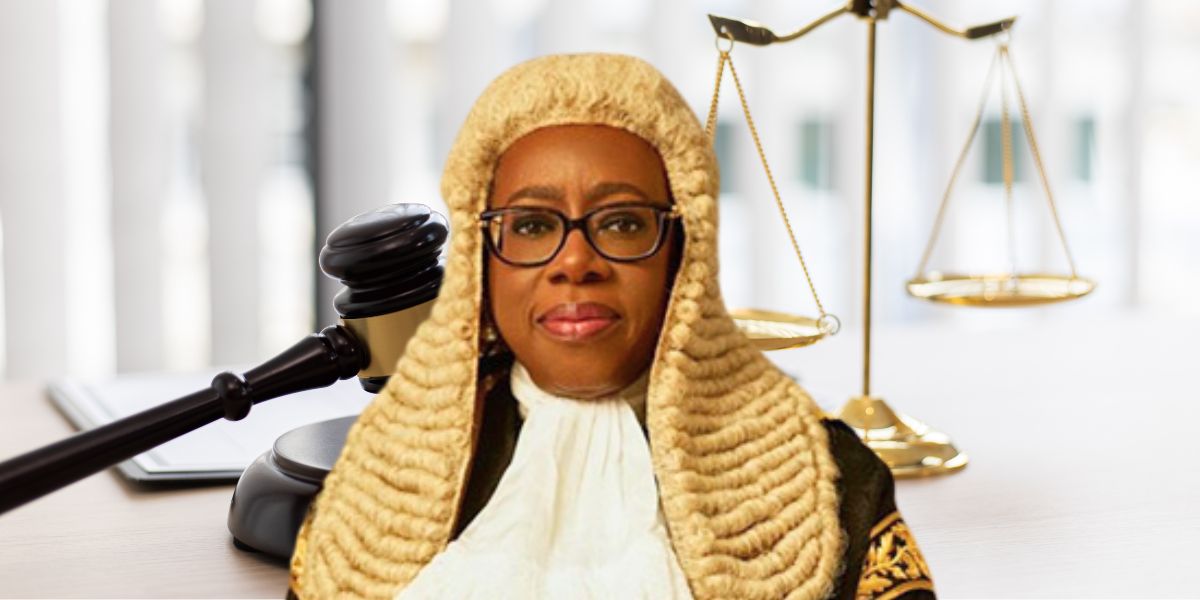
The Coroner’s Court sitting at the Igbosere Magistrates’ Court, Lagos Island, on Tuesday suspended further hearing in the inquest into the death of 21-month-old Master Nkanu Adichie-Esege, son of renowned author Chimamanda Ngozi Adichie and Dr Ivara Esege, pending further directives from the Chief Coroner, Justice Mojisola Dada.

Coroner Magistrate Atinuke Adetunji halted proceedings following a request conveyed by the Lagos State Attorney-General and Commissioner for Justice, Mr Lawal Pedro (SAN).

In a short ruling, Adetunji lambasted the Attorney-General for taking steps to halt the proceedings without formally informing the court.

“I find it very appalling that the Attorney-General of Lagos State, Mr Lawal Pedro (SAN), would take such steps without informing the court.

“The court is not under the Ministry of Justice. The Attorney-General does not have the power, under the principle of separation of powers, to direct the court.

“I will report to the Chief Coroner for further directives. I will not assign any adjournment date until I receive directives from the Chief Coroner,” she ruled.

Earlier, when the matter came up for hearing, counsel from the Attorney-General’s office, Adebola Araba, informed the court that he had been directed to inform the court that proceedings should be suspended pending a meeting between the Attorney-General and all counsel involved in the matter.

Araba said the meeting had been fixed for May 12, 2026.

“I have been directed to inform the court that a meeting between the Attorney-General of Lagos State and all counsel appearing in this matter has been scheduled for May 12, 2026.

“We urge the court to suspend today’s proceedings and fix a hearing date after the meeting,” he said.

See also  Presidential panel on State police begin their work

However, counsel to the deceased’s parents, Adeyinka Aderemi (SAN), told the court that his clients had earlier received a letter dated April 23, 2026, signed by Olamide Ibrahim from the Attorney-General’s office, fixing the meeting for 2 p.m. on Tuesday.

He said counsel were only informed late Monday night that the meeting had been rescheduled to May 12.

“We received a letter dated April 23, 2026, signed by Olamide Ibrahim from the Attorney-General’s office, fixing the meeting for today at 2 p.m.

“It was only last night that we were informed that the meeting had been shifted to May 12. Based on the earlier notice, we believed today’s hearing would proceed and that we would attend the meeting afterwards.

“The parents are here in court, and they will not be around after Friday,” Aderemi said.

The magistrate queried why the Attorney-General’s office communicated with parties without notifying the court.

In response, Araba said he was unaware of the earlier correspondence and had only been instructed to notify the court about the rescheduled meeting.

Counsel for Atlantis Paediatric Hospital, Abiodun Layonu (SAN), confirmed receiving two letters from the Attorney-General’s office dated April 23 and May 4, 2026, and said his clients would abide by the court’s directive.

Aderemi further informed the court that Kemi Pinheiro (SAN) had called him on Monday night to apologise for his inability to attend Tuesday’s proceedings.

He argued that the interests of the deceased’s parents were not being adequately considered.

“If the Attorney-General is sincere, he should be up and doing. If there is restorative justice, he should have called the meeting before now.

See also  US lawmaker bill seeks mandatory Sharia rejection by immigrants

“This letter has effectively truncated today’s hearing.

“The father of the deceased is in court and has already sworn his statement on oath. I had expected the court to hear it today,” he said.

Counsel for Euracare Multi-Specialist Hospital, Prof Taiwo Osipitan (SAN), also confirmed receiving the two letters dated April 23 and May 4, 2026, notifying parties that the meeting had been rescheduled to May 12, 2026.

The inquest into Master Nkanu Nnamdi Esege’s death commenced on February 25, 2026.

The child was admitted to Euracare Hospital on January 6, 2026, after being referred from Atlantis Paediatric Hospital for urgent medical procedures.

He had initially been admitted to Atlantis Hospital in Lagos for what was described as a worsening but initially mild illness.

While arrangements were being made to transfer him to Johns Hopkins Hospital in the United States, Atlantis referred him to Euracare for pre-flight diagnostic procedures, including an MRI scan, lumbar puncture, and insertion of a central line.

The child, however, died in the early hours of January 7, 2026, following the procedures.

Meanwhile, Pedro (SAN) has denied claims that his office played any role in the suspension of proceedings in the coroner’s inquest into the death of Master Adichie-Esege.

Reacting to reports surrounding the proceedings of May 5, 2026, at the J.I.C. Taylor Courthouse, Lagos Island, Pedro said suggestions that the Ministry of Justice directed or requested the coroner to halt the inquest were false.

He stressed that the decision to suspend proceedings lies solely within the powers of the coroner.

“At no time did the Office of the Attorney-General direct, request or intend that the coroner should suspend proceedings,” Pedro said.

See also  176 Illegal Estates In Lagos Exposed, Govt Gives Ultimatum

According to him, the ministry’s involvement had been misconstrued.

He explained that the invitation extended to counsel representing parties in the matter was part of a routine engagement aimed at communicating the policy direction of the Attorney-General’s office on the conduct and management of coroners’ inquests in Lagos State.

Pedro said the meeting was also intended to secure the cooperation of counsel and other stakeholders to ensure the inquest proceeds speedily and without avoidable delays.

“The engagement was designed to enhance coordination and ensure that the inquest is concluded expeditiously in the interest of justice,” he said.

The Attorney-General noted that the initiative was informed by recent institutional experience, particularly the prolonged coroner’s inquest into the death of late singer Ilerioluwa Oladimeji Aloba, popularly known as Mohbad.

He said the development highlighted the need for a more efficient framework for handling similar proceedings.

“The experience from recent inquests has shown the need to promote a more efficient process, as undue delays are neither in the interest of justice nor in the interest of affected families,” he stated.

Pedro maintained that the proposed engagement was never intended to interfere with, suspend or truncate the judicial process.

Rather, he said, it was conceived as a collaborative effort to improve the effectiveness and timely resolution of the proceedings.

He urged members of the public to disregard insinuations to the contrary and reaffirmed the ministry’s commitment to the proper administration of justice in Lagos State.

punch.ng

FOLLOW US ON:

FACEBOOK

TWITTER

PINTEREST

TIKTOK

YOUTUBE

LINKEDIN

INSTAGRAM

Continue Reading
Click to comment

Leave a Reply

Your email address will not be published. Required fields are marked *

News

Presidency closes public submissions on state police today

Published

on

The Presidency has announced that public submissions on the proposed National Policing Bill will close by 5 pm on Thursday, August 13, 2026, urging Nigerians to submit their views on the planned establishment of state police.

The Chief of Staff to the President and Chairman of the Presidential Working Group on the National Policing Bill, Femi Gbajabiamila, disclosed this on Wednesday, saying the consultation was designed to incorporate the experiences and professional expertise of Nigerians into the proposed legislation.

He said the submissions would be particularly useful in addressing concerns over political interference, oversight, police misconduct and intelligence-sharing between federal and state police services.

He said the consultation would not replace the role of the National Assembly, which would retain the power to scrutinise, amend, reject or pass the Bill when transmitted.

Gbajabiamila urged Nigerians to contribute to the process, particularly on how police services could be protected from political interference, who should investigate serious misconduct and how federal and state forces could share intelligence across state boundaries.

He said, “For too long, the debate has been framed as a choice between effective local policing and protection from political abuse. Nigeria needs both.

“We can bring policing closer to the people while building strong national standards, independent oversight and firm safeguards for every citizen. The time to fix policing in Nigeria is now, and we must see the work through.”

Gbajabiamila also stressed that the proposed state police system must contain strong safeguards to prevent governors from using the force against political opponents, protesters, journalists, minority communities and other citizens.

See also  Presidential panel on State police begin their work

Gbajabiamila, a former Speaker of the House of Representatives, said although state police could bring policing closer to communities and improve responses to local security challenges, its proximity to state governments raised legitimate concerns about political interference and abuse of power.

He said, “But proximity does not guarantee justice. The concern that governors might use state police against political opponents, minority communities or dissenting voices is serious and must be answered in the design of the law.”

He added that state police services must have lawful authority within their jurisdictions while remaining subject to the constitution, human rights and the rule of law.

According to him, the proposed framework should ensure that police officers are properly recruited, trained, equipped and supervised, while citizens must have access to credible complaints and oversight mechanisms.

Gbajabiamila said the reforms were aimed at creating a policing system that was “closer, faster and better informed by local conditions,” noting that officers familiar with a community’s language, geography and crime patterns would be better positioned to gather intelligence and respond to security threats.

He, however, stressed that the reform must protect citizens from abuse regardless of their political affiliation.

“The law must protect citizens regardless of who holds office. It must protect opposition parties, peaceful protesters, journalists and minority communities.

“It must make unlawful orders easier to resist, misconduct easier to investigate and political interference harder to hide,” he said.

On the legislative process, Gbajabiamila explained that the constitution currently provides for only one police force, the Nigeria Police Force, under Section 214, making constitutional amendment necessary before state police could be established.

See also  Ogun adopts new infection prevention control manual to enhance safety

He said both chambers of the National Assembly had approved proposed constitutional changes providing for a Federal Police Service and State Police Services, but the process was not yet complete.

According to him, the National Assembly must complete the remaining stages and transmit the amendment to the state Houses of Assembly, where it must be approved by at least 24 of the 36 state legislatures before it can proceed to the President for assent.

He stressed that until those steps were completed, state police remained a proposal.

Gbajabiamila also disclosed that the Presidential Working Group was preparing the National Policing Bill alongside the constitutional amendment process.

He said the Bill would establish national standards for recruitment, vetting, training, remuneration, pensions, equipment and professional conduct, as well as rules on the use of force, complaints, discipline, independent oversight, intelligence sharing and cooperation between federal and state police services.

He said state police would not automatically be established across the country even after the constitutional amendment and the National Policing Bill became law.

“Each state that chooses to establish a service will still need its own enabling law, institutions and funding. It must also meet the national conditions for operation before its officers can begin policing,” he said.

Gbajabiamila said a state that was not ready to establish its own police service would continue to be served by the Nigeria Police Force.

Source: punchng.com

FOLLOW US ON:

FACEBOOK

TWITTER

PINTEREST

TIKTOK

YOUTUBE

LINKEDIN

INSTAGRAM

Continue Reading

News

Yoruba gospel singer Evang. G.A. Idowu Aworinde d!es at 76

Published

on

Popular Yoruba gospel singer and evangelist, Evang. G.A. Idowu Aworinde, has reportedly d!ed at the age of 76.

Aworinde reportedly passed away on Monday, August 10, 2026. He was known for his Yoruba gospel songs and evangelism, with his music touching generations of Christian worshippers.

The visually impaired gospel minister was also a member of Victory Voices Spiritual Singers and was known for songs including Mo Ki Obi Mi.

FOLLOW US ON:

FACEBOOK

TWITTER

PINTEREST

TIKTOK

YOUTUBE

LINKEDIN

INSTAGRAM

See also  Igbo Town Unions drag Lagos demolitions to UN, ECOWAS Court, alleges ethnic bias
Continue Reading

News

No legal basis for CJN’s ban on ‘Barrister’ title — Law society

Published

on

The Nigerian Law Society has rejected the directive of the Chief Justice of Nigeria, Justice Kudirat Kekere-Ekun, asking lawyers to stop using “Barrister” as a title and adopt “Esquire” instead.

The society argued that the directive has no clear basis in existing legislation.

Recall that the CJN directed lawyers and court officials to immediately discontinue the use of “Barrister” before their names in official engagements at the Supreme Court.

The directive was contained in a July 13, 2026 memo signed by the Chief Registrar of the Supreme Court, Kabir Akanbi, and addressed to legal practitioners, court registrars and other lawyers.]

The memo said the measure was intended to promote professional standards at the apex court.

However, the NLS, through its Executive Director, Dr Tonye Jaja, in a statement released on Wednesday, said the Legal Practitioners Act, 1962 recognises “Barrister” and “Solicitor of the Supreme Court of Nigeria” as titles applicable to lawyers called to the Nigerian Bar.

Jaja explained that although the use of “Barrister” alone does not capture the full professional title, “Esquire” is also not expressly provided for in the relevant legislation.

“Using ‘Barrister’ as a title is a half-truth that leaves out the title of ‘Solicitor’. As an alternative title, the title of ‘Esquire’ or its abbreviated version ‘Esq.’ was to be used as the appropriate suffix by Nigerian lawyers in their official correspondences to the Supreme Court of Nigeria,” Jaja observed.

He argued that the CJN’s directive could not be traced to any provision of the Legal Practitioners Act.

See also  United States Orders Embassy Staff Out Of Abuja, Flags 23 Nigerian States As Danger Zones

“The problem with this recommended title of ‘Esquire’, or even other alternatives ‘Barrister-At-Law’ or ‘Attorney-At-Law’ is that they do not appear inside the Legal Practitioners Act, 1962,” Jaja said.

He added that, under the existing legal framework, neither the CJN, the Legal Practitioners Privileges Committee nor the Nigerian Bar Association could impose requirements on lawyers that were not expressly contained in the Act.

The NLS also challenged what it described as inconsistency in the treatment of the controversial “Blue Silks” rank of Senior Counsel of Nigeria, SCN.

The society faulted arguments by the LPPC and Justice James Omotosho of the Federal High Court in Abuja suggesting that the SCN title should not be recognised because it is not expressly provided for in the Legal Practitioners Act.

According to the NLS, the fact that the Senior Advocate of Nigeria, rank is expressly mentioned in the law does not automatically make other professional titles illegitimate.

Jaja accused the CJN and LPPC of applying different standards in dealing with professional titles.

He stated, “The Blue Silks rank of Senior Counsel of Nigeria, SCN, is not stated inside the Legal Practitioners Act, 1962. This is the more reason why neither the NBA nor the LPPC has any powers of regulation over the Blue Silks rank as per the judgment of Hon. Justice Mohammed Garba Umar of the Federal High Court Abuja.

“It is an act of contradiction and hypocrisy for both the CJN and the Chief Registrar of the Supreme Court of Nigeria to impose a ban upon a title ‘Barrister’ that is explicitly listed inside the Legal Practitioners Act, 1962 and replace it with alternatives that are not explicitly stated inside any statutes.

See also  Doctors to decide on nationwide strike today

“Another level of the hypocrisy and contradiction which is manifestly discriminatory in violation of Section 42 of the Constitution of the Federal Republic of Nigeria, 1999 is for the CJN and LPPC to permit Nigerian lawyers to use some titles (such as ‘Esquire’ for example) that do not appear in any statutes but attempt to ban the use of others (such as the Blue Silks rank of Senior Counsel of Nigeria-SCN).”

Jaja further argued that the SAN title itself evolved from the British King’s Counsel tradition rather than being created directly by Nigerian legislation.

He said Nigeria adopted the SAN title in 1975 after inheriting the King’s Counsel tradition, which dates back to the 1500s in Britain, with Francis Bacon identified as the first holder.

He also maintained that the absence of a title from a statute does not, in itself, make its use unlawful.

Jaja said the Senior Counsel of Nigeria title, conferred by the Nigerian Law Society and the Body of Senior Counsel of Nigeria, BOSCON, similarly derives its legitimacy from guidelines rather than direct statutory creation.

He argued that those guidelines were established pursuant to Section 40 of the Nigerian Constitution and Section 19 of the National Assembly Service Commission Act, 2014.

Source: punchng.com

FOLLOW US ON:
FACEBOOK

TWITTER

PINTEREST

TIKTOK

YOUTUBE

LINKEDIN

INSTAGRAM

Continue Reading

Trending