Connect with us

Business

US-Iran crisis: Nigerian crude oil nears $120

Published

on

Nigerian crude oil is again edging towards $120 per barrel as the conflict in the Middle East shows no sign of ending.

The PUNCH reports that data from the Central Bank of Nigeria showed that Bonny Light, Nigeria’s flagship crude oil grade, traded at about $117 per barrel, gradually returning to its April level when prices almost hit $140 at one point. Nigerian crude is usually sold at a premium above the global benchmark, Brent crude.

Oil prices have surged from about $70 per barrel since the war between the United States and Iran erupted, and the Strait of Hormuz, which handles about 20 per cent of global oil transportation, was closed.

According to Al Jazeera, Iran has submitted a response to the latest United States proposal aimed at ending the war through mediator Pakistan.

Iranian Ministry of Foreign Affairs spokesman, Esmaeil Baghaei, told a press briefing on Monday that Tehran’s response to the latest US proposal had been “conveyed to the American side through mediator Pakistan”, the semi-official Tasnim news agency reported.

Washington and Tehran have exchanged several proposals in recent weeks amid a ceasefire that largely halted six weeks of fighting. However, talks mediated by Pakistan have stalled, while US President Donald Trump said the ceasefire was “on life support”.

Baghaei said Iran’s demands include the release of its frozen assets abroad and the lifting of sanctions. “The points raised are Iranian demands that have been firmly defended by the Iranian negotiating team in every round of negotiations,” he said.

See also  FG weighs policy tweaks as Middle East war lingers

Iran has also demanded compensation for war damage, an end to the US blockade of Iranian ports, and a halt to fighting on all fronts, including in Lebanon, where Israeli forces continue their invasion and daily bombardments despite a ceasefire.

Washington had urged Iran to dismantle its nuclear programme and reopen the Strait of Hormuz, which, before the war, transported one-fifth of the world’s crude oil and liquefied natural gas supply.

Trump wrote on Truth Social on Sunday that “the Clock is Ticking” for Iran, warning that “they better get moving, FAST, or there won’t be anything left of them. TIME IS OF THE ESSENCE!”

The Iranian news agency, Fars, reported on Sunday that Washington had presented a five-point proposal, making it clear that the US would cease hostilities only if Iran entered formal peace negotiations.

The proposal reportedly included a demand that Iran retain only one operational nuclear site and transfer its stockpile of highly enriched uranium to the US.

In an earlier proposal sent last week, Iran called for an end to the war on all fronts and the removal of the US naval blockade on Iranian ports, which has been in place since April 13.

Fars also reported that the Iranian proposal insisted that Tehran would continue to manage the strategic Strait of Hormuz, a critical global energy route which Iran has largely kept closed since the conflict began.

The report added that the US had refused to release “even 25 per cent” of Iran’s frozen assets or pay reparations for war damage.

See also  Lagos govt cracks down on illegal trading under bridges

Meanwhile, US Treasury Secretary Scott Bessent said on Monday that he would urge G7 finance ministers to align with US sanctions aimed at cutting financing to what he described as Iran’s “war machine”.

Trump is also expected to meet top national security advisers on Tuesday to discuss options for resuming military action, according to US news outlet Axios.

Axios reported that Trump “has got a lot of different people in his ear”, including Israeli Prime Minister Benjamin Netanyahu and “very hawkish people” within his administration.

However, Baghaei said Iran was “fully prepared for any eventuality” should the conflict escalate again. “As for their threats, rest assured that we are fully aware of how to respond appropriately to even the smallest mistake from the opposing side,” the Iranian Foreign Ministry spokesman said.

punch.ng

FOLLOW US ON:

FACEBOOK

TWITTER

PINTEREST

TIKTOK

YOUTUBE

LINKEDIN

INSTAGRAM

Continue Reading
Click to comment

Leave a Reply

Your email address will not be published. Required fields are marked *

Business

Petrol imports surged by 207% in June — NMDPRA report

Published

on

Nigeria’s petrol importation surged by 207 per cent in June 2026, even as domestic Premium Motor Spirit supply fell by 22 per cent, according to the latest data released by the Nigerian Midstream and Downstream Petroleum Regulatory Authority.

The development marked a sharp reversal from the pattern recorded at the beginning of the year when domestic refining was supplying the bulk of the country’s petrol requirements.

The NMDPRA’s June 2026 Fact Sheet, obtained by our correspondent on Saturday, showed that average daily PMS imports rose from 5.9 million litres in May to 18.1 million litres in June.

The 12.2 million-litre daily increase represented a 206.8 per cent month-on-month rise.

In contrast, domestic PMS receipts fell from 41.5 million litres per day in May to 32.5 million litres per day in June, representing a decline of 9 million litres or 21.7 per cent.

Despite the sharp drop in domestic supply, total PMS receipts rose from 47.4 million litres per day in May to 50.6 million litres per day in June. This represented an increase of 3.2 million litres per day or 6.8 per cent.

The report read, “Total PMS receipts rose by seven per cent from 47.4 million litres per day in May to 50.6 million litres in June, driven by a 207 per cent surge in imports to 18.1 million litres, even as domestic supply fell by 22 per cent to 32.5 million litres per day.

“Domestic daily receipts include DPRP gantry and all coastal evacuation receipts. Consumption data is based on volumes trucked out from all facilities into the domestic market.”

The figures suggest that the increase in imports more than compensated for the decline in domestic supply during the month.

The development is significant because Nigeria entered 2026 with a much stronger domestic supply position. In January, domestic PMS supply was reported at 40.1 million litres per day, accounting for about 61.8 per cent of the country’s petrol supply, while imports averaged 24.8 million litres per day.

However, imports fell sharply to 3.0 million litres per day in February before rising to 5.9 million litres per day in March. The country’s dependence on imports then remained relatively low through the following months before the sharp increase recorded in June.

Compared with January, June’s domestic PMS receipts of 32.5 million litres per day were 7.6 million litres, or 19 per cent, lower than the 40.1 million litres recorded at the beginning of the year.

See also  Airlines groaning under multiple taxation – Okonkwo

Conversely, June’s import volume of 18.1 million litres per day was 6.7 million litres, or 27 per cent, below January’s 24.8 million litres per day.

However, the composition of supply changed considerably. While domestic supply accounted for the larger share of the market in January, the June figures showed a much greater reliance on imports to supplement local production.

The June data also showed that the country’s crude oil receipts by domestic refineries improved during the month.

Crude oil receipt by domestic refineries rose from 0.578 million barrels per day in May to 0.632 million barrels per day in June, an increase of 0.054 million barrels per day, or 9.3 per cent.

The NMDPRA rounded the increase to 10 per cent in its fact sheet.

The rise in crude receipts occurred at a time when domestic PMS supply decreased, indicating that higher crude deliveries alone did not immediately translate into higher petrol receipts in the domestic market.

The figures could also reflect changes in refinery operations, product yields, maintenance activities, evacuation arrangements and the balance between domestic production and imported products.

The June fact sheet further showed that average daily PMS consumption increased marginally from 46.3 million litres in May to 47.4 million litres in June.

The 1.1 million-litre increase represented a 2.4 per cent rise.

The increase in consumption, however, was far smaller than the 207 per cent jump in petrol imports.

As a result, the country’s petrol stock position improved during the month. PMS stock sufficiency rose from 16.2 days in May to 19.7 days in June.

This represented an increase of 3.5 days, or 21.6 per cent.

The improvement means that the country entered July with almost 20 days of petrol stock sufficiency, despite the increased reliance on imports.

The increase in petrol stocks is significant against the background of the supply disruptions and price volatility that have characterised the downstream petroleum market since the removal of petrol subsidy.

At the beginning of 2026, the NMDPRA reported that PMS stock sufficiency had risen to 33 days in January, compared with 29.2 days in December 2025. However, the stock position subsequently declined before recovering to 19.7 days in June.

The June data also showed a dramatic increase in imported Liquefied Petroleum Gas, popularly known as cooking gas.

Total LPG receipts rose from 4.1 kilotonnes per day in May to 5.1KT per day in June, representing a 24.4 per cent increase.

See also  Court remands suspected coup plotters in DSS custody

Domestic LPG receipts, however, fell from 4.0KT per day to 3.6KT per day, a decline of 0.4KT per day or 10 per cent.

Imports rose from 0.1KT per day in May to 1.5KT per day in June.

That represented an increase of 1.4KT per day, or 1,400 per cent.

The sharp increase in LPG imports helped push total receipts higher, even as domestic supply declined.

However, LPG consumption fell from 4.5KT per day in May to 4.1KT per day in June, a decline of 0.4KT per day or 8.9 per cent.

The figures indicate that LPG supply exceeded consumption during the month, potentially supporting inventory replenishment.

The supply of Automotive Gas Oil, commonly known as diesel, declined by 14 per cent in June.

AGO receipts fell from 18.8 million litres per day in May to 16.2 million litres per day in June, a decline of 2.6 million litres or 13.8 per cent.

The decline was entirely recorded in domestic receipts as the country recorded no AGO imports in either May or June.

The NMDPRA data showed that diesel consumption remained unchanged at 16 million litres per day in both months.

Consequently, June’s total AGO receipts of 16.2 million litres per day were only marginally above consumption.

Despite the lower supply, AGO stock sufficiency improved from 31 days in May to 37.1 days in June.

That represented an increase of 6.1 days or 19.7 per cent.

The rise in stock sufficiency, despite lower daily receipts, suggests that existing inventories continued to provide a substantial buffer for the diesel market.

The supply of Aviation Turbine Kerosene also fell during the month.

ATK receipts declined from 3.6 million litres per day in May to 2.5 million litres per day in June.

The 1.1 million-litre decline represented a fall of 30.6 per cent.

ATK consumption also fell from 3.1 million litres per day to 2.9 million litres per day, representing a 6.5 per cent decline.

The drop in consumption was, however, significantly smaller than the decline in receipts.

Domestic gas supply rose marginally during the period under review.

The NMDPRA reported that domestic gas supply increased from 4.984 billion standard cubic feet per day in May to 5.116Bscf/d in June.

The increase of 0.132Bscf/d represented a 2.65 per cent rise.

The authority said its domestic gas supply figure includes volumes supplied to the Nigeria LNG Limited.

The modest improvement came as the Federal Government and industry stakeholders continued to focus on increasing gas availability for power generation, industrial production and other domestic uses.

See also  Private sector faults N100,000 minimum wage proposal

The January-to-June 2026 trend points to a petroleum market that has remained heavily influenced by the changing balance between domestic refining and imports.

Nigeria began the year with domestic PMS supply accounting for the majority of total supply. January’s 40.1 million litres per day from domestic sources compared with 24.8 million litres per day from imports.

By June, however, domestic supply had fallen to 32.5 million litres per day, while imports stood at 18.1 million litres per day.

Although the absolute volume of imports in June remained lower than January’s figure, the sharp increase from the May level showed how quickly the market could turn to imported products when domestic supply weakened.

The trend also highlights the continuing importance of domestic refining capacity to Nigeria’s fuel security.

In May, the Dangote Petroleum Refinery supplied an average of 41.5 million litres of petrol daily, according to reports based on the NMDPRA’s monthly data. The figure was significantly higher than the 40.1 million litres per day recorded in January. However, June’s domestic PMS receipt fell to 32.5 million litres per day.

The development comes amid the gradual transformation of Nigeria’s downstream petroleum sector, with the Dangote refinery increasingly supplying the domestic market while imports continue to act as a balancing source.

The figures also demonstrate that increased refinery crude supply does not automatically guarantee a corresponding increase in domestic petrol receipts. In June, crude receipts rose by about 9.3 per cent, while domestic PMS receipts fell by 21.7 per cent.

For consumers, the most immediate implication is that the country’s petrol supply system remains dependent on a combination of local refining and imports.

The June data therefore presents a mixed picture: domestic refining received more crude, total petrol supply increased and stock levels improved, but local PMS receipts fell sharply while imports surged.

In the wider downstream sector, diesel supply remained entirely domestic, LPG imports increased dramatically to supplement weaker local receipts, aviation fuel supply declined and gas availability recorded modest growth.

The data underscores the continuing transition of Nigeria’s petroleum market from an import-dependent system to a mixed supply structure in which domestic refineries are expected to provide the bulk of demand while imports fill supply gaps.

punch.ng

FOLLOW US ON:

FACEBOOK

TWITTER

PINTEREST

TIKTOK

YOUTUBE

LINKEDIN

Continue Reading

Business

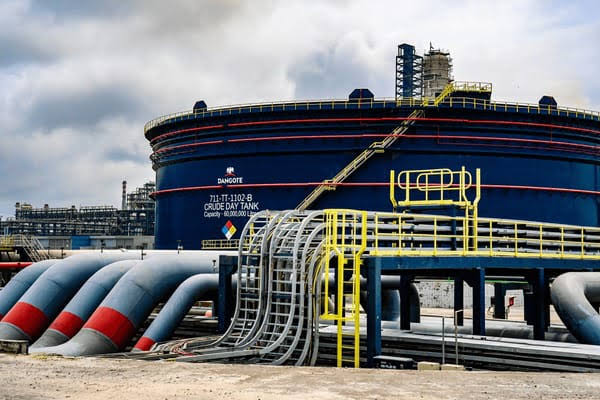
Dangote refinery raises $2.5bn, may go public August

Published

on

Africa’s richest man, Aliko Dangote, has nearly completed a $2.5bn private share placement for Dangote Petroleum Refinery & Petrochemicals FZE (Dangote refinery) ahead of what is expected to be Africa’s largest initial public offering, according to a Bloomberg report on Friday.

According to people familiar with the transaction, the refinery owner sold a stake representing up to six per cent of the company in a deal that values the Lagos-based refinery at approximately $40bn, underscoring growing investor confidence in the continent’s largest single-train refinery.

The fundraising exercise reportedly drew overwhelming interest from investors, attracting about $4bn in demand, significantly exceeding the amount of shares on offer. People familiar with the transaction said the private placement was executed in phases.

The report stated, “Aliko Dangote has nearly completed a $2.5bn private stock placement for his refinery business, according to people familiar with the matter, as the company prepares for Africa’s largest initial public offering.

“Africa’s richest person sold a stake representing as much as six per cent of Dangote Petroleum Refinery & Petrochemicals FZE at a price that would value the company at about $40bn,” one of the people said, asking not to be identified while discussing confidential matters.

According to one of the sources, “The offer attracted around $4bn in demand. It initially sold about $2bn of shares before a further $500m was raised, largely backed by regional institutional investors.”

The sources, who requested anonymity because the discussions are confidential, said the fundraising marks a major milestone ahead of the company’s planned public listing. Officials of Dangote Industries declined to comment on the transaction.

See also  Nigeria emerges major crude supplier to Senegal refinery

The private placement follows another successful fundraising exercise in which the company recently secured $750m through a debt offering for the refinery, which currently processes about 700,000 barrels of crude oil per day at its Lekki facility on the outskirts of Lagos.

The report noted that the refinery’s public listing could raise an additional $1.5bn to $2bn, with the initial public offering expected as early as August, although the timeline remains subject to market conditions and regulatory approvals.

One of the people familiar with the plans said, “The IPO could raise a further $1.5bn to $2bn with a listing expected as early as August.” The sources also disclosed that Dangote is deliberately prioritising African participation in both the private placement and the forthcoming public offering.

According to them, “Dangote’s emphasis on African investor participation in the private placements and the retail offering of the IPO is consistent with the billionaire’s push for greater regional ownership in the financing of the continent’s industrial development.”

They added that the planned public offering would be widely marketed to Nigerians, other Africans, and international retail investors. “The expected IPO is likely to be heavily marketed to Nigerians and other African and international retail investors in an effort to attract broad demand from ordinary citizens,” one of the people said.

The fresh capital is expected to support the refinery’s ambitious expansion programme. According to the sources, proceeds from the fundraising will be used to double the refinery’s processing capacity from 700,000 barrels per day to 1.4 million barrels per day by 2028, positioning it among the world’s largest refining complexes.

See also  Vehicle imports jump 67% in three months

The expansion comes at a time when global energy markets continue to adjust to supply disruptions triggered by geopolitical tensions, with several countries seeking alternative fuel suppliers.

The Dangote refinery has increasingly emerged as a strategic supplier of refined petroleum products across Africa following disruptions in traditional international supply chains.

Commissioned in 2023 after years of construction, the Dangote Petroleum Refinery is the largest single-train refinery in Africa and one of the biggest globally. The facility was established to end Nigeria’s decades-long dependence on imported refined petroleum products despite being Africa’s largest crude oil producer.

Since commencing commercial operations, the refinery has begun supplying petrol, diesel, aviation fuel, and other petroleum products to the domestic market while expanding exports across West Africa and beyond. The project has also significantly reduced Nigeria’s petrol import requirements and eased pressure on the country’s foreign exchange demand.

The planned IPO represents another landmark in Dangote’s strategy to broaden ownership of the refinery after financing its construction largely through a combination of shareholder funds, bank loans, and debt capital market issuances.

If completed, the listing is expected to rank among the largest capital market transactions ever undertaken in Africa, potentially raising between $1.5bn and $2bn in fresh equity while allowing retail and institutional investors to own shares in one of the continent’s most valuable industrial assets.

punch.ng

FOLLOW US ON:

FACEBOOK

TWITTER

PINTEREST

TIKTOK

YOUTUBE

LINKEDIN

Continue Reading

Business

World Bank reveals that poverty threatens 79% of Nigerians despite reforms

Published

on

Despite nearly three years of sweeping economic reforms by the Federal Government, about 79 per cent of Nigerians remain poor or vulnerable to falling into poverty, highlighting the country’s deepening social and economic challenges, new World Bank documents obtained by The PUNCH have shown.

The findings are contained in the World Bank’s newly approved Country Partnership Framework for Nigeria, covering 2026 to 2032, and its accompanying Streamlined Country Diagnostic. The seven-year strategy seeks to support Nigeria’s ambition to create more and better jobs through private-sector-led growth while accelerating poverty reduction.

According to the Streamlined Country Diagnostic document, “Thirty-three per cent of its population is ultra-poor (food insecure by age-weighted caloric intake), 61 per cent is below the poverty line, and 79 per cent is near poor (below the poverty line or vulnerable to falling back into poverty).”

The documents indicate that while recent macroeconomic reforms have helped stabilise the economy and restore investor confidence, the benefits have yet to translate into meaningful improvements in living standards for most Nigerians.

The World Bank noted that Nigeria’s economic performance over the past decade had been constrained by structural rigidities, policy missteps, dependence on crude oil, and repeated external shocks, leaving millions trapped in poverty.

It stated that about 139 million Nigerians currently live below the national poverty line, with poverty concentrated largely in the northern part of the country. The report also noted that more than 86 million Nigerians remain without electricity, while three to four million young people enter the labour market every year with limited employment opportunities.

The Bank said, “Despite recent bold reforms stabilising the economy and laying the groundwork for the Renewed Hope Agenda, significant structural challenges remain.”

It added that sustaining macro-fiscal and structural reforms would be critical to reducing inflation, expanding fiscal space and ensuring that recent economic stabilisation translates into improved living standards.

The reports reviewed reforms introduced by the Bola Tinubu administration, including the removal of petrol subsidy, exchange rate liberalisation, tighter monetary policy and tax reforms.

According to the Bank, the reforms have begun to improve macroeconomic indicators. Economic growth increased from 3.5 per cent in the first half of 2024 to 3.9 per cent during the corresponding period of 2025, foreign reserves exceeded $42bn, fiscal deficits narrowed, and investor confidence strengthened.

However, it warned that high inflation continues to undermine household incomes. The report stated, “High inflation, though declining, continues to erode real incomes, particularly for the poor. Social protection efforts to support the most vulnerable have been slow and uneven in their rollout.”

The Bank added that although the reforms helped Nigeria avoid a more severe economic crisis, institutional weaknesses, weak policy coordination, and inadequate budget transparency continue to pose significant risks. It warned that sustained reform implementation, backed by deeper structural measures, would be required to improve Nigeria’s medium-term economic outlook.

See also  FG defends Tinubu’s UK visit, highlights strategic Nigeria‑UK ties

Under the new Country Partnership Framework, the World Bank said job creation would serve as the primary pathway for reducing poverty. The report explained that international experience from countries such as India, Indonesia, and China shows that moving people into productive employment remains the most effective tool for reducing poverty.

To achieve this, the framework will prioritise labour-intensive sectors, particularly agriculture and micro, small and medium enterprises, while addressing structural deficiencies in electricity, digital infrastructure, education and healthcare.

The document stated that the strategy would support “an agile social transfer system to accelerate poverty exit and prevent backsliding during crises.” It added that interventions would focus on vulnerable regions, particularly northern Nigeria, through agriculture, livelihood support, MSME financing and measures to strengthen resilience against economic and climate shocks.

The Bank stressed that reforms alone would not significantly reduce poverty unless they generate jobs on a large scale. According to the report, one in four Nigerian youths is neither employed, in education, nor in training, while the majority of workers remain trapped in low-productivity, low-paying informal jobs.

It projected that about 60 million young Nigerians would enter the labour force over the next decade, making employment generation Nigeria’s most urgent development priority.

The World Bank also raised concerns over the country’s limited social protection coverage. According to the report, more than three out of every five Nigerians are poor, while over 60 million people are classified as ultra-poor and unable to meet minimum food requirements.

It noted that public spending on social protection represented just 0.14 per cent of Gross Domestic Product in 2021 and that only 8.5 per cent of poor Nigerians were covered by any form of social safety net. The report stated that as ongoing reforms expand fiscal space, directing more resources towards the ultra-poor would be critical to strengthening social resilience.

To address the challenge, the Bank said it would support Nigeria in building a unified, better-targeted and domestically financed social protection system. Drawing lessons from Brazil, Pakistan, Indonesia and India, the framework proposes differentiated support for the ultra-poor, poor and near-poor, alongside expansion of the national social registry, digital identity system and digital payment infrastructure.

The Bank said the strategy also seeks stronger domestic financing, improved coordination between federal and state governments, and closer integration of cash transfers with investments in nutrition, education, healthcare, and sanitation. It added that the interventions are expected to expand social protection coverage to about 41 million beneficiaries.

The diagnostic further observed that employment alone would not immediately eliminate poverty because many Nigerians who already have jobs remain poor. It stated that only about 14 per cent of employed Nigerians currently work in regular wage-paying jobs, while the majority are engaged in informal activities that generate insufficient income to escape poverty.

See also  Lagos govt cracks down on illegal trading under bridges

The report noted that social protection programmes remain heavily dependent on external financing and must be complemented by investments in education, healthcare and skills development to improve productivity and earnings.

The World Bank also linked poverty reduction to improvements in human capital. It warned that learning poverty remains widespread, with 84 per cent of children aged between five and 14 unable to read age-appropriate texts despite years of schooling.

The Bank identified household poverty as one of the major factors keeping children out of school and limiting future productivity. It also highlighted widespread childhood stunting as a major contributor to intergenerational poverty.

The framework proposes increased investments in nutrition, early childhood development, sanitation, household food security and social protection, targeting an eight-percentage-point reduction in stunting among children under five during the CPF period.

The documents also reviewed the implementation of the previous Country Partnership Framework covering 2021 to 2025. According to the Completion and Learning Review, poverty rose sharply during the period as Nigeria grappled with the COVID-19 pandemic, high inflation, fuel subsidies, exchange rate distortions and worsening insecurity.

The report stated that the poverty rate increased from about 40 per cent in 2019 to 61 per cent in 2025 despite extensive World Bank support. Although the review rated the implementation of the previous framework as “Moderately Satisfactory”, it acknowledged that inflation continued to worsen hardship across the country.

It stated, “A national cash transfer program supported by the World Bank was designed to protect the poor and vulnerable from these shocks, but rollout has been slower than anticipated.”

The review noted that about 8.1 million households had received at least one payment under the national cash transfer programme established to cushion the impact of inflation and economic reforms.

It added that another World Bank-supported resilience programme had reached more than 15 million Nigerians through social safety nets, livelihood support, food security interventions and financial assistance for businesses, including women-owned enterprises. The Bank concluded that preserving the current reform momentum while accelerating private investment, strengthening governance, and creating productive jobs would determine whether Nigeria succeeds in lifting millions of people out of poverty.

According to the Completion and Learning Review, safeguarding and deepening the reforms would be essential if the country is to reignite growth and enable the majority of Nigerians to escape poverty.

The PUNCH earlier reported that the World Bank approved a fresh $1.25bn loan for Nigeria under its Nigeria Actions for Investment and Jobs Acceleration programme, amid public concerns over the country’s rising debt burden and repeated calls for the Federal Government to reduce external borrowing.

The approval was announced in a statement issued by the World Bank alongside the launch of a new Country Partnership Framework for Nigeria covering 2026 to 2032. The bank said the new framework would guide its support for Nigeria over the next six years, with a focus on creating jobs by unlocking private sector-led growth.

See also  Court voids N110bn National Assembly vehicles, allowances vote

“The World Bank Group has endorsed a new Country Partnership Framework for Nigeria spanning 2026–2032, setting out a strategy to create more and better jobs at scale by unlocking private sector-led growth,” the statement read.

The World Bank Country Director for Nigeria, Mathew Verghis, said the institution would focus on helping Nigeria convert recent macroeconomic gains into improved living standards.

“Our new Country Partnership Framework provides the strategy for how the World Bank Group will support Nigeria over the coming years, with a strong focus on helping to create more and better jobs, particularly by enabling private sector-led growth.

“The recent macroeconomic gains have been critical to help stabilise the economy. Translating improved macroeconomic conditions into better living standards will require addressing the structural constraints to spur private sector investment and job creation,” he said.

The Bank concluded that preserving the current reform momentum while accelerating private investment, strengthening governance, and creating productive jobs would determine whether Nigeria succeeds in lifting millions of people out of poverty.

According to the Completion and Learning Review, safeguarding and deepening the reforms would be essential if the country is to reignite growth and enable the majority of Nigerians to escape poverty.

The PUNCH earlier reported that the World Bank approved a fresh $1.25bn loan for Nigeria under its Nigeria Actions for Investment and Jobs Acceleration programme, amid public concerns over the country’s rising debt burden and repeated calls for the Federal Government to reduce external borrowing.

The approval was announced in a statement issued by the World Bank alongside the launch of a new Country Partnership Framework for Nigeria covering 2026 to 2032. The bank said the new framework would guide its support for Nigeria over the next six years, with a focus on creating jobs by unlocking private sector-led growth.

“The World Bank Group has endorsed a new Country Partnership Framework for Nigeria spanning 2026–2032, setting out a strategy to create more and better jobs at scale by unlocking private sector-led growth,” the statement read.

The World Bank Country Director for Nigeria, Mathew Verghis, said the institution would focus on helping Nigeria convert recent macroeconomic gains into improved living standards.

“Our new Country Partnership Framework provides the strategy for how the World Bank Group will support Nigeria over the coming years, with a strong focus on helping to create more and better jobs, particularly by enabling private sector-led growth.

“The recent macroeconomic gains have been critical to help stabilise the economy. Translating improved macroeconomic conditions into better living standards will require addressing the structural constraints to spur private sector investment and job creation,” he said.

punch.ng

FOLLOW US ON:

FACEBOOK

TWITTER

PINTEREST

TIKTOK

YOUTUBE

LINKEDIN

Continue Reading

Trending