Connect with us

Business

Reps probe CBN, NNPCL over unremitted operating surplus

Published

on

The House of Representatives Public Accounts Committee on Tuesday stepped up its investigation into revenue remittances by federal agencies, directing the Office of the Accountant-General of the Federation to submit a detailed account of outstanding operating surplus and other revenues allegedly owed to the Federal Government by the Central Bank of Nigeria, the Nigerian National Petroleum Company Limited and other government-owned enterprises.

The committee also demanded explanations over allegations that the OAGF deducted funds from the statutory accounts of several Ministries, Departments and Agencies, including the reported withdrawal of N15bn from the Universal Basic Education Commission, raising concerns that the practice may have hampered the agencies’ ability to carry out their statutory mandates.

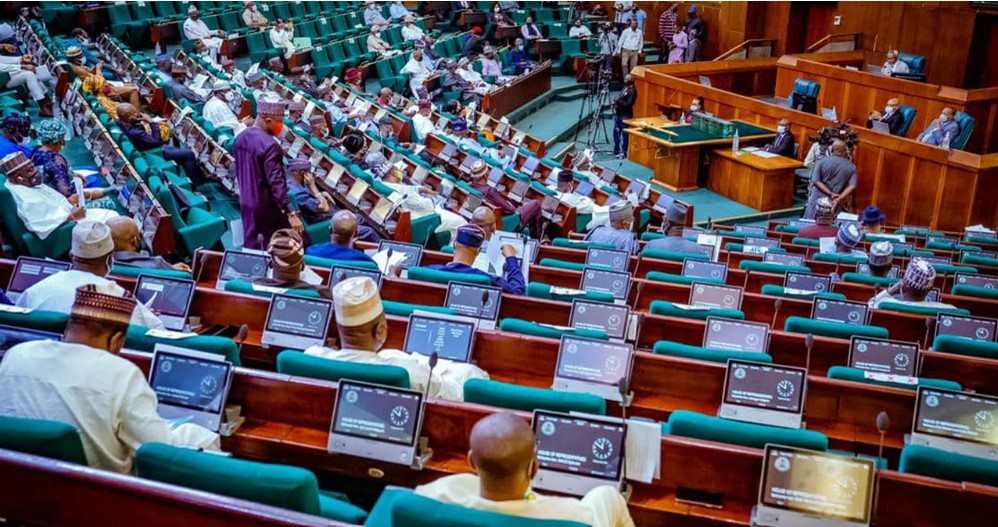
The directives were issued during an investigative hearing at the National Assembly, where the AGF, Shamseldeen Ogunjimi, appeared alongside senior officials of the Treasury.

The hearing forms part of the committee’s broader oversight of public finances and compliance with the Fiscal Responsibility Act, which requires government-owned enterprises to remit a prescribed percentage of their operating surplus to the Consolidated Revenue Fund.

The operating surplus regime is intended to strengthen government revenues and curb leakages, but compliance has remained a recurring concern, with several agencies accused over the years of either under-remitting or failing to remit altogether.

Opening the discussion, a member of the committee, Gboyega Isiaka, expressed concern over Nigeria’s weak revenue performance, arguing that poor remittance compliance continued to undermine the country’s fiscal position.

Addressing the nation’s top accountant, the lawmaker said, “Considering our GDP, ours is one of the lowest on the continent, at about 16 per cent. Business entities are expected to return about 80 per cent of their operating surplus, while others remit between 20 and 50 per cent.

“From everything we are seeing, there still appears to be a backlog of remittances. Can you provide some figures? Beyond that, as a member of the economic management team, how satisfied are you with the performance of agencies such as the CBN, SEC, NIMASA and others, considering the scale of assets they manage?

See also  Hardship: Nigerian-used car market booms as more owners sell off private vehicles

“It is not enough to say they remitted 80 per cent of their surpluses. What exactly is the surplus they are declaring? We need to examine that against the assets under their control, as well as the revenues they ought to have paid but have not.”

Responding, the Director of Revenue and Investment at the OAGF, Makinde Mogaji, disclosed that the CBN allegedly owed the Federal Government N5.3tn in unremitted operating surplus.

He said previous efforts by the Public Accounts Committee to recover the funds had not yielded results.

“Early last year, the CBN was owing the Federal Government N5.3tn as operating surplus. Despite the efforts of the Public Accounts Committee to recover the money, it has not been paid.

“Seventy per cent of that amount ought to have been remitted, but the CBN refused to pay. That is just one of our major sources of revenue. In contrast, an agency like FAAN has remitted N473bn,” he said.

The hearing also examined the OAGF’s policy of automatic deductions from the accounts of MDAs, a mechanism introduced to recover anticipated operating surplus before the end of the fiscal year.

Defending the policy, Ogunjimi said it had significantly improved government revenue collections.

“That was an ingenious way of taking, in advance, what was due to government, and it helped us generate substantial revenue last year,” he said.

He, however, acknowledged that the policy attracted resistance from some agencies, leading to reviews and reversals in certain cases.

“When we introduced the initiative and generated significant revenue, some agencies sought reversals. Some went to Mr President, arguing that the deductions were excessive. In some cases, the deductions were cancelled entirely; in others, they were reduced.

“We have continued to manage those issues, which is one reason we have not been able to sustain the level of collections achieved last year. There were also instances where agencies such as the NNPCL refused to cooperate to the extent that they had to be asked to leave because of their non-compliance. While NNPCL accepted some of the liabilities, it disputed others, and those issues are still being considered by a post-mortem committee.”

See also  PHOTOS: Groundnut Pyramids, Kano – Northern Nigeria’s Cash Crop Symbol

Providing further clarification, Mogaji said the auto-deduction framework remained operational and was designed to reconcile agencies’ actual operating surplus after their accounts had been finalised.

“Yes, the auto-deduction system introduced last year is still in operation. It is designed to recover operating surplus in advance, after which agencies compute their actual surplus to determine whether they have been over-deducted or owe additional remittances. The figures we currently have are still subject to reconciliation and should not be regarded as final,” he explained.

The committee, however, questioned the legality and implications of deductions from the accounts of agencies established to deliver essential public services.

The Chairman of the committee, Bamidele Salam, cited petitions from UBEC and several other agencies alleging that statutory funds had been withdrawn without prompt reimbursement.

“There is an ongoing investigation involving UBEC and other agencies. UBEC claimed that funds approved under its November 2025 Authority to Incur Expenditure were not released by the Accountant-General. It also alleged that N16bn and another N15bn were taken from the commission’s account without refund.

“We are concerned about these deductions from statutory allocations to critical government institutions. It is not only UBEC. NASENI raised similar complaints involving over N70bn, and several other agencies have also made similar allegations. So, what is the justification?” he asked.

Responding, Ogunjimi maintained that the withdrawals were temporary and undertaken only to meet urgent government financing needs, with the understanding that the funds would be refunded when required.

“There have been occasions when government needed to meet critical financial obligations, and we temporarily utilised funds belonging to some agencies. It is essentially a loan, and we have been refunding those agencies.

See also  ECOWAS begins recruitment for over 30 positions in Nigeria, others

“The Accountant-General cannot arbitrarily withdraw money from agencies’ accounts. We first analyse how long the funds have remained idle, acting on directives from the Honourable Minister. If funds have remained unutilised for several months and government urgently requires financing, we temporarily deploy them and refund the money when the agency needs it.

“For example, we utilised over N300bn belonging to TETFund and subsequently refunded the entire amount. Whenever an agency requests its funds for approved projects, we process the refund,” he added.

Salam, however, rejected the explanation, insisting that statutory agencies should not be deprived of funds appropriated by law for their programmes.

“Which agencies have actually been refunded? UBEC is complaining, NASENI is complaining, NBC is complaining, and several others currently under investigation have made similar claims. Their major grievance is that funds are withdrawn from their accounts, leaving them unable to carry out the responsibilities for which the money was appropriated.

“Take UBEC, for instance. We all know the consequences of neglecting basic education, particularly in northern Nigeria. We have about 13.5 million out-of-school children.

“UBEC is expected to build schools, provide infrastructure and supply instructional materials. It cannot effectively discharge those responsibilities if its statutory funds are diverted to other purposes.”

The committee subsequently directed the OAGF to submit detailed records of outstanding operating surplus owed by the CBN, NNPCL and other government-owned enterprises, as well as documentation showing deductions made from MDA accounts, refunds already effected and outstanding balances.

The investigation is expected to continue in the coming weeks as lawmakers seek to determine the extent of compliance with the Fiscal Responsibility Act, recover outstanding revenues due to the Federal Government and establish whether the deductions from statutory agency accounts were carried out within the ambit of the law.

punch.ng

FOLLOW US ON:

FACEBOOK

TWITTER

PINTEREST

TIKTOK

YOUTUBE

LINKEDIN

Continue Reading
Click to comment

Leave a Reply

Your email address will not be published. Required fields are marked *

Business

How to apply for free CAC registration under FG’s 250,000 MSME programme

Published

on

The Federal Government has opened applications for the free registration of 250,000 Micro, Small and Medium Enterprises (MSME) under the Small and Medium Enterprises Development Agency of Nigeria-Corporate Affairs Commission formalisation programme.

The initiative, approved by President Bola Tinubu, is designed to remove the cost of business registration for eligible nano, micro and small businesses, enabling more entrepreneurs to join Nigeria’s formal economy.

Successful applicants will receive free Business Name registration through the Corporate Affairs Commission, with the Federal Government covering the statutory registration fees.

The programme was announced by the Presidency during the 8th National MSME Awards held at the State House, Abuja, on June 27.

Beyond free registration, beneficiaries will also receive technical training, business development support and access to opportunities aimed at improving business sustainability and growth.

How to apply

Business owners interested in the programme are required to:

1. Visit the official SMEDAN portal at portal.smedan.gov.ng
2. Create an account using their personal details, including name, email address, phone number and password.
3. Complete the MSME registration form with accurate business information.
4. Select “No” when asked whether the business already has a CAC registration number.
5. Review the information provided and submit the application.
6. Wait for confirmation from SMEDAN if the application is successful.

Businesses already registered on the SMEDAN database but without CAC registration may automatically qualify for the programme.

Applicants approved under the scheme will be contacted with the next steps for their free CAC Business Name registration.

See also  See why Ooni of Ife praised Zulum

The initiative follows a Memorandum of Understanding signed between the Corporate Affairs Commission and SMEDAN to formalise 250,000 nano, micro and small enterprises nationwide.

In 2026, Tinubu formally approved the free formalisation and corporate registration of 250,000 Micro, Small, and Medium Enterprises, MSMEs, across the country.

It was announced at the State House in Abuja during the 8th National MSME Awards 2026.

According to the presidency, the move is aimed at removing financial difficulty for nano, micro, and small scale entrepreneurs, effectively integrating them into Nigeria’s formal banking and regulatory ecosystem.

punch.ng

FOLLOW US ON:

FACEBOOK

TWITTER

PINTEREST

TIKTOK

YOUTUBE

LINKEDIN

Continue Reading

Business

FG granted N34tn import duty waivers in 2025 – Customs

Published

on

The Comptroller-General of the Nigeria Customs Service, Bashir Adeniyi, on Monday disclosed that the value of Import Duty Exemption Certificate approvals granted by the Federal Government on selected imported goods and equipment rose to N34tn in 2025, warning that such fiscal incentives have significantly reduced the service’s revenue-generating capacity.

Adeniyi made the disclosure during an investigative hearing of the Senate Committee on Finance with revenue-generating agencies in Abuja.

At the same session, the committee threatened to invoke sanctions against the heads of the Nigerian Civil Aviation Authority, the Small and Medium Enterprises Development Agency of Nigeria, the Industrial Training Fund, the Federal Medical Centre, Jabi, and other agencies for failing to honour its invitation.

Addressing lawmakers, the Customs boss said government fiscal policies often directly affect the agency’s revenue performance, either positively or negatively.

He said although the Nigeria Customs Service remained one of the country’s leading revenue-generating agencies, it could have recorded higher collections over the years if not for government-approved duty waivers and other policy interventions.

According to him, one of the major factors affecting Customs revenue is the Import Duty Exemption Certificate policy introduced in March 2020.

He said, “IDEC approvals reached about N34tn in 2025, 60 per cent of which was rightly granted by the government for military hardware procurement, which attracted duty exemptions because of Nigeria’s prevailing security challenges.

“Other government-backed waivers included the importation of Compressed Natural Gas (CNG), electric and hybrid vehicles, healthcare equipment and medical supplies, industrial machinery and manufacturing inputs, and food import intervention programmes.”

See also  ECOWAS begins recruitment for over 30 positions in Nigeria, others

The Customs boss, however, argued that fiscal policy should not be assessed solely on revenue generation, saying that duty waivers also serve broader economic and social objectives.

He, nevertheless, urged the Federal Government to strengthen monitoring mechanisms to ensure beneficiaries of the waivers deliver the expected outcomes, including lower prices, increased industrial production, and improved access to healthcare.

Earlier in his presentation, Adeniyi told the committee that the Customs Service had generated N4.5tn as of June 30 from its N11.04tn revenue target for 2026, leaving about N7tn to be realised before the end of the fiscal year.

The hearing also exposed disagreements over the alleged non-remittance of operating surpluses by some government agencies.

Representing the Fiscal Responsibility Commission, the Deputy Director of Monitoring and Evaluation, Bello Gulmare, alleged that the Nigeria Customs Service had an outstanding liability of N8.9bn arising from the non-remittance of its operating surplus into the Consolidated Revenue Fund as of 2019.

The claim was, however, rejected by Customs officials.


Similarly, the commission alleged that the Corporate Affairs Commission owed N13.9bn in unremitted operating surplus covering the period from 2023 to 2025.

Reacting, the Registrar-General of the Corporate Affairs Commission, Hussaini Ishaq Magaji, said the agency had been settling the outstanding obligations gradually.

Following the submissions, the Senate Committee on Finance directed the CAC, the Fiscal Responsibility Commission and the committee’s secretariat to reconcile their records and determine the exact outstanding balance.

Chairman of the committee, Senator Sani Musa (Niger East), said the reconciliation exercise should be concluded within two weeks ahead of another interface with the commission.

See also  48-hour curfew imposed after attack on bar in Plateau, Jos

He said, “A detailed report on the outcome of the planned meeting should be ready within the next two weeks for another interface with CAC.

“Heads of agencies like NCAA, ITF, SMEDAN, FMC Jabi and others who failed to physically attend today’s session should unfailingly make themselves available at the next sitting or risk severe sanction through invocation of the relevant section of our rules against them.”

The Senate has in recent months intensified oversight of revenue-generating agencies as part of efforts to improve government earnings, enforce compliance with the Fiscal Responsibility Act, and ensure proper remittance of operating surpluses into the Consolidated Revenue Fund.

The Finance Committee has also been scrutinising the impact of tax waivers and import duty exemptions on the country’s revenue profile amid growing pressure to expand non-oil revenue.

punch.ng

FOLLOW US ON:

FACEBOOK

TWITTER

PINTEREST

TIKTOK

YOUTUBE

LINKEDIN

Continue Reading

Business

Dangote dumps naira, begins petrol sales in dollars

Published

on

Dangote Petroleum Refinery has fixed the ex-depot price of Premium Motor Spirit (petrol) at $0.779 per litre, unveiling a new pricing template that also raised the benchmark prices for diesel and aviation fuel following its transition to dollar-denominated transactions.

This marks an end to naira payments for the purchase of refined products, which started after the October 1, 2024, commencement of the naira-for-crude deal.

The development also marks a major shift in the refinery’s commercial operations and could reshape pricing dynamics in Nigeria’s deregulated downstream petroleum sector, where Dangote has emerged as the country’s largest supplier of refined petroleum products.

The revised prices, which took effect on Monday, place Automotive Gas Oil (diesel) at $1.087 per litre, Aviation Turbine Kerosene at $0.942 per litre, while coastal deliveries of petrol were fixed at $1,044.62 per metric tonne.

The refinery disclosed the new rates in a notice issued to petroleum marketers and customers, stating that all previously issued naira-denominated Proforma Invoices and Deal Recaps for gantry and coastal transactions had become invalid.

The notice, signed by the refinery’s Group Commercial Operations, read, “Following our email on the 9th of July, 2026, regarding the transition from Naira to United States Dollars, please note that all issued Naira Coastal and Gantry PFIs/Deal Recaps are now invalid, and no payments should be made against them.

The applicable USD prices for each product, effective today, July 13, 2026, are provided below.”

Under the new pricing schedule, petrol sold through the gantry will cost $0.779 per litre, diesel $1.087 per litre, aviation fuel $0.942 per litre, while coastal PMS supplies will sell for $1,044.62 per metric tonne.

See also  States rush to deploy forest guards as insecurity deepens

The company, however, clarified that the new pricing arrangement does not affect Liquefied Petroleum Gas. “Also note that this transition to USD does not apply to LPG transactions,” the refinery said.

Findings by our correspondent indicate that the new dollar-denominated pricing reflects the refinery’s latest commercial pricing structure and is intended to align petroleum product sales with the currency used in procuring a significant proportion of its crude oil feedstock.

Sources familiar with the development said the refinery considered it necessary to adopt a uniform pricing framework after a growing imbalance between the currency used to procure crude oil and the currency in which refined products were being sold.

One official noted that Dangote refinery now receives a significantly larger share of its crude oil supplies from the Nigerian National Petroleum Company Limited under dollar-denominated supply arrangements, while a substantial volume of its refined products has continued to be sold domestically in naira.

The source explained that the mismatch had increased the refinery’s exposure to foreign exchange risks.

Explaining the rationale behind the move, another source added, “Dangote refinery is receiving fewer naira-denominated crude cargoes from NNPCL compared with dollar-denominated cargoes, while a larger volume of its petroleum products has been sold in naira. The resulting currency mismatch, combined with volatility in international crude oil prices and continued exchange-rate uncertainty, made it necessary to migrate product sales to dollars.”

The decision is expected to have significant implications for petroleum marketers, many of whom source products directly from the refinery for nationwide distribution. It could also influence fuel pricing in the downstream market, depending on movements in the foreign exchange market and international crude oil prices.

See also  IMF raises Nigeria’s growth to 3.9%

The refinery had previously embraced naira-denominated transactions following the Federal Government’s domestic crude supply initiative, under which local refiners were supplied crude oil in naira to strengthen domestic refining, reduce pressure on foreign exchange demand and stabilise fuel prices. However, the arrangement has faced implementation challenges in recent months, with industry stakeholders reporting that a growing proportion of crude supplies has reverted to dollar-based transactions.

The latest shift underscores the lingering foreign exchange pressures confronting Nigeria’s downstream petroleum sector despite ongoing efforts to deepen local refining and reduce dependence on imported fuels. It also raises fresh questions about the future of the government’s naira-for-crude policy and its impact on domestic fuel pricing.

The new dollar benchmark will now serve as the reference price for marketers purchasing products directly from the refinery, although the eventual retail pump price of petrol will depend on the prevailing naira-to-dollar exchange rate, logistics costs, transportation margins, regulatory charges, and marketers’ operating expenses.

In recent months, pump prices have fluctuated in response to movements in crude oil prices, foreign exchange rates and competition among suppliers, with industry stakeholders closely monitoring pricing decisions by Dangote Refinery because of its growing influence on the domestic fuel market.

punch.ng

FOLLOW US ON:

FACEBOOK

TWITTER

PINTEREST

TIKTOK

YOUTUBE

LINKEDIN

Continue Reading

Trending