Connect with us

Business

States pocket N2.37tn VAT under new tax regime

Published

on

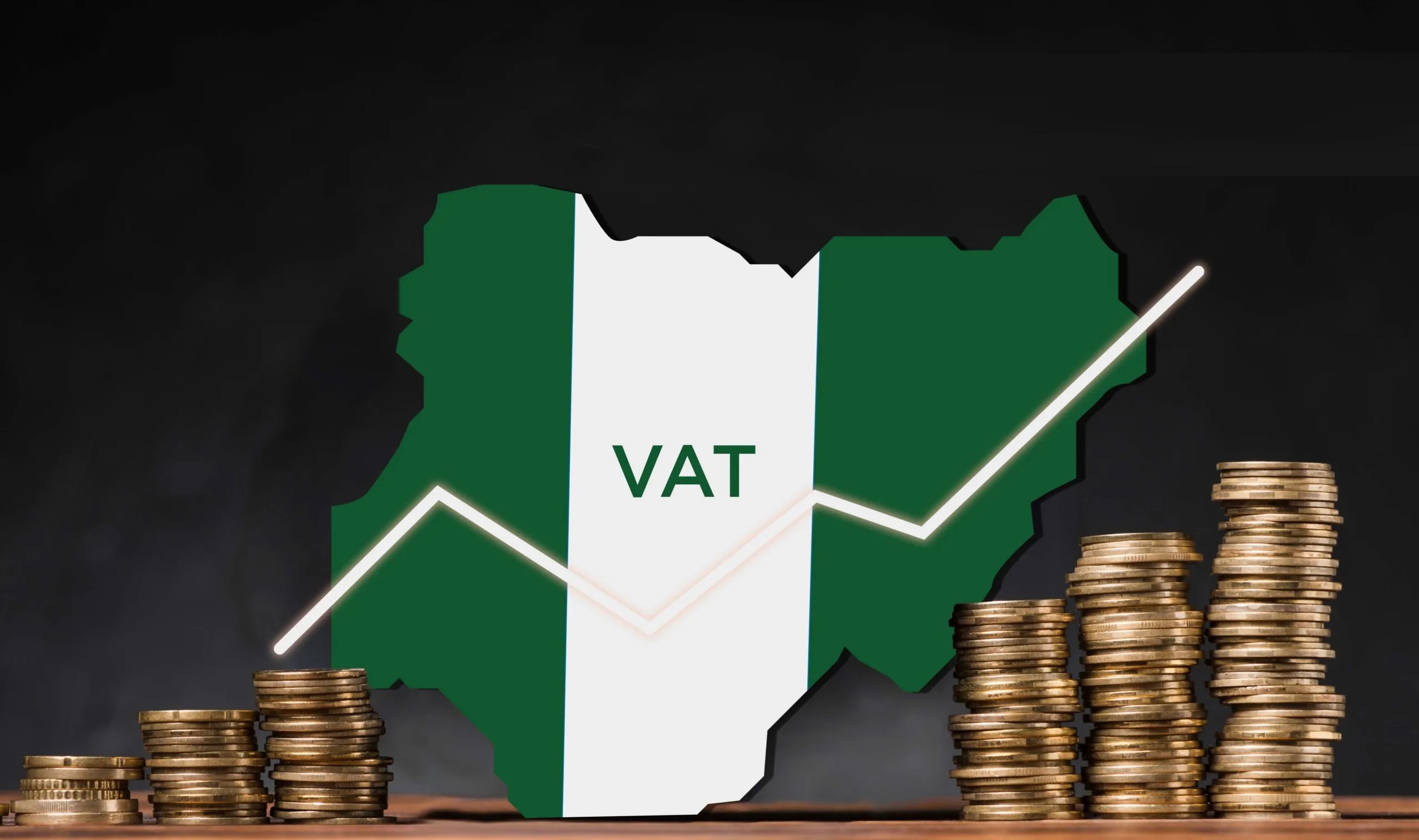
State governments received N2.37tn from Value Added Tax revenue generated in the first half of 2026, representing an increase of N451.25bn compared with the corresponding period of 2025, an analysis by The PUNCH has shown.

The figure indicates that states’ VAT allocation rose by 23.48 per cent from N1.92tn in the first six months of 2025, according to Federation Account Allocation Committee reports and data from the National Bureau of Statistics and the Office of the Accountant General of the Federation collated by The PUNCH on Sunday.

The analysis covered VAT generated from January to June 2026, although the proceeds were distributed at FAAC meetings held between February and July. Under the FAAC arrangement, revenue earned in a particular month is shared among the three tiers of government in the following month. This means that January revenue was distributed in February, while June revenue was shared in July.

A total of N4.31tn in distributable VAT revenue was shared among the Federal Government, states and local government councils during the first half of 2026. This was N471.07bn, or 12.26 per cent, higher than the N3.84tn distributed in the corresponding period of 2025.

The H1 2026 distributable VAT pool accounted for 33.09 per cent of the N13.04tn total distributable federation revenue shared during the six-month period.

In comparison, VAT represented about 37.99 per cent of the N10.12tn shared in the first half of 2025. This means that although VAT revenue increased in absolute terms in 2026, its share of total FAAC distributions declined because statutory and other federation revenues grew at a faster pace.

The N13.04tn shared from revenue generated between January and June 2026 was N2.92tn, or 28.86 per cent, above the N10.12tn distributed from revenue generated in the corresponding period of 2025.

The rise in states’ VAT receipts was driven by higher distributable VAT collections in four of the six months and the implementation of a new vertical sharing formula that increased the collective share allocated to states.

Before the commencement of the new tax regime on January 1, 2026, distributable VAT was shared 15 per cent to the Federal Government, 50 per cent to states, and 35 per cent to local government councils.

Under the new tax laws, the Federal Government’s share was reduced to 10 per cent, while the states’ portion increased to 55 per cent. The local governments’ allocation remained unchanged at 35 per cent.

The tax reforms took effect as scheduled from January 1, 2026, following the signing of the new tax laws in June 2025. The adjustment transferred five percentage points of the distributable VAT pool from the Federal Government to the states.

Based on the N4.31tn VAT distributed in H1 2026, the Federal Government gave up about N215.72bn to the states because of the change in the formula.

Had the previous 15 per cent formula remained in place, the Federal Government would have received about N647.15bn from the H1 VAT pool. Under the current 10 per cent allocation, its expected share was about N431.43bn.

See also  FCT: Water supply project will create 1,600 jobs – Wike

States would have collectively received N2.16tn under the old 50 per cent formula. However, the current 55 per cent allocation raised their share to about N2.37tn, giving them an additional N215.72bn.

The local governments’ 35 per cent share was unaffected by the adjustment. They received about N1.51tn from the distributable VAT pool during the six months.

In January 2026, whose revenue was distributed in February, states received N551.77bn from VAT. This was the highest monthly VAT allocation to states in the first half of the year. The amount was N192.38bn, or 53.53 per cent, higher than the N359.39bn allocated to states from January 2025 VAT revenue.

The distributable VAT pool for January 2026 stood at about N1tn, against N718.78bn in January 2025, representing an increase of N284.44bn, or 39.57 per cent.

The January VAT surge was followed by a decline in February. States received N340.52bn from February 2026 VAT revenue, which was shared in March. This represented a month-on-month fall of N211.26bn, or 38.29 per cent, from the January allocation.

Despite the monthly reduction, the February figure was N35.80bn, or 11.75 per cent, higher than the N304.72bn received by states from VAT generated in February 2025.

FAAC distributed N619.12bn in VAT revenue for February 2026, compared with N609.43bn in the corresponding month of 2025. The distributable pool therefore increased by N9.69bn, or 1.59 per cent, year on year.

States’ VAT allocation declined further to N283.47bn from March 2026 revenue, which was shared at the April FAAC meeting.

The March amount was N57.05bn, or 16.75 per cent, below the February allocation. It was also N13.41bn, or 4.52 per cent, lower than the N296.88bn received from March 2025 VAT revenue.

The total distributable VAT revenue for March 2026 fell to N515.39bn, down by N78.36bn, or 13.20 per cent, from N593.75bn in March 2025. The trend changed in April, when states received N410.90bn from VAT revenue shared in May. This represented a month-on-month increase of N127.43bn, or 44.96 per cent, from the March figure.

Compared with the N299.04bn allocated from April 2025 VAT revenue, the April 2026 figure rose by N111.86bn, or 37.41 per cent. The distributable VAT pool increased to N747.09bn in April 2026, from N598.08bn in the corresponding month of 2025. This amounted to a year-on-year increase of N149.01bn, or 24.92 per cent.

The OAGF said gross VAT revenue increased to N806.62bn in April from N664.43bn in March, reflecting increased collections before deductions for collection costs and other adjustments. States received N378.83bn from May 2026 VAT revenue distributed in June. This was N32.07bn, or 7.80 per cent, lower than the April allocation.

On a year-on-year basis, however, the amount was N32.98bn, or 9.53 per cent, higher than the N345.86bn received from VAT generated in May 2025. The May 2026 distributable VAT pool stood at N688.79bn, marginally below the N691.71bn recorded in May 2025. The N2.93bn difference represented a decline of 0.42 per cent.

See also  Dangote names N739 as new petrol pump price

In June, states’ VAT receipts recovered to N407.40bn. The revenue, shared in July, was N28.57bn, or 7.54 per cent, higher than the May allocation. It also exceeded the N315.75bn received from VAT generated in June 2025 by N91.64bn, representing an increase of 29.02 per cent.

The distributable VAT pool for June 2026 rose to N740.72bn, up by N109.22bn, or 17.29 per cent, from N631.51bn in June 2025. The monthly pattern showed that states received more VAT revenue year on year in January, February, April, May, and June. March was the only month in which their VAT allocation fell below the corresponding 2025 level.

Beyond VAT, the three tiers also benefited from increased overall FAAC distributions during the first half of the year. The Federal Government received N4.57tn from revenue generated between January and June 2026. This was N1.17tn, or 34.47 per cent, above the N3.40tn allocated to it in the corresponding period of 2025.

The Federal Government’s monthly allocations were N577.91bn from January revenue, N675.09bn in February, N789.16bn in March, N787.35bn in April, N818.68bn in May and N923.44bn in June.

Its allocation rose during most of the period despite the reduction in its VAT share because statutory federation revenue and other components of the distributable pool increased.

State governments received a total of N4.47tn in general FAAC allocations during H1 2026, excluding the separate 13 per cent derivation payments to oil-producing states. This represented an increase of N1.05tn, or 30.58 per cent, over the N3.43tn received by the states during the first half of 2025.

Their monthly general allocations stood at N794.01bn from January revenue, N651.53bn in February, N657.60bn in March, N772.36bn in April, N759.14bn in May, and N838.21bn in June.

Local government councils received N3.13tn during the six-month period, up from N2.50tn in H1 2025. This represented an increase of N625.42bn, or 24.98 per cent.

Their monthly allocations were N537.88bn from January revenue, N456.47bn in February, N468.83bn in March, N540.15bn in April, N534.28bn in May, and N591.39bn in June.

Oil-producing states also received N864.89bn as 13 per cent mineral revenue derivation during H1 2026. The amount was N73.57bn, or 9.30 per cent, higher than the N791.33bn paid as derivation revenue in the corresponding period of 2025.

The monthly derivation payments rose from N90.19bn in January to N110.95bn in February and N120.76bn in March. They increased to N157.25bn in April, N188.13bn in May, and N197.61bn in June. The figures show that the new VAT formula delivered an immediate gain to states while reducing the Federal Government’s claim on consumption tax revenue.

The PUNCH earlier reported that the Nigeria Economic Summit Group warned that the Federal Government could face revenue shortfalls if it does not increase the value-added tax rate as part of the ongoing tax reform process.

The Chief Executive Officer of NESG, Dr Tayo Aduloju, made this statement during an interactive media session in Abuja. He emphasised that while reforms to the VAT system are essential, maintaining the current VAT rate without an increase could result in a significant loss of revenue for the government.

See also  Naira, stocks drop after Trump’s military threat

According to him, simply reducing the number of taxes without adjusting the VAT rate could weaken the government’s revenue base.

Also, in its 2025 Consultation Report on Nigeria, the International Monetary Fund noted that although the recent tax reforms approved by the National Assembly and President Bola Tinubu represent a major step forward in modernising the VAT and Company Income Tax regimes, the choice to maintain the current VAT rate would lead to an immediate revenue shortfall.

It stated that the Federal Government may lose as much as 0.5 per cent of the country’s Gross Domestic Product in revenue following its decision not to raise the VAT rate.

According to the Fund, unless alternative financing options are found, subnational governments may be forced to either scale back spending or ramp up their own revenue efforts. The IMF, however, acknowledged the government’s justification for delaying a VAT hike, particularly at a time of worsening poverty and food insecurity.

Speaking earlier at the launch of the BudgIT State of States 2025 Report in Abuja, where he delivered the keynote address, the current Minister of Finance and the Coordinating Minister of the Economy, Mr Taiwo Oyedele, projected that states could earn more than N4tn annually from 2026 when new Value Added Tax reforms take effect.

He said, “With VAT reforms kicking in from 2026, states’ share will rise to 55 per cent. That could amount to over N4tn in 2026. The question is: will this money be spent, or will it be invested?”

Economic analysts earlier called on state governments to intensify efforts to unlock internal revenue as their allocations under the revised sharing formula increase.

A former Chairman of the Chartered Institute of Bankers of Nigeria, Prof Segun Ajibola, called for transparency in the use of the increased allocations, adding, “If a state government wants to be accountable, each state government should set up a desk to account for the increase in the VAT allocation and make the report known to the public. There is so much to spend on agriculture and other public utilities.”

Also, the Chief Executive Officer of Economic Associates, Dr Ayo Teriba, earlier said VAT historically replaced state sales tax and originally belonged to states. “The tax belonged to the states. It is for ease of collection that the federal government decides to collect on behalf of the states,” Teriba noted.

He further cautioned states against overdependence on statutory allocations, advising, “Not to make a mountain out of a molehill (as) these are smaller amounts for the states.”

punch.ng

FOLLOW US ON:

FACEBOOK

TWITTER

PINTEREST

TIKTOK

YOUTUBE

LINKEDIN

Continue Reading
Click to comment

Leave a Reply

Your email address will not be published. Required fields are marked *

Business

Oil cargoes meant for naira-for-crude deal supplied to Dangote – NNPC

Published

on

The Nigerian National Petroleum Company Limited has insisted that it supplied all available crude oil cargoes allocated under the Federal Government’s naira-for-crude initiative to the Dangote Petroleum Refinery, saying there had been no withholding on its part.

The national oil company stated this even as a top management official of the Dangote Group disclosed exclusively to The PUNCH that the refinery was receiving just four million barrels of crude oil monthly under the arrangement, instead of about 13 million barrels envisaged after President Bola Tinubu’s 2024 directive.

The refinery had attributed its decision to switch from naira-denominated fuel sales to dollar transactions to the crude supply shortfall, saying it would also increase exports of refined petroleum products to earn foreign exchange.

Responding on Monday, the NNPC, through its spokesman, Andy Odeh, said the company had fully discharged its obligations under the naira-for-crude policy. “As a 7.25 per cent equity shareholder in Dangote Petroleum Refinery and Petrochemicals, NNPC Limited has a direct and genuine interest in seeing the refinery operate at full capacity. That is not in dispute.

“What the figures being cited require is context. Under the naira-denominated crude supply arrangement, NNPC Limited has allocated 100 per cent of all available naira crude cargoes to DPRP in 2026 — there has been no withholding on our part. Actual off-take in any period is shaped by several variables: crude availability, nomination timelines, and the refinery’s own operational scheduling.

Odeh said the NNPC has met its obligations to the refinery, saying the two parties are resolving any existing gaps together. “NNPC Limited has met its 2026 supply obligations to the refinery. Our engagement with DPRP management remains constructive, and where any gaps exist, we are resolving them together — as the partners we are.

“A fully supplied, fully operational Dangote refinery serving the Nigerian market is an obligation NNPC Limited shares without reservation,” he added.

However, the Dangote Group maintained that the crude volumes supplied under the arrangement were inadequate to sustain naira-denominated fuel sales.

A top management official of the Dangote Group had told The PUNCH that crude supply under the naira-for-crude arrangement had been limited to just four million barrels monthly despite the increase in Nigeria’s crude oil production.

See also  CBN orders banks to freeze six terror suspects’ accounts

The official, who pleaded anonymity because of the sensitivity of the matter, said the refinery was now set to export a larger percentage of its products in exchange for foreign exchange.

“Since the traders have brought lots of imported products to the market, we are focusing on exports. We can’t, and we shouldn’t be fighting against the government’s policies,” the source said.

Our correspondent told the official that exporting without adequately supplying the domestic market would not be good for the country, but he responded with a question: “Is issuing massive import licences and releasing forex for imports good for the country, when 45 per cent of our production can meet 100 per cent of the entire country’s requirements in terms of petrol, diesel and aviation fuel?”

When told that the NNPC said it had increased crude supply to the Dangote refinery, the official replied, “Do you think that they will keep quiet if we process the naira crude and export the products? We are getting just four million barrels monthly.”

With the sale of petrol in dollars to local marketers, the Dangote official disclosed that the refinery would now process whatever crude it receives under the naira arrangement and supply the equivalent refined products in naira to the Nigerian market through the NNPC.

“We will account for every barrel of crude we receive against the naira payment by supplying equivalent products in naira. We will do that through the NNPC. The NNPC buys a lot from us,” he said.

The refinery had maintained that the inability to secure the expected crude volumes under the naira-for-crude initiative compelled it to abandon naira-denominated fuel sales and adopt dollar pricing for petroleum products.

Last week, the refinery announced a new dollar-denominated pricing template, fixing the ex-depot price of petrol at $0.779 per litre, diesel at $1.087 per litre and aviation fuel at $0.942 per litre.

The move has drawn criticism from petroleum marketers, who warned that it could increase pressure on fuel prices, although the Nigerian Midstream and Downstream Petroleum Regulatory Authority said the decision was consistent with the provisions of the Petroleum Industry Act, which allows refiners to recover their costs.

Supply worsens

Meanwhile, petrol supply in the Federal Capital Territory, Abuja, worsened on Monday with the closure of some major filling stations in Abuja and a fresh increase in the pump price of petrol.

See also  FCT: Water supply project will create 1,600 jobs – Wike

Checks by one of our correspondents showed that some stations operated by NNPC Limited and MRS along the Airport Road Expressway were shut when visited on Monday.

At stations that were dispensing the product, petrol was being sold at between N1,250 and N1,280 per litre. Bovas sold petrol at N1,250 per litre, while Azman Filling Station at 6th Avenue dispensed the product at N1,280 per litre. Salbas also sold petrol at N1,280 per litre.

The development has further heightened concerns among motorists and other consumers over the rising cost and availability of petrol in the nation’s capital. For motorists in Abuja, Monday’s development meant longer searches for petrol, closed stations and prices as high as N1,280 per litre at outlets that had the product available.

Meanwhile, truck traffic has surged across major private petroleum depots in Lagos as marketers scramble for petrol supplies following the fifth consecutive day of suspended loading at Dangote Petroleum Refinery amid growing expectations that wholesale prices could rise when operations resume.

Expert reacts

Meanwhile, Professor Emeritus of Petroleum Economics and Principal Facilitator at the FUPRE Energy Business School, Wumi Iledare, said the Dangote refinery’s decision to sell petrol in dollars should be viewed within the broader context of petroleum economics and Nigeria’s energy security rather than merely the currency in which products are priced.

According to Iledare, the move is a commercial response to the realities of the global oil market, where crude oil, the refinery’s major feedstock, is traded in United States dollars.

Iledare explained that pricing refined products in dollars enables the refinery to reduce its exposure to exchange rate volatility and provides greater revenue certainty, although it shifts part of the foreign exchange risk to fuel marketers and, ultimately, consumers, where the costs are passed on.

He stressed that the refinery’s dollar pricing would not automatically translate to higher fuel prices, noting that domestic petrol prices would instead become more closely tied to movements in international crude oil prices and the naira-dollar exchange rate.

“Does this necessarily mean higher fuel prices? Not necessarily. What it does mean is that domestic fuel prices become more closely linked to two key variables: international crude oil prices and the naira-dollar exchange rate. If crude prices rise or the naira weakens, pump prices are likely to increase. Conversely, if crude prices decline or the naira strengthens, consumers should also expect prices to adjust downward. That is how a market-oriented pricing system is expected to function,” he said.

See also  How to apply for free CAC registration under FG’s 250,000 MSME programme

The petroleum expert maintained that despite concerns over dollar-denominated pricing, the Dangote refinery had strengthened Nigeria’s energy security by reducing dependence on imported petrol and improving the availability of petroleum products.

He, however, noted that domestic refining alone could not guarantee affordability, saying fuel prices would continue to depend on exchange rate stability, international crude prices, logistics costs and the level of competition in the downstream sector.

“The refinery has significantly improved the availability of petroleum products by reducing Nigeria’s dependence on imported PMS. That alone makes the country less vulnerable to disruptions in international supply chains and enhances supply reliability.

“This is why I would say that Dangote Refinery can shield Nigeria more effectively from supply shocks than from price shocks. Domestic refining improves energy security, but it cannot completely insulate Nigeria from global petroleum market dynamics because crude oil still has an international opportunity cost, whether it is refined in Lagos, Rotterdam, or Houston,” he stated.

On the implications for the naira, Iledare argued that pricing petroleum products in dollars would not automatically weaken the local currency. “As for the impact on the naira, the answer is more nuanced than many assume. Dollar pricing by itself does not automatically weaken the naira. What matters is whether the arrangement increases or reduces Nigeria’s net demand for foreign exchange,” he said.

He urged policymakers to focus less on the currency in which petroleum products are priced and more on building an efficient and competitive downstream market.

“The real issue is therefore not the currency of pricing. The real issue is whether Nigeria’s downstream petroleum market satisfies the four tests of good public policy: efficiency, effectiveness, equity, and ethics. Those are the standards by which this development should be judged,” he added.

punch.ng

FOLLOW US ON:

FACEBOOK

TWITTER

PINTEREST

TIKTOK

YOUTUBE

LINKEDIN

Continue Reading

Business

143 firms battle for 50 oil blocks today; read details

Published

on

The Nigerian Upstream Petroleum Regulatory Commission will open the decisive commercial phase of the 2025 oil and gas licensing round on Tuesday (today), with 143 companies set to compete for 50 blocks across Nigeria’s major and emerging hydrocarbon basins.

The commercial bid conference, by invitation only, is scheduled to take place in Abuja. The development marks the latest stage in a licensing process that began in November 2025 and has attracted significant interest from companies seeking access to Nigeria’s upstream petroleum assets.

In a statement issued on Monday, the Head of Media and Corporate Communications at the NUPRC, Eniola Akinkuotu, said companies that successfully scaled the prequalification process had been notified and invited to physically attend the commercial bid conference.

According to the commission, the 50 blocks on offer cover a wide range of geological terrains and include 16 blocks in the Niger Delta Onshore, 18 in the Niger Delta Shallow Water and one in the Niger Delta Deep Offshore.

The assets also include three blocks in the Benin Basin Onshore, four in the Anambra Basin Onshore, four in the Chad Basin Onshore and four in the Benue Trough.

The statement read, “The Nigerian Upstream Petroleum Regulatory Commission has invited qualified companies to the highly anticipated Commercial Bid Conference slated for July 21, 2026.

“These companies, which scaled through the transparent and rigorous process, have been notified and are expected to physically attend the Commercial Bid Conference taking place at the Conference Centre, Transcorp Hilton Hotel, Abuja. Attendance is strictly by invitation.

See also  NNPC boosts Dangote refinery crude supply to seven cargoes – Sources

“On offer are 50 oil and gas blocks across diverse terrains: Niger Delta Onshore (16), Niger Delta Shallow Water (18), Niger Delta Deep Offshore (1), Benin Basin Onshore (3), Anambra Basin Onshore (4), Chad Basin Onshore (4) and Benue Trough (4).

“In line with the guidelines, the elements of the bid parameters include the signature bonus, the work programme commitment and commitment to performance security, culminating in a weighted technical and commercial score that will determine the winning bid.”

The spread of the blocks reflects the Federal Government’s effort to attract investment beyond the traditional Niger Delta producing areas and stimulate exploration in frontier basins with significant hydrocarbon potential.

The commercial bids will be assessed using key parameters, including signature bonus, work programme commitments and commitment to performance security. The parameters will be combined into a weighted technical and commercial score that will determine the successful bidders.

The commission said the companies invited to the conference had emerged from a transparent and rigorous prequalification process. The 2025 Licensing Round was first announced on November 11, 2025, in line with the provisions of the Petroleum Industry Act, 2021.

The bid portal was subsequently launched on December 1, 2025, to enable interested companies to register and participate in the process. A pre-bid conference was held on January 14, 2026, at Eko Hotels and Suites, Lagos, to explain the guidelines and procedures to registered bidders and other interested stakeholders.

The registration and submission of documents for prequalification closed on February 27, 2026, while the prequalification stage was completed on March 16, 2026.

See also  Naira, stocks drop after Trump’s military threat

A total of 286 companies submitted applications for prequalification. Following the evaluation process, 196 companies were prequalified to proceed to the technical and commercial bidding phase.

The commission said 143 of the prequalified companies subsequently submitted a total of 200 bids for the available assets. These 143 companies are now expected to participate in the commercial bid conference on Tuesday.

The number of bids submitted indicates that some companies are competing for more than one block, further underscoring the level of interest generated by the licensing round.

The commercial bid conference is expected to provide the commission with an opportunity to formally evaluate and compare the financial and operational commitments of the qualified bidders.

The process is also expected to test the seriousness of investors by placing emphasis not only on the amount offered as signature bonus but also on the work programmes and financial guarantees required to develop the assets.

The 2025 bid round is taking place against the backdrop of the Federal Government’s efforts to increase crude oil and gas production, attract fresh investment into the upstream sector and unlock previously underdeveloped petroleum assets.

Nigeria has struggled for years to attract sufficient investment into exploration and production due to concerns over regulatory uncertainty, insecurity, ageing infrastructure, project delays and the high cost of operating in the upstream sector.

The NUPRC has, however, said recent reforms under the Petroleum Industry Act and improvements in the regulatory environment are aimed at creating a more predictable framework for investors.

The licensing round also comes as the commission seeks to increase production to support government revenue, strengthen energy security and provide the feedstock required by Nigeria’s expanding domestic refining industry.

See also  Oil earnings fall short by N16.2tn

The successful conclusion of the commercial bidding phase will therefore be closely watched by investors and industry stakeholders as a key test of the country’s ability to convert its petroleum resources into new exploration activity, production and economic value.

The commission’s invitation to 143 companies for the commercial bid conference represents the latest milestone in a process that began with 286 applications and has now narrowed the competition to the companies that submitted 200 bids for the 50 blocks on offer.

Following the commercial bid conference and the completion of the subsequent stages of the process, successful bidders are expected to emerge in line with the applicable rules and evaluation criteria for the 2025 Licensing Round.

punch.ng

FOLLOW US ON:

FACEBOOK

TWITTER

PINTEREST

TIKTOK

YOUTUBE

LINKEDIN

Continue Reading

Business

Reps member faces petition over alleged N19m travel debt

Published

on

A member of the House of Representatives representing Obudu/Bekwarra/Obanliku Federal Constituency of Cross River State, Peter Akpanke, has been petitioned over an alleged unpaid travel debt of more than N19.15m arising from the procurement and reissuance of international and local airline tickets.

The petition, addressed to the Independent Corrupt Practices and Other Related Offences Commission and obtained by our correspondent, was written by Ohanele Udokanmma, solicitor to Johnson Ugochukwu of Havilah Global Travels Limited, who accused the lawmaker of failing to settle outstanding payments despite repeated demands.

According to the petition, Akpanke engaged the travel agency on January 16, 2026, to procure three Business Class airline tickets to Rome for himself and two associates at a total cost of N24.48m.

The solicitor stated that the tickets were purchased with the agency’s funds at the request of the lawmaker. The petition further alleged that while in Rome on January 24, 2026, Akpanke requested the reissuance of the tickets for two of his companions at an additional cost of N5.79m.

It added that he subsequently requested the reissuance of another passenger’s ticket at a further cost of N1.52m. According to the petitioner, the total value of the international tickets rose to N31m.

The solicitor, however, acknowledged that the lawmaker made part payments, stating that he paid N10m before embarking on the trip and another N4m upon his return from Rome, bringing the total amount paid to N14m.

The petition stated, “The total amount our client received so far from Hon. Peter Akpanke was N14,000,000 with a balance of N17,794,468 from N31,000,000.”

See also  Dangote Refinery: Consumer Forum says PENGASSAN plotting to sabotage energy independence

It also alleged that the travel agency later procured an additional local airline ticket for the lawmaker valued at N1.36m, which also remains unpaid. Cumulatively, comprising the outstanding international ticket balance and the local ticket, the petitioner claimed that Akpanke is indebted to the agency in the sum of N19,154,468.

The petition further alleged that all efforts to recover the debt had failed. The solicitor wrote, “Owing to the above facts, Hon. Peter Akpanke is now indebted to our client in the sum of N19,154,468.

“Our client has made repeated demands for the payment of these sums of money due to him as debt from Hon. Peter Akpanke, which he has refused, failed and neglected to pay, with the sole aim of not paying our client his money.”

The solicitor urged the authorities to investigate the matter, saying, “We hereby indulge you to please use your good office to investigate the matter such that justice should be done.”

When contacted, Akpanke denied owing Havilah Travels the N19.15m claimed in the petition, insisting that while he had an outstanding balance with the travel agency, the figure being circulated was false.

Speaking on the possible motive behind the petition, the lawmaker said, “If it is not politically motivated, if he has petitioned me to an anti-graft agency, why is he getting across to journalists again today?”

He added, “Number one, it’s a lie. I’m not owing Havilah Travels N19m. I’m having some balances to pay them, but it’s not up to N19m.”

See also  Obasanjo to FG: Stop apologising, negotiating with terrorists

Akpanke argued that having an outstanding business obligation was not a criminal offence, stressing that commercial debts should not automatically be portrayed as wrongdoing.

“To owe somebody is not a crime, my brother. That’s business. If we did business and maybe I’m owing him, a lot of people are owing me too. I’m not saying I’m not owing him. He has petitioned me to an anti-graft agency. Why not allow them do their work now? Why are you engaging journalists again?” he said.

Rejecting suggestions that he had used his political position to avoid payment, the federal lawmaker maintained that he had enjoyed a longstanding business relationship with the travel agency.

“What has political power got to do with buying tickets? Is that the first time he is buying tickets for me? He has bought tickets for me worth over N100m. Maybe I stayed owing him for some time and it made him petition me. That man had no business doing that,” Akpanke said.

He further defended the practice of purchasing airline tickets on credit, saying, “Which law says you cannot buy tickets on credit? I don’t like blackmailing people because tomorrow is pregnant.”

While admitting that he had transacted with Havilah Travels, Akpanke insisted he had been making payments and could provide proof.

“I will not tell you that I didn’t do business with Havilah Travels. I did. And I’m not owing them N19 million. I’ve been paying. I can show you evidence of the last payment I made to him. So what is all that rubbish now? The person who introduced us together has even told him, ‘Don’t worry, I will bear the liabilities.’ So why is he going to journalists?” he said.

See also  Corruption goes beyond stealing money – ICPC boss

He warned that he could also publicise his experience with the agency, adding, “I can equally blackmail them and let Nigerians know that when you do business with them, once you owe them, they begin to petition you to the EFCC and all those places. Has it ever stopped me from paying? I know that I have an obligation to pay him.”

punch.ng

FOLLOW US ON:
FACEBOOK

TWITTER

PINTEREST

TIKTOK

YOUTUBE

LINKEDIN

Continue Reading

Trending