Connect with us

News

Customs seek legislative overhaul of waivers, Customs Act provisions

Published

on

The Nigeria Customs Service has pushed for a comprehensive legislative review of Nigeria’s import waiver and concession regime, urging the National Assembly to examine whether the incentives continue to justify their fiscal cost and support the economic objectives for which they were established.

The Comptroller-General of Customs, Bashir Adeniyi, also urged the legislative arm to commence a review of the Nigeria Customs Service Act 2023, saying three years of implementation had exposed provisions that may require refinement to keep pace with the country’s rapidly evolving trade environment.

Adeniyi made the appeal on Wednesday in Abuja during a two-day retreat organised for the Senate Committee on Customs with the theme, “Legislative Oversight in the Context of Nigeria Customs Service Modernisation and Reforms.”

Rather than focusing solely on the Service’s record-breaking revenue performance, the Customs boss challenged lawmakers to shift legislative oversight from individual cargo clearances to the design of the digital systems driving customs operations.

He argued that the next phase of oversight should interrogate automated risk management, valuation databases, cargo release timelines and the effectiveness of tax exemptions instead of isolated operational decisions.

Speaking on the waiver regime, Adeniyi said a significant volume of imports enters the country under government-approved concessions, the continued relevance of which warrants legislative attention.

He said, “Third, engage us on the exemption regime. A substantial volume of trade enters this country under waivers and concessions granted for policy reasons. Whether those concessions still serve the purposes for which they were created is a legislative question rather than a Customs one, and we would welcome your attention to it.”

The latest call comes weeks after Adeniyi raised fresh concerns over the growing scale of import duty waivers, revealing that exemptions granted by the Federal Government had reached unprecedented levels.

Last month, during an investigative hearing of the Senate Committee on Finance with revenue-generating agencies, the Customs boss disclosed that the value of Import Duty Exemption Certificate approvals granted by the Federal Government on selected imported goods and equipment rose to N34tn in 2025.

“IDEC approvals reached about N34tn in 2025, 60 per cent of which was rightly granted by the government for military hardware procurement, which attracted duty exemptions because of Nigeria’s prevailing security challenges,” he said during the meeting.

See also  Over 100 killed in Brazil raid as UN demands probe

The Customs chief also urged the lawmakers to undertake a post-implementation review of the Nigeria Customs Service Act 2023, describing the legislation as the legal foundation that made the agency’s ongoing reforms possible.

According to him, three years of implementation have generated sufficient evidence for Parliament to determine which provisions are functioning effectively and which require amendment.

He said, “The Act has now been in operation for three years. A statute of that age is no longer a proposition; it is a record. There is now evidence of which provisions have worked as intended, which have proved harder to apply than the drafting anticipated, and which the pace of trade has already begun to overtake.

“A legislature rarely gets to see its own statute at work from the inside. Over these two days you will. I would ask you to treat this retreat as an occasion for reviewing the Act as much as for reviewing the Service, to ask our resource persons not only what we have built, but whether the law you gave us is proving adequate to what we are now being asked to do. Where it is not, we would rather you heard it here than discovered it in three years.”

Adeniyi maintained that Customs modernisation was fundamentally about replacing human discretion with transparent, technology-driven systems capable of producing consistent decisions regardless of the officer handling a transaction.

He explained that the deployment of the indigenous B’Odogwu customs platform and the Trade Modernisation Project represented more than a software upgrade, describing them as reforms designed to eliminate manual processes and improve accountability.

He said, “We mean the replacement of discretion with rules. Every point at which an officer exercises personal judgement over a consignment is a point at which the outcome depends on that officer, on his training, his workload, his integrity and his mood on the day. Modernisation is the systematic reduction of those points and their replacement with risk rules, automated valuation references and data-driven targeting that produce the same answer regardless of who is at the desk.

“That is why the Trade Modernisation Project matters, and why the deployment of B’Odogwu is more than a change of software. A customs administration that runs on paper is an administration in which the file can be found or lost, moved forward or held back. An administration that runs on a single electronic record is one in which every decision leaves a trace, every delay has an owner, and every intervention can be reconstructed after the fact.”

While highlighting the agency’s financial performance, Adeniyi cautioned against judging Customs solely by revenue growth. He disclosed that the Service generated N7.277tn in 2025, exceeding its annual target by 10.24 per cent, while collections between January and May 2026 reached N3.35tn.

See also  PHOTOS: Missing Nigerian woman found d3ad in US

However, he argued that exchange rate adjustments could artificially inflate revenue figures, insisting that the real measure of success lies in institutional reforms.

He said, “Revenue growth in a period of currency adjustment can flatter an administration that has done very little. What matters is whether the growth rests on better systems or on favourable arithmetic. I put it to you that ours rests on systems, and the purpose of this retreat is to let you examine that claim rather than accept it from me.”

The Comptroller-General further called for sustained legislative support for Customs reforms, warning that modernisation efforts often encounter resistance because automation removes discretionary powers that some interests seek to preserve.

He said, “Customs reform fails in most countries not for want of technical capacity but for want of political protection. Every modernisation reduces somebody’s discretion, and discretion is valuable to those who hold it. An administration that automates a process is removing something from someone, and that someone will often be better connected than the officer implementing the change.

“The protection that endures beyond any single administration is legislative protection. Where this Committee makes it known that the reform has the confidence of the Senate, resistance to it becomes materially harder.”

He also urged lawmakers to evaluate Customs based on measurable trade outcomes rather than administrative activities. “Hold us to outcomes rather than to activity. Ask what the release time was, not how many meetings were held about it,” he added.

Earlier, the Chairman of the Senate Committee on Customs, Senator Jibrin Isah, commended the Nigeria Customs Service for surpassing its 2025 revenue target, describing the performance as evidence that ongoing reforms were yielding tangible results.

See also  Prepare for heavy rain, firm urges farmers

According to him, Customs generated about N7.3tn in 2025 against an approved target of N6.5tn. He said, “We must commend the Nigeria Customs Service under the leadership of Comptroller-General Bashir Adewale Adeniyi for surpassing its revenue target in 2025. There has been a quantum leap in revenue generation, improved trade facilitation, and robust anti-smuggling activities.

“On behalf of the Senate, I want to appreciate the Comptroller-General, members of management and staff of the Nigeria Customs Service for this impressive performance.”

The lawmaker assured the Service of the National Assembly’s support in addressing legislative obstacles to its reforms.

He said, “Going forward in 2026, we believe that you can do a lot better. What you need to do is identify your challenges and address them as much as possible so that you can have a much more robust performance in 2026 and beyond. Where you require legislative backing, please do not hesitate to call on us.

“At the end of this retreat, my colleagues will be better ambassadors of the Nigeria Customs Service.”

Isah also congratulated Adeniyi on his re-election as Chairman of the World Customs Organization Council, describing the achievement as international recognition of Nigeria’s growing influence in global customs administration.

The PUNCH reports that the Nigeria Customs Service Act 2023 replaced decades-old customs legislation and introduced sweeping reforms, including legal backing for electronic cargo processing, advance rulings, Authorised Economic Operator status and a new funding framework for the Service.

Since its enactment, the agency has accelerated its digital transformation through the rollout of the indigenous B’Odogwu customs platform and the Trade Modernisation Project, both aimed at reducing cargo clearance time, improving transparency, strengthening risk management and enhancing revenue collection.

The latest call for a legislative review signals that Customs now wants Parliament to assess whether aspects of the law and Nigeria’s longstanding waiver and concession regime remain fit for purpose amid changing global trade patterns.

punch.ng

FOLLOW US ON:

FACEBOOK

TWITTER

PINTEREST

TIKTOK

YOUTUBE

LINKEDIN

Continue Reading
Click to comment

Leave a Reply

Your email address will not be published. Required fields are marked *

News

Tinubu demands two permanent seats, veto powers for Africa at the UN Security Council

Published

on

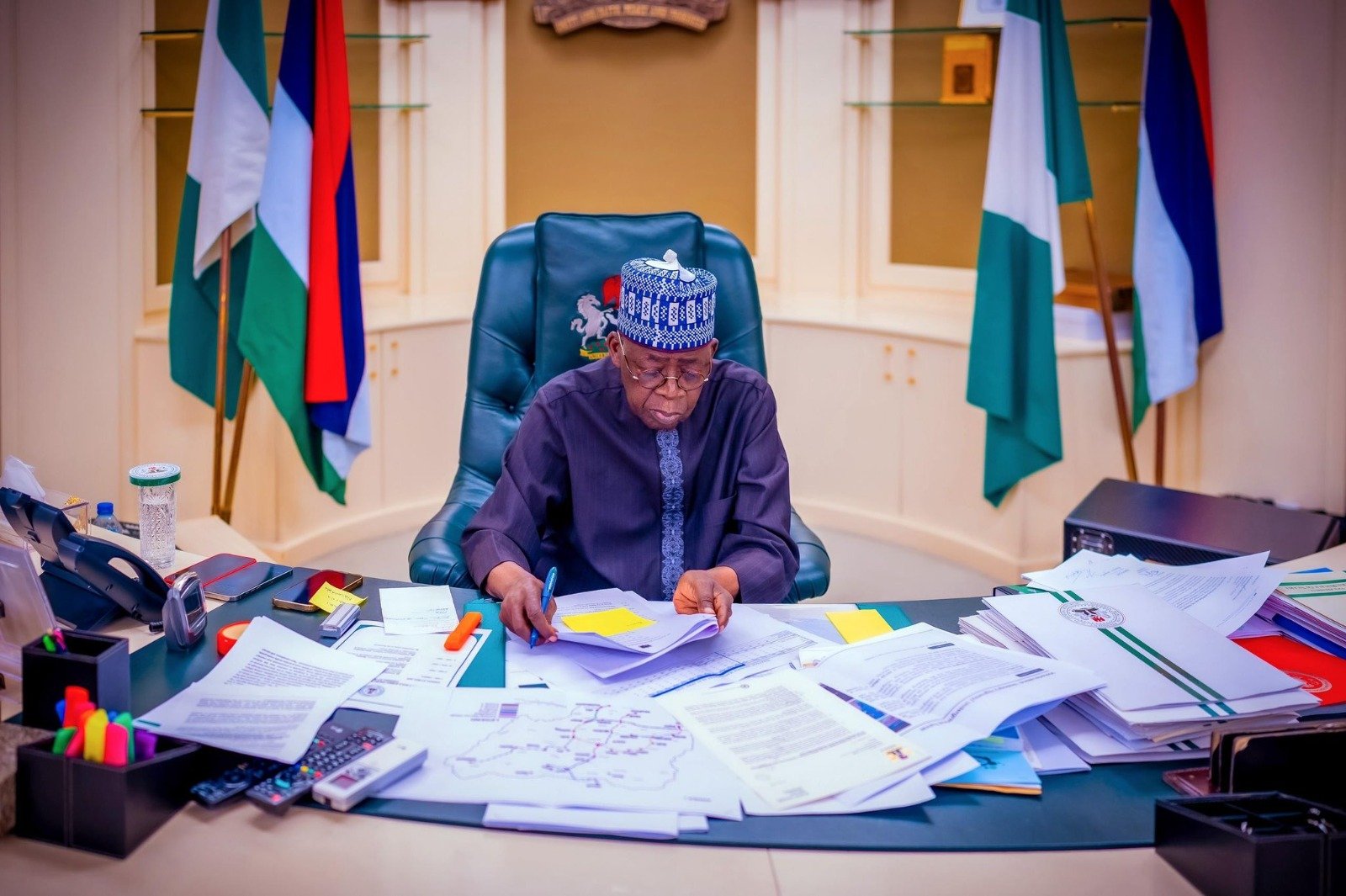
President Bola Tinubu has demanded at least two permanent seats for Africa on the United Nations Security Council, with veto powers, saying the current structure no longer reflects the distribution of global power.

Tinubu made the demand on Thursday in his address to the General Debate of the 81st Session of the United Nations General Assembly in New York.

The President’s address, delivered by Vice President Kashim Shettima, also called for five non-permanent seats for Africa on the Security Council.

He said the reform of the global body must begin with restructuring the Security Council, arguing that Africa could not continue to contribute to the council’s agenda without having permanent representation.

“The reform of this institution must begin with the reconstitution of the Security Council, for the world of 2026 cannot remain captive to the distribution of power in 1945. Africa cannot continue to fill the Council’s agenda while remaining absent from its permanent membership. Nigeria demands, in accordance with the Ezulwini Consensus and the Sirte Declaration, at least two permanent seats for Africa, with all the rights and responsibilities of permanent membership, including the veto for as long as it exists, and five non-permanent seats in total. The authority to speak for humanity carries an obligation to represent it.”

Tinubu said Nigeria was prepared to take on greater responsibility in international peace and security, citing the country’s contributions to peacekeeping and mediation efforts across Africa.

He listed Nigeria’s involvement in Liberia, Sierra Leone, Darfur, Mali and The Gambia, adding that the country continued to advance mediation, democratic governance, counter-terrorism and maritime security through ECOWAS, the African Union and Gulf of Guinea partnerships.

On climate change, the President rejected what he described as a false choice between development and climate action, saying developing countries needed support to industrialise while reducing emissions.

“We reject the false choice between development and climate action. Developing countries must industrialise, eradicate poverty and expand energy access through low-carbon pathways supported by technology transfer, capacity building and climate finance.

See also  Over 100 killed in Brazil raid as UN demands probe

“Africa contributes less than four per cent of greenhouse gas emissions, yet bears disproportionate consequences. Nigeria remains committed to the Paris Agreement and an equitable energy transition that reflects historical responsibility and capacity while protecting people’s right to development.”

Tinubu said Nigeria’s Energy Transition Plan was targeting net-zero emissions by 2060 while expanding access to affordable and reliable energy.

He said the plan combined renewable energy, clean cooking and gas as a transitional fuel with climate-smart agriculture and nature-based solutions.

The President also called for international climate finance to be based on equity and shared responsibility.

“Finance must be governed by equity and shared responsibility rather than charity, with international commitments translated into accessible, predictable and adequately funded mechanisms enabling developing countries to pursue climate action without compromising development objectives.”

On artificial intelligence, Tinubu called for responsible deployment of the technology, saying it could be used either for destructive purposes or to improve lives.

“We refuse to surrender our technological future to paranoia. An invention can be destructive or beneficial, depending on the purposes it serves and the judgement of those who use it. A knife can take a life in the hands of an assailant and save one in the hands of a surgeon. We can deploy artificial intelligence to wage war or use it to transform healthcare, education, agriculture, governance and economic productivity.

“Much of the anxiety surrounding AI reflects the distrust we have allowed to grow among us.”

He said Nigeria was investing in digital public infrastructure, broadband connectivity, innovation ecosystems, research institutions and technology entrepreneurship.

Tinubu invited international partners to collaborate with Nigerian youths in directing AI towards development.

“We invite the world to work with our inventive, resourceful and enterprising young people to direct AI towards humanity’s advancement rather than its destruction.”

The President also called for reforms to the international financial system, saying inadequate financing remained one of the biggest obstacles to sustainable development.

See also  Lawmakers protest as NASS okays e-transmission, manual backup ahead of 2027 elections

“Nigeria therefore calls for reform of the international financial architecture, wider access to concessional financing and debt sustainability frameworks that recognise developmental needs.”

He said Nigeria also supported innovative financing through private capital, blended finance, South-South cooperation and strategic partnerships for sustainable development, climate adaptation and resilient infrastructure.

Tinubu highlighted the African Continental Free Trade Area as an opportunity to strengthen regional value chains, increase intra-African trade and promote industrialisation.

He said Africa must move beyond exporting raw materials and focus on value addition, manufacturing, technological innovation and knowledge-driven growth.

“Our abundant natural resources must become engines of shared prosperity rather than sources of perpetual dependency.”

On security, the President said Nigeria’s experience fighting Boko Haram, ISWAP and other armed groups had shown that military victories alone could not guarantee lasting peace.

“Nigeria’s prolonged struggle against Boko Haram, ISWAP and other armed groups has taught us that military victories require enduring foundations in education, economic opportunity, accountable governance and communities whose rights and dignity are protected. Development cannot take root where violence repeatedly uproots livelihoods, and peace cannot endure where injustice and exclusion replenish the ranks of those who threaten it.”

Tinubu called for greater international cooperation against terrorism, organised crime, cyberattacks and illicit finance.

He also expressed concern about the continuing conflicts in Sudan and other war-torn countries, calling for urgent diplomacy and protection of civilians.

“All parties must uphold international humanitarian and human rights law, protect civilians and facilitate humanitarian access. Negotiated settlements must respect sovereignty and territorial integrity.”

The President said Nigeria remained committed to peaceful dispute settlement under the UN Charter and urged the strengthening of peacekeeping, peacebuilding, mediation and institution-building.

“We place our faith in diplomacy because military victories alone cannot secure lasting peace.”

Tinubu further called for greater recognition of Africa’s contribution to global development, describing the continent as a potential major driver of global growth.

“Developing countries must be recognised as indispensable partners whose contributions to global solutions and shared prosperity extend far beyond their need for assistance.”

See also  US announces drug and terrorism charges against captured Venezuelan President Maduro

He said the UN must evolve to reflect the aspirations of present and future generations, warning that institutions that failed to adapt risked losing their relevance.

Tinubu said Nigeria would continue to support cooperation, dialogue and partnership among nations.

“Nigeria pledges to choose cooperation over confrontation, dialogue over division, hope over fear and partnership over isolation.”

Concluding the address, the President said a reformed UN remained necessary to achieve global peace and sustainable development.

“A reformed, inclusive and effective United Nations is indispensable to the peaceful, just and sustainable world that future generations deserve. Whatever our differences, we must remember that humanity is our oldest citizenship, and peace is the inheritance we owe every child.”

The demand came against the backdrop of renewed calls for reform of the UN Security Council, with UN Secretary-General António Guterres saying Africa’s continued absence from permanent membership was “unjust and indefensible”. Guterres, speaking as world leaders gathered in New York for the 81st session of the UN General Assembly, said the council must be reformed to reflect the present-day global order.

He said, “We must reform the Council so that it reflects today’s world with the legitimacy and effectiveness that today’s challenges demand.”

The 15-member council currently has five permanent members China, France, Russia, the United Kingdom and the United States all of which have veto powers. The African Union has been seeking at least two permanent seats with full privileges, including veto power if the veto is retained, as well as five non-permanent seats.

Guterres has repeatedly backed reforms of global institutions to reflect present-day geopolitical realities. In February, he told African leaders that the absence of permanent African seats on the council was “indefensible”, arguing that the UN system must reflect today’s realities rather than that of 1945.

Source: punchng.com

FOLLOW US ON:

FACEBOOK

TWITTER

PINTEREST

TIKTOK

YOUTUBE

LINKEDIN

INSTAGRAM

Continue Reading

News

Implement Ogun disability law, PWDs beg Abiodun

Published

on

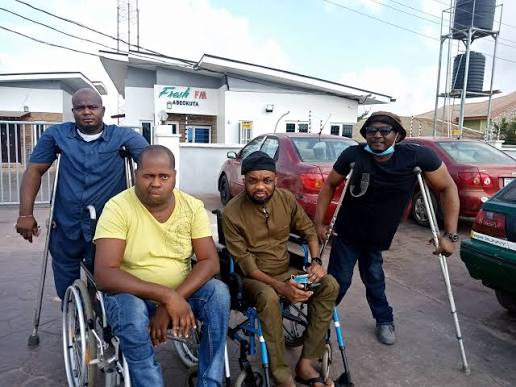
The Joint National Association of Persons with Disabilities and the Spinal Cord Injuries Association of Nigeria have called on the Ogun State Government to fully implement the state’s Disability Law, nearly nine years after it was signed into law.

The groups made the demand at a joint press briefing held on Wednesday at the NUJ Hall, Iwe Iroyin House, Oke-Ilewo, Abeokuta, urging Governor Dapo Abiodun to provide the political direction required to conclude the implementation process before the expiration of his tenure in eight months.

The Ogun State Disability Law was signed by the former governor, Senator Ibikunle Amosun, on December 27, 2017.

The groups, however, said the law had yet to be fully operationalised, leaving persons with disabilities waiting for the legal framework to translate into functioning institutions, enforceable protections and accessible public systems.

The National President of SCIAN, Abdulwahab Matepo, and the Chairman of JONAPWD, Ogun State chapter, Ayo Awobona, made the call during the joint briefing.

They said, “A law passed to protect the rights of persons with disabilities must not remain a law on paper. It must become a law in action.”

According to the groups, the disability community had engaged the state government and other stakeholders through meetings, consultations, letters, courtesy visits and media advocacy since 2025 in an effort to resolve issues surrounding the implementation of the law, without any success recorded.

They stressed that their campaign was not intended to confront the state government but to ensure that commitments were translated into concrete action.

See also  Senate recalls members from recess over rising insecurity

The groups said discussions about possible amendments to the law should not be allowed to indefinitely delay its implementation.

They advocated the operationalisation of the existing law in accordance with applicable legal procedures while any necessary amendments were pursued through the appropriate legislative process.

They said this would enable the government and the disability community to address implementation and possible improvements to the legal framework simultaneously.

The organisations said non-implementation had practical consequences for persons with disabilities, particularly in education, healthcare, transportation, employment, economic participation and political engagement.

They also called for accessible public institutions and mechanisms through which the rights of persons with disabilities could be protected and government obligations monitored.

The groups said the World Health Organisation estimated that about 16 per cent of the global population experienced significant disability.

They added that a 2025 JONAPWD “Assumptive Data of Persons with Disabilities in Nigeria” estimated that 1,032,221 persons were living with disabilities in Ogun State, based on a 15 per cent benchmark applied to the National Population Commission’s 2025 population projection.

Matepo said, “JONAPWD and SCIAN recognise government as an essential partner in achieving disability inclusion. We are therefore not presenting ourselves as opponents of government.

“We are presenting ourselves as partners seeking accountability and implementation. We remain ready to provide technical input, participate in consultations, review proposed amendments, mobilise the disability community and work constructively with government.

“But partnership must produce results. The disability community has demonstrated patience. We have written letters. We have attended meetings. We have made courtesy visits.

See also  Over 100 killed in Brazil raid as UN demands probe

“We have engaged legal experts. We have engaged government officials. We have undertaken public awareness activities. We have participated in consultations. And we have continued to pursue dialogue. The next step should now be action.”

He added, “We respectfully call on His Excellency, Prince Dapo Abiodun, CON, to provide the necessary political direction to ensure that the process of implementing the Ogun State Disability Law is concluded before the expiration of his term in office.

“JONAPWD has already formally appealed to the Governor to intervene and direct the relevant authorities to conclude the necessary processes and commence implementation. We therefore ask that this matter receive the necessary attention at the highest level of the state government.”

Source: punchng.com

FOLLOW US ON:

FACEBOOK

TWITTER

PINTEREST

TIKTOK

YOUTUBE

LINKEDIN

INSTAGRAM

Continue Reading

News

Argentine president slams UN as ‘useless’ over Falklands dispute

Published

on

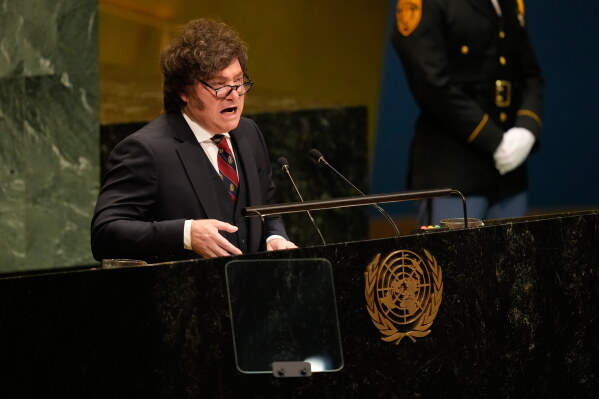
Argentine President Javier Milei attacked the United Nations in a speech to the world body on Wednesday, calling it a “useless organisation” filled with “arrogant parasites.”

Milei, one of US President Donald Trump’s closest Latin American allies, has repeatedly used the UN platform to criticise global governance and its “woke” agenda.

He accused the United Nations on Wednesday of having failed in its duty to guarantee collective security and human rights, saying it had instead allowed “chaos, violence and international terrorism” to flourish.

The UN, he said, “has become a useless organisation, serving only to feed a caste of fatally arrogant parasites disguised as well-intentioned bureaucrats.”

He accused the organisation of “looking the other way” on Argentina’s claim to the Falkland Islands, a British overseas territory which Argentines refer to as Las Malvinas and claim as part of their land.

Argentina has accused Britain of flouting a UN resolution ordering both parties to desist from unilateral action in the islands, over which the two countries fought a war in 1982.

“Those who follow the rules receive no reward for doing so, while those who break them face no repercussions whatsoever,” Milei said.

Underscoring Milei’s close ties with Trump, Argentina and the United States on Wednesday announced a joint initiative to improve the Latin American nation’s infrastructure and connect it with “vital economic sectors to major Atlantic ports and Western markets.”

The so-called Andes-Atlantic Corridor aims to facilitate investment in transport, digital infrastructure, minerals and energy, including Vaca Muerta, a massive hydrocarbon deposit in southern Argentina, a joint statement said.

See also  Senate recalls members from recess over rising insecurity

Last Saturday, PUNCH Online reported that the United Kingdom backed businesses and individuals operating in the Falkland Islands after an Argentine federal judge ordered British and Israeli companies to halt development of an oil project near the disputed territory.

The UK Minister for Overseas Territories, Uma Kumaran, said the government stood behind businesses and individuals supplying goods and services to the Falkland Islands, including those in the hydrocarbons sector.

AFP

Source: punchng.com

FOLLOW US ON:

FACEBOOK

TWITTER

PINTEREST

TIKTOK

YOUTUBE

LINKEDIN

INSTAGRAM

Continue Reading

Trending