Connect with us

Lifestyle

Some Nollywood stars refused to support Temitope Osoba’s burial — Actress

Published

on

Nollywood actress Toyosi Adesanya has alleged that some of her colleagues declined to support the burial of late actress Temitope Osoba because they claimed she was not a member of the Theatre Arts and Motion Pictures Practitioners Association of Nigeria.

Adesanya made the allegation on Tuesday at the candlelight procession and artistes’ night held in honour of Osoba in Ikeja, Lagos State.

The actress, who is the National Director of Social and Welfare of TAMPAN, represented the association’s President, Bolaji Amusan, popularly known as Mr Latin, at the event.

She appealed to practitioners in the entertainment industry to support one another in life and death, while condemning what she described as deception and “eye service” among colleagues.

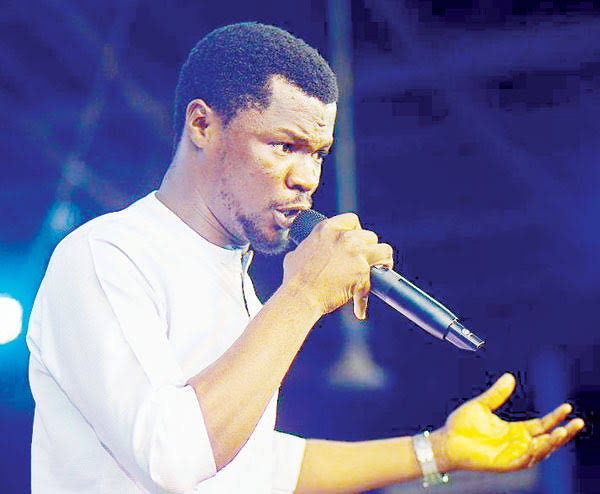
Screenshot from the video of actress Toyosi Adesanya speaking at the candlelight procession of late Temitope Osoba. Credit: City Edge TV

According to her, efforts to raise funds for Osoba’s burial after her death were resisted by some practitioners who questioned her membership of TAMPAN.

“Do you know that when Tope died, I was talking to the president about soliciting some funds for her burial but some of our colleagues declined, saying that she wasn’t a member of TAMPAN and that she didn’t practise.

“Someone who is dead and I can confirm was a member in Eti-Osa chapter, yet you are still beefing her. You people are going about saying that they shouldn’t contribute a dime for her because she’s not a member. That is bad. The same thing happened when Murphy Afolabi died,” she said.

Osoba’s death came barely a year after she publicly shared her experience battling breast cancer and appealed for financial support for her treatment.

See also  Maiduguri cleaner explains why she returned N4.8m bank error

In August 2025, she announced her return to acting after undergoing surgery and other treatment, saying she had been declared cancer-free.

Her death subsequently generated reactions and controversy among colleagues and fans, particularly over the level of support she received from members of the entertainment industry before and after her death.

Adesanya urged actors and other practitioners to stop waiting until their colleagues die before celebrating or supporting them, stressing that people should be appreciated while they are still alive.

“I have a message for you all, let’s celebrate ourselves while we are alive. Don’t judge anybody, let’s focus on our lives. Temitope came, saw but lost the battle to death,” she said.

The actress also criticised what she described as hypocrisy within the industry, noting that the number of people who attended Osoba’s candlelight procession appeared to contrast with the support she said was offered to the late actress when she needed it.

Adesanya urged practitioners to replace rivalry and division with love, unity and genuine support, stressing that death should not be the point at which colleagues begin to demonstrate concern for one another.

Source: punchng.com

FOLLOW US ON:

FACEBOOK

TWITTER

PINTEREST

TIKTOK

YOUTUBE

LINKEDIN

INSTAGRAM

Continue Reading
Click to comment

Leave a Reply

Your email address will not be published. Required fields are marked *

Lifestyle

**THE LIABILITY WIFE 💔**

Published

on

Marriage is supposed to be a partnership—not a one-person survival mission.

A “liability wife” is not simply a woman who earns less money or stays at home. A liability is a partner who consistently **takes without giving, demands without appreciating, creates problems without helping to solve them, and expects the other person to carry everything alone.**

She may want the best lifestyle but refuse to contribute to building it.

She may spend freely while her husband struggles with bills.

She may constantly demand but rarely appreciate.

She may criticize his efforts while doing little to support his vision.

She may turn every challenge into another burden instead of standing beside him during difficult seasons.

But let’s be honest: **this can happen with either spouse.** A husband can also become a liability to his wife.

Marriage is not about who brings the biggest salary. It is about **teamwork, sacrifice, responsibility, loyalty, respect, and mutual support.**

A good wife doesn’t have to be rich to be valuable.

She can contribute through wisdom, encouragement, discipline, emotional support, household responsibilities, business ideas, caring for the family, or simply standing beside her husband when life becomes difficult.

And a good husband should do the same.

**The goal should not be to marry someone who makes your life perfect.**

The goal is to marry someone who will help you face life’s imperfections together.

Before you marry, don’t only ask:

**“Do I love this person?”**

Also ask:

**“Can we build together?”**
**“Can we suffer together?”**
**“Can we communicate?”**
**“Can we manage money responsibly?”**
**“Will this person support me when things get difficult?”**
**“Am I also prepared to be a good partner?”**

See also  Early detection crucial to fighting cancer – Anambra first lady

Because beauty can attract you.

Money can impress you.

Chemistry can excite you.

But **character, responsibility and partnership are what help a marriage survive.**

**Choose a partner—not a burden.** ❤️💍

FOLLOW US ON:

FACEBOOK

TWITTER

PINTEREST

TIKTOK

YOUTUBE

LINKEDIN

INSTAGRAM

Continue Reading

Lifestyle

BLOOD MONEY / MONEY RITUAL: WHEN THE LOVE OF MONEY BECOMES A DANGEROUS TRAP

Published

on

Money is useful, but the desperate pursuit of wealth can become destructive when people begin to place riches above human life, morality, conscience, and God.

The Bible does not teach that wealth itself is evil. Rather, it warns us about the love of money and the terrible things people can do when greed controls their hearts.

1 Timothy 6:10 (KJV) says:

“For the love of money is the root of all evil: which while some coveted after, they have erred from the faith, and pierced themselves through with many sorrows.”

This is a serious warning. When money becomes more important than God, some people may become willing to lie, steal, defraud, exploit others, or even participate in violent and occult practices in the hope of becoming rich.

BLOOD MONEY IS NOT TRUE PROSPERITY

Money obtained through the suffering, exploitation, or destruction of another person is not a blessing simply because it makes someone financially rich.

Jesus asked in Mark 8:36 (KJV):

“For what shall it profit a man, if he shall gain the whole world, and lose his own soul?”

What is the benefit of possessing great wealth if it comes at the cost of your conscience, your relationship with God, or another person’s life?

No amount of money can compensate for a lost soul.

THE BIBLE WARNS AGAINST THE LOVE OF RICHES

Matthew 6:24 (KJV) says:

“Ye cannot serve God and mammon.”

A person cannot make money his god and still claim that God occupies first place in his heart.

See also  The Prestigious Awzaw Title Among the Igbos — As Documented by George T. Basden (1921)

The problem begins when someone says, “I must become rich at all costs.”

That mindset can lead people into dangerous decisions.

The Bible instead teaches us to seek God and live righteously.

Matthew 6:33 (KJV):

“But seek ye first the kingdom of God, and his righteousness; and all these things shall be added unto you.”

THERE IS NO SHORTCUT TO GOD’S BLESSING

Some people desire wealth without patience, honest work, discipline, or integrity. They want instant riches and may become vulnerable to people promising supernatural wealth through rituals and sacrifices.

But Scripture repeatedly emphasizes honest labor and righteousness.

Proverbs 10:22 (KJV):

“The blessing of the LORD, it maketh rich, and he addeth no sorrow with it.”

God’s blessing does not require you to destroy another human being.

God does not need human blood as the price for your financial success.

GREED CAN DESTROY A PERSON

The Bible gives us the example of Judas Iscariot, who betrayed Jesus for money.

Matthew 26:15 (KJV) says:

“And said unto them, What will ye give me, and I will deliver him unto you? And they covenanted with him for thirty pieces of silver.”

Judas received money, but what he gained financially could never compensate for what he lost spiritually and morally.

His story demonstrates the danger of allowing money to become more valuable than truth and righteousness.

DO NOT LET GREED CONTROL YOUR HEART

Luke 12:15 (KJV) says:

“Take heed, and beware of covetousness: for a man’s life consisteth not in the abundance of the things which he possesseth.”

See also  Apostle Chibuzor Suspends Wedding Of Autistic Daughter Amid Backlash

Your worth is not determined by the amount of money in your bank account, the car you drive, the house you live in, or the possessions you own.

A person can be wealthy and still be miserable.

A person can be poor and still have peace, dignity, love, and a clear conscience.

CHOOSE HONEST WEALTH

The Bible encourages people to work honestly rather than pursue wealth through wickedness.

Ephesians 4:28 (KJV) says:

“Let him that stole steal no more: but rather let him labour, working with his hands the thing which is good…”

There is dignity in honest work.

There is dignity in starting small.

There is dignity in building gradually.

There is dignity in struggling without compromising your conscience.

Proverbs 28:20 (KJV) also says:

“A faithful man shall abound with blessings: but he that maketh haste to be rich shall not be innocent.”

The desire to become rich quickly can become a dangerous trap.

YOUR LIFE IS MORE VALUABLE THAN MONEY

If someone offers you wealth in exchange for harming another person, abandoning your conscience, or participating in something evil, walk away.

Money can be lost and regained.

A business can fail and be rebuilt.

A job can be lost and another opportunity can come.

But a human life cannot simply be replaced.

Jesus said in Matthew 16:26 (KJV):

“For what is a man profited, if he shall gain the whole world, and lose his own soul?”

FINAL WARNING

Do not allow poverty, frustration, peer pressure, social media, or the desire to impress people to push you into dangerous practices.

See also  The 1973 Nigerian “Hides and Skins” Postage Stamp: A Window into Economic Identity

You do not need blood money to succeed.

You do not need to sacrifice another person for wealth.

You do not need occult power to build a meaningful life.

Work honestly. Learn a skill. Build patiently. Save. Invest wisely. Help others. Pray. Trust God.

Hebrews 13:5 (KJV) says:

“Let your conversation be without covetousness; and be content with such things as ye have…”

Proverbs 11:4 (KJV) reminds us:

“Riches profit not in the day of wrath: but righteousness delivereth from death.”

Choose righteousness over riches.
Choose life over greed.
Choose integrity over shortcuts.
Choose God over money.

Because at the end of life, the question will not simply be, “How much money did you make?”

The greater question is:

“What did you become while pursuing it?”

FOLLOW US ON:

FACEBOOK

TWITTER

PINTEREST

TIKTOK

YOUTUBE

LINKEDIN

INSTAGRAM

Continue Reading

Lifestyle

Catholic bishops’ inconvenient truth

Published

on

Politics and religion often conflate into a toxic brew. So, it is with the storm over John Onaiyekan’s comments after the recent meeting between President Bola Tinubu and the Catholic Bishops’ Conference of Nigeria. As the waves billow and swell, the encounter opens a window into the tremors in government rather than the cardinal’s intentions.

Instead of treating the bishops’ observations as sincere moral feedback from a respected institution, some of the administration’s vocal defenders responded with personal attacks, accusing the cardinal of partisanship and abuse of clerical privilege.

That reaction was unfortunate and avoidable.

No elected government claiming democratic credentials should treat independent criticism as hostility.

Yet the ferocious responses from the Minister of the FCT, Nyesom Wike; the President’s Special Adviser on Policy Communication, Daniel Bwala; and the SSA on Media, Temitope Ajayi, suggested Onaiyekan had committed a grave offence by saying the bishops told the President Nigeria was “bleeding,” that poverty was worsening, and many were struggling under economic reforms.

The cardinal’s fault was not fabricating facts but speaking publicly about an uncomfortable conversation.

He said the President disagreed, insisting the economy was improving and reforms were laying the foundation for recovery.

The bishops, he said, neither expected agreement nor sought to embarrass the President; they were discharging a moral duty to tell him what many Nigerians could not.

That should have ended the matter. Instead, critics turned a healthy exchange into a public quarrel. Bwala questioned the cardinal’s neutrality, alleging the church supported Peter Obi in 2023.

Ajayi dismissed the bishops as offering only one perspective. Wike argued that having taken sides in a past election disqualified the cardinal from impartiality and faulted the bishops for questioning INEC’s neutrality ahead of 2027 without stronger proof.

These points merit consideration. Religious leaders, like journalists and civil society actors, should aim for fairness as credibility rests on intellectual honesty. Achievements by government should be acknowledged. But fairness works both ways.

The administration’s defenders owe Nigerians an honest engagement with the bishops’ substance rather than attempts to discredit the messengers.

Who the cardinal voted for is irrelevant to whether millions of Nigerians are suffering. Hunger and inflation do not check party membership before striking families.

See also  Oba Abdul-Lateef Adeniran Akanni (Obaarun-Oladekan I): The Olofin Adimula of Ado-Odo

One of the weakest responses to public criticism is to attack motives while avoiding the issues raised. That strategy failed to convince many Nigerians. Therefore, it is no surprise that support for Onaiyekan flowed from across civic space.

The Northern Youth Council said he reflected lived realities; the Middle Belt Forum called the attacks unfair; the Catholic Laity Council defended the church’s pastoral duty to speak for the vulnerable.

Former governor and minister Rotimi Amaechi, himself a Catholic, reminded the Presidency that bishops have every right to criticise governments and urged responses based on evidence, not indignation.

Even Orji Kalu, APC senator and former Abia State governor, threatened to resign from the party if the bishops were insulted, noting their similar interventions across Africa.

The public backlash appears to have prompted moderation. Secretary to the Government of the Federation, George Akume, reaffirmed the administration’s respect for the Catholic Church and promised deeper consultations.

That is the mature response expected of a confident government, and it should have been the first instinct.

The episode exposes a deeper problem.

With the 2027 elections on the horizon, there is a growing tendency in official circles to interpret every criticism through a partisan lens.

Independent institutions that refuse to sing from the government’s hymn book risk being branded hostile. Such defensiveness serves neither democracy nor good governance.

Onaiyekan’s sharper point was that too many people around the President paint an overly rosy picture of the country. Whether entirely fair, the observation highlights a real danger that administrations insulated by courtiers and loyalists risk mistaking praise for patriotism.

Presidents need more than briefings, official statistics and flattering presentations. They need uncomfortable truths from independent voices including economists, labour unions, journalists, business leaders, traditional rulers and religious organisations.

Governments that refuse to listen lose touch with the people they govern. That is why criticism is not the enemy of reform; silence is.

The Tinubu administration can rightly argue it inherited an economy in deep distress and that difficult choices were necessary. Removing the petrol subsidy and liberalising the foreign exchange market were politically costly but, many economists agree, economically inevitable.

See also  The Prestigious Awzaw Title Among the Igbos — As Documented by George T. Basden (1921)

The government has expanded fiscal space for states, created NELFUND, launched youth initiatives, and helped end the destructive cycle of prolonged ASUU strikes. These are notable achievements and deserve acknowledgement.

But governments are judged by citizens’ lived realities, not only by economic theory or improving macro indicators.

Foreign reserves have strengthened to $52 billion from about $3 billion, fiscal revenues rose to all-time highs, and the naira exchange rate has stabilised compared with the immediate post-reform shock.

Yet these gains have not delivered meaningful relief for the average Nigerian. Inflation remains punishing at over 15 per cent and above 37 per cent in at least 10 states; food and transport costs are soaring; healthcare and medication are costly; electricity tariffs and rent have escalated; small businesses struggle with high energy costs and expensive credit.

For too many families, over 70 per cent of income is spent on feeding alone. Multidimensional poverty affects 63 per cent of Nigerians, per the World Bank.

The bishops sought to communicate that reality. It cannot be dismissed by citing encouraging macro trends.

The reforms are also incomplete. A parallel foreign-exchange market persists, reflecting distortions and weak confidence.

Oil production remains below projections. Domestic refiners complain of inadequate crude supply even as the government extends Project Gazelle with a new $4.5 billion refinancing, raising concerns about future crude commitments while local refining capacity is planned to double.

External debt keeps rising, increasing exchange-rate exposure and debt-service obligations, which already consume half of revenues.

Terrorism, banditry and kidnapping continue to terrorise large swathes of the country, driving farmers from fertile lands and worsening food inflation.

Official and independent reports indicate that more than 628,000 people have been killed and over 2.2 million abducted since 2023, according to a BusinessDay report in June.

These are measurable national realities, not opposition talking points. Governments need independent voices to speak honestly about them.  No pushback can erase the fact that Nigeria is bleeding.

The Catholic Church has a long history of such moral witness. During military rule, bishops such as Olubunmi Okogie, an Emeritus Cardinal, condemned authoritarianism, corruption and human-rights abuses.

See also  The 1973 Nigerian “Hides and Skins” Postage Stamp: A Window into Economic Identity

Under democratic governments, the church continued to criticise administrations across the political spectrum over insecurity, governance failures and human suffering. Its loyalty has been to moral principles, not to any party.

Tinubu should not regard himself as uniquely persecuted, nor should his supporters mistake clerical witness for partisan politics.

Religious leaders are, firstly, citizens. They bury terrorism victims, counsel unemployed graduates, comfort widows and feed hungry families. If such leaders cannot speak about poverty, insecurity and governance, democracy becomes a farce.

Political parties are also inconsistent. Many who now defend petrol subsidy removal opposed it when it was proposed under President Goodluck Jonathan. Those who benefited from the freedom to criticise must not deny others the same liberty when roles reverse.

One of the most perilous governance tendencies is believing that criticism weakens government. On the contrary, governments make worse mistakes when they become prisoners of official optimism.

They need independent feedback to test whether policies yield intended outcomes. Economic models and official reports are necessary but insufficient; they must be complemented by honest input from labour, business, academia, the media, civil society and faith leaders. Without it, governments risk governing statistical abstractions rather than human realities.

It is encouraging that the administration now appears to be recalibrating. Akume’s pledge of deeper engagement deserves commendation.

Consultation, not confrontation, marks mature democratic leadership. The Presidency gains nothing by quarrelling with institutions focused on the country’s welfare.

Tinubu has often said he welcomes constructive criticism. He insisted that he sought the job and should not be pitied. This episode is a chance to prove it.

Labelling respected clerics as partisan for voicing uncomfortable truths suggests the administration may lack confidence in the transformative power of its own reforms. That is diminishing.

Nigeria’s problems are too serious for official defensiveness. Reform is a journey requiring constant feedback. The bishops fulfilled their civic and moral duty. The Presidency must perform its constitutional role by listening, not by silencing dissent.

Source: punchng.com

FOLLOW US ON:
FACEBOOK

TWITTER

PINTEREST

TIKTOK

YOUTUBE

LINKEDIN

INSTAGRAM

Continue Reading

Trending