Connect with us

Lifestyle

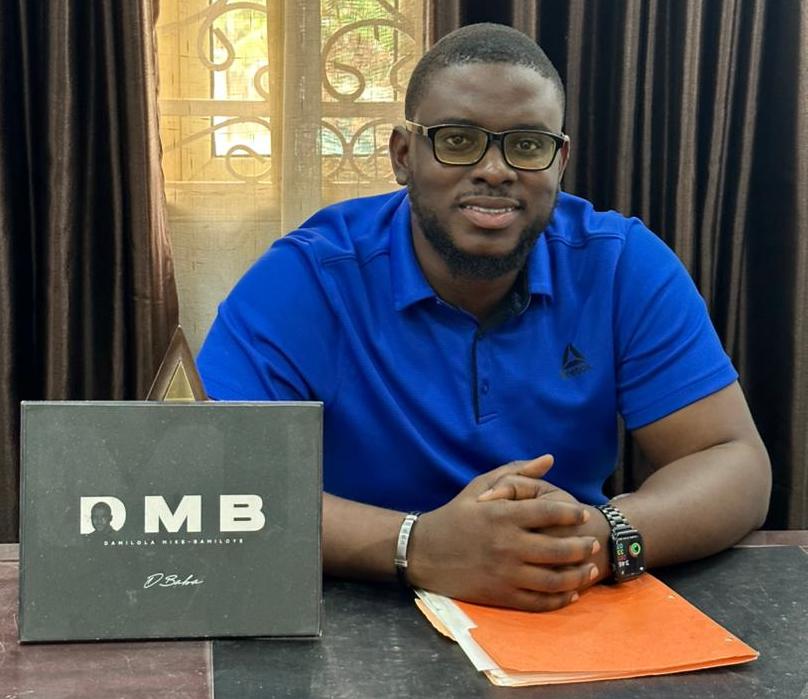
Damilola Mike-Bamiloye revealed how Dad rejected the plan to remake ‘Agbara Nla’

Published

on

A Christian actor and filmmaker, Damilola Mike-Bamiloye, speaks with DAMOLA ADEDIGBA about why they are remaking the 1993 classic movie, ‘Agbara Nla’, working with his father and other issues

The original Agbara Nla was released in 1993 and became a defining film for Mount Zion Films. What inspired you and your brother, Joshua, to revisit the story more than three decades later?

About four years ago, Joshua and I approached my dad (Mike Bamiloye) with the idea of revisiting some of the old stories, particularly Agbara Nla. We were exploring how some of those stories could be retold in a contemporary setting for a new generation. We played out different scenes in our minds and thought it would be an amazing idea.

We presented the idea to dad, but he told us it was not yet time. We respected that decision and left it at that.

Fast-forward to last year, I was having a conversation with a friend of mine, Chris, who is a producer, about the possibilities within God’s kingdom and filmmaking. Since he had worked on some remakes, I suggested the idea of remaking Agbara Nla.

Initially, it was simply an idea we were exploring, but he became excited about it and immediately felt a strong conviction that it was something we needed to pursue. He said, in essence, “This is it. We have to make it again.”

I explained to him that Joshua and I had previously approached our dad about the idea, but he had told us it was not yet time. However, Chris believed that the timing had changed and that the project could work.

We prayed about it, discussed it with some other friends and eventually went together to meet dad. Surprisingly, he did not discourage us. Instead, he gave us his approval and said, “Yes, go ahead and do it.”

By the grace of God, the idea eventually became a film. Looking back, the entire process of making ‘Agbara Nla: The Return’ feels almost like a dream. Everything seemed to unfold according to God’s plan.

We shot the film in about 20 to 21 days, and after that, things continued to fall into place. Looking back now, I believe that if we had made the film when we initially wanted to, it might not have had the same level of impact.

When dad told us four years ago that it was not yet time, it was simply because it was not yet time. In retrospect, we can see that the timing was part of God’s plan.

For people who watched the original Agbara Nla, how much of the original storyline should they expect to see in the remake?

We are bringing the entire story into this new film. All the characters are represented, and the story, from beginning to end, is captured in the new production.

The original film appealed to the generation, age and time in which it was made. This new one, however, is designed to appeal to this generation, this age and this time.

So, we are bringing the same story but presenting it in a modernised way. The story remains the same, but it has been adapted to reflect contemporary realities.

Most importantly, we believe the same degree of spiritual power is present in this new production. In fact, when the cast and crew watched the completed film, we could feel the power of God emanating from the screen and impacting everyone.

The original dealt heavily with spiritual warfare, cultism and the supremacy of God’s power. What contemporary issues did you introduce to make these themes relevant to today’s audience?

Agbara Nla is not just a story; it is God’s word. The beauty of God’s word is that it is everlasting. Its impact remains relevant across generations. Just like the Bible, which was relevant in the past and remains relevant today, God’s word does not fade away or expire.

What we are essentially doing is acting out God’s word and demonstrating the power of God, and that message remains relevant. The new film contains all the elements of the original, including spiritual warfare, because the life we live is actually more spiritual than physical.

Whatever happens in the physical has its roots in the spiritual. That is why the film teaches the importance of spiritual warfare, holding on to God and allowing Him to fight our battles. It also emphasises the importance of seeking God’s kingdom first, which should be our priority.

There are many lessons to learn from the movie. However, I implore everyone to go to the cinema and discover those lessons for themselves. What affects me personally or what I take away from the film may be entirely different from what another person gains from it.

I do not want to limit the scope of the film by defining what everyone should take away from it. I believe that when you watch it, it will speak to you differently and uniquely, depending on what you are going through at that particular point in your life.

Your father returns as Isawuru. What was it like directing him in a role that has become iconic among Mount Zion fans?

It was a very emotional process for me because I remember that when he played Isawuru in 1993, I was only four years old. I watched the film, loved it and went back home trying to imitate everything he did.

I remember gathering my siblings and reenacting some of the scenes from the original film. I would play Isawuru, pick up a leaf and recite some of the incantations, even though I would often get the words completely wrong.

I also remember watching my dad do his own make-up. He would apply the make-up himself and put powder on his hair to make himself look older.

Now, seeing him step into the same character without having to use powder or makeup to appear older, but instead playing Isawuru at his actual age, is remarkable.

Back then, he was trying to portray a man in his 50s or 60s. Now, he is 60, so he was able to step into the character naturally and bring a different depth to it.

In essence, it became even better. It was an amazing and wonderful experience for my brother, Joshua, and I.

You are not only directing the film, but also playing the role of Kola. How did you balance being behind the camera with also being an actor in such an important production?

I thank God for His grace, and also for my brother who stepped in as the co-director. When I’m on set, Joshua is directing, and when I’m not on set, I pick up the directing and continue with it.

The original was largely experienced through television and home video. Why is the return going to the cinemas nationwide?

As a matter of fact, we need to understand that Agbara Nla was written with the cinema in view. We had several post-productions and script edits. We had to look through the script over and again. We had so many people come together, bringing their thoughts and opinions, just to fit the cinema standard.

So, it’s not just from one person’s lens. It’s a movie that was cooked with different lenses of different people and different professionals.

So, when you’re watching it, you’re having a real cinematic experience, not just watching drama or people having long conversations. You’re seeing action, you’re seeing thriller, you’re seeing everything.

There’s a generation that grew up with the original Agbara Nla, while many young Nigerians may be encountering the story for the first time. How did you make the film appeal to both generations without losing the identity of the original?

The message is the same, but the technicality and the approach to delivering the message are different. So, it’s done with so much excellence in mind.

We used one of the best and latest cameras, to the glory of God. These are very expensive cameras to rent, but God provided the funds. We also used a lot of equipment, added graphics and illustrations, and had so many special effects.

All of that is to appeal to this generation. We believe it is going to get the attention of the new generation and bless them. Because whatever we do, the entertainment value that we put there is that evangelistic essence that will hit them and win them over to Christ, which is our core objectives: winning souls.

Your father has described Agbara Nla as a story whose journey began as far back as 1987. What does it mean to you personally to be part of the generation bringing this vision into a new era?

I feel blessed, privileged and honoured. I thank God that my father is alive to be part of this experience. It is a great privilege to be part of this new era, and to God be the glory.

The trailer has already generated a lot of curiosity and nostalgia. Without giving away spoilers, what should audiences expect from the movie?

There’s a lot in the original that you’ve not seen. For example, the first chapter of the film was originally written by me. There’s a reference to the original film so as to give a better background to who Isawuru is and the things that he did in the original film.

The original started with Isawuru just doing evil, but now we have more insight into who this man really is. We have the king character, which was not in the original film, and the kingdom of Muwonleru, which was also not in the original film. We have the altercation between the king and Isawuru, which was not in the original film. So, there’s a lot that has been added.

However, the things added are not to take away the essence of the film, but to validate the power and storytelling technique of the film.

What has kept Mount Zion’s vision alive despite challenges in filmmaking?

The word of God is what has kept the ministry alive. The fact that there are many voices, but the only voice that our father stuck to and that has been passed down to us, is the voice of God.

That’s the voice that we are passing to the next generation. The word of God is alive and is sharper than any two-edged sword.

How have you been able to overcome the challenges of Christian filmmaking?

God has really helped us. It has not been easy. There have been ups and downs, but through it all, the grace of God has been sufficient.

And the idea is to just keep our eyes focused on Jesus, who has called us into ministry. If it was the church that called us, then we would have the right to brag or get angry that we’re not being supported enough. But it wasn’t man that called us into this ministry; it was God that called us.

And because God was the one who called us into this ministry, He is going to take care of us. That’s the belief that we have, that He is taking care of us and taking us to the next level.

I believe the next level for Mount Zion is the cinema. And by the grace of God, we are taking over, in Jesus’ name.

How do you hope to preserve Mount Zion’s legacy while embracing new ideas?

By holding on to God’s Word and sticking to His Word. That’s the core of everything we’re doing, to win souls and evangelise through drama.

Even as we embrace new ideas and new approaches, the foundation remains the same: God’s Word, winning souls and evangelising through drama.

Source: punchng.com

FOLLOW US ON:

FACEBOOK

TWITTER

PINTEREST

TIKTOK

YOUTUBE

LINKEDIN

INSTAGRAM

See also  Ooni, Sultan, Kwankwaso, Oyinlola, Duke and other Dignitaries attend Ladoja’s coronation in Ibadan
Continue Reading
Click to comment

Leave a Reply

Your email address will not be published. Required fields are marked *

Lifestyle

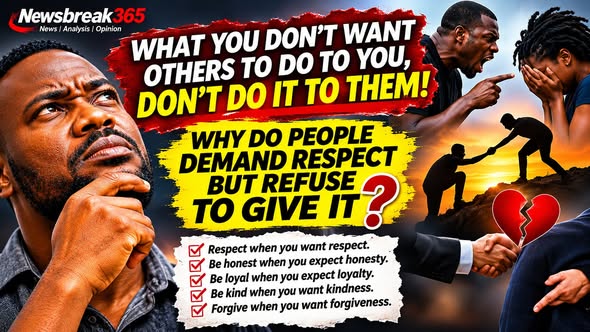
WHAT YOU DON’T WANT OTHERS TO DO TO YOU, DON’T DO IT TO THEM: WHY DO PEOPLE DEMAND RESPECT BUT REFUSE TO GIVE IT

Published

on

Some people want loyalty but betray others. They demand honesty but live by deception. They expect kindness but treat people with cruelty. So why do we expect others to treat us better when we refuse to treat them the same way?**

There is something deeply disturbing about human behaviour: some people want the best treatment from everyone around them, yet they have no problem making other people’s lives miserable.

They want respect, but they disrespect others. They want loyalty, but they betray those who trust them. They want forgiveness, but they hold grudges. They want people to understand their struggles, but they show no compassion when someone else is going through difficult times.

The biggest problem is that many people have become experts at identifying how others have wronged them while remaining completely blind to the pain they inflict on others.

**Is this not the height of hypocrisy?**

## THE HYPOCRISY OF DEMANDING WHAT YOU CANNOT GIVE

Think about it.

You don’t want anyone to embarrass you in public, yet you find pleasure in humiliating others.

You don’t want anyone to betray your trust, yet you betray people who genuinely believe in you.

You don’t want anyone to lie to you, yet you manipulate the truth whenever it benefits you.

You don’t want anyone to take advantage of your kindness, yet you exploit the kindness of others.

You don’t want anyone to abandon you when you need help, yet you disappear when someone needs you.

See also  See what a terror-free Nigeria supposed to look like

You don’t want people to speak badly about you behind your back, yet you participate in destroying other people’s reputations.

And when someone finally decides to treat you the way you have treated them, suddenly, you become the victim.

**Why should you expect a different standard of treatment when you refuse to practise the same values you demand from others?**

## PEOPLE HAVE FEELINGS TOO — NOT EVERYONE WILL TELL YOU WHEN YOU HURT THEM

One of the most dangerous assumptions people make is believing that someone who remains silent is not hurting.

Some people smile while carrying emotional wounds. Some people pretend everything is fine because they don’t want to explain their pain. Others simply withdraw because they have realised that explaining their feelings to someone who doesn’t care is a waste of time.

Never mistake someone’s silence for weakness.

The person you constantly insult may eventually stop speaking to you. The person whose kindness you repeatedly exploit may eventually walk away. The person you repeatedly disappoint may eventually stop expecting anything from you.

And when that happens, don’t always accuse them of changing.

Sometimes, your behaviour is the reason they changed.

## YOUR ACTIONS SAY MORE ABOUT YOU THAN YOUR WORDS

It is easy to preach about love, respect, kindness, loyalty and humanity.

It is easy to post inspirational quotes about treating people well.

It is easy to condemn wickedness when you are the victim.

But the real test of character is how you treat people when you have power over them, when they cannot offer you anything in return, and when nobody is watching.

See also  Flood crisis: NEC slashes prevention fund by 50%, approves N83bn

Do you respect people who cannot help you financially?

Do you treat workers, cleaners, security guards and vulnerable people with dignity?

Do you keep people’s secrets?

Do you apologise when you are wrong?

Do you consider the emotional consequences of your actions before hurting someone?

These are the questions that reveal genuine character.

## BEFORE YOU HURT SOMEONE, PUT YOURSELF IN THEIR SHOES

Imagine someone treating your mother, father, spouse, children or someone you deeply love the same way you treat other people.

Would you accept it?

Imagine being betrayed by someone you trusted. Imagine being publicly humiliated, manipulated, lied to or emotionally destroyed by someone you considered a friend.

Would you call it acceptable?

If you wouldn’t want it done to you or someone you love, why do you think it is acceptable to do it to another human being?

Nobody is perfect. Everyone makes mistakes. But there is a difference between making mistakes and repeatedly hurting people without taking responsibility.

**Being human is not an excuse for treating other human beings like they don’t matter.**

## THE GOLDEN RULE WE SHOULD NEVER FORGET

The principle is simple:

**WHAT YOU DON’T WANT OTHERS TO DO TO YOU, DON’T DO IT TO THEM.**

If you want respect, learn to respect others.

If you want honesty, be honest.

If you want loyalty, demonstrate loyalty.

If you want kindness, show kindness.

If you want forgiveness, learn to forgive.

If you want people to consider your feelings, start considering theirs.

The world would be a much better place if people stopped measuring good behaviour by what they personally receive and started measuring it by what they give.

See also  11th Senate to consider six-year single term for president, governors – Lawmaker

Remember, you are not the only person with feelings. You are not the only person who deserves respect. And you are certainly not the only person whose heart can be broken.

**Before you make someone cry, ask yourself whether you would be comfortable experiencing the same pain. Before you destroy someone’s peace, ask yourself whether you would accept someone destroying yours.**

Because demanding good treatment while deliberately treating others badly is not strength. It is hypocrisy.

—

## LET’S DEBATE: ARE PEOPLE BECOMING MORE SELFISH?

Why do some people demand respect, honesty, loyalty and kindness when they themselves refuse to offer those same values?

Is it selfishness, hypocrisy, lack of empathy or simply a society that has forgotten the meaning of humanity?

**Do you believe people should treat others exactly the way they want to be treated? Or should everyone simply treat others according to how they are treated?**

Share your thoughts in the comment section. Your opinion matters.

*Newsbreak365 — Bringing You Stories, Issues and Conversations That Matter.*

#Humanity #Respect #Hypocrisy #Kindness #LifeLessons #HumanBehaviour #GoldenRule #Newsbreak365


Continue Reading

Lifestyle

Sex outside marriage: Saudi court orders 100 lashes for Kenyan woman, read complete story

Published

on

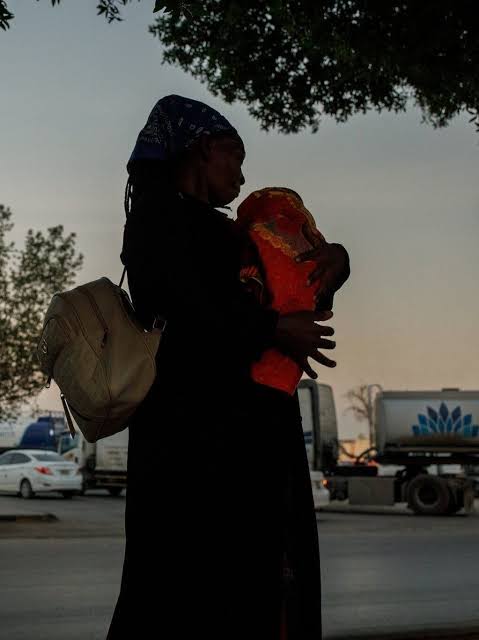
A Saudi Arabian court has sentenced a 40-year-old Kenyan domestic worker, Esther Wanja Muthoni, to 100 lashes for having sex outside marriage after she gave birth to a child in the kingdom.

The sentence, issued in October, followed several court hearings last summer and has left Muthoni fearing for her safety as she struggles to return to Kenya with her one-year-old son, Abudy.

The New York Times reported on Tuesday that Muthoni had been trying for more than a year to leave Saudi Arabia with her child but was unable to do so because of the legal proceedings against her.

“I am so afraid,” she told the newspaper in a telephone interview last month.

“I don’t think I can endure those lashes,” she said.

Muthoni, a mother of five, was working legally as a domestic worker through Maharah Human Resources, a Saudi recruitment company, when she became pregnant following a brief relationship with an Egyptian resident identified only as Mohamud.

She gave birth in August 2025 at staff accommodation. According to court documents reviewed by the newspaper, a supervisor discovered her and took her and the baby to a hospital, after which police detained her for questioning over the pregnancy.

Muthoni told the police that the child’s father had left Saudi Arabia. The court documents did not provide his surname.

Although she was released from police custody, she was reportedly denied access to both her staff accommodation and a shelter.

She subsequently lived at a petrol station in Riyadh that had become a gathering place for migrant mothers hoping to leave the country with their children.

See also  Church members avoided me over Muslim-Muslim ticket – Remi Tinubu

The New York Times said its investigation published last year had documented the difficulties faced by East African domestic workers who became pregnant in Saudi Arabia, including the bureaucratic obstacles preventing them from obtaining documents for their children and returning home.

Following the newspaper’s earlier report on Muthoni’s situation, Maharah provided her with accommodation, while the Kenyan Embassy issued documents intended to allow her to leave Saudi Arabia.

However, she remained unable to travel while her criminal case was pending.

The newspaper reported that Muthoni was provided with a court interpreter but had no lawyer during the proceedings. The court documents it reviewed also contained no indication that she had legal representation.

Although indigent defendants in Saudi Arabia are entitled to state-sponsored lawyers, experts told the newspaper that criminal trials sometimes proceed without legal representation, including in some cases carrying the death penalty.

In October, the three-judge panel found Muthoni guilty of having sex outside marriage and imposed the 100 lashes prescribed under its interpretation of Islamic law.

The judgment did not indicate that authorities had pursued the child’s father.

Ekaterina Porras Sivolobova, a labour migration analyst and founder of the non-profit organisation Do Bold, criticised the punishment, saying it violated international human rights standards.

“This sentence of flogging does not align with international human rights standards,” she told the newspaper.

She added that the punishment stripped Muthoni of her dignity instead of protecting a vulnerable woman.

The case has also raised questions about Saudi Arabia’s claims of legal and social reforms, particularly its 2020 announcement of restrictions on flogging.

See also  Tolani Quadri Oyebamiji “Sisi Quadri”: Life and Legacy of a Yoruba Comic Actor

The New York Times noted that judgments involving morality offences were not routinely published, making it difficult to establish how frequently courts still imposed the punishment.

Saudi Arabia’s judicial system is based on Islamic law, or sharia, but the kingdom does not have a written penal code.

Judges therefore interpret Islamic law in deciding criminal cases, leaving some offences and their punishments open to differing interpretations.

Muthoni did not appeal the judgment, saying she wanted to return home to her other children.

“It is the only way that can take me back home to my children,” she said.

In addition to the lashes, the court sentenced her to one year of banishment. The newspaper reported that Saudi rules generally allow a person sentenced to banishment to be sent to another city in the kingdom when no destination is specified in the judgment.

It remains unclear whether the order means Muthoni will be deported to Kenya. Her exit documents have also expired, leaving uncertainty over how she and her son will return home.

The Saudi and Kenyan governments, as well as representatives of Maharah, did not respond to requests for comment from The New York Times.

The newspaper’s earlier investigation found that East African women recruited to work as domestic workers in Saudi Arabia faced reports of physical abuse, sexual violence, withheld wages and abandonment.

It also reported that some Kenyan women who became pregnant while working in the kingdom struggled to obtain birth certificates for their children, while diplomats who could assist them were accused of neglecting their cases or demanding bribes and sexual favours.

See also  Malami asks EFCC chair to step aside, alleges bias

Source: punchng.com

FOLLOW US ON:

FACEBOOK

WHATSAPP CHANNEL

TWITTER

PINTEREST

TIKTOK

YOUTUBE

LINKEDIN

INSTAGRAM

Continue Reading

Lifestyle

Paul McCartney ranks third-richest musician with $1.4bn

Published

on

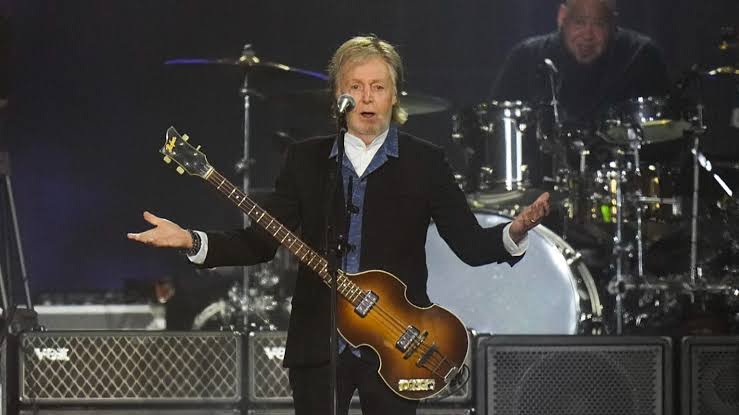
Former Beatles member Paul McCartney has become a billionaire, with an estimated net worth of $1.4bn, making him the world’s third-richest musician, Forbes has reported.

The 84-year-old British singer-songwriter ranks behind American rapper Jay-Z, whose fortune is estimated at 2bn, according to the publication.

Forbes disclosed this in a report published on Monday, attributing McCartney’s wealth to decades of songwriting, music publishing investments, royalties, touring and property holdings.

Much of his fortune comes from MPL Communications, the music publishing company he established in 1969, shortly before The Beatles broke up.

Through the company, McCartney acquired the publishing rights to thousands of songs, including works by early rock-and-roll musician Buddy Holly and scores from Broadway musicals.

The catalogue also includes several well-known Christmas songs, such as “It’s Beginning to Look a Lot Like Christmas”, “Blue Christmas” and “Baby, It’s Cold Outside”.

Forbes estimated that MPL is worth at least $`250m and generates tens of millions of dollars in annual revenue from music royalties.

The singer also earns from The Beatles’ music catalogue through the group’s Apple Corps company, which Forbes estimated generates more than $50m annually from streaming, vinyl sales and merchandise.

McCartney, drummer Ringo Starr and the estates of late band members John Lennon and George Harrison each receive a 25 per cent share of the company’s income, according to Forbes.

His share of the songwriting copyrights to The Beatles’ compositions in the United States is also estimated to be worth at least 10m annually.

McCartney’s wealth further includes earnings from decades of international tours, property in the United Kingdom and the Hamptons in the United States, as well as an art collection featuring works by Pablo Picasso and René Magritte.

See also  Flood crisis: NEC slashes prevention fund by 50%, approves N83bn

The singer’s financial success came after an early career in which The Beatles reportedly earned less than one US cent for each album sold under their initial record deal, while music publisher Dick James controlled the copyrights to songs written by the group.

McCartney subsequently established his own publishing company to gain greater control over his music and future royalties.

In a 2017 Forbes essay, he described the group’s early recording agreement as “basically a slave contract”, saying they did not receive a raise despite the success they brought the company.

Source: punchng.com

FOLLOW US ON:

FACEBOOK

WHATSAPP CHANNEL

TWITTER

PINTEREST

TIKTOK

YOUTUBE

LINKEDIN

INSTAGRAM

Continue Reading

Trending