Connect with us

Lifestyle

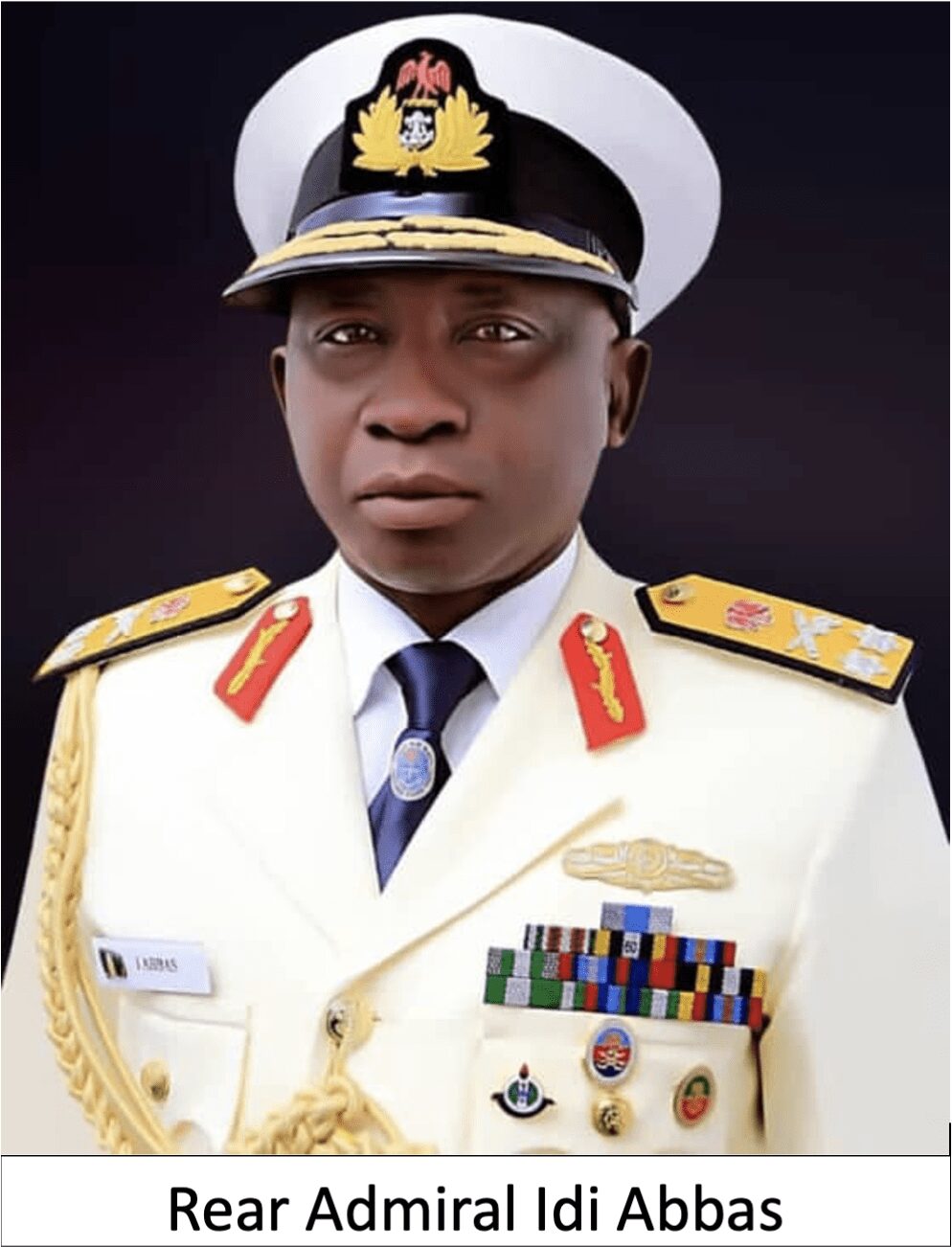
Meet Admiral Idi Abbas, Nigeria’s New Chief of Naval Staff

Published

on

On October 24, 2025, the Nigerian President, Bola Ahmed Tinubu appointed Rear Admiral Idi Abbas as the new Chief of Naval Staff, following the retirement of Vice Admiral Emmanuel Ogalla.

A statement from the Nigerian Navy described Rear Admiral Abbas as a seasoned officer who “brings a distinguished record of service and leadership to the Nigerian Navy.”

Early Life and Education

Rear Admiral Idi Abbas was born on September 20, 1969, and hails from Nassarawa Local Government Area of Kano State in North-West Nigeria

He began his early education at Gwagwarwa Primary School, Kano, and proceeded to the Air Force Military School, Jos, from 1981 to 1986, before gaining admission into the Nigerian Defence Academy (NDA) in 1987.

Rear Admiral Abbas was commissioned Sub-Lieutenant on September 10, 1993, as a member of NDA 40 Regular Course, graduating with a Bachelor’s Degree in Chemistry.

Military Courses and Qualifications

Rear Admiral Abbas is an Above Water Warfare (AWW) specialist who has attended several military courses both in Nigeria and abroad.

His training includes:

Sub-Lieutenant Technical Course at NNS QUORRA (1994)

Junior and Senior Staff Courses at Armed Forces Command and Staff College, Jaji (2001 and 2005)

Officers’ Long Course (OLC XII) at NNS QUORRA, Apapa Lagos (2003)

United Nations Military Observer Course in Tanzania (2009)

National Defence College (NDC), Abuja, Course 23 (2014)

Appointments Held;

Over the years, Rear Admiral Abbas has served in various key positions across the Nigerian Navy.

He started his career onboard several naval ships as a Watch-Keeping Officer, including NNS ARADU, NNS DAMISA, and NNS AYAM.

See also  Onyeka Onwenu (1952–2024): The Elegant Stallion of Nigerian Arts and Advocacy

He later held positions such as:

Naval Assistant to the Deputy Commandant, Armed Forces Command and Staff College, Jaji (1998)

Staff Officer III, Marine Services, Naval Headquarters (2004)

Gunnery Officer, NNS OHUE (2006)

Instructor, NNS QUORRA (2007)

Commanding Officer, Burma Battalion, NDA (2008)

Base Administrative Officer, NNS PATHFINDER

Naval Contingent Commander, Joint Task Force, Operation SAFE HAVEN (2010–2012)

Maritime Guard Commander, NIMASA (2015)

Commander Task Group, Operation TSARE-TEKU (2017)

Flag Officer Commanding, Central Naval Command (2022)

In July 2023, Rear Admiral Abbas was appointed Chief of Naval Safety and Standards (CNASS) at Naval

Headquarters, and in February 2024, became Chief of Defence Civil-Military Relations (CDCMR) at Defence Headquarters.

Before his elevation as the 25th Chief of Naval Staff, he served as Senior Research Fellow, Nigerian Army Heritage Centre, in January 2025.

Promotions

Rear Admiral Abbas rose through the ranks with dedication and excellence;

Midshipman – 1996

Lieutenant – 2001

Lieutenant Commander – 2006

Commander – 2006

Navy Captain – 2011

Commodore – 2016

Rear Admiral – September 10, 2020

Awards and Honours

His distinguished service has earned him several honours, including;

Passed Staff Course (PSC)

Fellow Defence College (FDC)

Forces Service Star (FSS)

Meritorious Service Star (MSS)

Distinguished Service Star (DSS)

Grand Service Star (GSS)

Defence General Staff Medal (DGSM)

He is also a member of the Nigerian Institute of Management (NIM) and the International Institute of Professional Security (IIPS).

FOLLOW US ON:

FACEBOOK

TWITTER

PINTEREST

TIKTOK

YOUTUBE

LINKEDIN

TUMBLR

INSTAGRAM

Continue Reading
Click to comment

Leave a Reply

Your email address will not be published. Required fields are marked *

Lifestyle

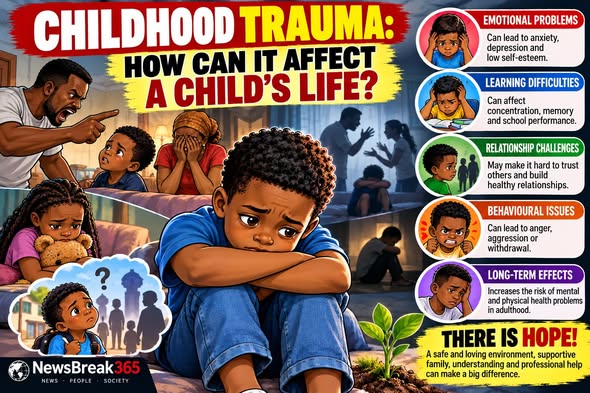
Childhood Trauma: How Can It Affect a Child’s Life?

Published

on

A child may grow older, but painful experiences from childhood can sometimes continue to affect emotional well-being, relationships, learning and health later in life.

Childhood is a critical period of emotional, social and brain development. When children repeatedly experience violence, abuse, neglect, severe family conflict or other frightening events, the effects can extend beyond the moment itself.

The World Health Organization (WHO) and the U.S. Centers for Disease Control and Prevention (CDC) recognize adverse childhood experiences (ACEs) as potentially traumatic experiences that can affect health, well-being and life opportunities.

What Is Childhood Trauma?

Childhood trauma can result from experiences that overwhelm a child’s ability to feel safe and secure.

These experiences can include:

Physical or emotional abuse
Neglect
Sexual abuse
Witnessing violence at home
Serious bullying or community violence
The loss or separation of caregivers
Household instability
Exposure to substance misuse or severe family dysfunction

Not every difficult childhood experience will affect every child in the same way. The impact can depend on factors such as the child’s age, the severity and duration of the experience, and the support available to the child.

How Can Childhood Trauma Affect a Child?

1. Emotional and Mental Health

Some children exposed to traumatic experiences may develop anxiety, depression, fear, emotional distress or problems with self-esteem.

WHO notes that childhood maltreatment and violence are associated with increased risks of mental-health problems, including anxiety, depression and post-traumatic stress.

2. Learning and Concentration

A child experiencing prolonged stress may find it harder to concentrate, learn or perform at school.

See also  This is "The Door Of No Return", Cape Coast, Ghana

The CDC says prolonged stress associated with adverse childhood experiences can affect brain development and systems involved in attention, decision-making and learning.

3. Behavioural Changes

Trauma may sometimes appear through behaviour rather than words.

A child may become unusually angry, withdrawn, fearful, aggressive or emotionally sensitive. However, these behaviours can have many causes, so they should not automatically be assumed to mean that a child has experienced trauma.

WHO reports that childhood violence and maltreatment can have consequences for behavioural and social development.

4. Difficulty Trusting Others

Children need safe and stable relationships to develop emotionally.

When a child’s early environment repeatedly feels unsafe, they may later struggle with trust, communication or forming healthy relationships. The CDC notes that children experiencing toxic stress may have difficulty forming healthy and stable relationships.

5. Possible Long-Term Health Effects

The effects of adverse childhood experiences can extend into adulthood. Research summarized by WHO and CDC links ACEs with increased risks of various mental and physical health problems and challenges affecting education and life opportunities.

This does not mean that every child who experiences trauma will develop long-term problems. Children can respond differently, and supportive environments can make an important difference.

There Is Hope

Childhood trauma does not have to determine a person’s entire future.

Safe, stable and nurturing relationships with parents, caregivers and other supportive adults are important for healthy development. WHO emphasizes prevention, positive parenting, supportive families and safe environments as important parts of reducing child maltreatment and its consequences.

Parents and caregivers should also remember that seeking professional help is not a sign of failure. When a child is struggling emotionally or behaviourally, a qualified healthcare or mental-health professional can help determine what support may be appropriate.

See also  30 BENEFITS 0F ALUM

A Message to Parents and Caregivers

Before saying:

“Why is this child behaving badly?”

Sometimes it may be worth asking:

“What might this child be experiencing that they don’t know how to explain?”

Children need boundaries and discipline, but they also need safety, affection, understanding and someone they can trust.

A difficult childhood experience does not have to become a lifelong sentence.

NewsBreak365 | News • People • Society

This article is for public education and does not diagnose any child or replace professional medical or psychological advice.

FOLLOW US ON:

FACEBOOK

TWITTER

PINTEREST

TIKTOK

YOUTUBE

LINKEDIN

INSTAGRAM

Continue Reading

Lifestyle

Nigerians’ New Slogan: “Money Na Water!” — But Where Is the Water Flowing?

Published

on

By NewsBreak365

A new expression is making waves across Nigerian conversations and social media: “Money na water!” 💰💦

The catchy phrase has quickly become a humorous way for Nigerians to talk about money, wealth, financial confidence and the everyday hustle. For some, it represents an optimistic attitude toward making money and enjoying the rewards of hard work. For others, it is simply another example of the Nigerian ability to turn serious financial realities into humour.

But one question keeps coming up:

If “money na water,” where exactly is the water flowing? 😂

In a country where many people work hard to meet rising living costs and financial responsibilities, the phrase can be interpreted in different ways. It may be a declaration of confidence, a joke among friends, or a playful response to the pressure of everyday life.

Social media has also made phrases like this spread rapidly. A simple expression can become a trend within hours as people add their own jokes, memes and personal experiences.

And Nigerians certainly know how to turn a catchy phrase into a conversation.

What Would You Do If Money Really Flowed Like Water?

Imagine waking up tomorrow and discovering that money was flowing into your account as easily as water from a tap.

Would you buy a house?
Would you start a business?
Would you travel?
Would you support your family?
Or would you quietly save the money and tell nobody? 😂

The beauty of “Money na water!” is that everyone can interpret it differently.

For some, it is about ambition. For others, it is pure cruise. And for many Nigerians, perhaps it is simply a funny way of saying: “We must keep hustling.”

See also  Kano gov appoints Emir of Rano Amirul Hajj for 2027

What Nigerians Are Saying

The phrase is likely to generate plenty of debate because money means different things to different people. While one person may associate wealth with luxury, another may see financial freedom as being able to pay bills, support loved ones, own a home or build a successful business.

So, if money really became water, what would you do first?

💬 Tell us in the comments:

If “money na water,” what would be the FIRST thing you would spend it on?

Share this story with your friends and let’s see what Nigerians would do if money really started flowing like water. 💰💦

NewsBreak365 — Bringing you stories, conversations and perspectives that matter.

FOLLOW US ON:

FACEBOOK

TWITTER

PINTEREST

TIKTOK

YOUTUBE

LINKEDIN

INSTAGRAM

Continue Reading

Lifestyle

THE SHORTCUT THAT CAN DESTROY YOUR SUCCESS

Published

on

What if the thing you are doing to become successful is actually the very thing that will destroy your success?

Read that again.

Some people become so desperate to get money, recognition, power, or a better life that they stop caring about how they get there.

They begin to justify:

❌ Lying
❌ Cheating
❌ Fraud
❌ Bribery
❌ Manipulation
❌ Illegal activities

Then they say, “At least I achieved my goal.”

But achievement does not erase consequences.

You can gain money and lose trust.
You can gain status and lose your reputation.
You can reach a destination and discover that the road you took cost you far more than you expected.

Never use a destructive method to accomplish something you genuinely desire.

If your goal is worth having, give yourself permission to take the time required to build the ability to achieve it.

Work hard.
Learn.
Develop your skills.
Be patient.
Stay disciplined.
Be honest.
Remain consistent.

And if you believe in God, seek His guidance before making decisions that could change your life.

🔥 THE BIG QUESTION

If you were given a guaranteed shortcut to become rich tomorrow—but you knew the method was wrong—WOULD YOU TAKE IT?

YES or NO?

👇 Don’t just vote. Tell us WHY.

📲 Share this post and let’s hear different opinions.

NewsBreak365 — Real News. Real People. A Better Tomorrow.

#NewsBreak365 #Success #Motivation #LifeLessons #HardWork #Discipline #Honesty #Wisdom #SuccessMindset #PersonalGrowth #LifeAdvice #Inspiration

FOLLOW US ON:

FACEBOOK

TWITTER

PINTEREST

TIKTOK

YOUTUBE

LINKEDIN

INSTAGRAM

See also  Francis Adekunle Fajuyi: A Symbol of Loyalty and Courage in Nigerian History
Continue Reading

Trending