Connect with us

Business

Economic recovery has begun – Edun

Published

on

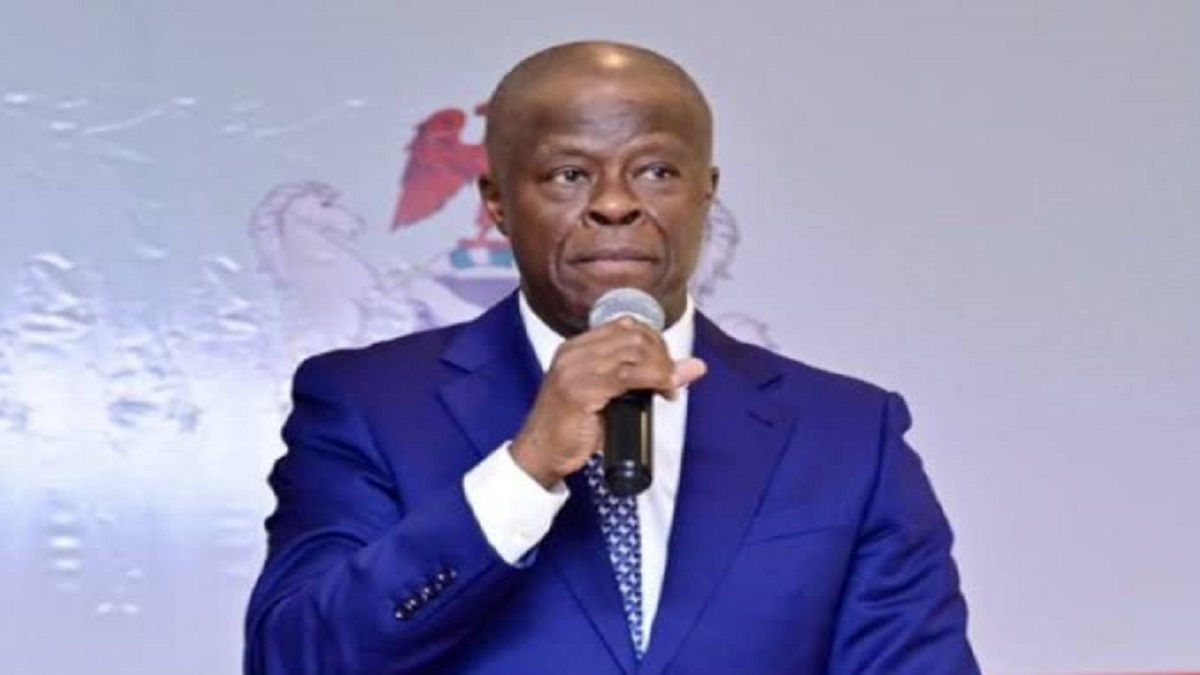
The Minister of Finance and Coordinating Minister of the Economy, Wale Edun, has assured Nigerians that the country’s economy has turned the corner.

He stated that in an opinion released on Sunday titled “Nigeria turning towards prosperity”, reassuring the citizens that the worst days were over.

“Despite some historical shortfalls and present-day challenges, I believe the most difficult phase of our economic journey is behind us. Nigeria has turned a decisive corner. The road ahead will demand hard work and discipline, but we are firmly on the right path,” Edun asserted.

According to the minister, when President Bola Tinubu took office in 2023, the country’s economy was on the brink of fiscal collapse.

“Slowing growth, surging inflation, and market distortions like the fuel subsidy and multiple exchange rate regimes had created an environment that scared off investment.

The President’s mandate was clear – dismantle those market distortions, reward productivity, and create a climate where private investment can thrive.

“Two years later, the results are evident at the macro level. GDP grew by 4.23 per cent in the second quarter of 2025. Inflation, while still high, has moderated to 18.02 per cent after six consecutive months of decline.

“The exchange rate has stabilised, and the gap between official and parallel markets has narrowed to about one per cent, down from a peak of nearly 70 per cent. Importantly, foreign reserves have risen above $43bn, the highest since 2019. These are more than just numbers; they are the foundation for building inclusive growth that benefits every Nigerian,” Edun enunciated.

President Tinubu, during his inaugural speech, announced the end of the petrol subsidy regime, which was said to be shrouded in corruption.

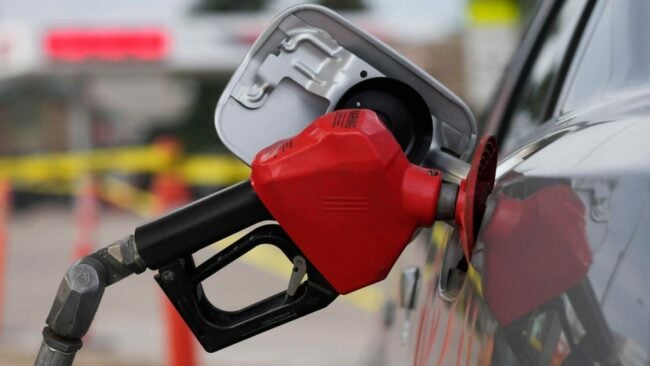
Consequently, the average price of a litre of petrol jumped from approximately N238.11 on May 28, 2023, to over N500 per litre on May 30, 2025.

See also  States, FCT external debt nears $5.7bn amid higher FAAC

A litre currently sells for between N910 and N950, depending on the location across the country.

In June 2023, the Central Bank of Nigeria unified the country’s exchange rates. As a result, the naira depreciated significantly, dropping from approximately N460–N465/$1 in the official market and N740–N775/$1 in the parallel market in May 2023.

By May 2025, the exchange rate had fallen to around N1,590.74/$1 in the official market and N1,620/$1 in the parallel market.

However, the local currency has gained almost seven per cent to trade at N1,457.96/$1 as of October 24, 2025.

The finance minister alluded that the economy “is ultimately about people, not statistics”.

“Millions of Nigerians measure progress by the cost of food, transport, and other necessities. I am keenly aware of this reality.

“Food inflation has been our heaviest burden since it surged after currency depreciation and the removal of fuel subsidies. However, targeted measures are beginning to ease the pressure. A bag of rice that cost about N120,000 last year now averages around N80,000. The prices of garri, pepper, tomatoes, and other essentials have also decreased,” he mentioned.

He explained that the government had taken steps to ensure the prices of food continue to trend downward, noting, “At the same time, we are careful to ensure our smallholder farmers have enough incentives to return to farms next planting season.

“We are, therefore, implementing programmes that stimulate agricultural production by safeguarding smallholder farmers’ incomes.

“In addition, 8.1 million households nationwide have received direct cash support from the government to help meet basic needs. This is more than a safety net; it ensures that the impact of these necessary reforms is cushioned for the most vulnerable among us, even as we continue to resolve the identity verification issues required to reach our 15 million households’ targets.”

See also  EFCC recovered N500bn, secured 7,000 convictions under my watch – Tinubu

Addressing concerns about the country’s rising debt, Edun noted, “The progress we have made does not diminish the tough realities we still face. Debt service costs remain heavy, consuming a larger-than-ideal share of our revenues. This is the consequence of past borrowing and elevated interest rates.

“At the same time, Nigeria’s fiscal revenue-to-GDP ratio, at about 10 per cent after rebasing, remains one of the lowest in Africa. This limits government resources for essential services like health, education, and infrastructure.”

The minister emphasised that the new Nigeria Tax Act and accompanying legislation, signed into law by the President on June 26, 2025, will help broaden the tax base, simplify compliance, and reduce tax evasion.

According to Edun, the tax reforms introduce a more progressive tax system that protects lower-income earners while adjusting tax rates for those with higher incomes.

“Together with structural revenue reforms such as the Revenue Optimisation and Assurance programme, these measures will strengthen revenues, create fiscal space, and support greater investment in our people and infrastructure.

“A stable economy is crucial, but stability alone is insufficient. To deliver inclusive prosperity, we must anchor growth in sectors that generate jobs and opportunities.

“We are providing necessary incentives to revive investments in the oil and gas industry. With improved security, oil theft is down, and production has rebounded to 1.68 million barrels per day, including condensates. Refinery projects are setting the stage for a stronger downstream sector,” the finance minister highlighted.

Recall that President Tinubu had reaffirmed that during this year’s Independence anniversary speech that his administration’s decision to remove fuel subsidies and unify exchange rates was painful but necessary.

See also  Obasanjo bombs Atiku: You’re my biggest mistake

He said those reforms had set Nigeria on a sustainable recovery path, freeing funds for education, healthcare, security, and infrastructure.

Tinubu highlighted that GDP growth reached 4.23 per cent in Q2 2025, the fastest in four years, while inflation dropped to 20.12 per cent, the lowest in three years.

“Dear Nigerians, we are in a race against time. We must construct the roads we need, mend those that are damaged, and build schools for our children and hospitals for our citizens. It is essential that we plan for the generations to come,” the President stated in his Independence Anniversary speech.

Edun reiterated this in his opinion, noting that infrastructure is the backbone of growth.

“Public funds alone cannot meet Nigeria’s vast needs, so we are attracting private capital through public-private partnerships. The Ajaokuta–Kaduna–Kano gas pipeline, and Project Bridge’s 90,000 km fibre expansion are examples of how we are laying out the groundwork for industrialisation and nationwide connectivity.”

He pointed to the renewed interest from local and foreign investors in the country’s economy as signs that the reforms of the Tinubu administration were working.

“Investors – both domestic and foreign, multilateral institutions, and ordinary citizens – are starting to believe in the nation’s prospects again. But confidence is fragile. Sustaining it demands a predictable policy environment, disciplined fiscal management, and steady progress in reducing inflation.

“Our medium-term target is seven per cent growth by 2027/28. Achieving this will require not only government action but the full participation of the private sector, entrepreneurs, and citizens. I am confident that if we work together, we will not only meet this target but surpass it,” he concluded.

punch.ng

FOLLOW US ON:

FACEBOOK

TWITTER

PINTEREST

TIKTOK

YOUTUBE

LINKEDIN

TUMBLR

INSTAGRAM

Continue Reading
Click to comment

Leave a Reply

Your email address will not be published. Required fields are marked *

Business

Agricultural quarantine service postpones release of recruitment shortlist

Published

on

The Nigeria Agricultural Quarantine Service has postponed the publication of shortlisted candidates for its ongoing recruitment exercise, which was initially scheduled for Thursday, August 13.

NAQS said the decision was made to ensure a thorough, transparent and accurate recruitment process.

The agency announced the postponement in a public notice signed by the Director of Human Resources, ACG Issaka Ahmed, and posted on its X handle on Friday.

“In order to ensure a thorough, transparent and accurate process, we are unable to release the list of shortlisted candidates as scheduled,” the notice stated.

The agency apologised for the delay and urged applicants and members of the public to remain patient while awaiting a new date.

“We sincerely regret any inconvenience or uncertainty this delay may have caused and appreciate the patience, understanding and continued interest of all applicants.

“All applicants and the general public are hereby notified that a new date will be communicated in due course through our official communication channels,” it said.

The agency advised applicants to rely only on information released through its official channels.

The recruitment exercise, which opened on July 28 and closed on August 10, attracted 606,928 attempted applications, while 407,659 were successfully submitted, according to statistics released by NAQS on Wednesday.

The agency said 199,269 applications were incomplete at the close of the application period.

The Assistant Superintendent of Quarantine II cadre, requiring HND or bachelor’s degree, recorded the highest number of applications with 290,076, followed by Quarantine Assistant II with 117,177 applications.

Other cadres included the NCE category with 79,685 applications, OND with 70,170, and the Superintendent cadre requiring a master’s degree with 13,183 applications.

See also  See the real story behind failed police communications system

PUNCH Online reports that NAQS said it will conduct a computer-based test and interviews on August 15, after shortlisted candidates are released on August 13.

However, candidates will now await new dates.

The recruitment exercise covers the Superintendent, Inspectorate and Assistant cadres.

Source: punchng.com

FOLLOW US ON:

FACEBOOK

TWITTER

PINTEREST

TIKTOK

YOUTUBE

LINKEDIN

INSTAGRAM

Continue Reading

Business

Customs dismiss smuggling, revenue leakage allegations

Published

on

The Nigeria Customs Service has dismissed allegations of increased smuggling, revenue leakage, recruitment impropriety and manipulation of succession within the service, describing them as a misrepresentation of its operations and administrative processes.

The service’s National Public Relations Officer, Deputy Comptroller Abdullahi Maiwada, stated this in a response released on Thursday to an investigative report published by a media outlet (not PUNCH) on August 7, 2026.

The report had alleged intensified smuggling along the Seme, Idiroko, Ilaro, Ipokia and Igbeti-Kishi corridors, as well as manipulation of the 846 valuation code at the Apapa, Tin Can Island and PTML Area Commands.

Maiwada said the claim of a surge in smuggling was inconsistent with the service’s enforcement activities, pointing to regular seizures recorded along the affected corridors.

“Our responsibility is to reduce smuggling to the barest minimum, not to claim that it can be completely eradicated,” he said.

On the 846 valuation code, the NCS explained that it was a digital tool designed for vehicles with non-standard or non-compliant Vehicle Identification Numbers, including specialised heavy equipment, classic vehicles and customised models.

“The 846 code is an established digital valuation code within the Customs portal, specifically designated for vehicles with non-standard or non-compliant Vehicle Identification Numbers,” Maiwada said.

He added that standard vehicles were assessed automatically through manufacturer-linked databases, while 846 applications were subjected to secondary approval by valuation officers and Area Controllers.

Maiwada said discrepancies discovered through post-clearance audits could lead to Demand Notices for the recovery of short-collected duties and sanctions against offending operators, adding that revenue collections at major ports had reached historic levels under the digital framework.

On the recruitment of Assistant Superintendents of Customs II, the Service said the exercise was conducted under the authorisation of the Nigeria Customs Service Board and in line with the NCS Act 2023 and Federal Character Commission guidelines.

See also  Minister-turned-party boss: Meet APC’s new national chairman, Yilwatda Nentawe

It said successful candidates were issued provisional offers subject to medical verification, background checks and formal acceptance.

The Service also rejected allegations of succession manipulation and favouritism among officers, saying promotions were determined by seniority, merit, promotion examinations and available vacancies in accordance with established regulations.

“Succession and promotion within the Service are governed by established rules and career progression structures, not personal preference,” the Service said.

Maiwada said leadership training for Deputy Comptrollers was part of the Service’s human capital development strategy, aimed at strengthening trade operations, intelligence management and executive leadership.

He explained that approved training programmes and international exposures were funded through budgetary allocations or formal technical assistance arrangements with partner institutions.

Responding to calls for independent investigations, the NCS said it remained subject to oversight by the Federal Ministry of Finance, National Assembly, Office of the Auditor-General for the Federation and anti-corruption agencies.

“The management maintains a firm, intolerant posture toward corruption, revenue leakage or administrative misconduct,” the Service stated.

It added that any officer or stakeholder found culpable would face disciplinary action and prosecution in accordance with the law, while assuring Nigerians that the Service would cooperate with any legitimate investigation by statutory authorities.

Source: punchng.com

FOLLOW US ON:

FACEBOOK

TWITTER

PINTEREST

TIKTOK

YOUTUBE

LINKEDIN

INSTAGRAM

Continue Reading

Business

Patience Jonathan revealed she mentored Azikel refinery boss Eruani from ‘small boy’ to big businessman

Published

on

Ex-President Goodluck Jonathan’s wife, Patience, has described the Group President of Azikel Group, Dr Azibapu Eruani, as a “small boy” she raised and mentored into the league of Nigeria’s biggest businessmen.

She said her guidance was behind his bold entry into big business at a relatively young age.

The former First Lady spoke on Tuesday in a video which went viral on Thursday during an inspection tour of the Azikel Refinery in Obunagha, Bayelsa State, alongside other dignitaries.

She said she personally introduced Eruani to billionaire businessmen, Aliko Dangote and Aminu Dantata, and pushed him to aspire to their level despite being the youngest among them.

“He’s a boy that I brought up. We are always together. Although he’s the little one among us when we are friends — Dangote, Seyi, Dantata, Eruani — among us, he’s the smallest. But I made sure he followed the Dangotes, he followed Dantata.

“Because I’m a woman in their midst, I made sure I told this small boy, ‘Go and follow them, and stop the grammar.’ But when he told me that one day he would be like Dangote, I said, ‘You’re thinking too high.’ I prayed to God to grant him his heart’s desire,” she said.

Group President of Azikel Group, Dr Azibapu Eruani

The former First Lady also recalled how the immediate past APC administration under Muhammadu Buhari initially failed to grant Eruani a refinery licence before eventually approving three.

“During the Buhari administration, he and others came to me and told me they were going to apply for a refinery. I told him, ‘Eruani, your brother, the President, did not give you a refinery.

See also  Petrol tops Nigeria’s imports with 613.6m litres in one year

“Is it the APC government that will give you one?’ I prayed it would happen. But later, they came back and told me they had been given three refineries,” she said.

The inspection coincided with the arrival of the refinery’s Crude Distillation Unit, a major milestone in the development of the $1bn facility.

The 25,000 barrels-per-day plant is a private hydro-skimming refinery designed to process condensate into petrol, diesel, aviation fuel, kerosene and other products.

It is set to become Nigeria’s second-largest full-slate refinery and the first major privately owned refinery in the Niger Delta.

The Managing Director/Chief Executive Officer of the Niger Delta Development Commission, Samuel Ogbuku, who joined the inspection tour, commended Eruani for his perseverance, noting that he had attended the project’s groundbreaking ceremony eight years ago.

Ogbuku described the refinery as an inspiration and a potential catalyst for investment, job creation and economic growth in Bayelsa State, and urged residents, particularly youths, to key into the opportunities it would create.


He also praised the Bayelsa State Government for improving road infrastructure leading to the refinery site and called for continued support for the project.

Governor Douye Diri, who was represented at the inspection by his deputy, Peter Akpe, has consistently backed the project, which is expected to employ hundreds of workers and drive industrialisation in the state.

Other dignitaries at the event included the Chairman of the Bayelsa State Council of Traditional Rulers, King Bubaraye Dakolo; Vice President of Azikel Group, Presley Asemota; and Isaac Yalah, among others.

See also  Ending fuel subsidy was tough but necessary — Tinubu

Source: punchng.com

FOLLOW US ON:

FACEBOOK

TWITTER

PINTEREST

TIKTOK

YOUTUBE

LINKEDIN

INSTAGRAM

Continue Reading

Trending