Connect with us

Business

Economic recovery has begun – Edun

Published

on

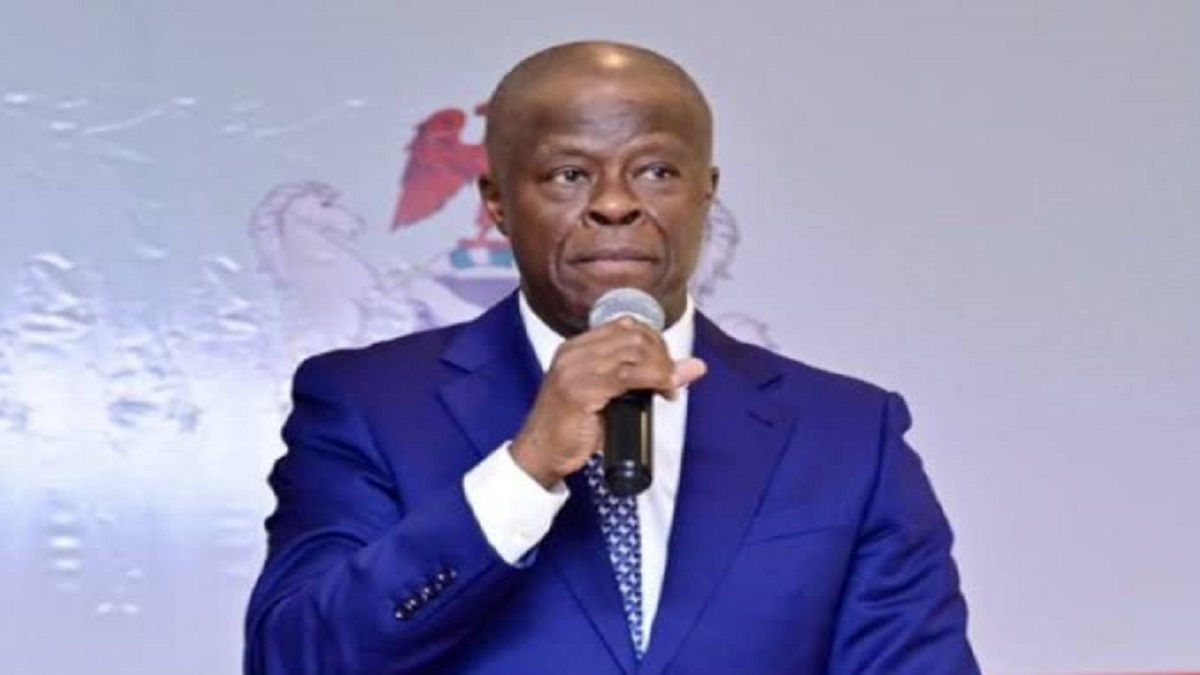
The Minister of Finance and Coordinating Minister of the Economy, Wale Edun, has assured Nigerians that the country’s economy has turned the corner.

He stated that in an opinion released on Sunday titled “Nigeria turning towards prosperity”, reassuring the citizens that the worst days were over.

“Despite some historical shortfalls and present-day challenges, I believe the most difficult phase of our economic journey is behind us. Nigeria has turned a decisive corner. The road ahead will demand hard work and discipline, but we are firmly on the right path,” Edun asserted.

According to the minister, when President Bola Tinubu took office in 2023, the country’s economy was on the brink of fiscal collapse.

“Slowing growth, surging inflation, and market distortions like the fuel subsidy and multiple exchange rate regimes had created an environment that scared off investment.

The President’s mandate was clear – dismantle those market distortions, reward productivity, and create a climate where private investment can thrive.

“Two years later, the results are evident at the macro level. GDP grew by 4.23 per cent in the second quarter of 2025. Inflation, while still high, has moderated to 18.02 per cent after six consecutive months of decline.

“The exchange rate has stabilised, and the gap between official and parallel markets has narrowed to about one per cent, down from a peak of nearly 70 per cent. Importantly, foreign reserves have risen above $43bn, the highest since 2019. These are more than just numbers; they are the foundation for building inclusive growth that benefits every Nigerian,” Edun enunciated.

President Tinubu, during his inaugural speech, announced the end of the petrol subsidy regime, which was said to be shrouded in corruption.

Consequently, the average price of a litre of petrol jumped from approximately N238.11 on May 28, 2023, to over N500 per litre on May 30, 2025.

See also  Nigerian Kobo and Naira Coins (1991–1993 Series): A Glimpse into Monetary Heritage (PHOTOS)

A litre currently sells for between N910 and N950, depending on the location across the country.

In June 2023, the Central Bank of Nigeria unified the country’s exchange rates. As a result, the naira depreciated significantly, dropping from approximately N460–N465/$1 in the official market and N740–N775/$1 in the parallel market in May 2023.

By May 2025, the exchange rate had fallen to around N1,590.74/$1 in the official market and N1,620/$1 in the parallel market.

However, the local currency has gained almost seven per cent to trade at N1,457.96/$1 as of October 24, 2025.

The finance minister alluded that the economy “is ultimately about people, not statistics”.

“Millions of Nigerians measure progress by the cost of food, transport, and other necessities. I am keenly aware of this reality.

“Food inflation has been our heaviest burden since it surged after currency depreciation and the removal of fuel subsidies. However, targeted measures are beginning to ease the pressure. A bag of rice that cost about N120,000 last year now averages around N80,000. The prices of garri, pepper, tomatoes, and other essentials have also decreased,” he mentioned.

He explained that the government had taken steps to ensure the prices of food continue to trend downward, noting, “At the same time, we are careful to ensure our smallholder farmers have enough incentives to return to farms next planting season.

“We are, therefore, implementing programmes that stimulate agricultural production by safeguarding smallholder farmers’ incomes.

“In addition, 8.1 million households nationwide have received direct cash support from the government to help meet basic needs. This is more than a safety net; it ensures that the impact of these necessary reforms is cushioned for the most vulnerable among us, even as we continue to resolve the identity verification issues required to reach our 15 million households’ targets.”

See also  Nigeria’s inflation drops for fifth consecutive time – NBS

Addressing concerns about the country’s rising debt, Edun noted, “The progress we have made does not diminish the tough realities we still face. Debt service costs remain heavy, consuming a larger-than-ideal share of our revenues. This is the consequence of past borrowing and elevated interest rates.

“At the same time, Nigeria’s fiscal revenue-to-GDP ratio, at about 10 per cent after rebasing, remains one of the lowest in Africa. This limits government resources for essential services like health, education, and infrastructure.”

The minister emphasised that the new Nigeria Tax Act and accompanying legislation, signed into law by the President on June 26, 2025, will help broaden the tax base, simplify compliance, and reduce tax evasion.

According to Edun, the tax reforms introduce a more progressive tax system that protects lower-income earners while adjusting tax rates for those with higher incomes.

“Together with structural revenue reforms such as the Revenue Optimisation and Assurance programme, these measures will strengthen revenues, create fiscal space, and support greater investment in our people and infrastructure.

“A stable economy is crucial, but stability alone is insufficient. To deliver inclusive prosperity, we must anchor growth in sectors that generate jobs and opportunities.

“We are providing necessary incentives to revive investments in the oil and gas industry. With improved security, oil theft is down, and production has rebounded to 1.68 million barrels per day, including condensates. Refinery projects are setting the stage for a stronger downstream sector,” the finance minister highlighted.

Recall that President Tinubu had reaffirmed that during this year’s Independence anniversary speech that his administration’s decision to remove fuel subsidies and unify exchange rates was painful but necessary.

See also  Four ministers to quit Tinubu’s cabinet ahead of 2027

He said those reforms had set Nigeria on a sustainable recovery path, freeing funds for education, healthcare, security, and infrastructure.

Tinubu highlighted that GDP growth reached 4.23 per cent in Q2 2025, the fastest in four years, while inflation dropped to 20.12 per cent, the lowest in three years.

“Dear Nigerians, we are in a race against time. We must construct the roads we need, mend those that are damaged, and build schools for our children and hospitals for our citizens. It is essential that we plan for the generations to come,” the President stated in his Independence Anniversary speech.

Edun reiterated this in his opinion, noting that infrastructure is the backbone of growth.

“Public funds alone cannot meet Nigeria’s vast needs, so we are attracting private capital through public-private partnerships. The Ajaokuta–Kaduna–Kano gas pipeline, and Project Bridge’s 90,000 km fibre expansion are examples of how we are laying out the groundwork for industrialisation and nationwide connectivity.”

He pointed to the renewed interest from local and foreign investors in the country’s economy as signs that the reforms of the Tinubu administration were working.

“Investors – both domestic and foreign, multilateral institutions, and ordinary citizens – are starting to believe in the nation’s prospects again. But confidence is fragile. Sustaining it demands a predictable policy environment, disciplined fiscal management, and steady progress in reducing inflation.

“Our medium-term target is seven per cent growth by 2027/28. Achieving this will require not only government action but the full participation of the private sector, entrepreneurs, and citizens. I am confident that if we work together, we will not only meet this target but surpass it,” he concluded.

punch.ng

FOLLOW US ON:

FACEBOOK

TWITTER

PINTEREST

TIKTOK

YOUTUBE

LINKEDIN

TUMBLR

INSTAGRAM

Continue Reading
Click to comment

Leave a Reply

Your email address will not be published. Required fields are marked *

Business

Nigeria misses OPEC oil production quota again

Published

on

Again, Nigeria has missed its crude oil production quota set by the Organisation of the Petroleum Exporting Countries after averaging 1.49 million barrels per day in April, below the 1.5 mbpd benchmark.

Figures from the Nigerian Upstream Petroleum Regulatory Commission showed that the country produced an average of 1,488,540 barrels of crude daily in April, representing about 99 per cent of the OPEC quota. When condensates were added, total daily production rose to 1.66mbpd

Last month, the NUPRC said oil production now averaged 1.8mbpd. However, data released on Tuesday was at variance with the report. The latest data mean Nigeria remained below its OPEC allocation for the ninth straight month since July 2025.

The NUPRC document showed that combined crude oil and condensate production peaked at 1.85 mbpd during the month, while the lowest output stood at 1.46 mbpd. The PUNCH reports that the April figures are an appreciable improvement compared to March, when oil output was 1.55mbpd.

Nigeria’s oil production has struggled for years due to crude theft, pipeline vandalism, ageing infrastructure, and underinvestment in the upstream sector. Although output improved marginally in April compared to March, it was still insufficient to meet the country’s OPEC target, underscoring persistent challenges in ramping up production despite government efforts to boost volumes.

The PUNCH reports that Nigeria’s crude production in March was 1.38 mbpd. While there was a 69,000 bpd increase from the 1.31 mbpd recorded in February, the figure is still 117,000 bpd below the OPEC quota.

The figures for February indicated a month-on-month decline of 146,000 barrels per day, widening the country’s shortfall from its OPEC production allocation. This is the eighth consecutive month the country has failed to meet the OPEC quota since July 2025.

See also  Otti seeks partnership with NAADI to grow Abia’s agriculture, economy

Recall that although Nigeria recorded a marginal improvement in January, when production rose from 1.422 mbpd in December 2025 to 1.46 mbpd, the rebound was short-lived as output fell significantly in February 2026.

Earlier data from NUPRC had also shown that crude oil production weakened at the end of 2025. Production declined from 1.436 mbpd in November 2025 to 1.422 mbpd in December, before recovering slightly in January.

In 2025, Nigeria’s crude oil production fell below its OPEC quota in nine months of the year, meeting or slightly exceeding the target only in January, June, and July.

Nigeria opened 2025 strongly, producing 1.54 mbpd in January, about 38,700 barrels per day above its OPEC allocation. However, production slipped below the quota in February at 1.47 mbpd and weakened further in March to 1.40 mbpd, marking one of the widest shortfalls during the year.

punch.ng

FOLLOW US ON:
FACEBOOK

TWITTER

PINTEREST

TIKTOK

YOUTUBE

LINKEDIN

INSTAGRAM

Continue Reading

Business

Dangote exports 1.66bn litres fuel amid US-Iran tensions

Published

on

Fresh data from the Nigerian Midstream and Downstream Petroleum Regulatory Authority has shown that the Dangote Petroleum Refinery & Petrochemicals exported an estimated 1.66 billion litres of refined petroleum products in April 2026.

This came amid mounting tensions in the Middle East and fears of possible disruption to global fuel supply routes following the growing conflict involving the United States and Iran.

An analysis of the NMDPRA’s April 2026 fact sheet by our correspondent showed that the country exported about 513 million litres of Premium Motor Spirit, popularly called petrol; 534 million litres of Automotive Gas Oil, also known as diesel; and 615 million litres of aviation fuel within the month under review.

The Dangote refinery is the only major functional refinery in Nigeria that currently produces enough refined petroleum products for both local consumption and export.

This is the first month the refinery has exported such a high volume of petroleum products, especially jet fuel and diesel, indicating the significance of the 650,000-barrel-per-day plant in Lekki, Lagos State.

The combined export volume translates to approximately 55.4 million litres daily. The development comes as the international oil market faces fresh uncertainty over the security of the Strait of Hormuz, a critical global oil shipping route, following the failure of the United States and Iran to agree on a peace deal.

Industry experts said the rising geopolitical uncertainty had significantly boosted demand for refined petroleum products from alternative suppliers such as Nigeria, especially as Europe, Africa, and parts of Asia scramble for more secure fuel sources.

See also  Blackouts: N300bn electricity power lifeline for hospitals, varsities hits snag

The NMDPRA document showed that local refineries operated at an average capacity utilisation of 99.12 per cent in April, with the Dangote refinery accounting for the overwhelming share of production.

The regulator stated that the refinery achieved 100 per cent capacity utilisation “for most of the days in April.” The report also indicated that domestic refineries received 18.37 million barrels of crude oil in April, up from 13.11 million barrels recorded in March.

Findings further showed that the refinery maintained strong export momentum despite increased domestic supply obligations. According to the fact sheet, average daily petrol production stood at 53.6 million litres, while 40.7 million litres were supplied locally and 17.1 million litres were exported daily.

Similarly, diesel production averaged 23.6 million litres daily, with exports accounting for 17.8 million litres per day, more than double the domestic supply volume of 8 million litres daily. For aviation fuel, exports stood at 20.5 million litres daily, compared to the domestic supply of 2.6 million litres per day.

The strong aviation fuel export performance comes weeks after reports emerged that domestic airline operators threatened to shut down over the rising cost of the fuel.

There are reports that Nigeria has become a net petrol exporter for the first time in decades due to rising output from the Dangote refinery. The refinery had earlier exported about 434 million litres of petrol in March after domestic production exceeded local consumption levels.

The latest figures underscore Nigeria’s gradual transition from a major importer of refined petroleum products to an export hub within Africa. It was observed that jet fuel exports may rise further if instability in the Middle East continues to disrupt traditional supply chains serving Europe and other regions.

See also  Otti seeks partnership with NAADI to grow Abia’s agriculture, economy

The Middle East accounts for a substantial share of global aviation fuel exports, with the Strait of Hormuz serving as a strategic transit corridor for crude oil and refined petroleum products. The prolonged disruption in the region has tightened global fuel supply and pushed up prices internationally.

The NMDPRA report also revealed that Nigerians consumed an average of 51.1 million litres of petrol daily in April, slightly above the 50 million litres benchmark estimated by the regulator. Diesel consumption stood at 17.3 million litres daily, while aviation fuel consumption averaged 2.5 million litres per day.

Despite increased local refining activity, petrol prices remained elevated across the country. The regulator attributed prevailing prices partly to international crude oil costs, which averaged $120.55 per barrel during the month, while gasoline costs stood at $1,074.97 per metric tonne.

The refinery, with a nameplate capacity of 650,000 barrels per day, is expected to play a central role in Nigeria’s energy security and foreign exchange earnings as global fuel trade patterns shift amid geopolitical tensions.

As the Nigerian refinery exports petrol, the NMDPRA has continued to issue licences for the importation of petrol.

punch.ng

FOLLOW US ON:

FACEBOOK

TWITTER

PINTEREST

TIKTOK

YOUTUBE

LINKEDIN

INSTAGRAM

Continue Reading

Business

FG, World Bank in talks over second-largest $1.25bn loan

Published

on

The Federal Government has stepped up engagement with the World Bank for a fresh $1.25bn loan to support economic reforms, job creation, and competitiveness, as findings by The PUNCH showed that the facility has reached a critical stage in the lender’s approval process.

The proposed loan, titled Nigeria Actions for Investment and Jobs Acceleration, is expected to be presented for approval on June 26, 2026, about six months and 21 days before the January 16, 2027, presidential election, according to the revised timetable of the Independent National Electoral Commission.

If approved, the loan will rank as the second-largest single World Bank facility secured under President Bola Tinubu, behind only the $1.5bn Reforms for Economic Stabilisation to Enable Transformation Development Policy Financing approved in June 2024.

At an exchange rate of N1,361.4 to the dollar, the proposed $1.25bn facility translates to about N1.70tn, showing the scale of external financing being pursued by the Federal Government amid ongoing economic reforms.

If approved and fully disbursed without any delay, the proposed $1.25bn World Bank loan, equivalent to about N1.70tn at an exchange rate of N1,361.4/$, will raise Nigeria’s external debt from N74.43tn ($51.86bn) as of December 31, 2025, to at least N76.13tn ($53.11bn).

The country’s total public debt would also rise from N159.28tn to at least N160.98tn. In dollar terms, Nigeria’s total public debt could rise from $110.97bn to about $112.22bn if the facility is eventually approved and fully disbursed.

Details of the facility were contained in a World Bank Programme Information Document obtained by The PUNCH on Monday, which showed that the loan has progressed beyond the initial concept and appraisal phases.

Crucially, The PUNCH confirmed that the operation is now at the decision meeting stage of the World Bank’s project cycle, a point at which the lender’s management reviews the final appraisal package and determines whether the project should proceed to the Board of Executive Directors for approval.

This stage typically comes after appraisal and negotiations have been substantially concluded, meaning that key policy actions, financing terms, and reform commitments have already been agreed in principle between the borrower and the World Bank team.

In the World Bank process, the decision meeting represents a near-final internal clearance, after which the project is prepared for formal Board consideration, where final approval is granted.

Supporting this position, the World Bank document stated, “The review did authorise the team to appraise and negotiate,” indicating that the project has successfully passed earlier internal checks and is advancing toward final approval.

The borrower is listed as the Federal Republic of Nigeria, while the Federal Ministry of Finance will serve as the implementing agency.

According to the World Bank, the loan is designed “to support the government’s efforts to expand access to finance, digital, and electricity services, and strengthen competitiveness through tax, trade, and agriculture reforms.”

The fresh borrowing move comes amid growing scrutiny of Nigeria’s rising reliance on multilateral financing under Tinubu. Findings showed that the World Bank has approved about $9.35bn in loans and credits for Nigeria between June 2023 and May 2026.

See also  Four ministers to quit Tinubu’s cabinet ahead of 2027

These approvals span multiple sectors, including power, education, healthcare, agriculture, social protection, renewable energy, MSME financing, and economic reform support. Key packages include the $2.25bn RESET and ARMOR reform financing in June 2024, $1.57bn for HOPE and SPIN programmes in September 2024, and $1.08bn for education and resilience programmes in March 2025.

If the proposed $1.25bn facility is approved next month, total World Bank approvals under Tinubu would rise to about $10.6bn, reinforcing the bank’s role as a major external financier for Nigeria’s reform agenda.

However, The PUNCH observed that many of the approved loans are not immediately disbursed, as fund releases are tied to the fulfilment of specific policy and reform conditions, often resulting in delays.

Govt warns

The Accountant-General of the Federation, Dr Shamseldeen Ogunjimi, earlier warned that Nigeria may reject loan facilities from the World Bank if delays in approval and disbursement persist, saying prolonged timelines could undermine the country’s willingness to proceed with such arrangements.

The warning was contained in a press statement last week by the Director of Press and Public Relations at the Office of the Accountant-General of the Federation, Bawa Mokwa.

Ogunjimi, who spoke in Abuja during a courtesy visit by a World Bank delegation led by Mrs Treed Lane, stressed that Nigeria expects timely processing of funding requests, given that the facilities are loans and not grants.

He said, “If approvals take more than six months, the Nigerian Government may no longer honour such arrangements,” highlighting concerns over bureaucratic delays in accessing development financing.

The AGF noted that as a responsible borrower, Nigeria should not be subjected to prolonged approval processes that could affect project execution timelines and broader development objectives. He therefore urged the World Bank to “expedite the approval and disbursement of project funds to Nigeria” to support the country’s priorities.

Ogunjimi emphasised that the loans carry repayment obligations, making it imperative that disbursement processes align with project schedules and fiscal planning frameworks.

However, the Senior External Affairs Officer at the World Bank, Mansir Nasir, earlier told The PUNCH that funds for projects financed by the institution were not disbursed at once but in instalments, depending on the nature of the project and financing instruments.

The PUNCH also reported that Nigeria’s debt to the World Bank rose by $2.08bn in one year to $19.89bn as of December 31, 2025, according to an analysis of external debt stock data released by the Debt Management Office.

The figure represents an 11.7 per cent increase from the $17.81bn owed to the global lender as of December 31, 2024. The World Bank debt comprises loans from the International Development Association and the International Bank for Reconstruction and Development.

See also  Religious freedom violations: APC, NNPP back Kwankwaso as US sanctions tension rises

IDA provides concessional grants and loans to low-income countries, while IBRD provides financial products and policy advice mainly to middle-income and creditworthy developing countries.

DMO data showed that Nigeria’s IDA debt rose from $16.56bn in 2024 to $18.51bn in 2025, an increase of $1.94bn or 11.73 per cent. IBRD exposure also increased from $1.24bn to $1.38bn, representing an increase of $141.84m or 11.41 per cent.

The increase means World Bank loans accounted for 38.36 per cent of Nigeria’s total external debt stock of $51.86bn as of the end of 2025.

The proposed loan is aligned with the World Bank’s Country Partnership Framework and forms part of a broader package of interventions, including FINCLUDE, BRIDGE, AGROW, ARMOR, and DARES programmes.

According to the bank, the facility is expected to drive growth through multiple channels, including reduced food and input costs, improved agricultural productivity, expansion of digital services, deeper financial markets, increased private investment, improved electricity access, and stronger tax revenue mobilisation.

“The $1.25bn standalone operation builds on recent progress in restoring stability and underpins the Government’s shift toward an inclusive growth model,” the document stated.

Implementation of the programme will be coordinated by the Federal Ministry of Finance, working with key agencies including the Central Bank of Nigeria, Securities and Exchange Commission, National Agricultural Seed Council, Nigerian Electricity Regulatory Commission, and the Ministry of Power.

However, it warned that the operation carries significant risks. “Overall, the risk to this DPF is assessed as high. Political and governance risks are elevated ahead of the 2027 elections, with pressures that could delay or reverse sensitive reforms,” the bank stated.

Economists speak

Economists warn that the rising loan pipeline, while potentially beneficial for long-term development, could deepen fiscal pressures if not matched with stronger domestic revenue mobilisation and prudent expenditure management.

Lagos-based economist, Adewale Abimbola, reacting to the rising World Bank commitments to Nigeria, said loans from multilateral institutions such as the World Bank are largely concessionary, with interest rates typically below market levels and longer repayment tenors

He noted that the critical question is not whether Nigeria should be borrowing, but whether the loans are structured and deployed effectively. “If it’s concessionary and tied to viable projects with medium-term revenue prospects, I don’t think it’s a bad idea,” Abimbola explained. “Borrowing isn’t bad; what matters is utilisation.”

He stressed that the economic impact of such loans depends on how well they are channelled into projects that can generate sustainable growth, strengthen revenue, and improve public services over time.

Development economist and CEO of CSA Advisory, Dr Aliyu Ilias, has expressed strong reservations about Nigeria’s rising debt profile amid rising World Bank loans.

While acknowledging that borrowing is not inherently bad for an economy, he questioned the rationale for taking on more debt at a time when the government claims to have higher revenues.

Ilias pointed out that, following the removal of the fuel subsidy, Tinubu had announced increased revenue inflows, further suggesting that the government should be able to fund projects without resorting to heavy borrowing.

See also  Nigeria secures $18.2bn oil investments, 28 field plans

Economist and CEO of the Centre for the Promotion of Private Enterprise, Dr Muda Yusuf, stressed that borrowing should always be backed by sound economic reasoning and clear development priorities.

Yusuf emphasised that the key issue is debt sustainability, which depends primarily on the country’s revenue capacity to service its obligations.

Without a strong cash flow to meet repayment schedules, he warned, Nigeria risks falling into a vicious cycle of borrowing to service existing loans, perpetuating fiscal vulnerability. He said it is essential that projects funded by loans directly support the economy’s capacity to repay.

According to him, Nigeria should be cautious with foreign loans due to the exchange rate risks they pose, noting that domestic debt is generally easier to manage. Excessive foreign borrowing, he warned, could put pressure on the country’s reserves and further weaken the exchange rate.

He stressed that a disciplined approach to debt sustainability will be crucial for Nigeria to avoid long-term fiscal distress.

Debt outlook fragile

Meanwhile, the Nigerian Economic Summit Group has warned that Nigeria’s debt outlook remains fragile despite signs of surface-level improvement, stressing that underlying fiscal pressures are still elevated and could worsen with continued borrowing.

In its Debt Burden Monitor report released on Monday, the NESG said while headline indicators suggest some stabilisation, the country’s debt position remains “a nuanced but concerning picture” as structural weaknesses persist beneath the surface.

The group noted that Nigeria’s Debt Burden Index declined to 70.9 points in 2024 from 83.6 points in 2023, which could give the impression that debt stress is easing. However, it cautioned that the improvement was largely driven by a temporary moderation in debt service pressures rather than any real strengthening of fiscal capacity.

It further pointed out that public debt-to-GDP rose to 40.6 per cent in 2024, reflecting continued reliance on borrowing to finance fiscal deficits and weak revenue generation, highlighting what it described as persistent fiscal vulnerability.

According to the NESG, recent data reinforces concerns, as the Debt Burden Index remained elevated and volatile throughout 2025, fluctuating within a high-stress range and ending the year at an estimated 79.2 points.

“This pattern indicates that debt pressure has not structurally eased but instead fluctuates within a high-stress band,” the report stated.

The group added that the seeming improvement in conventional debt ratios masks deeper structural imbalances, noting that valuation effects, rather than genuine fiscal strengthening, were responsible for the changes.

It warned that Nigeria has not yet made a decisive shift toward debt sustainability, stressing that the economy remains in what it described as a “high-risk fiscal environment”.

punch.ng

FOLLOW US ON:

FACEBOOK

TWITTER

PINTEREST

TIKTOK

YOUTUBE

LINKEDIN

INSTAGRAM

Continue Reading

Trending