Connect with us

Business

15% fuel tariff: PETROAN asks NNPC to reopen refineries before Dec

Published

on

The Petroleum Products Retail Outlets Owners Association of Nigeria has urged the Nigerian National Petroleum Company Limited to fast-track the reopening of the country’s refineries before December to avert a possible fuel scarcity and price hike during the festive season.

The association made the call while commending President Bola Tinubu’s approval of a 15 per cent import duty on petrol and diesel, saying the move could stimulate local refining and strengthen the downstream oil market if properly managed.

The National President of PETROAN, Dr Billy Harry, issued the appeal in Port Harcourt during a courtesy visit to the Pro-Chancellor and Chairman of the Governing Council of the Ignatius Ajuru University of Education, Dr Chinyere Igwe.

Harry described the policy as a bold step toward protecting domestic refineries, stabilising the market, and promoting energy security.

He, however, warned that if the measure was poorly implemented, it could cripple fuel importation and render many importers jobless, a situation he said would lead to fuel scarcity.

“NNPC must complete its partnership agreements quickly and start production at Nigeria’s refineries before December to avert any form of fuel scarcity or price hike during the Yuletide season,” he said.

The Port Harcourt, Warri and Kaduna refineries have been dormant for years despite efforts to revive them.

But the NNPC Group Chief Executive Officer, Bayo Ojulari, has expressed strong optimism that the facilities would work again, even after major stakeholders advised that the plants be sold off.

Speaking on the new tariff, Harry cautioned that failure to enforce fair regulation could wipe out importers who have long served as a check on profiteering.

“Importers of petroleum products, which were a price-check mechanism against profiteering, will be out of business if not properly managed. We call on regulatory agencies, especially the NMDPRA, to be on red alert against monopoly. If local refineries are not properly regulated, monopoly could harm the market,” he said in a statement on Friday.

See also  Nigeria needs 25m tonnes of maize annually – FG

The PETROAN president said while the tariff would boost local refining capacity and promote energy security, the government must ensure a level playing field for all operators.

He urged fuel importers to look inwards and begin to patronise local refineries rather than depend solely on foreign supplies.

Harry also called on the Nigerian National Petroleum Company Limited to make crude oil available to domestic refineries, warning that the success of the new policy depends on adequate feedstock supply.

He disclosed that PETROAN would collaborate with the Ignatius Ajuru University of Education to expose students to practical aspects of petroleum marketing and energy management. The group, he said, would accept students for industrial training and excursions to filling stations, depots and refineries.

The PUNCH reported earlier that the Federal Government’s decision to impose a 15 per cent import duty on petrol and diesel is part of efforts to encourage local refining.

Oil marketers had warned that the measure could push petrol prices above N1,000 per litre if local refineries fail to supply enough fuel into the local market.

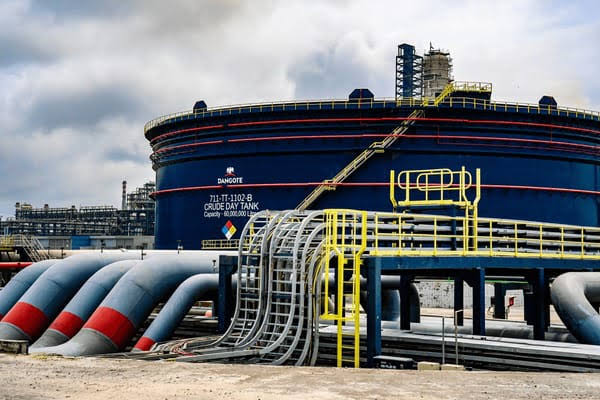
According to The PUNCH, industry operators cautioned that unless Nigeria’s four state-owned refineries and private facilities such as Dangote Refinery come fully on stream, the duty could lead to fresh supply gaps and higher pump prices nationwide.

Harry maintained that despite potential short-term challenges, the long-term benefits of the policy, such as increased local refining, job creation, a stronger naira and improved energy security, outweigh its disadvantages.

“We believe this policy will ultimately boost the local economy and attract investors. But it must be implemented carefully to avoid hardship,” the PETROAN president said.

The association reiterated its support for the Tinubu administration’s reforms but urged close supervision to ensure the 15 per cent tariff strengthens, rather than destabilises, Nigeria’s downstream petroleum sector.

“This policy will boost local refining, promote economic growth, create more job opportunities, and create a level playing field for domestic refineries. The benefits of this policy include increased local refining capacity, reduced dependence on imported fuel, improved price stability, enhanced energy security, a boost to the local economy, benefits to foreign reserves, benefits to the naira gaining strength, and attracting investors.

See also  NNPC laments losses as PENGASSAN halts strike

“The potential disadvantages include potential price increases, loss of jobs on the side of importing firms, and short-term challenges. The benefits of this policy will outweigh the potential disadvantages. Regulatory agencies such as the Nigerian Midstream and Downstream Petroleum Regulatory Authority should be on red alert against monopoly. If local refineries are not properly regulated, it could lead to a monopoly that might harm the market,” he was quoted.

Meanwhile, the Presidency on Friday confirmed that the approved 15 per cent import tariff on petrol and diesel, describing the policy as a strategic step to stimulate local refining and strengthen Nigeria’s energy independence.

According to a statement by the Special Adviser to the President on Media and Public Communications, Sunday Dare, on his official X handle on Friday, the new policy is “a bridge, not a burden,” aimed at transforming Nigeria’s petroleum landscape and securing long-term economic stability.

He described the policy as a strategic measure to end Nigeria’s dependence on imported fuel and accelerate the country’s path to energy self-sufficiency.

“It’s no longer news that President Tinubu has approved a 15 per cent import duty on petrol and diesel, a bold and strategic move aimed at reshaping Nigeria’s energy landscape,” Dare wrote.

He explained that for years, Nigeria had depended heavily on imported fuel despite being one of the world’s leading crude oil producers, a situation that drained foreign exchange, hindered job creation, and stifled local refining investments.

“For years, the nation has depended heavily on imported fuel despite being a leading crude oil producer, draining foreign exchange and exporting jobs that should have been created at home. This new policy is designed to reverse that trend by encouraging local refining, boosting domestic capacity, and ensuring that Nigeria’s oil wealth translates directly into national prosperity,” the statement added.

See also  Banks: Bad loans rise after CBN ends forbearance

Dare said the policy seeks to make imported products less competitive while tilting the market in favour of locally refined fuel from the Dangote Refinery, Port Harcourt Refinery, and modular plants under construction across the country.

“By making imported fuel less competitive, the government is tilting the market in favour of local refineries such as Dangote and other modular plants, laying the groundwork for a self-sustaining and resilient energy sector,” he stated.

He added that as domestic refining ramps up, supply will strengthen, and pump prices are expected to stabilise over time. The policy, according to him, will also stimulate industrial activity, create jobs, and attract fresh investments into the downstream petroleum value chain.

“As local refining ramps up and supply strengthens, prices are expected to moderate while jobs, investment, and industrial activity expand. This policy is therefore not a burden, but a bridge, from dependence to independence, from vulnerability to strength,” Dare said.

The presidential aide’s comment marks a departure from the position of petroleum marketers, who have warned that the pump price of Premium Motor Spirit, popularly known as petrol, could rise above N1,000 per litre following President Tinubu’s approval of a 15 per cent ad-valorem import tariff on fuel imports.

The new policy, which takes effect after a 30-day transition period expected to end on 21 November 2025, is part of the government’s strategy to protect local refiners and reduce the influx of cheaper imported products that threaten domestic refining investments.

PUNCH Online reports that the latest data from the Nigerian Midstream and Downstream Petroleum Regulatory Authority indicate that petrol imports still accounted for about 69 per cent of the country’s total fuel demand over the 15 months between August 2024 and 10 October 2025.

punch.ng

FOLLOW US ON:

FACEBOOK

TWITTER

PINTEREST

TIKTOK

YOUTUBE

LINKEDIN

TUMBLR

INSTAGRAM

Continue Reading
Click to comment

Leave a Reply

Your email address will not be published. Required fields are marked *

Business

Court orders Virgin Atlantic to pay N13m for missed flight

Published

on

A Federal High Court in Lagos has ordered Virgin Atlantic Airways Limited to pay Mrs. Joy Ezetah the sum of $5,906.50 in damages after it failed to allow her board a scheduled Lagos-London flight, an incident that disrupted her onward trip to Canada and caused her financial loss.

Justice Ibrahim Kala in the judgement delivered on Monday, held that the airline was liable for the losses suffered by the claimant after she was denied boarding at the Murtala Muhammed International Airport on 6 April 2024.

The claimant had asked the court for N100m in general damages, arguing that she bought a business-class ticket through Air Canada for a four-leg trip from Lagos to Toronto and back, but was stopped from boarding the Virgin Atlantic flight “without justification.”

She told the court that she arrived early, completed check-in, and was issued a boarding pass for the Lagos-London leg.

According to her, airline officials later prevented her from boarding, stating they could not connect her ticket to her Air Canada connecting flight from London to Toronto.

Ezetah stated that the airline owed her a duty of care and should have resolved the issue with Air Canada or made other arrangements instead of denying her boarding.

She further maintained that when she later contacted Air Canada, the airline confirmed that her ticket was valid and that she was expected on the connecting flight.

Virgin Atlantic, however, denied liability. It said it was “not the issuing carrier” and insisted that the ticket had been purchased directly from Air Canada under a codeshare arrangement.

See also  FCCPC sets January 5 deadline for digital lending compliance

The airline also argued that an error code in the reservation system prevented it from issuing a boarding pass for the connecting flight and that it acted professionally by advising the passenger to contact the ticket issuer.

It further contended that the claimant’s inability to complete online check-in before arriving at the airport showed that there was already a problem with the ticket.

After reviewing the evidence, submissions and legal authorities cited by both sides, Justice Kala held that the claimant’s case had merit.

The court awarded $5,906.50 in damages against Virgin Atlantic and ordered that the sum be paid using the prevailing exchange rate published by the Central Bank of Nigeria. Based on the highest official rate of N1,365.50 to a dollar, the award translates to about N8.07m.

Justice Kala also ordered the airline to pay 10 per cent interest per annum on the judgment sum until full liquidation of the debt.

Additionally, the court awarded N5m as costs against Virgin Atlantic, noting that the claimant had been forced to approach the court to enforce her rights.

punch.ng

FOLLOW US ON:

FACEBOOK

TWITTER

PINTEREST

TIKTOK

YOUTUBE

LINKEDIN

INSTAGRAM

Continue Reading

Business

States kick as Senate moves to amend Electricity Act; read details

Published

on

A fresh battle over the control of Nigeria’s electricity sector is brewing, as state electricity regulators have accused the National Assembly of attempting to claw back powers already devolved to states under the Constitution and the Electricity Act 2023.

In a strongly worded memorandum submitted to the Senate Committee on Power and obtained by our correspondent on Tuesday, electricity regulatory commissions and bureaus from 16 states warned that the proposed Electricity Act (Amendment) Bill 2026 could reverse one of the most significant reforms in Nigeria’s power sector.

The regulators argued that the amendment bill, rather than strengthening the electricity market, seeks to restore extensive federal oversight over matters they insist have constitutionally become the responsibility of states.

The concerns were contained in a letter dated May 26, 2026, addressed to the Chairman of the Senate Committee on Power and signed on behalf of the State Electricity Regulatory Commissions and Bureaus.

Signatories to the document included the chairmen and chief executives of electricity regulators in Abia, Anambra, Bayelsa, Edo, Ekiti, Enugu, Gombe, Imo, Kogi, Lagos, Nasarawa, Niger, Ogun, Ondo, Oyo and Plateau states.

The regulators said they had taken advantage of the Electricity Act 2023 to begin building sub-national electricity markets and had already engaged investors based on the framework created by the law.

They noted that they had earlier met with the Senate committee and were subsequently requested to consolidate their concerns into a single memorandum for the consideration of lawmakers, the Nigerian Electricity Regulatory Commission and other stakeholders.

The letter stated, “We represent State Regulatory Commissions/Bureaus that have taken advantage of the Electricity Act 2023 to commence the development of our sub-national electricity markets and sectors.

We are grateful for the audience you granted us to raise concerns on the ongoing consideration of the proposed Amendment Bill 2026 to the Electricity Act 2023.

“As agreed during our discussion, we have collated and consolidated the comments into one document which is hereby attached for the consideration of the Senate and House Committees on Power, NERC and other stakeholders.”

The state electricity regulators said they had identified 17 contentious provisions in the proposed amendments to the Electricity Act that they believed could undermine the constitutional powers already granted to states in the electricity sector.

According to the regulators, the areas of disagreement include the authorisation of State Houses of Assembly to legislate on electricity matters, the supremacy of state laws within state electricity markets, and provisions seeking to retain federal control over all activities connected to the national grid.

Other disputed clauses relate to restrictions on states’ participation in the wholesale electricity market, matters concerning the Nigerian Wholesale Electricity Market, the authority of states over independent transmission and distribution networks, and the establishment and administration of the Power Consumers Assistance Fund.

The regulators also raised concerns over the proposed expansion of the powers of the Nigerian Electricity Management Services Agency, the structure and decisions of the Forum of Electricity Regulators, and the provision granting the Nigerian Electricity Regulatory Commission final administrative appellate jurisdiction on certain issues arising within the forum.

See also  Nigeria needs 25m tonnes of maize annually – FG

They further opposed provisions designating electricity generation, transmission, distribution and supply as essential services, as well as clauses dealing with government-owned enterprises as licensees and obligations to host communities.

Additional areas of contention include the regulation of intra-state electricity matters that may have implications for the national grid, the imposition of timelines and phased conditions for states transitioning into independent electricity markets, and proposed federal oversight on consumer protection, anti-trust measures and tariff design within state electricity jurisdictions.

The regulators argued that the disputed provisions require further consultation to ensure that the decentralisation objectives of the Electricity Act are not weakened by subsequent amendments.

“A review of the Bill suggests that the general intention is to reverse the devolution of legislative, governance and regulatory powers over electricity matters that occur solely within the respective states to the state governments, in favour of a reconsolidation of powers at the federal level, with the Nigerian Electricity Regulatory Commission retaining full supervisory powers over the market. Effectively, it appears that the intention of the Bill is that Nigeria should continue with the same regime that, for 20 years, has not led to any significant increase in power availability or per capita consumption for Nigerians, despite ever-increasing (and unsustainable) federal debt.”

At the centre of the dispute is the interpretation of the constitutional amendments that allowed states to legislate on electricity matters within their territories. The regulators argued that the proposed amendment bill wrongly assumes that state legislatures derive their powers from the National Assembly rather than directly from the Constitution.

According to them, any attempt by the National Assembly to grant, restrict or redefine those powers through ordinary legislation would amount to a constitutional violation.

The memorandum stated, “Section 2 of the Bill aims to amend Section 2(2)(a)-(e) of the Principal Act. By that section, the National Assembly reserves to itself the power to delegate legislative powers to States’ Houses of Assembly, suggesting that the Bill (or the Principal Act) is the source of the powers of a state to make laws on its electricity markets.

“This provision is based on a shocking miscomprehension of Nigerian constitutional law—it proceeds from the wrong assumption that the NASS, by ordinary legislation and not constitutional amendment, can confer (or restrict) the legislative power of states.

“The constitutional division of powers is fundamental to federalism, ensuring a balance between national unity and state autonomy. There is no legal framework for the NASS to ‘empower’ state governments to make law by ordinary legislation, as the language of the Bill attempts to do.

“The constitutional division of powers is fundamental to federalism, ensuring a balance between national unity and state autonomy. There is no legal framework for the NASS to ‘empower’ state governments to make law by ordinary legislation, as the language of the Bill attempts to do. Consequently, Section 2 of the Bill, seeking to amend Section 2 of the Act, is not consistent with the Constitution.”

See also  NNPC laments losses as PENGASSAN halts strike

The regulators described as “a shocking miscomprehension of Nigerian constitutional law” the provisions of the bill that appear to suggest that the National Assembly is the source of states’ authority over electricity matters.

They warned that the proposed law could undermine the principle of federalism by weakening state autonomy. Beyond constitutional concerns, the regulators said the bill could create uncertainty in the electricity market and discourage investors who had already committed resources based on the existing legal framework.

“The clear intention behind the new drafting is to reconsolidate in the Federal Government matters solely within the state electricity markets which had been devolved to the states,” the memorandum stated.

“This will defeat the key objectives of the Electricity Act and the various states’ electricity laws, even before the regime introduced by them has taken any root. It will introduce avoidable disruption in the industry as significant investment decisions have already been taken based on the Electricity Act 2023, and these investments are now put at risk by this proposed amendment.”

The state regulators specifically faulted provisions relating to federal oversight of activities connected to the national grid, restrictions on state authority over wholesale electricity transactions, the proposed expansion of NERC’s powers and changes affecting mini-grids and independent distribution systems.

They argued that allowing NERC to retain overriding authority over electricity activities merely because they have some connection to the national grid would effectively render state powers meaningless.

The memorandum stated, “What is required, in order to attain the full benefits of the decentralisation of the Nigerian Electricity Supply Industry that is the theme of the Fifth Alteration and provided for in the Principal Act, is proper coordination on transmission matters between NERC and state regulators, and not top-down federal legislation.”

The regulators also rejected provisions that would permit NERC to exercise final administrative appellate jurisdiction over disputes involving state electricity regulators. According to them, NERC and the SERCs are on equal standing within their respective constitutional spheres of authority.

“NERC and the SERCs are on equal standing within their respective constitutional spheres of authority,” the memorandum said. “The National Assembly cannot arrogate to NERC quasi-judicial authority over SERCs, especially where the dispute might be on a matter over which NERC has no authority.”

They further argued that the Constitution already vests judicial powers in the courts and that such responsibilities cannot be transferred to a regulatory agency. The proposed establishment of a Forum of Electricity Regulators also drew criticism.

Although the regulators acknowledged the importance of coordination among electricity regulators, they argued that participation in such arrangements should be voluntary rather than imposed through federal legislation.

See also  Banks: Bad loans rise after CBN ends forbearance

“The better approach would be a Memorandum of Understanding or similar instrument jointly negotiated by all relevant regulatory bodies in which the principles of coordination and harmonisation will be agreed,” they said.

The state regulators equally opposed provisions declaring generation, transmission, distribution and supply of electricity as essential services covering both federal and state electricity markets.

According to them, such provisions could inadvertently expand NERC’s jurisdiction into areas already devolved to states, including tariff regulation. “The provision is invidious, regressive and should be expunged,” the memorandum stated.

The regulators also faulted proposals empowering NERC to determine contributions to the Power Consumers Assistance Fund from electricity consumers. They argued that since electricity tariffs and retail supply have become matters for state regulation, decisions relating to subsidies and customer contributions should similarly reside with state authorities.

Other contentious areas identified by the regulators included host community obligations, the role of the Nigerian Electricity Management Services Agency, licensing arrangements involving government-owned electricity enterprises and timelines for states transitioning into independent electricity markets.

The dispute highlights the growing tension between the Federal Government and states over the future structure of Nigeria’s electricity industry. The Electricity Act 2023 was enacted following the Fifth Alteration to the 1999 Constitution, which removed electricity from the Exclusive Legislative List and empowered states to generate, transmit and distribute electricity within their territories.

Since then, several states have enacted electricity laws and established regulatory agencies to oversee emerging sub-national electricity markets. Lagos, Enugu, Ekiti, Ondo, Edo and other states have already commenced varying stages of implementation of their electricity reform programmes.

Energy experts have repeatedly described the decentralisation of the sector as a major opportunity to attract investment, improve efficiency and expand access to electricity. However, the latest amendment proposals appear to have reopened the debate over how regulatory powers should be shared between Abuja and the states.

As the National Assembly continues deliberations on the amendment bill, the position adopted by lawmakers could shape the future direction of Nigeria’s electricity reforms and determine whether the country deepens its experiment with decentralisation or returns to a more centralised regulatory model.

The Electricity Act 2023 was designed to operationalise the constitutional amendments that empowered states to participate directly in electricity generation, transmission and distribution within their boundaries. Since its enactment, several states have passed their own electricity laws and established regulatory commissions.

The proposed Electricity Act (Amendment) Bill 2026 seeks to amend several provisions of the principal legislation. However, state regulators contend that some of the proposed changes amount to an attempt to reverse the gains of decentralisation and restore broad federal control over the Nigerian Electricity Supply Industry.

punch.ng

FOLLOW US ON:

FACEBOOK

TWITTER

PINTEREST

TIKTOK

YOUTUBE

LINKEDIN

INSTAGRAM

Continue Reading

Business

Africa urgently needs more fish farms, says UN

Published

on

Africa needs to urgently expand its fish-farming sector to meet its food needs, the head of the UN’s fisheries division said Tuesday, even as its latest report found record production levels globally.

Fish and seafood is now a $184-billion trade, according to the State of World Fisheries and Aquaculture report by the United Nations’ Food and Agriculture Organization (FAO), launched at the Our Ocean Conference in Kenya.

Fish-farming, or “aquaculture”, overtook traditional “capture” fishing as a source of food production in 2021 and has continued to grow — surpassing 100 million tonnes for the first time in 2024, the latest year for data.

But Africa is lagging behind the rest of the world, with only 18 percent of its fish coming from farms, compared to around half elsewhere.

Sub-Saharan Africa’s fish production will need to grow by 68 percent between now and 2050 to keep up with its rapidly growing population, the FAO said.

“It’s an opportunity waiting to be exploited… but it’s whether the timing is sufficiently fast to catch up with that demand,” Manuel Barange, director of the FAO’s fisheries division, told AFP.

“Aquaculture can actually be a game-changer,” he said. “If we manage to develop aquaculture in Africa, there’s a lot of opportunities.”

But governments urgently need to create regulations and incentives to attract investors, Barange added.

More than 700 different species of fish are raised for consumption on aquaculture farms around the world and the FAO argues it is a more predictable and sustainable approach than traditional fishing at sea.

See also  Consumers pay N1.13tn electricity bill despite blackouts

It is also more manageable in the face of climate change, which is causing rapid changes in the volumes and locations of ocean fish.

Climate change is “a disruptor of everything that we do,” said Barange.

More work is also needed to reduce over-fishing: the report found that only 62 percent of global fisheries were sustainably fished.

The 11th edition of the Our Ocean Conference began in the Kenyan port city of Mombasa on Tuesday — its first time in Africa — bringing together politicians, NGOs, investors and innovators.

Since its first edition in 2014, organisers boast that it has led to more than 2,900 commitments valued at over $169 billion, covering marine conservation, sustainable fisheries, climate adaptation, security and pollution reduction.

punch.ng

FOLLOW US ON:

FACEBOOK

TWITTER

PINTEREST

TIKTOK

YOUTUBE

LINKEDIN

INSTAGRAM

Continue Reading

Trending