•IPMAN, PETROAN push back, warn against monopoly, Dangote insists on ‘Nigeria First’ policy
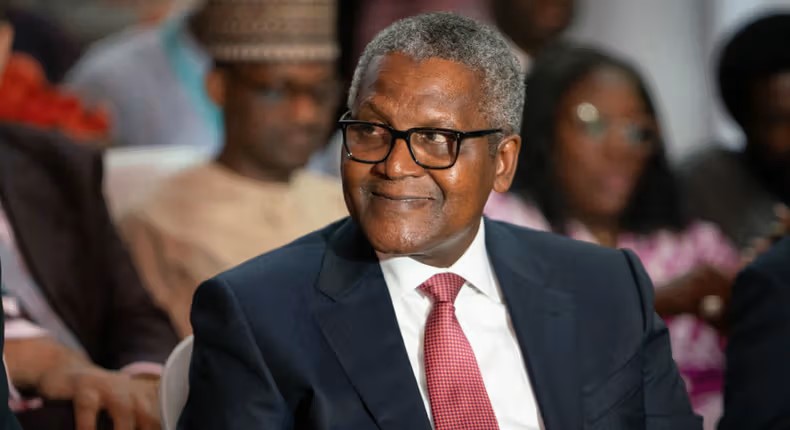
The President of the Dangote Group, Alhaji Aliko Dangote, has asked President Bola Tinubu to include refined petroleum products in the list of items banned under the ‘Nigeria First’ policy of the Federal Government. But this was unanimously rejected by oil marketers and some industry analysts on Sunday.
The ’Nigeria First’ policy seeks to ban government agencies from importing goods that can be produced within Nigeria. In May, Tinubu barred government agencies from importing goods or services that are available locally.
The policy stated that no procurement of foreign goods or services already available in Nigeria shall proceed without justification and a Bureau of Public Procurement waiver.
Speaking at the just concluded Global Commodity Insights Conference on West African Refined Fuel Markets hosted by the Nigerian Midstream and Downstream Petroleum Regulatory Authority in partnership with S&P Global Insights, Dangote requested in clear terms that petrol, diesel, and other refined petroleum products be added to the items banned by the policy.
According to him, the importation of fuel into Nigeria is killing local refining and discouraging further investments in the sector and even the economy. To remain viable, he urged governments across Africa to take deliberate steps as the United States, Canada, and the European Union have done to protect domestic producers from what he called unfair competition.
Dangote did not mince words when he said that the Nigeria First policy announced by Tinubu should apply to the petroleum products sector. “The Nigeria First policy announced by His Excellency, President Bola Tinubu, should apply to the petroleum product sector and all other sectors,” he stated.
This request by Dangote seeks to place a ban on the importation of petrol, diesel, and other products being produced locally. He argued that local refiners were finding it difficult to sell their products because of what he called dumping. The billionaire businessman alleged that importers were dumping toxic fuel that would never be allowed in Europe.
“And to make matters worse, we are now facing increased dumping of cheap, often toxic petroleum products, some of which are blended to substandard levels that would never be allowed in Europe or North America,” he said.
Dangote mentioned that some of the importers bring into Nigeria fuel or crude oil subsidised in Russia. This, he said, affects local pricing, forcing refiners to drop prices below their costs.
“Due to the price caps on the Russian petroleum products, discounted petroleum products produced in Russia or with discounted Russian crude find their way to Africa, severely undercutting our local production, which is based on full crude pricing. This has created an unlevel playing field in most African countries. Petrol and diesel are sold for about a dollar net of taxes.
“In Nigeria, due to this unfair competition, this price is just about 60 cents, even cheaper than Saudi Arabia, which produces and refines its own oil. This is due to the fact that we are having too much dumping. To remain viable, we urge the governments across Africa to take deliberate steps as the United States, Canada, and the European Union have done to protect domestic producers from unfair competition,” he stated.
The richest man in Africa said this was not to monopolise the sector but to produce local investments. He noted that those who have the resources to invest in Nigeria keep taking their resources outside the country while they criticise local investors.
“Let me take this opportunity to address concerns around monopoly and dominance. The reality is that too many people who have the means and the opportunity to contribute meaningfully to our nation’s growth choose instead to criticise from the sidelines while investing their wealth abroad,” Dangote said.
To prove that his $20bn refinery can satisfy local fuel needs, Dangote disclosed that Nigeria has become a net exporter of petroleum products, having exported approximately 1.35 billion litres of petrol to other countries worldwide in 50 days.
According to Dangote, between June and July 2025, the refinery exported up to 1 million tonnes of petrol, which is approximately 1.35 billion litres when converted.
“Today, Nigeria has actually become a net exporter of refined products. Before I came on the podium, I asked my people how many tonnes of PMS we have actually exported. From June beginning to date, we have exported about 1 million tonnes of PMS, within the last 50 days,” he said.
Marketers tackle Dangote
However, marketers disagreed with Dangote, urging the Federal Government not to consider adding petroleum products to the list of items banned from importation.
Speaking with our correspondent on Sunday, the National Publicity Secretary of the Independent Petroleum Marketers Association of Nigeria, Chinedu Ukadike, said independent marketers would not support that idea as it would spell doom for the sector.
“We independent marketers will depart from that request. If the government does that, that means we will not be able to check inflation and monopoly, since it is the only refinery operating in the country now. We should continue to import even as we buy locally.
“I heard that the NMDPRA stated clearly that Dangote cannot produce all the fuel that the country needs. We will appreciate it if the country allows importation to continue since we are not paying subsidy,” Ukadike said.
Reacting to Dangote’s claim that importation would kill businesses and local refineries, Ukadike differed. “Importation won’t kill local businesses or refineries; it will strengthen them. It will ensure local refineries step up their game. I don’t agree with Dangote on this,” he said.
Also, the National President of the Petroleum Products Retail Outlet Owners Association of Nigeria, Billy Gillis-Harry, kicked against the call to ban fuel Importation. He said no one company should be allowed to dominate the downstream sector in a free economy.
While admitting that there is a need to ban the importation of some goods, he said these should not include fuel, stressing that Nigeria needs multiple sources of energy. “I don’t agree with Dangote. We are running a free economy. There’s no reason why any one company should have an overarching value on the entire industry.
“Importation is not killing the economy. Importation is stabilising the sources of petroleum products. Importation of all products is useful. However, those that can be produced in Nigeria, like toothpicks, garri, egusi soup, cassava, and others like that, should be banned.
“But importation of refined petroleum products should not be banned because it helps to ensure that there are multiple sources of energy and replenishment,” Gillis-Harry stated.
Expert reacts
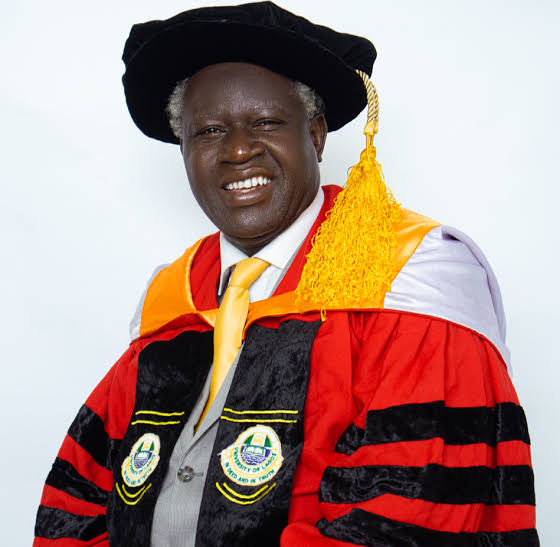
An energy expert at the University of Lagos, Professor Dayo Ayoade, also warned against banning fuel Importation, saying this would promote monopolistic tendencies.
“No, we cannot have a ban on petroleum imports. It’s not a legal ban. That would not be acceptable because we don’t have diverse sources for petroleum products. We can’t rely solely on the Dangote refineries. That would give a monopoly to a private individual.
“And for the reasons of energy security and national security, that would be completely unacceptable. The government should continue to encourage, liberalise, and ensure other refineries come upstream. NNPC may want to privatise or sell off its refineries, then that’s fine. But we need to have a better base of product market before we now start to say we want to ban imports,” he said.
He queried what the local and international laws say about banning products.
“And you know, when we talk about bans, we have to look at international trade. International trade law does not really sit well with banning things. So, we have to be clever about how we do it. But if the market is ripe, it will be more expensive to bring in things from other countries than our own products, provided they are of sufficient quantity and the quality is fine,” the don submitted.
More refineries
During the NMDPRA conference, Dangote called on the regulator to encourage building more refineries. He charged the agency to withdraw dormant refinery licences from those holding on to them.
The IPMAN spokesman supported Dangote on this, saying, “On that side, I agree with him. You can’t obtain a licence to build a refinery and use it to decorate your house. The nation needs more refineries to do more exports.”
Dangote has repeatedly stated that his refinery has more than enough fuel to satisfy local fuel needs, wondering why some marketers insist on “sabotaging” his investment with importation. He disclosed recently that the refinery would produce hit 700,000 barrels per day capacity in December, an update from the current 650,000 BPD capacity.
On Friday, Dangote announced his retirement as a Director and the Chairman of the Board of Directors of Dangote Cement. According to a statement Friday by the Group Chief Branding & Communications Officer, Anthony Chiejina, Dangote is relinquishing his position as chairman and retiring from the board to focus more attention on the $20bn refinery, petrochemicals, fertiliser, and government relations.
FOLLOW US ON:
FACEBOOK
TWITTER
PINTEREST
TIKTOK
YOUTUBE
LINKEDIN
TUMBLR
INSTAGRAM