

Connect with us

Business

Marketers raise petrol prices amid drop in crude cost

Published

on

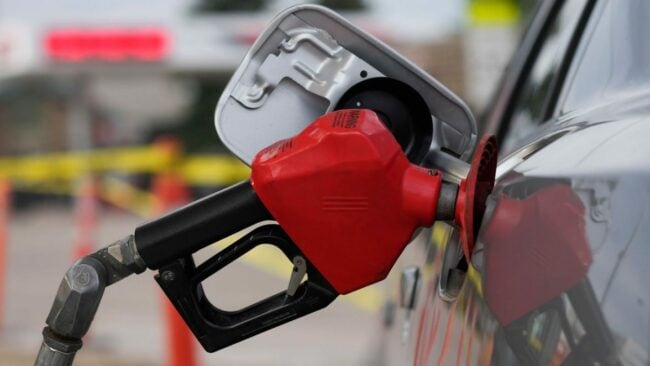
Filling stations have raised their pump prices for petrol to N900/litre and above despite a decline in the cost of crude oil since Sunday.

Some retail outlets owned by the Nigerian National Petroleum Company Limited raised petrol prices to N900 per litre in Lagos and Ogun, even as crude prices dropped from nearly $69 to $66 per barrel.

Dangote refinery partners, including Ardova and Heyden, jerked prices above N900 per litre. Our correspondent observed that AP, a partner of the Dangote refinery, sold petrol at the rate of N925 per litre in the Mowe area of Ogun State, while Heyden offered N910.

Filling stations along the Lagos-Ibadan Expressway displayed different prices on Monday, confirming a new price regime despite no significant rise in crude prices or the naira-dollar exchange rate.

But marketers said that the prices might come down this same week.

Throughout last week, petrol was sold below N900 in many of the filling stations in Lagos, Ogun and environs, while the prices were higher in the South-East, South-South and the North.

As of yesterday, TotalEnergies sold petrol at N910 while Asharami offered N905 per litre. NIPCO and Fatgbems were yet to hit the N900 line on Monday, selling petrol at N890 and N892 respectively. Enyo sold the product at N915 per litre.

On Friday, the Dangote refinery confirmed raising its ex-depot petrol price to N850 from N820. No reason was given for the increment. The latest data from Petroleumprice.ng showed that petrol depot prices among selected suppliers averaged N855 per litre. Prices ranged from N850 at Aiteo to as high as N870 at Sobaz and Mainland, reflecting slight variations across major depots.

See also  PHOTOS: Sachet Alcohol Ban Threatens Five Million Jobs, Distillers Warn NAFDAC

Other listed depots include NIPCO Lagos at N852, Northwest at N860, Alkanes at N860, Ever at N863, TSL at N864, Pinnacle at N851.5, Menj at N852, and Sahara at N855.

But as traders adjusted pump prices higher in Nigeria, Brent crude fell 4.4 per cent, while West Texas Intermediate finished 5.1 per cent lower on Friday. According to Reuters, oil held steady on Friday as markets awaited a meeting in the coming days between the Russian President, Vladimir Putin and his US counterpart, Donald Trump, but prices marked their steepest weekly losses since late June on a tariff-hit economic outlook.

Brent crude futures settled 16 cents, or 0.2 per cent, higher at $66.59 a barrel, while US West Texas Intermediate crude futures were unchanged at $63.88. US crude fell over 1 per cent earlier in the session after it was reported that Washington and Moscow were aiming to reach a deal to halt the war in Ukraine that would lock in Russia’s occupation of territory seized during its military invasion.

Marketers expect price drop

Speaking, the National Publicity Secretary of the Petroleum Products Retail Outlet Owners Association of Nigeria, Joseph Obele, said marketers were expecting a drop in fuel prices this week.

Obele noted that fuel prices went up because crude prices rose about 10 days ago. However, he noted that crude prices dropped a few days later, stating that pump prices should be adjusted downward this week.

“Last weekend, there was a rise in the price of crude oil. So, arising from that, the refineries responded by adjusting their price upwards. A few days later, the price dropped again, arising from the meeting between Trump and the Russian Ambassador.

See also  Here Are Top Companies That Sustain Lagos Economy.

“What affected the price was the threat given by President Donald Trump to the Russian president. So, we saw an upward review and a few days later, when the threat subsided, traders reviewed the existing price downward. So, tomorrow, next tomorrow, we hope to see a downward review of the price of petroleum products,” he said

Obele added that another factor that pushed up petrol prices was the fact that the Dangote refinery “suspended PMS loading for about eight days.” The refinery had since denied this claim, saying it supplies 40 million litres of petrol daily. Obele concluded that “by Tuesday or so, we hope to see a downward review of petrol prices.”

FOLLOW US ON:

FACEBOOK

TWITTER

PINTEREST

TIKTOK

YOUTUBE

LINKEDIN

TUMBLR

INSTAGRAM

Continue Reading
Click to comment

Leave a Reply

Your email address will not be published. Required fields are marked *

Business

See Full List of Top 10 World’s Largest Economies in 2026

Published

on

The United States is projected to remain the world’s largest economy in 2026 with a gross domestic product estimated at $32.1 trillion, according to new global economic forecasts obtained from Focus Economics on Wednesday.

The U.S. continues to lead global output through dominance in technology, finance, healthcare, and advanced manufacturing. Growth in artificial intelligence, healthcare innovation, and high-value industries has further widened its lead over other major economies in recent years.

The top 10 world economies ranked in numbers

1. United States — $32.1 trillion
The United States remains the world’s largest economy, accounting for over a quarter of global output in nominal terms. Its economy is highly diversified, with Silicon Valley driving global leadership in AI, biotech, and software, while Wall Street anchors the financial sector.

2. China — $20.2 trillion
China is the world’s second-largest economy, driven by manufacturing, exports, and large-scale industrial production. It remains the leading global producer of electronics, machinery, and textiles, though it faces structural challenges, including a shrinking population and high debt levels.

3. Germany — $5.4 trillion
Germany remains Europe’s largest economy, supported by a strong industrial base and the Mittelstand network of medium-sized manufacturing firms that form the backbone of its export strength.

4. India — $4.5 trillion
India continues its rapid economic rise, driven largely by services and information technology. Its economy has more than doubled over the past decade, supported by a young population and expanding domestic demand.

5. Japan — $4.4 trillion
Japan remains a global manufacturing powerhouse in robotics, automobiles, and electronics, although long-term growth is constrained by an aging population and structural economic stagnation.

See also  CNG investments hit $980m, says Presidency

6. United Kingdom — $4.2 trillion
The United Kingdom is a major service-based economy, with strengths in finance, insurance, and real estate, anchored by the City of London.

7. France — $3.6 trillion
France has a diversified economy led by luxury goods, aerospace, agriculture, and manufacturing, with global brands such as Airbus and LVMH playing major roles.

8. Italy — $2.7 trillion
Italy combines a strong services sector with manufacturing strengths in fashion, machinery, and automobiles, driven largely by its industrial northern regions.

9. Russia — $2.5 trillion
Russia remains heavily dependent on oil and gas exports, with energy revenues playing a central role in its economy despite ongoing sanctions and geopolitical pressures.

10. Canada — $2.4 trillion
Canada rounds out the top 10, supported by natural resources such as oil, forestry, and mining, alongside a strong services and financial sector.

Economists say the global economy is increasingly being shaped by technology, demographics, energy transitions, and geopolitical tensions, all of which will influence how these rankings evolve in the coming years.

punch.ng

FOLLOW US ON:

FACEBOOK

TWITTER

PINTEREST

TIKTOK

YOUTUBE

LINKEDIN

INSTAGRAM

Continue Reading

Business

Nigeria misses OPEC oil production quota again

Published

on

Again, Nigeria has missed its crude oil production quota set by the Organisation of the Petroleum Exporting Countries after averaging 1.49 million barrels per day in April, below the 1.5 mbpd benchmark.

Figures from the Nigerian Upstream Petroleum Regulatory Commission showed that the country produced an average of 1,488,540 barrels of crude daily in April, representing about 99 per cent of the OPEC quota. When condensates were added, total daily production rose to 1.66mbpd

Last month, the NUPRC said oil production now averaged 1.8mbpd. However, data released on Tuesday was at variance with the report. The latest data mean Nigeria remained below its OPEC allocation for the ninth straight month since July 2025.

The NUPRC document showed that combined crude oil and condensate production peaked at 1.85 mbpd during the month, while the lowest output stood at 1.46 mbpd. The PUNCH reports that the April figures are an appreciable improvement compared to March, when oil output was 1.55mbpd.

Nigeria’s oil production has struggled for years due to crude theft, pipeline vandalism, ageing infrastructure, and underinvestment in the upstream sector. Although output improved marginally in April compared to March, it was still insufficient to meet the country’s OPEC target, underscoring persistent challenges in ramping up production despite government efforts to boost volumes.

The PUNCH reports that Nigeria’s crude production in March was 1.38 mbpd. While there was a 69,000 bpd increase from the 1.31 mbpd recorded in February, the figure is still 117,000 bpd below the OPEC quota.

The figures for February indicated a month-on-month decline of 146,000 barrels per day, widening the country’s shortfall from its OPEC production allocation. This is the eighth consecutive month the country has failed to meet the OPEC quota since July 2025.

See also  Nigerian billionaire Tonlagha hires lobbyists to push Nigeria-US ties

Recall that although Nigeria recorded a marginal improvement in January, when production rose from 1.422 mbpd in December 2025 to 1.46 mbpd, the rebound was short-lived as output fell significantly in February 2026.

Earlier data from NUPRC had also shown that crude oil production weakened at the end of 2025. Production declined from 1.436 mbpd in November 2025 to 1.422 mbpd in December, before recovering slightly in January.

In 2025, Nigeria’s crude oil production fell below its OPEC quota in nine months of the year, meeting or slightly exceeding the target only in January, June, and July.

Nigeria opened 2025 strongly, producing 1.54 mbpd in January, about 38,700 barrels per day above its OPEC allocation. However, production slipped below the quota in February at 1.47 mbpd and weakened further in March to 1.40 mbpd, marking one of the widest shortfalls during the year.

punch.ng

FOLLOW US ON:

FACEBOOK

TWITTER

PINTEREST

TIKTOK

YOUTUBE

LINKEDIN

INSTAGRAM

Continue Reading

Business

Dangote exports 1.66bn litres fuel amid US-Iran tensions

Published

on

Fresh data from the Nigerian Midstream and Downstream Petroleum Regulatory Authority has shown that the Dangote Petroleum Refinery & Petrochemicals exported an estimated 1.66 billion litres of refined petroleum products in April 2026.

This came amid mounting tensions in the Middle East and fears of possible disruption to global fuel supply routes following the growing conflict involving the United States and Iran.

An analysis of the NMDPRA’s April 2026 fact sheet by our correspondent showed that the country exported about 513 million litres of Premium Motor Spirit, popularly called petrol; 534 million litres of Automotive Gas Oil, also known as diesel; and 615 million litres of aviation fuel within the month under review.

The Dangote refinery is the only major functional refinery in Nigeria that currently produces enough refined petroleum products for both local consumption and export.

This is the first month the refinery has exported such a high volume of petroleum products, especially jet fuel and diesel, indicating the significance of the 650,000-barrel-per-day plant in Lekki, Lagos State.

The combined export volume translates to approximately 55.4 million litres daily. The development comes as the international oil market faces fresh uncertainty over the security of the Strait of Hormuz, a critical global oil shipping route, following the failure of the United States and Iran to agree on a peace deal.

Industry experts said the rising geopolitical uncertainty had significantly boosted demand for refined petroleum products from alternative suppliers such as Nigeria, especially as Europe, Africa, and parts of Asia scramble for more secure fuel sources.

See also  Lagos hotel room rates hit N205,534 as supply lags

The NMDPRA document showed that local refineries operated at an average capacity utilisation of 99.12 per cent in April, with the Dangote refinery accounting for the overwhelming share of production.

The regulator stated that the refinery achieved 100 per cent capacity utilisation “for most of the days in April.” The report also indicated that domestic refineries received 18.37 million barrels of crude oil in April, up from 13.11 million barrels recorded in March.

Findings further showed that the refinery maintained strong export momentum despite increased domestic supply obligations. According to the fact sheet, average daily petrol production stood at 53.6 million litres, while 40.7 million litres were supplied locally and 17.1 million litres were exported daily.

Similarly, diesel production averaged 23.6 million litres daily, with exports accounting for 17.8 million litres per day, more than double the domestic supply volume of 8 million litres daily. For aviation fuel, exports stood at 20.5 million litres daily, compared to the domestic supply of 2.6 million litres per day.

The strong aviation fuel export performance comes weeks after reports emerged that domestic airline operators threatened to shut down over the rising cost of the fuel.

There are reports that Nigeria has become a net petrol exporter for the first time in decades due to rising output from the Dangote refinery. The refinery had earlier exported about 434 million litres of petrol in March after domestic production exceeded local consumption levels.

The latest figures underscore Nigeria’s gradual transition from a major importer of refined petroleum products to an export hub within Africa. It was observed that jet fuel exports may rise further if instability in the Middle East continues to disrupt traditional supply chains serving Europe and other regions.

See also  Vietnam seeks stronger trade, agricultural ties with Nigeria

The Middle East accounts for a substantial share of global aviation fuel exports, with the Strait of Hormuz serving as a strategic transit corridor for crude oil and refined petroleum products. The prolonged disruption in the region has tightened global fuel supply and pushed up prices internationally.

The NMDPRA report also revealed that Nigerians consumed an average of 51.1 million litres of petrol daily in April, slightly above the 50 million litres benchmark estimated by the regulator. Diesel consumption stood at 17.3 million litres daily, while aviation fuel consumption averaged 2.5 million litres per day.

Despite increased local refining activity, petrol prices remained elevated across the country. The regulator attributed prevailing prices partly to international crude oil costs, which averaged $120.55 per barrel during the month, while gasoline costs stood at $1,074.97 per metric tonne.

The refinery, with a nameplate capacity of 650,000 barrels per day, is expected to play a central role in Nigeria’s energy security and foreign exchange earnings as global fuel trade patterns shift amid geopolitical tensions.

As the Nigerian refinery exports petrol, the NMDPRA has continued to issue licences for the importation of petrol.

punch.ng

FOLLOW US ON:

FACEBOOK

TWITTER

PINTEREST

TIKTOK

YOUTUBE

LINKEDIN

INSTAGRAM

Continue Reading

Trending