
Connect with us

Business

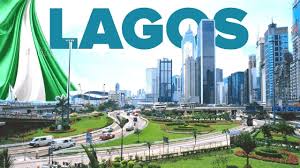
Here Are Top Companies That Sustain Lagos Economy.

Published

on

1. Dangote Group (Aliko Dangote -Hausa)
2. Globacom. (Micheal Adenuga. -Yoruba,)
3. BUA. (Abdul Rabiu -Hausa,)
4. First bank. (Oba Otudeko – Yoruba)
5. Zenith Bank (Jim Ovia – Delta,)
6. GTB. (Tajudeen Adeola -Yoruba)
7. Access Bank ,( Albert Wigwe – Rivers)
8. UBA. (Tony Elumelu. – Ibo)
9. Fidelity Bank (Mustafa Chike Obi – Igbo)
10. Geregu Power plc (Femi Otedola . Yoruba)
11. Honeywell Flours Mills (Oba Otudeko – Yoruba)
12. Oando. (Wale Tinubu – Yoruba)
13. Flutterewave. (Olugbenga Agboola – Yoruba)
14. Forte Oil. ,(Abdulwasiu Sowami -Yoruba)
15. Honeyland Foods (Ibunkun Odunsiya – Yoruba)
16. Rite Foods ltd (Suleiman Adegunwa ,-Yoruba)
17. JUMIA (Tunde Kehinde – Yoruba)
18. Konga. (Leo Stan Ekeh -Igbo)
19. Payporte (Bassey Eyoh – Cross River)
20. Dealsdey. (Sim Shagaya – Kwara’ Yoruba)
21. ShopRite Nigeria. (Tayo Amusan – Yoruba)
22. Addide Supermarket chain -(Adebowale Odunuga -Yoruba)
23. Sahara Energy -{Tunde Ayeni – Yoruba)
24. FCMB. -(Dubomi Balogun -Yoruba)
25. Sterling Bank ( Mike Adenuga -Yoruba,)
26. Paystack. ( Shola Akinlade ,-Yoruba)
27. Conoil. (Mike Adenuga -Yoruba)
28. Elizade Motors (Micheal Ade Ojo -Yoruba,)
29. Yinka Folawiyo Petroleum (Yinka Folawiyo -Yoruba)
30. Chicken Republic (Deji Akinyanju -Yoruba,)
31. Mega Chicken (Timothy Olubisi Ayenuyo -Yoruba)
32. Sweet Sensation (Kehinde Kamson -Yoruba)
33. Tantalizes ( Abosede Ayeni – Yoruba)
34. Tastee Fried Chicken (Olayinka Adedayo -Yoruba)
35. Stanbic IBTC (Atedo Peterside – Rivers)
36. WEMA Bank (Adekoya Okupe – Yoruba)
37. Union Bank (Farouk Gumel + Hausa)
38. AIICO Insurance ( Babatunde Fajemirokun -Yoruba)
39. Leadway Assurance (Hassan Odukale -Yoruba)
40. Nestoil (Ernest Obiejesi -Igbo)
41. Mainone. (Funke Opeke -Yoruba)
42. Tito Group (Asiwaju Akinwumi -Yoruba)
43. Nord Automobiles (Ajayl Akintobi -Yoruba,)
44. Coscharis (Cosmos Maduka -Igbo)
45. IMC Steyr Motors (Charles’ Ekundayo -Yoruba)
46. Paga (Tayo Oviosu. – Yoruba)
47. Kuda. (Babs Ogundeyi – Yoruba)
48. Mama Cass ( Grace Onabowale -Yoruba)
49. Kilimanjaro (EbelevEnunwa- Igbo)
50. Dignified Mobile Toilets (DMT) (Toyosi Akerele – Yoruba)
51. Vita foam (Bisoye tejuoso – Yoruba)
52. Wemy Industries – Ademola Odunaiya – Yoruba)
53. Hoodies and Stones Clothing -(Fadipe Adedamola – Yoruba)
54. Heirs Holdings. (Tony Elumelu -Ibo)
55. Verve International (Mitchell Elegbe ).
56. Moniepoint was founded by Tosin Eniolorunda – Yorùbá

See also  CBN pumps $1.25bn into fuel import, others

With all these conglomerates, ask yourself that, who actually build Lagos?

Sho Rotimillion Henry:

Shonde Oluwagbenga Majorities of the market space. Ladipo market Igbos, Alaba market igbos, Daleko market igbos, West minister igbos, oyigbo yorubas. Mile 12 hausas. Oke odo yorubas, ojuwoye yorubas, trade fair igbos, balogun mandilas igbos, Ajah market igbos and yorubas. Epe market yorubas. The most lucrative markets in lagos are dominated by the igbos. Stop playing tribal bigotry.

Shonde Oluwagbenga :

Sho Rotimillion Henry When are you guys going to get tired of using the word BIGOT and TRIBALISM?

When?

Why is it that whenever someone post the real fact that talks about Lagos economy and it doesn’t align with your southeast sentiments, automatically that person is a Tribal bigot?

This lists is from NBA Nigeria Bureau of Statistics, on how Lagos economy is been sustained. Why don’t you ask yourself why markets was exempted from the lists if truly markets sustain economy?

This are the conglomerates where Lagos State get their huge revenue from, not from the markets you listed out here.

Do you even know that, the taxes those markets you said you dominated pay in a year is not up to what each company pay in a month, not to talk of tax dangote refinery alone would be paying in a month?

Mr Trader, Markets is not really the economy booster.

If you want to know this better, Let’s take ABA market as an example, ABA markets is one of the biggest Markets in entire west africa countries, but what is the IGR of ABIA state or what exactly is ABIA state contributing to federals governments coffers?

See also  Banks sent pretty ladies to woo me for deposits – Otedola

Do you even know that what Oyo state alone contribute to Government coffers surpass what entire Ibo region Contributed with your ABA market .

You need to understand this thing better, exporting our Jobs to china and importing unemployement back Nigeria all in the name of Business, Market or Trading, doesn’t build economy, that is why Ibo region are not doing fine when it comes to revenue generation.

Conglomerate is the strength of state economy not markets.

Hope you have learn something Mr Tribal Bigot, who want to use ordinary Markets to defend Ibo statement of Ibo build Lagos.

We are Yoruba :

Others and more :

Proceeds of the inhabitants of the “brown roof kingdom”. Yorubas excellence in entrepreneurship.🔥🔥

1. Chowdeck:
Femi Aluko, Olumide Ojo and Lanre Yusuf. They launched in October 2021.

2. BOKKU:
Owned by a Nigerian Adewale Adeyemi, started operation in September 30, 2022.

3. The Place:
Owned by Kola Adewale.

4. Brent Stores:
Martins Akinola.

5. Justrite:
Dr. and Mrs. Aderinwale and Mrs. Omoboye. Current CEO is Mrs. Tosin Aderinwale.

FOLLOW US ON:

FACEBOOK

TWITTER

PINTEREST

TIKTOK

YOUTUBE

LINKEDIN

TUMBLR

INSTAGRAM

Continue Reading
Click to comment

Leave a Reply

Your email address will not be published. Required fields are marked *

Business

NNPC sets 36-year oil production record at 355,000bpd

Published

on

The Nigerian National Petroleum Company’s upstream subsidiary, NNPC Exploration and Production Limited, has recorded its highest daily crude oil production in more than three decades, hitting 355,000 barrels per day on December 1, 2025.

The milestone, confirmed in a statement issued on Tuesday by NNPC Limited’s Chief Corporate Communications Officer, Andy Odeh, marks the company’s biggest output since 1989 and signals renewed momentum in Nigeria’s upstream recovery efforts.

According to the statement, NNPC E&P Limited’s average daily output has surged by 52 per cent in just two years, rising from 203,000 barrels per day in 2023 to 312,000 barrels per day in 2025, a performance the company attributed to strengthened operational systems, disciplined asset management and structured field development.

“On December 1st, 2025, NNPC E&P Limited, the flagship upstream subsidiary of NNPC Limited, achieved a record production level of 355,000 barrels of oil per day, its highest daily output since 1989. The milestone marks a significant step forward for Nigeria’s upstream sector and reflects the company’s ongoing transformation anchored on efficiency and discipline.

“The figures show genuine transformation: average daily production surged 52 per cent, rising from 203,000 barrels per day in 2023 to 312,000 in 2025.

“This record growth is no coincidence; it stems from a clear strategy anchored on operational excellence, strong asset management, and structured field development,” the statement said, stressing that the achievement reflects a “genuine transformation” underway within the company.

Commenting on the achievement, the Group Chief Executive Officer of NNPC Limited, Bayo Ojulari, described the accomplishment as fresh evidence that Nigeria’s energy revival “is not a dream but already happening.”

See also  PENGASSAN declares nationwide strike over ‘mass sack’ of 800 workers at Dangote refinery

Ojulari noted that by exceeding its own production benchmarks, NNPC E&P has demonstrated that the essential building blocks needed to scale national output are being firmly established.

“By showing its ability to exceed its own production benchmarks, NEPL confirms that the essential building blocks for scaling national output are being firmly established. The achievement signals that the machinery of production, equipment, processes, capabilities, and partnerships can be driven with commercial discipline to produce real and positive outcomes.

“The achievement converts national ambition into measurable momentum. The presidential targets of two million barrels per day by 2027 and three million by 2030 have often appeared aspirational. NEPLs’ delivery brings them closer to reality,” he added.

Ojulari said the accomplishment boosts investor confidence and reassures global partners that Nigeria remains committed to reclaiming its place as a stable, dependable crude supplier.

The Executive Vice President, Upstream, Udy Ntia, said the milestone represents more than a production figure, stressing that NEPL’s growth is anchored on responsible and sustainable operations.

“In a sector where shortcuts can yield short-term wins but long-term damage, NEPL is making a different point: sustainable progress must rest on responsible operations. This ensures that scaling production does not compromise worker safety, community wellbeing, or environmental protection. It reinforces a shift away from extraction at any cost towards sustainable value creation, a core requirement for any modern energy company seeking global relevance,” Ntia said.

According to him, the company’s approach ensures that scaling output does not undermine worker safety, environmental protection or community wellbeing.

Similarly, the Managing Director of NNPC E&P Limited, Nicolas Foucart, said the new production record reflects the broader transformation sweeping through NNPC Limited.

See also  Banks sent pretty ladies to woo me for deposits – Otedola

“This is a story shaped by leadership that charts a clear course; by partnerships built on alignment and accountability; and by a workforce whose hard work is turning goals into measurable progress. Our people, our processes, and principles are the real engines behind this success. We are building for tomorrow, not just celebrating today,” Foucart noted.

He added that the gains translate into increased national revenue, stronger energy security and a more resilient economic foundation.

“For Nigerians, this accomplishment means far more than increased barrels; it translates into greater national revenue, stronger energy security, and a more resilient economic foundation. NEPL has not only produced more hydrocarbons; it has reignited belief in what Nigeria’s energy sector can achieve with the right systems, culture, and dedication.”

Nigeria’s crude oil sector has struggled over the past decade, with output frequently dropping below OPEC quotas due to pipeline vandalism, crude theft, underinvestment, deferred maintenance and declining performance of mature fields.

At several points between 2021 and 2023, the country’s production fell to multi-decade lows, raising concerns about revenue losses and the long-term viability of the industry.

Reforms under the Petroleum Industry Act, the unbundling of NNPC into a commercial entity and renewed upstream interventions have aimed to reverse the decline.

President Bola Tinubu’s administration has set ambitious production targets of two million barrels per day by 2027 and three million barrels per day by 2030, goals industry players previously considered optimistic.

NNPC E&P Limited, a wholly-owned subsidiary responsible for several joint venture and production-sharing assets, has been positioned as a critical driver of this revival. The company has implemented field optimisation strategies, renewed contractor alignment, strengthened governance structures and ramped up previously underperforming assets.

See also  CBN ends cash deposit limit for bank customers

The latest 355,000 bpd performance, the company’s highest since 1989, is a significant step toward stabilising national output and rebuilding investor confidence in Nigeria’s oil industry.

punch.ng

FOLLOW US ON:

FACEBOOK

TWITTER

PINTEREST

TIKTOK

YOUTUBE

LINKEDIN

TUMBLR

INSTAGRAM

Continue Reading

Business

NNPC / Heirs Energies ends gas flaring at OML 17, seals deals with offtakers

Published

on

The NNPC / Heirs Energies OML 17 Joint Venture on Tuesday signed Gas Flare Commercialisation Agreements under the Nigerian Gas Flare Commercialisation Programme and approved Non-NGFCP frameworks.

At the ceremony held in Lagos, the JV said the event marked a significant transition from regulatory approvals to structured commercial execution, enabling flare gas volumes across OML 17 to be captured and deployed for productive use, including power generation, industrial applications, cooking gas and compressed natural gas, in alignment with Nigeria’s gas development priorities and energy-transition objectives.

The agreements brought together Heirs Energies, as operator of the OML 17 Joint Venture, and approved flare gas offtakers under frameworks designed to eliminate routine flaring while converting previously wasted resources into economic value.

The offtakers are AUT Gas, Twems Energies, Gas & Power Infrastructure Development Limited (PCCD) and Africa Gas & Transport Company Limited.

Speaking at the ceremony, the Chief Upstream Investment Officer of NNPC Upstream Investment Management Services, Seyi Omotowa, representing NNPC Limited, described the milestone as a practical demonstration of Nigeria’s commitment to gas-based development.

“For us at NNPC Limited and NUIMS, flare gas commercialisation is not a compliance exercise; it is a strategic pathway to improving energy availability, deepening gas-based industrialisation and strengthening Nigeria’s position as a responsible energy producer. OML 17 has become a practical model of this vision, moving decisively from approval to delivery.”

He commended Heirs Energies for disciplined execution and investment, noting that the JV continues to set benchmarks for operational delivery and gas development within Nigeria’s upstream sector.

See also  Naira vs Cedi: Which Currency Holds More Power?

The Nigerian Upstream Petroleum Regulatory Commission Chief Executive, Gbenga Komolafe, who was represented at the ceremony by the Senior Manager, NUPRC, Mr Ojo Olalekan, reaffirmed the commission’s commitment to supporting the implementation of flare gas commercialisation projects and ensuring that operators and offtakers are enabled to deliver bankable, environmentally responsible gas-to-market solutions in line with the Petroleum Industry Act 2021.

“This ceremony demonstrates Heirs Energies’ commitment to eliminating routine gas flaring across OML 17 and aligns fully with the commission’s Gas Flare Commercialisation Programme and national energy and emission-reduction objectives,” he said.

Heirs Energies’ Chief Executive Officer, Osa Igiehon, noted that the agreements reflect the company’s broader gas-led strategy and brownfield excellence approach, focused on creating long-term value for Nigeria.

“Gas sits at the heart of Nigeria’s development journey. Through disciplined investment, partnership with regulators and credible offtakers, and a clear execution focus, we are converting waste into value, strengthening domestic energy supply and supporting responsible operations across OML 17,” he noted.

Igiehon added that the NGFCP and Non-NGFCP flare gas projects build on recent operational progress by the OML 17 Joint Venture, including a significant increase in gas delivery to the domestic market through brownfield interventions and infrastructure optimisation.

“The JV has also continued to deepen its host-community partnerships through targeted healthcare interventions, education support and skills-development programmes across its areas of operation.

“With the symbolic signing completed, the flare gas offtakers are expected to progress into full project implementation, working closely with the JV, regulators and communities to deliver commercial, environmental and social outcomes.

See also  CBN ends cash deposit limit for bank customers

“The OML 17 NGFCP initiative reinforces Nigeria’s position as a gas-led economy, supporting domestic power generation, industrial growth and responsible resource development while advancing the country’s energy-transition objectives,” he stated.

punch.ng

FOLLOW US ON:

FACEBOOK

TWITTER

PINTEREST

TIKTOK

YOUTUBE

LINKEDIN

TUMBLR

INSTAGRAM

Continue Reading

Business

NNPC E&P hits 355,000bpd, records highest output in 36 years

Published

on

The Nigerian National Petroleum Company’s upstream subsidiary, NNPC Exploration and Production Limited, has recorded its highest daily crude oil production in more than three decades, hitting 355,000 barrels per day on December 1, 2025.

The milestone, confirmed in a statement issued on Tuesday by NNPC Limited’s Chief Corporate Communications Officer, Andy Odeh, marks the company’s biggest output since 1989 and signals renewed momentum in Nigeria’s upstream recovery efforts.

According to the statement, NNPC E&P Limited’s average daily output has increased by 52 per cent in two years, rising from 203,000 barrels per day in 2023 to 312,000 barrels per day in 2025—a performance the company attributed to strengthened operational systems, disciplined asset management and structured field development.

“On December 1, 2025, NNPC E&P Limited, the flagship upstream subsidiary of NNPC Limited, achieved a record production level of 355,000 barrels of oil per day, its highest daily output since 1989.

“The milestone marks a significant step forward for Nigeria’s upstream sector and reflects the company’s ongoing transformation anchored on efficiency and discipline.

“The figures show genuine transformation: average daily production surged 52 per cent, rising from 203,000 barrels per day in 2023 to 312,000 in 2025.

“This record growth is no coincidence; it stems from a clear strategy anchored on operational excellence, strong asset management and structured field development,” the statement said.

Commenting on the achievement, the Group Chief Executive Officer of NNPC Limited, Bayo Ojulari, described the accomplishment as evidence that Nigeria’s energy revival “is not a dream but already happening.”

See also  PENGASSAN declares nationwide strike over ‘mass sack’ of 800 workers at Dangote refinery

Ojulari said that by exceeding its own production benchmarks, NNPC E&P has shown that the essential building blocks needed to scale national output are being established.

“By showing its ability to exceed its own production benchmarks, NEPL confirms that the essential building blocks for scaling national output are being firmly established.

“The achievement signals that the machinery of production, equipment, processes, capabilities and partnerships can be driven with commercial discipline to produce real and positive outcomes.

“The achievement converts national ambition into measurable momentum. The presidential targets of two million barrels per day by 2027 and three million by 2030 have often appeared aspirational. NEPL’s delivery brings them closer to reality,” he added.

He said the accomplishment boosts investor confidence and reassures global partners that Nigeria remains committed to reclaiming its place as a stable and dependable crude supplier.

The Executive Vice President, Upstream, Udy Ntia, said the milestone represents more than a production figure, noting that NEPL’s growth is anchored on responsible and sustainable operations.

“In a sector where shortcuts can yield short-term wins but long-term damage, NEPL is making a different point: sustainable progress must rest on responsible operations.

“This ensures that scaling production does not compromise worker safety, community wellbeing or environmental protection,” Ntia said.

According to him, the company’s approach ensures that higher output does not undermine worker safety, environmental protections or community relations.

Nigeria’s crude oil sector has struggled over the past decade, with output frequently dropping below OPEC quotas due to pipeline vandalism, crude theft, underinvestment, deferred maintenance and declining performance of mature fields.

See also  14 banks have met CBN’s new capital requirement

At several points between 2021 and 2023, the country’s production fell to multi-decade lows, raising concerns about revenue losses and the long-term viability of the industry.

Reforms under the Petroleum Industry Act, the unbundling of NNPC into a commercial entity and renewed upstream interventions have aimed to reverse the decline.

President Bola Tinubu’s administration has set ambitious production targets of two million barrels per day by 2027 and three million barrels per day by 2030, targets that industry players previously considered optimistic.

NNPC E&P Limited, a wholly owned subsidiary responsible for several joint venture and production-sharing assets, has been positioned as a key driver of the revival.

The company has implemented field optimisation strategies, renewed contractor alignment, strengthened governance structures and ramped up previously underperforming assets.

The latest 355,000bpd performance—its highest since 1989—represents a significant step toward stabilising national output and rebuilding investor confidence in Nigeria’s oil industry.

punch.ng

FOLLOW US ON:

FACEBOOK

TWITTER

PINTEREST

TIKTOK

YOUTUBE

LINKEDIN

TUMBLR

INSTAGRAM

Continue Reading

Trending