Connect with us

Lifestyle

I’m not in supremacy battle with any monarch- Alaafin

Published

on

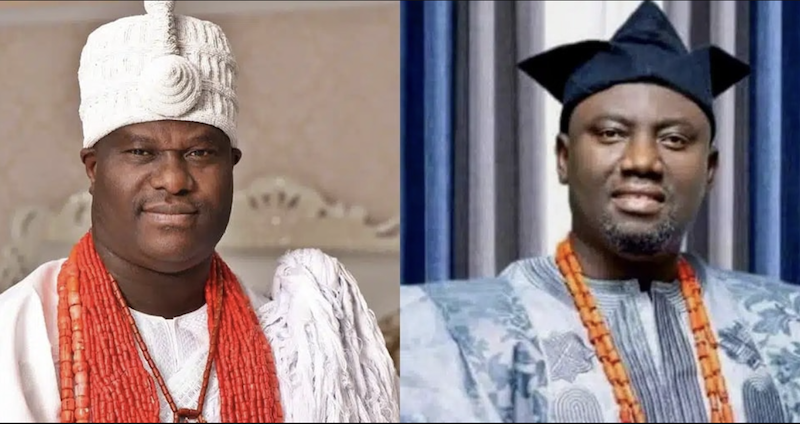
The Alaafin of Oyo, Oba Akeem Owoade, on Thursday, disclosed that he is not in a supremacy battle with any monarch either in Yorubaland or anywhere in the universe.

He made this disclosure in a statement released by his Director of Media and Publicity, Bode Durojaiye, in Ibadan, the Oyo State capital.

The fresh battle between the Alaafin, Oba Owoade and the Ooni of Ife, Oba Enitan Ogunwusi, started last Monday after the Alaafin faulted the Ooni’s decision to confer the title of Okanlomo of Oduwa on a businessman, Dotun Sanusi, during the unveiling of an indigenous social media network- 2geda, at Ilaji Hotel, Ibadan, at the weekend.

The statement explained that Alaafin is a veritable custodian of Yoruba culture and tradition, and has always taken into consideration the safety and welfare of his subjects at all times. It added that the monarch relied heavily on the will and wishes of his subjects.

Durojaiye said he (Alaafin) would never compromise tradition, culture and development of his people for a pot of porridge.

He said the monarch operates a government that is judged by its result, as prosperity, security and well-being of the people dictated his popularity both in the palace and in the empire at large.

The statement reads in part, “Why Alaafin does not need to get into any battle for supremacy with any Oba, either in Yorubaland or anywhere in the universe? These immortal words of Alexander Graham Bell – The most successful men in the end are those whose success is the result of steady accretion.

See also  Major General Henry Edmund Olufemi Adefope (1926–2012)

“It is the man who carefully advances step by step, with his mind becoming wider and wider, and progressively be able to grasp any theme or situation -persevering in what he knows to be practical, and concentrating his thought upon it, who is bound to succeed in the greatest degree” – sum up the life voyage of Owoade, an indomitable monarch with an unequalled passion for the great good of all.

“He (Alaafin) is a veritable custodian of Yoruba culture and tradition, and has always taken into consideration the safety and welfare of his subjects and will never compromise tradition, culture and development of his people for a pot of porridge. The history has been so kind and friendly to Alaafin Owoade publicity since he ascended the throne of his forefathers, as he does not need to get into any battle for supremacy with any oba, either in Yorubaland or anywhere in the universe.

“Alaafin combines humility with royalty to meet the modern-day demands. Kabiyesi (the king who no one questions). Iku Baba Yeye (The one who commands death/he who is parent to death). Alashe (He who wields authority). Ekeji Orisha (Second-in-command to the gods). The Alaafin was inducted into the mysteries of various gods like Ifa, Sango etc to be the direct representative of these deities on earth.”

The statement added, “At the hallowed ground of the Yoruba ancient shrine, as Owoade made a covenant with illustrious Yoruba ancestors that he would defend, protect and add glamour to the Yoruba norms and tradition. Oduduwa’s Principal minister and grandson, Oranmiyan (Because Oduduwa begot Okanbi, (an only child and Okanbi begot Oranmiyan, among others, namely Ila-Orangun, Oni-Sabe, Olu-Popo, Ala-Ketu, Oba-Benin) founded the city of Oyo when prolonged drought struck Ile-Ife as a result of people’s emigration.

See also  Peter Obi is already planning to leave ADC  —  Kachikwu

“Oyo simply rose to prominence through wealth gained from trade and its military skills. It was the largest West African empire, the most important and authoritative of all the early Yoruba principalities. More so, the British, as it was in their tradition, recognised lineage as meaningful supremacy and legitimacy, preferring to sign the Treaty of Cessation with the Alaafin as the Superior Head of the Yoruba Nation.

“In politics also, he is concerned about the sanctity of his position, and whatever happens on the welfare of his people. Customs and all traditional practices of today in government, religion and economic life have had distance, and possibly age-long origins which were based on valid and accepted tenets that emerged from the synthesis and aggregated experience of a particular society.

“One of such societies is the ancient city of Oyo, reputed for cultural resources that are of rich non-material and material attributes and transmitted through generations. Moreover, the precepts and concepts of Alaafin’s administration have continued to support and nurture the people’s ancient culture and sophisticated civilisation from time immemorial.

“The basic concept of government was monarchy with a rigid adherence to the monolithic Oduduwa dynasty and of the paternal line.”

Continue Reading
Click to comment

Leave a Reply

Your email address will not be published. Required fields are marked *

Lifestyle

Parents, You Cannot Neglect Your Children Emotionally Today and Expect Them to Love You Unconditionally Tomorrow

Published

on

Some parents spend years neglecting their children’s emotional needs, yet expect unlimited love, respect and attention when they grow old. But have we forgotten that family relationships are built through years of actions, not simply blood connections?**

There is an uncomfortable conversation many families avoid: the emotional responsibility of parents towards their children.

In many African households, parents expect unquestionable respect, obedience, loyalty and lifelong support from their children. Children are often reminded that their parents brought them into the world, paid their school fees, provided food and shelter, and made sacrifices to give them a better future.

But there is another side of parenting that rarely receives enough attention.

**What happens when parents provide everything materially but fail to provide the emotional love their children desperately need?**

What happens when a child grows up in a home where affection is absent, encouragement is replaced with criticism, and emotional expression is treated as weakness or disrespect?

And what happens when that child becomes an adult and begins to distance themselves from the very parents who raised them?

## Providing for Children Is Not the Same as Loving Them

Some parents believe that providing food, clothing, education and shelter is sufficient proof of love.

While financial provision is an important parental responsibility, children need much more than material things.

They need parents who listen when they speak, comfort them when they are hurting, encourage them when they fail and celebrate their achievements without jealousy or unnecessary comparison.

A child needs to feel safe enough to express emotions without being insulted, humiliated or constantly reminded that they are worthless.

Unfortunately, some parents spend more time correcting their children’s mistakes than recognising their achievements.

Some constantly compare their children with their neighbours’ children. Others use insults, threats, intimidation and emotional manipulation as methods of discipline.

See also  A BRIEF HISTORY OF ADO-EKITI

Over time, these experiences can damage the emotional connection between parents and children.

## The Emotional Wounds Children Carry Into Adulthood

Not every wound is visible.

A child may grow up with a roof over their head and enough food to eat while silently struggling with emotional neglect.

Some adults still remember being rejected by their parents, never receiving a genuine compliment, being constantly criticised or feeling that nothing they did was ever good enough.

Others remember how their parents treated them differently from their siblings.

Some children grow up believing that they must achieve something extraordinary before they deserve their parents’ affection.

These experiences can affect how people develop relationships, express emotions and build confidence as adults.

And when they eventually become financially independent, some choose to create emotional distance from their parents.

This does not automatically mean they hate their parents. Sometimes, it means they are trying to protect themselves from relationships that have caused them years of emotional pain.

## Why Do Some Parents Demand Love They Never Demonstrated?

One of the biggest contradictions in some family relationships is that parents who rarely demonstrated affection while raising their children later expect constant attention and devotion.

They expect their children to call every day, visit frequently, provide financial assistance and make personal sacrifices for them.

But they rarely stop to ask themselves whether they built the emotional foundation for that relationship.

Some parents believe that age automatically guarantees respect and affection.

Others interpret every disagreement as disrespect, forgetting that children eventually become independent adults with their own opinions, boundaries and experiences.

Being a parent deserves respect, but parenthood does not make anyone immune to criticism or accountability.

See also  Celebrity designer Veekee James, husband welcome first daughter

**You cannot demand an emotional connection while refusing to acknowledge the emotional damage that may have weakened it.**

## The African Parenting Culture: Is It Time for a Change?

In many African societies, questioning parental behaviour is often considered disrespectful.

Children are frequently told that parents are always right, regardless of how they behave.

Phrases such as “I am your father,” “I am your mother,” and “You must never question me” are sometimes used to shut down conversations about emotional pain.

Respect for parents is an important cultural value. However, respect should not become an excuse for emotional cruelty, intimidation or the refusal to accept responsibility.

African parents must understand that modern parenting requires more than authority and discipline.

Children need guidance, boundaries, affection, emotional security and understanding.

A healthy family should be a place where children feel loved, not a place where they constantly fear making mistakes.

We must also recognise that many parents were raised in difficult environments themselves. Some never experienced affection from their own parents and therefore struggle to demonstrate it.

Understanding their background may help explain their behaviour, but it does not mean harmful patterns should continue into another generation.

## Children Also Have Responsibilities

This conversation should not be interpreted as permission for adult children to mistreat their parents.

Children also have responsibilities to treat their parents with kindness, dignity and respect.

Not every parent-child disagreement is evidence of emotional neglect, and not every distant relationship is entirely the parent’s fault.

There are parents who genuinely sacrificed everything for their children and still experience rejection or abandonment.

There are also children who behave unfairly towards loving parents.

Every family situation is different.

However, parents and children must understand that meaningful relationships require effort from both sides.

See also  Hajia Bola Muinat Shagaya: Nigeria’s Business Icon and Fashion Patron (PHOTOS)

Love cannot thrive where there is constant humiliation, resentment, manipulation and a refusal to communicate.

## The Lesson Every Parent Must Understand

If you want your children to remember you with affection, give them reasons to remember you with affection.

Be present in their lives. Listen to them. Encourage them. Apologise when you are wrong. Celebrate their successes and support them through their failures.

Do not make your children feel that they must earn your love.

And when they become adults, understand that your relationship with them must evolve. They are no longer little children who must obey every instruction without question.

**The truth is simple: You cannot spend years planting emotional pain and expect to harvest unconditional affection without addressing the damage.**

Parenting is not just about bringing children into the world. It is also about creating an environment where they feel valued, protected, respected and loved.

Because one day, your children will grow up, build their own lives and make their own choices.

The question is: When they look back at their childhood, will they remember a home filled with love or a place they spent their adult lives trying to recover from?

—

## LET’S HEAR YOUR OPINION

Do you believe parents who emotionally neglect their children while growing up should expect unconditional love, attention and financial support from them in old age?

Should children always forgive their parents, regardless of how they were treated?

**Share your thoughts in the comment section. This is a conversation African families need to have.**

*NewsBreak365 — Bringing important conversations to the forefront.*

FOLLOW US ON:

FACEBOOK

WHATSAPP CHANNEL

TWITTER

PINTEREST

TIKTOK

YOUTUBE

LINKEDIN

INSTAGRAM

Continue Reading

Lifestyle

Money, Titles and Positions Should Never Make You Feel Superior to the Poor

Published

on

Wealth is not a licence to humiliate others. Having power does not make you a god, and occupying a position of authority does not give you the right to treat less privileged people as though they are beneath you.**

There is something deeply disturbing about people who acquire money, political influence, professional titles or positions of authority and suddenly begin to behave as though they are more human than everyone else.

Give some people money, and their attitude changes overnight. Give them a political appointment, and they begin to treat ordinary citizens with contempt. Give them a powerful position, and they forget that the people they look down on deserve the same dignity and respect as they do.

But when did financial success become a measure of human worth?

## When Money Becomes an Instrument of Arrogance

In many societies, particularly across Africa, wealth and social status are sometimes treated as measures of importance.

People are judged by the cars they drive, the houses they own, the clothes they wear and the political connections they have.

Unfortunately, this mentality has created an environment where some wealthy individuals believe they have the right to intimidate, insult, embarrass and disrespect those who have less.

Some people cannot even speak politely to a security guard, cleaner, domestic worker, market trader or ordinary employee because they believe their financial position makes them superior.

But the truth is simple: **Being wealthy does not automatically make you respectable. Your character determines how much respect you deserve.**

## Your Position Today Is Not Guaranteed Forever

See also  FG backs DHQ as coup rumour sparks political firestorm

One of the greatest lessons people should understand is that life is unpredictable.

The person enjoying enormous wealth today could face financial difficulties tomorrow. The politician occupying a powerful office today may become an ordinary citizen after leaving office.

The boss giving instructions today may one day need help from someone who previously worked under them.

Positions change. Wealth fluctuates. Influence fades.

That is why humility should never be sacrificed for temporary achievements.

You should never use your present circumstances to humiliate someone whose struggles you do not understand.

## The Poor Are Not Less Human

Being poor is not a crime, a character defect or a reason to be treated without dignity.

Some people are struggling financially despite working extremely hard. Others have experienced circumstances beyond their control.

A person’s bank balance does not determine their intelligence, kindness, integrity or value as a human being.

The security guard deserves respect. The cleaner deserves respect. The labourer deserves respect. The unemployed person deserves respect.

Respect should not be reserved for people who can afford expensive clothes, luxury cars and impressive titles.

If you can only respect people who have money, then perhaps you do not understand the true meaning of respect.

## True Greatness Is Found in Humility

Real greatness is not demonstrated by how many people fear you, how many people bow before you or how many people depend on your financial assistance.

It is demonstrated by how you treat people who have absolutely nothing to offer you.

A truly influential person does not need to humiliate others to prove their importance.

See also  Mohbad Family demands identity of US lab for DNA test

You can be a billionaire and still be humble. You can occupy the highest political office and still treat ordinary citizens with dignity.

You can have everything money can buy without losing the humanity that makes you who you are.

**Never become so wealthy that you forget the poor. Never become so powerful that you begin to see yourself as a god.**

After all, no amount of money can purchase genuine humanity.

## Final Thoughts: Have We Confused Wealth With Human Worth?

Perhaps the biggest problem in our society is that we have started measuring people by what they possess rather than who they are.

We celebrate expensive lifestyles but sometimes ignore good character. We admire powerful people even when they mistreat others, simply because of their influence.

It is time to rethink our definition of success.

Money should improve your life, not destroy your character. Position should give you an opportunity to serve, not an excuse to oppress. A title should represent responsibility, not superiority.

**Remember this: You may be richer than someone, more educated than someone or more powerful than someone, but you are not more human than them.**

—

### NEWSBREAK365 DISCUSSION

Do you think money, political power and social status have made some people arrogant and disrespectful towards the poor?

Why do some people suddenly change their attitude towards others immediately after becoming wealthy or occupying positions of authority?

Is humility becoming a rare quality in our society?

Share your thoughts in the comment section.

**Newsbreak365 — Bringing Issues That Matter to the Conversation.**

FOLLOW US ON:

FACEBOOK

WHATSAPP CHANNEL

TWITTER

PINTEREST

TIKTOK

YOUTUBE

LINKEDIN

INSTAGRAM

Continue Reading

Lifestyle

The Millions You Couldn’t Spend on Your Parents While They Were Alive, You Will Spend on Their Burial When They Are Gone

Published

on

A painful question about family values, parental neglect and the growing culture of extravagant funerals: Why do some children struggle to make life comfortable for their ageing parents but spare no expense when organising their burial?**

There is a painful contradiction in the way some families treat their elderly parents.

While their parents are alive, they struggle to receive financial assistance, proper healthcare, comfortable accommodation and even basic necessities. Some spend their final years worrying about food, medication and survival, despite having children who can afford to make their lives better.

But the moment those parents die, something changes.

Suddenly, money becomes available. Expensive coffins are purchased, elaborate burial ceremonies are organised, matching outfits are distributed, lavish receptions are arranged, and enormous sums are spent to impress relatives, friends and the wider community.

The same children who struggled to support their parents in their lifetime can suddenly spend millions giving them an elaborate farewell.

**But what exactly are we celebrating when the people we claim to honour were neglected while they were alive?**

## When a lavish burial becomes more important than a parent’s comfort

In many African communities, particularly in Nigeria, burial ceremonies have become major social events.

For some families, a parent’s burial is an opportunity to demonstrate wealth, social status and family influence. The more expensive the ceremony, the greater the impression it may create.

There is nothing inherently wrong with giving parents a dignified burial. Parents deserve honour, and families have every right to celebrate their lives and remember their contributions.

See also  Toyosi Arigbabuwo: Veteran of Yoruba Cinema and Faithful Community Leader (PHOTOS)

However, the real question is whether the same commitment, generosity and financial sacrifice were demonstrated when those parents were still alive.

Why spend millions on a coffin but struggle to pay for essential medication?

Why organise an expensive reception but never provide your ageing mother with a comfortable place to live?

Why invite hundreds of guests to celebrate your father’s life when he spent his final years feeling abandoned?

These are uncomfortable questions, but they deserve honest answers.

## Parents need more than birthday messages and funeral speeches

Many elderly parents do not necessarily expect their children to make them wealthy.

Sometimes, all they want is regular communication, a little financial assistance, access to healthcare, respect and the reassurance that they have not been forgotten.

A telephone call can mean everything to a lonely parent.

Paying for medication can save a parent unnecessary suffering. Providing food and a comfortable living environment can make their remaining years more peaceful.

Yet, some parents spend their final years waiting for attention that never comes.

When they eventually die, their children may stand before mourners, deliver emotional speeches and describe them as the greatest parents in the world.

But the question remains: Did they experience that love when they could still appreciate it?

## The pressure to impress society

One possible explanation for extravagant funerals is social pressure.

In some communities, families feel compelled to organise expensive ceremonies because they fear criticism from relatives, neighbours and society.

Some believe a modest burial will be interpreted as a sign that the deceased was not respected.

See also  You Have Plenty of Cars — But How Many Can You Drive at Once?

But should public opinion determine how much money a family spends on a funeral?

Should the desire to impress people become more important than making an ageing parent comfortable?

Perhaps it is time to reconsider what honouring our parents really means.

A parent’s dignity should not depend on the price of their coffin, the number of guests at their funeral or the amount of money displayed during their burial.

## Love should not wait until the funeral

The greatest tribute to a parent is not necessarily an expensive burial ceremony.

It is making them feel loved, respected, valued and supported while they are still here.

If you have ageing parents, do not wait until their photographs are displayed beside a coffin before remembering their sacrifices.

Visit them. Call them. Support them according to your ability. Listen to their concerns. Help them access healthcare. Give them reasons to smile.

Because once they are gone, no amount of money can bring back an opportunity you wasted.

**A lavish burial may impress society, but it cannot rewrite a lifetime of neglect.**

## The question Nigerians and Africans should answer

This conversation is not about condemning every expensive funeral or assuming that every child who spends millions on a burial neglected their parents. Some families genuinely cared for their parents throughout their lives and still choose to give them a grand farewell.

However, it is about challenging a disturbing contradiction that deserves public attention.

**Why do some children struggle to spend money making their parents comfortable while they are alive, but suddenly find millions to spend when those parents die?**

See also  Nigerians must not stay silent on insecurity, Davido tells Rarara

Perhaps the real measure of love is not how much we spend saying goodbye, but how much we do to make life meaningful for those we claim to love.

*NewsBreak365 — Real News | Real People | A Better Africa.*

FOLLOW US ON:

FACEBOOK

WHATSAPP CHANNEL

TWITTER

PINTEREST

TIKTOK

YOUTUBE

LINKEDIN

INSTAGRAM
Continue Reading

Trending