Connect with us

Lifestyle

A BRIEF HISTORY OF ADO-EKITI

Published

on

The founder of the Ado kingdom was a prince of Ile-ife named Awamaro(the restless one) and ‎Ewi‎ (the speaker)‎. He is said to have left Ile-ife with his elder brother Oranmiyan and gone to Ita Orogun and Benin with him after staying briefly with Oloba in Oba-Ile, Akure.

Oba of Benin and the Ewi of Ado-Ekiti. Both first settled in Benin forests before disputes among their people led them to separate and the Ewi sought a new home westward at Utamodi (Oke Papa).

Ewi Biritiokun and his son reigned there. It was Ewi Awamaro who migrated to Ilesun (Present day Ado-Ekiti) after staying briefly at Udoani (Ido Ani) and Agbado during the long trek.

When Ewi Awamaro left Agbado, the elders remained behind to rest and gave the settlement the name Agba Ado (Elders’ Camp) – Agbado-Ekiti as the town is known today.

Awamaro’s spies encouraged him to attack Elesun with the support of Odolofin after he had settled down at Oke Ibon (now Odo Ijigbo) and with the conquest of Ulesun by Awamaro, the town of Ulesun changed its name to Ado or Ado-Ewi.

The Elesun (the King) who ruled over the town of Ulesun with its satellite towns i.e. Ukere (now Ikere), Isinla, Ulamoji, Agidimo, Ikewo existed in what is now known as Ado-Ekiti before the emergence of Ewi of Ado-Ekiti.

The Elesun occupied the peak of a hierarchy where he had his subordinates as the Odolofin (Elesun second in command), Asao, Elegemo, Alamoji, Olisinla, Olulero, Olookori etc.

Elesun was the head of the laity in the worship of Olota (god), the deity in charge of the security of Ulesun State.

The Ulesun language was different from Yoruba (Ado-Ewi) language. Examples are Ideregbe (Ewure or Goat), Okeregba (Aja or Dog), Amomo (Alangba or Lizard), Usa (Ikoko or Pot), Ukere (Ago or Calabash Cup), Ogolomosi (Ibepe or Pawpaw), Oyeye (Epa or Groundnut).

See also  Prince Tajudeen Olusi: The Lagos Political Elder Who Shaped Tinubu’s Rise

Some of the Elesun’s chiefs such as Odolofin and Asao were accepted into the Ewi’s system of chieftaincy after Awamaro’s conquest.

The Elegemo retained his post as Chief Priest and custodian of Iwemo Ogun. Ewi’s Warrior chiefs who provided military security for palace inhabitants were the Akogun at Irona, Oloja Ese at Oke Ese, Eleyinmi at Okeyinmi and Egbedi at Orereowu.‎

Eventually, Ewi and his people overthrew the existing political arrangements after series of conflicts, conquered Ulesun community, displaced and killed its ruler Elesun, cut off his head and proceeded and established a new town, Awamaro named Ado, meaning ‘here we encamp’.

Ewi Awamaro and his successors conquered villages and cottages in the neighbourhood, replaced their rulers with their own loyalists, stalwarts and scions of the royal family.

The important citizens of these conquered communities were relocated in Ado. Ewi supplanted Elesun as sovereign ruler of the aboriginal and settler population, many of Elesun’s Chiefs were confirmed in their offices but they swore oaths of allegiance to the Ewi.

Many of the succeeding Ewi expanded the kingdom by force of arms, annexed territories and gave these territories to scions of the royal families, these assumed titles which became hereditary.

The expansion and growth of Ado-Ekiti and the kingdom of Ado lasted over 400 years. In the course of this expansion, Ado became associated with certain traits.

Citizens of the kingdom in general and those of the mother town, Ado-Ekiti in particular were reputed for great attention to cleanliness.

Traditions preserve numerous brave citizens of each Ado community, the best known were Ogbigbonihanran of Idolofin quarters, Ogunmonakan of Okelaja, Fasawo, a.k.a. Aduloju of Udemo quarters, and Eleyinmi Orogirigbona of Okeyinmi quarters – all of Ado-Ekiti and Ogunbulu, a.k.a. Ala l’oju Osoru of Aisegba.

See also  “I slept with two dead bodies” – Doris Ogala makes shocking confession in church, reveals near-death experience

‎Folk, traditions are replete with fond references to Ewi’s relationship with some other Ekiti traditional rulers.

Ewi’s antecedents are depicted as: Elempe Ekiti (mightiest man in Ekiti).‎ Folk traditions of this nature vividly portray the towering position of Ado-Ekiti. In the first place, Ado-Ekiti is situated at the heartland of Ekiti and is thus less exposed to cross-border attacks or non-Ekiti influences.

Consequently, over many centuries, waves of immigrant groups seeking haven settled in Ado-Ekiti and several other Ado communities‎.

Many of these immigrants were refugees, they left their old homelands in parts of Ekiti, Akoko, Owo etc. where their leaders lost out in chieftaincy contests.

Some were war captives, these were brought in droves by Aduloju and his lieutenants from their slave wars of the 1870s and 1880s in parts of Owo, Ose and Akoko.

They were settled in Ado communities where they increased the local population, and enriched the culture with their lineage names and festivals in similar circumstances, citizens of Ado communities left their fatherland and settled in a few places in the neighbourhood up to Ijesaland.

Ibadan sacked many Ado communities in 1873 and made a huge haul of prisoners of war and other captives who eventually settled in Iwo, Ibadan and some Remo towns such as Iperu and Makun Sagamu. However, Ado communities especially the mother town offset part of their losses with a large number of slaves and prisoners of war from Owo, Ose and Akoko.

Ado-Ekiti is one of the towns of the north eastern territory of Yoruba land and passed through a succession of military, political and cultural changes from the time of ‎Ewi Awamaro (circa 1310 A.D) who migrated there to form what became Ado-Ekiti.

Ewi Awamaro subjugated Elesun’s neighbours and expanded his territory except Ukere (Ikere Ekiti) and his successors up to Yeyenirewu followed same steps that by 1550 A.D. Ado-Ewi had become a big power in the entire Ekiti country.

See also  PHOTOS: WHO TRULY OWNS ILORIN – YORUBA OR FULANI?

The Ewis that reigned at Ado from 1444 to 1552 were:

Ewi Ata (1444–1471),
‎Ewi Owakunrugbon (1471–1490)

Ewi Owamuaran (1490–1511)

Yeyenirewu – The regent (1511– 1552)‎ Ewi’s military exploits during the period was to subjugate and annex his immediate territories extended to Ikere, Igbara Odo, Ogotun, Aramoko, Erio and Erijiyan among others.

Ewi Obakunrin (1552–1574)
‎Ewi Eleyo-Okun (1574–1599) ‎
‎Ewi Afigbogbo Ara Soyi (1599-1630)
‎Ewi Gberubioya (1630-1696)
‎Ewi Idagunmodo (1696-1710)
‎Ewi Okinbaloye Aritawekun (1710-1722)
‎Ewi Amono Ola (1722-1762)
‎Ewi Afunbiowo (1762-1781)‎
Ewi Akulojuorun (1781-1808)‎
Ewi Aroloye (1808-1836)‎
Ewi Ali Atewogboye (1836-1885)‎
Ewi Ajimudaoro Aladesanmi I (1886-1910)‎
Ewi Adewumi Agunsoye (1910 – 1936)‎
Ewi Daniel Anirare Aladesanmi II (1937 – 1983),
HRM Ewi Samuel Adeyemi George-Adelabu I (1984 – 1988)

HRM Alayeluwa Ewi Rufus Adeyemo Adejugbe Aladesanmi III (the current Ewi of Ado-Ekiti). ‎

Ado-Ewi was peaceful as war was abandoned in place of diplomacy and mutual relations strategy. Ewi Gberubioya divided the Ewi dynasty into three ruling houses of Owaroloye (Aroloye), Atewogboye and Arutawekun.

Ewi’s sons that ruled in neighbouring areas during the reign of Gberubioya included Okunbusi who became Onigede, Adubienimu who became Alawo, the Onijan, Opoakin (of Iwere), Olu Akitipa (of Odo), Aramude, Olokun, Olurasa, Onikewo and Olotin. One of his sons, Amujoye founded Igbemo and took the title of Oba of Igbemo from its inception.

FULL COURTESY: OLOOLUTOF.WORDPRESS.COM
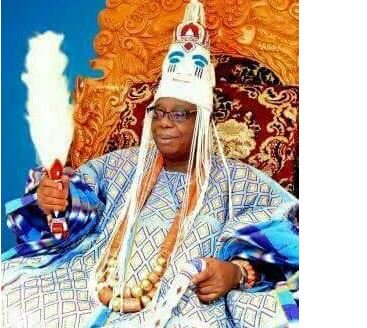
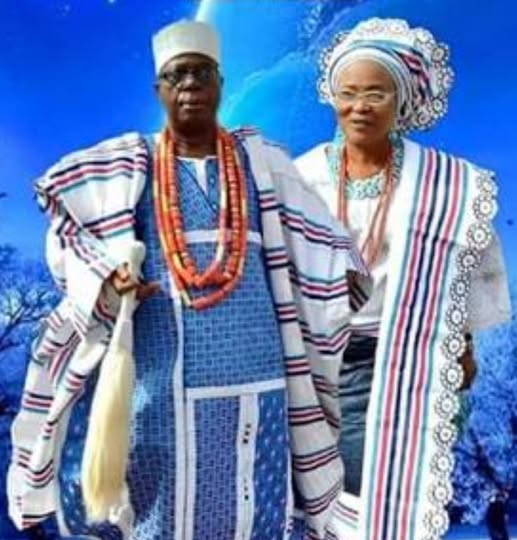
IMAGE: THE EWI Of ADO-EKITI: HIS ROYAL
MAJESTY; OBA RUFUS ADEYEMO ADEJUGBE ALADESANMI III.
WITH KABIYESI’S MOST AMIABLE CONSORT; THE EYESORUN OF ADO-EKTI.

FOLLOW US ON:

FACEBOOK

TWITTER

PINTEREST

TIKTOK

YOUTUBE

LINKEDIN

TUMBLR

INSTAGRAM

Continue Reading
Click to comment

Leave a Reply

Your email address will not be published. Required fields are marked *

Lifestyle

Nigeria’s ambassador-designate to Algeria, Lele, dies at 50

Published

on

The Federal Government has announced the death of Nigeria’s ambassador-designate to Algeria, Mohammed Mahmud Lele, who died at the age of 50.

The Ministry of Foreign Affairs disclosed this in a statement issued in Abuja on Wednesday by its spokesperson, Kimiebi Ebienfa.

According to the ministry, Lele died in the early hours of April 19, 2026, in Ankara, Türkiye, after a protracted illness.

The ministry described the late diplomat as a dedicated officer who served the country with distinction.

“The late Ambassador Lele, until his death after a protracted illness, was the Director in charge of the Middle East and Gulf Division in the Ministry of Foreign Affairs.

“Ambassador Lele, a career diplomat, was recently appointed by President Bola Ahmed Tinubu as Ambassador-designate to the People’s Democratic Republic of Algeria, following the Nigerian Senate’s confirmation of his nomination,” the statement said.

Born in Gamawa, Bauchi State, in 1976, Lele studied Economics at Bayero University, Kano, and went on to serve in Nigerian missions in Berlin, Lomé and Riyadh.

“Ambassador Lele was known for his intellectual depth, strategic insight and commitment to the advancement of Nigeria’s foreign policy objectives,” the statement added.

The Permanent Secretary of the ministry, Dunoma Umar Ahmed, who received the remains of the late diplomat at the Nnamdi Azikiwe International Airport, Abuja, described him as “a hardworking, humble and fine officer, who will be sorely missed by the ministry.”

The ministry added that his death “is a monumental loss not only to his immediate family but also to the entire Foreign Service community and the Federal Republic of Nigeria.”

See also  Video - Oba Senator Abdulrasheed Adewolu Akanmu Ladoja as the 44th Olubadan of Ibadanland

Lele was buried on Wednesday in Kano in accordance with Islamic rites.

The ministry extended condolences to his family, associates, and the government and people of Bauchi State, praying for the peaceful repose of his soul and strength for those he left behind.

Continue Reading

Lifestyle

Governor Amuneke reveals party officials offered him dollars to alter anti-govt skits

Published

on

Comedian Kevin Chinedu, popularly known as Kevinblak, has revealed that officials of a political party offered him dollars to change his satirical skits criticising politicians and governance.

He made the disclosure on Monday in an interview on ARISEtv’s Arise 360 programme, where he spoke about the pressures facing content creators who hold public officials accountable through humour.

Chinedu, known for his character Governor Amuneke, said the approach came at a particularly vulnerable moment, shortly after his wife had a Caesarean section and he was under financial strain.

“They said they were going to change my life, that I’m earning crumbs, you know, give me dollars. They mentioned that my colleagues are in the game and all of that,” he said.

He declined to name the party, saying only that it was “Amuneke’s party”, a reference to the fictional political figure in his skits, and cautioned against any attempt to identify it publicly.

“Don’t mention names, trust me, don’t mention names,” he said.

Despite the financial pressure, the comedian said he turned down the offer, recalling how the officials had tried to lure him to Abuja with the promise of a life-changing sum.

“I had a lot of bills on my head and I just heard come, come to Abuja, let’s change your life. Dollars upon dollars,” he said.

He said he ultimately held firm, guided by a personal code he had maintained throughout his career.

“I looked at it, I said, no, I am who I am. I’ve been here for a long time, and I’ve never been in any illegal thing, and I’ve never been somewhere, you know, I’m doing something because I’m being influenced, because of money.

See also  Stop Paying Bride Price For Non-Virgins – Reno Omokri Warns Men

“If I want to do it, it should be something I’m doing because I want to do it. So, you know, it is what it is,” he said.

When asked whether friends had urged him to accept the money, Chinedu said his inner circle was equally principled, and had themselves been approached and refused.

“I don’t have friends that are easily overwhelmed with money. I have people who have principles because they have, you know, approached them, they themselves. So, we always have that conversation,” he said.

punch.ng

FOLLOW US ON:

FACEBOOK

TWITTER

PINTEREST

TIKTOK

YOUTUBE

LINKEDIN

INSTAGRAM

Continue Reading

Lifestyle

Over 4,600 Nigerian doctors relocate to UK in three years – Report

Published

on

Nigeria’s already fragile healthcare system is facing renewed strain as no fewer than 4,691 doctors have relocated to the United Kingdom since President Bola Tinubu assumed office on May 29, 2023, fresh data from the General Medical Council shows.

The UK GMC is a public official register detailing the number of practising doctors in the UK alongside other details such as their areas of speciality, country of training, among others.

The mass migration represents not just a human resource crisis but a significant economic loss.

With the Federal Government estimating that it costs about $21,000 to train a single doctor, Nigeria has effectively lost at least $98.5m in training investments within less than two years.

The figure put the total number of Nigeria-trained doctors currently practising in the UK to about 15,692, making Nigeria one of the largest sources of foreign-trained doctors in Britain, second only to India.

As of May 28, 2025, official records showed that the number of Nigerian-trained doctors in the UK was a little over 11,000. The figure has grown significantly since then.

The exodus of doctors comes as Nigeria’s doctor-to-population ratio hovers around 3.9 per 10,000 people, far below the minimum threshold recommended by the World Health Organisation.

For many health experts, the numbers confirm what has long been visible: a system gradually losing its most critical workforce.

The Nigerian Medical Association has repeatedly warned that poor remuneration, unsafe working conditions, and inadequate infrastructure are pushing doctors out of the country.

“Our members are overworked, underpaid and exposed to unsafe environments daily. Many are simply burnt out,” the NMA said in one of its recent statements addressing workforce migration.

See also  The Sad Story of the Deadly Ikeja Bomb Blast in 2002

Similarly, the National Association of Resident Doctors has consistently highlighted the toll on younger doctors, who form the backbone of Nigeria’s tertiary healthcare system.

“Doctors are leaving because the system is failing them—irregular salaries, excessive workload, and lack of training opportunities,” NARD noted during one of its nationwide engagements.

Ironically, the doctor exodus persists even as Nigeria continues to spend heavily on healthcare abroad.

While official foreign exchange data shows only modest spending on medical tourism in recent years, broader estimates suggest Nigerians still spend hundreds of millions of dollars annually seeking treatment overseas.

For instance, a recent report by The PUNCH revealed that foreign exchange outflow for health-related travel by Nigerians surged to $549.29m in the first nine months of 2025, a 17.96 per cent increase from $465.67m in the same period of 2024, according to official data by Nigeria’s apex bank.

A public health expert, Dr David Adewole, noted that the Federal Government’s national policy on health workforce migration, aimed at curbing the growing trend of health professionals leaving the country—commonly referred to as ‘Japa’—is a good initiative, but may not do much to address the fundamental problems of the shortage of skilled healthcare professionals in Nigeria, particularly in rural and underserved areas.

According to him, many of the push factors for health professionals emigrating to greener pastures, like insecurity, emolument and lack of basic amenities like potable water, health facilities, cost of living and constant electricity, persisted.

He stated: “To make healthcare workers stay here, let the salaries be enough so that what you earn will be much more than the multiples of what you need for basic needs, like food, power supply, housing, and so forth.

See also  Stop Paying Bride Price For Non-Virgins – Reno Omokri Warns Men

“People still look at life after retirement. You might have a good policy, but its implementation is the issue. For example, you are retired, and for your retirement package, you don’t need to know anyone for it to be processed promptly.

“Then subsequently, your monthly pension, without pressing anybody, should be paid. Those things are not here.

“And when you go to the hospital abroad, if you tell them that you are in a hurry, you go to your home; they’ll bring the medicines to your doorstep.”

Continue Reading

Trending