Connect with us

Education

Ex Unilag VC – 239 first-class lecturers quit UNILAG over poor pay

Published

on

No fewer than 239 first-class graduates of the University of Lagos, employed as lecturers, left the institution within seven years.

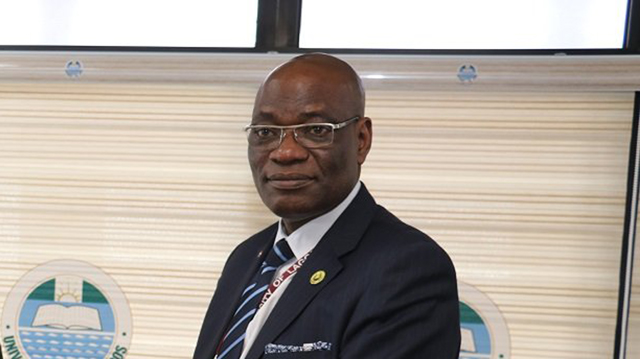
Immediate past Vice-Chancellor of UNILAG, Prof. Oluwatoyin Ogundipe, disclosed this on Tuesday while speaking as guest lecturer at The PUNCH Forum, themed: “Innovative Funding of Functional Education in the Digital Age,”

Reeling out statistics, Ogundipe said UNILAG retained 256 first-class graduates as lecturers between 2015 and 2022, but only 17 remained in the institution’s employ as of October 2023.

He attributed the mass exodus to poor remuneration, unconducive working conditions, and low motivation among lecturers.

Ogundipe said, “At UNILAG, we decided that those with first-class honours should be employed. What is remaining is not up to 10 per cent. All of them have gone. One day, I asked the man in charge to give me this information.

“In 2015, 86 were employed; in 2016, 82; during my time, that is, 2017 to 2022, 88 were employed. As of October 2023, only 17 were on the ground. They have gone. Very soon, in the next 10 years, you will have only females in the universities if something is not done.”

He noted that unless the government adequately funds the sector, universities would, in the next decade, be dominated by women, while poorly prepared candidates would gain entry into postgraduate programmes.

“Many of us are tired. By the time you get home, there is no light, and the Federal Government is saying they are giving us N10m to access as loans. You can see how our lives have been devalued. Can I use N10m to build a security post?

See also  Benin varsities, Nigerian polys in NYSC fraud

“How do you encourage them? Many of our colleagues, especially the young ones, are tired. The unfortunate thing is that two things will happen in the universities soon. Women will be the ones to occupy universities, like we have in secondary schools. Second, the calibre of people who will come for postgraduate studies will be people who are not supposed to come,” he added.

Ogundipe lamented chronic underfunding of the education sector, noting that both federal and state allocations had consistently remained below 10 per cent, far short of UNESCO’s recommended 15 to 26 per cent.

He urged legislators to enact a law mandating that each first-generation university receive at least N1bn annually to address decayed infrastructure.

According to him, many universities are forced to rely on Internally Generated Revenue, which ought to be channelled into research.

Ogundipe, who is also Pro-Chancellor of Redeemer’s University, Ede, Osun State, lamented that infrastructure, technology, teachers’ remuneration, research support, and digital facilities in universities were either overstretched or completely absent.

“In the period from 2015 to 2025, Nigeria’s education sector has faced tremendous fiscal restraint. Federal budget allocations — even after headline increases in absolute naira terms — have consistently remained below 10 per cent, and most years hover between 4.5 and 7.5 per cent.

“The consequences of chronic underfunding are immediate and profound: Nigeria has the highest number of out-of-school children worldwide, estimated at between 10 and 22 million. Over 60 per cent of primary education funding is absorbed by teacher salaries, often with little left for capital expenditure or innovation,” he said.

See also  UK boarding schools woo Nigerian students at Abuja, Lagos fairs

Ogundipe advocated innovative funding strategies beyond government allocations, including public-private partnerships, alumni endowments, philanthropy, education bonds, optimising digital platforms, and linking funding to measurable outcomes.

He said, “UNESCO positions innovative financing as a critical tool for bridging the nearly $100bn annual financing gap impeding educational attainment in low- and lower-middle-income countries.

“Innovative mechanisms for education include shared risk/reward models for infrastructure, investors repaid only if outcomes are achieved, risk capital to support EdTech and innovative schools, leveraging the Nigerian diaspora for targeted investments, debt swaps for education, education technology grants, corporate donations, and capacity-building linked to business and reputation.”

While urging state and Federal Governments to raise allocations, he also identified critical roles for the private sector, alumni, civil society, faith-based organisations, and donor agencies.

“The private sector should see education support not just as social responsibility but as enlightened self-interest in building the workforce, the talent, and the markets of tomorrow. Invest not only in infrastructure, but in people, curricula, and research that advance national development.

“To alumni, home and abroad, remember that the institutions that made you now need you. Give, mentor, endow, advise, and advocate for your alma mater and the next generation.

“To civil society and faith-based groups, continue to be the vanguards of inclusion, equity, and grassroots school transformation. To the Nigerian media, lead the narrative, demand reforms, report boldly and analytically, and make education funding a national priority.

“To international and donor agencies, partner with us, but let us increasingly build our domestic resource mobilisation and institutional resilience. Above all, to every Nigerian, let us see education as the most sacred trust we must pass to our children. Our fingerprints, our footprints, our names should be found in the library buildings, the digital labs, the scholarships, and the lives changed,” Ogundipe said.

See also  PICTURES: Zulum approves N12.9bn aeronautics scholarship for 54 Borno students

PUNCH management staff at the forum included Executive Director, Business Development and Innovation, Mrs Valerie Omowunmi Tunde-Obe; Chairman, Editorial Board, Mr Obafemi Obadare; General Manager, Production, Mr Olayinka Popoola; and Manager, Advertisement, Mrs Mary Ubani.

Also in attendance were the Editor, PUNCH Digital, Mr Lekan Adetayo; Deputy Editor, The PUNCH, Mr Tana Aiyejina; Associate Editor, News, Dr Ramon Oladimeji; and Head of Training, PUNCH Media Foundation, Mr Dele Aina.

FOLLOW US ON:

FACEBOOK

TWITTER

PINTEREST

TIKTOK

YOUTUBE

LINKEDIN

TUMBLR

INSTAGRAM

Continue Reading
Click to comment

Leave a Reply

Your email address will not be published. Required fields are marked *

Education

Tinubu appoints NECO, NBTE chairmen, names poly rector, renews library DG tenure

Published

on

President Bola Tinubu has approved new appointments across key education agencies, including the National Examinations Council and the National Board for Technical Education.

According to a statement on Wednesday by the President’s Special Adviser on Information and Strategy, Bayo Onanuga, the appointments are part of efforts to strengthen institutions under the Federal Ministry of Education.

The President appointed Prof. Modupe Adeola Adelabu as Chairman of the Governing Board of the National Examinations Council, while retaining the Registrar, Prof. Ibrahim Dantani Wushishi.

He also named Prof. Babatunde Salako as Chairman of the National Board for Technical Education, while earlier reappointing the Executive Secretary, Prof. Idris Bugaje, for a second and final term of five years.

In the polytechnic sector, Tinubu appointed Dr Bongfa Binfa as Rector of the Federal Polytechnic, N’yak-Shendam, Plateau State, for a single term of five years. Binfa succeeds the pioneer rector, Dr Mukaila Zakari Ya’u, whose tenure ended in March 2026.

Until his appointment, Binfa was the Deputy Rector (Academic) at the Federal Polytechnic of Oil and Gas, Bonny, and previously lectured at the Federal Polytechnic, Idah.

The President also renewed the tenure of Prof. Chinwe Veronica Anunobi as Director-General of the National Library of Nigeria for a final term of five years.

Anunobi, who was first appointed in September 2021, has led “several institutional reforms aimed at repositioning the National Library as a modern technology-driven knowledge institution” including the development of digital platforms such as the National Repository of Nigeria and the National Virtual Library.

The statement noted that Adelabu, a former Deputy Governor of Ekiti State and ex-chairman of the NBTE, brings extensive experience in educational administration, while Salako is a former Director-General of the Nigerian Institute of Medical Research.

See also  UK boarding schools woo Nigerian students at Abuja, Lagos fairs

It added that the renewal of Anunobi’s tenure is expected to ensure continuity in ongoing reforms and the completion of the National Library headquarters project in Abuja.

punch.ng

FOLLOW US ON:

FACEBOOK

TWITTER

PINTEREST

TIKTOK

YOUTUBE

LINKEDIN

INSTAGRAM

Continue Reading

Education

JAMB releases Monday’s UTME results

Published

on

The Joint Admissions and Matriculation Board (JAMB) has released the results of candidates who sat the 2026 Unified Tertiary Matriculation Examination on Monday, April 20.

Its spokesperson, Fabian Benjamin, disclosed this in a statement released on Tuesday, directing affected candidates to the board’s standard result-checking channels.

“The results for Monday, 20th, have been released. Candidates can view their results using the usual process,” the statement read.

Candidates can access their scores by sending “UTMERESULT” to 55019 or 66019 via SMS, using the phone number with which they registered for the examination.

Monday’s release is the latest in a series of daily result announcements that JAMB has been making since the 2026 UTME commenced on Thursday, April 16.

The exercise, which involves over two million candidates sitting computer-based tests at centres across the country, has seen the board publish results in batches corresponding to each examination day.

The board started the process by releasing results for Thursday’s candidates, followed by a combined batch covering Friday, April 17, and Saturday, April 18.

The Friday-Saturday release, however, came later than candidates had expected. JAMB had initially indicated the results would be available on Saturday but failed to meet that timeline, drawing frustration from candidates who waited through the night.

The board subsequently apologised, attributing the delay to the absence of its chief executive, who was occupied with an official engagement.

The results were eventually published on Sunday, April 19, before the board moved on to process and release the Monday batch.

See also  UK boarding schools woo Nigerian students at Abuja, Lagos fairs

punch.ng

FOLLOW US ON:

FACEBOOK

TWITTER

PINTEREST

TIKTOK

YOUTUBE

LINKEDIN

INSTAGRAM

Continue Reading

Education

JAMB releases over 1.8 million UTME results nationwide

Published

on

The Joint Admissions and Matriculation Board (JAMB) has announced the release of results for candidates who sat the 2026 Unified Tertiary Matriculation Examination on Friday, April 17, and Saturday, April 18.

In a statement issued on Sunday by its spokesperson, Fabian Benjamin, the board said 1,264,940 results from the two days had been processed and made available for candidates.

“The results of candidates who sat the examination on Friday, 17 April and Saturday, 18 April 2026 have now been released.

“A total of 1,264,940 results from these two days are available for candidates to check/view,” the statement read.

The board noted that this latest batch follows an earlier release of results for candidates who wrote the examination on Thursday, April 16.

“The board had earlier released 632,752 results of candidates who sat the examination on Thursday, 16 April 2026. This brings the total number of results released so far to 1,897,692,” it said.

JAMB urged candidates to access their results through its designated SMS channels, maintaining its standard result-checking procedure.

“To view their results, candidates should send UTMERESULT to 55019 or 66019 using the phone (SIM) number they used to register for the 2026 UTME,” the statement added.

The examination body further explained that the results released so far represent outcomes from the first three days of the nationwide exercise.

The UTME, which commenced nationwide on Thursday, is expected to have over two million candidates participating across various computer-based test centres.

punch.ng

FOLLOW US ON:

FACEBOOK

TWITTER

PINTEREST

TIKTOK

YOUTUBE

LINKEDIN

INSTAGRAM

See also  Mathematics no longer compulsory for Arts students, says FG
Continue Reading

Trending