Connect with us

Lifestyle

Jonathan Adagogo Green: Nigeria’s First Indigenous Professional Photographer

Published

on

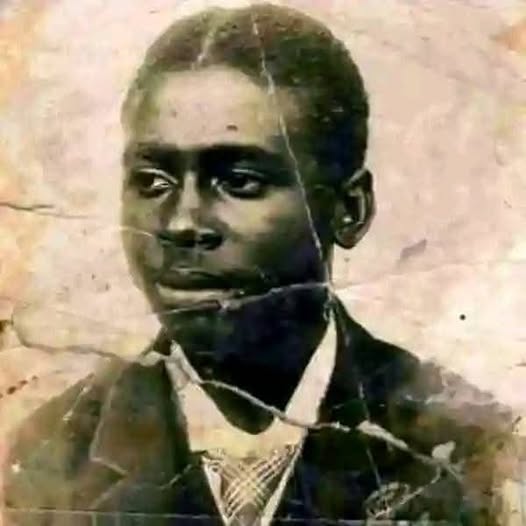
Jonathan Adagogo Green (1873–1905) occupies a unique place in Nigerian cultural history as the country’s first indigenous professional photographer. At a time when the camera was still a rare and foreign tool, Green used it to document the Niger Delta during an era of social transformation, leaving behind an invaluable visual record of both tradition and colonial encounter.

Early Life and Education

Born in Bonny, Rivers State, Green was of Ibani (Ijaw) heritage. His upbringing placed him at the heart of a cosmopolitan trading hub, where encounters with Europeans, missionaries, and local aristocracy shaped his worldview. Photography was still an emerging craft in West Africa when Green showed interest. He pursued formal training in Sierra Leone, where he studied the technical aspects of photography, though some scholars suggest he may also have apprenticed with European photographers in Nigeria before traveling.

By the time he returned home, Green had mastered his craft and set up his own studio in Bonny, a groundbreaking step that made him one of the first Nigerians to establish a professional career in photography.

Career and Artistic Vision

Green’s portfolio was as diverse as it was culturally rich. His subjects included:

Local chiefs and dignitaries, often portrayed in elaborate regalia that emphasized traditional authority.
British colonial officials, reflecting the growing imperial influence in the Niger Delta.

Everyday life, trade, and rituals, which provided an intimate glimpse into the rhythms of a society navigating both continuity and change.

His work was widely distributed in postcards and albums, circulating within Nigeria and beyond. This not only shaped local identity but also framed how outsiders perceived the Niger Delta.

See also  Kunle Adetokunbo “Dejo Tunfulu”: Life, Career and Untimely Death of a Yoruba Comic Star

Green had a distinctive eye for balance. His portraits often juxtaposed tradition and modernity—capturing chiefs in ceremonial attire alongside colonial officers in uniform, or Nigerian elites in European suits still rooted in indigenous culture. His photography, therefore, was not merely aesthetic but interpretive, offering commentary on the hybrid realities of colonial-era Nigeria.

Challenges of Recognition
For decades, Green’s identity was obscured by his English surname. Many early historians mistakenly assumed he was a European photographer, which delayed the recognition of his role as a Nigerian pioneer. It was only through scholarly research that his Ibani (Ijaw) heritage and indigenous identity were firmly established.

Legacy

Though his career was cut short by his untimely death in 1905 at just 32 years old, Jonathan Adagogo Green left behind a powerful archive of images that remain central to Nigeria’s visual history. Many of his works are preserved in the National Museum, Lagos, as well as in international collections.

In 2003, the National Gallery of Art in Abuja curated an exhibition of his works, reaffirming his status as the “father of Nigerian photography.” Scholars like S. O. Ikpakronyi have since helped cement his rightful place in the narrative of Nigeria’s cultural heritage.

Today, Green is celebrated not just as a photographer but as a visionary who understood the power of the image in defining identity, culture, and history. His work bridged the gap between tradition and modernity, leaving a legacy that continues to inspire generations of Nigerian photographers and visual storytellers.

Source: Ikpakronyi, S. O. Jonathan Adagogo Green: Pioneer Nigerian Photographer. National Gallery of Art, Abuja, 2003.

See also  PHOTOS: Meet Grace Atinuke Oyelude — Nigeria’s First Miss Nigeria, Still Radiant at 93!

FOLLOW US ON:

FACEBOOK

TWITTER

PINTEREST

TIKTOK

YOUTUBE

LINKEDIN

TUMBLR

INSTAGRAM

Continue Reading
Click to comment

Leave a Reply

Your email address will not be published. Required fields are marked *

Lifestyle

Declare Your Lineage – Royal Family Tells Musician KWAM 1 Over His Interest In Becoming Next Awujale Of Ijebuland

Published

on

KWAM 1, in a letter dated December 3, 2025, addressed to the chairman of the Fusengbuwa Ruling House in Agunsebi Quarters, Ijebu-Ode, announced his interest in the stool, describing himself as a “bonafide son” of the ruling house.

The Fusengbuwa ruling house of Ijebu-Ode, next in line to produce the new Awujale of Ijebuland, Ogun State, has instructed Fuji musician Wasiu Ayinde, popularly known as KWAM 1, to confirm his family’s royal lineage to validate his membership in the ruling house.

KWAM 1, in a letter dated December 3, 2025, addressed to the chairman of the Fusengbuwa Ruling House in Agunsebi Quarters, Ijebu-Ode, announced his interest in the stool, describing himself as a “bonafide son” of the ruling house.

KWAM 1 also stated that his candidacy aligns with Ijebu customary law and the Ogun State Chieftaincy Laws.

In an interview with Punch, the Chairman of the ruling house and former National President of the Institute of Chartered Accountants of Nigeria, Abdulateef Owoyemi, said only bonafide members of the family would be allowed to participate in the selection process.

Owoyemi explained that KWAM 1, Olori Omooba of Ijebu land and others interested in the stool have been directed to complete the Fusengbuwa ruling house royal lineage data form.

According to him, the form, which requires contenders to trace their genealogy back seven generations, ensures that only genuine princes from the family can participate, thereby blocking “strangers” from claiming the throne.

He said, “The first step for anyone interested in contesting for the Awujale throne is to declare their lineage by filling the standard Fusengbuwa ruling house royal lineage data form. Once confirmed as a legitimate member of the ruling house, they can then apply for the expression of interest form.

See also  No Igbo will have peace until Nnamdi Kanu regains freedom – Obi Cubana tells Tinubu

“We have told him, just like everyone else interested in the Awujale throne, that the first step is to declare his lineage. He will do this by completing the royal lineage data form, showing his full name, which parent and grandparent he descends from, and continuing up to seven generations.

“The completed form will be signed and submitted to the head of the ruling house unit of the Fusengbuwa ruling house, who will affirm that he is a genuine member. Only then will the process move forward.”

Owoyemi emphasised that although the application window for the throne officially closed on December 5, KWAM 1 had been given a five-day extension, which would lapse on December 10.

He noted, “We won’t shut anybody out of picking the next Awujale, but we must ensure that you are a legitimate member of Fusengbuwa. Every right comes with responsibilities. For a royal family, everyone must prove their legitimacy by completing the royal lineage data form.

“When we receive the form, we will review it meticulously. If clarification is needed, we will contact the applicant. We welcome men of influence who will use their influence to enhance the throne, not to claim it, ensuring that what truly belongs to our family is preserved.”

Owoyemi explained that the local government has given them 14 days to select candidates, and the ruling house hopes to have a new Awujale by the second or third week of January 2026.

He added, “The local government has given us 14 days to select candidates, which expires on December 18. After that, the kingmakers have seven days to deliberate and choose one candidate, whose name will be forwarded to the governor.

See also  Iyabo Ojo vows fresh legal action against Lizzy Anjorin over defamation

“Legally, the government then has 21 days to conduct background checks and security clearance, allowing for objections or protests. After this period, the State Executive Council will ratify the nominee, and the governor will announce the next Awujale, after which coronation rites will commence.

“So, combining the candidate selection, kingmakers’ deliberation, and legal objection period, we are looking at around 42 days. Therefore, we expect the next Awujale to emerge between the second and third week of January.”

FOLLOW US ON:

FACEBOOK

TWITTER

PINTEREST

TIKTOK

YOUTUBE

LINKEDIN

TUMBLR

INSTAGRAM

Continue Reading

Lifestyle

VIDEO: I’m Married But Not In My Husband’s House; I Didn’t Have The Experience Of Living Happily Ever After – Singer Shola Allyson Reveals

Published

on

While speaking about her love life, the 54-year-old who came into limelight with a love album ‘Eji Owuro’, revealed that she is married but not living with her husband.

Sola Allyson, the popular Nigerian gospel singer, has revealed that she is not currently living with her husband.

The musician made this known in her latest interview on Oyinmomo TV.

While speaking about her love life, the 54-year-old who came into limelight with a love album ‘Eji Owuro’, revealed that she is married but not living with her husband.

Sharing her marital experience, the singer said she has never enjoyed the kind of happiness many people describe.

“I’m married, but I’m not in my husband’s house. We live separately. He in his house and I in mine.”

The interviewer asked: “You sang ‘Eji Owuro’, did you experience genuine love from your husband?

She replied, “We lied before. Those older than us didn’t inform us that it’s tough. They made us believe that so long as you both love each other, you will live happily ever after, but it’s a lie.

“That’s not the experience I have. I didn’t have the experience of living happily ever after. I did all I could to make it work.

“Marriage has been a big challenge. I hear people talk about joy in marriage, but I have never experienced it.”

CLICK TO WATCH THE VIDEO

FOLLOW US ON:

FACEBOOK

TWITTER

PINTEREST

TIKTOK

YOUTUBE

LINKEDIN

TUMBLR

INSTAGRAM

See also  Chief Abraham Salako (Afilaka) and the Peugeot 404 in 1960s Nigeria
Continue Reading

Lifestyle

VIDEO: Shola Allyson Finally Opens Up, Reveals Why She Does Not Reference Jesus In Her Songs

Published

on

Recall that Allyson, who is regarded as a gospel singer, was dragged on social media in March 2025 for not directly referencing ‘Jesus’ in all her songs.

Shola Allyson, the renowned Nigerian songstress, has opened up on the real reason she avoids mentioning the name of Jesus in all her songs.

Recall that Allyson, who is regarded as a gospel singer, was dragged on social media in March 2025 for not directly referencing ‘Jesus’ in all her songs.

Reacting to her critics in a post on X, the songstress stated that “No one can bully me into joining their darkness that looks like light because indolent souls find comfort in it”.

Finally revealing her reason for not mentioning Jesus in her songs, Shola Allyson on Saturday during her latest interview on Oyinmomo TV, stated that Jesus did not ask her to do PR for him.

She said “I’m not a religious singer. As I am, I have never introduced myself as a gospel singer. My name is Shola Allyson. I’m a singer”.

Interviewer; “Some people said you don’t mention ‘Jesus’ name’ in all your songs”.

She quickly responded “Jesus did not instruct us to mention his name in songs nor did Jesus ask us to do PR for Him”.

CLICK TO WATCH THE VIDEO

FOLLOW US ON:

FACEBOOK

TWITTER

PINTEREST

TIKTOK

YOUTUBE

LINKEDIN

TUMBLR

INSTAGRAM

See also  Kunle Adetokunbo “Dejo Tunfulu”: Life, Career and Untimely Death of a Yoruba Comic Star
Continue Reading

Trending