Connect with us

Lifestyle

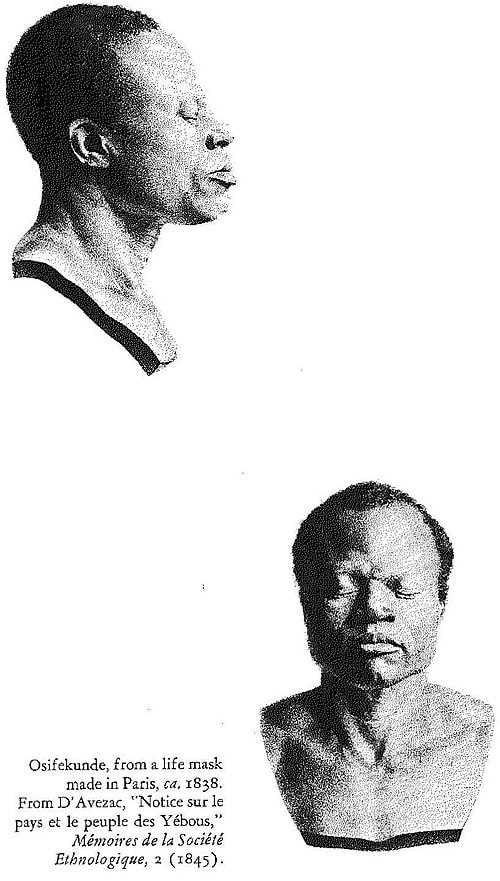
Osifekunde of Ijebu: A Rare First-Person Window into Pre-Colonial Yorubaland and the Atlantic Slave Trade

Published

on

Osifekunde of Ijebu (born c. 1795) occupies a unique place in the history of West Africa and the wider Atlantic world. His personal testimony—recorded in Paris in 1838—offers one of the earliest detailed European-language accounts of Yorubaland before British colonial rule, while illuminating the operations of the 19th-century transatlantic slave trade.

Early Life in Ijebu

Osifekunde was born around 1795 in Ijebu-Ode, a key Yoruba kingdom in what is now Ogun State, Nigeria. At the time, Ijebu controlled a prosperous trade corridor linking the interior Yoruba states with the Niger Delta ports, making it a strategic node in regional commerce.

His later testimony, carefully recorded by French geographer Pascal d’Avezac-Macaya, described:
Political organisation—the authority of the Awujale (paramount ruler) and the council of chiefs.
Economic life—busy market centres and long-distance trading routes.

Religion and culture—traditional festivals and Yoruba spiritual practices that pre-dated large-scale European colonial intrusion.

These recollections provide historians with a rare insider’s view of pre-colonial Yoruba society.

Capture and Enslavement

As a young man, Osifekunde travelled toward the Niger Delta on a trading journey. Sources differ slightly on the details: some suggest he was tricked or kidnapped by Ijaw raiders, others that he was seized outright by pirates active in the slave trade.

He was sold to Portuguese slave traders and transported across the Atlantic to Brazil, which by the early 19th century had become the largest importer of enslaved Africans. Enslaved in Rio de Janeiro under a Brazilian master sometimes recorded as M. Ferreira, Osifekunde experienced the harsh realities of the Atlantic slave economy decades after Britain and other European powers had officially outlawed the trade.

See also  PHOTOS: The True and Sad Story of How Afonja Lost Ilorin and Its Kingship to Fulani People

Journey to Paris and Meeting with Pascal d’Avezac

Fate intervened when his Brazilian master travelled to Paris and brought Osifekunde along as a servant. In 1838, he met Pascal d’Avezac-Macaya, a French geographer and ethnographer keen to document African societies.

Recognising the rarity of a first-hand African perspective, d’Avezac recorded Osifekunde’s detailed oral account of Yoruba geography, politics and culture, and even commissioned a plaster life mask of him.

The mask—later held at the Musée de l’Homme in Paris and displayed in the Smithsonian National Museum of African Art—remains a striking physical record of this encounter.

D’Avezac presented Osifekunde’s narrative to the Société de Géographie de Paris in 1841, giving European scholars unprecedented direct testimony of West African society from an African source.

Contributions to Knowledge of Yorubaland

Osifekunde’s recollections went beyond cultural customs:

Geography and trade routes—he mapped major Yoruba towns, described travel times, and explained trade connections from the interior to coastal markets.

Political economy—his observations revealed the Ijebu’s role in controlling access between the hinterland and Atlantic ports.

Such details made his account an invaluable primary source for historians and geographers of the 19th century and remain essential for modern scholars of Yoruba history.

Legacy

Osifekunde’s life story links three continents—Africa, South America and Europe—and personifies the far-reaching networks of the Atlantic slave trade. His ability to recall the complex social, political and spiritual life of his homeland decades after enslavement demonstrates the resilience of cultural memory among the African diaspora.

Today, both his published narrative and his life mask stand as rare, powerful reminders of the human stories behind global historical forces. Modern Yoruba studies and historians of slavery continue to draw on his testimony as a direct African voice in an era when most ethnographic records were filtered through European traders or missionaries.

See also  Video - Sunday Igboho Visits Yoruba Traditional Rulers

Sources
National Museum of African Art (Smithsonian Institution), “Life Mask of Osifekunde of Ijebu”, collection notes.

FOLLOW US ON:

FACEBOOK

TWITTER

PINTEREST

TIKTOK

YOUTUBE

LINKEDIN

TUMBLR

INSTAGRAM

Continue Reading
Click to comment

Leave a Reply

Your email address will not be published. Required fields are marked *

Lifestyle

Plateau gov apologises to Igbo over civil war role

Published

on

Plateau State Governor, Caleb Mutfwang, has apologised to the Igbo community for the role the state played during the Nigerian Civil War, saying the people of Plateau were “deceived” into participating in the conflict.

Speaking during an interactive session with Igbo leaders from the 17 local government areas of the state at the Government House, Little Rayfield, Jos, Mutfwang urged both sides to put the painful chapter behind them and strengthen the bonds of unity.

According to a report by The Guardian on Monday, the governor commended the Igbo community for its contributions to Plateau State’s socio-economic development, describing them as an integral part of the state’s growth and prosperity.

He noted that Plateau had remained one of the most accommodating states for the Igbo people since the end of the civil war and recalled that compensation had been paid for some of the losses suffered during the conflict.

“I apologise to the Igbos so that we can put the past behind us and continue to foster unity. We have become one family because our people were deceived into going to war, and we regret it. We must close that chapter and move forward.

“We must unite. We want the Igbos to regard us as their brothers and sisters, and together we must create an enabling environment where everyone can prosper,” Mutfwang said.

The governor also appealed to Igbo entrepreneurs in Plateau State to support indigenous businesses by creating opportunities for young people through mentorship and investment.

See also  Iyabo Ojo vows fresh legal action against Lizzy Anjorin over defamation

“Nigeria is a great country, and no ethnic group has demonstrated the entrepreneurial spirit more than the Igbo. I encourage you to replicate that same spirit in Plateau. I also appeal to Igbo business owners to employ and train young Plateau indigenes,” he said.

During the meeting, leaders of the Igbo community endorsed Mutfwang for a second term ahead of the 2027 governorship election, citing what they described as his inclusive leadership, prudent management of resources and commitment to peaceful coexistence.

The endorsement was announced by the President-General of the Igbo Community in Plateau State, Chief Chidi Onah, who described the governor as a leader committed to equity and development.

“We hereby endorse Governor Caleb Mutfwang as the consensus candidate of the Igbo community for the 2027 governorship election. This endorsement is based on his competence, integrity, proven leadership and commitment to equity.

“He has promoted peaceful coexistence and created a business-friendly environment. He stood by us during the demise of our traditional ruler and has consistently engaged stakeholders to promote unity among the diverse ethnic groups in Plateau State,” Onah said.

Onah also praised the governor’s developmental efforts, saying the state had become more conducive for business and investment.

“Igbo people have lived in Plateau since before Nigeria’s independence. We appreciate the governor for compensating some of our members over disputed properties and urge Nigerians across ethnic and religious divides to support his administration,” he added.

Also speaking, former President-General of the Igbo Community Association, Mike Okunonke, described the Igbo as peace-loving people committed to the economic development of Plateau State.

See also  Video - Sunday Igboho Visits Yoruba Traditional Rulers

He said the community’s support for Mutfwang was based on his performance rather than political affiliation.

“We will vote for personalities, not political parties. Governor Mutfwang has demonstrated capacity by creating opportunities and reducing unemployment. We will mobilise our members across the 17 local government areas to support him,” Okunonke said.

He added that the endorsement reflected the cordial relationship the governor had built with the Igbo community through genuine partnership and inclusiveness.

The governor’s Special Adviser on Igbo Affairs, Barr. Jonah Okechukwu Ezekweme, commended Mutfwang for creating an enabling environment for the Igbo community to thrive in the state.

He urged members of the community to support the governor’s second-term bid while continuing to partner with the state government in creating employment and business opportunities for young people.

Earlier, High Chief Felix O. Akpunku welcomed members of the Igbo community on behalf of the governor and praised Mutfwang’s developmental projects across the state, describing his administration as one committed to inclusive governance and sustainable development.

The meeting also featured the formal presentation of the new President-General of the Igbo Community Association, Chief Chidi Onah, by the immediate past President-General, Chief Mike Ifeanyi Okunonke.

Other speakers, including Chief Dr. Nelson Mkparu and Hon. Maureen Odilimuo, also lauded the governor for his inclusive leadership and support for the Igbo community, pledging continued cooperation with his administration.

The meeting ended with both the Plateau State Government and the Igbo community reaffirming their commitment to peaceful coexistence, deeper collaboration and sustainable development across the state.

See also  Roland Olubukola Olomola - The story of BABA ARA and how he died

punch.ng

FOLLOW US ON:

FACEBOOK

TWITTER

PINTEREST

TIKTOK

YOUTUBE

LINKEDIN

Continue Reading

Lifestyle

Eight die, nine missing in Jigawa boat tragedy

Published

on

Twenty-three persons have been rescued, while eight bodies have been recovered from Sunday’s boat accident that claimed 40 passengers in Jigawa State.

The incident occurred at Malamawar-Yan Dutse in Ringim Local Government Area, where a wooden boat conveying about 40 passengers, mostly female farmers and labourers, capsized while crossing a waterway.

Boat accidents have remained a recurring tragedy in riverine communities across northern Nigeria, particularly during the rainy season, often attributed to overloading, failure to use life jackets and strong water currents.

The Police Public Relations Officer of the Jigawa State Police Command, SP Shi’isu Adam, confirmed the latest casualty figure to The PUNCH on Monday.

He said search and rescue operations continued for the remaining nine passengers.

“At the moment, we have successfully rescued 23 victims alive. Unfortunately, we have also recovered eight corpses from the river,” Adam said.

He explained that local divers, emergency responders and security personnel had been at the scene since the incident occurred to rescue survivors and recover bodies.

According to him, all the rescued victims received medical attention and were subsequently discharged.

“Those rescued are now safe at their homes as they were discharged to reunite with their families,” he said.

Adam added that the search for the remaining nine passengers would continue on Tuesday.

“We are not relenting. Our teams are combing the river and adjoining communities to ensure we find the remaining nine persons,” he said.

He appealed to residents of riverine communities to assist security agencies with useful information that could aid the rescue operation.

See also  God instructed me not to collect offerings, says Isaac Oyedepo

The police spokesman also urged boat operators to avoid overloading and ensure that all passengers wear life jackets before embarking on any journey.

punch.ng

FOLLOW US ON:

FACEBOOK

TWITTER

PINTEREST

TIKTOK

YOUTUBE

LINKEDIN

Continue Reading

Lifestyle

Northern Christians query N1.9bn church share in N8bn religious budget

Published

on

The Northern Christian Association has asked the Federal Government to explain what it described as a wide disparity in the allocation of about N8.05bn for church and mosque projects in the 2026 Appropriation Bill, warning that the imbalance raises concerns over equity and equal treatment of citizens.

The association said it was not opposed to government support for religious projects but insisted that such interventions must be guided by the constitutional principles of fairness, transparency and justice.

In a statement issued on Monday by its Chairman, Rev Joseph Hayab, the NCA said reports indicated that about N1.91bn was earmarked for seven church-related projects, while approximately N6.14bn was allocated to 52 mosque-related projects in the 2026 budget.

According to the association, the disparity had reinforced concerns among many Christians over what it described as a persistent pattern of unequal treatment and selective implementation of government policies.

Hayab said, “How long will Nigerians continue to read stories that expose the hypocrisy of our leaders?

“The partiality, lack of equity and unequal treatment of citizens by government and political leaders are among the major factors responsible for division, distrust, segregation and the absence of genuine unity and love among Nigerians.”

He added that while Christians had continued to exercise restraint in the interest of national peace and unity, successive governments had often mistaken such patience for weakness.

The NCA argued that Nigerians had repeatedly witnessed actions exposing inconsistencies in governance, warning that perceived discrimination and double standards were eroding public trust and national cohesion.

“Our constitution recognises every Nigerian as equal before the law, while the teachings of all religions discourage unfair treatment of children, women, family members and fellow human beings.

See also  Roland Olubukola Olomola - The story of BABA ARA and how he died

“Government should, therefore, not be seen to promote policies that suggest preferential treatment for one religious group over another,” Hayab said.

The association stressed that its position should not be interpreted as opposition to Islam, Christianity or government collaboration with faith-based organisations, but rather as a call for fairness in the distribution of public resources.

It maintained that if public funds were to be allocated for religious projects, such allocations should be transparent, balanced and devoid of any perception that one faith enjoyed greater recognition than another.

“NCA is challenging the Federal Government to explain these abnormalities. Government should not establish a system that creates division among citizens or gives the impression that one religious community is more important than another.

“Instead, it should initiate programmes and policies that unite Nigerians and strengthen our collective national identity,” the statement added.

The association further urged the Federal Government to review the allocations in line with the constitutional principles of fairness, equity and equal treatment, insisting that budgetary decisions should promote national unity and strengthen public confidence in the impartiality of government.

punch.ng

FOLLOW US ON:

FACEBOOK

TWITTER

PINTEREST

TIKTOK

YOUTUBE

LINKEDIN

Continue Reading

Trending