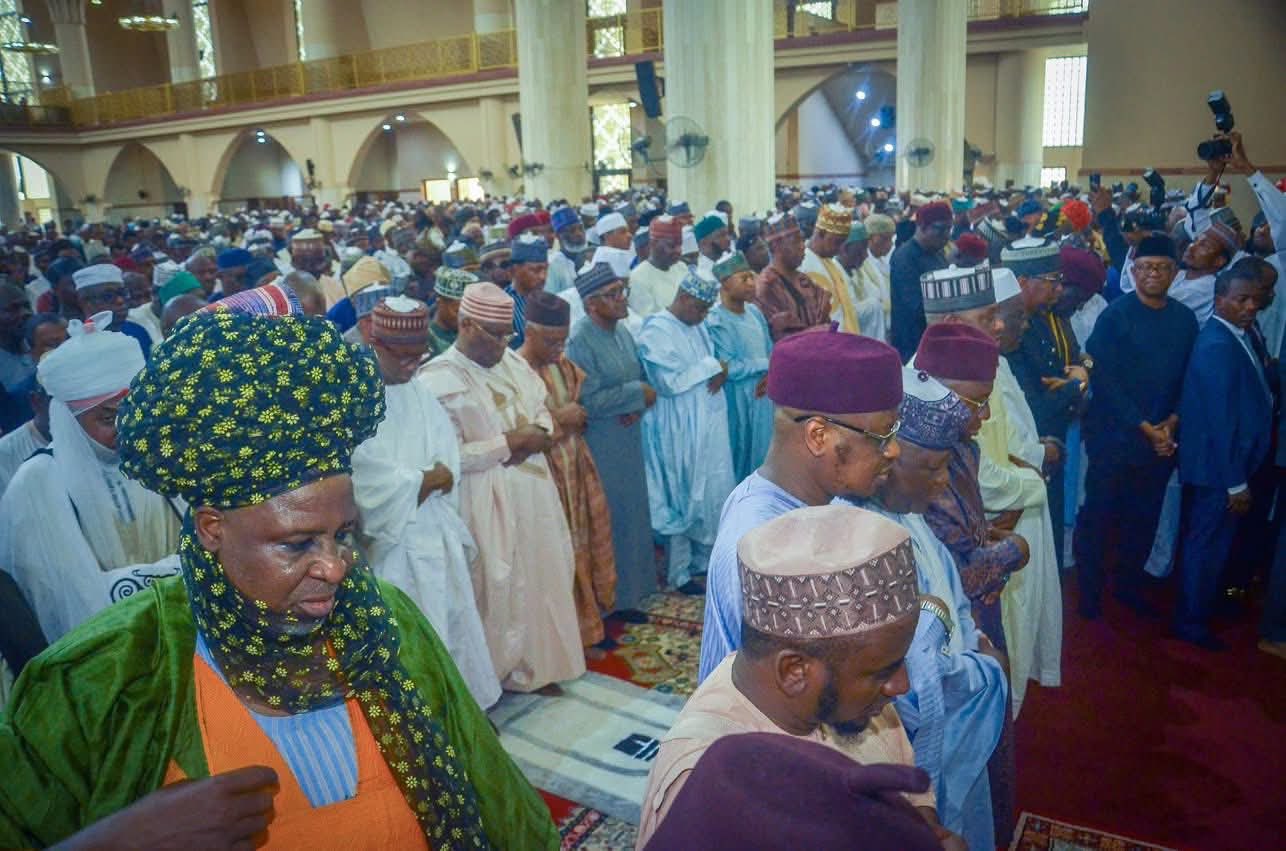
On Sunday, dignitaries from different political divides were present at the Central Mosque, Abuja, in honour of Hajiya Umma El-Rufai, the deceased mother of the former governor of Kaduna State, Mallam Nasir El-Rufai.
From his residence in Abuja to the mosque and lastly to the Gudu cemetery, both members of the opposition parties and the ruling party were present to offer condolences.
Specifically, his successor, Governor Uba Sani, the National Security Adviser, Mallam Nuhu Ribadu, were present in his house and at the funeral prayers.
The two had parted ways politically with El-Rufai, though they were mutual friends before.
Also present were former Vice President Atiku Abubakar, 2023 Labour Party presidential candidate, Peter Obi, former governor of Rivers State, Rotimi Amaechi, former governor of Sokoto State, Aminu Tambuwal, and ex-Adamawa State governor, Jibrilla Bindow.
All Progressives Congress governors were also in attendance, including Governors Babagana Zulum (Borno) and Mohammed Bago (Niger); former national chairman of APC, Abdullahi Ganduje; former Minister of Interior, Abdulrahman Dambazau, among others.
The 16th Emir of Kano, Lamido Sanusi, a former Zamfara State governor, Abdulaziz Yari, Senator Shehu Sani and billionaire businessman, Aliko Dangote, were also present.
At the interment of Hajiya El-Rufai at the Gudu Cemetery, Abuja, on Sunday, the former Minister of Communications and Digital Economy, Isa Pantami, held the two estranged friends (El-Rufai and Sani) by their shoulders and spoke a few words capable of melting the hardest of hearts.
Looking across his shoulders, he said, “Let us focus on the things that unite us because they are more than the things that divide us.
This life and everything it contains will end, and the grave is our end. No matter how you strive, you won’t get anything until Allah (God) grants it to you.”
Atiku had earlier announced his attendance in a post on his verified X handle, saying, “Today, I joined family, friends and associates of Mallam Nasir El-Rufai and the extended El-Rufai family at the Janazah (funeral prayer) of the matriarch of the family, Hajiya Umma El-Rufai.
“May God continue to comfort the family and all who mourn her. And may Allah grant her Aljannah Firdaus. Amin.”
Prominent Nigerians, including President Bola Tinubu, had earlier paid tributes to the deceased.
Tinubu, in a statement signed by his spokesman, Bayo Onanuga, commiserated with El-Rufai, urging him to find the strength to move on in the absence of his beloved mother.
“Nasir, please accept my heartfelt condolences on the passing of your beloved mother, Hajiya Umma, which happened today (Friday) in Cairo. As someone who had also lost an old mother, I share in your grief,” Onanuga wrote on behalf of President Tinubu.
Sani also earlier extended condolences on behalf of the Kaduna State Government and its people, describing the late Hajiya Umma as “a devoted mother and matriarch, a woman of rare grace, moral clarity, and quiet strength,” who embodied faith, patience, generosity, and community reconciliation.
“On behalf of the government and people of Kaduna State, I extend my deepest condolences to His Excellency, Mallam Nasir El-Rufai, and the entire El-Rufai family on the passing of their beloved mother, Hajiya Umma El-Rufai,” Sani said.
The National Chairman of the APC, Prof Nentawe Yilwatda, visited El-Rufai and his family, urging them to put their faith in God at all times.
He posted, “I visited the home of Mallam Nasir El-Rufai to commiserate with him and the entire family on the painful loss of his beloved mother, Hajiya Umma El-Rufai, who passed away yesterday (Friday).
“The death of a mother is a deeply personal and irreplaceable loss. It is a moment of profound grief not only for the immediate family, but also for all who understand the priceless role of a mother in the life of her children and family.
“Mama lived a fulfilled life and, by the grace of God, leaves behind a legacy through her children, family and all those whose lives she touched.
“At this difficult time, I pray that Almighty Allah forgives her shortcomings, grants her Aljannatul Firdaus, and comforts Mallam Nasir El-Rufai, the entire El-Rufai family, and all loved ones she left behind. May Allah grant the family the strength, patience and fortitude to bear this painful loss,” the APC Chairman wrote.
Also, the immediate past governor of Ekiti State and former Chairman of the Nigerian Governors’ Forum, Dr Kayode Fayemi, expressed deep sorrow over the passing of Hajiya Umma.
In a statement issued on Sunday by the Fayemi Media Office, the ex-governor described her death as a profound loss, not only to the El-Rufai family but also to all who were touched by her life of humility, faith, and service.
He noted that the late Hajiya Umma lived a life defined by strong moral values, devotion to family, and commitment to community—qualities he said are reflected in her son’s life and public service.
“I received with deep sadness the news of the passing of Hajiya Umma El-Rufai. Her departure is a painful loss, but we take solace in the exemplary life she lived and the legacy she leaves behind,” Fayemi said.
The death came at a time when El-Rufai was in the custody of the Independent Corrupt Practices and Other Related Offences Commission following his arrest over allegations of corruption and money laundering.
He was arraigned before a Federal High Court in Kaduna on March 24 on a 10-count charge, with the case adjourned until March 31, 2026, for hearing of pending applications, including his bail request.
He was released temporarily from the ICPC custody, reportedly to witness the burial rites of his mother.