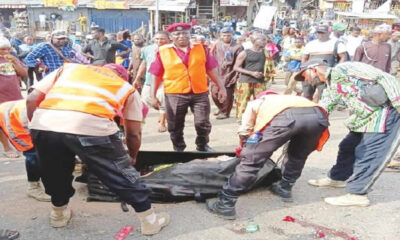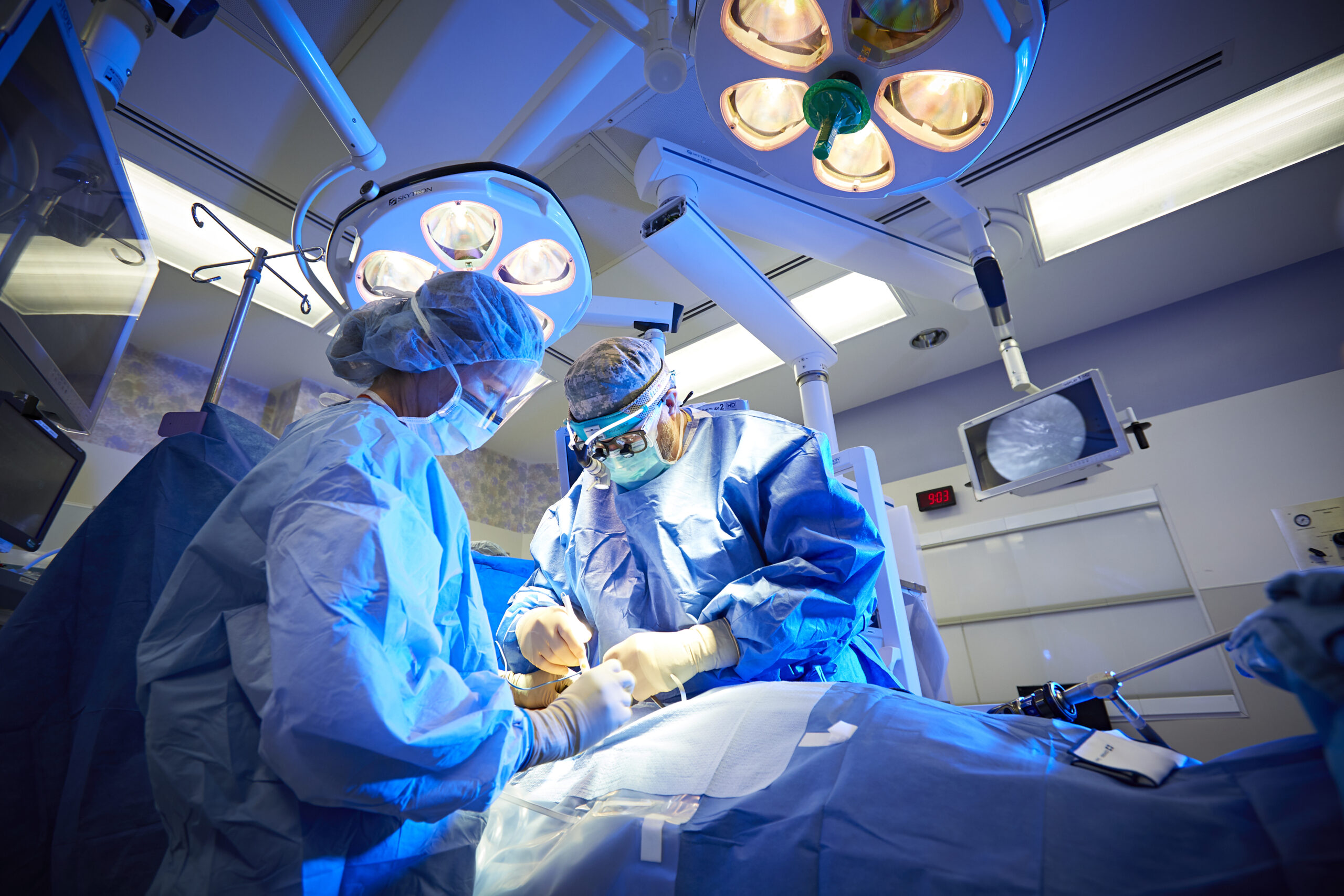
In this report, IBRAHIM ADAM examines how gaps in medical testing and neglected laboratory tests put patients at serious risk, with unnecessary surgeries and mismanaged treatments claiming lives
The death of 62-year-old Mrs Justina Awokumaka sparked much grief among her family members, one that is further deepened by alleged medical misconduct in an Abuja hospital.
Late Awokumaka, a resident of Bwari, reportedly died after what her family believes was an unnecessary appendectomy and subsequent complications during cancer treatment at a teaching hospital in Gwagwalada.
Her story was shared on February 25, 2026, by an X user, Tamunokuro Obietonbara (@sankofa360).
According to him, Awokumaka first experienced severe abdominal pain last year and went to the General Hospital in Bwari.
With no doctors available, she sought care at a private hospital the same day.
There, a doctor diagnosed appendicitis after a manual abdominal exam, without conducting a blood test or scan and scheduled her for surgery.
The appendectomy was reportedly performed a few days later. She initially appeared to recover, but within a week, her condition worsened as her pain intensified and her abdomen became rigid.
She was then transferred to the University of Abuja Teaching Hospital, where tests revealed she had cervical cancer, not appendicitis.
Doctors advised rest before cancer surgery, but four weeks later, preparations were halted due to dangerously low blood levels.
During her final hours, she underwent a blood transfusion after prolonged difficulty finding veins.
A doctor administered blood through a vein in her neck. About an hour later, her son noticed severe swelling, realising blood was leaking into the surrounding tissue.
Nurses were said to have delayed in responding, and when a doctor eventually assessed her, he allegedly downplayed the situation. She died later that night.
Obietonbara claimed that the first surgery was driven by greed, and proper laboratory examinations could have saved her life.
“The doctor who carried out the appendicitis surgery lied. She did not have appendicitis. He took advantage of the poor woman’s naivety. If the first surgery was not conducted and a proper examination had been carried out, she would have been alive today. First, she died from a doctor’s greed and second, from a doctor’s negligence,” he wrote.
Tests before surgery
But the chairman of the Nigerian Medical Association, Lagos State branch, Dr Babajide Saheed, said no qualified doctor would perform surgery without conducting the necessary medical laboratory investigations, except in life-threatening emergencies.
Saheed explained that surgeries are broadly classified as minor, intermediate or major and that the patient’s condition at the time determines the appropriate course of action.
“In cases where a patient is in severe pain or has a brain tumour causing life-threatening complications, surgery may need to be performed urgently to relieve pressure or remove the tumour. In such cases, there may not be time to wait for every routine test before proceeding.
“In the case of a gunshot wound, doctors may need to operate immediately to save the patient’s life. While emergency tests may be conducted simultaneously, the medical team does not delay life-saving intervention. The priority is to stabilise and treat the patient,” he said.
Saheed also addressed what he described as a widespread misunderstanding of the term surgery, noting that some procedures are highly specialised and carefully planned.
He cited procedures such as the Latissimus Dorsi Flap, which require detailed preoperative assessment and thorough evaluation of the patient’s overall health.
“Patients may expect a quick solution, but as professionals, doctors must thoroughly evaluate the patient’s overall health and determine whether they are fit for surgery after a laboratory test. This assessment is also carried out by the surgeon and must also be reviewed by the anesthesiologist before the operation can proceed,” he said.
The NMA chairman warned that doctors who ignore proper medical procedures risk endangering lives and facing serious consequences.
Women share experiences
A student of Tai Solarin University of Education, Ogun State Damilola Onaniyi, said a heart condition diagnosis in 2023 almost altered the course of her life.
After experiencing episodes of shortness of breath, she underwent an electrocardiogram and echocardiogram.
She said a sonographer informed her that the results indicated cardiomyopathy.
Onaniyi said, “For a moment, that single word almost became my whole reality. I was dead scared.”
She was unsatisfied, which made her seek another cardiologist’s opinion, where an evaluation revealed that her symptoms were linked not to her heart but to an ulcer caused by helicobacter pylori infection.
“If I had stopped at the first diagnosis, I would have lived in fear for nothing. Sometimes you really do have to listen deeper and keep asking questions,” she said.
A chef, Gina Ehikodi-Ojo shared a similar experience, saying that a doctor had diagnosed her with appendicitis following an examination.
Reluctant to undergo surgery, she opted for a further scan, which turned out to be premenstrual condition.
“I decided to do a computed tomography scan at Mecure or anything that will help a doctor see whatever might be happening in my body. That is the respect I have for Dr Chiemeka Sidney Iroegbu forever. He was very young and was able to read those images and said there was nothing wrong. It was just pre-menstrual syndrome at the end of the day. That first doctor would have cut me for nothing,” she said.
An entrepreneur, Nwadinuba Francisca recalled being told as a junior secondary school pupil that she had an ovarian cyst requiring urgent surgery after presenting with abdominal swelling. But her mother insisted on a second opinion.
“After looking at the scan and properly examining me, it turned out to be stool that formed whatever. I just had to take a laxative and I was okay after a day or two,” she said.
According to an online hospital, the Cleveland Clinic, ovarian cysts are common growths that develop on or inside your ovaries.
A radio presenter at Kapital FM 92.9, Nnamonu Obianuju described a two-year ordeal at the Federal Medical Centre, Abuja, where her elder sister was treated for leukaemia.
She said her sister underwent chemotherapy with little improvement, even as her abdomen became increasingly swollen.
“Two weeks before her death, it was found out that she had an ovarian cyst and that it had become malignant. My sister would have been alive today if only the ovarian cyst was removed on time,” she said.
A consultant in the Division of Paediatric Surgery at Usman Danfodiyo University Teaching Hospital, Sokoto State, Dr Yazeed Muhammad, warned that performing surgery without laboratory evaluation could lead to serious complications or even death.
“No surgeon will perform surgery without adequate evaluation of the patient. You need a lab test to know what is wrong with the patient. However, any doctor who tries that is a quack, and it will have severe consequences for both the patient and the doctor. Sometimes, the patients are left with serious complications that they battle for their entire life, or it leads to death,” he told Saturday PUNCH.
A nurse at the Abubakar Tafawa Balewa University Teaching Hospital in Bauchi State, Amina Ahmed, explained that preoperative tests, including complete blood count, blood grouping, infectious disease screening and anaesthesia assessment, are mandatory before any surgery.
“No surgeon will operate in our hospital without first ensuring that the patient has undergone the necessary laboratory tests. Anyone who attempts to operate without these tests will face disciplinary action, including the possible revocation of their medical license,” she told Saturday PUNCH.
Children at risk
A parent, Oluwakemi Adefolurin, said her ten-year-old daughter was diagnosed with appendicitis at a private hospital after scans were conducted.
But because the patient was a child, she was referred to a general hospital, where it was discovered that her daughter was free of an appendix after another scan.
“General hospital did their own scan after two days of admission and nothing like an appendix was found. Thank God the private hospital does not operate on children. They would have carried out an unnecessary surgery on a ten-year-old,” she said.
A business woman, Adediran Atinuke also recounted how her newborn niece developed jaundice shortly after being delivered by caesarean section at a private hospital.
She said the family’s concerns were initially dismissed until a referral was made to a paediatrician.
“They took a blood sample from her toe and she was confirmed dangerously jaundiced. They advised immediate phototherapy. Thankfully, my niece was fine after four days under the bluish light,” she said.
Another business woman Adebola Adeola recalls being rushed to a hospital in Lekki after a doctor pressed her abdomen and declared she had appendicitis.
She said the doctor advised immediate surgery to prevent a rupture and save her life, but her mother insisted on another evaluation at a government hospital.
“We went to a government hospital where a scan was done and there was nothing like appendicitis. This is eight years now and I never had any surgery of such,” she said.
Patients also lie
A medical laboratory scientist in training at the Irrua Specialist Teaching Hospital, Ifuhemi Olotu, warned that patients’ dishonesty could complicate diagnosis and treatment.
Olotu explained that there is a standard procedure for patients undergoing surgery, and upon arrival, patients are instructed to perform tests before seeing a doctor.
“Sometimes, patients meet the doctors first. When they complain about symptoms, the doctors do not immediately diagnose or prescribe medication. Instead, they send the patient to the laboratory. Based on the complaints, the doctors can document the case, consider possible causes and order appropriate tests such as blood, urine or stool analysis. Only when the results are returned will treatment begin,” she told Saturday PUNCH.
Olotu raised questions about the accuracy of some patient claims, citing appendicitis as a common example.
“Are we certain the patient’s complaint was truly related to appendicitis, or did the patient suggest that she was having an appendix problem? To be honest, some patients can be misleading,” she said.
Fraudulent surgeries for profit
A Canada-based Nigerian doctor, Dr Arinze Onwumelu, alleged that some medical practitioners in Nigeria falsely diagnose patients with appendicitis and perform deceptive surgeries to make quick money.
Onwumelu made the claim in a two-minute, 29-second video posted on his Instagram account, Dr Zo (@official_doctor_zo), stating that he had personally witnessed the practice while working in the country.
According to him, the alleged misconduct involves taking patients to the operating theatre, making a superficial skin incision and closing it without them having appendicitis.
He said the presence of a surgical scar could mislead doctors into assuming that the appendix had already been removed.
“There are a couple of doctors back home, in Africa generally, in the process of trying to hustle, as they call it, they tell patients they have appendicitis and take them to the theatre, and just slice the skin, close it and ask the patient to go.
“In a real sense, they don’t have appendicitis; it’s just a way of trying to make quick money. I am 100 per cent sure about this, because I’ve seen it,” Onwumelu said.
The doctor warned that such actions could put patients’ lives at risk, as doctors may initially rule out appendicitis when a scar is present, delaying life-saving treatment.
“There are things you should not do as a medical doctor, no matter where you are, no matter the situation, no matter the circumstances,” he said.
Onwumelu stressed that honesty with patients is essential, even when a conclusive diagnosis cannot be made.
“In medicine, the sin of commission is worse than the sin of omission. You should tell the patient you don’t know what’s wrong with them and let them go home, than to tell them that they have appendicitis, take them to the theatre, just do a skin incision, close them, collect money and let the patient go. If it’s not appendicitis, tell the patient it’s not appendicitis. If you don’t know, say you don’t know. You cannot put somebody to sleep, cut off the skin and still leave the appendix intact,” he added.
Neglect of lab tests
The National President of the Association of Medical Laboratory Scientists of Nigeria, Dr Casmir Ifeanyi, warned that the continued neglect and suppression of medical laboratory services in the country was costing lives and worsening the already fragile health system.
Ifeanyi said evidence-based medical practice remained the global standard and required that all treatments and patient management be guided by empirical data generated by medical laboratories.
“The challenge in Nigeria is that within the health system, the managers continue to undermine medical laboratory diagnosis. Across the globe, the standard practice today is evidence-based medical practice. That means before initiating any form of treatment or patient management, it must be based on empirical data provided by medical laboratories,” he told Saturday PUNCH.
The laboratory scientist noted that globally, 70–80 per cent of clinical decisions rely on labo ratory data, but described Nigeria’s continued dependence on exploratory surgery as outdated and dangerous.
According to him, exploratory surgery involves operating on a patient without a confirmed diagnosis to determine the cause of illness.
“In one case in South East Nigeria, a woman was operated on because she was told she had cancer. When they operated, there was no cancer. They could not even suture her properly. As I speak, she is wasting away and may soon pass on. What we see is experimentation with human life in Nigeria,” he said.
He maintained that the scale of dysfunction within the country’s healthcare system surpasses the damage caused by insurgency and violent crime.
“Ask those who go abroad for care. Do they operate without first knowing exactly what laboratory investigations show? Do they even give a painkiller without data generated through medical diagnostic investigations? It does not happen. The problem in the Nigerian health sector is worse than Boko Haram, banditry, kidnapping or other forms of extremism. An individual walks into a Nigerian hospital alive and may come out as a dead body,” he said.
A public health expert, Damilola Fajinmi, said the primary mandate of a hospital is to save lives, warning that bypassing laboratory tests before surgery breaches best practices.
Fajinmi explained that surgical interventions are complex processes that require strict adherence to established safety protocols to minimise risk and ensure favourable outcomes.
“The truth is, the primary mandate of hospitals is the protection of patient life. Surgical interventions are a complex process where safety is predicated on a comprehensive diagnostic workup,” she told our correspondent.
She noted that every surgical candidate must complete a risk assessment before any operation to detect conditions that could cause complications.
Fajinmi acknowledged that the country’s healthcare system faces systemic challenges, including limited resources and diagnostic delays, which create pressure points within service delivery.
She, however, stressed that such constraints must not result in compromised standards of care.
“No doubt there are systemic challenges in Nigeria, as well as resource limitations and even diagnostic delays. This causes pressure points within healthcare delivery. However, skipping essential diagnostics is a breach of surgical best practices,” she added.
Grave criminal offence
A Senior Advocate of Nigeria, Dr Monday Ubani, told Saturday PUNCH that failure to carry out necessary medical tests before surgery is a criminal offence.
He emphasised that certain prerequisite tests are essential to assess a patient’s health before any operation.
“I’m a lawyer, but I understand that there are procedures for laboratory tests and conducting surgeries. Within the medical process, if someone fails to conduct a medical examination or investigation, even if they are not a medical doctor, it can indicate a level of medical negligence,” Ubani said.
He noted that performing an operation without laboratory tests, operating on the wrong diagnosis, and causing death constitutes absolute negligence and could attract both civil and criminal consequences.
“Before an operation, steps must be taken to determine the problem. If these steps are skipped, it raises questions about whether the person performing the surgery is a medical doctor and whether they have committed medical negligence, because this can have both civil and criminal consequences.
“Before an operation is performed, certain prerequisite tests must be carried out to assess the health of the person to be operated on. If these tests are not conducted, we must question whether the person performing the surgery is a qualified medical doctor. If the person is not qualified, then negligence becomes a serious issue, though it also depends on the type of operation and the procedures involved,” he said.
punch.ng
FOLLOW US ON: