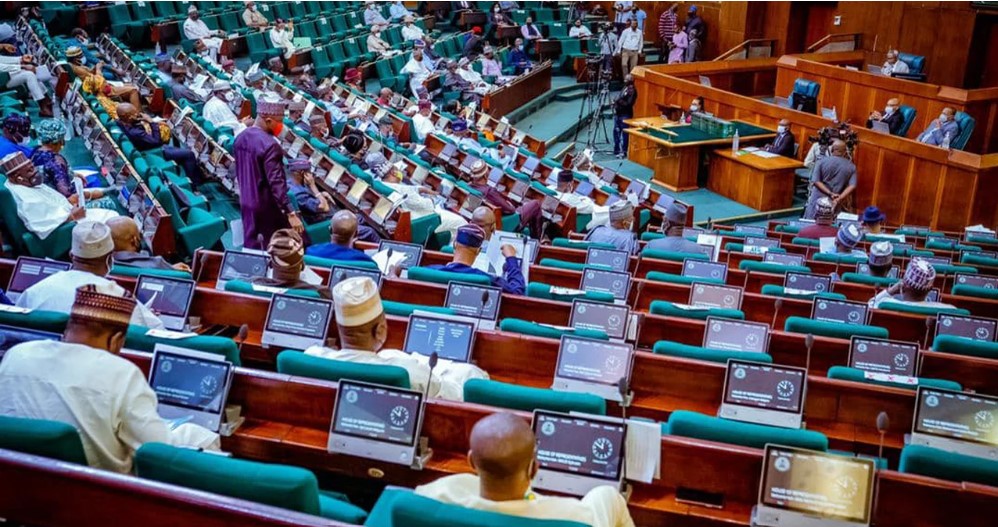
The House of Representatives is seeking the establishment of the National Public Assets Management Commission with authority to oversee the registration, valuation, management and disposal of Federal Government assets, including those held by ministries, agencies and government-owned enterprises.
The proposed legislation, introduced on the floor of the House on Tuesday, would require public institutions to register their assets in a central national database, disclose existing debts and other claims against them, and obtain the commission’s approval before undertaking transactions involving the sale, lease, concession or disposal of public property.
Sponsored by Lagos lawmakers, Ademorin Kuye and Lanre Okunlola, the National Public Assets Management Commission Bill, 2026, is designed to address gaps in the management of public assets by establishing a single authority to coordinate records and monitor their value, condition and utilisation.
A copy of the bill exclusively obtained by The PUNCH reveals that the proposed law provides that the commission’s authority should prevail “where its provisions conflict with existing laws governing asset management by institutions such as the Ministry of Finance Incorporated, the Bureau of Public Enterprises, the Asset Management Corporation of Nigeria and the Nigeria Sovereign Investment Authority.
Under the proposed arrangement, these institutions would retain their specialised statutory responsibilities but would be required to operate “within the commission’s registration, valuation, reporting and approval framework.”
Section 16 empowers the commission to “demand complete asset inventories from government institutions, inspect their premises and records, issue binding directives to address non-compliance and refer persistent violations to the President and the National Assembly.”
The bill provides that the commission’s directives would take precedence over contrary instructions, policies or internal rules issued by the institutions concerned.
It also makes clear that the proposed commission would not “directly sell or dispose of government property,” as such transactions would remain the responsibility of the relevant custodians, subject to the commission’s prior approval and oversight.
Central register proposal
A major feature of the proposed legislation is the establishment of a National Public Assets Register, which would serve as the authoritative database for Federal Government property and investments.
The register would contain information including the location, ownership, acquisition cost, current value, condition, maintenance history, legal status, revenue generated and outstanding financial obligations associated with each asset.
The commission would also assign every registered asset a unique public asset identification number to enable its tracking throughout its useful life.
According to the bill, existing public institutions would be required to submit complete inventories of their assets within 12 months of the law’s commencement, while newly acquired assets would have to be registered within 90 days of acquisition, completion, transfer of ownership or assumption of control.
The proposed register is expected to incorporate “digital documentation, geographical information systems, electronic title records, photographs, valuation reports and transaction histories.”
Section 25 provides for public access to non-sensitive information through an online portal, although information relating to national security, defence, intelligence and protected commercial interests could be withheld.
The commission would also publish an annual state of public assets report showing the total value of federal assets, the financial obligations attached to them and their net unencumbered value.
Under the bill, every covered institution would be required to certify annually that its asset records were complete and accurate.
Sale, disposal conditions
The legislation also proposes stricter conditions for the sale, leasing, concession and monetisation of public assets, requiring independent valuation, competitive processes, value-for-money assessments and consideration of the public interest before transactions can proceed.
Section 77 specifically provides that “no public asset should be disposed of below its independently assessed market value except where the law expressly permits an exception.”
Material terms of monetisation contracts would also be disclosed through a public asset transaction portal, subject to restrictions necessary to protect legally classified information.
The commission would have powers to monitor compliance with such contracts, direct corrective action and recommend termination where there is a material breach or a public-interest concern.
The bill further provides that “assets placed under leases or concessions should revert to Federal Government ownership when the agreements expire or are terminated.”
Scrap sales, missing assets
In a bid to curb the unauthorised removal and undervaluation of government property, the bill proposes a national policy governing the scrapping of obsolete vehicles, machinery, industrial equipment, electronic devices and other public assets.
Under the proposed framework, no asset could be classified as scrap without technical assessment, verification of its identity and an estimate of its recoverable value.
An asset that is idle or underutilised would not automatically qualify for scrapping. It would first have to be assessed for possible repair, redeployment, leasing, concession or disposal.
Section 82 requires scrap to be independently valued and disposed of through a competitive process, while records of its quantity, weight or volume would be uploaded to the national register.
It further provides that no scrap should leave a government site without a Scrap Movement Certificate specifying the quantity, buyer, vehicle and destination.
The bill proposes fines of at least three times the assessed value of the affected asset or scrap for individuals convicted of pilfering public assets, or imprisonment for a term to be prescribed by the National Assembly, or both.
Corporate bodies, including government-owned enterprises and private contractors, would face fines of at least five times the assessed value, in addition to possible suspension or disqualification from future public asset disposal transactions.
Where public officers, security personnel or contractors are implicated, the bill provides for the maximum applicable fine, disciplinary referral in the case of public officers and forfeiture of benefits derived from the offence.
Penalties
The proposed legislation further identifies failure to register public assets, concealment, false declarations, fraudulent valuation, unauthorised disposal, conflicts of interest and obstruction of inspections as offences.
It also provides for individual liability where directors or principal officers of corporate bodies consent to, connive in or negligently facilitate an offence.
Section 127 specifically targets custodial institutions that knowingly withhold asset registration, resist lawful directives or undertake monetisation and disposal transactions without the required approval.
The commission would be empowered to impose administrative sanctions on non-compliant institutions and institute proceedings to recover losses arising from offences under the proposed law.
The bill also proposes protection for whistleblowers who report concealment, mismanagement or unlawful disposal of public assets, alongside a mechanism for receiving and investigating public complaints.
Recovered assets register
The proposed commission would also maintain a Recovered Assets Register covering property seized, forfeited, confiscated or recovered under the law, including assets held by AMCON, the Economic and Financial Crimes Commission, the Independent Corrupt Practices and Other Related Offences Commission and the Nigeria Deposit Insurance Corporation.
However, the bill preserves the investigative and prosecutorial functions of the EFCC and ICPC. It states that the commission would not be empowered to interfere with investigations, prosecutions or court-supervised processes.
Assets awaiting final forfeiture decisions would have their legal status recorded, while court orders would prevail where they conflict with the proposed law’s requirements concerning custody, preservation or disposal.
The bill further provides for an annual report to the National Assembly on public assets and compliance by custodial institutions, while preserving the constitutional functions of the Auditor-General for the Federation.
If enacted, the legislation would establish a central oversight system for federal public assets while requiring existing institutions to submit to common standards of registration, valuation and accountability.
Its practical impact would depend on implementation, the accuracy of asset records, enforcement of its provisions and the commission’s ability to coordinate institutions with overlapping responsibilities.
Source: punchng.com
FOLLOW US ON:
FACEBOOK
WHATSAPP CHANNEL
TWITTER
PINTEREST
TIKTOK
YOUTUBE
LINKEDIN
INSTAGRAM