





Connect with us

News

Dangote vs PENGASSAN: NLC mobilises workers for strike against refinery

Published

on

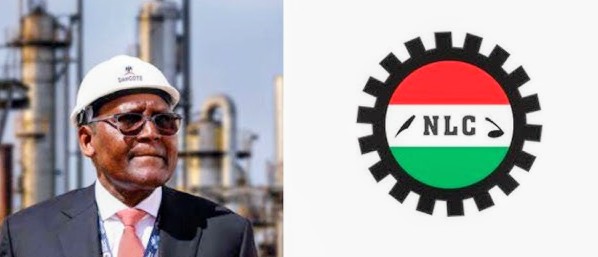
The Nigeria Labour Congress has directed its affiliate unions to begin urgent mobilisation and prepare for a nationwide industrial action against the Dangote Group, accusing the conglomerate of sustained anti-worker practices.

This came as the nationwide strike declared by the Petroleum and Natural Gas Senior Staff Association of Nigeria on Monday against the refinery paralysed operations at key oil and gas regulatory institutions, including the Nigerian National Petroleum Company Limited, the Nigerian Upstream Petroleum Regulatory Commission, and the Nigerian Midstream and Downstream Petroleum Regulatory Authority.

Also on Monday, the National Industrial Court in Abuja restrained PENGASSAN from embarking on its industrial action against Dangote Petroleum Refinery and Petrochemicals FZE, barring the union from halting crude oil and gas supply to the $20bn Lekki-based refinery.

However, PENGASSAN declared that it was not aware of the court injunction, arguing that court orders or processes were served via a court bailiff and not through social media.

In an internal memo shared with The PUNCH on Monday and addressed to the presidents and general secretaries of affiliate unions, NLC President Joe Ajaero placed NLC affiliates on alert.

The directive follows a clash between Dangote refinery and PENGASSAN. The oil union earlier announced that more than 800 workers at the Dangote refinery were dismissed after attempting to unionise. The union alleged that many of the jobs were replaced with more than 2,000 expatriates, mainly from India. Dangote has denied the accusations, saying the layoffs were part of a restructuring to improve safety and prevent sabotage, adding that over 3,000 Nigerians remain employed.

The standoff has already led PENGASSAN to order a halt to crude and gas supplies, forcing a temporary shutdown of operations at the refinery, which is critical to Nigeria’s efforts to cut fuel imports and ease pressure on foreign exchange.

Government mediators have since stepped in to prevent prolonged disruption, as a meeting held in Abuja on Monday, involving officials of the Federal Government, PENGASSAN, and Dangote Group.

Ajaero described the Dangote Group as waging a “protracted and deliberate anti-worker crusade” against the Nigerian working class. “The ongoing battle with PENGASSAN and NUPENG is merely a symptom of a deeper sickness; a capitalist pathology of union-busting, worker enslavement, and gross impunity that defines the Group’s industrial relations strategy,” he wrote.

He accused the company of operating “as a state within a state,” alleging that Dangote has for too long flouted Section 40 of the Nigerian Constitution, violated International Labour Organisation Conventions 87 and 98, and treated national labour laws with contempt.

“Their facilities are not workplaces but plantations of exploitation, where the dignity of the worker is systematically crushed to maximise profit for the few. The time for pleading and endless, fruitless dialogue is over. The moment for decisive, collective action is now,” Ajaero said.

The row is about more than jobs. The $20bn refinery is central to Nigeria’s efforts to reduce fuel imports and stabilise its shaky currency. A strike that halts production would quickly be felt across the economy. The dispute also casts a spotlight on the outsized clout of both Dangote, the country’s dominant industrial player, and the unions, which remain among the few institutions capable of mass mobilisation.

The NLC directed all affiliate unions to place their members on immediate and full alert and to commence, with immediate effect, vigorous and comprehensive unionisation of all workers within Dangote Group facilities under their jurisdiction.

It further instructed unions to begin mobilising members and resources for what it described as a full-scale and decisive engagement with the conglomerate. The Congress said the aim of the action is to compel Dangote to respect the right of every worker to freely join a union of their choice, cease all forms of intimidation and victimisation, and submit to the authority of Nigeria’s labour laws and institutions.

See also  Nigeria, UK seal £746m deal to redevelop Tin Can, Apapa ports

Each affiliate union has been ordered to set up an Action Mobilisation Committee and liaise directly with the NLC national secretariat within 72 hours to coordinate strategy, logistics, and communication. Ajaero insisted that unity of purpose and action is non-negotiable.

“The impunity of the Dangote Group must be met with the resistance of organised labour. No amount of media verbiage and paid hirelings will stop us from fighting for our liberty in the face of apparent regulatory capture, where the state seems to have abdicated its responsibility to hold this behemoth accountable for its breaches of our laws,” he said.

“The blood and sweat of Nigerian workers built this conglomerate; we will not let it become a monument to their oppression. Together, we stand! Together, we will overcome.”

NLC affiliates include the Nigeria Union of Petroleum and Natural Gas Workers, the National Union of Chemical, Footwear, Rubber, Leather and Non-Metallic Products Employees, the National Union of Food, Beverage and Tobacco Employees, and the National Union of Air Transport Employees.

Others include the National Union of Electricity Employees, the Maritime Workers Union of Nigeria, the National Union of Textile, Garment and Tailoring Workers of Nigeria, the National Union of Metalworkers of Nigeria, the Industrial Sector Senior Staff Association of Nigeria, the Steel and Engineering Workers Union of Nigeria, and the Medical and Health Professional Senior Staff Association of Nigeria.

NNPC, others shut

The strike by PENGASSAN paralysed operations at the Nigerian National Petroleum Company Limited, the Nigerian Upstream Petroleum Regulatory Commission, and the Nigerian Midstream and Downstream Petroleum Regulatory Authority.

Our correspondent observed that at the NUPRC  headquarters in Abuja, the main gate was firmly locked and key, leaving several employees stranded outside the premises. Security operatives on duty confirmed that no staff were allowed entry, in line with the strike directive issued by the union.

Similarly, activities at the NMDPRA headquarters in the busy Central Business District were completely grounded as workers fully complied with the industrial action. Confirming the situation, the PENGASSAN Chairman in NMDPRA, Tony Iziogba, told The PUNCH that the union had achieved “100 per cent compliance,” effectively restricting access to staff and visitors.

He added that his colleagues had also enforced 100 per cent compliance at the NNPCL and other relevant agencies. PENGASSAN said the strike became inevitable after the alleged wrongful dismissal of about 800 workers at the Dangote Petroleum Refinery.

Court bars PENGASSAN

The National Industrial Court, Abuja, on Monday restrained the Petroleum and Natural Gas Senior Staff Association of Nigeria from embarking on its planned industrial action against Dangote Petroleum Refinery and Petrochemicals FZE. Justice Emmanuel Danjuma Subilim, in a ruling, barred the defendants from halting crude oil and gas supply to the Dangote Refinery.

Listed as defendants in the suit are the Nigerian National Petroleum Company Limited, the Nigerian Midstream and Downstream Petroleum Regulatory Authority, and the Nigerian Upstream Petroleum Regulatory Commission. Dangote Refinery, in an ex parte application filed by its counsel, George Ibrahim, secured the interim order against the defendants.

Ibrahim, in the motion, sought an order of interim injunction restraining the 1st Defendant (NNPCL), its members, agents, servants, privies, representatives, assigns, or howsoever described, from directing or effecting a halt in the supply of crude oil and gas to the Claimant.

See also  Akpabio links terror attacks to plot against Tinubu, see how

He further prayed the Court to restrain them from embarking on any industrial action against the Claimant with the intention of crippling operations, blocking access roads, obstructing vehicular movement, or otherwise disrupting the operations of the Claimant or the licensees of the 2nd to 4th Defendants, as contained in the directives issued by the 1st Defendant on September 26, 2025, pending the hearing and determination of the motion on notice.

He also sought “an order of interim injunction restraining the 2nd–4th Defendants, their employees, members, agents, servants, privies, representatives, licensees, assigns or howsoever described from giving effect to the directives of the 1st Defendant to halt the supply of crude oil and gas to the Claimant; or joining, continuing, embarking on, or in any manner participating in the planned industrial action of the 1st Defendant and its affiliates or cronies or any other strike whatsoever against the Claimant/Applicant, with a view to frustrating its business and operations, pending the hearing and determination of the motion on notice.”

Ibrahim argued that the Applicant is a duly licensed petroleum production and distribution company, engaged in refining and producing petroleum and petrochemical products for general public consumption in Nigeria. He stressed that the company provides essential services critical to the Nigerian economy and the well-being of the public.

He further contended that in recent times, incidents of sabotage by some employees at the Claimant’s plant had raised grave health and safety concerns, necessitating a re-organisation exercise which led to the disengagement of some staff. This, he noted, was communicated to all employees through a memo dated September 25, 2025.

According to him, in the early hours of September 26, 2025, the Claimant became aware of reports circulating online alleging that Nigerian workers were dismissed simply because they joined the 1st Defendant’s union.

He said the management of the Claimant promptly issued a press statement refuting the allegation, clarifying that the company was not opposed to unionisation, which it recognises as a constitutional right. He emphasised that the refinery has over 3,000 Nigerians in its workforce and that only a negligible number of staff were affected by the reorganisation exercise, which was necessitated by acts of sabotage and safety concerns.

Counsel further told the Court that by a letter dated September 26, 2025, the 1st Defendant, through its General Secretary, Lamumba Okugbawa, wrote to the Minister of Petroleum and Gas, threatening that unless the affected staff were reinstated—alleged to be over 800—the union would take steps to bring the Claimant to its knees.

“The 1st Defendant issued a press statement on September 26, 2025, erroneously describing the disengagement exercise as anti-labour practices, and alleging that the workers were victimised for joining the union, which is patently incorrect,” Ibrahim submitted.

He added that, notwithstanding the Claimant’s clarifications, the 1st Defendant became further incensed and directed its executives and members in the licensees of the 2nd–4th Defendants, who supply crude oil and gas to the Claimant, to halt such supply as a means of paralysing its operations.

“The 2nd–4th Defendants are on standby to implement the directives of the 1st Defendant through their agents and licensees, with a view to cutting off supply of crude oil and gas to the Claimant, thereby crippling its operations, unless this Honourable Court intervenes,” Ibrahim argued.

He further asserted that the 1st Defendant, aware of its membership strength across the country, was intent on carrying out its threat to shut down the Claimant’s operations unless restrained by the Court.

“The Claimant’s plant was constructed at a cost exceeding $20bn by its promoters, to address Nigeria’s decades-long energy challenges. The refinery has been making substantial contributions to the economy and meeting consumer demand. If the 1st Defendant’s threat is carried out, Nigeria would be plunged back into the dark days of energy shortages, with devastating consequences for consumers and the economy,” he submitted.

See also  FG revokes 5% telecom tax on voice, data services

According to him, the 1st Defendant and its members have perfected plans to embark on industrial action capable of crippling the Claimant’s services to the Nigerian public and the economy, without engaging in any formal dispute resolution with the Claimant as required by law.

In his brief ruling on the ex parte application, Justice Subilim held that the balance of convenience was in favour of the Applicant, as the continuation of the threatened industrial action would irreparably damage its business and undermine the provision of essential services to the Nigerian public.

The judge ruled that it was in the interest of justice to restrain the Respondents in order to preserve industrial peace and safeguard the continuous provision of essential services pending the hearing and determination of the substantive suit.

Justice Subilim accordingly granted the restraining order and directed that the same be served on the defendants forthwith, together with the motion on notice. The Court held that the order shall subsist for seven days only. The matter was subsequently adjourned to October 13 for the hearing of the motion on notice.

PENGASSAN reacts

Reacting, PENGASSAN General Secretary, Lumumba Okugbawa, said in a statement that the association was not aware of the court injunction. Okugbawa argued that court orders or processes are served via a court bailiff and not through social media.

He directed all members of PENGASSAN to continue with the industrial action until further instructions. “On behalf of the national leadership of our great association, I sincerely wish to commend you all for the courage we exhibited today in standing up for what is right. We have just begun, and victory is in sight.

“Our attention has been drawn to rumours making the rounds on a court injunction restraining our noble exercise. I want to unequivocally state that we have not been served anything of such. Court orders or processes are served via a court bailiff and not through social media.

“All comrades are therefore directed to continue with the industrial action until further instruction. Only information coming through our official channels should be regarded as authentic. Any further clarification you need should be sought from higher organs of the Association,” Okugbawa said on Monday

ASCSN supports TUC, PENGASSAN

The Association of Senior Civil Servants of Nigeria has thrown its weight behind the Trade Union Congress of Nigeria and the Petroleum and Natural Gas Senior Staff Association of Nigeria in condemning what they described as the “unjust and anti-labour” practices recently carried out by the management of Dangote Petroleum Refinery.

In a statement issued in Abuja on Monday, the ASCSN National President, Shehu Mohammed, said the arbitrary dismissal of workers for exercising their constitutional right to freely associate and belong to a trade union is a gross violation of Section 40 of the Nigerian Constitution and a direct breach of Nigeria’s obligations under International Labour Organisation conventions.

“Such acts are unacceptable and cannot be tolerated in a democracy. We, therefore, stand shoulder-to-shoulder with TUC and PENGASSAN in demanding the immediate reinstatement of all affected workers just as we support the call for an independent investigation into the refinery’s anti-worker practices,” the union emphasised.

punch.ng

FOLLOW US ON:

FACEBOOK

TWITTER

PINTEREST

TIKTOK

YOUTUBE

LINKEDIN

TUMBLR

INSTAGRAM

Continue Reading
Click to comment

Leave a Reply

Your email address will not be published. Required fields are marked *

News

Pentagon restores name of US Pacific Command

Published

on

The Pentagon is set to restore the name of the US Indo-Pacific Command to the US Pacific Command, it said on Tuesday, reversing a 2018 decision.

The renaming will not change the command’s area of responsibility, which stretches from the western part of India to America’s Pacific coastline, the Department of War said in a statement.

Its “fundamental mission and its unwavering commitment to maintaining a free and open theatre alongside regional allies and partners” also remain unchanged, it added.

The name change “honours the command’s deep historical roots, fostering a sense of pride and collective spirit among all who serve in the Pacific,” the department said, without giving additional details.

The US Pacific Command was established by former President Harry Truman after World War II.

It operated under that name for over 70 years before being renamed as the US Indo-Pacific Command in 2018, in a nod to the growing importance of the Indian Ocean in US strategic thinking.

The 2018 name change also came as part of broader efforts by Washington to counter China’s growing influence across the Asia-Pacific domain.

AFP

See also  Obasanjo to FG: Stop apologising, negotiating with terrorists
Continue Reading

News

Labour to engage FG on minimum wage review

Published

on

The Nigeria Labour Congress and the Trade Union Congress said they will restart negotiations with the Federal Government over a new national minimum wage, warning that workers can no longer cope with rising living costs as inflation continues to erode real incomes.

The unions are pushing for what they described as a “genuine living wage” to replace the current framework, which they said no longer reflects Nigeria’s economic realities, particularly sharp increases in food, transport, housing, and healthcare costs.

The position was contained in a joint address delivered at the 114th International Labour Conference in Geneva on Monday, where the unions also rejected any proposal to tax the minimum wage or impose additional fiscal burdens on low-income earners.

Nigeria’s current minimum wage of N70,000 was signed into law on 18 July 2024, in an agreement between organised labour and the federal government. President Bola Tinubu formally announced the wage on 19 July 2024, and it took effect on 29 July 2024.

The agreement originally set a three-year review cycle, shifting from the previous five-year arrangement. However, in January 2025, the Federal Government adjusted the framework, announcing that the minimum wage would now be reviewed every two years, effectively setting 2026 as the next review point.

In light of this, labour leaders said they intend to formally open discussions with the federal government ahead of the July 2026 wage renegotiation deadline, in a bid to prevent the delays that have often hindered previous minimum wage reviews.

“The current Act expires early next year, and we have announced that renegotiation will commence by July 2026 to avoid the painful delays of the past. As soon as we leave here, we shall write again to the government demanding the commencement of the process for renegotiating the national minimum wage,” the unions said.

See also  PENGASSAN backs NUPENG, threatens shutdown of Dangote refinery

The labour leaders said workers are already under severe pressure from inflation, currency depreciation, and rising costs across essential services, arguing that official economic indicators do not reflect the daily realities of most households.

They warned that taxing the minimum wage would worsen poverty and deepen economic hardship at a time when many citizens are struggling to meet basic needs.

“We demand nothing less than a genuine living wage that reflects today’s harsh economic realities. We also demand immediate relief measures by governments at all levels until a new minimum wage is signed into law. We reject outright any attempt to tax the minimum wage or impose further burdens on the poor,” the unions said in their communiqué.

The unions stressed that the upcoming negotiations must go beyond nominal wage adjustments and instead focus on protecting real incomes, which they said have been steadily eroded by inflation.

They also urged federal and state governments to introduce short-term relief measures pending the conclusion of negotiations, warning that delays could heighten industrial tensions across the country.

Beyond wage concerns, the labour movement used the Geneva platform to highlight broader economic and social challenges, including insecurity, unemployment, and rising poverty levels.

They said insecurity in several parts of the country has made commuting increasingly dangerous for workers, with killings, abductions, and displacement affecting productivity and livelihoods.

According to the unions, nearly 2,000 people were killed in the first quarter of the year, while millions have been displaced, with entire communities and economic activities disrupted by violence.

See also  Plateau panel urges anti-land grabbing law enforcement

They warned that worsening insecurity could force workers to remain at home as a survival response, escalating tensions beyond traditional labour action if not urgently addressed.

The labour leaders also said about 65 per cent of Nigerians, estimated at roughly 150 million people, are currently living in multidimensional poverty, driven by inflation, job losses, and declining purchasing power.

They argued that while macroeconomic reforms are aimed at stabilisation, they have yet to translate into improved living standards for ordinary citizens.

As the 2027 general elections approach, the unions said they are developing a charter of demands to shape their engagement with political actors and inform their support for candidates, noting that  only political actors who commit to improved security, functional public services, wage reforms, and protection of labour rights would receive their backing.

The labour movement also raised concerns over alleged interference in union affairs in some states, accusing certain governments of undermining democratically elected labour leadership structures.

They emphasised that organised labour would resist any attempt to weaken union independence or impose external control on labour organisations.

As the current wage regime approaches its 2026 review window, the unions said their priority remains securing a wage structure that reflects economic realities and protects workers from further erosion of income.

They maintained that the outcome of the upcoming negotiations would determine whether Nigerian workers receive what they termed a “living wage” or continue to endure worsening economic hardship.

punch.ng

FOLLOW US ON:

FACEBOOK

TWITTER

PINTEREST

TIKTOK

YOUTUBE

LINKEDIN

INSTAGRAM

Continue Reading

News

Ribadu, Akpabio advocate tech-driven border control over Insecurity

Published

on

The National Security Adviser, Nuhu Ribadu, and President of the Senate, Godswill Akpabio, on Tuesday called for the deployment of modern technology and stronger regional cooperation to strengthen Nigeria’s border security architecture and address growing security threats across the country.

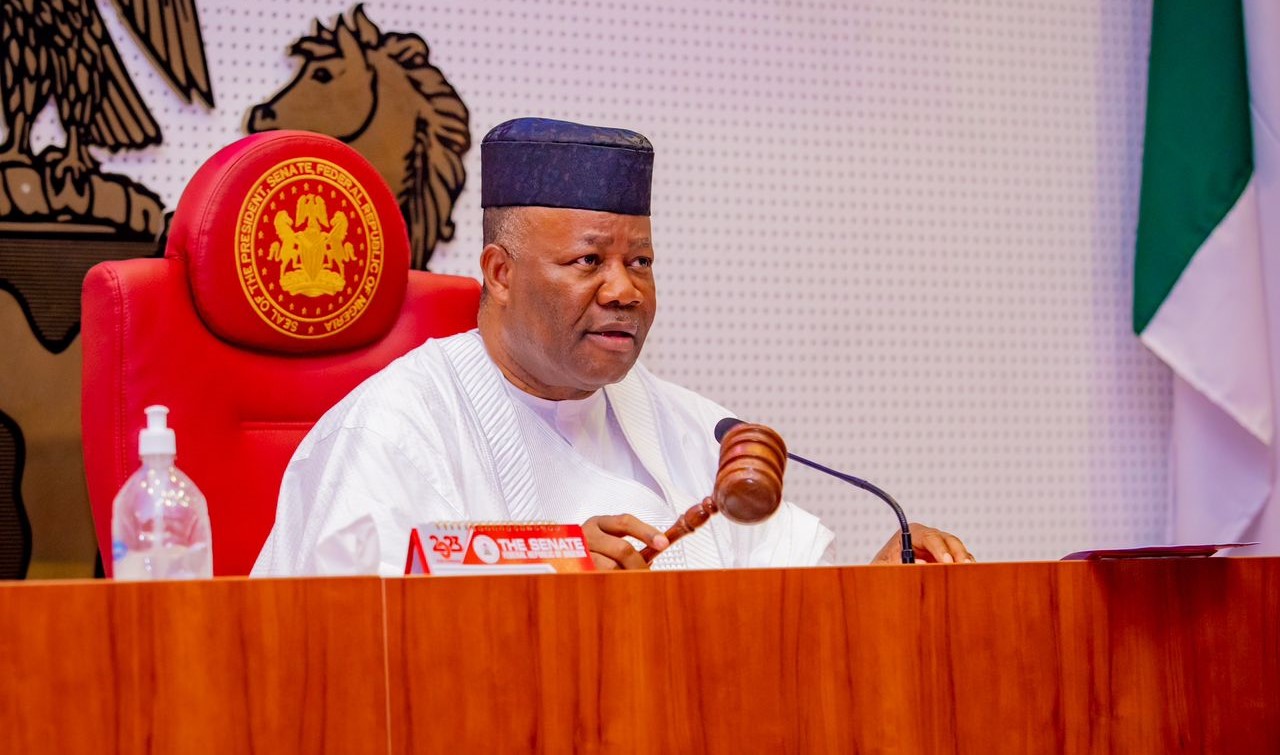
FILE: Akpabio

They made the call at the opening of the 15th National Security Seminar organised by the Alumni Association of the National Defence College in Abuja.

Represented by the Director of Policy and Strategy at the Office of the National Security Adviser, Yazid Gbemudu, the NSA said Nigeria’s territorial integrity and national stability were closely tied to the effectiveness of its border security framework.

He noted that while Nigeria’s extensive land and maritime borders facilitated trade, regional integration and socio-economic development, they also exposed the country to threats including terrorism, arms trafficking, smuggling, human trafficking, irregular migration and other forms of transnational organised crime.

According to him, weak border governance creates vulnerabilities that can be exploited by criminal and terrorist networks, thereby undermining national security and development efforts.

“A major pillar of Nigeria’s contemporary border security framework is the National Border Management Strategy, which promotes an integrated border management approach.

“The strategy seeks to enhance intelligence collaboration, strengthen border infrastructure, improve surveillance capabilities and modernise border management processes,” he said.

Ribadu said the deployment of Border Management Information Systems and other technological solutions at key entry and exit points had improved data collection, traveller screening and migration monitoring.

“These initiatives demonstrate Nigeria’s commitment to aligning its border management practices with international standards,” he added.

See also  PHOTOS: Train crushes dispatch rider to de@th in Lagos

The NSA stressed the need for the full implementation of an integrated border management system to improve coordination among security, intelligence and law enforcement agencies.

“Effective intelligence sharing, joint operations and harmonised border procedures are essential for addressing contemporary security threats,” he said.

He also advocated increased investment in technology-driven border security solutions.

“Expanding surveillance systems across land, maritime and coastal borders will significantly improve monitoring capabilities and reduce illegal cross-border activities.

“Modern challenges require modern solutions, including biometric identification systems, advanced border monitoring technologies and data-driven security frameworks,” Ribadu stated.

The NSA further emphasised the importance of regional and bilateral cooperation, noting that many of the security challenges confronting Nigeria’s borders were transnational in nature and required coordinated responses among neighbouring countries.

He also called for greater investment in border communities through sustainable development, improved infrastructure and economic opportunities to reduce their vulnerability to criminal exploitation.

“Strengthening Nigeria’s border security architecture is fundamental to ensuring national stability, protecting territorial integrity and promoting socio-economic development,” he said.

Ribadu, however, acknowledged challenges such as porous borders, inadequate infrastructure, limited technological capabilities and gaps in inter-agency coordination, saying they required urgent attention.

“Border security is a shared responsibility that requires the collective efforts of security agencies, government institutions, border communities and international partners,” he added.

Speaking at the event, Akpabio, who was represented by the Chairman of the Senate Committee on Defence, Ahmad Lawan, said Nigeria’s extensive land and maritime boundaries posed significant security challenges.

“As a country with extensive land and maritime boundaries, Nigeria faces significant challenges relating to border control, illegal migration, arms trafficking, smuggling and the infiltration of criminal and extremist elements.

See also  PENGASSAN backs NUPENG, threatens shutdown of Dangote refinery

“It is, therefore, imperative that Nigeria prioritises the strengthening of its border security architecture through improved surveillance, enhanced infrastructure, better inter-agency coordination, technological innovation and stronger regional cooperation,” he said.

Akpabio noted that many of the security threats confronting Nigeria had transnational dimensions, making coordinated responses essential.

He stressed that peace and security remained prerequisites for meaningful national development.

“There can be no meaningful development without peace and security. Porous and poorly managed borders can become vulnerabilities that undermine national security efforts and national stability,” he said.

The Senate President also advocated a whole-of-government and whole-of-society approach to addressing insecurity.

According to him, government institutions, security agencies, civil society organisations, the private sector, traditional institutions, the media and academia all have critical roles to play in safeguarding the country.

Earlier, the Acting President of AANDEC, Commodore Amatare Kpou (retd.), described the seminar as a key platform for promoting informed discourse on national security challenges and opportunities.

Kpou said the theme of the seminar, “Strengthening Nigeria’s Border Security Architecture for National Stability,” was timely, given the growing threats of irregular migration, smuggling, trafficking and other cross-border crimes.

He expressed confidence that the deliberations would generate useful recommendations for policymakers and contribute to efforts aimed at building a safer and more secure Nigeria.

Nigeria shares over 4,000 kilometres of land borders with neighbouring countries and an extensive coastline, making border security a critical component of national security.

Authorities have repeatedly identified porous borders as channels for terrorism, arms smuggling, human trafficking and other transnational crimes.

The Federal Government has in recent years intensified efforts to strengthen border management through technology, intelligence sharing and regional cooperation.

See also  Obasanjo to FG: Stop apologising, negotiating with terrorists

punch.ng

FOLLOW US ON:

FACEBOOK

TWITTER

PINTEREST

TIKTOK

YOUTUBE

LINKEDIN

INSTAGRAM

Continue Reading

Trending