





Connect with us

News

Dangote vs PENGASSAN: NLC mobilises workers for strike against refinery

Published

on

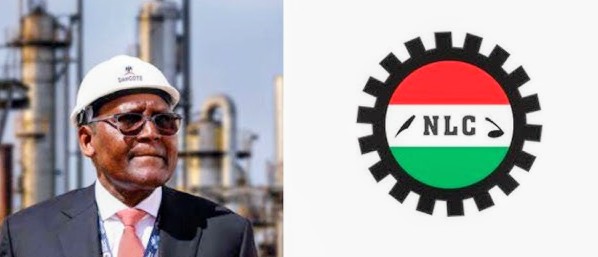
The Nigeria Labour Congress has directed its affiliate unions to begin urgent mobilisation and prepare for a nationwide industrial action against the Dangote Group, accusing the conglomerate of sustained anti-worker practices.

This came as the nationwide strike declared by the Petroleum and Natural Gas Senior Staff Association of Nigeria on Monday against the refinery paralysed operations at key oil and gas regulatory institutions, including the Nigerian National Petroleum Company Limited, the Nigerian Upstream Petroleum Regulatory Commission, and the Nigerian Midstream and Downstream Petroleum Regulatory Authority.

Also on Monday, the National Industrial Court in Abuja restrained PENGASSAN from embarking on its industrial action against Dangote Petroleum Refinery and Petrochemicals FZE, barring the union from halting crude oil and gas supply to the $20bn Lekki-based refinery.

However, PENGASSAN declared that it was not aware of the court injunction, arguing that court orders or processes were served via a court bailiff and not through social media.

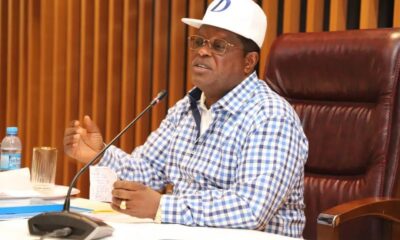
In an internal memo shared with The PUNCH on Monday and addressed to the presidents and general secretaries of affiliate unions, NLC President Joe Ajaero placed NLC affiliates on alert.

The directive follows a clash between Dangote refinery and PENGASSAN. The oil union earlier announced that more than 800 workers at the Dangote refinery were dismissed after attempting to unionise. The union alleged that many of the jobs were replaced with more than 2,000 expatriates, mainly from India. Dangote has denied the accusations, saying the layoffs were part of a restructuring to improve safety and prevent sabotage, adding that over 3,000 Nigerians remain employed.

The standoff has already led PENGASSAN to order a halt to crude and gas supplies, forcing a temporary shutdown of operations at the refinery, which is critical to Nigeria’s efforts to cut fuel imports and ease pressure on foreign exchange.

Government mediators have since stepped in to prevent prolonged disruption, as a meeting held in Abuja on Monday, involving officials of the Federal Government, PENGASSAN, and Dangote Group.

Ajaero described the Dangote Group as waging a “protracted and deliberate anti-worker crusade” against the Nigerian working class. “The ongoing battle with PENGASSAN and NUPENG is merely a symptom of a deeper sickness; a capitalist pathology of union-busting, worker enslavement, and gross impunity that defines the Group’s industrial relations strategy,” he wrote.

He accused the company of operating “as a state within a state,” alleging that Dangote has for too long flouted Section 40 of the Nigerian Constitution, violated International Labour Organisation Conventions 87 and 98, and treated national labour laws with contempt.

“Their facilities are not workplaces but plantations of exploitation, where the dignity of the worker is systematically crushed to maximise profit for the few. The time for pleading and endless, fruitless dialogue is over. The moment for decisive, collective action is now,” Ajaero said.

The row is about more than jobs. The $20bn refinery is central to Nigeria’s efforts to reduce fuel imports and stabilise its shaky currency. A strike that halts production would quickly be felt across the economy. The dispute also casts a spotlight on the outsized clout of both Dangote, the country’s dominant industrial player, and the unions, which remain among the few institutions capable of mass mobilisation.

The NLC directed all affiliate unions to place their members on immediate and full alert and to commence, with immediate effect, vigorous and comprehensive unionisation of all workers within Dangote Group facilities under their jurisdiction.

It further instructed unions to begin mobilising members and resources for what it described as a full-scale and decisive engagement with the conglomerate. The Congress said the aim of the action is to compel Dangote to respect the right of every worker to freely join a union of their choice, cease all forms of intimidation and victimisation, and submit to the authority of Nigeria’s labour laws and institutions.

See also  PHOTOS: 10 rescued, over 40 feared d3ad in Sokoto boat mishap

Each affiliate union has been ordered to set up an Action Mobilisation Committee and liaise directly with the NLC national secretariat within 72 hours to coordinate strategy, logistics, and communication. Ajaero insisted that unity of purpose and action is non-negotiable.

“The impunity of the Dangote Group must be met with the resistance of organised labour. No amount of media verbiage and paid hirelings will stop us from fighting for our liberty in the face of apparent regulatory capture, where the state seems to have abdicated its responsibility to hold this behemoth accountable for its breaches of our laws,” he said.

“The blood and sweat of Nigerian workers built this conglomerate; we will not let it become a monument to their oppression. Together, we stand! Together, we will overcome.”

NLC affiliates include the Nigeria Union of Petroleum and Natural Gas Workers, the National Union of Chemical, Footwear, Rubber, Leather and Non-Metallic Products Employees, the National Union of Food, Beverage and Tobacco Employees, and the National Union of Air Transport Employees.

Others include the National Union of Electricity Employees, the Maritime Workers Union of Nigeria, the National Union of Textile, Garment and Tailoring Workers of Nigeria, the National Union of Metalworkers of Nigeria, the Industrial Sector Senior Staff Association of Nigeria, the Steel and Engineering Workers Union of Nigeria, and the Medical and Health Professional Senior Staff Association of Nigeria.

NNPC, others shut

The strike by PENGASSAN paralysed operations at the Nigerian National Petroleum Company Limited, the Nigerian Upstream Petroleum Regulatory Commission, and the Nigerian Midstream and Downstream Petroleum Regulatory Authority.

Our correspondent observed that at the NUPRC  headquarters in Abuja, the main gate was firmly locked and key, leaving several employees stranded outside the premises. Security operatives on duty confirmed that no staff were allowed entry, in line with the strike directive issued by the union.

Similarly, activities at the NMDPRA headquarters in the busy Central Business District were completely grounded as workers fully complied with the industrial action. Confirming the situation, the PENGASSAN Chairman in NMDPRA, Tony Iziogba, told The PUNCH that the union had achieved “100 per cent compliance,” effectively restricting access to staff and visitors.

He added that his colleagues had also enforced 100 per cent compliance at the NNPCL and other relevant agencies. PENGASSAN said the strike became inevitable after the alleged wrongful dismissal of about 800 workers at the Dangote Petroleum Refinery.

Court bars PENGASSAN

The National Industrial Court, Abuja, on Monday restrained the Petroleum and Natural Gas Senior Staff Association of Nigeria from embarking on its planned industrial action against Dangote Petroleum Refinery and Petrochemicals FZE. Justice Emmanuel Danjuma Subilim, in a ruling, barred the defendants from halting crude oil and gas supply to the Dangote Refinery.

Listed as defendants in the suit are the Nigerian National Petroleum Company Limited, the Nigerian Midstream and Downstream Petroleum Regulatory Authority, and the Nigerian Upstream Petroleum Regulatory Commission. Dangote Refinery, in an ex parte application filed by its counsel, George Ibrahim, secured the interim order against the defendants.

Ibrahim, in the motion, sought an order of interim injunction restraining the 1st Defendant (NNPCL), its members, agents, servants, privies, representatives, assigns, or howsoever described, from directing or effecting a halt in the supply of crude oil and gas to the Claimant.

See also  Lagos enforce okada ban statewide

He further prayed the Court to restrain them from embarking on any industrial action against the Claimant with the intention of crippling operations, blocking access roads, obstructing vehicular movement, or otherwise disrupting the operations of the Claimant or the licensees of the 2nd to 4th Defendants, as contained in the directives issued by the 1st Defendant on September 26, 2025, pending the hearing and determination of the motion on notice.

He also sought “an order of interim injunction restraining the 2nd–4th Defendants, their employees, members, agents, servants, privies, representatives, licensees, assigns or howsoever described from giving effect to the directives of the 1st Defendant to halt the supply of crude oil and gas to the Claimant; or joining, continuing, embarking on, or in any manner participating in the planned industrial action of the 1st Defendant and its affiliates or cronies or any other strike whatsoever against the Claimant/Applicant, with a view to frustrating its business and operations, pending the hearing and determination of the motion on notice.”

Ibrahim argued that the Applicant is a duly licensed petroleum production and distribution company, engaged in refining and producing petroleum and petrochemical products for general public consumption in Nigeria. He stressed that the company provides essential services critical to the Nigerian economy and the well-being of the public.

He further contended that in recent times, incidents of sabotage by some employees at the Claimant’s plant had raised grave health and safety concerns, necessitating a re-organisation exercise which led to the disengagement of some staff. This, he noted, was communicated to all employees through a memo dated September 25, 2025.

According to him, in the early hours of September 26, 2025, the Claimant became aware of reports circulating online alleging that Nigerian workers were dismissed simply because they joined the 1st Defendant’s union.

He said the management of the Claimant promptly issued a press statement refuting the allegation, clarifying that the company was not opposed to unionisation, which it recognises as a constitutional right. He emphasised that the refinery has over 3,000 Nigerians in its workforce and that only a negligible number of staff were affected by the reorganisation exercise, which was necessitated by acts of sabotage and safety concerns.

Counsel further told the Court that by a letter dated September 26, 2025, the 1st Defendant, through its General Secretary, Lamumba Okugbawa, wrote to the Minister of Petroleum and Gas, threatening that unless the affected staff were reinstated—alleged to be over 800—the union would take steps to bring the Claimant to its knees.

“The 1st Defendant issued a press statement on September 26, 2025, erroneously describing the disengagement exercise as anti-labour practices, and alleging that the workers were victimised for joining the union, which is patently incorrect,” Ibrahim submitted.

He added that, notwithstanding the Claimant’s clarifications, the 1st Defendant became further incensed and directed its executives and members in the licensees of the 2nd–4th Defendants, who supply crude oil and gas to the Claimant, to halt such supply as a means of paralysing its operations.

“The 2nd–4th Defendants are on standby to implement the directives of the 1st Defendant through their agents and licensees, with a view to cutting off supply of crude oil and gas to the Claimant, thereby crippling its operations, unless this Honourable Court intervenes,” Ibrahim argued.

He further asserted that the 1st Defendant, aware of its membership strength across the country, was intent on carrying out its threat to shut down the Claimant’s operations unless restrained by the Court.

“The Claimant’s plant was constructed at a cost exceeding $20bn by its promoters, to address Nigeria’s decades-long energy challenges. The refinery has been making substantial contributions to the economy and meeting consumer demand. If the 1st Defendant’s threat is carried out, Nigeria would be plunged back into the dark days of energy shortages, with devastating consequences for consumers and the economy,” he submitted.

See also  INC protests over Fubara impeachment plot

According to him, the 1st Defendant and its members have perfected plans to embark on industrial action capable of crippling the Claimant’s services to the Nigerian public and the economy, without engaging in any formal dispute resolution with the Claimant as required by law.

In his brief ruling on the ex parte application, Justice Subilim held that the balance of convenience was in favour of the Applicant, as the continuation of the threatened industrial action would irreparably damage its business and undermine the provision of essential services to the Nigerian public.

The judge ruled that it was in the interest of justice to restrain the Respondents in order to preserve industrial peace and safeguard the continuous provision of essential services pending the hearing and determination of the substantive suit.

Justice Subilim accordingly granted the restraining order and directed that the same be served on the defendants forthwith, together with the motion on notice. The Court held that the order shall subsist for seven days only. The matter was subsequently adjourned to October 13 for the hearing of the motion on notice.

PENGASSAN reacts

Reacting, PENGASSAN General Secretary, Lumumba Okugbawa, said in a statement that the association was not aware of the court injunction. Okugbawa argued that court orders or processes are served via a court bailiff and not through social media.

He directed all members of PENGASSAN to continue with the industrial action until further instructions. “On behalf of the national leadership of our great association, I sincerely wish to commend you all for the courage we exhibited today in standing up for what is right. We have just begun, and victory is in sight.

“Our attention has been drawn to rumours making the rounds on a court injunction restraining our noble exercise. I want to unequivocally state that we have not been served anything of such. Court orders or processes are served via a court bailiff and not through social media.

“All comrades are therefore directed to continue with the industrial action until further instruction. Only information coming through our official channels should be regarded as authentic. Any further clarification you need should be sought from higher organs of the Association,” Okugbawa said on Monday

ASCSN supports TUC, PENGASSAN

The Association of Senior Civil Servants of Nigeria has thrown its weight behind the Trade Union Congress of Nigeria and the Petroleum and Natural Gas Senior Staff Association of Nigeria in condemning what they described as the “unjust and anti-labour” practices recently carried out by the management of Dangote Petroleum Refinery.

In a statement issued in Abuja on Monday, the ASCSN National President, Shehu Mohammed, said the arbitrary dismissal of workers for exercising their constitutional right to freely associate and belong to a trade union is a gross violation of Section 40 of the Nigerian Constitution and a direct breach of Nigeria’s obligations under International Labour Organisation conventions.

“Such acts are unacceptable and cannot be tolerated in a democracy. We, therefore, stand shoulder-to-shoulder with TUC and PENGASSAN in demanding the immediate reinstatement of all affected workers just as we support the call for an independent investigation into the refinery’s anti-worker practices,” the union emphasised.

punch.ng

FOLLOW US ON:

FACEBOOK

TWITTER

PINTEREST

TIKTOK

YOUTUBE

LINKEDIN

TUMBLR

INSTAGRAM

Continue Reading
Click to comment

Leave a Reply

Your email address will not be published. Required fields are marked *

News

Sultan backs Sharia law in Oyo, Ekiti

Published

on

President-General, Nigeria Supreme Council of Islamic Affairs (NSCIA) and Sultan of Sokoto, Muhammad Sa’ad Abubakar III, has expressed support for the establishment of an Independent Shariah Arbitration Panel in Ekiti and Oyo states.

But the Aare Ona Kakanfo of Yorubaland, Gani Adams, condemned the attempt to introduce Sharia in the South West, saying it is alien to Yoruba culture and religious beliefs.

The 20th Sultan of Sokoto and the spiritual leader of Nigeria’s Muslims also expressed concern about the spate of intolerance and disregard for the rights of Muslims, especially in the southern part of the country. He noted that Muslims in the South West had been denied their constitutional rights to a Shariah Court of Appeal.

In a statement, yesterday, by the Deputy National Legal Adviser of NSCIA, Haroun Eze, the traditional ruler lamented the unwarranted resistance and objections from political and traditional quarters to the Muslim community’s efforts to establish an Independent Shariah Arbitration Panel in Ekiti.

He said this was coming barely a few weeks after the announcement on the inauguration of a Shariah panel in Oyo generated “unnecessary anxiety, thereby leading to its indefinite postponement.

“The Independent Arbitration Panel, which is a voluntary platform designed solely for the resolution of civil and marital disputes among consenting Muslims, was to fill the inexplicable vacuum created by the failure of the political elite in the South West to establish Sharia courts, as allowed by the Nigerian Constitution, in South West, despite the huge population of Muslims in the region,” Sultan said.

See also  VIPs move to engage NSCDC after 11,000 policemen were recalled

According to the monarch, such scenarios as the denial of the rights of female students to wear the Hijab despite a Supreme Court judgment, are nothing but calculated attempts to prevent Muslims in the region from practising their faith.

Speaking during the 2025 Oodua festival at Enuwa Square, Ile-Ife, Osun State, yesterday, Adams stressed that the introduction of Sharia was to destabilise the Yoruba land by religious fanatics and fundamentalists. He emphasised that while Saudi Arabia is an Islamic kingdom where Sharia aligns with religious teachings and is widely accepted, Nigeria remains a nation where the constitution guarantees freedom of religion.

According to him, Saudi Arabia is a good example of an Islamic kingdom that practises Sharia law according to the Holy Quran. He said: “The Saudis also adhere strictly to the law, and they are happy because Sharia law is in tandem with their religious beliefs and teachings. But Nigeria is a secular nation where the constitution allows every citizen to practise whatever religion they believe in freely without any intimidation.

“Sharia law is alien to our culture and religious beliefs in Yoruba land; therefore, those religious fanatics masquerading as Muslims should stay away from acts that could set Yorubaland on fire.”

Meanwhile, berating the recent influx of Islamic State’s West Africa Province (ISWAP) in the South West, Adams called on the federal and state government to intensify efforts to tackle insecurity in the region. Adams further expressed the readiness of the Oodua People’s Congress (OPC) to partner other security groups in curbing the scourge in Yoruba land.

See also  Ex-minister, Audu Ogbeh is dead

FOLLOW US ON:

FACEBOOK

TWITTER

PINTEREST

TIKTOK

YOUTUBE

LINKEDIN

TUMBLR

INSTAGRAM

Continue Reading

News

Statement on the Rejection of Sharia Law in South-West Nigeria

Published

on

The Sultan of Sokoto and the leadership of the Nigerian Supreme Council for Islamic Affairs (NSCIA) must clearly understand this position: the Yoruba people of South-West Nigeria do not need, want, or accept Sharia law as a governing system in their land.

Yoruba society is uniquely pluralistic. In most families across the South-West, Christians, Muslims, and traditional worshippers coexist peacefully under the same roof. This interwoven family structure is one of our greatest strengths. Introducing Sharia law into such a setting would place families on a collision course, fracture long-standing relationships, and undermine the shared values that have sustained our people for generations.

It is important to ask a fundamental question: Is it compulsory or by force that Muslims must live under Sharia law? Many Muslims across the world practice their faith peacefully without imposing religious law on diverse societies. Faith should be a personal conviction, not a political weapon.

Any attempt—direct or indirect—to Islamise the South-West against the will of its people will be firmly resisted through lawful and collective means, because the Yoruba are not a monolithic religious bloc. Our philosophies, cultures, and worldviews are distinct. We cherish family unity, tolerance, and mutual respect above religious extremism.

Let it be clearly stated: the Yoruba are not religious bigots, nor are we extremists. We are a civilized people who value progress, coexistence, and peace. We reject anything that may plunge our land into chaos, division, or bloodshed. Therefore, those advocating Sharia governance should restrict such ambitions to regions where it is openly accepted. The people of the South-West are not interested.

See also  AI-powered cyber threats put healthcare systems at risk

Nigeria is constitutionally a secular state, and the implementation of Sharia law as a state system directly contradicts the principles of secularism, equal citizenship, and fundamental human rights. If Nigeria intends to remain united, no religious legal system should be imposed on unwilling populations.

Furthermore, the practical outcomes of Sharia implementation in parts of Northern Nigeria raise serious concerns. These include:

Persistent insecurity and terrorism

Banditry and mass kidnapping

Ethnic and religious tensions

Widespread poverty and hunger

High levels of illiteracy

Deep social inequality and segregation

These realities cannot be ignored, and they offer no justification for exporting such a system to the South-West.

To our Muslim brothers and sisters in the OduduwaYorubaterritory: peaceful coexistence is our collective responsibility. We must not allow the mistakes and crises of other regions to destabilize our homeland. The Yoruba way has always been dialogue, tolerance, and mutual respect—and we intend to preserve it.

Leave the Oduduwa Yoruba land as it is. Let us live in peace.

Ire oooo.

Signed
Comrade Oyegunle Oluwamayowa Omotoyole (Omayor)
Oduduwa Nation Home-Based Youth Leader.

FOLLOW US ON:

FACEBOOK

TWITTER

PINTEREST

TIKTOK

YOUTUBE

LINKEDIN

TUMBLR

INSTAGRAM

Continue Reading

News

Sultan-Led NSCIA Slams Southern Resistance To Sharia Panels Establishment

Published

on

The Nigerian Supreme Council for Islamic Affairs (NSCIA) under the leadership of its President-General and Sultan of Sokoto, His Eminence, Alh. Muhammad Sa’ad Abubakar, has expressed concern over alleged intolerance and disregard for the rights of Muslims, especially in the southern part of the country.

A statement signed by NSCIA deputy national legal adviser, Imam Haron Muhammed Eze, on Wednesday, said the most recent of this development emanated from Ekiti state where the efforts of the Muslim community to set up an Independent Sharia (Arbitration) panel was met with resistance and objections from both political and traditional quarters.

It added that this came a few weeks after the announcement of the inauguration of a Sharia panel in Oyo state generated anxiety and led to its indefinite postponement.

The Independent Sharia Panel is a voluntary platform designed solely for resolution of civil and marital disputes among consenting Muslims.

According to the statement, the Arbitration and the Sharia Court of Appeal, just like the Customary Court of Appeal are provided in section 275 of the 1999 constitution (as amended) of the Republic of Nigeria confirming the legality of both initiatives.

It added that the NSCIA strongly supported the establishment of the Independent Sharia Arbitration Panel in Ekiti and Oyo States for the intended purpose, especially where the Muslims in the states have been denied their constitutional right to a Sharia Court of Appeal in all the states of South-West Nigeria.

The group, while disapproving of the Supreme Court judgement, said their judgements are nothing but calculated attempts to prevent Muslim in the region from practicing their faith.

See also  SSANU, NASU issue strike notice over unpaid allowances

The NSCIA stressed that the council cannot find any legal justification for the resistance. It called on governors and traditional authorities in the southern part of the country, particularly the South-West, to ensure that the constitutional rights of Muslims in their respective domains are preserved and protected.

FOLLOW US ON:

FACEBOOK

TWITTER

PINTEREST

TIKTOK

YOUTUBE

LINKEDIN

TUMBLR

INSTAGRAM

Continue Reading

Trending