The Petroleum and Natural Gas Senior Staff Association of Nigeria has tackled the Presidency over comments by Vice President Kashim Shettima condemning its industrial action over a rift with the Dangote refinery.
PENGASSAN told The PUNCH on Monday that it would take same action if its members were sacked again.
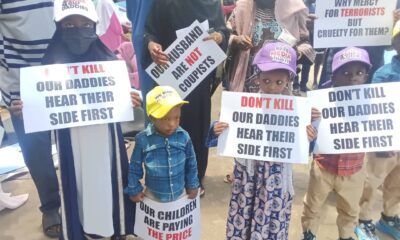
This comes as some individuals staged a protest in Kaduna, accusing PENGASSAN of attempting to sabotage the Dangote refinery.
PENGASSAN had last week shut down critical oil and gas facilities over allegations that Dangote refinery sacked 800 workers who joined the union. But the Dangote refinery said it only sacked a few workers who were sabotaging the facility, saying this was part of the company’s reorganisation.
But oil and gas workers embarked on a strike in defence of their colleagues, causing the nation losses in oil and gas production as well as a drop in power generation.
The intervention of the Federal Government restored normalcy as PENGASSAN suspended the strike on Wednesday after the Dangote Group was asked to redeploy the sacked workers to other business units.
Despite the suspension of the strike that caused queues in filling stations, the price of cooking gas has yet to return to about N900 per kg, as it still sold for N2,000 in Lagos and other places as of Monday.
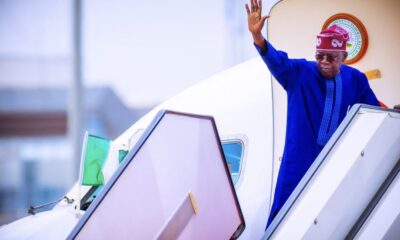
Speaking on Monday at the opening of the 2025 Nigerian Economic Summit in Abuja, Shettima described Dangote as an institution and a pillar of Nigeria’s economic development. He warned that Nigeria is greater than PENGASSAN, and no one should hold the country to ransom.
“Aliko Dangote is not an individual; he’s an institution, and he’s a leading light in Nigeria’s economic parliament,” the Vice President said.
“And how we treat this gentleman will determine how outsiders will judge us. If he had invested $10bn in Microsoft, in Amazon, or in Google, he probably might be worth $70 to $80bn by now. But he opted to invest in his country, and we owe it to future generations to jealously protect, promote, preserve, and protect the interests of this great Nigeria.
“I wish to call for caution, retrospection, and a deeper sense of patriotism from both labour and the organised private sector in defining and improving the relationship between labour and industry in the interest of maintaining our steadily improving economic fortunes. It’s not about holding the whole nation to ransom because of a minor labour dispute.
“Nigeria is greater than PENGASSAN. Nigeria is greater than each and every one of us,” Shettima emphasised.
Reacting, the National President of PENGASSAN, Festus Osifo, said the nation was bigger than Dangote and the Presidency as well.
According to Osifo, PENGASSAN had a mandate to protect the jobs of its members sacked by the Dangote refinery for joining the association. This mandate, he said, would be discharged whenever the next arises.
“Of course the nation is bigger than PENGASSAN, the way it’s bigger than Dangote and the Presidency. We have a mandate to protect the jobs of our members, that we will discharge whenever the need arises,” Osifo told The PUNCH.
Osifo, who doubles as the President of the Trade Union Congress, stressed that if the same situation that led to the sack of its workers occured again, it would deploy the same strike action to address it.
“Should this same event occur again tomorrow, our approach will be exactly the same,” he stated.
Asked for his reaction to social media comments that the Federal Government might be pushed to dissolve PENGASSAN because a strike by its members threatened energy security, Osifo responded, “Does the law prohibit workers’ right to strike?”
Similarly, the General Secretary of PENGASSAN, Lumumba Okugbawa, said, “Is Nigeria not bigger than any individual or institution?”
Also speaking, the Minister of Budget and Economic Planning, Senator Abubakar Bagudu, said the Federal Government would not relent in its support for domestic production as part of efforts to stabilise the economy and sustain growth.
“The next focus of government is sustaining the reform for achieving growth and development. Inflationary expectations are on the decline, and we shall continue to support domestic production,” he said.
Bagudu explained that reforms introduced May 2023 had helped avert fiscal collapse, ease macroeconomic pressures, and strengthen resilience.
He said the removal of fuel subsidies, deregulation of the foreign exchange market, tighter borrowing discipline and the naira-for-crude policy were bold choices that laid the foundation for stability.
The minister added that reforms were beginning to yield results, with GDP growth improving to 3.4 per cent in 2024 and further strengthening into 2025.
According to him, the government is prioritising agriculture, manufacturing and infrastructure to sustain the downward trend in inflation and ease the cost of living.
He stressed that expanding access to credit, mechanisation, storage and transportation remained critical.
Bagudu projected GDP growth of 4.6 per cent in 2025 and said the upcoming National Development Plan 2026–2030 targets a $1tn economy by 2030, anchored on sustained reforms, diversified revenue and a stronger domestic production base.
The Minister of Industry, Trade and Investment, Dr Jumoke Oduwole, further said the Federal Government was determined to ensure that trade policies were translated into practical outcomes that boosted exports, created jobs and embedded Nigeria firmly in global value chains.
“The question is not just about policy ambition but about delivery. How does Nigeria translate trade policy from impact to practice, so that within the next three years exporters can begin to feel the impact? Talk is cheap, and it is time to move from words to results,” she said.
Oduwole disclosed that the government had taken concrete steps to deepen trade integration across Africa.
She noted that Nigeria was the first country to implement the five-year review of the African Continental Free Trade Area, inaugurating a central coordination committee in the second quarter of 2025 to provide a clear roadmap for stakeholders.
“We submitted our tariff schedules and indicated interest to serve as the territorial champion under AfCFTA, and that was announced in February. We are aligning private sector dynamism with public reform to ensure Nigeria is not left behind,” she added.
According to her, the ministry has negotiated with countries including Uganda and Ecuador, identifying opportunities for Nigerian businesses in apparel, light manufacturing and cosmetics.
On structural barriers such as high trade costs, congested ports and export rejections, Oduwole said government was working on reforms to cut costs by as much as 75 per cent, streamline agencies, and strengthen standards.
“It is about taking policy from paper to practice and ensuring that our exporters and manufacturers feel the impact. That is the practical work we have been doing in the last 10 to 11 months,” she said.
In his opening address, the Chairman of the Nigerian Economic Summit Group, Olaniyi Yusuf, warned that the way the country treated its domestic investors would determine the confidence of foreign investors in committing long-term capital to Nigeria.
He cited persistent inflationary pressures, high debt service obligations and subdued investor confidence as major obstacles to inclusive growth.
According to him, Nigeria is currently in the stabilisation phase, but he cautioned that progress could be lost if reforms were not deepened.
“Stabilisation has given us breathing space, but it is not the destination. We must consolidate and accelerate reforms deliberately to avoid sliding backwards,” he said.
The NESG chairman outlined seven areas that should guide reform consolidation, including industrialisation, infrastructure, investor confidence, fiscal sustainability, inclusion, institutional strengthening and security.
He added that micro, small and medium enterprises must be supported with affordable finance, stable power and technology to drive industrial growth.
He emphasised that policies must be inclusive and felt in households through jobs, healthcare, education and social protection.
“Dead businesses don’t employ workers, they don’t pay salaries, and they don’t pay taxes,” he warned, stressing that regulators must enable, not stifle, private sector growth.
Yusuf urged policymakers to send a clear signal of credibility and trust. “Nigeria must say clearly: we will protect, not picket, investors,” he said, calling for a national framework anchored on industrialisation, infrastructure, investment, inclusion and institutions to guide the 2026–2030 National Development Plan.
Kaduna anti-PENGASSAN protest
On Monday, scores of protesters took to the streets in Kaduna to march in solidarity with the Dangote refinery, accusing those they called a well-connected oil importation cartel and elements within the labour movement of trying to frustrate the country’s nascent local refining drive.
The protest, themed ’National Unity Against Sabotage: Reclaiming Our Petroleum Sector for the People’, sought urgent government action to protect the multi-billion-dollar refinery from “systematic attacks” by the so-called elements of the oil importation cartel.
The protesters, who gathered under the aegis of Partners for National Economic Progress, converged on the Murtala Mohammed Square before winding through Alkali Road, Ali Akilu Road, Ahmadu Bello Way and Muhammadu Buhari Way, carrying placards with inscriptions such as “Protect Local Refining”, “End Fuel Import Cartel”, and “Support Dangote Refinery.”
One of the movement’s leaders, Igwe Ude-Umanta, told the crowd the Kaduna demonstration formed part of a nationwide campaign that began in Abuja on October 2.
He described the rallies as a national liberation effort aimed at saving Nigeria’s economy from forces he said were determined to keep the country dependent on imported fuel.
This struggle is against the cartel that destroyed our public refineries, killed the textile industry, and now wants to strangle the Dangote refinery. We will not let them succeed. The days of holding Nigeria hostage are over,” Ude-Umanta stated.
He went down memory lane on Kaduna’s once-thriving textile industry, saying the same pattern of sabotage that gutted that sector was being replayed in the petroleum industry.
“Kaduna used to be a textile hub before the same pattern of sabotage destroyed it. Today, they want to replicate that in our petroleum sector by frustrating local refining. We will resist them,” he said.
PANEP leaders accused PENGASSAN of complicity, describing recent union actions as tantamount to “economic terrorism”.
PANEP urged either an outright halt to fuel importation or the imposition of heavy tariffs to protect domestic refining and related industries.
“Countries that place tariffs are not stupid; they are protecting their economies,” Ude-Umanta said, adding that importers were frightened by the prospect of local refining exposing price manipulation and corrupt practices.
Dahiru Maishanu, who also addressed the rally, said the union’s conduct had gone beyond legitimate labour protest and was instead assisting the importers’ agenda.
“What PENGASSAN did was not unionism; it was sabotage. The Federal Government should have arrested their leadership to serve as a deterrent. We cannot allow people to hide under labour unions to commit crimes against our economy,” Maishanu said.
The protesters demanded urgent intervention of President Bola Tinubu to ensure that local refineries like Dangote are supplied with crude oil on terms equal to those offered to foreign refiners.
“President Tinubu must stamp his feet. Local refineries must receive crude at the same price offered to foreign refiners. That is key to sustaining the refinery and boosting investor confidence,” they said.
They accused the union of blocking the sale of locally produced liquefied petroleum gas and aviation turbine kerosene, insisting those actions were intended to keep prices artificially high and preserve monopoly profits.
“They are punishing Nigerians to protect their greed. How can importers compete with producers? They are scared because local refining will expose their fraud and end their control over pricing,” Maishanu said.
The demonstrators praised the Dangote refinery for what they called its early impact on prices of Premium Motor Spirit and diesel, saying ordinary Nigerians were already “breathing fresh air” because of local refining.
They warned that if the refinery were undermined, the consequences would be severe for investor confidence and the wider economy.
“This movement is about economic salvation. If we allow them to kill the Dangote refinery, no investor will ever risk bringing money into this country again. We must protect this refinery as our own,” Maishanu said.
They called on the Federal Government to “crush every enemy of Nigeria’s economic progress,” urging swift policy and enforcement actions that would protect local refining capacity and punish those found to be undermining it.
In reaction, the PENGASSAN president Osifo said the protesters are “ignorant people” while Okugbawa added that “it’s their constitutional right to protest.”
PENGASSAN dissolves NGIC
The national body of PENGASSAN has reportedly dissolved its Nigerian Gas Infrastructure Company and Nigerian Gas Marketing Limited chapter for failing to shut off gas supply to the Dangote refinery during the crisis last week.
But the unit appealed the dissolution, faulting the union’s national secretariat over what it described as an unjust sanction tied to the failed attempt to shut down gas supply to the Dangote refinery.
In a formal petition to the national leadership of PENGASSAN obtained on Monday, the NGIC/NGML Congress said it received the dissolution directive “with shock and dampened spirit”, arguing that the affected executives made concerted efforts to execute the national strike order but were hindered by operational hazards and the heavy presence of security personnel at key gas facilities.
Giving a response to the dissolution, members of the union, in a petition signed by 163 members, called for the reinstatement of the officials.
The letter read in part, “We, the members of congress of NGIC/NGML PENGASSAN Branch, write to formally appeal the decision of the National PENGASSAN Secretariat to dissolve our branch leadership over perceived acts of sabotage relating to their inability to successfully execute the shutdown mandate of gas supply to Dangote refinery.
“We received the decision with shock and dampened spirit, given the effort the leadership and mobilised members of the branch put in to ensure the mandate was successfully carried out, despite several intimidation and assaults they faced all through the struggle, with emphasis on escalations at Oben Metering Station, where lives were at risk.”
“Our leaders did more than enough to carry out the directive of the nation despite their lives being at risk. The allegations of collusion and acceptance of monetary gifts from management are without evidence and false,” the congress stated.
The NGIC workers maintained that their inability to completely enforce the shutdown stemmed from technical and safety constraints, including continuous gas injection from producers into the Escravos–Lagos Pipeline System and malfunctioning emergency shutdown valves at the Warri Gas Treatment Plant.
“NGIC assets and facilities are complex. The Warri Gas Treatment Plant, for instance, has critical safety concerns, including a faulty emergency shutdown valve that could endanger workers and surrounding communities if mishandled,” the letter explained.
The members also debunked reports suggesting a total shutdown of gas supply to the Dangote refinery.
According to the executives, at no time did they claim that the refinery had been completely shut down.
They clarified that only some valves along the line and the inlet from the OB3 pipeline through Oben were closed temporarily in an attempt to reduce pressure.
The officials added that the action was intended to cause a pressure drop that could affect supply to the refinery, but the move did not yield the expected result.
They further noted that the information relayed to the national president, suggesting that gas supply to Dangote had been cut off, was premature and based on a misunderstanding of the situation.
“It is also important to state that, at no point did the branch executives tell anyone that Dangote has been shut down 100 per cent; they only said they have shut down some valves along the line and the inlet from OB3 to the line through Oben, and they hope the pressure will drop after a few hours and Dangote will come down, all of which didn’t work out as they had expected. We note that whoever informed the national president that gas supply to the Dangote refinery was cut off had done so in haste to give good news and was impatient to wait for the outcome of the actions our comrades from NGIC took,” it added.
The congress urged PENGASSAN’s national secretariat, led by its president, to review its decision and clear the dissolved executives of the allegations of sabotage and bribery.
It also called for a fair hearing, stressing that punishing loyal members who risked their lives during the industrial action could demoralise others and weaken solidarity in future union struggles.
“We, the members of the congress, kindly note that our branch leadership did more than enough to carry out the directive of the National despite their lives being at risk. They even went ahead to do what management have labelled as “never been heard of in the history of NGIC/NGML, i.e., the shutdown of facilities and damage of assets (please note that NGIC/NGML PENGASSAN have never shut down any customer due to strike action prior to now).
“That they recorded some successes which were limited by the continuous injection of gas from producers to the ELPS and the heavy presence of military personnel, which usually outnumbered them,” the letter added.
Meanwhile, the engineers reportedly sacked by the Dangote refinery for joining PENGASSAN are still awaiting their redeployment letters.
Dangote thanks Tinubu
Dangote Petroleum Refinery commended Tinubu for his timely intervention in averting what it described as “the disruptive actions” of PENGASSAN against the company.
In a statement, the company said the President’s leadership, through his ministers and senior government officials, ensured the restoration of order and stability to the energy sector at a critical moment.
“Dangote Refinery is grateful to the President of the Federal Republic of Nigeria, Bola Tinubu, for his intervention, through his ministers and senior officials, which resulted in the abatement of the disruptive actions of PENGASSAN against the refinery,” the statement read.
According to the company, among the key government officials who worked “tirelessly” to restore normalcy were Nigeria’s security chiefs, led by the National Security Adviser, Nuhu Ribadu; the Director General of the Department of State Services, Mr Adeola Ajayi; and the Director General of the National Intelligence Agency, Mr Mohammed Mohammed.
The refinery also commended “other senior government officials who worked untiringly and determinedly into the wee hours of several nights to avert the declared disruption of Nigeria’s energy sector by anarchists and agents of darkness.”
These, it noted, included the Minister of Labour and Employment, Dr Mohammed Dingyadi; the Minister of Finance and Coordinating Minister of the Economy, Mr Wale Edun; the Minister of Budget and Economic Planning, Senator Abubakar Bagudu; and the Minister of State for Labour and Employment, Hon. Nkeiruka Onyejeocha, saying, “We remain very grateful to these officials for their patriotism and national service.”
punch.ng
FOLLOW US ON:
FACEBOOK
TWITTER
PINTEREST
TIKTOK
YOUTUBE
LINKEDIN
TUMBLR
INSTAGRAM