Connect with us

Education

Safe Schools project stalls in 30 states as abductions rise

Published

on

Despite recurring attacks on schools across the country, 30 states have yet to implement the Federal Government’s Safe Schools Initiative.

The Safe Schools Initiative was launched in May 2014 after the Chibok abduction, with an initial $10m pledge and later a multi-donor trust fund coordinated with the United Nations to protect education from attacks.

Since then, Nigeria has signed the Safe Schools Declaration (2015), ratified it (2019) and hosted the 4th Global SSD Conference in Abuja, while also adopting a National Policy on Safety, Security and Violence-Free Schools in 2021.

The programme is backed by a N144.8bn financing plan (2023–2026) that relies on federal, state and donor contributions, but reports show that only a fraction of the funds has been released, and state co-funding remains inconsistent.

The failure of the authorities to implement the initiative has further exposed schools to attacks, discouraging many children from enrolling and increasing the number of out-of-school children, particularly in the North.

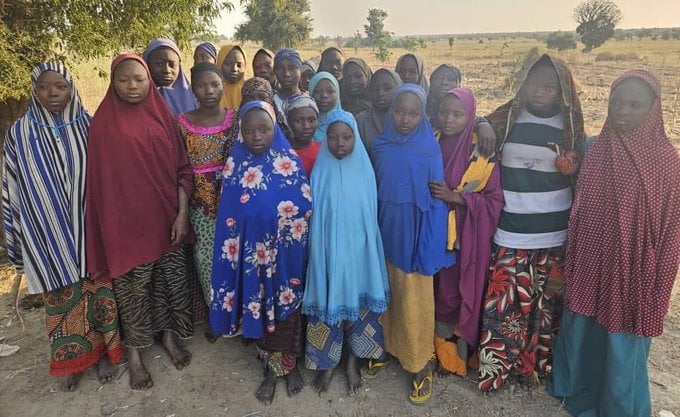
Early on November 17, 2025, armed men attacked the Government Girls Comprehensive Secondary School in Maga, Kebbi State, abducting 24 schoolgirls. The school’s vice-principal was killed during the attack. The students were freed on Tuesday.

Days later, on November 21, gunmen invaded St. Mary’s Catholic School in the Papiri community, Agwara Local Government Area of Niger State, abducting hundreds of pupils and staff.

Church and local officials later confirmed that 303 students and 12 teachers were taken in one of the worst mass kidnappings in recent memory.

The attack occurred despite prior intelligence warnings and government directives. Authorities had ordered the closure of boarding schools in the area because of security threats, but the school reportedly reopened.

Several northern state governments have also shut down schools as kidnappings persist.

Officials familiar with the initiative told our correspondent that several states have failed to fund the Safe Schools Initiative or equip offices for its take-off.

Speaking on condition of anonymity because he was not authorised to release confidential data on the initiative, an insider disclosed that the states include Abia, Adamawa, Akwa Ibom, Anambra, Bauchi, Bayelsa, Borno, Cross River, Delta, Ebonyi, Edo, Ekiti, Gombe, Imo, Kaduna, Kano, Kebbi, Kogi, Kwara, Lagos, Niger, Ogun, Ondo, Osun, Oyo, Plateau, Sokoto, Taraba, Yobe and Zamfara.

Findings also revealed that while the Federal Capital Territory, Benue, Nasarawa, Katsina, Rivers and Enugu have donated coordination centres for the programme, the facilities remain unfurnished.

Electronic gadgets and other essential equipment required to establish control and command centres for monitoring schools under their watch have not been provided, limiting effective surveillance and oversight.

Our correspondent also gathered that Jigawa State has donated and equipped a coordination centre, but it has yet to be activated.

The PUNCH reported last week that 11,550 schools have been registered on the National Safe Schools Response and Coordination Centre’s central monitoring platform.

The Commander of the centre, Assistant Commandant General Emmanuel Ocheja, confirmed the development and underscored the need for sustained funding to ensure the project’s success.

Ocheja said, “Ongoing technological upgrades, including surveillance drones and advanced command systems, are progressing but require additional financial support.”

He also emphasised the importance of establishing “a more sophisticated Command and Control Centre and additional regional monitoring hubs.”

The commander urged state governments to play a more active role in safeguarding schools, stressing the need for “stronger early-warning systems capable of detecting potential threats before they reach school environments.”

Last week, the Federal Government appealed to state governors to adopt and domesticate the Safe School Transition Plan.

See also  ATBU alumni oppose Reps’ move to reclassify institution as conventional varsity

The National Coordinator of Financing Safe Schools in Nigeria, Hajia Halima Iliya, reaffirmed the government’s commitment to the initiative, noting that the administration had shown “the political will to implement policies aimed at securing schools.” She also announced the approval of the 2026–2030 Transition Plan for Safer Schools.

NAPTAN, NANS, CSOs lament attacks

The National Parents Teachers Association of Nigeria, the National Association of Nigerian Students and Civil Society Organisations decried the non-implementation of the Safe Schools Initiative in 30 states amid widespread kidnappings of students.

Speaking with our correspondent, the National President of NAPTAN, Danjuma Haruna, who lamented the abductions, called on states to key into the initiative without delay.

“We saw what happened in the past weeks and we are not happy about it. We are, however, relieved to hear news of the release of the abducted students from the school in Kebbi, and we are assured that sooner or later the ones abducted in Niger State will be released.

“It is sad that we have that number of states that have not keyed into the Safe School Initiative. We are using this opportunity to call on state governments to please key into this opportunity to ensure that our schools remain safe.”

The Assistant General Secretary of NANS, Olatunji Adejuwon, said, “The rising wave of school abductions across the country has once again exposed the painful reality that the Safe School Initiative, one of Nigeria’s most crucial security frameworks for the protection of students, has been abandoned.

“This neglect has created dangerous gaps that continue to put the lives of our children, teachers and educational institutions at risk.

“The Safe School Initiative was developed to provide coordinated security strategies, early-warning systems, community-based surveillance and rapid-response mechanisms for school environments. Its non-implementation raises a serious concern: Why was a policy designed to safeguard the nation’s future allowed to fade away at a time when insecurity is escalating?

“Now more than ever, the reactivation and full enforcement of the Safe School Initiative is not just important but urgent.”

He noted that Nigeria needs strong, transparent and sustainable policies that prioritise student safety above all else, stressing the need for leaders to rise above bias, excuses and corruption.

“Protecting our children is not political; it is a moral responsibility. Students are the leaders of tomorrow, and their safety should never be compromised or negotiated.

“Reinstating the Safe School Initiative will not only restore confidence in our educational system but will reaffirm the government’s commitment to securing the future of this nation.”

The Programme Director of Reform Education Nigeria, Ayodamola Oluwatoyin, frowned on the failure of states to key into the programme almost 10 years after its conception.

“It is highly unfortunate that more than 10 years after the conception of the Safe School Initiative, 30 states are yet to key into the policy. Remember that we have 36 states in the country; this means that only six states have keyed into the policy. This is not good enough.

“These days we are seeing a resurgence in school abductions. It is time for state governors to take urgent action. It is time for state governors to awake and take responsibility for school safety.”

National Moderator of the Civil Society Action Coalition on Education For All, Peculiar Caleb, urged the government to deploy trained personnel to vulnerable schools and strengthen coordination among the military, police, NSCDC and local actors to safeguard children.

She expressed concern over Nigeria’s rising insecurity, especially the escalating attacks on schools, despite the country’s commitments under the SSI and SSD.

See also  Act now to avert strike, ASUU warns education minister, presidency

“Nigeria is becoming increasingly unsafe for children to learn. Despite signing the Safe Schools Initiative (2014) and endorsing the Safe Schools Declaration (2015), with accompanying operational guidelines, training manuals and policies, our schools remain vulnerable to violent attacks.

“From the abduction of the Chibok girls (2014) to Dapchi (2018), Kagara (2021), Jangebe (2021), Federal Government College Yauri (2021), Kuriga (2024), and now the 2025 mass abductions in Niger and Kebbi States, Nigeria continues to witness shocking violations of the right to education,” she said.

She also urged the government to reopen and secure the 589 closed schools across northern Nigeria and all 41 federal unity schools.

“We call on the government and stakeholders to act now. Nigeria cannot build a secure, prosperous and inclusive future when millions of children remain out of school and hundreds remain in captivity, when schools are unsafe and when funding for education remains insufficient.”

Kogi gov confirms bandits’ relocation

Governor Usman Ododo of Kogi State has raised the alarm that bandits’ commanders have relocated to Kogi State in a move to intensify attacks, but the government and security agencies will take the fight to their hideouts.

The governor said this during an interactive session with newsmen shortly after an emergency stakeholders’ meeting with security agencies and traditional rulers at the Government House, Lokoja, on Thursday.

However, he said the situation was not peculiar to Kogi, as other parts of the country were also passing through a trying period.

He noted that certain measures had been taken in the interest of residents, regardless of religious or political affiliation.

“Before now, you will hear of shooting in schools and residents across the world; we have to put heads together to save our people. We have come to brainstorm and see a way out and provide our people with the needed security.

“The major commanders of the bandits have relocated to Kogi State in the last three days, but we will not wait for them to fight us; we will take the fight to them.

“We are not going to bow to the criminals, we are not going to negotiate with them, we are not going to pay ransom. We are going to sensitise our people to be security-conscious of their activities.”

The governor added that the State Security Council had resolved that, from now on, all public activities—whether religious or social—should end by 4pm until further notice. He warned that any event centre that violates the directive would be demolished.

Deputy Commissioner of Police, Ayo Edun, called for calm, saying most of the circulating reports fuelling panic were social media rumours.

He urged residents to verify information before sharing it and to report suspicious activity through circulated security hotlines.

The Ohinoyi of Ebiraland, His Royal Highness, Tijani Anaje, speaking on behalf of traditional rulers, pledged full cooperation with the government and security agencies.

He expressed concern over wrong and misleading information spreading online, noting that some videos and messages circulating on social media were false.

He called for strategic collaboration among all community leaders to ensure peace across the state.

Meanwhile, the State Government has assured the public—especially students, parents and residents of Lokoja—that there is no bandit attack or kidnapping threat at the Kogi State Polytechnic, Lokoja, or at any other school within and around the Lokoja metropolis.

Rumours of a bandit attack in Lokoja spread widely around 11.30am on Thursday, leading to disruptions of socio-economic activities for hours, particularly in the Zango, Crusher and Felele areas of the capital city.

See also  Troops pound terror bases in key states due to Trump's threats

But in a statement, the Commissioner for Information and Communications, Kingsley Fanwo, said, “The satanic panic being circulated by mischief makers is baseless and should be completely dismissed. We urge our people to go about their lawful businesses without fear.

“The government is working round-the-clock with all security agencies to guarantee the safety and security of every Kogite, wherever they live or stay.”

FCT launches manhunt for abducted teens

In a related development, the FCT Police Command has launched a manhunt for a 16-year-old boy and six young girls abducted from their homes in Gidan Bajimi, a village in Kawu ward of the Bwari Area Council of the Federal Capital Territory.

Residents who spoke to our correspondent said police officers combed the nearby bushes and forests in search of the kidnapped victims.

“The police were here in the morning, and they went around the bushes and the forests, trying to see if they can still trace where the kidnappers went. They did not find anything, but they promised to keep looking,” a community member, who identified himself simply as Salisu, said.

On Wednesday, the FCT Police Commissioner, Miller Dantawaye, announced the re-launch of Operation Sweep—a joint operation of security agencies in the FCT—following an expanded Security Council meeting presided over by the FCT Minister, Nyesom Wike.

Briefing journalists, Dantawaye said the agencies would deploy personnel to schools and religious centres to ensure residents’ safety.

However, reports of the kidnap emerged on Thursday morning, with a member of the community, Suleiman Shuaibu, confirming the latest incident to Daily Trust.

“It was around 9:53pm when a call came from Gidan-Bijimi community that some bandits invaded the village and abducted six young girls. Unfortunately, my cousin happened to be among the victims,” he said.

He added that vigilantes put up a fight against the bandits but were forced to retreat due to the superior firepower of the attackers. The abducted girls were aged between 17 and 23 years.

Shuaibu further said that some residents fled their homes after the incident, noting that the abductors had yet to contact the community.

As of the time of filing this report, the FCT Police Command had not issued an official statement. Likewise, the Police Public Relations Officer for the FCT, Josephine Adeh, did not respond to calls and messages.

10 feared kidnapped in Niger

Gunmen have reportedly abducted 10 people from Angwan-Kawo and Kuchipa villages in Shiroro Local Government Area of Niger State.

The Niger State Police Command Public Relations Officer, Wasiu Abiodun, told Channels TV on Thursday that the incident occurred on Wednesday evening.

“On November 26, 2025, at about 8pm, a report was received indicating that suspected armed men abducted about ten persons from Angwan-Kawo and Kuchipa villages of Shiroro Local Government Area. Effort is being made to rescue the victims,” Abiodun said.

Earlier that same day, another attack was reported in Kakuru community, also in Erena Ward, where a blind man was reportedly brutalised and had his right hand severed by bandits after they seized a mobile phone from him.

The victim is currently receiving first aid at a patent medicine shop in the Kuduru community.

Residents of the Palaita community, Erena Ward, also reported that bandits attacked a rice farm in their area, allegedly abducting up to 24 people, including pregnant women. The PUNCH could not immediately confirm the incident.


Continue Reading
Click to comment

Leave a Reply

Your email address will not be published. Required fields are marked *

Education

Japan tightens student visa rules with high documentation demands

Published

on

International students seeking to study in Japan must now navigate a structured and documentation-heavy visa process, reflecting strict immigration requirements outlined in official government guidance.

As reported by the Economic Times on Wednesday, the “Study in Japan” portal operated by the Japan Student Services Organization states that applicants are required to complete multiple stages before entering the country. These include securing admission from a recognised institution, obtaining a Certificate of Eligibility (COE), applying for a student visa, and completing residence registration after arrival.

Certificate of Eligibility is a key requirement.

A central part of the process is the Certificate of Eligibility (COE).

According to official guidance, the COE must be applied for through a regional immigration services bureau in Japan. In most cases, the accepting educational institution acts as the applicant’s representative.

The COE serves as official proof that the student meets Japan’s immigration requirements for long-term study. Without it, applicants may face significant difficulties in obtaining a student visa.

Students are also advised to coordinate directly with their university or language school regarding documentation requirements and processing timelines.

Financial proof is required

Japan also requires international students to demonstrate that they can financially support themselves during their stay.

This typically includes submitting bank balance certificates, income records, or documents showing the source of funds. These may belong either to the student or to a financial sponsor.

The requirement is intended to ensure students can cover tuition fees, accommodation, and living expenses throughout their studies.

Student visa application process

Once the COE is issued, students can apply for a visa at a Japanese embassy or consulate in their home country or region of residence.

Standard requirements include:

See also  PHOTOS: School collapse in Indonesia leaves three de@d, 38 missing

Passport
Completed visa application form
Passport-sized photographs
Certificate of Eligibility (copy accepted)
Additional documents, if requested

Applicants are also expected to carry these documents when entering Japan for immigration checks.

Arrival and residence procedures

Students staying in Japan for more than three months are issued a residence card, known as a zairyu card, upon arrival at major airports such as Narita, Haneda, Kansai, and Fukuoka.

After arrival, students must register their residential address at a local municipal office within 14 days. The residence card must be carried at all times while living in the country.

“My Number” system for residents

Foreign residents are also assigned a 12-digit identification number known as “My Number.” It is issued after residence registration and is used for taxation, banking, employment, and other administrative services.

Students may also apply for a My Number card, which serves as an official identification document in Japan.

Short-term entry rules for exams

Students travelling to Japan solely for entrance examinations must apply for a Temporary Visitor visa using an official exam voucher issued by the institution where they plan to sit the test.

Depending on nationality, short stays may last 15, 30, or 90 days. In some cases, students must return to their home country after passing exams to apply for a formal student visa before beginning studies.

Overall, the system reflects Japan’s structured approach to managing international student entry, with a strong emphasis on documentation, financial verification, and post-arrival compliance.

punch.ng

FOLLOW US ON:

FACEBOOK

TWITTER

PINTEREST

TIKTOK

YOUTUBE

LINKEDIN

INSTAGRAM

Continue Reading

Education

ASUU warns of fresh strike over 2025 agreement delay, others

Published

on

The Academic Staff Union of Universities (ASUU) has warned that the public university system could face another wave of industrial unrest if the Federal Government and state governments fail to fully implement the December 2025 agreement reached with the union.

Speaking at the end of its National Executive Council meeting held at Modibbo Adama University, Yola, on May 9 and 10, 2026, ASUU expressed dissatisfaction with what it described as the “distorted and uncoordinated” implementation of the agreement signed with the Federal Government.

According to a statement issued by ASUU President, Chris Piwuna, on Monday, the union said it had maintained “a studied silence” since the signing and public presentation of the agreement in January 2026.

“This interactive session was called to present the outcome of our review of the implementation of the signed agreement and other outstanding issues following the NEC meeting held at Modibbo Adama University, 9th–10th May, 2026,” the statement read.

The union said it decided to speak after reviewing the implementation process and other unresolved issues affecting university lecturers.

“The momentum generated with the unveiling of the 2025 FGN-ASUU Agreement on 14th January, 2026 is fast waning and may soon be lost if government’s promise to fully implement the agreement is not kept,” it stated.

Recall that in March 2026, the Minister of Education, Tunji Alausa at a Lagos event declared the era of strikes in Nigerian tertiary institutions permanently over, assuring parents, students, and the general public that universities and polytechnics will remain open for all academic sessions.

See also  FRIN, NOAN partner on youth empowerment through agriculture

Meanwhile, ASUU blamed the situation on the failure to inaugurate the Implementation Monitoring Committee, which it said was meant to ensure proper execution of the agreement.

According to the union, federal and state authorities have implemented the agreement in a “distorted and uncoordinated manner”, while only a few state governments have complied.

The union also accused administrators of federal universities of selectively implementing components such as Consolidated Academic Allowances, Earned Academic Allowances, and Professorial Allowances, which it said should have been integrated into the Consolidated Academic Salary Structure.

ASUU further criticised some state governments for allegedly ignoring the agreement despite participating in the negotiation process.

It reaffirmed its commitment to ensuring members benefit from what it described as the gains of the eight-year negotiation (2017–2025).

ASUU also faulted the Federal Government’s proposed National Research Council and the Minister of Education’s announcement of a National Research and Innovation Development Fund.

It said the proposal did not align with the provisions of the 2025 agreement, which recommends “at least 1 per cent of GDP” as funding for research, innovation and development.

The union questioned the proposed $500 million funding structure and its source, expressing concern over possible external borrowing.

On welfare matters, ASUU said several issues remained unresolved, including salary arrears, promotion arrears, unremitted deductions, salary shortfalls under the Integrated Personnel and Payroll Information System, and withheld salaries from the 2022 strike.

It also criticised delays in pension payments for retired lecturers, particularly in state universities, and accused the National Pension Commission of delaying benefit harmonisation.

See also  See Wike's response to 2027 presidential ambition rumour

The union called on President Bola Ahmed Tinubu, as Visitor to federal universities, to intervene and address the outstanding welfare concerns.

ASUU also opposed the reversal of the mother-tongue policy in early childhood education, describing it as retrogressive.

It rejected the proposed establishment of a Coventry University campus in Nigeria under a transnational education arrangement, describing it as a move that could undermine local tertiary institutions.

The union also faulted compulsory enrolment of academics into the Nigeria Education Repository Databank, describing it as a violation of academic autonomy and data protection laws.

ASUU further criticised plans to scrap some university courses considered “irrelevant”, arguing that humanities and social sciences remain essential for developing critical thinking and innovation.

The union also raised concerns over governance in universities, alleging cases of maladministration and questionable academic appointments.

It warned against what it described as increasing political tension, insecurity, and economic hardship in the country ahead of the 2027 general elections.

ASUU cautioned that continued neglect of lecturers’ welfare could trigger a fresh industrial action, noting that frustration among members was rising.

It urged Nigerians to prevail on governments at all levels to fully implement the agreement and resolve outstanding issues, adding that NEC would reconvene in the coming weeks to review developments and take further action if necessary.

punch.ng

FOLLOW US ON:

FACEBOOK

TWITTER

PINTEREST

TIKTOK

YOUTUBE

LINKEDIN

INSTAGRAM

Continue Reading

Education

FG declares admissions outside CAPS illegal, warns institutions of sanctions

Published

on

The Federal Government has declared that any admission conducted outside the Central Admissions Processing System (CAPS) is illegal, warning tertiary institutions across the country that violations of approved admission procedures will attract sanctions.

The Minister of Education, Maruf Alausa, issued the warning on Monday at the 2026 Policy Meeting on Admissions to Tertiary Institutions held in Abuja, stressing that institutions operating parallel admission processes would no longer be recognised by the government.

He said the integrity of the admissions system remained central to restoring trust in Nigeria’s tertiary education framework, adding that the era of unregulated practices must end.

“Let me reiterate, without equivocation, that admissions conducted outside this framework are illegal and will not be recognised,” Alausa said.

He warned that institutions that continued to bypass the Joint Admissions and Matriculation Board’s CAPS platform risked severe consequences.

“The era in which institutions operated parallel admission systems, often to the detriment of deserving candidates, must come to an end,” he added.

The minister further cautioned that the Federal Government would not tolerate any breach of admission regulations, noting that erring institutions would be held accountable.

“I have resisted many attempts at condoning illegality in the admissions process. I will not be a party to such actions.

“Any institution found to have conducted admissions outside the CAPS will be held accountable, and appropriate sanctions shall be applied without hesitation,” he stated.

According to him, heads of institutions in both public and private sectors must be aware that such breaches could attract serious penalties, including regulatory action.

See also  On food price crash, farmers fault FG’s order as agro-imports hit N2.2tn

“Heads of institutions, whether in the public or private sector, must recognise that such violations could result in severe consequences, including the suspension of operating licences or other regulatory actions, where applicable,” Alausa warned.

He emphasised that enforcement of the policy was not intended to be punitive but necessary to restore credibility and order in the system.

“Government will continue to enforce compliance with this policy, and appropriate sanctions will be applied where necessary. This is not a punitive measure; it is a necessary step towards restoring order and credibility in the system,” he said.

On admission age, the minister announced that the Federal Government had retained 16 years as the minimum age for entry into tertiary institutions.

“Following extensive consultations and policy reviews, the government has maintained sixteen (16) years as the minimum age for admission into tertiary institutions,” he said.

He explained that the decision reflected a balance between academic readiness and inclusivity, while noting that exceptional cases would be handled under strict guidelines.

“While we recognise the existence of exceptionally gifted individuals, such cases must be treated within clearly defined and rigorously enforced guidelines,” he added.

Alausa also commended JAMB for improving access for persons with disabilities, including waivers of application fees, describing the initiative as a step toward equity.

“This initiative is not only humane but also a powerful affirmation of our national commitment to equity and equal opportunity,” he said.

He further highlighted reforms in the education sector, including the implementation of the Nigerian Education Loan Fund to remove financial barriers to higher education.

See also  Ibas rejects Assembly’s move to probe six-month spending

“For decades, financial constraints have constituted a significant barrier for many capable young Nigerians,” he noted.

He said the interest-free loan scheme covering tuition and upkeep was a strategic investment in national development.

On transparency, he insisted that tertiary institutions must publish key operational data, including enrolment figures and financial allocations, to strengthen accountability.

Public universities, polytechnics, and colleges of education must operate with openness that reflects their public mandate,” he said.

Alausa also underscored the government’s push for digitalisation in education, including the adoption of computer-based testing and integration of emerging technologies in curricula.

He described the 2025 agreement with the Academic Staff Union of Universities (ASUU) as a turning point, aimed at improving welfare, funding, and institutional stability.

“The 2025 Agreement represents a decisive breakthrough in resolving a dispute that had persisted for many years,” he said.

He added that the reforms were designed to ensure uninterrupted academic calendars and restore confidence in public universities.

The minister also warned against examination malpractice, saying stricter verification systems were being introduced to protect the credibility of certificates.

“The credibility of our certificates depends on the integrity of the processes through which they are earned,” he said.

Alausa urged stakeholders to prioritise implementation over policy announcements, stressing that reforms would only succeed through execution.

“For too long, our sector has been characterised by well-articulated policies that fail to translate into tangible outcomes,” he said.

He called on participants at the policy meeting to uphold integrity, noting that the future of millions of Nigerian students depended on fair and efficient admissions processes.

See also  FRIN, NOAN partner on youth empowerment through agriculture

“The decisions we take here will have far-reaching implications for millions of young Nigerians,” he said.

The minister reiterated the government’s commitment to building a tertiary education system that is inclusive, merit-driven, and globally competitive, before formally declaring the meeting open.

punch.ng

FOLLOW US ON:

FACEBOOK

TWITTER

PINTEREST

TIKTOK

YOUTUBE

LINKEDIN

INSTAGRAM

Continue Reading

Trending