The Presidency has disputed the latest economic report by Nigeria’s biggest multilateral lender, the World Bank, which estimated that 139 million citizens were living in poverty, describing the figure as “unrealistic” and detached from the country’s economic realities.
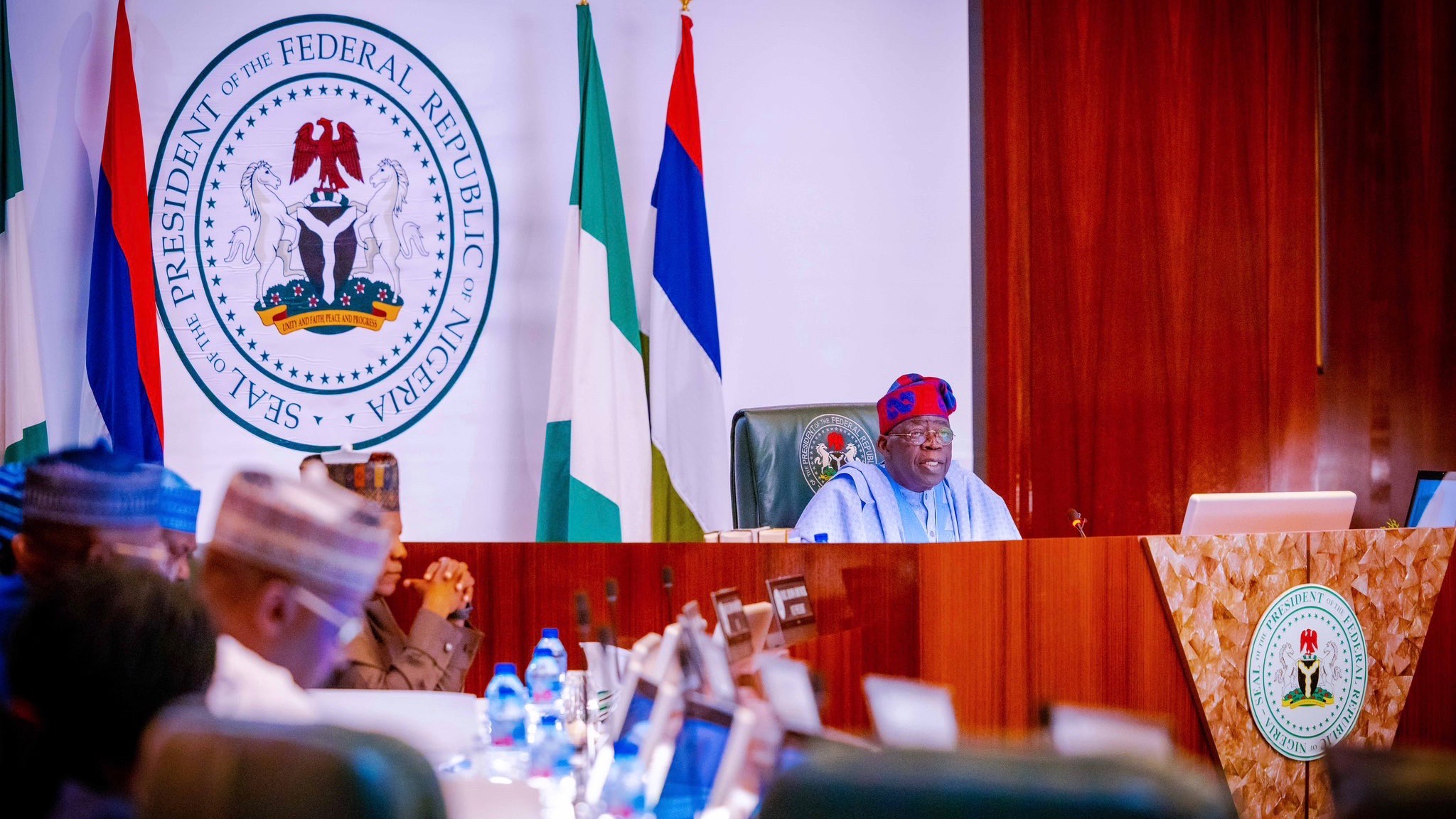
President Bola Tinubu’s Special Adviser on Media and Public Communication, Sunday Dare, said in a post on his official X handle on Wednesday that the poverty figures must be “properly contextualised” within the limits of global poverty measurement models.
“While Nigeria values its partnership with the World Bank and appreciates its contributions to policy analysis, the figure quoted must be properly contextualised. It is unrealistic,” Dare said.
The Presidency explained that the 139 million figure was derived from the global poverty line of $2.15 per person per day, set in 2017 using Purchasing Power Parity, and should not be mistaken for an actual headcount of poor Nigerians.
It noted that when converted to nominal terms, the $2.15 benchmark equals about N100,000 per month at current exchange rates, which is well above Nigeria’s new minimum wage of N70,000.
“There must be caution against interpreting the World Bank’s numbers as a literal, real-time headcount. The estimate is derived from the global poverty line of $2.15 per person per day, a benchmark set in 2017 Purchasing Power Parity terms. If converted nominally, that figure equals about $64.5 per month, or nearly N100,000 at today’s exchange rate, well above Nigeria’s new minimum wage of N70,000. Clearly, the measure is an analytical construct, not a direct reflection of local income realities.
“Poverty assessment under PPP methodology uses historical consumption data (Nigeria’s last major survey was in 2018/19) and often overlooks the informal and subsistence economies that sustain millions of households. The government, therefore, regards the figure as a modelled global estimate, not an empirical representation of conditions in 2025. What truly matters is the trajectory, and Nigeria’s is now one of recovery and inclusive reform,” the statement added.
According to the former minister, poverty estimates under the PPP methodology rely on historical consumption data, often overlooking the vast informal and subsistence economies that sustain millions of Nigerian households. The government, therefore, considers the World Bank’s estimate as “a modelled global projection, not an empirical representation of living conditions in 2025.”
He stressed that what truly matters is not the static figure but the direction of change. It said Nigeria’s economy is now on a recovery and reform trajectory, driven by policies designed to ensure inclusive growth and social protection.
It noted that the current administration had expanded a number of welfare and intervention programmes aimed at cushioning the impact of recent reforms, while laying the groundwork for long-term prosperity.
Among the key initiatives Dare highlighted are, “Conditional Cash Transfers: Expanded to reach up to 15 million households nationwide, with verified digital enrolment through the National Social Register. Over N297 billion has been disbursed since 2023 to poor and vulnerable families. Renewed Hope Ward Development Programme: A major new initiative targeting all 8,809 electoral wards, delivering micro-infrastructure, livelihoods, and social services directly at the community level.
“National Social Investment Programmes: Strengthened components such as N-Power, GEEP micro-loans (TraderMoni, MarketMoni, FarmerMoni), and Home-Grown School Feeding to protect jobs, encourage small enterprise, and keep children in school. Food Security Initiatives: Distribution of subsidised grains and fertilisers, mechanisation partnerships, and the revival of strategic food reserves to curb inflationary pressure on staples.
“Renewed Hope Infrastructure Fund: Financing critical energy, road, and housing projects to lower living costs and stimulate local employment, National Credit Guarantee Company: Expanding affordable credit to small businesses, women, and youth entrepreneurs through risk-sharing mechanisms with commercial banks.”
The Presidency maintained that the Tinubu administration was tackling Nigeria’s poverty challenge by addressing the structural distortions that have constrained productivity and inclusive growth for decades.
It cited ongoing reforms such as fuel subsidy removal, exchange rate unification, and the fiscal reallocation of funds toward productive sectors, describing them as “painful but necessary choices” to fix the root causes of poverty rather than its symptoms.
“Even the World Bank itself has acknowledged that these reforms are already restoring macroeconomic stability and growth momentum,” the statement added, referencing recent remarks by World Bank officials acknowledging signs of economic recovery under the Tinubu administration.
The government emphasised that economic recovery alone is not enough unless it translates into real welfare gains for ordinary Nigerians.
According to the statement, the administration’s medium-term priority is to ensure that macroeconomic stability leads to affordable food, quality jobs, and reliable infrastructure.
Investments are being ramped up in agriculture, manufacturing, and power reliability, including new gas-to-power projects and skill development hubs expected to boost job creation and reduce living costs.
“Nigerians should begin to feel more visible improvements in food prices, income, and purchasing power as these programmes mature,” the statement said.
The Presidency added that the administration is consolidating its social protection architecture by integrating all welfare programmes under a unified, data-driven framework to enhance transparency and accountability.
This integration includes expanding the National Social Register and scaling up existing NSIP schemes, ensuring that “no vulnerable community is left behind.”
The Presidency concluded by reaffirming President Tinubu’s commitment to building “a resilient and inclusive economy” where growth directly improves living standards.
“Nigeria rejects exaggerated statistical interpretations detached from local realities. The government remains focused on empowering households, expanding opportunity, and laying the foundation for a fairer, more prosperous nation,” the statement concluded.
Earlier on Wednesday, the global lender expressed concern that despite Nigeria’s recent economic stabilisation efforts, about 139 million Nigerians are now living in poverty, warning that the country risks losing hard-won reform gains if policies are not translated into tangible improvements in citizens’ welfare.
The World Bank Country Director for Nigeria, Mathew Verghis, disclosed this at the launch of the October 2025 Nigeria Development Update titled, “From Policy to People: Bringing the Reform Gains Home.”
Verghis, in his address, commended Nigeria’s bold reforms in the exchange rate and petroleum subsidy regimes, describing them as “foundational” steps that could reshape the country’s long-term economic trajectory
“Over the last two years, Nigeria has commendably implemented bold reforms, notably around the exchange rate and the petrol subsidy. These are the foundations on which the country has the opportunity to build a programme that can transform its economic trajectory,” he said.
He likened the current reform window to the historic policy shifts seen in countries like India in the early 1990s, noting that such rare opportunities must be seized decisively or risk being lost.
According to him, the reforms are already yielding results, growth is picking up, revenues have risen, debt indicators are improving, the foreign exchange market is stabilising, reserves are climbing, and inflation is gradually easing.
“These results are exactly what you need to see in a stabilisation phase. These are big achievements, and many countries would envy them,” he noted.
However, the World Bank chief cautioned that these macroeconomic improvements had yet to translate into improved living conditions for ordinary Nigerians.
“Despite these stabilisation gains, many households are still struggling with eroded purchasing power. Poverty, which began to rise in 2019 due to policy missteps and external shocks such as COVID-19, has continued to increase even after the reforms. In 2025, we estimate that 139 million Nigerians live in poverty,” he revealed.
The new figure indicates a sharp increase from 129 million recorded in April 2025 and 87 million in 2023, reflecting the deepening hardship among households despite ongoing economic reforms.
Mixed reactions
Although the Presidency has disputed the figure, Nigeria’s opposition parties, economists, and labour leaders took turns to criticise or commend President Bola Tinubu’s administration, arguing that the deepening hardship across the country shows that its much-touted economic reforms have yet to translate into tangible relief for ordinary citizens.
The Labour Party’s Interim National Publicity Secretary, Tony Akeni, said the figures reflect the grim realities of life in the country.
“While the President talks about growth and reduced inflation, these are only figures on paper. They haven’t translated into any advantage for the ordinary Nigerian,” Akeni said.
He urged the government to ensure its economic reforms begin to yield tangible results, adding that the continuous fall of the naira has pushed many into extreme poverty.
“In some places, people earn maybe a dollar or two a day. It’s crazy,” he said.
Similarly, the New Nigeria People’s Party’s spokesman, Ladipo Johnson, accused the government of worsening Nigeria’s debt crisis and failing to cushion the impact of its policies.
“The President keeps proposing new loans even after exceeding budget targets. These contradictions point to more perils for Nigeria,” Johnson said, warning that the poverty rate could rise further before year-end.
He urged civil society groups and opposition parties to hold the government accountable, adding, “Unless civil society and political parties come together to scrutinise this government, it will plunge the country over the cliff.”
The Peoples Democratic Party’s Deputy National Youth Leader, Timothy Osadolor, accused the government of deceiving Nigerians about its achievements.
“We don’t need the World Bank or the UN to tell us there’s hunger in the land. You can see it on the faces of Nigerians everywhere,” Osadolor told The PUNCH.
He advised the President to use the remainder of his tenure to restore public confidence.
“Nigerians are dying of poverty. If the President cannot resign, he should at least work to save his name before history judges him.”
Also reacting, the African Democratic Congress National Publicity Secretary, Bola Abdullahi, said government’s claims of progress were “meaningless.”
“The GDP numbers mean nothing because they don’t reflect the lives of ordinary Nigerians. We’re glad the World Bank has said it, maybe the government will listen to its friends if they don’t want to listen to us,” he added.
The Assistant General Secretary of the Nigeria Labour Congress, Chris Onyeka, said workers do not need World Bank or IMF data to understand the depth of poverty in Nigeria.
“We know the truth. Millions are struggling to meet basic needs,” he said, noting that inflation, a weak naira, and rising food and housing costs have eroded the value of the N70,000 minimum wage.
He lamented that the wage, worth about $46 monthly, “barely covers the cost of a bag of rice.”
Onyeka added that the daily experiences of workers show that “poverty is not an abstract statistic; it is lived reality,” urging the government to prioritise welfare and workplace rights.
Economists say the effort to fix Nigeria’s economy has temporarily worsened poverty levels due to inflation and policy shocks.
The Chief Executive Officer of the Centre for the Promotion of Private Enterprise, Muda Yusuf, said there was a lag between reforms and their positive impact.
“The process of fixing what’s broken has aggravated poverty,” he said, explaining that exchange rate unification and fuel subsidy removal spiked inflation and weakened purchasing power.
Yusuf added that while macroeconomic stability was improving, the next step must focus on reducing the cost of living through targeted interventions in agriculture, infrastructure, and energy.
“We need different policies now to address welfare directly,” he added.
Former University of Uyo Vice-Chancellor, Prof. Akpan Ekpo, said growth alone could not reduce poverty without deliberate policies.
“You can’t grow at four per cent and expect poverty to drop. Growth must be double-digit and sustained for years, like China did,” he said.
He urged the government to invest in human capital and skill development instead of relying on temporary palliatives.
“Cash transfers won’t solve poverty; deliberate government policy will,” he added.
However, former Chartered Institute of Bankers of Nigeria President, Okechukwu Unegbu, said the Bretton Woods institutions often exaggerated Africa’s problems.
“I don’t believe everything the World Bank says, but there’s no denying poverty is everywhere,” he said. “The question is whether the government is serious about tackling it.”
Proshare Nigeria Chief Economist, Teslim Shitta-Bey, described Tinubu’s reforms as necessary but said their adverse effects on the poor must be addressed.
“Exchange rate unification and subsidy removal were inevitable, but the challenge now is ensuring the gains reach ordinary Nigerians,” he told The PUNCH.
He said the economy is on a growth path, with GDP expected to reach 4.4 per cent by year-end, but called for improved power supply and digital skills training to help citizens benefit from global opportunities.
“The world rewards multiple income streams; Nigeria must prepare its people to earn globally,” he said.
punch.ng
FOLLOW US ON: