Connect with us

Business

Nigeria risks returning to FATF grey list without deep reforms – Ngwu

Published

on

The Director of the Lagos Business School Public Sector Initiative, Prof. Franklin Ngwu, has said that without deep reforms, Nigeria risks returning to the Financial Action Task Force, FATF, grey list.

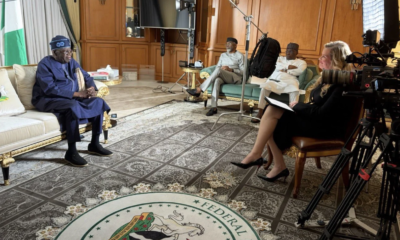
Ngwu made this statement on Monday while responding to questions in an interview on Arise Television.

His comment comes after FATF delisted Nigeria from its “grey list” of countries with deficiencies in anti-money laundering and counter-terrorist financing frameworks.

According to him, Nigeria has not done well in recent years pertaining to money laundering and corruption.

“Nigeria has not performed well in recent years regarding money laundering and corruption, which led to its placement on the grey list.

“Although it appears that we have taken corrective measures, resulting in our removal, there is no guarantee that we will not relapse,” he said.

FOLLOW US ON:

FACEBOOK

TWITTER

PINTEREST

TIKTOK

YOUTUBE

LINKEDIN

TUMBLR

INSTAGRAM

See also  CBN cuts T-bill rate amid N3.63tn demand
Continue Reading
Click to comment

Leave a Reply

Your email address will not be published. Required fields are marked *

Business

FAAC allocation rises to N2.44tn despite revenue decline, read details

Published

on

The Federal Government, 36 states and 774 local government councils shared N2.441tn from the Federation Account in November 2026, representing an increase of N13bn, or 0.54 per cent, from the N2.428tn distributed in October, despite a decline in gross revenue collections.

The increase marked the second consecutive monthly rise in Federation Account Allocation Committee disbursements, following the sharp decline recorded in September, when allocations fell by 22.2 per cent from the record N3.007tn shared in August.

The latest allocation, which represents revenue generated in October, was approved at the November FAAC meeting held in Abuja.

The Office of the Accountant-General of the Federation disclosed this in a statement issued on Wednesday by its Director of Press and Public Relations, Bawa Mokwa.

According to the statement, “A total sum of N2.441tn, being October 2026 Federation Account Revenue, has been shared to the Federal Government, States and the Local Government Councils.”

An analysis by The PUNCH showed that the N2.441tn distributed in November was N13bn higher than the previous month’s allocation but remained N566bn, or 18.8 per cent, below the record N3.007tn shared in August.

The November distribution also exceeded the N2.338tn shared in September by N103bn, or 4.4 per cent, although it remained N109bn below the N2.550tn distributed in July.

The latest figures indicate that allocations to the three tiers of government have continued to recover gradually from September’s decline, despite weakening revenue collections.

According to the FAAC communiqué, total gross revenue fell by N102bn, or 2.6 per cent, from N3.913tn in September to N3.811tn in October.

See also  Dangote refinery: NMDPRA mulls legal battle over access restriction

Gross statutory revenue declined by N97.323bn, or 3.1 per cent, to N2.999tn in October from N3.096tn in September.

The statement said, “According to the communiqué, gross statutory revenue of N2.999tn was received for the month of October 2026. This was lower than the sum of N3.096tn received in the preceding month by N97.323bn.”

The decline reversed the recovery recorded in September, when gross statutory revenue increased by N246.384bn from N2.850tn in August.

Similarly, gross Value Added Tax collections declined for the second consecutive month, falling by N4.426bn, or 0.54 per cent, from N816.872bn in September to N812.446bn in October.

VAT collections had previously declined by N17.972bn in September, following an increase of N40.875bn in August.

The statement read, “Gross revenue of N812.446bn was available from the Value Added Tax in October 2026. This was lower than the N816.872bn available in the month of September 2026 by N4.426bn.”

Despite the decline in gross collections, the amount available for distribution increased because deductions, transfers, refunds and savings fell during the month.

According to the communiqué, N128.797bn was deducted as cost of collection in October, compared with N131.758bn in September, representing a reduction of N2.961bn.

Similarly, transfers, refunds and savings declined by N111bn, or 8.2 per cent, from N1.352tn in September to N1.241tn in October.

The combined reduction of approximately N114bn in these two categories helped offset the N102bn decline in gross revenue, allowing distributable revenue to increase by N13bn.

The N2.441tn available for distribution comprised N1.688tn in statutory revenue and N752.488bn from VAT.

See also  Dangote rejects NNPC offer to increase stake in refinery; read why

Distributable statutory revenue increased by N16bn, or approximately 0.96 per cent, from N1.672tn in September, while distributable VAT declined by N4.099bn, or 0.54 per cent, from N756.587bn.

A breakdown of the allocation showed that the Federal Government received N856.065bn, compared with N832.242bn in October, representing an increase of N23.823bn, or 2.9 per cent.

The 36 state governments received N809.909bn, up by N10.037bn, or 1.25 per cent, from N799.872bn in the previous month.

Similarly, the 774 local government councils received N568.701bn, representing an increase of N8.041bn, or 1.43 per cent, from N560.660bn.

Source: punchng.com

FOLLOW US ON:
FACEBOOK

WHATSAPP CHANNEL

TWITTER

PINTEREST

TIKTOK

YOUTUBE

LINKEDIN

INSTAGRAM

Continue Reading

Business

Lagos moves to convert $50bn climate target into investments, read details

Published

on

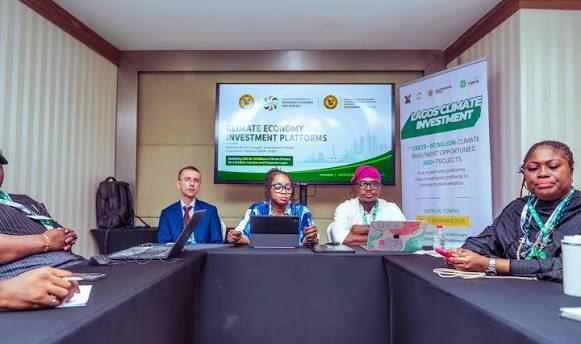
The Lagos State Government says investors have begun expressing interest in partnerships across its climate investment projects, following engagements with financial institutions, energy companies and project developers at the ongoing 31st United Nations Climate Change Conference in Antalya, Türkiye.

The discussions have produced initial partnership opportunities in healthcare, solar energy, women’s empowerment and clean transportation, as the state seeks to turn its previously unveiled $25bn-$50bn investment pipeline into bankable projects.

The engagements followed the presentation of more than 300 potential climate projects by the state, with investors participating in project pitches, exchanging contacts and exploring financing arrangements with government representatives and local businesses.

In a statement issued on Tuesday following a reception at the Lagos Climate Investment Day, which capped a week-long engagement with investors, the Special Adviser to the Governor on Climate Change and Circular Economy, Titilayo Oshodi, said the interactions had strengthened the state’s confidence in its ability to attract private capital for climate investments.

She said, “We’ve brought in the public sector. We’ve brought in the private sector. We’ve brought in young enterprises who are already doing stuff in the green economy. We’ve brought in financial institutions who are ready to show that where we can take the risk, we can begin to fix green finance.

“We have experimented with these things and we have seen that there’s a possibility in them, and it gives us a lot of confidence right now. So, I just want to say thank you to our financial institutions, once again, Sterling Bank, for taking the pain, for taking a shot at us, taking a chance on government.”

Oshodi disclosed that project developers and investors had held discussions after a full day of presentations, with participants asking questions and exploring possible areas of cooperation.

See also  Dangote refinery: NMDPRA mulls legal battle over access restriction

“We had a full day of pitches just a few hours ago. The investors that we brought in asked questions, they were exchanging cards. They were having conversations to discover themselves, and they are beginning to look at what is possible going beyond now,” she said.

She added that the objective was to move beyond announcements and ensure that investment discussions translated into projects, employment and improved living conditions.

“Let’s carry this momentum. Let’s take it along with us. Let’s turn our pledges into projects. Let’s turn our projects into jobs. Let’s turn our jobs into real impact for Lagos State and, by extension, for Nigeria,” she said.

One of the private-sector partners, Tonye Cole, said the initiative provided an opportunity to connect international capital with sustainable development projects and businesses across Africa.

Cole, who said he had spent decades developing and financing sustainable projects, explained that he had worked with his partner, Funke Shobanjo, to establish a platform connecting available global funding with investment opportunities at the grassroots.

He said, “Together, we have developed this platform, and the platform works. What we are now working with Lagos State Government to bring to COP is the opportunity to partner with businesses like ours, with the state government, to develop and work on how sustainable projects and finance can meet the people that need it the most.

“This is an invitation to help you make a difference in a world that needs a difference. Let’s work together to make this happen.”

The Chief Operating Officer of FBNQuest Merchant Bank, Funke Shobanjo, also pledged support for the initiative, saying private investors were prepared to provide financing through a pan-African sustainable finance platform.

See also  Lagos moves to convert $50bn climate target into investments, read details

She said, “We are extremely excited about what Lagos State is doing, and we are passionate about driving the climate ambition forward for the projects under the umbrella.

“Our commitment is in private individuals coming together to provide capital and financing through a pan-African sustainable finance platform. I want to congratulate Lagos State on this goal and ambition and commit, on behalf of my co-founder and myself, our support to see the projects in the pipeline.”

The early engagements have also produced interest in social-sector projects. A member of the Lagos delegation disclosed that five investors had indicated willingness to partner with projects, including healthcare insurance initiatives aimed at reducing out-of-pocket medical expenses.

The delegate said Sterling Bank had also indicated support for providing between 50 and 100 tricycles for women’s empowerment programmes in Lagos, while Worldwide Energy had promised to solarise a primary healthcare centre.

Climate and carbon asset expert, Dr Adebola Odunsi, described the engagements as an opportunity to unlock economic value through partnerships across states and sectors.

He said the waste generated in one state could serve as raw material for businesses in another, creating opportunities for trade, investment and shared climate benefits.

“The waste that is being generated in one state can become the raw material in another state. So very soon, there are trade opportunities and climate outcome opportunities that we can share, all for the shared climate prosperity of our beautiful country, Nigeria,” Odunsi said.

He added that the investment platform had taken years of work to develop and had attracted considerable interest from international stakeholders.

See also  Firm unveils first phase of 100MW data centre

The engagements come as Lagos seeks to bridge the financing gap between its climate ambitions and actual project delivery. Its previously announced pipeline covers more than 300 potential projects across clean energy, transportation, water management, climate resilience, circular economy, agriculture and green enterprise.

In a related development, the Lagos State Commissioner for Energy and Mineral Resources, Biodun Ogunleye, has identified private capital as a critical factor to addressing the state’s electricity supply deficit and financing its energy transition.

He said Lagos, with an estimated electricity demand of 12,000 megawatts, could not depend solely on government resources to finance the infrastructure required to bridge the gap.

“Our goal as government is to create an enabling environment and not to generate the power ourselves. But reforms alone must not build power plants. Indeed, capital does.

“Government balance sheet alone cannot fund the investment that we know is required,” Ogunleye said.

He disclosed that the state was targeting an additional 2,000 megawatts of electricity capacity and had established regulatory institutions to encourage private investment across generation, distribution and mini-grid development.

Ogunleye urged investors to take advantage of financing mechanisms, including the Global Fund for Infrastructure and Investment Finance, to support project preparation and reduce investment risks.

He said, “Government provides legitimacy, enabling policy and a pipeline, while the private sector provides structuring, capital, credit decisions and asset management.”

He added that the state was ready to share priority projects with financing partners and explore guarantees and other risk-sharing arrangements to make the investments attractive to lenders.

Source: punchng.com

FOLLOW US ON:

FACEBOOK

WHATSAPP CHANNEL

TWITTER

PINTEREST

TIKTOK

YOUTUBE

LINKEDIN

INSTAGRAM

Continue Reading

Business

NYSC pays Oyo corps members’ delayed allowances, blames technical glitch

Published

on

The National Youth Service Corps (NYSC) says it has paid the delayed October 2026 allowance to corps members who served in Oyo State and completed their service year on October 29.

The scheme attributed the delay to a technical glitch in the Government Integrated Financial Management Information System, the Federal Government platform used to process corps members’ monthly allowances.

In a statement on Tuesday, the NYSC management said the affected corps members had been paid as of November 17, adding that anyone yet to receive the money by the close of business on Wednesday should contact the Oyo State Coordinator for verification.

The statement was signed by the Director of Information and Public Relations, Caroline Embu.

The management apologised for the delay, acknowledging that the affected corps members’ complaints were justified and that the situation might have caused them hardship.

It explained that while other corps members received their October allowances before completing their service, payments to those in Oyo State were delayed by the technical problem with the GIFMIS platform.

The NYSC, however, maintained that the allowance had been fully provided for in the budget and that no corps member’s entitlement had been withheld, diverted or reduced.

It added that the allowances were paid directly into individual bank accounts from the scheme’s Central Bank of Nigeria account through the GIFMIS platform.

According to the statement, the Oyo State Coordinator had earlier informed the affected corps members about the reason for the delay.

It also disclosed that the Director-General of the NYSC, Brigadier General Olakunle Nafiu, met some of the affected corps members during his visit to the Oyo State Orientation Camp in Iseyin on Saturday, November 14.

See also  Tinubu, Shell in high-level talks over S20bn Nigeria investment

The management said Nafiu had assured them that the payment issue would be resolved.

The statement read, “As expected, the affected Corps Members were sensitised by the Oyo State Coordinator on the cause of the delay in their payment.

“Also, on Saturday, 14 November 2026, the Director-General, Brigadier General Olakunle Nafiu, met some of the affected Corps Members in person during his visit to the Oyo State Orientation Camp in Iseyin.

“In line with the Director-General’s assurance, as of today, 17 November 2026, the affected Corps Members have been paid, and any of them not credited by close of business tomorrow, 18 November 2026, should notify the Oyo State Coordinator for necessary verification.”

The development followed complaints by corps members who served in Oyo State that they had yet to receive their October allowance after completing their service year.

The complaints attracted public attention, with some affected members taking to social media to demand payment of their entitlements.

The NYSC management said it recognised the financial importance of the monthly allowance to corps members, particularly those posted to states where they had no family or established support networks.

It described prompt payment of their allowances as an obligation rather than a favour.

“Management appreciates the fact that Corps Members leave their homes to serve in States where many know no one, and that their allowance sustains them throughout the service year.

“For this reason, it regards prompt payment of allowance to these patriotic Nigerians as a duty, not a favour,” the statement added.

See also  Firm unveils first phase of 100MW data centre

The management thanked the affected corps members for their patience and members of the public who drew attention to the delay.

It also urged Nigerians to rely on the scheme’s official communication channels for clarification and avoid spreading unsubstantiated claims.

The NYSC, established in 1973, is a mandatory one-year national service programme for eligible Nigerian graduates, with participants deployed to states outside their states of origin to promote national unity and development.

Source: punchng.com

FOLLOW US ON:

FACEBOOK

WHATSAPP CHANNEL

TWITTER

PINTEREST

TIKTOK

YOUTUBE

LINKEDIN

INSTAGRAM

Continue Reading

Trending