Connect with us

Lifestyle

The 1961 Ife Bronze Stamp: A Symbol of Nigeria’s Cultural Rebirth and Independence

Published

on

How a postage stamp featuring the Bronze Head of Ife became a proud declaration of Nigeria’s ancient civilisation and postcolonial identity

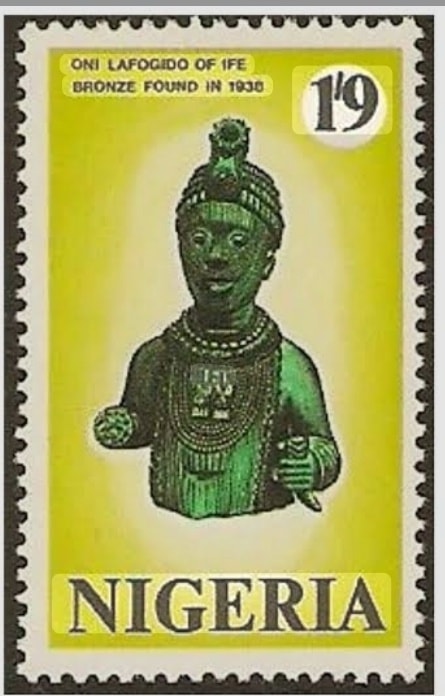
In 1961, barely a year after Nigeria gained independence from British colonial rule, a new postage stamp was released — one that carried far more than a monetary value. It bore the image of the Bronze Head from Ife, an exquisite artifact often called the Ooni Lafogido Bronze, representing one of Africa’s most advanced precolonial artistic traditions.

This stamp was more than a token of postage; it was a declaration of national pride, cultural continuity, and artistic excellence. By replacing colonial insignia with indigenous imagery, Nigeria announced to the world that it was ready to define itself — through its own history, artistry, and identity.

From Colonial Symbols to Cultural Sovereignty

Before independence, Nigerian stamps carried the images of British monarchs, notably Queen Victoria and later Queen Elizabeth II. These colonial-era stamps reflected imperial dominance rather than local heritage.

However, with Nigeria’s independence on October 1, 1960, came a conscious effort to reimagine national symbols — from the flag and anthem to the designs on its currency and postage stamps.

The 1961 Ife Bronze stamp marked a decisive shift. By featuring the Ife Bronze Head, the Nigerian government and postal service sought to showcase the country’s long-standing civilisation and artistic sophistication that predated European contact.

This act transformed postage — a mundane, everyday necessity — into an instrument of cultural diplomacy and national identity.

The Bronze Head from Ife: A Masterpiece of Precolonial Nigeria

See also  Funke Akindele’s new movie opens with over ₦200m at box office

The image chosen for the 1961 stamp was based on the Bronze Head from Ife, one of the most iconic pieces of ancient Nigerian art. Discovered in Ile-Ife, the sacred city of the Yoruba people, this masterpiece is believed to represent Ooni Lafogido, an ancient ruler of Ife.

Dating from the 12th to 15th century, the bronze head was created using the lost-wax casting technique, a sophisticated metalworking process that demonstrates the technical mastery of Yoruba artisans long before European contact.

The naturalism, facial symmetry, and craftsmanship of the Ife bronzes astonished European archaeologists when they were first uncovered in the early 20th century, challenging racist colonial assumptions about African art and civilisation.

By placing this artwork on a national stamp, Nigeria sent a powerful message: our civilisation is ancient, our artistry is world-class, and our identity is rooted in greatness.

A New Era of Nigerian Stamps

The 1961 Ife Bronze stamp was part of the first definitive series issued by the Nigerian Postal Service (NIPOST) after independence. The decision to feature indigenous themes reflected a wider movement in postcolonial Africa to reclaim national imagery from colonial narratives.

Other stamps from this era featured cultural icons, agricultural produce, and wildlife — each representing different aspects of Nigeria’s identity, economy, and environment.

The Ife Bronze Head stamp, however, stood out for its symbolism. It connected Nigeria’s modern statehood with its ancient artistic legacy, bridging centuries of history in a single image.

The Early History of Nigerian Postage

To fully appreciate the 1961 stamp, it is essential to understand the history of postal development in Nigeria.

See also  Why pregnant women with previous CS shouldn’t use PHCs for antenatal care

Nigeria’s first postal marking appeared in 1859, when a hand-struck stamp inscribed “Paid in Lagos” was introduced under British colonial administration. The first adhesive postage stamps were released in Lagos on June 10, 1874, featuring the image of Queen Victoria.

As different regions of Nigeria came under British control — Lagos Colony, Northern Nigeria, and Southern Nigeria — each issued its own stamps until the territories were merged in 1914 to form modern Nigeria.

After independence, the country began to issue stamps that reflected its unity in diversity, heritage, and national aspirations.

Cultural and Historical Significance

The 1961 Ife Bronze stamp carried deep cultural resonance beyond postal use. It was a symbol of self-definition — a nation affirming its worth not through colonial approval, but through its ancestral artistry.

For many Nigerians, seeing indigenous symbols on official postage represented a profound sense of ownership and pride. It also introduced international audiences to Nigeria’s artistic achievements, positioning the country as a centre of African civilisation.

Today, surviving copies of the 1961 Ife Bronze stamp are considered collectors’ items, valued both for their beauty and their historical importance in Nigeria’s journey toward cultural reclamation.

Legacy and Continuing Relevance

More than six decades later, the message behind the 1961 Ife Bronze stamp remains powerful. It stands as a testament to Nigeria’s ability to tell its own story — not through colonial imagery, but through its own masterpieces, traditions, and voices.

The Bronze Head from Ife, immortalised on that small piece of paper, continues to represent the artistic genius and enduring spirit of the Yoruba civilisation and Nigeria as a whole.

See also  10 things to know about Prof. Amupitan, new INEC Chairman

References

Nigerian Postal Service (NIPOST) Archives

National Museum, Ife — Yoruba Bronze Collections

British Museum: Bronze Head from Ife Exhibit Notes

FOLLOW US ON:

FACEBOOK

TWITTER

PINTEREST

TIKTOK

YOUTUBE

LINKEDIN

TUMBLR

INSTAGRAM

Continue Reading
Click to comment

Leave a Reply

Your email address will not be published. Required fields are marked *

Lifestyle

Actress Eniola Badmus threatens lawsuit over prostitution allegation, see details

Published

on

Nollywood actress and Special Assistant to the Speaker of the House of Representatives on Social Events and Public Hearings, Eniola Badmus, has vowed to pursue legal action against an X user who accused her of running a prostitution network linking young women to top film executives and Nigerian politicians.

The fresh allegation, posted on Thursday by a X.com user identified as #Femzydr1, claimed that the popular Yoruba actress had been operating as a private pimp within the Nigerian movie industry, using her connections to funnel young girls to directors, movie executives, and powerful politicians, and that her political appointment was a reward for such services.

He wrote, “Popular Yoruba Actress Eniola Badmus is reportedly a private pimp in Nigeria and in the movie industry, linking young girls up with top directors, movie executives, and Nigerian politicians. She surely gained entry into the political scene through this network, and many young girls have been exploited & used for different purposes by politicians through her connections.

Actress Eniola Badmus threatens lawsuit over prostitution allegation. Credit: X | Eniola Badmus

Reacting swiftly on her verified X account, Badmus dismissed the claims as entirely false and issued a stern warning to the accuser, making clear she had no intention of letting the matter slide.

“This is the attention you’ve been craving for, so let’s get into it. This is a false accusation and the authorities will step in. Let it be known that we do not forgive in this zone,” the actress wrote.

PUNCHONLINE reports that in 2023 a similar incident happened where a TikTok user, Nwakaego Okoye, had made a viral video labelling Badmus a “professional pimp” who allegedly connected young women, particularly those who had undergone cosmetic surgery to top politicians across Nigeria which led to her arrest and was subsequently charged before Justice Nicholas Oweibo of the Federal High Court in Lagos.

See also  See what made Imisi win Big Brother Naija

The accused was sentenced to three years imprisonment, though the judge gave her the option of a N150,000 fine in lieu of jail time.

In the current case, the accuser, @Femzydr1, has subsequently issued a public apology.

“I sincerely apologize to Ms. Eniola Badmus, her family, friends, fans, and everyone affected by my recent tweet. The post accusing her of exploitation, linking young girls to movie and political figures, and pimping was wrong, irresponsible, and made without evidence. I deeply regret spreading such damaging and false information,” the user wrote.

punch.ng

FOLLOW US ON:

FACEBOOK

TWITTER

PINTEREST

TIKTOK

YOUTUBE

LINKEDIN

TUMBLR

INSTAGRAM

Continue Reading

Lifestyle

Lagos refers Simi’s resurfaced tweets to police for probe, see details

Published

on

The Lagos State Domestic and Sexual Violence Agency has referred the controversy surrounding resurfaced tweets allegedly linked to singer Simi to the Commissioner of Police for preliminary investigation.

The Executive Secretary of the agency, Lola Vivour-Adeniyi, disclosed this on Thursday during an interview on Channels Television, saying the agency could not ignore the allegations.

The controversy erupted after Simi made comments on social media about rape, saying that men should stop raping women, suggesting rapists should be castrated and claiming that “almost every woman she knows has been sexually assaulted.”

Those statements became widely discussed online.

Shortly after, screenshots of a series of old tweets believed to be from 2012 and 2013 began circulating.

Among them were posts appearing to reference children at her mother’s daycare, including comments such as “love to kiss d kids at my mum’s daycare – they’re super adorable and I’m crazy abt ’em” and “Why this 4yr old boy tryna put hand inside ma shet????? Ogbeni wash it oh!”, among others.

The resurfacing of the old tweets drew intense criticism from some social media users, who interpreted them as inappropriate, and generated what many described as heat against the singer.

In response, Simi addressed the matter on her social media page, explaining that the old tweets were reflections of her then youth and experiences helping at her mother’s daycare.

She maintained that the posts were not written “from perversion” and said critics had taken them out of context.

Reacting to the situation, Vivour-Adeniyi said the agency had been observing developments around what some have dubbed “Simi Gates and Simi Darlington”, following the circulation of tweets said to date back to 2012 and 2014.

“In terms of Simi, I think they are calling it Simi Gates and Simi Darlington. Some people have been asking what are institutions doing? I can speak for what Lagos State DSV is doing.

See also  See what made Imisi win Big Brother Naija

“We’ve been observing and because we had seen some tweets as far back as 2012, some 2014, and then there were talks around certain tweets being doctored and all of that,” she said.

She added that the agency decided to escalate the matter for further scrutiny.

“But what we’ve done is to actually refer the case to the Commissioner of Police to at least conduct some preliminary investigation. As you’ve said, there are also reports that this may have happened in a creche managed by her mom. And so issues of safeguarding and child protection concerns have been raised,” she stated.

According to her, the state’s safeguarding taskforce has also been briefed.

“In Lagos State, we have the taskforce saddled with the responsibility of implementing the safeguarding and child protection order and that the taskforce has been briefed on this and preliminary investigations are ongoing,” Vivour-Adeniyi said.

She stressed that the agency had a duty to commence preliminary inquiries, noting that prosecution would depend on the availability of a complainant.

She also urged anyone affected to come forward to give their statement.

“For the Simi case, we cannot act like we have not seen this. And so we have a duty to at least commence preliminary investigation. Is there any survivor? Because the truth of the matter, it’s going to be very difficult to prosecute the lady without a survivor being present.

“A victim of whatever it is — is it sexual abuse, is it defilement, is it sexual assault by penetration and what have you — so it’s to start the process, encourage anybody who was allegedly sexually assaulted by Simi to please come forward and ensure that their statement is taken and then we know where we’re going to on the matter,” she added.

Continue Reading

Lifestyle

First UK baby from deceased womb transplant born

Published

on

A baby boy has become the first child in the United Kingdom to be born after his mother received a womb transplant from a deceased donor, marking a significant development in reproductive medicine.

According to BBC on Tuesday, the baby, Hugo, was delivered just before Christmas 2025 at Queen Charlotte’s and Chelsea Hospital in west London, weighing nearly 7lbs.

His mother, Grace Bell, who is in her 30s, was born without a functioning womb due to Mayer-Rokitansky-Küster-Hauser (MRKH) syndrome — a condition that affects about one in 5,000 women in the UK. Although she has normal ovaries, she does not menstruate and was informed at 16 that she would not be able to carry her own child.

Following the birth, Bell described the moment as extraordinary. “It was simply a miracle,” she said. Recalling the experience, she added, “I remember waking up in the morning and seeing his little face, with his little dummy in, and it felt like I needed to wake up from a dream. It was just incredible.”

Bell underwent a 10-hour transplant procedure at The Churchill Hospital in Oxford in June 2024. Months later, she received in vitro fertilisation treatment at The Lister Fertility Clinic in London before a successful embryo transfer led to the pregnancy.

She and her partner, Steve Powell, named their son Hugo Richard, honouring Prof Richard Smith, the clinical lead at the charity Womb Transplant UK and a consultant gynaecological surgeon at Imperial College Healthcare NHS Trust. Smith, who was present at the birth, told PA Media: “It’s been an unbelievable journey. Our whole team has been hanging together now for years and years to make this happen. So to me it’s been fantastic, just amazing.”

In a tribute reported by The Guardian, the donor’s family said the decision to donate had “given other families the precious gift of time, hope, healing and now life.”

See also  Abubakar Gimba: Nigerian Author, Economist, and Voice of Moral Conscience

They added: “As her parents, we feel tremendous pride at the legacy she leaves behind – a legacy of compassion, courage and love that continues to touch lives even after her passing.”

Medical teams have indicated that the transplanted womb will be removed once the couple decide they have completed their family, to avoid Bell remaining on long-term immunosuppressant medication.

Reports indicate that globally, about 25 to 30 babies have been born following deceased womb donations, while most womb transplants involve living donors.

The UK’s first womb transplant was carried out in 2023 using a living donor. Womb donation is not covered under routine organ donor registration or deemed consent laws, and families must give specific approval.

punch.ng

FOLLOW US ON:

FACEBOOK

TWITTER

PINTEREST

TIKTOK

YOUTUBE

LINKEDIN

TUMBLR

INSTAGRAM

Continue Reading

Trending