Connect with us

News

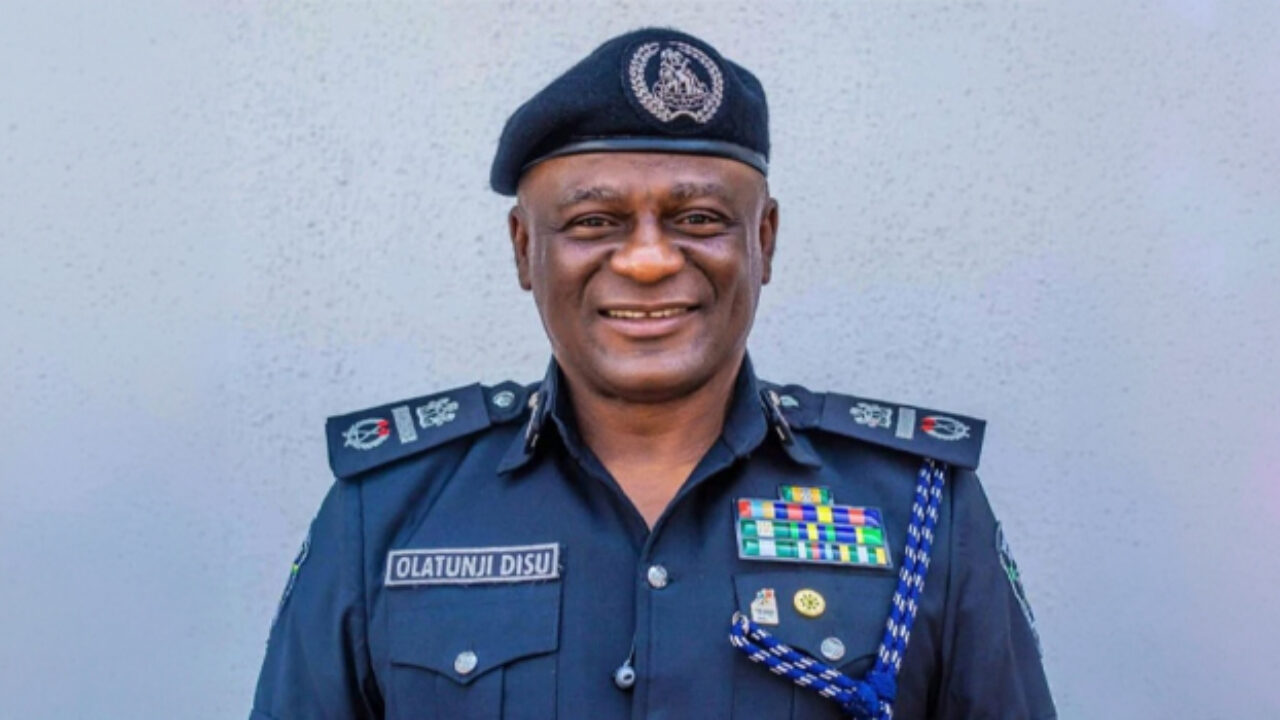
Disu declares total war on police corruption, impunity

Published

on

President Bola Tinubu on Wednesday charged the newly decorated acting Inspector-General of Police, Tunji Disu, to make the Nigeria Police Force better than he met it, as the country grapples with banditry, terrorism, and other criminal activities.

The President, who personally decorated Disu with his new rank at the State House, Abuja, said the appointment comes at “a defining moment for our nation’s security,” expressing confidence in the new police chief’s ability to restore public confidence in the Force.

“The commitment that I expect from you is for you to make it better than you met it. And I’m sure you can do it. Nigeria is challenged right now with banditry, terrorism and all sorts of criminal activities,” Tinubu stated during the decoration ceremony.

The President, who drew on his personal knowledge of Disu from his tenure as Lagos State Governor, said he believes in the dedication the new IGP exhibited while serving in Lagos.

“I know your record. I believe in the dedication that you’ve exhibited while you were in Lagos and I was the Governor of Lagos State.

“Now you assume this responsibility at a defining moment for our nation’s security,” the President said.

Tinubu outlined specific expectations for the new police chief, emphasising discipline, professionalism, and inter-agency collaboration.

“I expect you to strengthen the discipline, enhance inter-agency collaboration, and restore public confidence in the Nigeria Police.

“Lead firmly but fairly, demand professionalism at every level and ensure that safety of lives and property remains your highest priority,” he charged.

Acknowledging the magnitude of the task ahead, the President assured Disu of his full support.

“It is a daunting challenge. I know you can do it.

“You have my full support as you advance the security pillars of the Renewed Hope agenda.

“You are a straightforward individual, committed and respected. You have sufficient discipline,” Tinubu stated.

The President urged the new IGP to draw from the experience of his predecessor, Kayode Egbetokun, who attended the ceremony.

“You can draw from the experience of Kayode Egbetokun who had been there before you.

“You have been part of the thinking, and you’ve been part of the innovation.

“The challenge as you hold the baton of this leadership is the belief that you will excel and Nigeria will prevail,” he said.

Speaking to the outgoing IGP, Tinubu expressed gratitude for his service while linking his legacy to the success of his successor.

See also  Pope warns of regional spillover from Israel-Iran war

“To the outgoing Inspector-General of Police, I extend the gratitude of the entire country.

“Nigeria, we are a grateful nation to you for your dedication in service, expression of good leadership attributes within the Force.

“You have served with commitment and distinction, and Nigeria appreciates your contribution to maintaining law and order in our country,” the President said.

He added, “What you should look back and remember is this: you have not succeeded without a good successor.

“Therefore, the success of Tunji Disu as IGP, when confirmed, is part of your responsibility and the joy you should look forward to.”

Tinubu noted that Disu’s previous role as Principal Staff Officer to Egbetokun positioned him well for the new assignment.

“Having been part of your Principal Staff Officer, I have no doubt he understands the ins and outs of the operation.

“He will only improvise. He’s an operational person from what I know,” the President stated.

The decoration ceremony, which took place at 4:00 pm at the President’s office, had in attendance Chief of Staff to the President Femi Gbajabiamila, and other senior government officials.

President Tinubu personally pinned the new insignia on Disu’s uniform, marking the formal transfer of leadership of Africa’s largest police force.

In his response, Disu pledged to justify the confidence reposed in him, vowing to end impunity and enforce zero tolerance to corruption within the Force.

“The President mentioning a lot of activities about me, mentioning areas I’ve worked, mentioning successes I’ve recorded as a policeman, brought emotion to me, almost brought me to tears,” Disu told State House correspondents.

He added, “I will let them know that the era of impunity is over. I will ensure that I train them and encourage them to follow human rights. I will ensure that they know that I will try to follow a regime of zero tolerance to corruption.”

The new police chief emphasised that Nigerian citizens are the ultimate bosses of the police.

“One of the first lectures I’m going to have with my men, I’m going to talk to them, let them know that the citizen, the citizen of the country, are the boss. No police anywhere in the world can succeed without the cooperation of members of the public,” Disu stated.

Egbetokun, in his remarks, expressed confidence in his successor’s ability to surpass his achievements.

Acting IG Tunji, Disu and Egbetokun
The acting Inspector-General of Police, Tunji Disu and the former IG, Kayode Egbetokun. Photo: Police

“I invested in likely successors in the Nigerian Police Force, and I’m happy that one of those that I’ve invested in has been found most suitable for the job. I have so much confidence that he would surpass what I have done,” Egbetokun stated.

See also  ASUU suspends two-week warning strike

The decoration came barely 24 hours after Egbetokun submitted his resignation letter on Tuesday, citing family issues that require his undivided attention.

However, multiple Presidency sources told our correspondent that Egbetokun was asked to step down during a meeting with the President on Monday evening at the Presidential Villa.

Disu’s appointment came just 48 days before his scheduled retirement on April 13, 2026, when he would have reached the mandatory retirement age of 60 years.

However, under the amended Police Act, which allows Inspectors-General of Police to serve a four-year tenure regardless of age, Disu may remain in office until 2030.

According to the Special Adviser to the President on Information and Strategy, Bayo Onanuga, President Tinubu will convene a meeting of the Nigeria Police Council shortly to formally consider Disu’s appointment as substantive Inspector-General of Police, after which his name will be transmitted to the Senate for confirmation.

Born on April 13, 1966, on Lagos Island, Lagos State, Disu joined the Nigeria Police Force on May 18, 1992, and has served for over three decades across multiple operational and leadership roles.

He rose to national prominence as Commander of the Rapid Response Squad in Lagos State, where he served for six years. Under his leadership, the unit won the Best Anti-Crime Squad award in West Africa in 2016.

On August 2, 2021, he was appointed to head the Intelligence Response Team, replacing the suspended Abba Kyari.

Before his elevation to IGP, Disu was Assistant Inspector-General of Police in charge of the Force Criminal Investigation Department Annex, Alagbon, Lagos.

Disu’s appointment will see the retirement of at least nine Deputy Inspectors-General of Police, in line with the tradition that senior officers vacate their positions when a junior colleague is appointed IGP.

Disu assumes duty

The acting Inspector-General of Police,  Disu, on Wednesday formally assumed duty following his decoration by President Tinubu earlier in the day.

The new police boss took his first salute as Inspector-General from members of the Quarter Guard and other officers at the Force Headquarters after returning from the Presidential Villa at about 4:15 p.m. He thereafter proceeded to the official handover ceremony with Egbetokun.

See also  Ogun adopts new infection prevention control manual to enhance safety

Egbetokun, dressed in a blue suit, white shirt and tie, attended the ceremony alongside Deputy Inspectors-General of Police.

In his remarks, Disu thanked the President for the confidence reposed in him, noting that the Nigeria Police Force possesses the capacity to address prevailing security challenges.

He said the Force is endowed with brave and professional officers whose institutional knowledge, passion and resilience have enabled the country to overcome difficult security situations.

The acting IG, however, acknowledged existing challenges within the Force, including a trust deficit with communities, outdated systems, resource gaps and instances of misconduct.

“These are truths we must confront with resolve in order to reposition the Nigeria Police as a trusted, people-oriented institution,” he said.

Disu outlined three priorities for his tenure: professionalism and modernisation; accountability and integrity; and community partnership.

On professionalism, he said the Force would embrace intelligence-led policing, forensic investigation, digital tools and evidence-based practices, adding that officers would be better trained and equipped.

Addressing accountability, he declared that impunity would not be tolerated under his leadership, stressing that disciplinary measures would apply across all ranks without exception.

He said, ”I will say this plainly, so there is no confusion: the days of impunity are over. The badge is a symbol of public trust. Anyone who treats it otherwise will face the full consequences of our disciplinary processes.

This applies at every rank, without exception, including those closest to me. I will not ask the public to trust a Service that does not first hold itself accountable. We will strengthen our internal oversight mechanisms, make our processes more transparent, and mean what we say when we speak of the rule of law.”

He also pledged to strengthen internal oversight mechanisms and promote transparency in line with the rule of law.

On community partnership, Disu said effective policing requires collaboration with the public, noting that community policing would become central to the operations of the Force.

He urged officers to uphold integrity, compassion and courage in the discharge of their duties, while assuring them of improved welfare and dignified working conditions.

The acting IG also called on Nigerians to partner with the police by reporting crimes, engaging with officers and holding the institution accountable when necessary.


Continue Reading
Click to comment

Leave a Reply

Your email address will not be published. Required fields are marked *

News

Nigerians have constitutional right to self-defence from insecurity — Bwala

Published

on

The Special Adviser to President Bola Tinubu on Policy Communication, Daniel Bwala, says Nigerians are constitutionally empowered to self-defence themselves against attackers, including in situations involving lethal threats, while maintaining that the government is working to address insecurity across the country.

Bwala stated this during an interview on Arise Television on Wednesday.

He was reacting to recent violent incidents in the country, including the killings in Esiele community in Orire Local Government Area of Oyo State and the abduction of teachers and pupils of LA Primary School.

The presidential aide said the Nigerian Constitution guarantees citizens the right to self-defence.

“The constitution has guaranteed to every citizen of Nigeria the right to self-defence; you have the right to defend yourself,” he said.

“When your right, my right, and that of my neighbour is put together, it becomes collective rights to defend ourselves and Nigerians have the right to defend themselves.

“If you come to my house to try to kill me, any lethal weapon I use to defend myself is guaranteed by the Constitution,” he added.

Bwala, however, noted that firearm possession remains regulated by law.

He said, “Nigerians don’t have the right to bear certain arms unless those arms are permitted but the collective people can come together to apply to the government for the right to coordinate themselves.”

Explaining the government’s position on insecurity, Bwala said criminality is a global challenge but insisted that collective action is necessary to address it.

“Solution is what we all look to; evil men operate anywhere in the world, no matter how tight you are as a government.

See also  You Betrayed Your Mother, Siblings – Ayo Fayose’s Brother Blasts Him On 65th Birthday

“You do your best and expect that with the help of God and collective participation of the people through collective intelligence, we will be able to put an end to it,” he said.

On public reactions to recurring attacks, he said citizens will continue to express frustration.

“I know the Nigerian people will continue to complain. For example, no matter how we say that we are sorry and the incident happens again, people will complain, cry and mourn because it’s the lives of the Nigerian people that are taken away by the evil element. We will put an end to this as a people,” he said.

Bwala also linked rising insecurity to election cycles and societal pressures.

“Every eve of elections in Nigeria from 2014, 2018, 2022, and now 2026, you will see that crisis increases because of the idea of a crisis economy. A lot of people take advantage of that but the will and spirit of the collective people is what will put an end to this situation,” he said.

He further noted the role of local vigilance groups and security collaboration.

“As a people, we have vigilantes, and in Borno State, we have paramilitary organisations that provide intelligence to law enforcement,” he said.

punch.ng

FOLLOW US ON:

FACEBOOK

TWITTER

PINTEREST

TIKTOK

YOUTUBE

LINKEDIN

INSTAGRAM

Continue Reading

News

Pan-African initiative targets safer, inclusive AI systems

Published

on

African policymakers, technology experts and civil society leaders have launched a continent-wide initiative aimed at strengthening ethical oversight of artificial intelligence (Ai) as governments and businesses accelerate the adoption of emerging technologies across critical sectors of the economy.

The Policy Innovation Centre, in partnership with the Africa Hub for Innovation & Development and with support from Luminate, has unveiled the Pan-African AI Ethics and Governance Fellowship, a programme designed to build institutional capacity for safer, more inclusive and accountable AI systems across Africa.

The initiative comes as artificial intelligence technologies gain traction in healthcare, agriculture, education, financial services and public administration across the continent, raising both optimism about economic transformation and concerns over governance, accountability and social harm.

Organisers said the fellowship seeks to address widening fears around algorithmic bias, misuse of personal data, weak regulatory oversight and the risk of excluding vulnerable communities from the benefits of AI-driven innovation.

The 12-week virtual fellowship will convene more than 50 mid- to senior-level professionals drawn from government agencies, regulatory institutions, academia, civil society organisations, the media and private sector companies across Africa. Participants will undergo expert-led training sessions, mentorship programmes and policy labs focused on developing practical governance tools tailored to African realities.

The Executive Director of the Policy Innovation Centre, Dr Osasuyi Dirisu, said the programme was created to ensure Africa plays a more active role in shaping how AI systems are governed and deployed rather than merely adapting external regulatory models developed elsewhere.

“This Fellowship is designed to move beyond conversations on AI and focus on building practical governance capacity across African institutions,” Dirisu said during the launch event. “We are raising the next generation of African leaders who will sit at the intersection of AI system development in Africa and ensure that these systems are inclusive, ethical, and serve the public good.”

See also  Read how power struggles threaten Ondo APC’s unity ahead of primaries

The fellowship reflects a broader shift among African governments and institutions seeking to balance rapid technological adoption with safeguards capable of protecting citizens from unintended consequences associated with AI systems.

Across the continent, policymakers are increasingly grappling with questions around automated decision-making, surveillance technologies, misinformation, data ownership and labour displacement as global competition around AI intensifies.

While several African countries have announced national AI strategies or digital transformation frameworks in recent years, implementation remains fragmented and regulatory capacity uneven. Experts warn that without stronger governance institutions; African economies could become vulnerable to exploitative technology practices and excessive dependence on foreign AI systems.

The Chief Executive Officer of the Africa Hub for Innovation & Development, Dr Kunle Kakanfo, said the fellowship was also intended to foster collaboration among African professionals working on similar governance challenges across different jurisdictions.

“The fellowship for us is not just about leadership development in AI ethics and governance; it’s also about making significant connections, cross-country networks, and being able to cross-breed experience,” Kakanfo said. “This fellowship would be a catalytic platform that is able to help us drive the needed change that we need within AI ethics and governance on the continent.”

The launch further reinforces Nigeria’s growing role in the continent’s technology policy ecosystem as the country seeks to position itself as a regional hub for digital innovation and AI governance discussions.

Speaking at the event, National Director of the National Centre for Artificial Intelligence and Robotics, Dr Olubunmi Ajala, described the programme as part of Africa’s strategic response to one of the most transformative technological shifts of modern times.

See also  Lagos women plan nude protest over ancestral home destruction

“This is a deliberate, organised, and urgent response of Africa to one of the most consequential technological revolutions in human history,” Ajala said. “If we don’t do what we need to do in terms of governance and ethics, the problems will go beyond technology failures, and some of the damages could be colossal.”

His remarks echo growing international debate over the societal risks posed by generative AI systems and advanced machine learning technologies, particularly around transparency, accountability and concentration of power among a small number of global technology firms.

Participants in the fellowship said they viewed the initiative as an opportunity to bridge the widening gap between innovation and regulation across Africa’s rapidly evolving digital economy.

Head of Product at Auto Check Africa, Ayobola Adedayo, said she hoped the programme will deepen her understanding of AI governance and help shape more responsible adoption of emerging technologies across Nigeria and the wider continent.

A Kenyan technology journalist participating in the fellowship, Carol Odero, said discussions around AI governance were becoming increasingly urgent as innovators and policymakers debate how much regulation emerging technologies require.

“I have spent a lot of time with innovators who think that AI should be left to run wild, that it is not something to govern because it is still so new,” Odero said. “But I would like to show them that there is a different path, and I’m hoping to get that out of the fellowship.”

Organisers said the programme will contribute to building a long-term network of African AI governance practitioners capable of influencing policy reforms, strengthening institutional oversight and promoting more equitable AI systems across the continent.

See also  15,000 Churches Could Close This Year Amid Religious Shift In U.S.

The initiative also reflects growing recognition among African institutions that governance frameworks will play a critical role in determining whether AI technologies deepen existing inequalities or become tools for inclusive development.

The Policy Innovation Centre, an initiative of the Nigeria Economic Summit Group, said the fellowship aligns with its broader mission of supporting evidence-based policymaking and behavioural innovation across Africa’s public and private sectors.

punch.ng

FOLLOW US ON:

FACEBOOK

TWITTER

PINTEREST

TIKTOK

YOUTUBE

LINKEDIN

INSTAGRAM

Continue Reading

News

Borno gov vows safe return of 48 abducted school children

Published

on

The Borno State Governor, Babagana Zulum, has assured residents of Mussa community in Askira Uba Local Government Area, where terrorists abducted 48 school children, that all efforts were being intensified to secure the safe release of the victims.

The governor gave the assurance on Tuesday during a visit to Uba town to sympathise with parents of schoolchildren.

Addressing the gathering, the governor conveyed his heartfelt sympathy to the Emir, the parents of the abducted children, and the entire people of the Uba Emirate over the unfortunate incident.

“I want to convey my deepest sympathy to the Emir of Uba, parents of the abducted children, and the entire people of Uba Emirate over the recent unfortunate incident,” Zulum said.

“Let me assure you that the Federal Government under the distinguished leadership of President Bola Ahmed Tinubu, the Nigerian Armed Forces, and the Borno State Government will do everything possible to secure the release of the children,” he assured.

The governor commended the military and other security agencies for taking proactive measures to prevent further deterioration of the security situation in the area.

He disclosed that the Brigade Commander, Commanding Officer, Divisional Police Officer, and other heads of security establishments had already been deployed to strengthen security and facilitate the safe return of the abducted children.

Governor Zulum also pledged to fortify security in Askira, Uba, and adjoining communities to prevent a recurrence of similar incidents.

“We have made frantic efforts to stabilise Askira, Uba, and adjoining communities through reinforcing security in these areas,” he said.

See also  Venezuelan interim president announces proposal for mass amnesty

The governor appealed to the abductors to release the innocent children, noting that they were minors who required the care and protection of their parents.

He further called on residents of the Uba Emirate and the entire people of Borno State to intensify prayers, especially during the first 10 days of the holy month of Dhul Hijjah.

Speaking during the visit, the Emir of Uba, Alhaji Ali Ibn Isma’ila Mamza II revealed that the incident occurred on Friday, 15 May, when 48 persons were abducted in Mussa community, including 37 primary school pupils, six secondary school students, and five other residents.

The monarch commended Governor Zulum for his unwavering commitment to addressing insecurity, uniting the people of the state, and supporting the emirate.

Also speaking, a representative of the Mussa community, Dr. Chinapi Amanja, appreciated the governor’s visit and acknowledged the deployment of senior military officers and other security personnel to the area.

punch.ng

FOLLOW US ON:

FACEBOOK

TWITTER

PINTEREST

TIKTOK

YOUTUBE

LINKEDIN

INSTAGRAM

Continue Reading

Trending