
Connect with us

News

Invasion threat: Why Trump is after Tinubu — Afenifere

Published

on

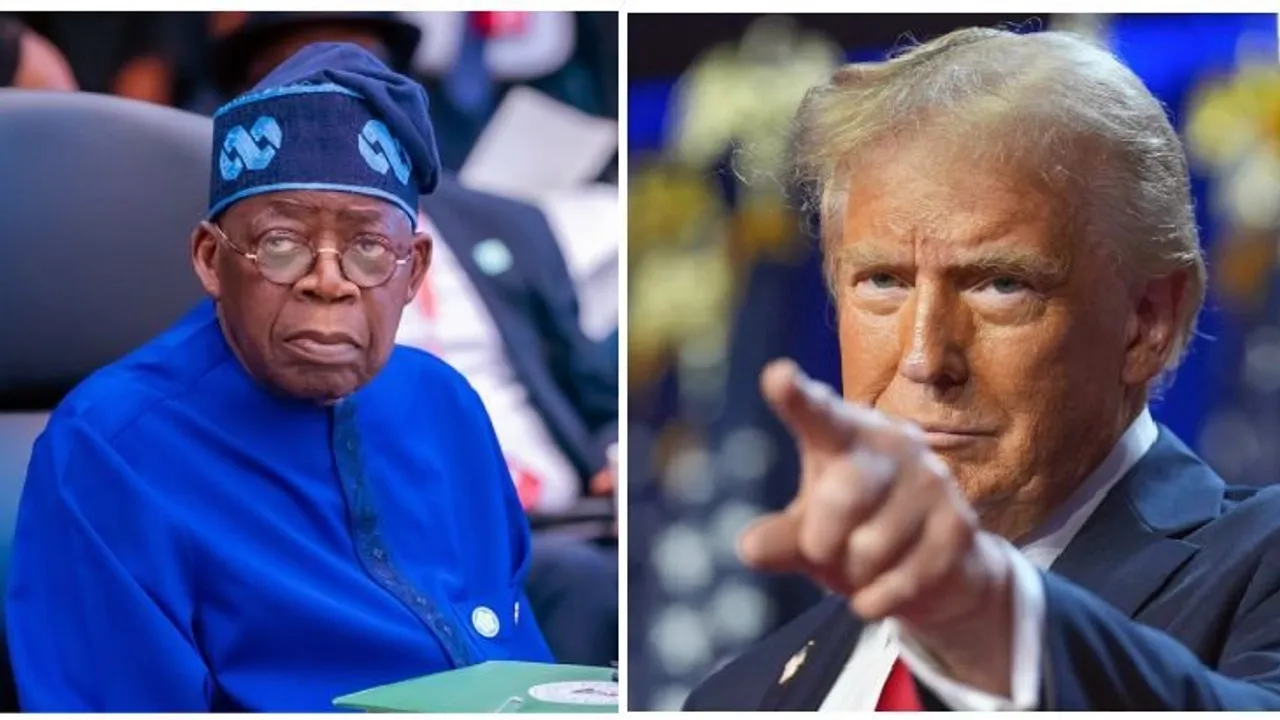
THE pan-Yoruba socio-political organisation, Afenifere, yesterday, disclosed that the recent threat by US President Donald Trump to invade Nigeria to ‘fight’ terrorists was a decoy to mask his displeasure over President Bola Tinubu’s stance on matters of public interest.

Afenifere, in a statement by its National Publicity Secretary, Mr Jare Ajayi, maintained that the claim that the Federal Government is complicit in bandits’ killing of Christians in Nigeria was not only unfounded, but an attempt to ‘give a dog a bad name to have a justification to kill it’.

Insisting that there are extraneous reasons behind the stand of the American President, Afenifere stated that the major reason for the posture was economic.

“By sounding so harsh, Mr Trump hopes to get President Tinubu to negotiate with him with a view to having more inroads into Nigeria’s economy and to possibly force Nigeria to buy more goods, especially weapons, from America. Nigeria’s recent rapport with China does not seem to go down well with the US.

“Besides, some interests in America do not like the principled positions being taken by the Bola Tinubu administration on some issues”, Ajayi said.

The Afenifere spokesman said that Nigeria is a sovereign country, adding that “the matter at hand falls within the purview of what the government can and should deal with. And government, through its various security arms, is not resting on its oars. It is working on insecurity. Government can do more, certainly. The change of security chiefs is one of the steps being taken by Mr. President to buckle up on security.”

See also  Rivers Assembly begins screening of nine Fubara commissioner-nominees

In addition, he said: “It is a known fact that the claim of genocide against Christians in Nigeria is not valid. Not that people are not being killed, the reality is that bandits and terrorists do not discriminate. Their target is the economy. Those funding them are interested in the mineral resources underground. So, they sponsor bandits to cause mayhem in places where they spot mineral resources. When the people in those areas are displaced, the ‘sponsors’ step in and begin to exploit the resources.

“It is not for nothing that he ordered that the Department of Defence in his country should be renamed ‘Department of War’. Thus, Nigerians should refrain from acting in a manner (or making a pronouncement) that those who may want to create theatres of war would have justifications for doing so”, he said.

He, however, warned against heating up the polity, saying, “When you deride your country, it is not always easy to undo the damage. As such, we should be mindful of what we say or write about our country. “There is no doubt that Nigeria needs all the help it can get to tackle its security challenges, etc. Threatening it with a war attack is not the way to help. If anything, such would escalate the already undesirable situation,” Ajayi stated.

Meanwhile, Governor Babajide Sanwo-Olu of Lagos State, yesterday, urged Nigerians to defend the country and government against any form of external threat.

The Governor, who was represented by the Deputy Governor, Dr. Obafemi Hamzat, said this at the flag-off of the All Progressives Congress, APC, e-registration hands-on device/application held at Lagos House, Marina.

See also  NAFDAC resumes enforcement of sachet alcohol ban, dismisses shutdown claims

Reacting to Trump’s threat to launch a military incursion, the governor said: “The Dangote 650,000 barrel per day of refining capacity must be protected, the billions of dollars expended is not a joke.

“We all said we should sign the Petroleum Industry Bill, PIB, in this country. What are they doing now? So those refineries in San Francisco that are now empty because we are refining here. But it’s not our fight.

“Our President is taking the right decisions. People who don’t understand will criticise him, but let us go out there and be proud and defend this government. They are doing the right things. As we do it, God will continue to be with us.”

FOLLOW US ON:

FACEBOOK

TWITTER

PINTEREST

TIKTOK

YOUTUBE

LINKEDIN

TUMBLR

INSTAGRAM

Continue Reading
Click to comment

Leave a Reply

Your email address will not be published. Required fields are marked *

News

Pentagon restores name of US Pacific Command

Published

on

The Pentagon is set to restore the name of the US Indo-Pacific Command to the US Pacific Command, it said on Tuesday, reversing a 2018 decision.

The renaming will not change the command’s area of responsibility, which stretches from the western part of India to America’s Pacific coastline, the Department of War said in a statement.

Its “fundamental mission and its unwavering commitment to maintaining a free and open theatre alongside regional allies and partners” also remain unchanged, it added.

The name change “honours the command’s deep historical roots, fostering a sense of pride and collective spirit among all who serve in the Pacific,” the department said, without giving additional details.

The US Pacific Command was established by former President Harry Truman after World War II.

It operated under that name for over 70 years before being renamed as the US Indo-Pacific Command in 2018, in a nod to the growing importance of the Indian Ocean in US strategic thinking.

The 2018 name change also came as part of broader efforts by Washington to counter China’s growing influence across the Asia-Pacific domain.

AFP

See also  Retired Police Officer With Spinal Cord Injury Battles For Life On N47,000 Pension After Selling His Only House, No Support From Force
Continue Reading

News

Labour to engage FG on minimum wage review

Published

on

The Nigeria Labour Congress and the Trade Union Congress said they will restart negotiations with the Federal Government over a new national minimum wage, warning that workers can no longer cope with rising living costs as inflation continues to erode real incomes.

The unions are pushing for what they described as a “genuine living wage” to replace the current framework, which they said no longer reflects Nigeria’s economic realities, particularly sharp increases in food, transport, housing, and healthcare costs.

The position was contained in a joint address delivered at the 114th International Labour Conference in Geneva on Monday, where the unions also rejected any proposal to tax the minimum wage or impose additional fiscal burdens on low-income earners.

Nigeria’s current minimum wage of N70,000 was signed into law on 18 July 2024, in an agreement between organised labour and the federal government. President Bola Tinubu formally announced the wage on 19 July 2024, and it took effect on 29 July 2024.

The agreement originally set a three-year review cycle, shifting from the previous five-year arrangement. However, in January 2025, the Federal Government adjusted the framework, announcing that the minimum wage would now be reviewed every two years, effectively setting 2026 as the next review point.

In light of this, labour leaders said they intend to formally open discussions with the federal government ahead of the July 2026 wage renegotiation deadline, in a bid to prevent the delays that have often hindered previous minimum wage reviews.

“The current Act expires early next year, and we have announced that renegotiation will commence by July 2026 to avoid the painful delays of the past. As soon as we leave here, we shall write again to the government demanding the commencement of the process for renegotiating the national minimum wage,” the unions said.

See also  Peter Obi sues Deji Adeyanju for ‘defamation’

The labour leaders said workers are already under severe pressure from inflation, currency depreciation, and rising costs across essential services, arguing that official economic indicators do not reflect the daily realities of most households.

They warned that taxing the minimum wage would worsen poverty and deepen economic hardship at a time when many citizens are struggling to meet basic needs.

“We demand nothing less than a genuine living wage that reflects today’s harsh economic realities. We also demand immediate relief measures by governments at all levels until a new minimum wage is signed into law. We reject outright any attempt to tax the minimum wage or impose further burdens on the poor,” the unions said in their communiqué.

The unions stressed that the upcoming negotiations must go beyond nominal wage adjustments and instead focus on protecting real incomes, which they said have been steadily eroded by inflation.

They also urged federal and state governments to introduce short-term relief measures pending the conclusion of negotiations, warning that delays could heighten industrial tensions across the country.

Beyond wage concerns, the labour movement used the Geneva platform to highlight broader economic and social challenges, including insecurity, unemployment, and rising poverty levels.

They said insecurity in several parts of the country has made commuting increasingly dangerous for workers, with killings, abductions, and displacement affecting productivity and livelihoods.

According to the unions, nearly 2,000 people were killed in the first quarter of the year, while millions have been displaced, with entire communities and economic activities disrupted by violence.

See also  Africa could become a renewable superpower - UN chief

They warned that worsening insecurity could force workers to remain at home as a survival response, escalating tensions beyond traditional labour action if not urgently addressed.

The labour leaders also said about 65 per cent of Nigerians, estimated at roughly 150 million people, are currently living in multidimensional poverty, driven by inflation, job losses, and declining purchasing power.

They argued that while macroeconomic reforms are aimed at stabilisation, they have yet to translate into improved living standards for ordinary citizens.

As the 2027 general elections approach, the unions said they are developing a charter of demands to shape their engagement with political actors and inform their support for candidates, noting that  only political actors who commit to improved security, functional public services, wage reforms, and protection of labour rights would receive their backing.

The labour movement also raised concerns over alleged interference in union affairs in some states, accusing certain governments of undermining democratically elected labour leadership structures.

They emphasised that organised labour would resist any attempt to weaken union independence or impose external control on labour organisations.

As the current wage regime approaches its 2026 review window, the unions said their priority remains securing a wage structure that reflects economic realities and protects workers from further erosion of income.

They maintained that the outcome of the upcoming negotiations would determine whether Nigerian workers receive what they termed a “living wage” or continue to endure worsening economic hardship.

punch.ng

FOLLOW US ON:

FACEBOOK

TWITTER

PINTEREST

TIKTOK

YOUTUBE

LINKEDIN

INSTAGRAM

Continue Reading

News

Ribadu, Akpabio advocate tech-driven border control over Insecurity

Published

on

The National Security Adviser, Nuhu Ribadu, and President of the Senate, Godswill Akpabio, on Tuesday called for the deployment of modern technology and stronger regional cooperation to strengthen Nigeria’s border security architecture and address growing security threats across the country.

FILE: Akpabio

They made the call at the opening of the 15th National Security Seminar organised by the Alumni Association of the National Defence College in Abuja.

Represented by the Director of Policy and Strategy at the Office of the National Security Adviser, Yazid Gbemudu, the NSA said Nigeria’s territorial integrity and national stability were closely tied to the effectiveness of its border security framework.

He noted that while Nigeria’s extensive land and maritime borders facilitated trade, regional integration and socio-economic development, they also exposed the country to threats including terrorism, arms trafficking, smuggling, human trafficking, irregular migration and other forms of transnational organised crime.

According to him, weak border governance creates vulnerabilities that can be exploited by criminal and terrorist networks, thereby undermining national security and development efforts.

“A major pillar of Nigeria’s contemporary border security framework is the National Border Management Strategy, which promotes an integrated border management approach.

“The strategy seeks to enhance intelligence collaboration, strengthen border infrastructure, improve surveillance capabilities and modernise border management processes,” he said.

Ribadu said the deployment of Border Management Information Systems and other technological solutions at key entry and exit points had improved data collection, traveller screening and migration monitoring.

“These initiatives demonstrate Nigeria’s commitment to aligning its border management practices with international standards,” he added.

See also  Data privacy issues threaten Nigeria’s financial inclusion

The NSA stressed the need for the full implementation of an integrated border management system to improve coordination among security, intelligence and law enforcement agencies.

“Effective intelligence sharing, joint operations and harmonised border procedures are essential for addressing contemporary security threats,” he said.

He also advocated increased investment in technology-driven border security solutions.

“Expanding surveillance systems across land, maritime and coastal borders will significantly improve monitoring capabilities and reduce illegal cross-border activities.

“Modern challenges require modern solutions, including biometric identification systems, advanced border monitoring technologies and data-driven security frameworks,” Ribadu stated.

The NSA further emphasised the importance of regional and bilateral cooperation, noting that many of the security challenges confronting Nigeria’s borders were transnational in nature and required coordinated responses among neighbouring countries.

He also called for greater investment in border communities through sustainable development, improved infrastructure and economic opportunities to reduce their vulnerability to criminal exploitation.

“Strengthening Nigeria’s border security architecture is fundamental to ensuring national stability, protecting territorial integrity and promoting socio-economic development,” he said.

Ribadu, however, acknowledged challenges such as porous borders, inadequate infrastructure, limited technological capabilities and gaps in inter-agency coordination, saying they required urgent attention.

“Border security is a shared responsibility that requires the collective efforts of security agencies, government institutions, border communities and international partners,” he added.

Speaking at the event, Akpabio, who was represented by the Chairman of the Senate Committee on Defence, Ahmad Lawan, said Nigeria’s extensive land and maritime boundaries posed significant security challenges.

“As a country with extensive land and maritime boundaries, Nigeria faces significant challenges relating to border control, illegal migration, arms trafficking, smuggling and the infiltration of criminal and extremist elements.

See also  Retired Police Officer With Spinal Cord Injury Battles For Life On N47,000 Pension After Selling His Only House, No Support From Force

“It is, therefore, imperative that Nigeria prioritises the strengthening of its border security architecture through improved surveillance, enhanced infrastructure, better inter-agency coordination, technological innovation and stronger regional cooperation,” he said.

Akpabio noted that many of the security threats confronting Nigeria had transnational dimensions, making coordinated responses essential.

He stressed that peace and security remained prerequisites for meaningful national development.

“There can be no meaningful development without peace and security. Porous and poorly managed borders can become vulnerabilities that undermine national security efforts and national stability,” he said.

The Senate President also advocated a whole-of-government and whole-of-society approach to addressing insecurity.

According to him, government institutions, security agencies, civil society organisations, the private sector, traditional institutions, the media and academia all have critical roles to play in safeguarding the country.

Earlier, the Acting President of AANDEC, Commodore Amatare Kpou (retd.), described the seminar as a key platform for promoting informed discourse on national security challenges and opportunities.

Kpou said the theme of the seminar, “Strengthening Nigeria’s Border Security Architecture for National Stability,” was timely, given the growing threats of irregular migration, smuggling, trafficking and other cross-border crimes.

He expressed confidence that the deliberations would generate useful recommendations for policymakers and contribute to efforts aimed at building a safer and more secure Nigeria.

Nigeria shares over 4,000 kilometres of land borders with neighbouring countries and an extensive coastline, making border security a critical component of national security.

Authorities have repeatedly identified porous borders as channels for terrorism, arms smuggling, human trafficking and other transnational crimes.

The Federal Government has in recent years intensified efforts to strengthen border management through technology, intelligence sharing and regional cooperation.

See also  Peter Obi sues Deji Adeyanju for ‘defamation’

punch.ng

FOLLOW US ON:

FACEBOOK

TWITTER

PINTEREST

TIKTOK

YOUTUBE

LINKEDIN

INSTAGRAM

Continue Reading

Trending