Connect with us

Lifestyle

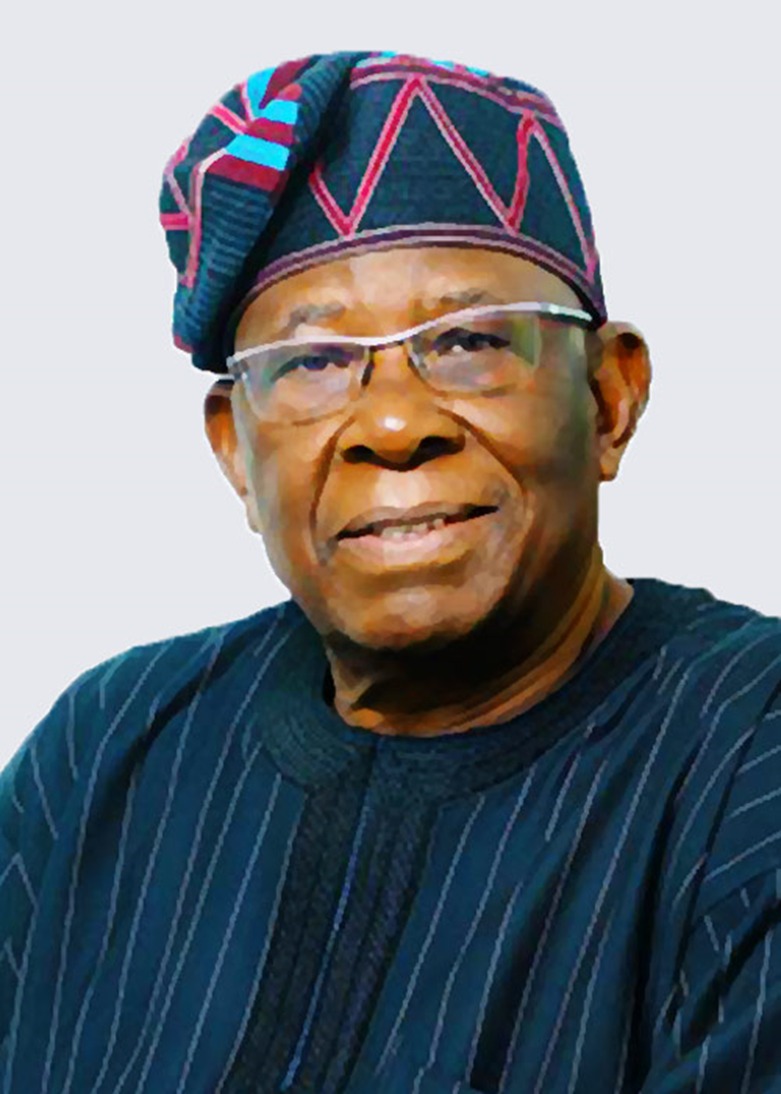
Chief Michael Ade-Ojo: The Visionary Behind Toyota’s Rise and Elizade University’s Legacy

Published

on

From automobile pioneer to education advocate, Chief Michael Ade-Ojo’s journey reflects innovation, philanthropy, and national development.

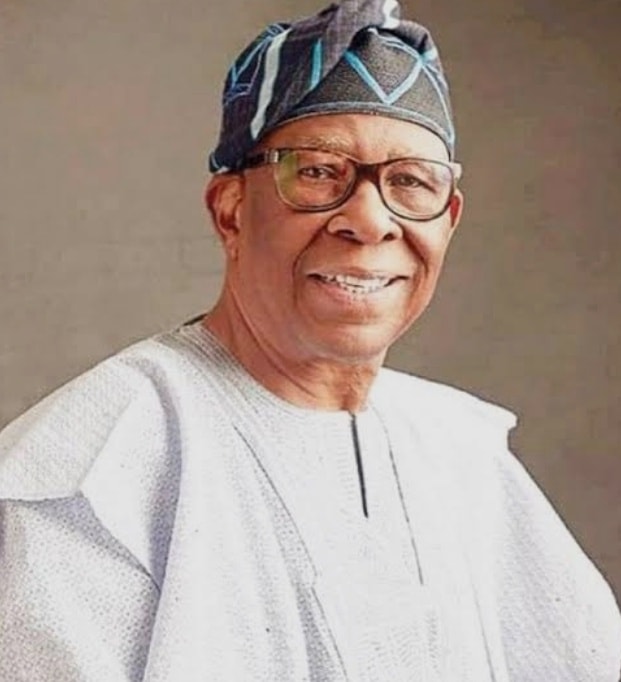
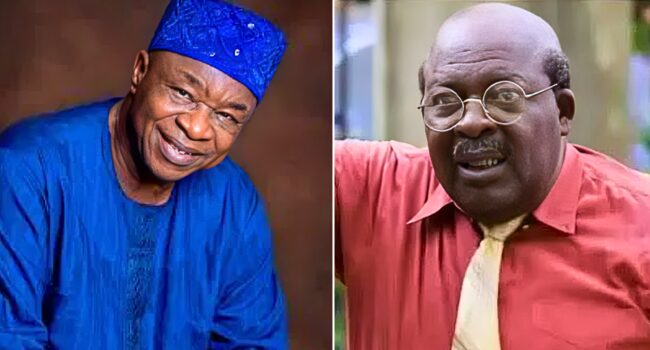
The man in the image is Chief Michael Ade-Ojo, a distinguished Nigerian businessman, entrepreneur, and philanthropist whose influence spans the automobile and education sectors. He is best known as the founder of Elizade Motors and Elizade University, two institutions that have become symbols of innovation, excellence, and national pride.

Born on June 14, 1938, in Ilara-Mokin, Ondo State, Michael Ade-Ojo’s early life was marked by resilience and ambition. Coming from humble beginnings, he understood the value of hard work and education from a young age. After completing his early education, he attended Imade College, Owo, and later graduated from the University of Nigeria, Nsukka, where he earned a degree in Business Administration in 1965.

Shortly after graduation, Ade-Ojo began his career at the British Petroleum (BP) company. However, his entrepreneurial drive soon led him to establish his own business. In 1971, alongside his late wife Elizabeth Wuraola Ojo, he founded Elizade Independent Agencies (EIA) — a company that would later become synonymous with automobile excellence in Nigeria. The name “Elizade” was coined from the combination of Elizabeth and Ade-Ojo.

Under his leadership, Elizade Motors revolutionized the Nigerian automobile market. Ade-Ojo secured partnerships with international car manufacturers, most notably Toyota Motor Corporation of Japan, which eventually led to the widespread adoption of Toyota vehicles in Nigeria. His visionary business strategies and consistent reliability earned him the affectionate nickname “Mr. Toyota.”

By the late 1980s and 1990s, Elizade Motors had become a household name, representing quality, trust, and innovation. The company’s success story laid the foundation for Toyota Nigeria Limited (TNL), which became one of the leading automobile distributors in the country. Ade-Ojo’s model of efficiency and integrity helped shape the Nigerian automobile distribution landscape, inspiring many young entrepreneurs.

See also  Vintage Enamelware Pots: A Glimpse into Nigeria’s Culinary and Cultural Heritage (PHOTOS)

Beyond business, Chief Ade-Ojo has made enormous contributions to education and community development. In 2012, his long-held dream of establishing a world-class higher institution came true when the Federal Government of Nigeria licensed Elizade University, located in his hometown of Ilara-Mokin, Ondo State. The university, built with a vision to promote excellence and innovation, offers a serene learning environment and modern infrastructure — a testament to Ade-Ojo’s commitment to youth empowerment and national progress.

Through his philanthropic initiatives, Ade-Ojo has funded scholarships, endowments, and educational projects to support talented but financially disadvantaged students. It is reported that he has invested over ₦40 billion into Elizade University, reflecting his lifelong passion for education and human capital development.

His achievements have earned him numerous accolades, including the Officer of the Order of the Niger (OON) in 2005, among several industry and humanitarian awards. Despite his success, Ade-Ojo remains deeply connected to his roots. He continues to invest in the infrastructural development of Ilara-Mokin, transforming it into one of the most progressive towns in Ondo State.

Today, Chief Michael Ade-Ojo’s legacy extends beyond automobiles and education. He embodies the values of perseverance, innovation, and community service — qualities that have inspired generations of Nigerian entrepreneurs. His story reminds us that success is not merely about wealth, but about creating institutions that outlive one’s lifetime.

References:

Elizade University Official Website

Vanguard Nigeria, “Ade-Ojo at 85: Celebrating the Man Who Brought Toyota to Nigeria” (2023)

FOLLOW US ON:

FACEBOOK

TWITTER

PINTEREST

TIKTOK

YOUTUBE

LINKEDIN

TUMBLR

INSTAGRAM

Continue Reading
Click to comment

Leave a Reply

Your email address will not be published. Required fields are marked *

Lifestyle

PHOTOS: A Biafran Armoured Vehicle at the National War Museum, Umuahia: Ingenuity in a Time of Siege

Published

on

Displayed at the National War Museum in Umuahia, Abia State, this armoured vehicle stands as a striking material reminder of the technological improvisation that characterised the Biafran side during the Nigerian Civil War (1967–1970). The vehicle is commonly identified as an up-armoured T16 Universal Carrier, adapted and deployed by Biafran forces in the face of severe resource constraints.

The Nigerian Civil War in Context

The Nigerian Civil War, often called the Biafran War, erupted in July 1967 following the secession of the Eastern Region of Nigeria as the Republic of Biafra under the leadership of Lt. Col. Chukwuemeka Odumegwu Ojukwu. The conflict was rooted in a complex mix of political instability, ethnic tensions, economic disputes, and the fallout from the 1966 military coups.
The federal government imposed a land, sea, and air blockade on Biafra, drastically limiting access to weapons, fuel, spare parts, and food. This blockade forced Biafran engineers, mechanics, and technicians to rely heavily on local innovation and adaptation to sustain their war effort.

The Up-Armoured Universal Carrier

The vehicle shown in the museum is believed to be based on the T16 Universal Carrier, a light tracked armoured vehicle originally designed during the Second World War. Universal Carriers were widely used by Allied forces and were present in Nigeria during the colonial era.
During the war, Biafran forces modified available carriers by:

Reinforcing them with improvised armour plating

Adapting engines and mechanical components using locally available materials

Reconfiguring them for reconnaissance, troop movement, or limited combat roles

See also  Professor Patrick Okedinachi Utomi is a renowned Nigerian political economist, management expert, academic, author, and entrepreneur.

Although such vehicles could not match the firepower or durability of modern armoured tanks, they represented a pragmatic response to isolation, allowing Biafra to maintain some level of mechanised capability.

Ingenuity Under Pressure

The armoured carrier exemplifies what many historians describe as Biafran wartime ingenuity. Alongside makeshift armoured vehicles, Biafra also produced:

Locally assembled rockets and mortars (such as the Ogbunigwe)

Modified civilian vehicles for military use

Small-scale refineries and workshops to support logistics

These efforts were driven by necessity rather than abundance, highlighting the role of technical skill and improvisation in asymmetric warfare.

Human Cost and Global Attention

The war resulted in devastating human losses. Scholarly estimates suggest around 100,000 military deaths, while civilian deaths range from approximately 500,000 to over 2 million, largely due to famine and disease exacerbated by the blockade. These figures vary widely among historians and humanitarian organisations, reflecting the difficulty of precise wartime accounting.
Notably, the Nigerian Civil War was among the first conflicts to receive extensive global television coverage. Images of starving Biafran children broadcast internationally shaped global humanitarian awareness and influenced the development of modern relief organisations.

Preservation and Historical Memory

Today, the presence of this armoured vehicle at the National War Museum, Umuahia serves an educational purpose rather than a celebratory one. It invites reflection on:

The realities of civil conflict

The limits and possibilities of local technological innovation

The enduring human and social consequences of war

As an artefact, it underscores how material culture can help future generations understand both the creativity and tragedy that emerge under extreme historical conditions.

See also  [ICYMI] $4.7m US fraud: Ghana’s anti-graft agency, FBI seize Shatta Wale’s Lamborghini

Sources

National War Museum, Umuahia (museum displays and archival descriptions)

Nigerianland, Nigeria History Makers – Pictures

Falola, T. & Heaton, M., A History of Nigeria (Cambridge University Press)

FOLLOW US ON:

FACEBOOK

TWITTER

PINTEREST

TIKTOK

YOUTUBE

LINKEDIN

TUMBLR

INSTAGRAM

Continue Reading

Lifestyle

A Woman of Elegance, Resilience, and Impact: Alhaja Simbiat Atinuke Abiola

Published

on

This seldom-seen image from 1991 gently captures the serene presence of Alhaja Simbiat Atinuke Abiola (née Shoaga), pictured alongside her daughter, Wuraola Abiola, at her husband’s birthday celebration in Lagos—just a year before her passing. A prominent member of the renowned Abiola lineage, her life was rooted in service and generosity.

Alhaja Simbiat was not only the cherished spouse of the late Chief Moshood Kashimawo Olawale Abiola, she was also a formidable figure in her own right. In the early 1980s, she shattered glass ceilings by launching and directing Wonder Bakery, an innovative enterprise that provided employment to over 140 Nigerians—at a time when female business leaders were a rarity in the country.

Yet, her brilliance extended well beyond commerce.

In 1992, while waging a brave battle against cancer in a hospital in the United Kingdom, Alhaja Simbiat watched the heart-wrenching news of the Cairo (Dahshur) earthquake. Touched by the plight of the children affected, she selflessly donated $100,000 to support the reconstruction of a school that had been reduced to rubble. Even as her health declined, her compassion remained boundless—reaching across nations and touching lives.

That same year, Nigeria mourned the loss of a quiet luminary. Alhaja Simbiat passed away at age 51 in a British hospital, leaving behind a legacy defined by kindness, tenacity, and quiet leadership.

She was far more than a devoted wife and loving mother—she stood as a beacon of humanity, vision, and unwavering dignity.

May her soul continue to rest in perfect peace.

Source: historylovers

Photo: theelitesng

FOLLOW US ON:

FACEBOOK

TWITTER

PINTEREST

TIKTOK

YOUTUBE

LINKEDIN

TUMBLR

INSTAGRAM

See also  Professor Patrick Okedinachi Utomi is a renowned Nigerian political economist, management expert, academic, author, and entrepreneur.
Continue Reading

Lifestyle

VIDEO: Seyi Tinubu arrives Alaafin’s palace for installation as ‘Okanlomo of Yorubaland’

Published

on

The city of Oyo is currently witnessing an influx of political figures and traditional rulers for the installation of new high-ranking chiefs by the Alaafin of Oyo, Oba Abimbola Owoade.

Seyi Tinubu, accompanied by his wife, Layal, arrived at the palace of the Alaafin on Sunday.


Alaafin confers chieftancy titles on Seyi Tinubu. Credit: X|adejare_stephen


Alaafin confers chieftancy titles on Seyi Tinubu. Credit: X|adejare_stephen

PUNCH reports that Seyi, the son of President Bola Tinubu, will be installed as the “Okanlomo of Yorubaland,” a title which translates to “the beloved child” or “the one dear to the hearts of all Yoruba people.”

The title is said to symbolise a custodian of Yoruba values, unity, and cultural heritage.

The Senator representing Zamfara West and a former Governor of Zamfara State, Abdul’Aziz Yari, has also reportedly arrived in Oyo, accompanied by a delegation of northern senators and political figures.


Alaafin confers chieftancy titles on Seyi Tinubu, Senator Yari. Credit: X|adejare_stephen

Yari will also be installed as the “Obaloyin of Yorubaland” on the same occasion by the Alaafin.

The Director of Media and Publicity to the Alaafin, Bode Durojaiye, in a recent statement, reportedly stated that the ‘Obaloyin of Yorubaland’ title represents love, compassion, justice, and a bridge between physical and spiritual realms.

Both titles are said to come with responsibilities that include promoting Yoruba culture, advising the Alaafin, fostering unity, and advancing education and social welfare.


Alaafin confers chieftancy titles on Seyi Tinubu, Senator Yari. Credit: X|adejare_stephen

Videos circulating on social media reveal that the venue of the event is set, capturing the presence of several notable figures, including former Governor of Kano State, Abdullahi Ganduje, lawmakers, and a diverse assembly of traditional rulers and chiefs.

See also  Hameed Ali: A Military Strategist Turned Customs Reformer

Watch videos below:

CLICK TO WATCH THE VIDEO

Credits: PUNCHNG

FOLLOW US ON:

FACEBOOK

TWITTER

PINTEREST

TIKTOK

YOUTUBE

LINKEDIN

TUMBLR

INSTAGRAM

Continue Reading

Trending