Connect with us

News

Nearly $3bn spent on Eurobond debt servicing under Tinubu

Published

on

The Federal Government has spent about $2.93bn servicing Eurobond debt across eight quarters under President Bola Tinubu, according to an analysis of external debt-service records published by the Debt Management Office.

The data, covering Q3 2023 to Q2 2025, show that Eurobond obligations alone accounted for 31.5 per cent of Nigeria’s total external debt service of $9.32bn over the two years.

More striking is the structure of the payments: interest charges consumed $2.43bn out of the $2.93bn spent on Eurobonds, meaning that 83 per cent of all Eurobond servicing in the period went to interest rather than principal.

This reflects the costliness of Nigeria’s dependence on commercial borrowing and suggests that expensive debt will remain a major burden on government finances for several years.

Tinubu assumed office in May 2023, making Q3 2023 the first full quarter under his administration. That quarter was also the most expensive within the two-year window, as Nigeria redeemed a maturing Eurobond.

The country paid a total of $943.66m in Eurobond obligations in Q3 2023, comprising a $500m principal redemption and $443.66m in interest. Nigeria’s total external-debt servicing for the period stood at $1.39bn, meaning Eurobonds alone accounted for 67.8 per cent of the entire foreign-debt bill that quarter.

It remains the quarter with the highest Eurobond share under the Tinubu administration. In Q4 2023, Eurobond servicing fell sharply as no principal was due. The government paid $148.57m, all of it interest, while total external-debt servicing amounted to $943.17m, and Eurobonds accounted for just 15.8 per cent of the total in the quarter.

Nigeria’s Eurobond obligations resumed their upward climb in Q1 2024, when the government paid $282.57m in interest. Total external-debt servicing for the quarter was $1.12bn, giving Eurobonds a 25.2 per cent share.

The pattern strengthened in Q2 2024, when Eurobond interest payments rose to $293.73m. With total foreign-debt servicing at $1.12bn, Eurobonds accounted for 26.2 per cent. These two quarters showed a reappearance of heavy commercial-debt costs within Nigeria’s external obligations, even outside redemption periods.

A significant spike appeared in Q3 2024, when Eurobond servicing hit $427.72m. This was entirely interest payment, and it pushed Eurobond payments to 31.9 per cent of the total external-debt service of $1.34bn. Q3 quarters are increasingly emerging as heavy repayment windows due to the structure of Nigeria’s Eurobond coupons, and 2024 followed that pattern.

The cost dropped again in Q4 2024, mirroring the drop in Q4 2023. Eurobond servicing stood at $148.57m, while total external-debt service was $1.08bn. This placed the Eurobond share at 13.8 per cent, the lowest in the two-year period.

However, the relief was short-lived. Eurobond obligations surged back to $427.72m in Q1 2025, matching the level recorded in Q3 2024. Nigeria’s total external debt servicing for the quarter reached $1.39bn, placing the Eurobond share at 30.7 per cent.

See also  Reps approve $347m loan for Lagos-Calabar highway, others

The repeated spikes in Q3 2024 and Q1 2025 highlight the growing weight of interest charges on Nigeria’s fiscal operations and the clustering of Eurobond coupons around similar maturity cycles. In Q2 2025, the most recent quarter in the records, Eurobond servicing fell to $260.07m, entirely interest.

Nigeria’s total external-debt servicing was $932.10m, giving Eurobonds a 27.9 per cent share. The PUNCH observed that Nigeria is spending far more on servicing existing Eurobonds than on reducing the underlying principal.

Of the $2.93bn spent on Eurobonds, only $500m went toward reducing the debt stock; the remaining $2.43bn was consumed by interest. The data also show that Eurobonds took between 13.8 per cent and 67.8 per cent of Nigeria’s total external-debt service in each quarter under review.

Further analysis by The PUNCH showed that Nigeria’s Eurobond commitments stood at $17.32bn as of June 2025, accounting for 36.86 per cent of the country’s total external debt, according to the data from the DMO.

This marks an increase from $15.62bn in June 2023, when Eurobonds represented 36.19 per cent of external debt. The data show that Nigeria’s Eurobond stock rose by $1.70bn between the two periods — a 10.88 per cent increase — indicating the country’s growing exposure to high-interest commercial debt.

In September, the Federal Executive Council approved plans to raise $2.3bn through Eurobond sales as part of the 2024–2025 borrowing plan, with an additional $1.1bn set aside to refinance maturing foreign obligations. The National Assembly also endorsed the foreign borrowing.

By November, Nigeria raised $2.35bn from international investors through a dual-tranche Eurobond issuance that attracted a record $13bn in bids, the Debt Management Office said in a statement.

The offer, split between a 10-year and a 20-year note, represents Nigeria’s largest order book in the international capital market and comes as the Federal Government moves to plug its 2025 fiscal deficit and broaden its funding sources amid ongoing fiscal and monetary reforms.

The Eurobond comprised $1.25bn due in 2036 and $1.10bn due in 2046, with the 10-year note priced at 8.63 per cent and the 20-year at 9.13 per cent.

According to the DMO, the sale drew participation from investors in the United Kingdom, North America, Europe, Asia, the Middle East, and Nigeria, cutting across fund managers, pension and insurance funds, hedge funds, banks, and other financial institutions.

The agency said the $13bn orderbook was “the largest ever” for Nigeria, reflecting strong appetite from a broad mix of buyers. The notes will be listed on the London Stock Exchange, FMDQ Securities Exchange Limited, and the Nigerian Exchange Limited.

In the DMO statement, President Bola Tinubu said the investor response showed continued confidence in the Nigerian economy and reaffirmed the country’s credibility in global debt markets.

“We are delighted by the strong investor confidence demonstrated in our country and our reform agenda. This development reaffirms Nigeria’s position as a recognised and credible participant in the global capital market,” Tinubu was quoted as saying.

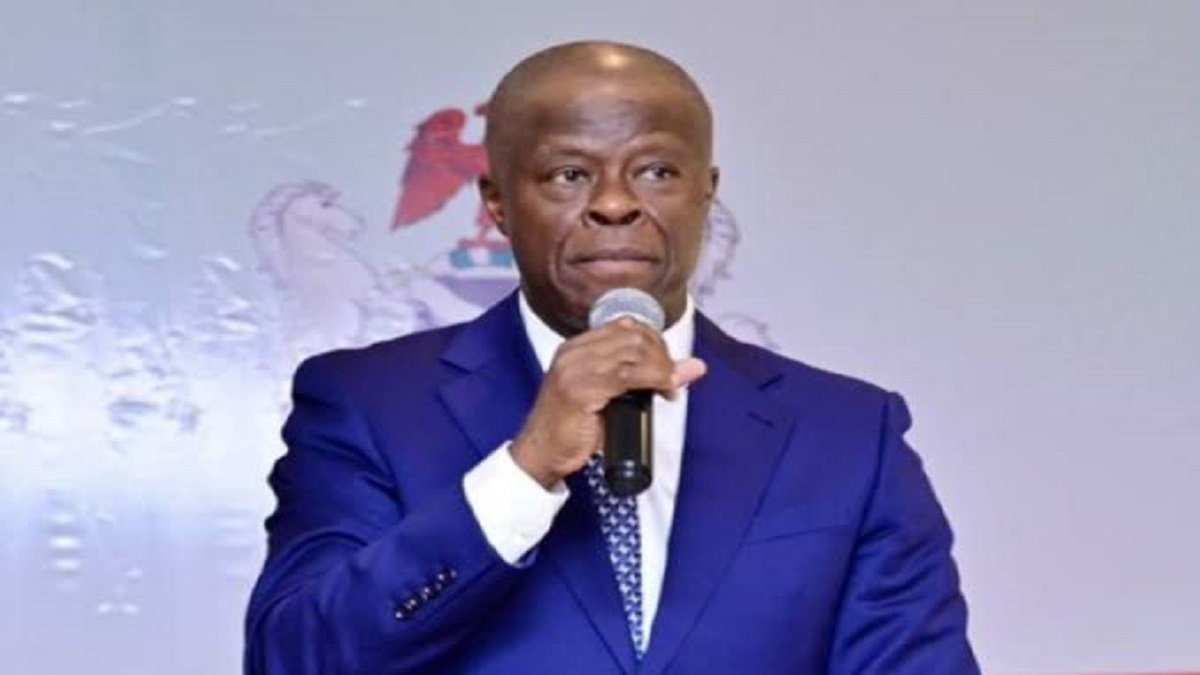
Also, the Minister of Finance and Coordinating Minister of the Economy, Wale Edun, said the outcome underscored international trust in the government’s reform drive and commitment to fiscal stability.

See also  Outrage over police crackdown on Lagos anti-demolition protesters

DMO Director-General, Patience Oniha, said tapping long-term financing through the Eurobond market aligned with the strategy of supporting economic growth while reducing pressure on short-term domestic borrowing.

“Nigeria’s ability to access the Eurobond Market to raise long-term funding needed to support the growth agenda of President Bola Tinubu is a major achievement for Nigeria and is consistent with the DMO’s objectives of supporting development and diversifying funding sources,” Oniha said in the statement.

According to the DMO, proceeds from the issuance will be used to finance the 2025 budget deficit and meet other government funding needs. The transaction was arranged by Chapel Hill Denham, Citigroup, Goldman Sachs, J.P. Morgan, and Standard Chartered Bank as joint bookrunners, while FSDH Merchant Bank acted as financial adviser.

Nigeria last accessed the Eurobond market in December 2024, when it raised $2.2bn. The latest issuance, achieved amid tight global credit conditions and rising borrowing costs, signals that the country still has access to external financing despite the fiscal pressures it faces.

Nigeria’s foreign exchange reserves are projected to rise to $45bn by the end of 2025, driven by strong investor confidence following the country’s successful $2.3bn Eurobond issuance, according to investment house CardinalStone.

It also estimated that Nigeria’s year-end debt level would rise to N166.7tn (42.2 per cent of GDP). In a separate assessment, Comercio Partners described the Eurobond’s success as a “positive signal” for Nigeria’s fiscal outlook.

However, it warned that the gains could be undermined if exchange rate instability resurfaces.

“On one hand, the inflow boosts external reserves, provides fiscal breathing space, and enhances the government’s capacity to meet short-term obligations. On the other hand, it raises exposure to foreign exchange risk and heightens interest burdens in hard currency,” Comercio Partners said.

Experts react

Financial analysts have offered mixed assessments of Nigeria’s rising reliance on Eurobond borrowing, warning that while the instruments provide quick access to capital, they also carry cost and refinancing risks that could strain government finances if not managed prudently.

Reacting to the DMO data showing that Nigeria spent $2.93bn servicing Eurobonds across eight quarters—83 per cent of which went to interest—investment professionals said the country must balance ease of access with long-term repayment pressures.

The Managing Director/CEO of Arthur Stevens Asset Management Limited, Olatunde Amolegbe, said Eurobonds would continue to feature in Nigeria’s financing mix because of their speed and flexibility.

He noted that governments typically use a combination of debt options, explaining that “there will always be a need to have a mix of debt instruments depending on cost, timing, and speed of execution.”

See also  See the real story behind failed police communications system

Amolegbe said Eurobonds remain attractive because they are “relatively easy sources of debt” and usually free of the “onerous conditions” that accompany multilateral loans, even when the latter appear cheaper.

He added that borrowing was unavoidable for countries with large infrastructure needs, stressing that Nigeria’s concern should be disciplined deployment and repayment capacity. “Inasmuch as those funds are being deployed appropriately and we maintain the ability to meet repayment terms, then it’s not much of an issue,” he said.

A Lagos-based economist, Adewale Abimbola, downplayed the risks, arguing that Nigeria had maintained a strong repayment history. According to him, “I don’t think there’s any significant risk. Nigeria has always been meeting its Eurobond obligations,” citing the recent oversubscription as evidence of investor confidence.

Abimbola said borrowing was acceptable if tied to productive projects and warned that excessive domestic borrowing could crowd out private investment.

He argued that external commercial debt remained viable as long as interest-rate and exchange-rate exposures were controlled. “As long as interest, market, and exchange-rate risks are carefully managed, I don’t see any risk,” he said, adding that the recent currency recovery meant “currency risk will almost be inexistent if reforms are sustained.”

He noted that Eurobonds are inherently costlier because “commercial loans have higher interest compared to bilateral or multilateral loans,” referencing Nigeria’s latest issuance priced at 8.75 per cent for the 10-year and 9.25 per cent for the 20-year notes.

Finance professional and research analyst, Dayo Adenubi, offered a more cautious view, describing Eurobonds as “market-driven financing” that gives governments and corporates faster access to long-term capital but at a high cost.

He explained that repayment terms are dictated by investors and investment banks, which price the issuer’s credit risk. “It’s easy to get, but it’s more expensive,” he said. Adenubi warned that Eurobonds delay the principal burden until maturity, which encourages serial refinancing.

“You pay coupons semi-annually and the principal at maturity, so it postpones the day of judgement,” he said, noting that most issuers “use a new one to refinance once it’s time to pay.”

He cautioned that failure to achieve the expected returns on projects funded by Eurobonds could lead to distress. “If the projects do not turn out as successful as forecasted, there’s risk of default, which can get very ugly,” he said, pointing to Ghana, Sri Lanka, and Kenya as recent cautionary tales.

According to him, while multilateral loans remain cheaper and domestic borrowing theoretically easier, Eurobonds require disciplined macroeconomic management to avoid refinancing traps. “If the economy improves and the government’s finances improve, you can refinance with better terms,” he said.

punch.ng

FOLLOW US ON:

FACEBOOK

TWITTER

PINTEREST

TIKTOK

YOUTUBE

LINKEDIN

TUMBLR

INSTAGRAM

Continue Reading
Click to comment

Leave a Reply

Your email address will not be published. Required fields are marked *

News

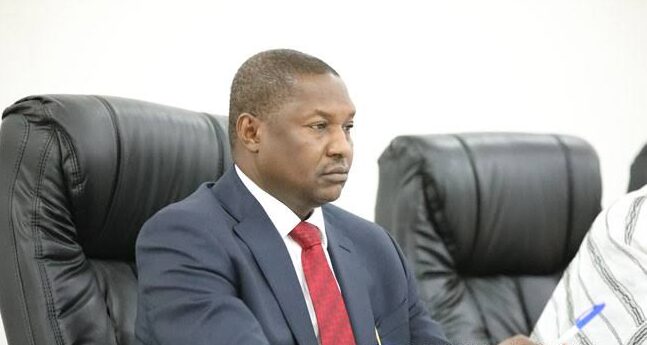
EFCC moves to seize 57 Malami-linked properties

Published

on

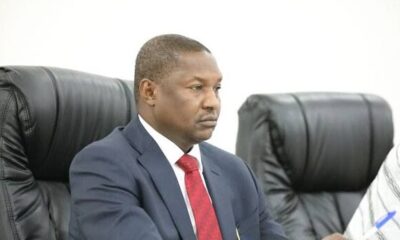
The Economic and Financial Crimes Commission has urged the Federal High Court in Abuja to order the permanent forfeiture of 57 properties allegedly linked to a former Attorney General of the Federation and Minister of Justice, Abubakar Malami, to the Federal Government.

The anti-graft agency, in a motion on notice filed by its legal team led by Jibrin Okutepa (SAN) and Ekele Iheanacho (SAN), told Justice Joyce Abdulmalik that the respondents failed to place sufficient material before the court to justify setting aside the interim forfeiture order earlier granted.

The motion, marked FHC/ABJ/CS/20/2026, listed Malami, Hajia Bashir Asabe and Abiru’ Rahman Abubakar Malami among the respondents, alongside several companies allegedly linked to the assets.

The EFCC brought the application pursuant to Section 17 of the Advance Fee Fraud and Other Fraud-Related Offences Act, 2006, seeking “a final order of this honourable court forfeiting to the Federal Government of Nigeria, the properties described in the schedule below, which were found by the commission as properties reasonably suspected to be proceeds of unlawful activities.”

Arguing the motion, Okutepa stated that the proceeding was a non-conviction-based forfeiture and that the court has the statutory authority to grant the relief sought.

He added: “This honourable court made an interim order forfeiting the properties to the Federal Government of Nigeria.

“The order of the honourable court has been published in a national daily, namely THISDAY Newspaper of 9th January, 2026.

“No sufficient cause has been shown why the properties under the interim forfeiture order should not be finally forfeited to the Federal Government of Nigeria,” Okutepa argued.

See also  UK contractor details luxury property, unpaid bills during Diezani trial

In an affidavit deposed to by an EFCC investigator, Daniel Adebayo, the commission said it received multiple petitions alleging corruption, abuse of office and fraud against the former minister.

Adebayo stated that investigations involved obtaining financial records from banks and the Central Bank of Nigeria, as well as inquiries from agencies including the Corporate Affairs Commission, Federal Inland Revenue Service, Code of Conduct Bureau and the Abuja Geographical Information System.

He added that land registries in Kebbi, Sokoto and Kano states were also queried, while assets were physically verified and valued.

The officer said individuals linked to the transactions were invited and interviewed.

He further stated that Malami’s earnings while in office between 2015 and 2023, including salaries, allowances and estacodes, were not commensurate with the value of the assets under investigation.

“I know as a fact and verily believe the findings of the investigation, which are as follows:

“Mr Abubakar Malami (SAN) was the Hon. Minister of Justice and Attorney General of the Federation, hereinafter referred to as HAGF, from 2015 to 2023.

“He was paid a total of N89,664,000.00 as salary between 2015 and 2023, whilst in office, with an average payment of N962,663.68 per month.

“He also received a severance allowance of N12,158,400.00 at the end of his tenure in office.

“Mr Malami SAN was also paid estacodes allowances to cover his travel expenses whenever he travelled outside the country on official trips.

“He calculated and declared a total sum of N253,608,500.00 as the amount he received for the official trips between 2015 and 2023 in a letter written to the Chairman of the CCB as an addendum to his Assets Declaration Form in June 2023.

See also  Outrage over police crackdown on Lagos anti-demolition protesters

“Attached and collectively marked as Exhibit EFCC 2 & 3 are copies of the asset declaration forms filled out by Mr Malami SAN from 2015 to 2023, together with a letter dated 16th of June, 2023, written by him to the Chairman of the CCB as an addendum to the asset declaration form as found at his house during EFCC’s execution of a search warrant.”

Adebayo further deposed: “Aside from the actual acquisition of the properties which are manifestly disproportionate to Mr Malami SAN‘s known and lawful sources of income, no building permits/approvals from appropriate authorities were obtained to erect most of the various structures in Kano and Kebbi states as part of a scheme to disguise the unlawful origin of the funds used to acquire the assets.”

He alleged that some of the properties were acquired through proxies and corporate entities linked to the former minister.

The EFCC listed 57 landed properties spread across Abuja, Kebbi, Kano and Kaduna states, including assets tied to Rayhaan University in Kebbi.

Justice Abdulmalik fixed April 21 for the hearing of the motion.

The case stems from an earlier order of the Federal High Court in Abuja, on January 8, 2026, presided over by Justice Emeka Nwite, which granted an interim forfeiture of the 57 properties following an ex parte application by the EFCC.

The properties, valued at about N213.2bn, were said to be linked to Malami and two of his sons and were suspected to be proceeds of unlawful activities.

The court directed that the assets be temporarily forfeited to the Federal Government, and ordered the EFCC to publish the order in a national newspaper to enable interested parties to show cause within 14 days why they should not be permanently forfeited.

See also  Lagos-Calabar highway section to open December 2025 – FG

Following the interim order, Malami and other respondents challenged the forfeiture proceedings, urging the court to set aside the order.

punch.ng

FOLLOW US ON:

FACEBOOK

TWITTER

PINTEREST

TIKTOK

YOUTUBE

LINKEDIN

Continue Reading

News

Presidency reveals why Tinubu consoled Plateau victims at Jos airport

Published

on

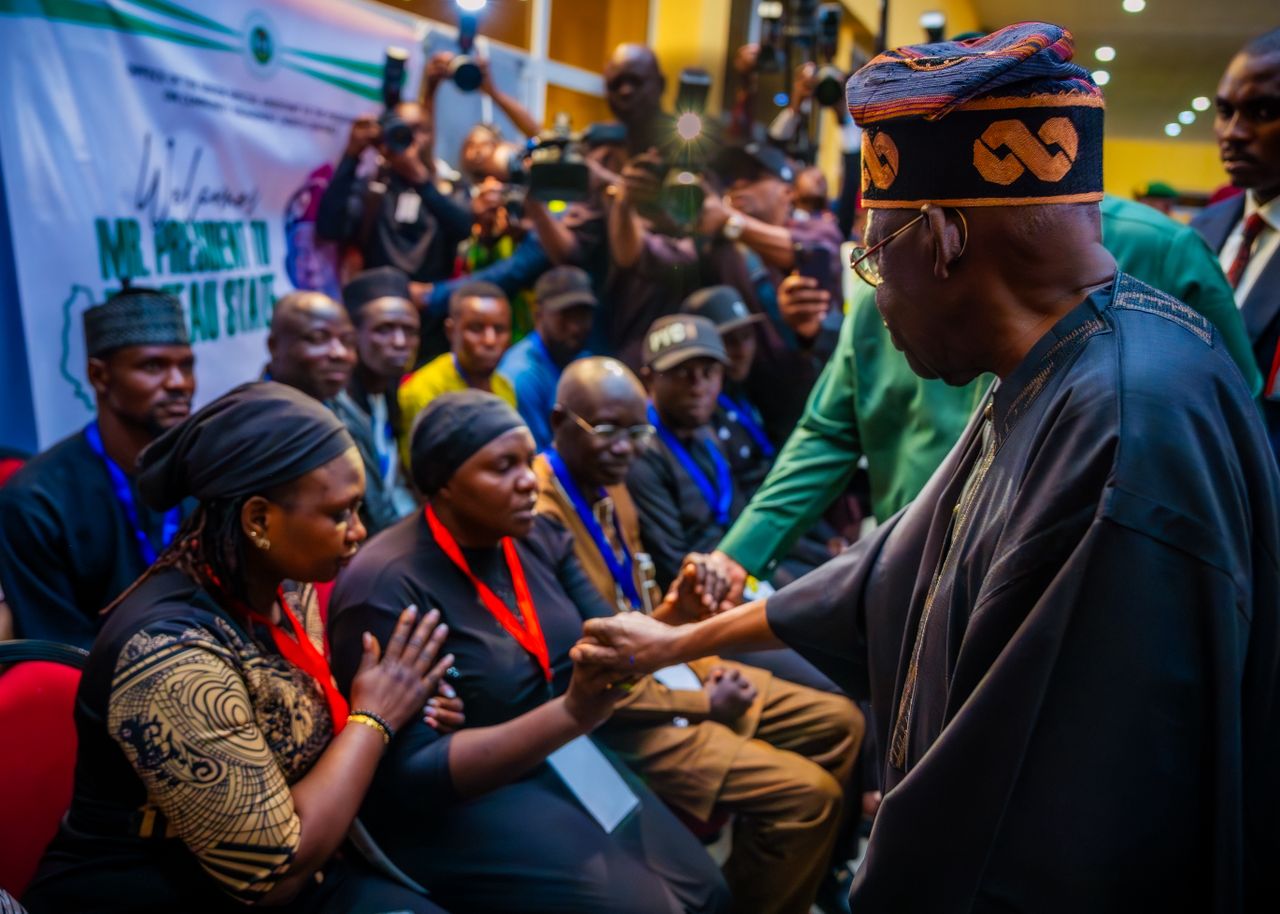
The Presidency has defended President Bola Tinubu’s decision to meet victims of the Plateau State killings at a hall adjoining the Yakubu Gowon Airport rather than driving into Jos township, citing flight restrictions and logistical constraints as the reasons for the arrangement.

In a statement by Special Adviser to the President on Information and Strategy, Bayo Onanuga on Friday, the Presidency said the runway at the airport does not support night flights due to the absence of navigational aids, making it impossible for Tinubu to visit Rukuba, drive back to the airport and depart before dusk.

“Upon arrival in Jos, the visit encountered some logistical challenges. While the road distance from the airport to Jos township is approximately 40 minutes, the runway does not support night flights due to the absence of navigational aids. The constraints made it unfeasible to drive into town, meet victims for on-the-spot assessment and return to the airport before dusk.

“Consequently, state and federal officials decided to bring representatives of the affected community to a hall adjoining the airport so the President could meet with them promptly while adhering to flight restrictions,” the statement read.

The visit came days after gunmen attacked the Angwan Rukuba district of Jos North Local Government Area on Palm Sunday, killing at least 28 people in one of the deadliest outbreaks of violence in the state in recent years.

The Presidency also explained the delay in Tinubu’s departure for Jos, saying his itinerary for Thursday had included receiving Chadian President Mahamat Idriss Déby Itno at the Presidential Villa for a bilateral meeting on security cooperation.

See also  See the real story behind failed police communications system

The meeting, which centred on strengthening collaboration between Nigeria and Chad, ran longer than expected, pushing back his scheduled departure.

According to the statement, Tinubu had initially planned to travel to Iperu, Ogun State, on Thursday, but suspended the trip after Mutfwang briefed him on the security situation in Plateau.

“President Tinubu’s itinerary for Thursday included two main engagements: receiving the Chadian President, Mahamat Idriss Déby Itno, and proceeding to Iperu, Ogun State. After Governor Caleb Mutfwang’s briefing, President Tinubu suspended the trip to Ogun.

“Overnight, the Presidential Villa made arrangements for the visit to Jos, with presidential assets quickly deployed. However, the President could not postpone the scheduled visit by the Chadian leader.

“The President of Chad was at the Presidential Villa for a very important bilateral meeting focused on strengthening security collaboration between the two countries. The meeting ran longer than expected, affecting President Tinubu’s scheduled departure for Jos,” the statement read.

Despite the airport setting, the Presidency said the visit achieved its objectives, with Tinubu consoling victims, listening to community leaders and engaging key stakeholders on ending the decades-long cycle of violence in the state.

Among those present at the hall were the Minister of Defence, the Chief of Army Staff and the Inspector-General of Police, who had earlier visited Rukuba ahead of the President’s arrival.

“President Tinubu’s visit to Jos was not merely symbolic. It was a strategic, high-level engagement aimed at bringing all stakeholders together to address the root causes of conflict and insecurity in the state,” Onanuga said.

See also  Pay more attention to health, education, TUC tells Diri

At the meeting, Tinubu addressed a grieving mother, Mrs Rhoda, whose video clutching the bloodied corpse of her son had gone viral and become the defining image of the attack. He identified her son as Ayuba.

“I know the pain. I see in the video how you buried your loved ones and the pain and agony in your heart. But it’s only God who can give you joy and hope. No amount of money can pay all of you back,” he said.

He also announced the deployment of over 5,000 AI-enabled cameras across Plateau State, directed security chiefs to track down the killers, constituted a committee to assess losses and provide compensation, and invited community leaders to Abuja for further talks.

The Nigerian Army separately announced the deployment of over 850 additional troops to reinforce operations under Operation Enduring Peace.

The Presidency insisted the visit was deliberate and strategic, with Onanuga saying “President Tinubu achieved the purpose of his visit, despite the naysayers’ attempts to ridicule it. He dropped an unmistakable message: sustainable peace must be built with the people, not imposed on them.”

However, former Vice President Atiku Abubakar criticised the visit as insensitive.

“It is both shocking and deeply insensitive that several days after the gruesome killings of innocent citizens, the President’s so-called ‘on-the-spot assessment’ was reduced to a brief stop at the foot of his aircraft, never extending beyond the airport, never reaching the grieving communities, and never touching the pain of the victims,” Atiku said in a statement by his aide, Phrank Shaibu.

See also  UK contractor details luxury property, unpaid bills during Diezani trial

He added that the visit had been hurriedly curtailed to allow Tinubu to proceed to Lagos for the Easter holidays, describing it as “a decision that reflects a deeply troubling prioritisation in the face of national grief.”

punch.ng

FOLLOW US ON:
FACEBOOK

TWITTER

PINTEREST

TIKTOK

YOUTUBE

LINKEDIN

Continue Reading

News

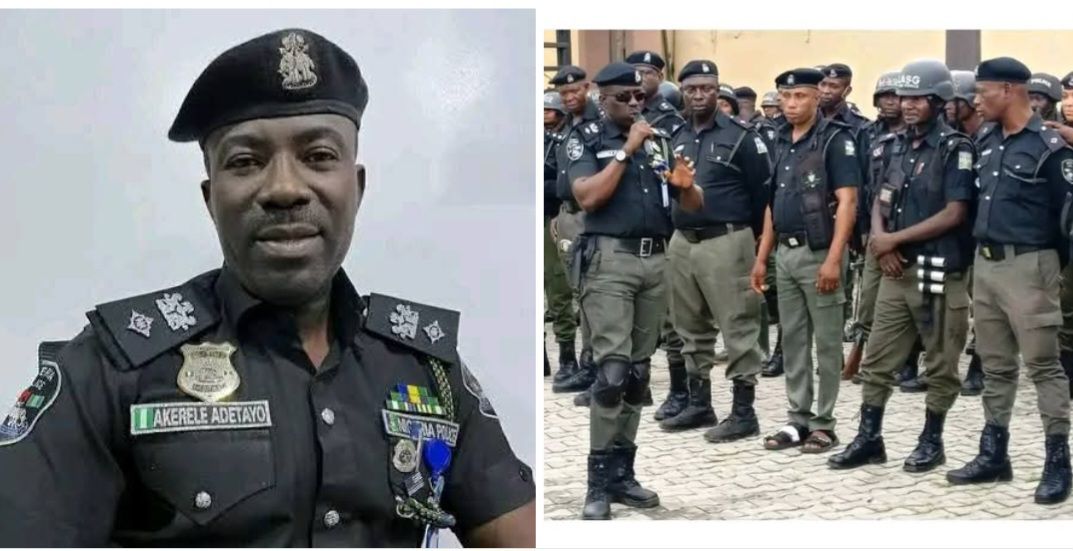
Lagos task force launches anti-crime patrol unit

Published

on

The Lagos State Task Force has launched an anti-crime patrol unit to combat criminal activities and environmental violation across the state.

The launch followed the ban by the Commissioner of Police, Tijani Fatai, on the agency’s enforcement of traffic violations in the state.

The agency stated that the round-the-clock anti-crime patrol unit represented a strategic initiative designed to proactively detect, deter and neutralise criminal intent before it becomes a threat to public safety.

Chairman of the Lagos State Task Force, CSP Adetayo Akerele, emphasised that the establishment of the unit was necessary to eliminate criminal elements posing serious security threats to residents and visitors within the state.

He said the new unit will function as a standby and sharp response team mandated to arrest and ensure the prosecution of offenders involved in activities such as drug peddling, street urchinism, activities of area boys commonly known as Omotaku, raids on criminal black spots, littering of the environment, attacks on government officials on lawful duty, quackery, one-chance robbery syndicates and other special offences.

Akerele reiterated the task force’s commitment to eradicating criminality in Lagos, promising to intensify surveillance, patrols and enforcement operations across all identified flashpoints.

He stated: “We will spare no effort to eliminate criminal activities in the state this year. We will compel criminals to desist from their acts or relocate from Lagos.”

The agency affirmed its commitment to safeguarding lives and property, urging residents to cooperate with law enforcement agencies by providing timely and credible information to aid ongoing security and environmental operations.

See also  Outrage over police crackdown on Lagos anti-demolition protesters

FOLLOW US ON:
FACEBOOK

TWITTER

PINTEREST

TIKTOK

YOUTUBE

LINKEDIN

Continue Reading

Trending