Connect with us

Lifestyle

Parents shouldn’t hide medical history from children — British-Nigerian urologist

Published

on

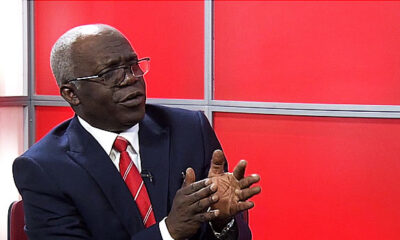
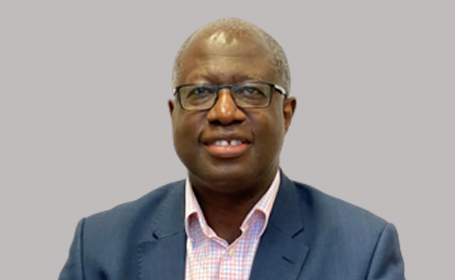
A London-based British-Nigerian consultant urological surgeon, Prof Francis Chinegwundoh, speaks with BIODUN BUSARI on his childhood experience and journey into the medical profession, among other issues

How was your childhood experience?

My dad came to the United Kingdom in the 1950s. He and my mum got married in London. They didn’t plan to stay in the UK, but something happened, and they ended up staying. Eventually, their four children, including me, were all doing very well at school.

With our academic performance, they decided we would stay rather than return to Nigeria, as other family friends had done. My parents thought going back would disrupt us.

What was growing up like among white children?

There were no majority-black schools. Every school then was predominantly white, with some black and Asian children. In those days, we lived in the mixed area of Balham, a suburb in south London. There was a majority of white people.

However, there were still quite a few black families from the Caribbean, West Africa, Asia, India, and Pakistan, and this made it a mixed area, and my siblings and I didn’t feel isolated because there were others like us. We went to school in a general environment, and the same applied to shops. It wasn’t much of a problem. It may have been different if we were not in London. Then and now, London is the most diverse part of the UK.

Did your parents influence your choice of medical career?

I guess I was about eight or nine years old when I started concentrating on medicine. Initially, it didn’t appeal to me, but there were television programmes that drew my interest. I can recall a programme called Emergency Ward 10 and another one called General Hospital. These were weekly soaps and programmes.

I just enjoyed those soap operas. I enjoyed the characters, and I started imagining and portraying myself as a doctor in those TV programmes. Then I remember getting one of the plastic toy sets. Then I decided that was what I wanted to do.

Academically, I was very strong. What my parents were interested in was my doing well in school. They didn’t focus on whether I should be a doctor or not. Of course, they were happy when I said I wanted to do medicine, but it was not something they pushed me into or suggested that I do. That impetus came from me. They encouraged me because I had the idea quite early on of what I wanted to do.

Can you share ideas about how your education was?

After primary school, I was able to attend a grammar school. Grammar schools are schools for academically bright students. These are free as opposed to private schools, which my parents could never have afforded. Private schools generally have very high academic standards, but they are expensive.

Grammar schools were a means of social mobility. They have very competitive exams. If you managed to get into a grammar school, then you were assured of an outstanding education, should you choose to take advantage of the opportunity.

I went to a grammar school. It was actually a Catholic school in south London called Salesian College. I did very well. I was second in class throughout. Then I applied to get into medical school. That was very competitive. You must be very good, with what we used to call O-Levels at that time, which are now called GCSEs.

You must have good grades for A-level. Then the support of your headmaster or headmistress, who would write a letter of support to buttress your application to medical school, was very important. Thankfully, I was able to secure entry to St. George’s Medical School, part of the University of London. It was in Tooting, south London.

What inspired you to pursue urology as an area of speciality?

It is quite a long journey. After I qualified at medical school at the age of 23, I was either 35 or 36 before I became a consultant urologist. It’s a long journey to reach consultant status in a surgical speciality. When you qualify, you do a series of house jobs or internships.

See also  PHOTOS: The Story of Madam Efunroye Tinubu, businesswoman, kingmaker and the first woman to kick against British rule in Nigeria

For two years, you rotate in general areas to have broad experience. After those two years, you then decide if you want to be a surgeon, physician, or general practitioner. You can even decide if you want to go to the army or the navy. There are exams to take for all these specialities.

For instance, if you want to be a surgeon, you must pass the exam of the Royal College of Surgeons. After passing the exam, you will enter a training programme. Under that training, you will still rotate in different areas. You might do some orthopaedics, cardiothoracic surgery, urology, or neurosurgery. This helps in getting experience in different surgical fields.

After these two or three years, you decide on the particular branch. It comes with competitive interviews, exams, written and published articles, journals presented, research, and so on, to secure a training post in your subspecialty.

I enjoyed urology as I found the consultants very amenable. I specialised in urology because it dealt with males and females as opposed to gynaecology, which deals with females only.

Based on your research, what is the correlation between black men and prostate cancer?

I have specialised in dealing with prostate cancer. I have been a consultant for almost 30 years. It was quite early when I took an interest in prostate cancer. I’ve seen a lot in my consultancy practice, and that led me to a lot of black men, making me wonder why I was seeing many black men with prostate cancer.

Then I decided to do some research in the late 1990s. I called the offices of the population census and surveys, basically the government statistical office in the UK, to know how many black men had prostate cancer. This statistical body said they didn’t know because there had not been any research into black men and prostate cancer in the UK.

That was why I embarked on doing the research. I was able to show and publish that black men were two times as likely to get prostate cancer as their white counterparts. I suspected something about our genetics, but exactly what we don’t know remains unknown.

So, having accepted the fact that black men have an increased risk of prostate cancer, we then focused on raising awareness in the community. For more than 25 years, I’ve been raising awareness that black men should be aware of their increased risk and therefore start getting themselves tested.

Unfortunately, prostate cancer is so common in Nigeria. I don’t think you’ll find any family where there are men over 50 and someone has not had prostate cancer. It’s the second most common cancer in men worldwide. In some countries, it’s number one, in others it’s number two. In fact, in the UK, more men get prostate cancer than women get breast cancer.

What should men, especially Nigerian men, do?

Get tested. Men should go for tests. I explain to men when I give talks that only men have a prostate gland, and it is usually the size of a small cherry or a walnut. It sits in front of the anus, in front of the back passage, deep inside the pelvis.

Its purpose is to produce the seminal fluid. So when a man climaxes, most of that fluid that comes out is prostate fluid. Some of it is sperm from the testicles, but most of that fluid is prostate fluid, which nourishes the sperm. So, it’s a sexual gland; it’s a sexual organ.

Secondly, the water pipe has to pass through it. So, the water pipe connecting the bladder to the penis, surrounding the exit of the bladder, is where the prostate lies. It surrounds the water pipe. As it gets bigger, which happens as you age, it begins to squeeze the water pipe.

So, most men will recognise that in their 40s, 50s, 60s onwards, the urinary flow becomes slower. When you’re very young, your urinary flow is very fast. As you age, the prostate begins to enlarge, and it squeezes the water pipe. Therefore, the flow becomes slow, and the bladder doesn’t empty as well.

See also  The History of the Yellow Card: How the International Certificate of Vaccination Came to Be

Most men over the age of 50 will have what we call benign prostate enlargement, where the prostate naturally squeezes the water pipe. Men will recognise this: the flow is slower; it takes them a longer time to pass urine. They have to go more often, and they have to get up at night. This is not to be confused with prostate cancer.

The problem with the prostate gland is that the symptoms of enlargement and squeezing of the water pipe are the same symptoms that may indicate prostate cancer, including difficulty in passing urine. It could be some sexual issues as well.

But very importantly, and I always emphasise this, you can have prostate cancer with no urinary symptoms whatsoever. So, if you’re waiting for urinary symptoms before you see your doctor, it may be too late.

Interestingly, in Nigeria, my colleagues tell me that 90 per cent of men with prostate cancer are already advanced. To find it when it’s early and still a small thing that can be dealt with very well, you have to have the blood test.

It’s a blood test called Prostate Specific Antigen. It’s like an early warning sign. So, I encourage men every year to have this blood test. If the blood test is raised, it leads to further investigations to see if the man has prostate cancer or not.

At what age is it advisable for men to have the test?

At 40 years of age. The reason is that you can have prostate cancer without any symptoms. In the UK, for example, I would say 80 to 90 per cent of men, when we find prostate cancer, it is still in the prostate. It has not spread anywhere.

Based on this, we can cure those men. Whereas in Nigeria, it is the opposite. About 80 to 90 per cent of men, by the time their cancer is diagnosed, it has already spread into the bones, into the pelvis, and into certain lymph glands.

One of the things we know about prostate cancer is that there is a hereditary element to it. So, if your father has prostate cancer, your risk is double. If your dad and maybe your brother have prostate cancer, your risk is quadrupled.

So, it’s very important to know your family history. Also, if it turns out that on your mother’s side, there is a history of breast cancer or cancer of the ovary, your risk as a male of getting prostate cancer is also high.

I emphasise this because when I was a child, various family friends would pass away. I would ask what they died from, and parents would say, ‘I don’t know’. So, there’s secrecy as to what they died from.

I encourage people to share their family histories. As a parent, if you have cancer of this or cancer of that, tell your children so they can start getting themselves tested earlier than they might otherwise have done. Family history is very important.

Can you briefly speak about your role as a medical legal expert?

It encompasses a whole range of things. For example, if you are riding a motorbike and you have an accident, maybe a car bumps into you, you fall over, and you might fracture your arm, leg, or pelvis, or even injure your penis or testicles, you will then seek compensation from the person who caused the accident.

Now, someone has to assess what injuries you’ve suffered and what the long-term effects of those injuries are. That’s where a medical legal expert comes in. So, I, as a urologist, would be asked to assess injuries to the testicles, injuries affecting one’s sex life. Maybe you’ve injured the kidney or something.

I would go through all the records, examine the man, and do a report. These are the injuries this person has suffered. This is going to be a permanent problem, or it’s a temporary problem, or we can get things better by doing this. That is one aspect: personal injury.

See also  How I made my first N1m in 1999 – Actress Funke Akindele

The other aspect is clinical negligence. If you, as a patient, come to me as a urologist and you allege that maybe your operation was done wrongly or there was a delay in your particular diagnosis, you go to a solicitor because you are aggrieved.

The solicitor has to employ someone, an expert in the area, to look through the entirety of the case and come to some sort of opinion as to whether indeed it was negligence or whether it was just bad luck. I will look at whether they breached their duty of care to you and caused you harm.

How do you manage all these roles?

I haven’t even mentioned that I’ve been running a cancer charity for the last 26 years. There’s a charity organisation called Cancer Black Care, which is based in London. It supports black people throughout their cancer journeys, helping them with getting information, navigating the social services system, and a whole lot.

What it means is that you have to be very efficient with your time. At the same time, you have to enjoy your family and friends. I enjoy travelling but over the years, I’ve managed to blend all these things.

When I deliver lectures, it is academic. I’m very adept at using computers and the latest software. I’ve started using artificial intelligence in some of my work. I’ve been paperless for up to 10 years.

How do you explain the magnet pulling Nigerian medical experts to the UK?

It is the pay and conditions of work. That is what it is. Everything here is very orderly. Every health service has its challenges, but they are completely different in magnitude from what obtains in Nigeria. Some of my colleagues in Nigeria are frustrated by having to work extremely long hours.

In the UK, no long hours, the pay is good, the education system is good. You don’t have to worry about electricity, whether at home or in the hospital. You don’t have to worry about water or buying a generator. Everything is designed to make your life comfortable and easy.

Education is a big pull as well. Education is free in the UK. You can pay extra for private education. But I think about 90 to 93 per cent of children in the UK are educated in the state system, while seven to 10 per cent are in the private system. Primary and secondary education is free in the UK.

The only time you start paying is when you go to university. Even at that, it is heavily subsidised by the government if you become a British citizen. So, people leave for professional reasons.

Then think of security reasons—you get it in the UK. The thing about medicine and nursing is that they are transferable skills. You can go anywhere in the world with those skills.

How did you feel when you became a Member of the Order of the British Empire?

It was in 2013. These awards are given to recognise your contributions, and it’s not something you apply for. It means some people notice your work and appreciate you. About four or five people will get nominated and scrutinised by a committee.

If you merit it, you get a letter from the palace. You have to keep it quiet for the two months until it’s officially announced and it’s in the media. So, it’s a secret kind of thing.

I was blessed that both my parents were able to come to Buckingham Palace, where I received the medal from Prince Charles (as he was called then), now King Charles III. I have always believed that hard work, determination, and focus bring rewards, and that was what I experienced.

So, I always advise and encourage everyone, especially youths, that your diligence for great work will be honoured and rewarded at one point or another if you don’t relent.

punch.ng

FOLLOW US ON:

FACEBOOK

TWITTER

PINTEREST

TIKTOK

YOUTUBE

LINKEDIN

TUMBLR

INSTAGRAM

Continue Reading
Click to comment

Leave a Reply

Your email address will not be published. Required fields are marked *

Lifestyle

Why my people hate Nigerians — South African beauty queen, Ntashabele

Published

on

South African model and beauty queen, Phumzile Ntashabele, tells BIODUN BUSARI about the circumstances surrounding the murder of a 22-year-old Nigerian e-hailing driver, Isaac Satlat, in South Africa and the struggle to get justice for him

Can you introduce yourself?

I’m Phumzile Grace Nsabele. I’m a widow and a mother of two. I’m a model, an international queen with a master’s in business administration. I’m a motivational speaker and an author. I’m Mrs Global Universe South Africa 2025, who is always standing for justice.

Who was Isaac Satlat to you?

He was my son’s friend. My son is Kagiso. I’m like a godmother to him. Isaac was one of my son’s friends, so I take all of them as my boys. Contrary to what many think, I’m not his biological mother. I liked him because he was my son’s best friend.

So, they grew up under me. I went with them everywhere that had to do with modelling, though I stayed in Johannesburg, while they stayed in Pretoria. There were like 10 of them, because I helped them in modelling; all of them, including Ugandans and other nationalities.

I met Isaac in 2024. We met at Soweto Fashion Week. He accompanied his friends, who were models. I saw him as they were taking pictures with his other model friend, Emmanuel.

I told him that he could be a model too, and he said, ‘Mummy, I’m short.’ I encouraged him that his height didn’t matter because he was confident. He appreciated me, and that was how we knew each other and got along.

How would you describe him?

He was a young man who was full of life. He had a promising future. He was a 22-year-old young man. Isaac was studying Mechanical Engineering at Divine Favour Progressive College. He was due to graduate next month. His next birthday would be on March 12.

He was going to be 23 next month. Isaac was a loving and jolly boy. He was a champion to all his friends. He was respectful everywhere.

He attended schools from primary to tertiary level in South Africa and was leading a church. He was a God-fearing child, and he was just awesome.

What do you know about his parents?

His father is a Nigerian. He lives in South Africa. Isaac was staying with his dad because he raised him. His mother and two sisters are in Nigeria. There is another man, Mr Solomon; he’s a family member and their spokesperson. We’ve been working together to get justice for him.

Where was Isaac before he received a message that led to his death?

He was with his friends, including my son, because they stayed together. He came back from work, then went into the gym. After the gym, that was when he got a notification to go and pick somebody for his e-hailing business.

See also  The History of the Yellow Card: How the International Certificate of Vaccination Came to Be

His friends even asked him when he would be back and he told them that it was a short trip and that he would be back in 15 minutes. That was the last time his friends saw him.

You said he came back from work; did he have another job?

He was an intern. He was working as an intern at St. Julian. That’s where he was studying. He was not a full-time Uber driver. He was doing Uber only part-time and was also a model.

Was there any time he was attacked by criminals before the one that took his life?

No, I don’t think there was any record of such. These killers just acted like normal people and requested any Uber driver who was available.

He picked up the call and went to attend to them. So, he wouldn’t know they were criminals; he just got a notification from his place to the other place. It was a very short distance.

Do you think it was one of the xenophobic attacks on Nigerians?

It was not a xenophobic crime. It was not Nigeria versus South Africa. It was just a crime that happened here in South Africa; it’s happening to people in many places, especially in Cape Town and Durban.

It’s been happening a lot. Apparently, this was the first time in Pretoria. Even the way they killed him was just so uncalled for.

Are you saying this was the first time a Nigerian would be killed in Pretoria?

Not only a Nigerian, but this was also the first time anyone that I know in the e-hailing business was killed. They’ve been robbing Uber drivers, but it was the first time in Pretoria where an Uber driver was killed.

Remember, nobody knew that Isaac was a Nigerian. I don’t think they targeted him because he was Nigerian. Nobody knew that he was Nigerian. They just wanted an e-hailing driver. They requested one, and it was so unfortunate that it was Isaac.

The sad part was that they did not even take anything, not even his phone. They only took his life. They found the phone near his wallet and his passport; everything was in the car.

Apart from this incident, why do you think Nigerians in South Africa are being killed by South Africans?

The truth is that a lot of Nigerians in South Africa are drug dealers. That’s what the South Africans are fighting against. They say that Nigerians sell drugs to their children. They are angry that Nigerians are destroying their children.

Many South Africans hate Nigerians because of drug dealing in South Africa. Meanwhile, it is not all Nigerians who are criminals. As a South African, I’ve been friends with Nigerians for the past 25 years.

See also  Five things to watch out for on Grammys night Sunday

My late husband was Ugandan. My whole life, I’ve been surrounded by foreigners, and they’ve been good friends to me. There was not even one Nigerian who ever disrespected me or did me any harm or wrong. They are my family.

That’s why most Nigerians are my family. It was the reason I liked Isaac. It is the reason I want justice for him. He was such a good young man. He was hardworking and focused.

Even with what I was doing for him and his family, my own South African people have called me names on social media. I’m told to leave South Africa because I am siding with drug dealers and drug lords.

The problem with South Africans is that they think all foreigners are criminals in South Africa. I tell my people that the Nigerians I see around me are hardworking. They are specialists and professionals like doctors, filmmakers, and brilliant people. They have legitimate businesses.

So, that’s why I cannot relate to my fellow South Africans when they are painting all Nigerians as drug dealers. I always tell them that drugs were in South Africa even before Nigerians arrived here. South Africans are just using Nigerians as scapegoats.

Do you think South Africans hate Nigerians because they are successful in their country?

Not all Nigerians are doing bad things in South Africa. The same applies to South Africans. We have rapists who are South Africans. We have murderers, just like those who killed Isaac. But there are good people, too.

I’m South African, and we have many good people like me. I used to say that if we blame foreigners for our problems and pursue them, South Africans will still have internal problems. It will start as racial grudges. It will be white and black.

After that, it is going to be tribal. It would be, ‘This one is Ndebele, and this one is Zulu’. We are always having something to fight about. It’s not foreigners. It’s not Nigerians. We, as South Africans, have our issues to deal with. I think it is self-hate or something like that.

But when we talk and when we side with foreigners, we are told that we are sleeping with Nigerians or foreigners. They will say we must leave the country. I’m taking all the insults. But I know that I’m an African queen. I am the queen that I am today because of foreigners.

It was when I represented South Africa as Mrs Universe South Africa that I won Mrs Worldwide South Africa. I represented South Africa in Singapore. The people who were with us were Nigerians. There were white people also; there were Congolese. So, I became the queen that I am because of foreigners.

When I reached Singapore, I did not represent South Africa. I represented all Africans, and they supported me. That’s why I support Africa in all the things I do. There are just these little people who are hurt. They are painting all Nigerians with the same brush.

See also  Godwin Alabi-Isama (born 24 December 1940) is a Nigerian retired military officer

How are the South African authorities treating the case?

Initially, a 25-year-old lady handed herself over to the police. Then, two other guys were arrested and there was a court case yesterday (Monday, February 16). It was adjourned till Monday, February 23, when they are going to appear again in the Pretoria Court.

The fourth suspect handed himself over yesterday. So, he appeared in court today (Tuesday, February 17). So, we have suspects. They are in the age group of 25 to 30.

In what ways have you sought justice for Isaac?

I posted Isaac’s pictures as seen in the video because if it were not for that video that was circulating on social media, we would not have been able to arrest these guys.

It was through this video that we managed to get this girl to hand herself in. People already saw who she was. That’s why she handed herself in. We are still circulating all the pictures and asking people to support.

We are asking Africans who are in South Africa to support, because this concerns all nations. It’s not only South Africans and Nigerians.

We are pleading with all Africans who are here to support us to get justice for Isaac. We are also pleading for financial assistance to take Isaac back home. There’s already a link where the connection has been made. We’ve been sharing that.

We designed something where people can make payments to help the father and Isaac go back home.

What kind of justice do you have in mind from the court?

First of all, they don’t deserve bail, which they were not granted. They are criminals. They deserve life imprisonment.

Unfortunately, in South Africa, there’s no death penalty. But if it were any other country, they would deserve the death penalty. Since there is no death penalty in South Africa, I think it should be life imprisonment. They do not deserve parole.

How can you be a woman and do this? If you see the video, Isaac fought for his life. He wanted to get out of the car. But for that woman to even hold his legs until his last breath, she is wicked.

Mind you, she didn’t even show any remorse, even yesterday in court. There was another guy among them who was smiling. They were not remorseful. That’s why their place shouldn’t be in society.

punch.ng

FOLLOW US ON:

FACEBOOK

TWITTER

PINTEREST

TIKTOK

YOUTUBE

LINKEDIN

TUMBLR

INSTAGRAM

Continue Reading

Lifestyle

Becoming a king won’t end my showbiz career — Okey Bakassi

Published

on

Actor, comedian and traditional ruler of the Umuihuocha Autonomous Community in Imo State, Okechukwu Onyegbule, popularly known as Okey Bakassi, speaks to NAOMI CHIMA about how he is balancing his career with his role as a traditional ruler

You have spent over three decades in the comedy industry. At what point did you realise that comedy was no longer a hobby, but your life’s calling?

Comedy is just one aspect of what I do. I prefer to describe myself as an entertainer. My work is a blend of acting, stand-up comedy and public speaking; all wrapped into one package.

It began as a hobby during my university days. But when I moved to Lagos for my youth service, I had to confront a defining question: what next? Do I get a paid job or pursue my interest in entertainment? Initially, I wanted to do it part-time because it came naturally to me and brought me joy.

However, I soon realized that entertainment is not something you dabble in. The industry wasn’t as structured as it is today. Roles weren’t waiting for you; you had to chase them relentlessly. It demanded the same level of commitment and energy as any full-time profession.

Toward the end of my service year, after deep reflection, I decided to pursue entertainment fully before considering paid employment. I was driven purely by passion. It gave me happiness and felt effortless. I told myself that if I could also make a living from it, then this was what I was meant to do.

Growing up, did you ever envision that you were a funny person destined for entertainment?

Not at all. I grew up in a close-knit family where we gathered in the living room to gist. My mother was an excellent storyteller. My father, though a military man, had a cheerful side when he wanted to. From a young age, we were encouraged to express ourselves freely, speak our minds and joke around. That environment shaped me.

As a child, I actually wanted to be a military doctor. I eventually studied engineering and somehow ended up in show business. Life has an interesting way of unfolding. At some point, I simply looked at life and said, “Let me do this first.”

Growing up as the eldest in a disciplined military home, how did that shape your humour and work ethic?

Life in the barracks influenced me tremendously. Any “barracks pikin” will tell you it’s a mini Nigeria; a melting pot of tribes, languages and cultures. You grow up with friends from everywhere. That exposure gives you stories, accents, behavioural patterns and perspectives you won’t easily find elsewhere.

Everything was around me — drama, diversity and humour. It all became material without me even realising it.

You’ve spoken about arriving in Lagos with nothing and even experiencing homelessness. What kept you going?

When I left Port Harcourt (Rivers State capital), my family was going through financial difficulties. I’m the first of five children, and I had never even been to Lagos before youth service.

What kept me going was understanding how tough things were back home. I had to choose my own version of “tough”: stay home with a false sense of security while still struggling, or face the obvious hardship in Lagos and fight to survive. I chose to survive in Lagos rather than add to my parents’ burden.

See also  How I made my first N1m in 1999 – Actress Funke Akindele

The comedy show, “Night of a Thousand Laughs”, was pivotal in your career. What stands out about its birth?

I was instrumental in creating Night of a Thousand Laughs. When I arrived in Lagos, I realised there was no defined comedy industry. There were travelling theatre groups and actors who did comedy within drama, but no structured platform for stand-up comedy.

Seeing comedians in Lagos who were as funny — or even funnier — than my friends in Port Harcourt made me realise talent was scattered across the country.

The question became: how do we bring them together?

At the time, I worked as Opa Williams’ production manager, alongside Reginald Ebere. We conceptualised a nationwide comedy reality platform to discover talent and bring them to Lagos to compete. Opa Williams embraced the idea. Reginald and I drafted the original concept, and it ultimately contributed significantly to the growth of stand-up comedy in Nigeria.

After acting opportunities slowed down, you reinvented yourself through stand-up. How crucial was that reinvention?

Reinvention was everything. Financial experts talk about multiple streams of income, but at that time, everyone focused on acting because stand-up wasn’t yet an industry.

After my first movie, I experienced what I’d call deliberate isolation from the acting space, and I didn’t understand why. It was a wake-up call. If one door closes, another must open.

I decided to take stand-up seriously, refine my craft and make it versatile. Eventually, I began earning more from stand-up than acting.

Which platform stretches your creativity the most?

Stand-up comedy. Acting and music are collaborative efforts. Radio is unique because you speak to people who can’t see you. But stand-up is just you, the audience and a microphone. There’s no safety net.

It requires presence of mind, sharp mental alertness and the ability to deliver a compelling and funny story in real time. Every audience is different. Their mood changes everything.

It’s intense. In my opinion, it’s the toughest art form.

You were recently crowned the Okwe II of Umuihuocha Obohia. How do you see yourself evolving with this role?

Life evolves in stages. You begin as a bachelor finding direction, then become a husband, a father, and now, in my case, a community leader.

When a community asks you to represent them, it means they see something in you. I see this role as an opportunity, not retirement. We’ve wrongly framed traditional leadership as something for people who are tired. It shouldn’t be.

While you’re strong and connected, you can leverage those connections to uplift vulnerable people and put your community on the map.

When I first “Googled” Umuihuocha, nothing came up. It felt like we didn’t exist. Today, there’s presence and visibility. By the time of the official coronation, the structures will be firmly in place.

See also  Godwin Alabi-Isama (born 24 December 1940) is a Nigerian retired military officer

How will you balance comedy with the restraints of royalty?

Every stage of life comes with restraints. Marriage brings restraint. Fatherhood brings more. Public office demands another level of responsibility.

I have adapted through each stage. This is simply another phase. Change is constant. There’s nothing frightening about it.

Having spoken about the dangers of intolerance in leadership, how do you assess Nigeria’s present political climate, and what advice would you give both leaders and citizens?

Power reveals character. Give someone power or money, and you’ll see who they truly are.

Leadership should teach humility. History shows that many rise and fade quickly. The people who celebrate you today can withdraw their support tomorrow.

If you’re in leadership, your security matters, but the welfare of the people matters more. Don’t assume a God-like status. You’re not God.

Why do you think your people chose you to lead them?

Years in the public eye without scandal speak volumes. I have carried myself responsibly. I hold a degree in Agricultural Engineering, a diploma in Public Relations, and I’m committed to self-development.

I turn 57 this year. Life has prepared me. I have maintained a stable family life and remained grounded. People recognise consistency.

What role should government policies play in empowering entertainment?

Entertainment is one of the largest employers of youth. One creative person can support hundreds.

Government must create an enabling environment — stable power supply, security and grants for creatives. Without electricity, content cannot be consumed. Without security, creators can’t travel or research safely.

Partnerships can boost tourism, foreign exchange and cultural exports.

You have been married for over 25 years. What’s the secret of your enduring union?

Intentionality. I approached my career with focus and did the same with marriage. My wife is my childhood sweetheart. Early years were turbulent, but grace and intentionality built synergy.

Poverty puts immense strain on families, so working hard to provide is crucial. Respect, faith and shared vision matter.

As a husband, you must paint a future your partner believes in. Consistent progress keeps people together.

As a father, what are you intentional about passing down to your children?

Family values. Without values, a family collapses. We raise our children with the fear of God and a strong sense of identity.

They must understand that their achievements reflect on generations before and after them.

My wife and I operate as a team. The children see that unity and understand its seriousness.

You’ve spoken about polygamy. Would you consider it as a traditional ruler?

I believe polygamy is a valid African system of marriage. Every system has challenges; monogamy included. Divorce rates prove that.

Many modern arrangements are already functionally polygamous; we just don’t label them as such.

The key is responsibility. Marriage systems should protect families and children. The conversation should be honest, not emotional.

Has fatherhood changed you?

Completely. “Daddy” is the highest title a man can hold.

See also  PHOTOS: List of Nigeria’s Naval Chiefs Since Independence to the Present Day

Fatherhood makes you accountable. A traditional African father is wired to protect and provide, sometimes at the expense of emotional closeness. That’s something men must be careful about.

Can you compare parenting across generations?

Technology has changed everything. I won’t say this generation is worse, because every generation says that about the next.

But today’s children face higher exposure to trauma and digital overload. Less outdoor interaction reduces empathy and connection.

That worries me. The world is different, and we must adapt wisely.

Beyond entertainment and a royal title, what legacy matters most to you?

My greatest legacy is the example I set for my children. My primary responsibility before God is to raise people who will become blessings to society, not curses. Every terrorist or criminal out there is someone’s child who was poorly raised and eventually became a scourge to society.

You cannot fail at home as a father and claim success as a leader. Charity begins at home. If you cannot manage your household, how can you lead a community?

At the end of the day, my personal mantra is the pursuit of happiness. I want to be remembered as a man who came, who saw and who was happy.

As a veteran, what is your advice on competition and rivalry in the entertainment industry?

Competition and rivalry are natural in any industry. The important thing is to keep it healthy. Someone else’s failure should not be the foundation of your success.

Rivalry can be intense, but there is no need to harm or sabotage anyone to move forward. Focus on improving your craft. Let your growth speak for you.

You recently served as master of ceremonies at an event in Imo State. How do you respond to those who question a traditional ruler continuing to work as an MC?

Nigerians are still learning to appreciate the dignity of labour. We tend to rank professions unnecessarily; looking down on some and placing others on a pedestal.

In other societies, janitors and fast-food workers are respected because they are earning an honest living and contributing to society. Anyone who works legitimately to serve humanity deserves respect and can aspire to any position.

That mindset is something I hope to challenge. Becoming a king does not mean retiring from meaningful work. As long as I can balance both roles effectively, I will continue. The only time I would reconsider is if one responsibility becomes so demanding that I need to scale back.

Besides, kings are public speakers, and that’s what I do professionally. So I’m well within my lane.

What’s your favourite food and sport?

Football, and I still play to this day. As for food, I enjoy swallow with any good soup.

How do you relax?

I relax by watching sports or movies and by reading. I set a goal to read at least three books a year.

punch.ng

FOLLOW US ON:

FACEBOOK

TWITTER

PINTEREST

TIKTOK

YOUTUBE

LINKEDIN

TUMBLR

INSTAGRAM

Continue Reading

Lifestyle

Rest every four hours, FRSC issues safety guide for fasting motorists

Published

on

The Federal Road Safety Corps, on Friday, urged motorists who are participating in the fasting periods, to ensure that they take rest at intervals, to avoid road crashes.

The FRSC Commander in-charge of the Sagamu-Ore-Benin Expressway corridor, Mr Nasir Mohammed, gave the advice in an interview with the News Agency of Nigeria in Ota.

He noted that the advice had become expedient following the commencement of fasting periods by both Christian and Muslim faithfuls.

NAN reports that Catholic faithfuls had commenced lenten season with the distribution of Ash on Wednesday, which period is marked by 40 days fasting.

In the same vein, Muslim faithfuls had also began observation of Ramadan in the Islamic calendar, which period is also marked by fasting.

Mohammed urged motorists to be cautious of fatigue and possible dehydration during the fasting periods, and ensure that they take hours of rest before returning to the steering.

He also warned motorists against over speeding and wrongful overtaking, which could lead to tragedy, adding that drivers must strictly adhere to all safety rules while on the road.

“We are appealing to motorists, especially Muslims and Christians who are fasting, to always observe the rest after every four hours of driving, to prevent avoidable loss of lives.

“Also, all motorists are enjoined to drive to stay alive; Wishing all safer roads and fuller life.” he said.

(NAN)

punch.ng

FOLLOW US ON:

FACEBOOK

TWITTER

PINTEREST

TIKTOK

YOUTUBE

LINKEDIN

TUMBLR

INSTAGRAM

See also  PHOTOS: The Untold Story of Nigeria’s First Political Plane Hijack
Continue Reading

Trending