Connect with us

News

States pile up N1.06tn debt despite record allocations

Published

on

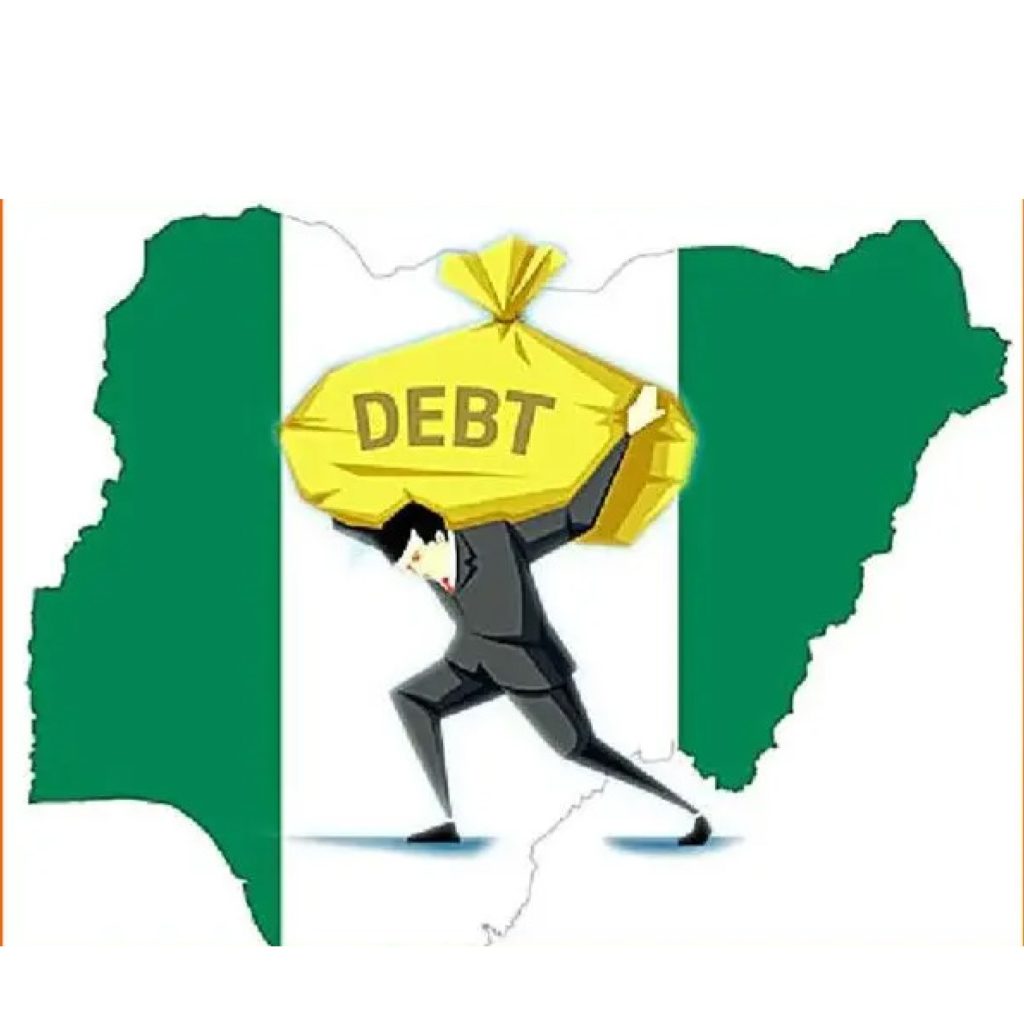
States across the country owe contractors and retirees a combined N1.06tn in outstanding obligations despite receiving record revenue inflows in 2024, according to new data from BudgIT’s 2025 State of States report.

The organisation found that contractor arrears amounted to N434.87bn, while pension and gratuity arrears stood at N626.81bn, bringing total unpaid obligations to N1.06tn. The figures underline persistent fiscal stress at the subnational level, even in a year when federal allocations more than doubled and many states reported higher internal revenues.

A total of 30 states reported owing either contractors or retirees in the 2024 fiscal year, based on the BudgIT report. Twenty-six states recorded contractor arrears, while 27 states owed pension and gratuity arrears to retirees.

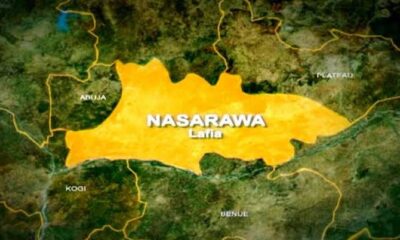
Only three states, Borno, Kano, and Nasarawa, reported zero liabilities in both categories, making them the only states without outstanding obligations to contractors or retirees in 2024. According to an analysis of the data, Kaduna State is the largest debtor to contractors and retirees in 2024, owing a combined N139.36bn.

The state reported contractor arrears of N56.07bn and pension and gratuity arrears of N83.29bn, the highest pension backlog in the country. Ogun State followed with N107.18bn in total arrears, driven mainly by a massive N81.54bn pension and gratuity backlog and N25.64bn in unpaid contractor obligations.

Benue State ranked third with combined arrears of N99.68bn, split between N27.42bn owed to contractors and N72.25bn in pension arrears. Edo State came fourth with N95.46bn, including N37.54bn in contractor arrears and N57.92bn in unpaid pensions.

Enugu State followed closely, reporting a combined N90.18bn, made up of N54bn owed to contractors and N36.18bn in pension liabilities. Imo State owed N57.25bn, Akwa Ibom N43.71bn, Delta N42.35bn, and Oyo N41.97bn, while Plateau completed the top bracket with combined arrears totalling N40.98bn, driven by N16.03bn in contractor arrears and N24.95bn in pension liabilities.

These 10 states collectively account for almost half of the N1.06tn burden carried by subnational governments. At the lower end of the ranking, Kano and Nasarawa reported no arrears, making them the least indebted states to contractors and pensioners in 2024.

Lagos, which recorded only N48.74m in contractor arrears and no pension backlog, ranked third-lowest. Ebonyi followed with N88.89m, then Borno with N1.10bn, Jigawa with N1.79bn, and Katsina with N2.22bn.

See also  PHOTOS: 25 d3ad, 13 rescued and 14 missing as boat capsizes in Yobe

Yobe owed N3.99bn, Ondo N4.77bn, and Kogi N6.52bn, completing the list of the 10 states with the smallest arrears nationwide. The PUNCH observed that while some northern states, such as Kano, Nasarawa, and Jigawa, maintained minimal arrears, others, like Kaduna, Benue, and Plateau, accumulated large pension backlogs over the years.

The report noted that total liabilities for the 35 states analysed — excluding Rivers, which had no audited accounts due to the 2025 state of emergency — stood at N1.24tn.

On the reason for excluding Rivers, the report read, “Due to the political climate in Rivers State, the state government did not produce an audited financial statement for 2024, also, given that the Federal High Court nullified the 2024 budget of the state and counted it as void, any reporting done by the state on that budget is also regarded as unconstitutional. Hence, the decision to exempt Rivers state from the 10th Edition of State of States.”

Besides contractor and pension arrears, states owed N33.74bn in salary and staff claims, N62.33bn in judgment debts, and N73.25bn in other liabilities.

“About N434.87bn is owed in contractor arrears, N626.81bn is owed in pension and gratuity arrears, N33.74bn is owed in salary and other staff claims, N62.33bn is owed in judgement debt and other pending litigation, and other liabilities amount to N73.25bn,” the report read.

BudgIT warned that these outstanding obligations, if left unmanaged, could undermine state-level fiscal sustainability, delay capital projects, and weaken public confidence, especially among vulnerable retirees depending on monthly benefits.

Despite the backlog, states received unprecedented revenue in 2024. Gross FAAC allocations surged to N11.38tn, up from N5.4tn in 2023, driven largely by subsidy removal and exchange-rate adjustments. Yet the report observed that arrears persisted because many states continued to prioritise recurrent expenditure over clearing historical obligations.

BudgIT argued that rising personnel costs, increased overheads, and expanding political commitments may have constrained the capacity of some state governments to settle legacy debts.

The PUNCH further observed that four states carried contractor and pension liabilities that far exceed what they generated internally within the same year, raising fresh concerns about subnational fiscal sustainability. The four states were Kaduna, Benue, Adamawa, and Taraba, with arrears that significantly outpaced their 2024 Internally Generated Revenue.

See also  DSS explains why Sultan was arrested in Kaduna

Kaduna’s total arrears stood at N139.36bn, more than double its 2024 IGR of N70.07bn. The arrears were driven mainly by the state’s pension and gratuity backlog of N83.29bn, alongside contractor debts of N56.07bn. This means Kaduna owed almost N2 in unpaid obligations for every N1 it generated internally.

Benue showed similar vulnerability. The state generated N20.92bn internally in 2024, yet owed N99.68bn in contractor and pension arrears—almost five times its IGR. Pension liabilities alone amounted to N72.25bn, while contractor arrears totalled N27.42bn, leaving Benue’s obligations far beyond its revenue capacity.

The situation suggests that the state would need nearly five full fiscal years of IGR, assuming no other expenditures, to clear its outstanding debts. Benue’s case reflects a structural mismatch between revenue capacity and expenditure commitments built up over several administrations.

Adamawa also recorded liabilities significantly above its IGR. The state generated N20.30bn in 2024, but owed N27.5bn in pension and gratuity arrears. Although Adamawa posted zero contractor arrears in the 2024 table, its pension debt alone exceeded its IGR by about 35 per cent, demonstrating a rising retirement-cost burden relative to the state’s revenue base.

This gap, while smaller than those of Kaduna and Benue, still points to a fragile fiscal structure that could widen if pension obligations continue to accumulate. Taraba’s imbalance was even more pronounced relative to its revenue size. The state generated N16.06bn in IGR but owed a combined N23.53bn, including N226.37m to contractors and N23.30bn in pension and gratuity arrears.

Taraba’s liabilities exceeded its internally generated revenue by more than N7bn, amounting to an overhang of approximately 46 per cent above what the state earned from domestic sources.

The disproportionate pension burden indicates a long-running accumulation of retirement obligations that the state has been unable to clear. The Nigerian Pension Commission earlier said only 17 states out of Nigeria’s 36 states are currently implementing the Contributory Pension Scheme.

The commission noted that 12 states have not started at all, while seven states are at various stages of establishing their pension bureaus.

Speaking at the Second Run 2025 Consultative Forum for States and the FCT held in Benin, Edo State, the Director-General of PenCom, Omolola Oloworaran, who was represented by the Commissioner for Inspectorate, Samuel Uwandu, said, “17 states out of the 36 states in the country are currently implementing the contributory pension scheme. Twelve states have not started at all, while seven states are at various stages of establishing their pension bureaus.”

See also  10th Senate passed over 90 bills, 52 signed into law — Akpabio’s aide

The CPS was introduced by the Pension Reform Act of 2004, and under this law, employees and employers jointly contribute to a Retirement Savings Account for each worker, making pensions more sustainable.

The law set the minimum combined contributions at 15 per cent of an employee’s monthly earnings. The Pension Reform Act of 2014, which amended the 2004 law, further improved the CPS by increasing contributions to a combined minimum of 18 per cent and tightening regulations to ensure compliance by both private and public sector employers.

Speaking earlier with The PUNCH, the spokesperson for the Nigerian Union of Pensioners, Bunmi Ogunkolade, said state governments were foot-dragging on matters related to the payment of retirees’ gratuities and the implementation of the new pension scheme. Ogunkolade urged state governments to pay retirees their entitlements.

Earlier this month, The PUNCH reported that operations at the National Assembly were disrupted as aggrieved local contractors, lawyers, and civil society activists barricaded the major entry and exit points of the complex in protest over an alleged N3tn debt owed to them by the Federal Government.

Brandishing placards and chanting solidarity songs, the contractors vowed to sustain the blockade “for as long as it takes” until payment alerts hit their phones for government projects they claimed to have completed.

Speaking during the protest, the National President of the All Indigenous Contractors Association of Nigeria, Jackson Nwosu, said the group had no choice but to protest after years of unmet promises.

“We are here because the Federal Government refused to pay contractors, and we have brought the case to the parliament to address our grievances,” he said. “These things are capital projects that had already been executed, and we have been pushing for payment since 2024. They are owing our association alone over N3tn.”

punch.ng

FOLLOW US ON:

FACEBOOK

TWITTER

PINTEREST

TIKTOK

YOUTUBE

LINKEDIN

TUMBLR

INSTAGRAM

Continue Reading
Click to comment

Leave a Reply

Your email address will not be published. Required fields are marked *

News

EFCC moves to seize 57 Malami-linked properties

Published

on

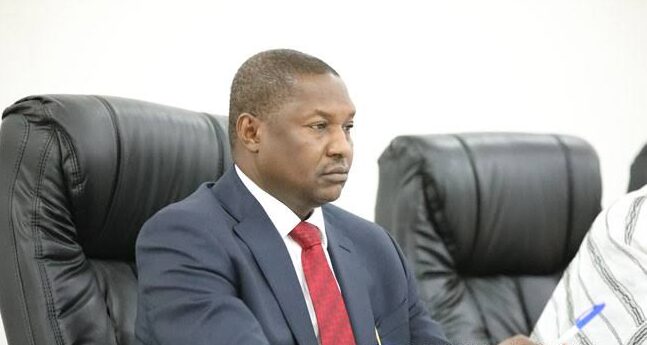
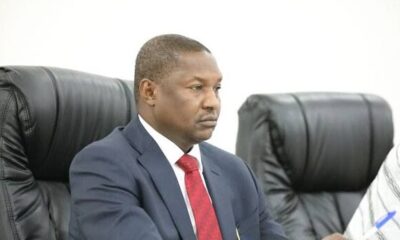
The Economic and Financial Crimes Commission has urged the Federal High Court in Abuja to order the permanent forfeiture of 57 properties allegedly linked to a former Attorney General of the Federation and Minister of Justice, Abubakar Malami, to the Federal Government.

The anti-graft agency, in a motion on notice filed by its legal team led by Jibrin Okutepa (SAN) and Ekele Iheanacho (SAN), told Justice Joyce Abdulmalik that the respondents failed to place sufficient material before the court to justify setting aside the interim forfeiture order earlier granted.

The motion, marked FHC/ABJ/CS/20/2026, listed Malami, Hajia Bashir Asabe and Abiru’ Rahman Abubakar Malami among the respondents, alongside several companies allegedly linked to the assets.

The EFCC brought the application pursuant to Section 17 of the Advance Fee Fraud and Other Fraud-Related Offences Act, 2006, seeking “a final order of this honourable court forfeiting to the Federal Government of Nigeria, the properties described in the schedule below, which were found by the commission as properties reasonably suspected to be proceeds of unlawful activities.”

Arguing the motion, Okutepa stated that the proceeding was a non-conviction-based forfeiture and that the court has the statutory authority to grant the relief sought.

He added: “This honourable court made an interim order forfeiting the properties to the Federal Government of Nigeria.

“The order of the honourable court has been published in a national daily, namely THISDAY Newspaper of 9th January, 2026.

“No sufficient cause has been shown why the properties under the interim forfeiture order should not be finally forfeited to the Federal Government of Nigeria,” Okutepa argued.

See also  FG gets $25.35m Kuwait loan to tackle Kaduna out-of-school crisis

In an affidavit deposed to by an EFCC investigator, Daniel Adebayo, the commission said it received multiple petitions alleging corruption, abuse of office and fraud against the former minister.

Adebayo stated that investigations involved obtaining financial records from banks and the Central Bank of Nigeria, as well as inquiries from agencies including the Corporate Affairs Commission, Federal Inland Revenue Service, Code of Conduct Bureau and the Abuja Geographical Information System.

He added that land registries in Kebbi, Sokoto and Kano states were also queried, while assets were physically verified and valued.

The officer said individuals linked to the transactions were invited and interviewed.

He further stated that Malami’s earnings while in office between 2015 and 2023, including salaries, allowances and estacodes, were not commensurate with the value of the assets under investigation.

“I know as a fact and verily believe the findings of the investigation, which are as follows:

“Mr Abubakar Malami (SAN) was the Hon. Minister of Justice and Attorney General of the Federation, hereinafter referred to as HAGF, from 2015 to 2023.

“He was paid a total of N89,664,000.00 as salary between 2015 and 2023, whilst in office, with an average payment of N962,663.68 per month.

“He also received a severance allowance of N12,158,400.00 at the end of his tenure in office.

“Mr Malami SAN was also paid estacodes allowances to cover his travel expenses whenever he travelled outside the country on official trips.

“He calculated and declared a total sum of N253,608,500.00 as the amount he received for the official trips between 2015 and 2023 in a letter written to the Chairman of the CCB as an addendum to his Assets Declaration Form in June 2023.

See also  President Bola Ahmed Tinubu, GCFR Appoints General Christopher Musa(Rtd) as Defence Minister.

“Attached and collectively marked as Exhibit EFCC 2 & 3 are copies of the asset declaration forms filled out by Mr Malami SAN from 2015 to 2023, together with a letter dated 16th of June, 2023, written by him to the Chairman of the CCB as an addendum to the asset declaration form as found at his house during EFCC’s execution of a search warrant.”

Adebayo further deposed: “Aside from the actual acquisition of the properties which are manifestly disproportionate to Mr Malami SAN‘s known and lawful sources of income, no building permits/approvals from appropriate authorities were obtained to erect most of the various structures in Kano and Kebbi states as part of a scheme to disguise the unlawful origin of the funds used to acquire the assets.”

He alleged that some of the properties were acquired through proxies and corporate entities linked to the former minister.

The EFCC listed 57 landed properties spread across Abuja, Kebbi, Kano and Kaduna states, including assets tied to Rayhaan University in Kebbi.

Justice Abdulmalik fixed April 21 for the hearing of the motion.

The case stems from an earlier order of the Federal High Court in Abuja, on January 8, 2026, presided over by Justice Emeka Nwite, which granted an interim forfeiture of the 57 properties following an ex parte application by the EFCC.

The properties, valued at about N213.2bn, were said to be linked to Malami and two of his sons and were suspected to be proceeds of unlawful activities.

The court directed that the assets be temporarily forfeited to the Federal Government, and ordered the EFCC to publish the order in a national newspaper to enable interested parties to show cause within 14 days why they should not be permanently forfeited.

See also  Diezani was just ‘rubber-stamp’ for oil contracts under Jonathan, Lawyer tells UK court

Following the interim order, Malami and other respondents challenged the forfeiture proceedings, urging the court to set aside the order.

punch.ng

FOLLOW US ON:

FACEBOOK

TWITTER

PINTEREST

TIKTOK

YOUTUBE

LINKEDIN

Continue Reading

News

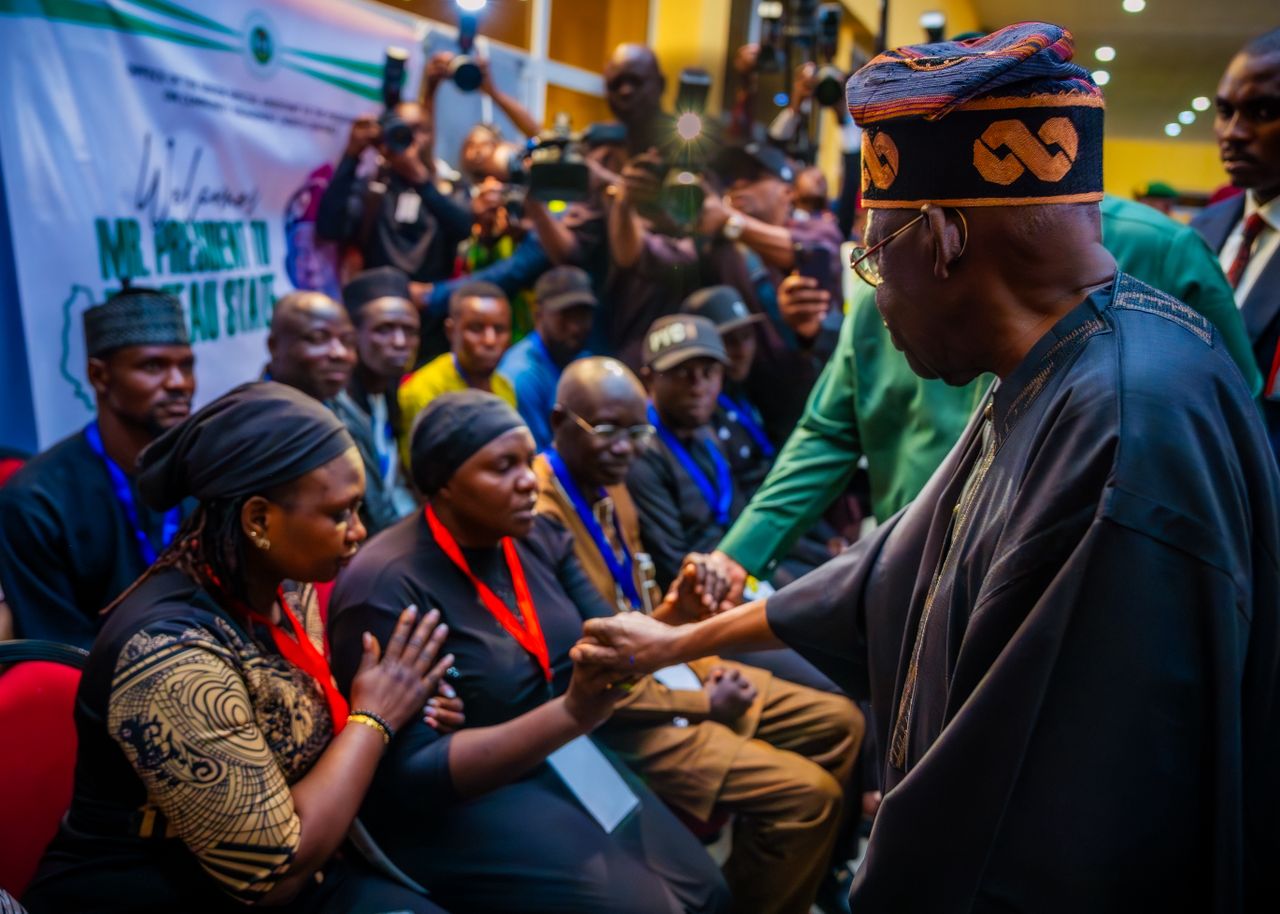
Presidency reveals why Tinubu consoled Plateau victims at Jos airport

Published

on

The Presidency has defended President Bola Tinubu’s decision to meet victims of the Plateau State killings at a hall adjoining the Yakubu Gowon Airport rather than driving into Jos township, citing flight restrictions and logistical constraints as the reasons for the arrangement.

In a statement by Special Adviser to the President on Information and Strategy, Bayo Onanuga on Friday, the Presidency said the runway at the airport does not support night flights due to the absence of navigational aids, making it impossible for Tinubu to visit Rukuba, drive back to the airport and depart before dusk.

“Upon arrival in Jos, the visit encountered some logistical challenges. While the road distance from the airport to Jos township is approximately 40 minutes, the runway does not support night flights due to the absence of navigational aids. The constraints made it unfeasible to drive into town, meet victims for on-the-spot assessment and return to the airport before dusk.

“Consequently, state and federal officials decided to bring representatives of the affected community to a hall adjoining the airport so the President could meet with them promptly while adhering to flight restrictions,” the statement read.

The visit came days after gunmen attacked the Angwan Rukuba district of Jos North Local Government Area on Palm Sunday, killing at least 28 people in one of the deadliest outbreaks of violence in the state in recent years.

The Presidency also explained the delay in Tinubu’s departure for Jos, saying his itinerary for Thursday had included receiving Chadian President Mahamat Idriss Déby Itno at the Presidential Villa for a bilateral meeting on security cooperation.

See also  PHOTOS: 25 d3ad, 13 rescued and 14 missing as boat capsizes in Yobe

The meeting, which centred on strengthening collaboration between Nigeria and Chad, ran longer than expected, pushing back his scheduled departure.

According to the statement, Tinubu had initially planned to travel to Iperu, Ogun State, on Thursday, but suspended the trip after Mutfwang briefed him on the security situation in Plateau.

“President Tinubu’s itinerary for Thursday included two main engagements: receiving the Chadian President, Mahamat Idriss Déby Itno, and proceeding to Iperu, Ogun State. After Governor Caleb Mutfwang’s briefing, President Tinubu suspended the trip to Ogun.

“Overnight, the Presidential Villa made arrangements for the visit to Jos, with presidential assets quickly deployed. However, the President could not postpone the scheduled visit by the Chadian leader.

“The President of Chad was at the Presidential Villa for a very important bilateral meeting focused on strengthening security collaboration between the two countries. The meeting ran longer than expected, affecting President Tinubu’s scheduled departure for Jos,” the statement read.

Despite the airport setting, the Presidency said the visit achieved its objectives, with Tinubu consoling victims, listening to community leaders and engaging key stakeholders on ending the decades-long cycle of violence in the state.

Among those present at the hall were the Minister of Defence, the Chief of Army Staff and the Inspector-General of Police, who had earlier visited Rukuba ahead of the President’s arrival.

“President Tinubu’s visit to Jos was not merely symbolic. It was a strategic, high-level engagement aimed at bringing all stakeholders together to address the root causes of conflict and insecurity in the state,” Onanuga said.

See also  PHOTOS: Russia sends submarine to escort tanker the US tried to seize off Venezuela, WSJ reports

At the meeting, Tinubu addressed a grieving mother, Mrs Rhoda, whose video clutching the bloodied corpse of her son had gone viral and become the defining image of the attack. He identified her son as Ayuba.

“I know the pain. I see in the video how you buried your loved ones and the pain and agony in your heart. But it’s only God who can give you joy and hope. No amount of money can pay all of you back,” he said.

He also announced the deployment of over 5,000 AI-enabled cameras across Plateau State, directed security chiefs to track down the killers, constituted a committee to assess losses and provide compensation, and invited community leaders to Abuja for further talks.

The Nigerian Army separately announced the deployment of over 850 additional troops to reinforce operations under Operation Enduring Peace.

The Presidency insisted the visit was deliberate and strategic, with Onanuga saying “President Tinubu achieved the purpose of his visit, despite the naysayers’ attempts to ridicule it. He dropped an unmistakable message: sustainable peace must be built with the people, not imposed on them.”

However, former Vice President Atiku Abubakar criticised the visit as insensitive.

“It is both shocking and deeply insensitive that several days after the gruesome killings of innocent citizens, the President’s so-called ‘on-the-spot assessment’ was reduced to a brief stop at the foot of his aircraft, never extending beyond the airport, never reaching the grieving communities, and never touching the pain of the victims,” Atiku said in a statement by his aide, Phrank Shaibu.

See also  FG gets $25.35m Kuwait loan to tackle Kaduna out-of-school crisis

He added that the visit had been hurriedly curtailed to allow Tinubu to proceed to Lagos for the Easter holidays, describing it as “a decision that reflects a deeply troubling prioritisation in the face of national grief.”

punch.ng

FOLLOW US ON:

FACEBOOK

TWITTER

PINTEREST

TIKTOK

YOUTUBE

LINKEDIN

Continue Reading

News

Lagos task force launches anti-crime patrol unit

Published

on

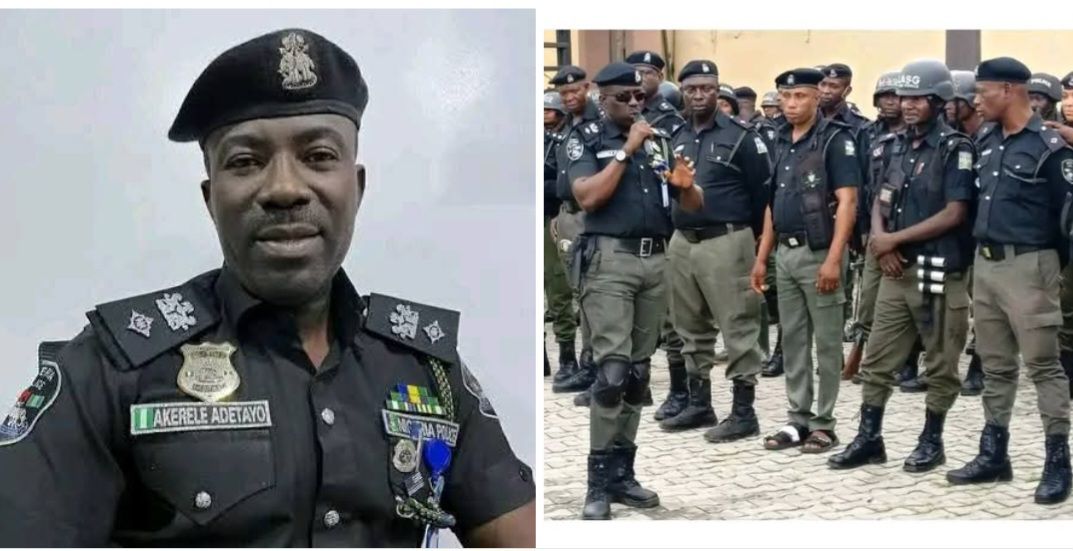
The Lagos State Task Force has launched an anti-crime patrol unit to combat criminal activities and environmental violation across the state.

The launch followed the ban by the Commissioner of Police, Tijani Fatai, on the agency’s enforcement of traffic violations in the state.

The agency stated that the round-the-clock anti-crime patrol unit represented a strategic initiative designed to proactively detect, deter and neutralise criminal intent before it becomes a threat to public safety.

Chairman of the Lagos State Task Force, CSP Adetayo Akerele, emphasised that the establishment of the unit was necessary to eliminate criminal elements posing serious security threats to residents and visitors within the state.

He said the new unit will function as a standby and sharp response team mandated to arrest and ensure the prosecution of offenders involved in activities such as drug peddling, street urchinism, activities of area boys commonly known as Omotaku, raids on criminal black spots, littering of the environment, attacks on government officials on lawful duty, quackery, one-chance robbery syndicates and other special offences.

Akerele reiterated the task force’s commitment to eradicating criminality in Lagos, promising to intensify surveillance, patrols and enforcement operations across all identified flashpoints.

He stated: “We will spare no effort to eliminate criminal activities in the state this year. We will compel criminals to desist from their acts or relocate from Lagos.”

The agency affirmed its commitment to safeguarding lives and property, urging residents to cooperate with law enforcement agencies by providing timely and credible information to aid ongoing security and environmental operations.

See also  President Bola Ahmed Tinubu, GCFR Appoints General Christopher Musa(Rtd) as Defence Minister.

FOLLOW US ON:
FACEBOOK

TWITTER

PINTEREST

TIKTOK

YOUTUBE

LINKEDIN

Continue Reading

Trending