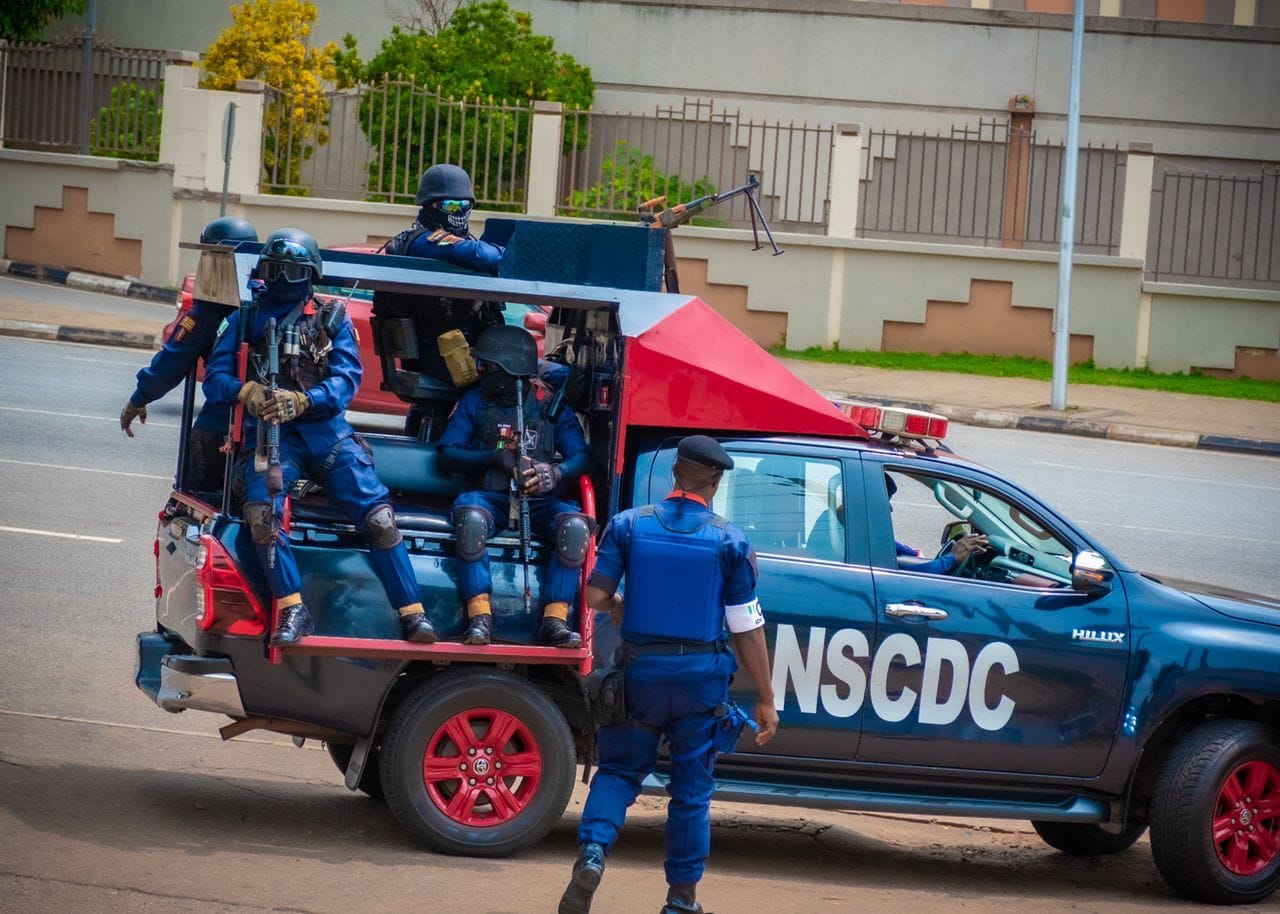
Following the withdrawal of 11,566 policemen by the authorities, prominent Nigerians have revealed plans to apply to the Nigeria Security and Civil Defence Corps for orderlies and security escorts.
The move, ordered by President Bola Ahmed Tinubu, is part of an aggressive push to redirect overstretched security manpower to escalating nationwide threats—including kidnapping spikes in Kwara, Kebbi, Niger and other parts of the North.
Addressing journalists in Abuja, Inspector-General of Police Kayode Egbetokun said the recall of police from VIP duties was neither punitive nor political but was designed to refocus policing on communities ravaged by crime.
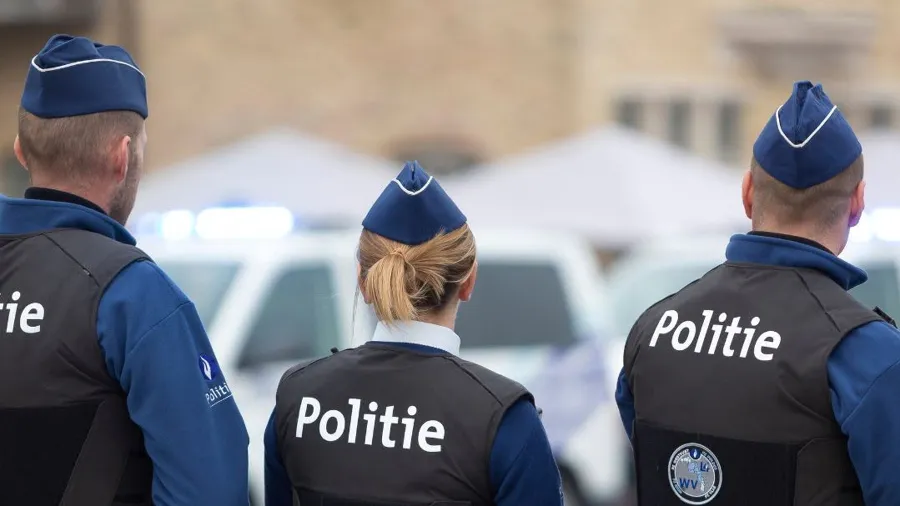
“In line with the President’s directive, we have withdrawn a total of 11,566 personnel from VIP protection. These officers are being redeployed to critical policing duties immediately,” he announced.
Egbetokun said the reallocation will strengthen rural and township security, improve intelligence-led operations, and boost rapid response capacity.
He warned that the implementation must be guarded against abuse by criminals posing as law enforcement agents.
“The withdrawal is not a retreat from responsibility, but a reclamation of it.”
The IGP also cited recent abductions in Kwara, Kebbi, and Niger states as justification for redeploying officers from VIP corridors to troubled zones.
Among recent successes, Egbetokun said the police arrested 451 suspects for armed robbery, 356 for kidnapping, 534 murder suspects, 129 for culpable homicide suspects, 173 persons for unlawful possession of firearms, 312 rape suspects and 282 suspected cultists.
Despite the sweeping directive, police insiders told The PUNCH that many officers had quietly resumed VIP assignments
A source who doesn’t want to be named because he was not permitted to speak to journalists said some of his colleagues on VIP duties are back.
“Those on VIPs’ duties are returning. I saw some of them today. In my office, two of them are back. This time around I think the directive will be effective with what I have seen on the ground, “one source said.
Another police official, speaking on condition of anonymity, added, “ Officers are being reassigned to their previous duties gradually. I don’t know the VIPs they were withdrawn from but our colleagues are returning. “
Findings by The PUNCH revealed that several political bigwigs—among them former SDP presidential candidate Prince Adewole Adebayo and suspended PDP National Secretary Samuel Anyanwu—were among VIPs whose police details were abruptly recalled.
At a high-profile meeting in the Central Business District on Thursday morning, The PUNCH spotted the former SDP standard-bearer flanked by NSCDC personnel alongside armed private guards dressed in black. Efforts made to reach Adebayo to confirm the withdrawal of his police escorts were unsuccessful as his line was unavailable.
Meanwhile, suspended PDP National Secretary, Samuel Anyanwu, admitted that his police orderlies had also been withdrawn.
Speaking in a phone interview on Thursday, he expressed support for the policy, but urged the government to prioritise “elder statesmen and national officers of political parties.”
“I support their withdrawal. Nigeria as a government is lacking in terms of manpower in the police. The police officers who are engaged with the VIPs have also mismanaged that position.”
However, he added a caveat: “They should prioritise it. They should know the calibre of people and take a look at their potential to be able to know who really meets the requirements of VIPs. They should do a proper recording and documentation of these police officers.”
Asked if he would turn to private guards, he replied, “How can I be using private guards? I’m entitled to police escorts. I’m a national official of a political party and also a senator. But I have applied to the NSCDC for manpower. In fact, I even prefer them because they are well trained too.”
Vice Chairman of the APC (South-East), Dr Ijeoma Arodiogbu, warned that depriving VIPs of protection could backfire.
“No, they didn’t withdraw my security aides. That’s one. In the House of Reps and the Senate yesterday (Wednesday), they spoke against that, because if they withdraw security aides from VIPs, it could be another level of insecurity.
“Of course, VIPs are prime targets, especially with politicians. So, I don’t think that the IGP will implement all of it. Of course, it is big news if any VIP is affected by any form of insecurity. That is why it’s called VIP, Very Important Personality,” he said.
While thanking the president for taking the bold moves, the APC chieftain also backed the call for priority to be given to certain VIPs, saying escorts should not be given to everyone.
“I agree with giving priority to certain persons of importance. In everything, prioritising is important. We shouldn’t be having a situation where some traders will be seen going about with 10 police details.
“Yes, we agreed that they have money. But they shouldn’t fall under the bracket or category of the elite who cogently need these escort and security aides. That is the one that is more disturbing.
“We also thank the president so much for calling for more recruitment of personnel into the police and army. It is all a bid to buffer all those challenges.”
According to him, priority should be given to truly high-risk individuals—not traders “going around with 10 police officers.”
The Deputy National Youth Leader of the PDP, Tim Osadolor, said Nigerians should embrace a future where VIPs move without escorts.
“Let everybody including the president learn to start moving around without them. Let Tinubu travel to Amsterdam and Denmark and see how their prime ministers move around freely without escorts.”
Meanwhile, the lawmaker representing Borno South, Senator Ali Ndume, has thrown his weight behind the withdrawal of police personnel from Very Important Persons.
Speaking on Thursday night on Politics Today, a programme on Channels Television, Ndume said some ministers had police officers attached not only to themselves but also to their wives and children.
He said he had long advocated the policy, describing it as one of President Bola Tinubu’s most commendable decisions, which must be fully implemented.
“We should see it on the ground. I thought I would not see policemen at the National Assembly today but I saw so many of them there today.
“I was given three police orderlies, but that was a big crowd for me so I refused. I insisted that if there’s going to be any attachment of the police to me, then it should be one orderly because I’m not an accused person.
“I should have police to monitor me so that next time they won’t say I have gone to have a meeting with the other person. So I need that police to monitor my movement and who I relate with. The police are not to protect me. No.
“So, I am of the opinion that all these policemen be withdrawn from VIPs. You can imagine that some of my colleagues like ministers have police attached to their wives and children. What’s their business with that?” he queried.
But some lawmakers described the directive as “unrealistic” and “potentially reckless,” insisting that VIPs remain primary targets of assassinations and politically motivated attacks.
The Majority Leader of the House of Representatives, Prof Julius Ihonvbere, called for clarification on the category of persons affected by the recent presidential directive ordering the withdrawal of police orderlies from Very Important Persons.
Speaking exclusively with The PUNCH, Ihonvbere said that although he does not consider himself a VIP, his position as a national officer requires police protection.
He stated, “We have to define those this policy will affect. I am not a VIP but a national officer of Nigeria. All over the world, presidents and other key government functionaries are protected by the police.
“In my own case, I can fly to Benin City, Edo State, but I cannot move without police from Benin City to my constituency. This is because that road is a danger zone where kidnappers hold sway.
“If I’m going to my constituency, will I go without security? I think the government should clarify this so that it will be clear for us to know who are affected by this development. I want to repeat that there are VIPs and public officers.”
The Professor of Political Science also lamented the abuse of police orderlies, especially by individuals with financial influence.
“Not long ago, a private citizen visited me. He came from the United States to do business in Nigeria. He had six police guards with him. This is something we need to look at,” he added.
In a separate interview, Edo lawmaker, Billy Osawaru said he is “now on his own,” without elaborating on what he intends to do going forward.
Asked if his police guard had been withdrawn, he replied, “Yes and I’m on my own.”
The lawmaker representing Osun East in the Senate, Francis Fadahunsi, urged the National Assembly to enact a law that would enable responsible Nigerians to bear arms, especially now that the country is grappling with worsening security challenges.
A short video of the lawmaker’s admonition at plenary was obtained by PUNCH Online in Osogbo, Osun State, on Thursday.
Fadahunsi, a lawmaker belonging to the All Progressives Congress, while advancing arguments on the need to allow responsible Nigerians to bear arms, said about 120 countries across the globe have legalised arm bearing by the people.
“We are almost at military rule, and we are at war. He (Tinubu) is the Commander-in-Chief because they listen to him and he is spending on them. That is what can solve the problem.
“Today, about 120 countries have legalised carrying arms. I think it is time for Nigeria to allow us to carry arms.
“If the elite and a few of us who are okay are carrying guns, it will be a war against these criminals, and they will run away because they are not many,” Fadahunsi said.
On the part of the National Assembly, the Senator said, “It is time for us to make a law that the kidnappers, including the negotiators, are criminals and should face the death penalty.”
Demanding a reorganisation of the country’s military architecture, the lawmaker queried the command structure of the Ministry of Defence.
He said, “The Minister of Defence is not a soldier or a retired general. The Minister of State, all of them are businessmen. The NSA is a retired policeman.
“Do you know that these soldiers called us, even those carrying superior guns than theirs, ‘bloody civilians’, and that is what is affecting us.
“The Commander-in -Chief needs to look at the military architecture around him and do the needful. If not, we will continue to waste money because they will not take orders from any other person other than their own general.”
Barely 24 hours after Fadahunsi’s comments, the Senate introduced a bill sponsored by Senate Leader Opeyemi Bamidele to classify all forms of kidnapping as terrorism, attracting a mandatory death sentence.
The Senate on Thursday introduced a bill seeking sweeping amendments to the Terrorism (Prevention and Prohibition) Act, less than 24 hours after lawmakers demanded tougher sanctions to curb the rising wave of insecurity across the country.
Sponsored by the Senate Leader, Senator Opeyemi Bamidele (APC, Ekiti Central), the bill, which sailed through first reading immediately, proposes to classify all forms of kidnapping as acts of terrorism, attracting the maximum penalty of death upon conviction.
The move followed a heated debate during Wednesday’s plenary, where senators lamented the worsening spate of abductions nationwide.
Many lawmakers argued that only the stiffest punishment would deter the growing menace. They called for the death penalty for kidnapping, irrespective of whether the victim dies in captivity.
Presiding over the session, Senate President Godswill Akpabio, directed Bamidele to submit an amendment bill “as soon as practicable,” stressing the urgency of the matter.
“A very serious amendment has been proposed, that the penalty for kidnapping be changed immediately to carry the maximum punishment of death,” Akpabio said.
“Henceforth, kidnapping should first be classified as a terrorist act, which should attract the death penalty. Once the offence is established, a death sentence must follow. There is no discretion,” he added.
Bamidele complied with the directive on Thursday, presenting the bill for its first reading.
The proposed amendment, however, seeks to broaden the scope by defining any form of kidnapping as terrorism, making the death penalty mandatory upon conviction, whether or not the victim survives the ordeal.
Meanwhile, the Association of Licensed Private Security Practitioners of Nigeria has described the new development as a wake-up call to modernise the 38-year-old law regulating private security operations.
The association said the current legal framework governing the private security industry is outdated and inadequate for addressing emerging threats.
Addressing journalists on Thursday, the Chairman of ALPSPN’s Interim Caretaker Management Committee, Maj. Gen. Elvis Njoku (retd.), said updating the Act had become necessary to professionalise the sector, standardise operations, and integrate private security firms more effectively into national security planning.
“We are pushing for amendments to the Private Guard Companies Act to incorporate modern security paradigms, such as data protection and environmental security. Our united front will make these demands irresistible, benefiting not just our members but the entire nation.
“The private security industry in Nigeria is at a pivotal juncture. We have witnessed remarkable growth in recent years, with our members providing essential services in areas ranging from corporate security, event management, VIP protection, to community surveillance,”he added.
Njoku explained that the association is seeking provisions that address new security realities, including data protection, technological surveillance tools, and expanded responsibilities for licensed practitioners.
He urged members to unite behind the push for legislative reforms, noting that a coordinated front would strengthen the industry’s advocacy efforts.
He also praised President Tinubu’s security reforms.