Connect with us

Business

Miners reject governors’ six-month mining ban plan

Published

on

Mining operators in the country have expressed strong opposition to the six-month planned ban on mining activities announced by the 19 Northern governors.

The Miners Association of Nigeria warned that the decision would worsen insecurity rather than curb it, arguing that such measures have historically driven out legitimate operators and created room for bandits and illegal miners to take over mining sites.

The association’s President, Dele Ayanleke, expressed a strong opposition view during an interview on Wednesday, telling The PUNCH that previous attempts by some state governments to suspend mining activities only succeeded in driving out legitimate operators and leaving mining sites in the hands of bandits and illegal miners.

Recall that Northern governors and traditional rulers on Monday called for a six-month suspension of mining activities across the region, blaming illegal mining for the worsening insecurity in many states. This was contained in a communiqué issued after a joint meeting of the Northern States Governors’ Forum and the Northern Traditional Rulers’ Council held at the Sir Kashim Ibrahim House, Kaduna.

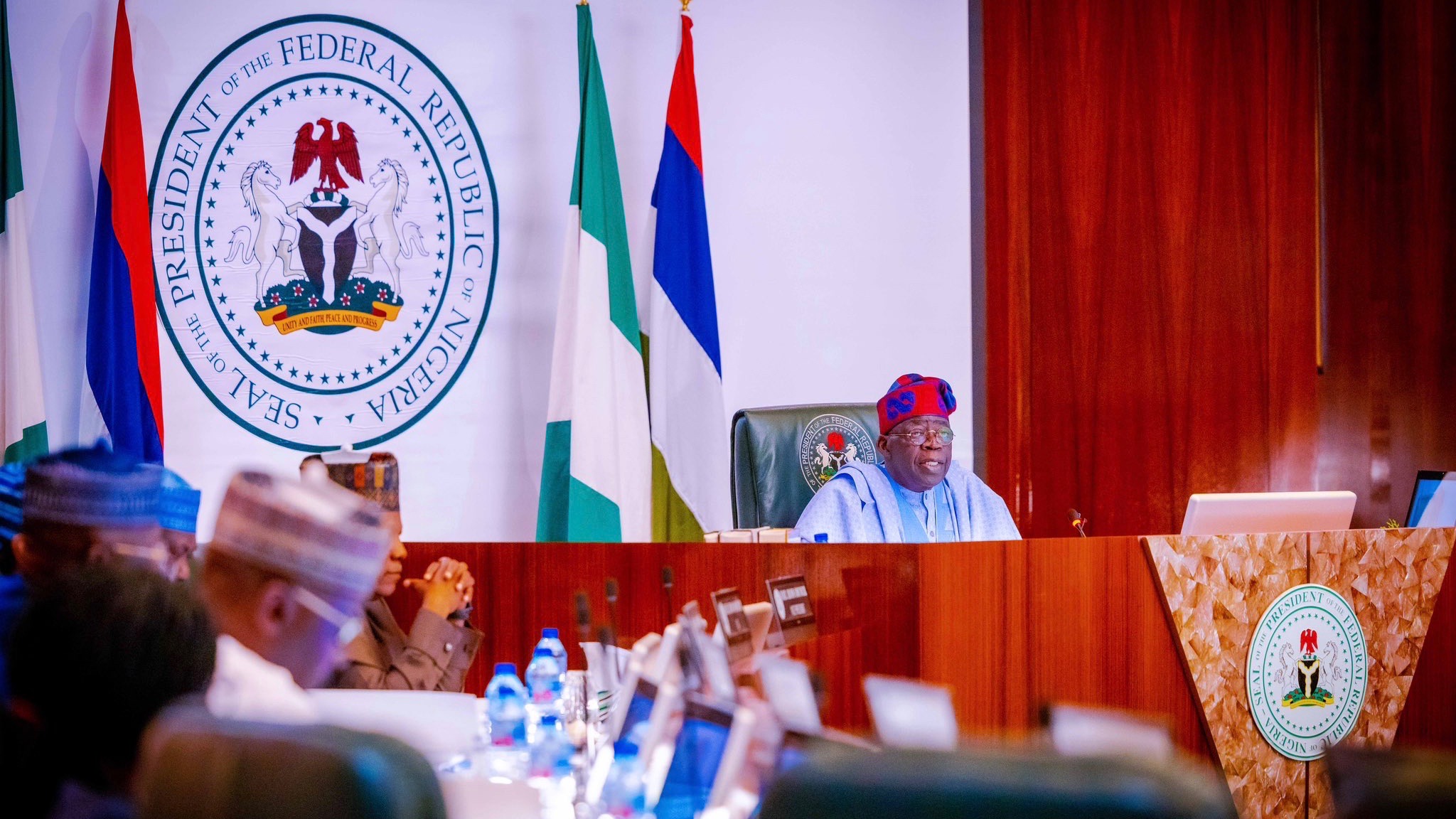
The forum asserted that criminal mining networks were fuelling violence and providing resources for armed groups. As a corrective measure, they asked President Tinubu to direct the Minister of Solid Minerals to suspend mining activities to allow for a full audit and revalidation of licences.

The ban, which is expected to run for six months, covers all forms of mining, artisanal and licensed operations, pending an improved security situation and a major security overhaul. “The Forum observed that illegal mining has become a major contributory factor to the security crises in Northern Nigeria,” it said.

“We strongly recommend a suspension of mining exploration for six months to allow proper audit and to arrest the menace of artisanal illegal mining.” The northern leaders also announced plans to mobilise N228bn to fight bandits terrorising communities across the region.

But Ayanleke described the policy as “misguided and counter-productive,” noting that past experience, particularly in Zamfara State, proves that shutting down mining does not translate to improved security.

He said, “Our opinion on this matter is simple. Since the governors said it is to improve the security situation in the region. We need to look at antecedents. For several years now, mining activities in Zamfara have been said to have been banned. But we discovered that the insecurity in the state is even getting worse in spite of the ban on mining activities.

See also  Food security fears mount as UK farmers battle drought

“What we have observed is that what usually happens when these governors ban activities is that they only succeed in sending out the legitimate operators from their site. The government doesn’t have or hasn’t been deploying enough security personnel to ensure compliance.

“So when legitimate operators leave the site, what we have observed is that the illegal operators would take over, including the so-called bandits. These illegal miners are the so-called bandits. And these are the people that the government cannot control. They don’t have enough logistics to deploy to ensure that people comply with any ban on activities.”

Ayanleke argued that the major challenge has been the government’s failure to deploy adequate security personnel and logistics to enforce compliance with any declared ban. “The government does not deploy enough security to protect these sites. So, when the legitimate operators exit, the illegal ones, who are mostly criminals, move in. These are the people the government cannot control,” he said.

The association warned that denying lawful operators access to sites would inadvertently give criminal groups more control over mineral resources, enabling them to “weaponise themselves.”

“So if Zamfara has remained banned for years now, we are still hearing a lot of banditry attacks and an increasing wave of banditry in that region. It means that banning mining activities cannot stop that problem. If anything at all, it would only improve on the resources that these people would have access to, for them to weaponise themselves and begin to carry out their heinous activities.

“We don’t see banning of mining activities as a panacea to the problem of insecurity and banditry that have been taking place in the northern part of the country,” he added.

Ayanleke further expressed concern that the six-month suspension would harm existing mining companies, disrupt production schedules, and threaten ongoing investments involving local and foreign partners.

“Just as we have said, the proposed ban would affect a lot of things. For example, you have a lot of big mining companies springing up in these states, which are contributing meaningfully to the economy.

“What happens to the economy if their operations are crippled. What will happen to their production or even upcoming miners who have partnered with investors, both foreign and local investors? What will happen to their investment? So I think we should look for another solution to solve this,” he said.

See also  Nigeria’s oil output hits 74-month high, beats OPEC quota

He argued that the ban could trigger investor flight and undermine the Federal Government’s push to grow the solid minerals sector into a major revenue source. The miners’ association urged the governors to adopt the Niger Delta security approach, where the Federal Government tackled oil-related insurgency without shutting down crude production.

“When there was an insurgency in the Niger Delta,  the government didn’t ban oil drilling activities. Instead, they deployed security to ensure that they curtail the level of insecurity in the area during that period. Assuming the government has banned oil drilling activities, what would have happened to our economy or the revenue that each state gathers to share every month in Abuja.

“These are the issues. So far, the feedback I have received from all our members across the federation is that a ban on mining activities is not the solution. If it were the best solution, Zamfara would be the most secure and safest place in this country,” Ayanleke said.

He called for the deployment of joint task forces or specialised security units to mining corridors to tackle bandits, enforce mining regulations, and protect licensed operators. According to him, artisanal mining is a global phenomenon that cannot be eradicated but can be regulated if legitimate operators remain active on mining sites.

“In my own licensed site, artisanal miners cannot operate without my consent. Where legitimate operators are present, illegal miners don’t disturb them. It is usually when there is a ban that these illegal miners take over,” he noted.

Ayanleke added that the government’s ongoing effort to formalise artisanal miners into cooperatives is a step in the right direction, but such reforms would fail if legitimate operators are forced out by blanket bans. He also referenced a recent warning by Senator Adams Oshiomhole on the growing link between banditry and illegal mining, urging the government to “listen and act.”

“When there was an insurgency in the Niger Delta area, the government deployed joint task forces to curtail illegal bunkers. They didn’t ban oil drilling activities. Assuming they did, imagine what would have happened to our economy today. So let the government deploy JTF, or its nearest force, to checkmate all these bandits and their activities,” he concluded.

The decision by the Northern Governors’ Forum followed escalating attacks across mining corridors in Kaduna, Niger, Zamfara, Plateau, and Katsina, where criminal groups have been accused of exploiting mining sites as operational bases and using mineral revenues to procure arms and support their logistics.

See also  NUPRC opens 50 oil blocks for bidding

However, mining in Nigeria is constitutionally under the exclusive control of the Federal Government, creating a long-standing jurisdictional tension between the federal and state authorities.

Under the 1999 Constitution (as amended), mineral resources fall within the Exclusive Legislative List, giving the Federal Government, through the Ministry of Solid Minerals and the Mining Cadastre Office, the sole authority to issue licences, regulate operations, and enforce compliance.

This means state governments cannot legally ban or suspend mining activities, except through advisory pronouncements or by collaborating with federal security agencies. The contradiction often results in policy clashes, with states attempting to impose local restrictions in response to insecurity or environmental concerns, even though the law does not grant them the power to enforce such measures.

Earlier this year, the Minister of Solid Minerals Development, Dele Alake, said that, despite the federal government’s constitutional authority to control the mining of the solid minerals in the country, it is constrained by cultural and political sensitivities, as state governments continue to interfere in mining operations.

Alake revealed that several governors have taken unilateral actions such as banning mining activities or sealing off mining companies, leading to conflicts with federal authorities. While reaffirming that mining falls under the exclusive jurisdiction of the FG, he noted that the Land Use Act grants states ownership of land, which is creating room for contention.

“I’ve had a meeting with the governors at their Secretariat here, organised by the chairman of the governors’ forum, the governor of Kwara State. Thirty-two were present there, and I had a robust exchange with them. Some didn’t feign ignorance of this constitutional separation of powers.

“I did explain to them this exclusivity of the mining sector as belonging to the purview of the Federal Government, and a lot of them understood. But there is a sensitivity given the peculiarity of our environment, political, social, and cultural environment, which we recognise, and I particularly will not be the one to heat the polity unnecessarily. I’ve had a lot of calls, even from the media, calling on me to confront this governor, confront that governor. That is not how to do it,” he explained to State House Correspondents.

punch.ng

FOLLOW US ON:

FACEBOOK

TWITTER

PINTEREST

TIKTOK

YOUTUBE

LINKEDIN

TUMBLR

INSTAGRAM

Continue Reading
Click to comment

Leave a Reply

Your email address will not be published. Required fields are marked *

Business

Ondo artisans beg FG for inclusion in empowerment programmes

Published

on

Artisans and skilled workers in Ondo State have appealed to the Federal Government to include them in various empowerment programmes under President Bola Tinubu’s Renewed Hope Agenda.

The artisans, under the aegis of the Artisan Defender and Empowerment Foundation, said over 25,000 members of the group had been neglected despite their support for the re-election of the President.

This was contained in a statement issued on Friday by the Chairman and General Secretary of the association, Engr. Ogundipe James and Adebayo Olugbenga, respectively.

According to the statement, the group was founded and registered with the Federal Government to promote the interests of Niger Delta artisans and skilled workers, adding that its members needed government support through empowerment initiatives.

The statement read, “It was evident, the neglect of the welfare and empowerment of over 25,000 artisans that this organisation controls, for which we are advocating better welfare, skills and vocational training, empowerment, workshops and recognition of political strength and weight the coalition commands in the voting structure.

“The deteriorating situation of artisan welfare, particularly in Ondo State, is why the body is seeking immediate attention, mostly empowerment and skills upgrading from the primary concerned government agencies—the Federal Ministry of Trade and Investment, Directorate of the Office of Humanitarian Affairs and Poverty Reduction, Small and Medium Enterprises Development Agency of Nigeria, Presidential Amnesty Programme, among others.

“The neglect of this very important organisation, which plays a vital role in employment and the growth of the national economy, will cause disagreement and affect political support that comes from this coalition group.”

See also  Akwa Ibom to drive large-scale farming with equipment leasing firm

The statement urged the concerned Federal Government agencies to consider the proposals earlier submitted by the group to enhance the support of its members for the President’s administration.

The group stated, “We call on the agencies mentioned above, demanding immediate attention to the proposals that have earlier been sent to this parastatal.

“This is a public warning and general awareness that failure to listen to Niger Delta Artisan Forum’s demands will lead to a national protest and have huge political support consequences for the continuation of the Renewed Hope Agenda of President Bola Ahmed Tinubu come the 2027 election, if attention is not immediately given to the demands.”

punch.ng

FOLLOW US ON:

FACEBOOK

TWITTER

PINTEREST

TIKTOK

YOUTUBE

LINKEDIN

Continue Reading

Business

RMAFC gives NUPRC 48 hours to dissolve host community trust

Published

on

The Revenue Mobilisation Allocation and Fiscal Commission has directed the Nigerian Upstream Petroleum Regulatory Commission to dissolve a disputed Host Community Development Trust within 48 hours over concerns about its constitution and representation of affected oil-producing communities.

The directive was contained in a statement issued by the commission on Friday and signed by the Head of Information and Public Relations Unit, Maryam Umar-Yusuf, following an investigative hearing into the operations of Sterling Oil Exploration and Energy Production Company and the implementation of the Host Community Development Trust provisions of the Petroleum Industry Act.

According to the statement, the ultimatum was issued during the hearing of the commission’s Investment Monitoring Committee after concerns were raised over the establishment of the trust for affected host communities.

The Chairman of the RMAFC, Mohammed Shehu, reaffirmed the commission’s commitment to protecting the interests of oil-producing host communities, saying it would continue to strengthen the oversight of operators and institutions responsible for ensuring that communities receive benefits due to them under the law.

Shehu, who spoke at the investigative hearing held at the commission’s headquarters on Thursday, described the exercise as “an important national service and a critical national responsibility.”

He commended the committee for its diligence and urged members to remain resolute, stressing that the commission’s constitutional mandate required “firm oversight, transparency and accountability in the management of national revenue assets.”

According to the statement, he expressed confidence that the investigation would strengthen trust in the petroleum sector and ensure that host communities received the full benefits guaranteed under the Petroleum Industry Act.

Leading the hearing, the Chairman of the Investment Monitoring Committee and Federal Commissioner representing Anambra State, Ekene Enefe, conducted an extensive investigation into SEEPCO’s compliance with the statutory provisions governing Host Community Development Trusts.

See also  Fuel price: Tinubu moves to end burden on Nigerians

He maintained that host communities should no longer bear the environmental and social consequences of oil exploration without corresponding development, adding that the commission would ensure operators and regulatory institutions discharged their statutory obligations.

The committee also criticised SEEPCO for repeatedly failing to honour invitations to appear before it despite previous engagements.

Addressing officials of the NUPRC during the hearing, Enefe said the commission would hold every institution in the petroleum value chain accountable for the effective discharge of its responsibilities.

He consequently ordered the regulator to address concerns surrounding the trust established for the affected communities, declaring, “We are going to give you 48 hours to dissolve that host community development trust.”

The committee chairman also faulted SEEPCO over what he described as its failure to meet obligations owed to host communities.

“We are going to write them and we are going to give them an ultimatum to pay up what is owed the host communities,” Enefe said.

He added that the committee would conclude its investigation and submit its findings to the appropriate authorities, insisting that the commission would carry out its constitutional oversight responsibilities “without fear or favour.”

Earlier, the NUPRC delegation, led by the Director of Host Communities, Ufondu Ejiro, defended the implementation of the Host Community Development Trust established under the Petroleum Industry Act.

According to the statement, Ejiro told the committee that the trust had been duly incorporated, funded and structured in accordance with the law.

She said the commission had processed documents relating to community consultations, governance structures, funding arrangements and Community Development Plans, while also presenting records of statutory contributions made into the trust.

See also  Nigerians Will Soon Be Able To Buy Dangote Refinery Shares Soon – Dangote Announces

The NUPRC maintained that it discharged its responsibilities within the framework of the Petroleum Industry Act and the Host Community Development Regulations.

However, counsel representing the affected host communities, Peter Chukwudi, rejected the regulator’s submissions, insisting that several persons recognised as community representatives were not accepted by the communities.

He also argued that adequate consultations were not conducted before the Host Community Development Trust was constituted and questioned the level of development recorded in the affected communities despite years of oil production.

Chukwudi urged the committee to ensure that the grievances raised by the communities were thoroughly investigated.

Also speaking, the Anambra State Commissioner for Petroleum and Mineral Resources, Professor Charles Ofoegbu, called for stronger collaboration between the NUPRC and the state government in verifying community representation and monitoring compliance with statutory obligations.

He advocated greater transparency in calculating statutory contributions, operational expenditure and the execution of community development projects, stressing that the state government had a responsibility to protect the interests of its oil-producing communities.

Other members of the commission also raised concerns during the hearing.

The Federal Commissioner representing Rivers State, Desmond Akawor, said there appeared to be a disconnect between the regulator and affected state governments, adding that closer collaboration and direct engagement with operators were necessary for effective oversight.

He also criticised SEEPCO for failing to attend the hearing and urged all parties to cooperate with the investigation.

The Federal Commissioner representing Kogi State, Abdulazeez Idris-King, questioned the effectiveness of the NUPRC’s verification process, saying reliance solely on documents submitted by operators might not sufficiently establish that genuine consultations had taken place with host communities.

See also  Akwa Ibom to drive large-scale farming with equipment leasing firm

Similarly, the Federal Commissioner representing Jigawa State, Hauwa Umar-Aliyu, stressed the need for regulators to uphold professionalism and impartiality, saying public confidence would only be strengthened if the interests of host communities received equal attention alongside those of operators.

According to the statement, the hearing forms part of the commission’s ongoing oversight initiative aimed at promoting transparency, strengthening accountability and ensuring that host communities derive the benefits guaranteed under the Petroleum Industry Act.

The PUNCH reports that The HCDT was created under the Petroleum Industry Act 2021 as a new framework for ensuring that communities where oil and gas operations take place receive direct and sustainable benefits from petroleum activities.

The PIA requires petroleum operators, known as settlors, to establish trusts for their host communities and contribute 3 per cent of their actual annual operating expenditure in the preceding year to the funds. The trusts are intended to finance community development projects and promote peaceful relations between operators and host communities.

The NUPRC is responsible for regulating the trusts, including their incorporation, funding, governance and implementation of development projects. The provision was introduced against the background of decades of grievances in oil-producing communities over environmental impacts, inadequate development and disputes with petroleum companies

punch.ng

FOLLOW US ON:

FACEBOOK

TWITTER

PINTEREST

TIKTOK

YOUTUBE

LINKEDIN

Continue Reading

Business

China extends trade boom as global AI tech demand surges

Published

on

Chinese exports and imports soared in July, official data showed Friday, as the manufacturing powerhouse benefits from a global AI boom lifting overseas demand for its tech products.

The world’s second-largest economy last year achieved a historic trade surplus of nearly $1.2 trillion, helping its manufacturing sector through a prolonged slump in domestic consumption.

The export boom has been propelled further this year by increased demand for Chinese data-processing equipment and related components, as companies rush to build artificial intelligence capacity.

Exports climbed 23.9 percent year-on-year last month, the General Administration of Customs (GAC) reported, compared with a 23.0 percent forecast by Bloomberg.

Overseas shipments of computers and related parts jumped 45.2 percent on year in the first seven months, the data showed.

“Export and import values remain elevated, helped by soaring global demand for electronics and green tech products,” wrote Julian Evans-Pritchard of Capital Economics.

China’s trade surplus appears to be on pace to match that of last year, reaching $687 billion through the end of July, the data showed Friday.

The yawning gap has increasingly raised eyebrows abroad — particularly in Europe, where leaders worry about floods of Chinese exports squeezing out local manufacturers.

Beijing has insisted it never deliberately pursued a trade surplus.

The Communist Party’s Politburo — the decision-making body headed by President Xi Jinping — urged a more “balanced” trade development at a key meeting late last month.

– China-US flare-up –

“Export growth continued to support the economy in July,” Zhiwei Zhang, president and chief economist at Pinpoint Asset Management, wrote in a note after Friday’s data.

“I expect intense negotiations between China and (its) major trading partners in coming months on what can be done to make trade more balanced,” he added.

See also  Food security fears mount as UK farmers battle drought

Imports increased 27.5 percent in July, extending this year’s strong performance even as main indicators of domestic demand have remained weak.

However, that was slower than the 36 percent surge seen in June, and also missed a Bloomberg forecast of 29.5 percent growth.

The growth has been achieved despite considerable pressure on the global trading system from the war in the Middle East and simmering trade frictions between Beijing and Washington.

China’s shipments to the United States rose 17 percent year-on-year last month, Friday’s data showed, as the countries remain locked in a trade war despite efforts to ease tensions.

That brought China’s surplus with its superpower rival this year to nearly $171 billion through the end of July, according to the official data.

The latest figures come days after a fresh flare-up in trade tensions between the world’s top two economies.

Following sanctions imposed by Washington over forced labour and national security concerns, Beijing on Wednesday announced restrictions on drone exports to the United States and blacklisted six firms.

China and the United States spent much of last year embroiled in an escalating trade war but reached a truce when US President Donald Trump met Xi in October.

The relationship will undergo further scrutiny in coming weeks as officials prepare for a scheduled state visit by Xi to the United States in late September.

AFP

punch.ng

FOLLOW US ON:

FACEBOOK

TWITTER

PINTEREST

TIKTOK

YOUTUBE

LINKEDIN

Continue Reading

Trending