Connect with us

News

Remi Tinubu gives grants to persons with disabilities in Sokoto

Published

on

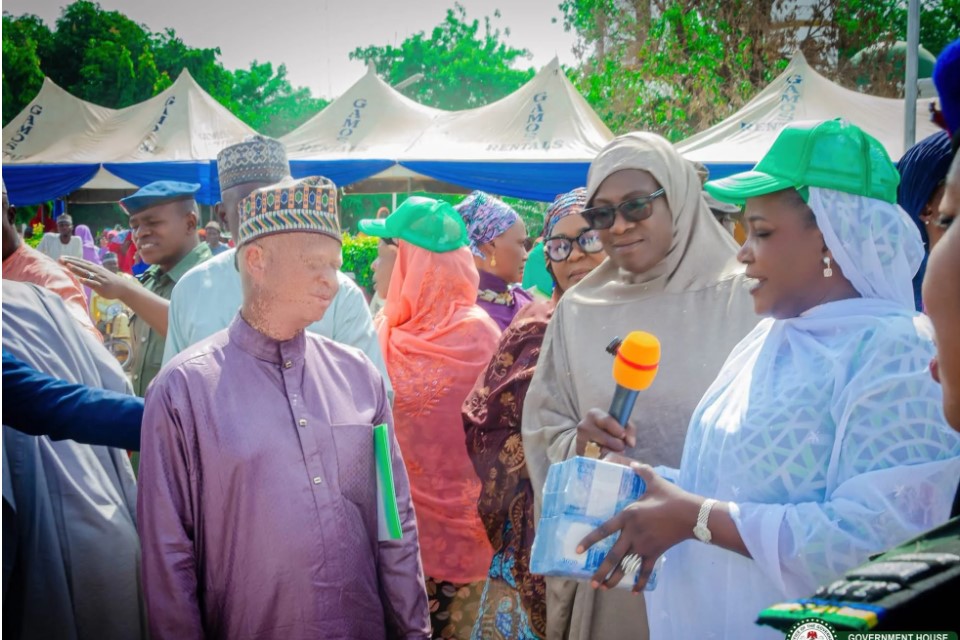
The First Lady, Mrs Oluremi Tinubu, on Wednesday marked this year’s World Disability Day with the disbursement of N64m in grants to persons living with disabilities across the state.

According to a Thursday statement signed by the Director General, Media and Publicity, Government House, Sokoto, Abubakar Bawa, the Mrs Tinubu was represented at the event by the wife of the state governor, Fatima Aliyu.

The statement noted that the First Lady announced the disbursement of N50m to beneficiaries in Sokoto as part of the broader Renewed Hope Initiative intervention being implemented across the 36 states and the FCT.

According to the statement, the First Lady explained that the programme is designed to create long-term economic independence for Nigerians with disabilities.

She said the RHI is empowering 250 persons with disabilities in each state, with each beneficiary receiving N200,000, bringing the total number of beneficiaries nationwide to 9,500 under the N1.9bn intervention.

“It is worth noting that over the past two years, the Renewed Hope Initiative has supported over 100,000 women, petty traders, and small business owners, including persons living with disabilities, with direct financial grants to grow their businesses,” the statement quoted her as saying.

The First Lady also stressed that the initiative was not limited to financial empowerment.

“Our commitment to improving lives has also been demonstrated through various interventions in agriculture, economic empowerment, education, health, and social welfare,” the statement added.

She was further quoted as highlighting RHI’s support for victims of conflict and vulnerable families.

See also  Lawmakers hail EFCC, NFIU for boosting Nigeria’s financial credibility

The statement said she noted that the programme has provided food assistance to 22 states and the FCT, including internally displaced persons and other vulnerable groups.

She commended Governor Ahmed Aliyu for what she described as consistent support for persons with disabilities in Sokoto State.

The statement added that during her remarks, the governor’s wife announced an additional N2m each to seven disability associations in the state to strengthen their existing empowerment schemes.

Providing further updates, the Special Adviser to the Governor on Disability Matters, Umar Muhammad Sabon Birni, disclosed that the present administration had restored and increased monthly stipends for persons with disabilities from N6,500 to N10,000.

He stated that 6,679 registered beneficiaries are currently receiving the allowance, while efforts are ongoing to register more eligible persons.

“The Ahmed Aliyu-led administration has also provided Ramadan feeding centres for persons with disabilities to break their fast during the holy month,” he said.

He added that the governor recently fulfilled his pledge of providing 1,000 hand-cycles to persons with disabilities across the state, describing the gesture as a major boost to mobility and independence for the beneficiaries.

He also commended the governor for “his love, support, and care for persons living with disabilities,” urging beneficiaries to support the administration’s programmes.

In a goodwill message, Sultan Muhammad Sa’ad Abubakar applauded Governor Aliyu for what the statement described as people-oriented projects being executed across the state. Represented by Ubandoman Arkilla, Alhaji Aliyu Hassan, the Sultan pledged the Sultanate Council’s continued support for the government.

The event featured a para-soccer match between the governor’s team and that of his wife, during which the First Lady’s team defeated the governor’s team 2–1.

See also  Police arrest eight ‘Democratic Republic of Yoruba’ members in Ogun

According to the statement, the Sokoto Para-Soccer Team also presented a trophy to the governor’s wife, which they won in a competition involving teams from Sokoto, Kebbi and Zamfara states.

Continue Reading
Click to comment

Leave a Reply

Your email address will not be published. Required fields are marked *

News

Child soldier: US threatens to cut military aid to Nigeria

Published

on

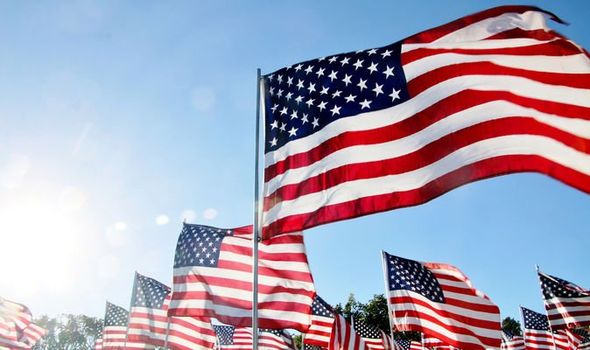
The United States of America has placed Nigeria on its Child Soldiers Prevention Act blacklist, saying the designation could lead to cuts in military training, weapons sales, foreign military financing, and defence cooperation from October 1, 2026, unless President Donald Trump issues a waiver.

This came after the State Department’s 2026 Trafficking in Persons Report cited the continued recruitment and use of children by Boko Haram and ISIS-West Africa on Nigerian soil.

The report, published on October 11 and obtained by The PUNCH on Monday, covers April 1, 2025 to March 31, 2026 and is the latest available assessment of Nigeria’s anti-trafficking performance by the US State Department.

It placed Nigeria on a list of 14 nations, including Russia, Iran, South Sudan, and Somalia, that are accused of recruiting or using child soldiers.

The report also revealed that the country’s anti-trafficking performance failed to meet minimum standards for the 15th consecutive year.

“Governments identified on the list are subject to restrictions, in the following fiscal year, on certain security assistance and commercial licensing of military equipment.

“The CSPA prohibits assistance to governments that are identified in the list under the following authorities: International Military Education and Training, Foreign Military Financing, Excess Defence Articles, and Peacekeeping Operations, with exceptions for some programs undertaken pursuant to the Peacekeeping Operations authority.

“The CSPA also prohibits the issuance of licenses for direct commercial sales of military equipment to such governments. Beginning October 1, 2026, and effective throughout Fiscal Year 2026, these restrictions will apply to the listed countries, absent a presidential waiver, applicable exception, or reinstatement of assistance pursuant to the terms of the CSPA,” the report read.

It said the determination to include a government in the CSPA list is “informed by a range of sources, including first-hand observation by U.S. government personnel and research and credible reporting from various UN entities, international organisations, local and international NGOs, and international and domestic media outlets.”

The blacklisting comes amid an ongoing US-Nigeria security partnership after the Trump administration deployed Navy SEAL Team 6 alongside Nigerian forces for joint counterterrorism operations in the northeast and formalised the bilateral 2026 Defence Cooperation Roadmap.

See also  Lawmakers hail EFCC, NFIU for boosting Nigeria’s financial credibility

According to the report, not a single government official was prosecuted for state complicity in trafficking despite acknowledged corruption, even as the number of trafficking victims who received government assistance collapsed from 2,058 the previous year to just 675.

The CSPA listing, if not waived by a sitting US president, could restrict International Military Education and Training, Foreign Military Financing, Excess Defence Articles, peacekeeping assistance, and licences for direct commercial sales of military equipment to Nigeria, the document said.

It stated, “The government did not report any investigations, prosecutions, or convictions of government employees allegedly complicit in trafficking crimes or provide details or other actions taken against complicit officials from previous years,” adding that “corruption and official complicity in trafficking crimes remained significant concerns.”

The report further noted that “observers reported some law enforcement, military, and other government officials reportedly committed trafficking crimes, accepted bribes to facilitate trafficking, or obstructed justice by interfering with investigations.”

On law enforcement, it said Nigerian authorities investigated 1,341 trafficking cases, comprising 589 sex trafficking cases, 301 forced labour cases, and 451 unspecified cases, involving 1,367 suspects. Of those, 94 were prosecuted and 97 traffickers convicted.

The US acknowledged that “the majority of those convicted received prison sentences of at least one year” and that “officials increased collaboration with foreign governments on international trafficking investigations,” resulting in operations across West Africa and Southeast Asia in partnership with INTERPOL.

It said although 2,004 people were identified as trafficking victims, comprising 893 sex trafficking and 1,111 forced labour, only 675 received government-supported assistance during the year, against 2,058 the prior period.

The report criticised shelter conditions at the National Agency for the Prohibition of Trafficking in Persons, noting that NAPTIP’s closed-shelter policy meant “residents were not allowed freedom of movement, including children’s access to school,” and that “access to some protection services was tied to victims’ willingness to cooperate with law enforcement proceedings.”

It noted that adult victims who declined shelter were not provided alternative services, and that “only one dedicated NGO shelter was available for adult male trafficking survivors.”

On the Child Soldiers Prevention Act listing, the report identified Boko Haram and ISIS-West Africa as the entities responsible for child recruitment.

See also  Why Do You Continue To Lie Against Your Motherland? Presidency Calls Out Kemi Badenoch

“Boko Haram and ISIS-West Africa continue recruiting, abducting, and using—including through force, fraud, and coercion—child soldiers as young as 12 years old as cooks, domestic workers, spies, porters, messengers, bodyguards or guards at checkpoints, “morality police,” armed combatants, and suicide bombers in attacks in Nigeria, Cameroon, Chad, and Niger; these children are subjected to physical and sexual abuse and forced drug use.

“These non-state armed groups continue to abduct women and girls in the northern regions of Nigeria, many of whom they exploit in forced labour, including in domestic servitude, and in sexual slavery. Boko Haram has kidnapped and subjected thousands of women and girls to forced marriage, including for sexual slavery and forced labour; Boko Haram punishes girls, including for refusing to marry, by forcing them to be suicide bombers.

“In many cases, the government coerces victims of forced marriage, including trafficking victims, to return to their Boko Haram husbands in Borno State demobilisation centres. Criminal gangs in the south recruit and use children in forced criminality, including kidnappings and robberies, and exploit them in sex trafficking. Criminal gangs in the northwest also exploit victims in forced labour in agriculture and mining,” the report stated.

It said the CSPA listing, under US law, could restrict International Military Education and Training, Foreign Military Financing, Excess Defence Articles, peacekeeping assistance, and licences for direct commercial sales of military equipment, restrictions effective from October 1, subject to a presidential waiver.

On labour trafficking, the report said the government “did not prohibit worker-paid recruitment fees…did not report holding labour recruiters liable civilly and criminally for fraudulent recruitment,” and “did not provide specialised training on child labour and human trafficking to labour inspectors.”

It added that “the government did not provide anti-trafficking training to its diplomatic personnel.”

The report also cited international criminal networks using Nigeria as an arena, saying “highly organised foreign criminal syndicates fraudulently recruit foreigners to Nigeria with promises of employment, confine them in leased properties and compel them to participate in organised online scams.”

See also  Abuja flooding: Mass demolition begins after Wike’s order

The TIP report also alleged that “Russian authorities fraudulently recruit and use Nigerians to fight in the Russia-Ukraine war” and that Nigeria’s Ministry of Education “helped promote” Russia’s Alabuga Start programme “despite warning signs.”

It raised concern that “North Korean nationals working in Nigeria may be operating under exploitative conditions displaying indicators of forced labour.”

On baby factories, which are criminal enterprises disguised as orphanages, maternity homes, or religious centres where women are held against their will, raped, and forced to deliver children who are subsequently sold, the report described the operations as a documented feature of Nigeria’s trafficking landscape, concentrated predominantly in the south.

Despite the concerns, the US government acknowledged Nigeria’s increased allocations, including victim service funding, which rose from N128m to N233m, while prevention spending jumped from N58.8m to N245m.

It also noted that the government coordinated the repatriation of 428 Nigerians exploited abroad, secured restitution for 14 victims as part of criminal sentences, and maintained anti-trafficking task forces in 23 states.

Nigeria, a source, transit, and destination country for trafficking, last attained the top Tier 1 ranking in 2011.

Its status has fluctuated between Tier 1, Tier 2, and the lower Tier 2 Watch List over the annual report’s 25-year history.

Countries in the 2026 CSPA listing include Afghanistan, Myanmar, the Democratic Republic of Congo, Ethiopia, Iran, Russia, Somalia, South Sudan, Sudan, Venezuela, Yemen, and two others in a group the US considers the most consequential offenders in child soldier recruitment globally.

When contacted for comments, NAPTIP’s Head of Press and Public Relations, Vincent Adekoye, said the agency would make its response to the report public.

Special Adviser to the President on Information and Strategy, Bayo Onanuga, did not respond to calls to his mobile line and a text message seeking the Presidency’s comments.

Source: punchng.com

FOLLOW US ON:

FACEBOOK

TWITTER

PINTEREST

TIKTOK

YOUTUBE

LINKEDIN

INSTAGRAM

Continue Reading

News

Reps quiz DMO, TCN over N54.57tn borrowing, N446.7bn debt

Published

on

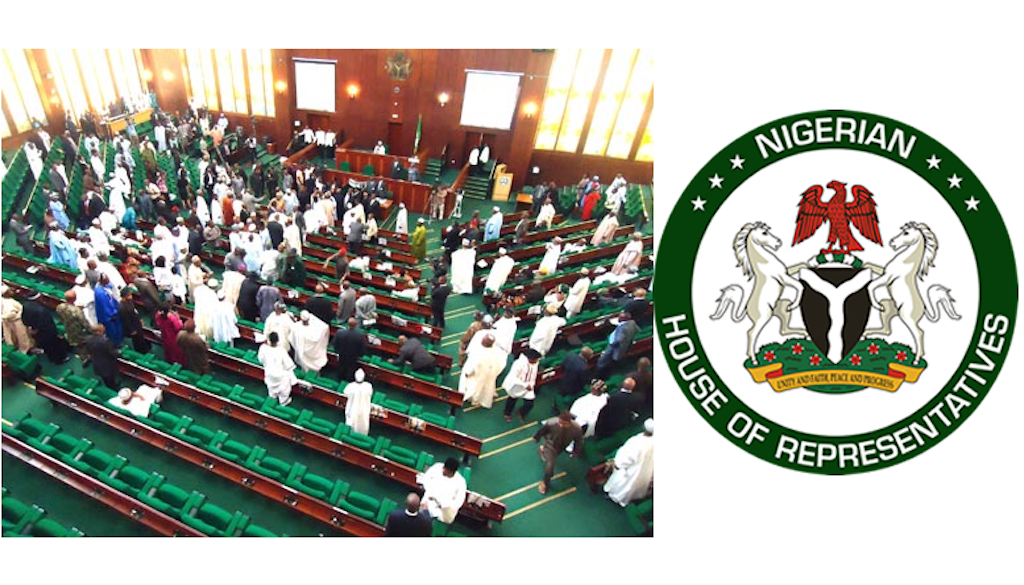
The House of Representatives Public Accounts Committee will question senior officials of the Debt Management Office and the Transmission Company of Nigeria on Monday and Tuesday over queries raised in the 2024 Auditor-General for the Federation’s report.

The invitations form part of the committee’s ongoing efforts to enforce financial accountability among Ministries, Departments and Agencies of the Federal Government and ensure that public institutions comply with established financial regulations.

The committee, chaired by Bamidele Salam, who represents Ede North/Ede South/Ejigbo/Egbedore Federal Constituency of Osun State, is expected to examine alleged irregularities involving government borrowing and the recovery of outstanding debts owed to the Federal Government.

A notice of invitation dated September 29, 2026, cited by The PUNCH, directed the two agencies to submit “all requested documents to the committee’s secretariat in Hearing Room 4, White House, House of Representatives, at least 72 hours before their scheduled appearances.”

The notice also required “the accounting officers and relevant subject matter experts of both agencies to attend the hearings at 1 pm in Hearing Room 446.”

The DMO is expected to explain its alleged failure to comply with borrowing estimates contained in five Appropriation Acts covering the 2020 to 2024 fiscal years.

According to the Auditor-General for the Federation’s Annual Report on Non-compliance and Internal Control Weaknesses in MDAs for the year ended December 31, 2024, the agency allegedly exceeded approved borrowing limits by N54.57tn during the five years.

The report stated that the DMO contracted fresh domestic and foreign loans totalling N88.67tn, against N34.89tn provided for debt financing in the Federal Government’s approved budgets over the same period.

See also  Police arrest eight ‘Democratic Republic of Yoruba’ members in Ogun

The difference between the reported borrowing figure and the budgeted amount raises questions about compliance with legislative approvals and the procedures governing government borrowing.

The committee is expected to seek explanations from the agency on the circumstances surrounding the reported discrepancy and the measures taken to ensure that borrowing activities comply with approved fiscal plans.

The DMO is responsible for managing Nigeria’s public debt, including domestic and external borrowing, debt servicing and the implementation of government debt-management policies. Its activities are central to the Federal Government’s financing arrangements and the management of the country’s debt obligations.

The Transmission Company of Nigeria, on its part, is expected to account for its alleged failure to recover N446.70bn out of N882.75bn owed to the Federal Government by various public agencies and institutions.

The amount in question represents outstanding obligations reportedly owed by public entities, with the committee expected to seek clarification on the recovery efforts made by TCN and the reasons for the unpaid balance.

The hearing comes amid continuing concerns over the management of public resources, compliance with financial regulations and the recovery of government funds tied up in outstanding debts.

Salam, an Accord chieftain, has repeatedly cautioned public institutions against treating legislative summons with levity, warning that the National Assembly has constitutional powers to investigate matters relating to public expenditure and the management of government funds.

Sections 88 and 89 of the 1999 Constitution, as amended, empower the National Assembly and its committees to conduct investigations within their constitutional mandate and summon persons to provide evidence or produce relevant documents.

See also  Abuja flooding: Mass demolition begins after Wike’s order

The Public Accounts Committee examines reports submitted by the Auditor-General for the Federation, scrutinising public accounts and investigating cases of alleged financial irregularities, non-compliance with regulations and weaknesses in internal controls.

Its work is intended to strengthen oversight of public spending, ensure that government agencies account for the use of public funds and recommend appropriate action where breaches are established.

The committee has also recorded financial recoveries for the Federal Government from oil companies, MDAs and government-owned enterprises over the past two years.

However, its oversight activities have occasionally been complicated by the failure of some institutions to honour invitations.

Last week, the Nigerian National Petroleum Company Limited and the Independent National Electoral Commission reportedly failed to honour the committee’s summons, prompting speculation about possible legislative measures to compel their appearance at a later date.

The scheduled hearings involving the DMO and TCN will provide the committee an opportunity to obtain explanations from the agencies and determine what further action may be necessary in response to the audit findings.

Source: punchng.com

FOLLOW US ON:

FACEBOOK

TWITTER

PINTEREST

TIKTOK

YOUTUBE

LINKEDIN

INSTAGRAM

Continue Reading

News

Xenophobia: 111 more Nigerians return from South Africa

Published

on

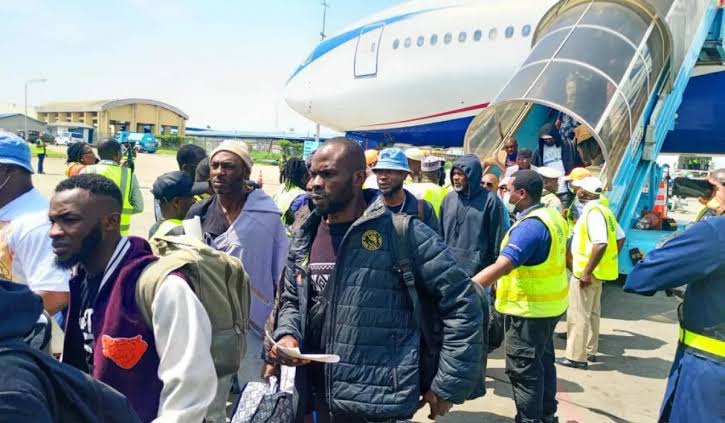
The Federal Government has evacuated another batch of 111 distressed Nigerians from South Africa amid concerns over xenophobic and Afrophobic attacks in the country.

The returnees, comprising 44 men, 23 women and 44 children, arrived in Lagos aboard South African Airways Flight SA060 on Thursday, October 8, 2026.

The Ministry of Foreign Affairs disclosed this in a statement signed by its spokesperson, Oluwafemi Adeniyi, on Sunday.

The ministry said the returnees were received by officials of the ministry, the Nigerians in Diaspora Commission, the National Agency for the Prohibition of Trafficking in Persons, the National Emergency Management Agency and other relevant Federal Government agencies.

According to the statement, the evacuation was fully funded by the $265,854 donation made by the Redeemed Christian Church of God to support the evacuation of 500 distressed Nigerians from South Africa.

“The arrival of the returnees brings the total number of consular evacuations conducted from South Africa to 15 since the commencement of the ongoing evacuation exercise on 10th June, 2026,” the statement said.

It added that the latest evacuation brought the cumulative number of Nigerians evacuated from South Africa to 2,037, including 1,388 whose repatriation costs were fully covered by the Federal Government.

The ministry disclosed that 318 Nigerians had so far benefited from the RCCG-funded evacuation, leaving 182 more to be repatriated under the church’s commitment.

It said, “With the successful evacuation of this RCCG-funded batch, a total of 318 Nigerian nationals have had their one-way tickets funded by the church. Therefore, 182 more nationals are expected to be repatriated under RCCG’s commitment to fund 500 one-way tickets.”

See also  Tinubu Asks Senate to Confirm New Service Chiefs

The Federal Government expressed appreciation to the RCCG, under the leadership of its General Overseer, Pastor Enoch Adeboye, for its financial support towards the evacuation of distressed Nigerians.

It also reaffirmed its commitment to engaging the South African authorities and other stakeholders to address xenophobia and Afrophobia in the country.

“The Federal Government remains committed to engaging relevant stakeholders, including authorities of South Africa, to address Xenophobia and Afrophobia in the country, and promote the welfare, safety and dignity of Nigerians residing there,” the statement added.

The ministry advised Nigerians living in South Africa to comply with local laws, remain vigilant and prioritise their safety.

It urged them to maintain contact with the Nigerian High Commission in Pretoria and the Consulate General in Johannesburg for consular assistance whenever necessary.


“The Federal Government remains steadfast in its commitment to providing timely consular support to Nigerians in the diaspora and safeguarding their welfare and well-being,” the statement said.

Source: punchng.com

FOLLOW US ON:

FACEBOOK

TWITTER

PINTEREST

TIKTOK

YOUTUBE

LINKEDIN

INSTAGRAM
Continue Reading

Trending