Connect with us

News

Benin foiled coup: US reviews travel warning, hostages regain freedom

Published

on

Calm has returned to Cotonou following a failed coup attempt in the Benin Republic on Sunday, the United States Embassy confirmed on Monday, lifting its earlier shelter-in-place advisory for American citizens in the country.

In a statement, the embassy said it had reassessed conditions on the ground after a turbulent 24 hours. “The US Embassy in Cotonou assesses that the situation in Cotonou is calm and has returned to normal. We are lifting the shelter-in-place recommendation,” the statement read, while urging American citizens to continue exercising caution, avoid crowds and demonstrations, and maintain a low profile.

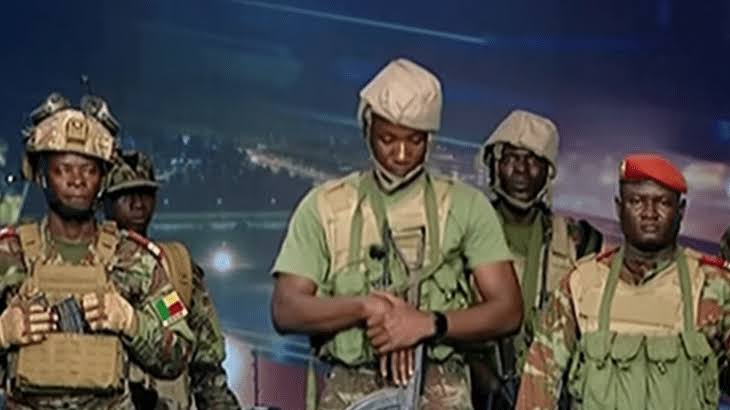
The advisory adjustment followed a dramatic series of events in which a faction of soldiers, calling themselves the “Military Committee for Refoundation,” attempted to overthrow President Patrice Talon.

The mutineers appeared on state television claiming they had dissolved the government and suspended the constitution, shortly after an unsuccessful assault on the president’s heavily guarded residence.

The soldiers briefly seized the national broadcaster to project legitimacy and rally support, contributing to widespread uncertainty. Borders were reportedly closed, and political parties suspended, further heightening tension across the country.

By later Sunday, Interior Minister Alassane Seidou announced that loyalist forces had regained control of key locations in Cotonou. Officials confirmed that at least 14 soldiers involved in the uprising were arrested, while others fled. Two senior army officers, Chief of Army Staff Abou Issa and Army Chief Colonel Faizou Gomina, who had been taken hostage during the coup attempt, were released on Monday following government action supported by Nigerian forces.

AFP journalists in Cotonou observed a city gradually returning to normal, with traffic resuming and roads reopening, although some military tanks remained stationed across key locations. President Talon appeared on television later on Sunday, reassuring citizens that the situation was “completely under control” and warning that the coup plotters would face punishment.

See also  Alleged terrorism: I’ve no case to answer, let me go — Nnamdi Kanu

The attempted coup in Benin follows a spate of military interventions in West Africa, including in Niger, Burkina Faso, Mali, Guinea, and, most recently, Guinea-Bissau. The Beninese government called for swift assistance from Nigeria, which deployed troops and conducted military strikes in Cotonou to help suppress the mutiny. ECOWAS also announced the deployment of troops from Ghana, Ivory Coast, Nigeria, and Sierra Leone to support the preservation of constitutional order in Benin.

International reactions were swift. The United Nations, the African Union, France, and regional bodies condemned the coup attempt, reaffirming support for democratic governance.

Under Benin’s constitution, Talon is completing his second term and is not eligible for a third. Finance Minister Romuald Wadagni, Talon’s designated successor, is considered the frontrunner for the upcoming April presidential election. Critics have, however, accused Talon of authoritarianism despite economic achievements, while the main opposition party has been excluded from the ballot.

Benin’s political history has been marked by repeated coups and attempted takeovers since independence in 1960, making the swift suppression of Sunday’s coup a rare instance of rapid stabilization and restoration of constitutional order in the country.

Continue Reading
Click to comment

Leave a Reply

Your email address will not be published. Required fields are marked *

News

FG names 10-member panel to probe deaths of 37 NSCDC detainees

Published

on

The Federal Government has constituted a 10-member independent committee to investigate the deaths of 37 people detained by the Nigeria Security and Civil Defence Corps in Niger State over suspected illegal mining.

The Minister of Interior, Olubunmi Tunji-Ojo, announced the constitution of the committee on Saturday, following a directive by President Bola Tinubu for a comprehensive investigation into the incident.

The 37 detainees died on Thursday, September 17, 2026, while in the custody of the NSCDC Niger State Command.

The cause of the deaths has not been established, with authorities ordering investigations to determine the circumstances surrounding the incident.

In a statement signed by the minister, the government said the committee would establish the identities of the deceased and investigate their arrests, detention and the cause and circumstances of their deaths.

It would also determine responsibility, complicity, negligence and misconduct, as well as recommend appropriate action, compensation where applicable and measures to prevent a recurrence.

“Any attempt to destroy or conceal evidence, intimidate witnesses or obstruct the investigation will be treated as a serious offence,” he said.

The committee is chaired by retired Deputy Director-General of the Department of State Services, Jonathan Kure, while Professor Isa Hayatu Chiroma (SAN), former Director-General of the Nigerian Law School, will serve as secretary.

Other members include retired AIG Hosea Hassan Karma; Professor Olayinka Buhari, a professor of Histopathology and former Chief Medical Director of the University of Ilorin Teaching Hospital; a representative of the Minna Emirate Council; and a representative of the Niger State Government.

The committee also includes Alhaji Liman Sulaiman, National Secretary of the Miners Association of Nigeria; lawyer and human rights activist Deji Adeyanju; Mrs Zainab Suleiman Okino of Blueprint Newspaper; and public affairs analyst, Dr George Agbakahi.

See also  Terrorism: Kanu accepts judge’s advice to consult lawyers

According to the statement, the committee may co-opt relevant experts, access facilities and documents, visit relevant locations and request memoranda from members of the public.

It has two weeks to complete its work and submit its report to the minister.

The minister also expressed condolences to the families of the deceased and appealed for calm while the investigation continues.

Source: punchng.com

FOLLOW US ON:

FACEBOOK

TWITTER

PINTEREST

TIKTOK

YOUTUBE

LINKEDIN

INSTAGRAM

Continue Reading

News

Oriire: Abductors fed us only when convenient for them – DSS witness tells court

Published

on

The witness of the Department of State Service, DSS in the ongoing trial of five alleged Ansaru terror group members on Friday, September 18 told the Federal High Court in Abuja that their abductors fed them only when it was convenient for them.

The witness code named AAA who was one of the victims of Orire school abduction said they were seriously traumatised during and after their ordeal that lasted 56 days.

Under cross examination by the counsel to the five accused persons Mr Bala Dakum, the witness said they were offered food by the abductors at their own convenient time despite the presence of little children of 18 months among them.

She admitted that the alleged kidnappers used the mobile phone of the victims to contact government officials but said she did not know the phone number of the government officials that were called.

She further told the court that upon their rescue by security operatives, she was interrogated by DSS operatives in their office and also while in the hospital.

Answering a question, the witness admitted that the three out of the five defendants on trial were with them in the forest while she got to know the other two during interrogation at the DSS office.

She also told the court that Michael Oyedokun and John Olaleye were killed at camp A and Camp B respectively but that she was not present at the scene where they were beheaded.

The witness further told the court that because she was not at the scene where the two teachers were beheaded, she did not know the specific kidnappers that carried out the killing.

See also  Alleged terrorism: I’ve no case to answer, let me go — Nnamdi Kanu

Meanwhile justice Salim Olasupo Ibrahim has fixed October 12 and 13 for continuation of trial of the five accused person.

FOLLOW US ON:

FACEBOOK

TWITTER

PINTEREST

TIKTOK

YOUTUBE

LINKEDIN

INSTAGRAM

Continue Reading

News

Protesters March Against Sunday Igboho’s Iru Ekun Security Outfit In Oyo, Allege Tribal Discrimination

Published

on

group of protesters on Friday took to the streets in Oyo State to demonstrate against the Iru Ekun Security Network, a private security outfit associated with Yoruba Nation activist Sunday Adeyemo, popularly known as Sunday Igboho.

The protesters, who carried placards, accused the security outfit of allegedly discriminating against people from some ethnic groups and called for equal treatment of all residents irrespective of their tribe or background.

Some of the placards displayed during the protest read: “Say No To Iru Ekun, Crime Knows No Tribe,” “A Criminal Is A Criminal. One Nation, One People, One Nigeria,” and “Our Diversity Is Our Strength.”

The demonstration comes amid growing public debate and criticism surrounding the activities and methods of the Iru Ekun Security Network, particularly concerns over the role of privately organised security groups and their relationship with formal law-enforcement agencies.

The latest controversy followed an incident in Oyo State in which Iru Ekun operatives were accused of obstructing police officers who were attempting to arrest a suspect in Ibadan.

A rights group, Vocalpoint Human Rights Initiative (VOHRI), on Wednesday warned against allowing Iru Ekun or any other private group to operate as a parallel law-enforcement institution.

The group said no individual or organisation should be allowed to determine who should be arrested or punished without lawful authority and due process.

The criticism also comes after reports of confrontations involving Iru Ekun operatives during security operations in Oyo State.

In June, members of the group reportedly came under attack during a surveillance operation in the Old Oyo National Park while searching for suspected kidnappers and armed criminals. Igboho subsequently vowed that the group would continue its anti-kidnapping operations in the South-West.

See also  Disu declares total war on police corruption, impunity

Iru Ekun was established by Igboho as a community security initiative aimed at tackling kidnapping, banditry and other criminal activities across parts of the South-West.

At the launch of the Lagos chapter earlier this month, Igboho directed members of the network operating in Lagos, Oyo, Ogun, Ondo and Ekiti states to intensify efforts against criminality.

According to reports, Igboho said the group would confront anyone threatening peace and security regardless of ethnic or religious affiliation and urged its members to operate within the law.

However, critics have continued to question the structure, accountability and methods of the privately organised security network, particularly given the existence of established state security structures such as the police and Amotekun.

A recent commentary published by Nigerian Tribune also raised concerns about the regulation and oversight of Iru Ekun, while discussing Igboho’s growing involvement in regional security matters.

The protesters’ demonstration on Friday adds a new dimension to the debate, with the placards emphasising ethnic inclusiveness and warning against treating crime through a tribal lens.

The protesters called for security operations to be conducted without discrimination, insisting that criminality should be addressed based on individual conduct rather than ethnic identity.

Source: Saharareporters

FOLLOW US ON:

FACEBOOK

TWITTER

PINTEREST

TIKTOK

YOUTUBE

LINKEDIN

INSTAGRAM

Continue Reading

Trending