Connect with us

Business

Nigeria’s World Bank debt to hit $9.65bn

Published

on

World Bank loans to Nigeria between 2023 and 2025 are projected to reach $9.65bn by the end of this year as fresh approvals, ongoing negotiations, and disbursements gather pace across key sectors.

The amount covers International Bank for Reconstruction and Development and International Development Association loans only, according to an analysis of data on the bank’s website by The PUNCH. When grants are added, total World Bank support rises to about $9.77bn within the three-year window.

The International Bank for Reconstruction and Development provides loans on commercial or near-commercial terms to middle-income and creditworthy low-income countries, while the International Development Association offers highly concessional loans and grants to the world’s poorest nations.

The figures show a steady build-up of commitments with government officials pushing ahead with digital infrastructure, social protection, power, education, and health programmes while defending the concessional nature of the borrowings.

The Federal Government is expected to secure another $500m facility on December 19, 2025, under the Fostering Inclusive Finance for MSMEs in Nigeria project. The operation is being prepared for Board consideration and will be implemented through the Development Bank of Nigeria.

The borrowing cycle under the administration of Bola Tinubu began with $2.7bn in loans in 2023 across four major projects. Financing that year was dominated by power sector recovery, renewable energy access, girls’ education, and women’s economic empowerment.

The Nigeria Distributed Access through Renewable Energy Scale-up project received $750m in IDA financing to expand private sector-led clean energy access. Another $700m IDA credit was approved for girls’ secondary education in participating states. Women’s economic empowerment attracted $500m IDA through the Nigeria for Women Programme Scale Up.

The AF Power Sector Recovery operation received $449m in IBRD financing and $301m in IDA to improve the reliability of the electricity supply and restore financial sustainability in the sector. There were no grant components in 2023, so the entire amount consisted of loans.

The volume of loans rose sharply in 2024 as new approvals reached $4.25bn, representing a 57.4 per cent increase compared with the preceding year. The increase was driven largely by two policy-based operations and three separate $500m IDA investment packages.

The Nigeria Reforms for Economic Stabilisation to Enable Transformation programme provided $1.5bn in loans, split between $750m IBRD and $750m IDA, as the government sought fiscal space and protection for vulnerable populations while reforms continued.

Another $750m IBRD loan was approved for the NG Accelerating Resource Mobilisation Reforms programme to boost non-oil revenues and safeguard oil and gas receipts.

The World Bank also cleared $500m IDA each for rural road access, primary healthcare strengthening, and dam safety and irrigation programmes. The primary healthcare programme included a $70m grant, which lifted total World Bank support for 2024, including grants, to about $4.32bn.

See also  Kano fire: FG, APC govs donate N8bn to victims

For 2025, the data shows $2.695bn in loans at various stages of project processing alongside $52.18m in grants. Nine operations have already been identified across financial inclusion, digital broadband, health, education, social protection, and institutional capacity.

The largest facilities are tied to $500m IDA each for broadband expansion, basic education, and livelihood support for poor and vulnerable households. Health security, nutrition, and internally displaced communities account for another $630m, while procurement standards receive $65m from IDA.

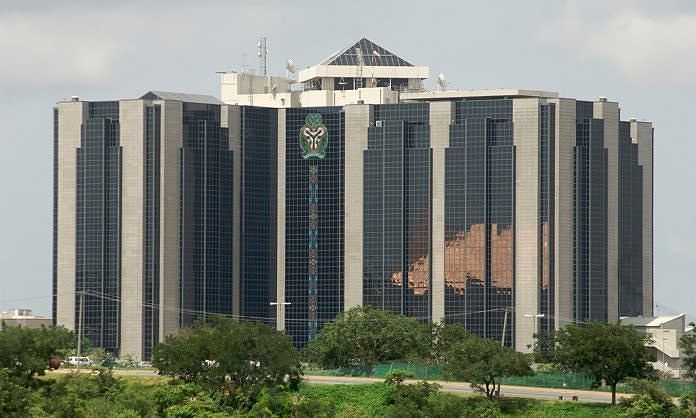
A $400m IBRD component is included for the MSME finance programme, along with a $100m IDA portion. Also, the Central Bank of Nigeria is to receive a $6.8m grant to strengthen technology-enabled oversight of the banking sector and deepen understanding of payment and remittance systems.

Compared with 2024, the 2025 loan pipeline represents a decline of about 36.6 per cent, though it is broadly in line with the $2.7bn reached in 2023. Across the three years, IDA loans account for about $7.30bn while IBRD loans contribute roughly $2.35bn. Grants add another $122.19m, rising from zero in 2023 to $70.01m in 2024 before easing to $52.18m in 2025.

The portfolio highlights the scale of financing underpinning Nigeria’s reform programme as authorities continue to seek low-cost multilateral resources even as concerns persist over debt sustainability and the need to strengthen domestic revenue mobilisation.

The PUNCH earlier reported that Nigeria’s stock of World Bank International Development Association loans rose to $18.5bn, making it the largest IDA borrower in Africa and the third-biggest in the world.

Fresh data from the IDA’s unaudited financial statements for the third quarter of 2025 confirmed that the country has maintained the ranking it first attained in 2024, when it climbed to third place after overtaking India. The country was the fourth-largest borrower in 2023.

According to the report, Nigeria’s exposure increased from $17.1bn in September 2024 to $18.5bn in September 2025, representing a rise of $1.4bn or 8.2 per cent. The increase reflects the country’s heavier reliance on concessional financing to plug infrastructure gaps, stabilise its reform programme, and support social spending amid volatile oil earnings.

Economists warn that the rising loan pipeline, while potentially beneficial for long-term development, could deepen fiscal pressures if not matched with stronger domestic revenue mobilisation and prudent expenditure management.

Lagos-based economist, Adewale Abimbola, reacting to the rising World Bank commitments to Nigeria, said loans from multilateral institutions such as the World Bank are largely concessionary, with interest rates typically below market levels and longer repayment tenors.

He noted that the critical question is not whether Nigeria should be borrowing, but whether the loans are structured and deployed effectively. “If it’s concessionary and tied to viable projects with medium-term revenue prospects, I don’t think it’s a bad idea,” Abimbola explained. “Borrowing isn’t bad; what matters is utilisation.”

He stressed that the economic impact of such loans depends on how well they are channelled into projects that can generate sustainable growth, strengthen revenue, and improve public services over time.

See also  FG to invest N12bn in digital research projects — Minister

Development economist and CEO of CSA Advisory, Dr Aliyu Ilias, has expressed strong reservations about Nigeria’s rising debt profile in light of the World Bank’s fresh commitments.

While acknowledging that borrowing is not inherently bad for an economy, he questioned the rationale for taking on more debt at a time when the government claims to have higher revenues. Ilias pointed out that following the removal of fuel subsidy, Tinubu had announced increased revenue inflows.

He added that both the Federal Inland Revenue Service and the Nigeria Customs Service had declared revenue surpluses, further suggesting the government should be able to fund projects without resorting to heavy borrowing.

According to him, the impact of the current borrowing spree is being felt in reduced public service delivery, particularly in capital expenditure, as debt servicing now consumes a significant portion of available revenue.

He warned that this crowding-out effect limits job creation, fuels inflation, and worsens Nigeria’s foreign-exchange imbalance, with the naira trading at historically low levels.

He argued that given the claimed revenue surpluses, the Tinubu administration should not have needed to borrow within its first two years in office, let alone at the scale currently being witnessed.

Economist and CEO of the Centre for the Promotion of Private Enterprise, Dr Muda Yusuf, said the rising World Bank commitments to Nigeria should be examined within the context of the country’s Medium-Term Expenditure Framework and annual budgets, which already provide for both domestic and foreign borrowing.

He noted that deficit financing is a common feature of budgets worldwide and is not inherently wrong, as it allows governments to make critical investments without waiting to generate all the required revenue upfront.

However, he stressed that borrowing should always be backed by sound economic reasoning and clear development priorities. Yusuf emphasised that the key issue is debt sustainability, which depends primarily on the country’s revenue capacity to service its obligations.

Without strong cash flow to meet repayment schedules, he warned, Nigeria risks falling into a vicious cycle of borrowing to service existing loans, thereby perpetuating fiscal vulnerability. He said it is essential that projects funded by loans directly support the economy’s capacity to repay.

According to him, Nigeria should be cautious with foreign loans due to the exchange rate risks they pose, noting that domestic debt is generally easier to manage. Excessive foreign borrowing, he warned, could put pressure on the country’s reserves and further weaken the exchange rate. He stressed that a disciplined approach to debt sustainability will be crucial for Nigeria to avoid long-term fiscal distress.

See also  N804bn arms imports spark calls for local production

Meanwhile, data from the Debt Management Office showed Nigeria’s external debt stood at $46.98bn as of June 30, 2025. Of this amount, the World Bank Group accounted for $19.39bn—comprising $18.04bn from the International Development Association and $1.35bn from the International Bank for Reconstruction and Development.

This means the World Bank holds 41.3 per cent of the total, reinforcing its outsized role in funding Nigeria’s development programmes.

The Minister of Budget and Economic Planning, Senator Abubakar Bagudu, recently called on the World Bank to support Nigeria’s Renewed Hope Ward Development Programme, a grassroots initiative he described as central to achieving President Bola Tinubu’s target of building a $1tn economy by 2030.

The minister praised the World Bank for its consistent backing of Nigeria’s reforms, describing the last 28 months of partnership as both challenging and transformative. “The World Bank team has collaborated with us not just as partners but as members of the same team. We could not have achieved the results we have today without your support,” he said.

Speaking with the minister in August 2025, the World Bank Country Director, Matthew Verghis, commended Nigeria for making bold decisions that could reset its development trajectory.

“Nigeria’s recent decisions represent a critical moment. Such choices are not easy, but they create opportunities for a new path,” Verghis said. “The World Bank stands ready to continue supporting Nigeria in maintaining these reforms and increasing their impact.”

However, The PUNCH also reported in September 2025 that about six loans worth $2bn, signed for Nigeria by the World Bank in 2024, were yet to be disbursed nearly a year after the bank’s approval.

Responding to an enquiry by The PUNCH, the Senior External Affairs Officer at the World Bank, Mansir Nasir, noted that funds for projects financed by the institution were not disbursed at once but in instalments, depending on the nature of the project and financing instruments.

“Projects financed by the World Bank run for a certain time, which varies depending on the specific project. The total amount of the project is not disbursed as a one-off, but rather in instalments depending on the financing instruments—e.g., IPF or PforR—which require certain milestones for specific disbursement values.

“If you look at the portal, you will see the specific disbursement timelines and values,” Nasir added. He further stated that before a new project can begin disbursement, it must meet certain agreed conditions between the Federal Government and the World Bank.

punch.ng

FOLLOW US ON:

FACEBOOK

TWITTER

PINTEREST

TIKTOK

YOUTUBE

LINKEDIN

TUMBLR

INSTAGRAM

Continue Reading
Click to comment

Leave a Reply

Your email address will not be published. Required fields are marked *

Business

Customs hand over seized N40.7m petrol to NMDPRA

Published

on

The Comptroller-General of Customs, Adewale Adeniyi, on Friday handed over 1,650 jerrycans of Premium Motor Spirit, worth N40.7 million, to the Nigerian Midstream and Downstream Petroleum Regulatory Authority for further investigation.

Addressing journalists at the handover ceremony held at the Customs Training College in Ikeja, Adeniyi said the seized fuel was intercepted at various locations, including Badagry, Owode, Seme, and other axes within Lagos State.

Represented by the National Coordinator of Operation Whirlwind, Deputy Comptroller-General Abubakar Aliyu, Adeniyi said the contraband was intercepted over the past nine weeks.

“In the space of nine weeks, our operatives intensified surveillance and enforcement across critical border communities. A total of 1,650 jerrycans of 25 litres each were seized along notorious smuggling routes, including Adodo, Seme, Owode Apa, Ajilete, Idjaun, Ilaro, Badagry, Idiroko, and Imeko. The total duty-paid value of the PMS is N40.7 million,” Adeniyi said.

He added that three tankers used to transport the fuel were carrying 60,000, 45,000, and 49,000 litres respectively, totalling 154,000 litres of PMS.

According to Adeniyi, the interception was the result of intelligence-driven operations and the vigilance of Operation Whirlwind in safeguarding Nigeria’s economy and energy security.

He explained that the transportation and movement of petroleum products are governed by regulatory frameworks and standard operating procedures designed to prevent diversion, smuggling, hoarding, and economic sabotage.

“These items contravened the established Standard Operating Procedures of Operation Whirlwind,” Adeniyi said, emphasising that such violations undermine government policy, distort market stability, and deprive the nation of critical revenue.

See also  N804bn arms imports spark calls for local production

He warned that border corridors such as Owode, Seme, and Badagry remain sensitive economic arteries. “These routes have historically been exploited for illegal cross-border petroleum movement. Under our watch, there will be no safe haven for economic sabotage,” he said.

Adeniyi said the handover to NMDPRA reflects inter-agency collaboration. “While Customs enforces border control and anti-smuggling mandates, NMDPRA regulates distribution and ensures compliance with downstream laws. This collaboration ensures due process, transparency, and regulatory integrity,” he said.

Representing NMDPRA, Mrs. Grace Dauda said the agency ensures that petroleum products produced in Nigeria are consumed domestically. “It is unfortunate that some businessmen attempt to smuggle the product out of the country. The public must work together to stop economic sabotage,” she said.

Operation Whirlwind is a special tactical enforcement operation launched by the Nigeria Customs Service in 2024 to combat cross-border smuggling of petroleum products, particularly PMS, and other contraband that threaten Nigeria’s economic security. It was established in response to a surge in illegal fuel diversion across the country.

punch.ng

FOLLOW US ON:
FACEBOOK

TWITTER

PINTEREST

TIKTOK

YOUTUBE

LINKEDIN

TUMBLR

INSTAGRAM

Continue Reading

Business

Stocks drop, oil rises after Trump Iran threat

Published

on

Most Asia equities fell and oil prices rose on Friday after Donald Trump ratcheted up Middle East tensions by hinting at possible military strikes on Iran if it did not make a “meaningful deal” in nuclear talks.

The remarks fanned geopolitical concerns and cast a pall over a tentative rebound in markets following an AI-fuelled sell-off this month.

Traders are also looking ahead to the release of US data later in the day that will provide a fresh snapshot of the world’s top economy.

A slew of forecast-beating figures over the past few days have lifted optimism about the outlook but tempered expectations for more interest rate cuts.

The US president told the inaugural meeting of the “Board of Peace”, his initiative to secure stability in Gaza, that Tehran should make a deal.

“It’s proven to be over the years not easy to make a meaningful deal with Iran. We have to make a meaningful deal otherwise bad things happen,” he said, as he deployed warships, fighter jets and other military hardware to the region.

He warned that Washington “may have to take it a step further” without any agreement, adding: “You’re going to be finding out over the next probably 10 days.”

Israeli Prime Minister Benjamin Netanyahu earlier warned: “If the ayatollahs make a mistake and attack us, they will receive a response they cannot even imagine.”

The threats come days after the United States and Iran held a second round of Omani-mediated talks in Geneva as Washington looks to prevent the country from getting a nuclear bomb, which Tehran says it is not pursuing.

See also  SEC creates insurance recapitalisation desk, pledges 14-day approval

The prospect of a conflict in the crude-rich Middle East has sent oil prices surging this week, and they extended the gains Friday to sit at their highest levels since June.

Equity traders were also spooked.

Hong Kong fell as it reopened from a three-day break, while Tokyo, Sydney, Wellington and Bangkok were also down. However, Seoul continued to rally to a fresh record thanks to more tech buying, with Singapore, Manila and Mumbai also up.

City Index market analyst Matt Simpson said a strike was not certain.

“At its core, this looks like pressure and leverage rather than a prelude to invasion,” he wrote.

“The US is pairing military readiness with stalled nuclear negotiations, signalling it has credible strike options if talks fail. That doesn’t automatically translate into boots on the ground or a regime-change campaign.

“While military assets dominate headlines, diplomacy is still in motion. The fact talks are continuing at all suggests both sides are still probing for a diplomatic off-ramp before tensions harden further.”

Shares in Jakarta slipped even after Trump and Indonesian President Prabowo Subianto reached a trade deal after months of wrangling.

The accord sets a 19 percent tariff on Indonesian goods entering the United States. The Southeast Asian country had been threatened with a potential 32 percent levy before the pact.

Jakarta also agreed to $33 billion in purchases of US energy commodities, agricultural products and aviation-related goods, including Boeing aircraft.

– Key figures at around 0700 GMT –

Tokyo – Nikkei 225: DOWN 1.1 percent at 56,825.70 (close)

Hong Kong – Hang Seng Index: DOWN 0.7 percent at 26,508.98

See also  FG to invest N12bn in digital research projects — Minister

Shanghai – Composite: Closed for holiday

West Texas Intermediate: UP 0.9 percent at $67.05 per barrel

Brent North Sea Crude: UP 0.9 percent at $72.27 per barrel

Euro/dollar: DOWN at $1.1756 from $1.1767 on Thursday

Pound/dollar: DOWN at $1.3448 from $1.3458

Euro/pound: DOWN at 87.42 pence from 87.43 pence

Dollar/yen: UP at 155.17 yen from 155.07 yen

New York – Dow: DOWN 0.5 percent at 49,395.16 (close)

London – FTSE 100: DOWN 0.6 percent at 10,627.04 (close)

AFP

punch.ng

FOLLOW US ON:

FACEBOOK

TWITTER

PINTEREST

TIKTOK

YOUTUBE

LINKEDIN

TUMBLR

INSTAGRAM

Continue Reading

Business

FG defers 70% of 2025 capital budget to 2026

Published

on

The Federal Government has said it will implement 30 per cent of the 2025 capital budget before the end of November, as part of measures to fast-track project execution and clear outstanding obligations.

It also stated that the remaining 70 per cent has been rolled over into the 2026 capital budget to ensure seamless implementation. The move follows a directive to Ministries, Departments, and Agencies to comply strictly with procurement rules in the execution and payment of capital projects under the extended 2025 budget cycle.

In a statement on Thursday by the Director of Press and Public Relations at the Office of the Accountant-General of the Federation, Bawa Mokwa, the government said MDAs had been instructed to align fully with the Public Procurement Act in implementing the 2025 and 2026 capital budgets.

The Minister of State for Finance, Mrs Doris Uzoka-Anite, gave the directive during a stakeholders’ meeting on the implementation of the extended 2025 Capital Budget held at the Federal Ministry of Finance in Abuja.

She stressed that capital disbursements must follow due process.

The statement read, “Mrs Uzoka-Anite emphasised that all capital payments must comply with the principles of the Procurement Act and that capital projects must be backed by cash before execution. She warned that no capital payment should be processed outside approved procurement procedures.”

She added that the country has sufficient funds to settle outstanding obligations and urged MDAs to update their documentation to enable quicker processing of payments.

The statement noted, “The Minister further stated that the nation has adequate funds to settle pending payments and urged MDAs to review and update their documentation to facilitate the timely processing of payments.”

See also  N804bn arms imports spark calls for local production

Providing further details, the Accountant-General of the Federation, Dr Shamseldeen Ogunjimi, disclosed that the Government Integrated Financial Management Information System had been fully restored.

Ogunjimi reiterated that warrants had already been issued to MDAs and announced that Treasury House would begin implementation of the 30 per cent component of the 2025 budget by the end of next week.

The statement read, “Dr Ogunjimi explained that 30 per cent of the 2025 Capital Budget will be implemented between now and 30 November 2026, while the remaining 70 per cent has been rolled over into the 2026 Capital Budget to ensure seamless implementation, in line with the directive of President Bola Tinubu.

“He reiterated that warrants have already been issued to MDAs and announced that Treasury House will commence implementation of the 30 per cent component of the 2025 Budget by the end of next week.”

The decision effectively means that a significant portion of last year’s capital allocations will now be executed within the current fiscal window, while the bulk has been carried forward into the 2026 capital framework to avoid disruption of ongoing projects.

Earlier in his welcome address, the Director of Funds, Mr Steve Ehikhamenor, cautioned MDAs against exceeding approved allocations. He urged them to avoid budget overruns and to adhere strictly to approved project items and their corresponding values.

He also advised agencies not to exceed the amounts specified in their warrants, to return any unutilised or excess funds to the Treasury, and to work closely with GIFMIS officials for technical support.

See also  Dangote Refinery: Consumer Forum says PENGASSAN plotting to sabotage energy independence

The PUNCH earlier in December 2025 exclusively reported that the Federal Government ordered ministries, departments, and agencies to carry over 70 per cent of their 2025 capital budget into the 2026 fiscal year as the administration moved to prioritise the completion of existing projects and contain spending pressures in the face of weak revenues.

The directive was contained in the 2026 Abridged Budget Call Circular issued by the Federal Ministry of Budget and Economic Planning and circulated to ministers, service chiefs, heads of agencies, and other senior government officials in Abuja.

The circular stated that only 30 per cent of the 2025 capital budget would be released within the year, while the remaining 70 per cent would form the basis of the 2026 capital budget, replacing the traditional rollover approach.

However, the Federal Government did not release the 30 per cent earmarked for 2025, resulting in its deferral into 2026, as ministers raised concerns over the non-release of funds for capital projects.

The PUNCH earlier reported that ministers in charge of key infrastructure and service-delivery agencies are grappling with a severe funding squeeze, as figures showed that MDAs received less than N1tn for capital projects in the first seven months of 2025.

The data used for this report was the most up-to-date available from the Budget Office of the Federation, as the agency had yet to release comprehensive full-year implementation figures, despite the fiscal year being well advanced.

An analysis of data from the Budget Office of the Federation’s Medium-Term Expenditure Framework and Fiscal Strategy Paper (2026–2028) showed that while N18.53tn was appropriated for capital expenditure for “MDAs and others” in 2025, the January–July pro rata benchmark stood at N10.81tn.

See also  Over 4,600 tricycles, 100,000 vehicles run on CNG in Nigeria – Official

However, actual capital releases to MDAs and related entities during the period amounted to just N834.80bn. That left a pro rata shortfall of about N9.98tn and a performance rate of only 7.72 per cent within the seven-month window.

punch.ng

FOLLOW US ON:

FACEBOOK

TWITTER

PINTEREST

TIKTOK

YOUTUBE

LINKEDIN

TUMBLR

INSTAGRAM

Continue Reading

Trending