Connect with us

Business

FG, AFC ink $1.3bn mining investment deal

Published

on

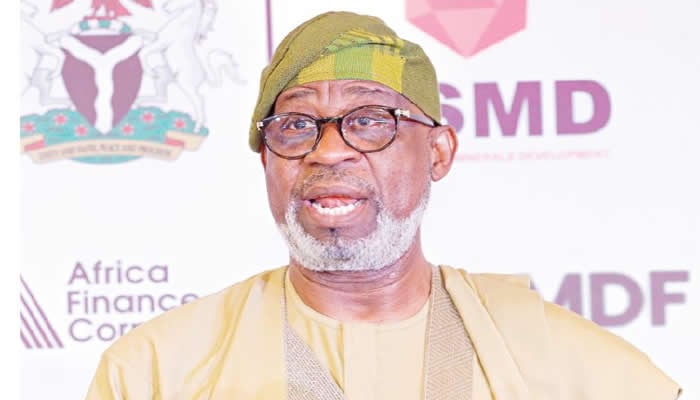
The African Finance Corporation and the Federal Government, through the Solid Minerals Development Fund, have signed an investment agreement to jointly finance three strategic projects, including a $1.3bn alumina refinery, a nationwide geoscience mapping exercise, and a special investment vehicle to unlock Nigeria’s minerals potential.

The agreement, signed in Abuja, marks the climax of months of negotiations between both parties and signals growing investor confidence in ongoing reforms in the country’s mining sector.

According to a statement issued on Sunday by the Special Assistant on Media to the Minister of Solid Minerals Development, Segun Tomori, the alumina refinery is expected to process about one million tonnes of bauxite annually using a modern Bayer-process flowsheet, supported by an on-site gas-fired cogeneration plant to generate steam and power.

The statement read, “The Africa Finance Corporation and the Federal Government, through the Solid Minerals Development Fund, have signed an investment agreement to jointly fund three projects: a $1.3bn alumina project, a comprehensive geoscience mapping exercise, and an investment vehicle to realise the goals.

“The MOU is the climax of talks between AFC and SMDF to jointly fund the construction of a $1.3bn alumina refinery, estimated to generate 1 million tonnes of bauxite ore per annum, utilising a modern Bayer-process flowsheet with an on-site gas-fired cogeneration plant for steam and power.”

Speaking at the signing ceremony, the Minister of Solid Minerals Development, Dele Alake, described the deal as a landmark that would accelerate value addition, create jobs, and significantly increase the sector’s contribution to Nigeria’s Gross Domestic Product.

“This is a landmark deal, poised to transform the mining sector and increase its contribution to the nation’s Gross Domestic Product,” Alake said.

See also  NNPC / Heirs Energies ends gas flaring at OML 17, seals deals with offtakers

The facility is designed for about 20 years of operation at 95 per cent utilisation, with total alumina output projected at 19 million tonnes over the project’s lifespan.

Government projections indicate that the project could contribute about $1.2bn annually to GDP, generate over $25bn in economic value throughout its lifecycle, and deliver about $8bn in foreign exchange earnings.

Officials said feasibility studies conducted by both AFC and SMDF confirmed the commercial viability and global competitiveness of the investment.

“Expected to be Nigeria’s largest mining-sector private investment and a landmark foreign direct investment, the project will contribute $1.2bn to GDP annually, over $25bn to the national economy across its lifecycle, and generate $8bn in foreign exchange earnings. Initial feasibility studies conducted by AFC and SMDF have confirmed the project’s competitiveness and commercial viability, validating the Ministry’s efforts to position Nigeria as a globally competitive minerals destination.

“This initiative delivers on the Ministry’s priority of generating big data on specific minerals, de-risking exploration for international investors, and unlocking the full potential of Nigeria’s minerals.”

The Executive Secretary of SMDF, Hajia Fatima Shinkafi, said the agreement represents the biggest project undertaken by the fund since its establishment.

“We are very proud and honoured to facilitate this phenomenal milestone, which is quite unprecedented since the inception of SMDF. It is a $1.3bn capital expenditure project,” Shinkafi said. “SMDF has come of age to be able to sit here and sign this deal with AFC. I thank AFC for collaborating with us to boost the value addition policy of my boss, Dele Alake.”

See also  Ogun debt hits N494bn, IGR rises above N240bn

Beyond the refinery, both organisations also agreed to undertake a comprehensive geoscience mapping exercise to generate reliable data on Nigeria’s mineral resources.

Experts say the absence of credible geological data has been a major barrier to large-scale investment in the sector. The initiative is expected to support exploration, improve transparency, and position Nigeria as a globally competitive mining destination.

“This initiative delivers on our priority of generating big data on specific minerals, de-risking exploration for international investors, and unlocking the full potential of Nigeria’s resources,” the minister noted.

The partners also agreed to establish a joint strategic investment vehicle to accelerate the development of exploration assets across the country. The vehicle will support rapid exploration, development, and production of selected mining leases once exploration campaigns are completed.

Demonstrating the Federal Government’s resolve to accelerate mining development, Alake confirmed that all necessary approvals had been granted to fast-track the AFC–SMDF investments.

“I have directed all relevant agencies under the ministry to ensure seamless processing and grant of all required permits, titles, and regulatory clearances,” he said. “We are determined to ensure that investors do not face unnecessary delays. The era of bottlenecks is over.”

The Permanent Secretary in the ministry, Farouk Yabo, described the agreement as a testament to ongoing reforms in the sector. “This initiative has the potential to put Nigeria on the global mining map. It reflects the transformative leadership that is repositioning the sector and attracting serious private capital,” Yabo said.

The development comes as the Federal Government intensifies efforts to diversify the economy away from crude oil by developing the solid minerals sector. Nigeria holds significant deposits of bauxite, lithium, gold, iron ore, and rare earth minerals, but the sector contributes less than one per cent to GDP due to poor infrastructure, illegal mining, and weak investment.

See also  Onyema warns new taxes could cripple airlines

Recent reforms by the ministry include modernising licensing processes, tightening security around mining sites, and promoting value addition. The AFC partnership could become a model for large-scale investments in Nigeria’s mining sector if successfully implemented.

While Shinkafi signed the agreement on behalf of the Federal Government, Franklin Edochie, Deputy Director and Head of Metals and Mining at AFC, signed on behalf of the corporation. The ceremony was witnessed by the AFC President and Chief Executive Officer, Samaila Zubairu, alongside senior government officials.

The success of the project could determine whether Nigeria’s mining reforms translate into sustained foreign investment and long-term economic diversification.

punch.ng

FOLLOW US ON:

FACEBOOK

TWITTER

PINTEREST

TIKTOK

YOUTUBE

LINKEDIN

TUMBLR

INSTAGRAM

Continue Reading
Click to comment

Leave a Reply

Your email address will not be published. Required fields are marked *

Business

Oshiomhole seeks ban on MTN, DSTV, read why

Published

on

The senator representing Edo North, Adams Oshiomhole, on Tuesday called for the revocation of licences of South African companies operating in Nigeria, including MTN and MultiChoice, owners of DSTV, following renewed xenophobic attacks against Nigerians in South Africa.

The call came as the National Assembly condemned the latest wave of attacks, urging the Federal Government to take immediate diplomatic and protective measures to safeguard Nigerian citizens abroad.

Speaking during plenary, Oshiomhole said Nigeria must respond firmly, invoking the principle of reciprocity in international relations.

He said, “I don’t want this Senate to be shedding tears, to sympathise with those who have died. We didn’t come here to share tears.

“If you hit me, I’ll hit you. I think it is appropriate in diplomacy. It’s an economic struggle.”

The former Edo State governor proposed that Nigeria should nationalise MTN and withdraw its operating licence, arguing that the company repatriates significant revenue while Nigerians face hostility in South Africa.

“This Senate should adopt a position that MTN, a South African company that is cutting away millions of dollars from Nigeria every day, should have Nigeria nationalise it and withdraw its licence,” he said.

According to him, such action would not only serve as a deterrent but also create opportunities for indigenous firms, amid what he described as economic and social targeting of Nigerians abroad.

He extended the call to MultiChoice, urging the Federal Government to revoke DSTV’s licence over alleged exploitative practices.

“I call on the Federal Government to revoke DSTV, which is also a South African company that is cutting away millions of dollars,” he said.

See also  Inside Abuja, ‘business centres’ disguised as schools

Oshiomhole linked the recurring tensions to domestic political dynamics in South Africa, noting that anti-immigrant rhetoric had become a feature of its politics and was shaping public attitudes toward foreign nationals, including Nigerians.

“When we hit back, the president of South Africa will go on his knees to recognise that Nigerians cannot be intimidated,” he said.

The senator made the remarks while contributing to a motion sponsored by Osita Izunaso, which was read on the floor by Aniekan Bassey under Senate rules on matters of urgent public importance.

Titled “A call for urgent national diplomatic and humanitarian action to defend the dignity, safety and honour of Nigerian citizens,” the motion highlighted growing concerns over the safety of Nigerians in South Africa.

Also speaking, Senator Victor Umeh described the situation as alarming, warning that Nigerians were living in fear.

“It is worrisome. They are hiding for their lives. They can’t move freely. This is a situation where people are paying good with evil,” he said, referencing Nigeria’s historical support for the anti-apartheid struggle.

Umeh called on the African Union to intervene and impose sanctions, warning that Nigeria could no longer tolerate attacks on its citizens.

“The AU, of which South Africa is a member, should rise now and impose necessary sanctions,” he said, adding that “we cannot allow this to continue.”

Oshiomhole, however, doubled down on calls for economic retaliation, arguing that Nigeria must move beyond rhetoric.

“I don’t want this Senate to be shedding tears to sympathise with those who have died. We didn’t come here to shed tears. I am not going to shed tears. If you hit me, I hit you. I think it is appropriate in diplomacy. It is an economic struggle,” Oshiomhole said.

See also  NNPC eyes 20% stake in Dangote refinery

He further argued that Nigerians should take advantage of opportunities in the local economy, currently dominated by foreign firms.

Senator Abdul Ningi warned South Africans over recent attacks on Nigerians, threatening that the country would take the fight to their territory.

“If a crime has been committed under the South African law, they have the right to bring any such person to justice, but to kill our people as if we are helpless, we will not allow that.

“If these things continue, we have alternatives, we have options, and therefore, these words should be sent across South Africa. We know where South Africans are, not only in Nigeria but all over Africa, and we can take this fight to their territory,” he said.

Speaking, the Senate President, Godswill Akpabio, decried the attack, adding that the National Assembly would send a joint team to meet with the South-African parliament on the matter.

“This is just not acceptable, this is barbaric, this is cruel, this is unheard of, this is strange behaviour, and we’re not seeing action from the government of South Africa. These are aspects that annoy me,” Akpabio said.

The development underscores mounting pressure on the Federal Government to adopt a tougher stance, as recurring xenophobic violence in South Africa continues to strain diplomatic relations and provoke calls for both economic countermeasures and stronger protections for Nigerians abroad.

Continue Reading

Business

Naira gains, trades 1,365/$ at official FX market

Published

on

…NFEM rate — N1,365.2474/$

…Naira strengthens by at least N9

…Black market (Buying and selling rates) — N1,390 — N1,400

The Nigerian naira strengthened against the United States (US) dollar, trading at N1,365.2474 at the Central Bank of Nigeria (CBN) official foreign exchange window on Monday, 4th May, 2026.

According to the data shared on the official platform of the Central Bank of Nigeria (CBN), the naira traded at the Nigerian Foreign Exchange Market (NFEM) rate of N1,365.2474 per dollar and closed at N1,367.5000 per dollar.

Tribune Online reports that the Nigerian currency traded at an NFEM rate of N1,374.9431 on 30th April 2026, which was the previous trading date. Comparing this with the trading rate on Monday, the naira strengthened by at least N9.

At the parallel market, the naira-to-dollar buying rate decreased by N3, while the selling rate increased by N2, compared with the previous trading rate on 30th April, 2026.

According to Aboki FX, the Naira-to-dollar exchange rate at the black market on Monday, 4th May, 2026, was N1,390 for the buying rate and N1,400 per dollar for the selling rate.

See also  NNPC / Heirs Energies ends gas flaring at OML 17, seals deals with offtakers
Continue Reading

Business

Experts promote rabbit value chain investment

Published

on

Experts in animal production have identified rabbit farming as a viable avenue for economic growth, job creation, and improved nutrition in Nigeria.

The experts made this known during a public lecture held at the Bauchi State College of Agriculture on Friday as part of activities marking Rabbit Appetite Day.

Speaking at the event, a registered animal scientist and lecturer at the Federal Polytechnic Damaturu, Sani Muazu, said there was a need to promote both the consumption and commercial production of rabbits across the country.

He described rabbit production as a largely untapped but promising sector capable of contributing significantly to Nigeria’s economy.

“Rabbit farming in Nigeria is still underdeveloped, with only about three to five per cent of the population engaged in the enterprise, mostly at small-scale family levels where farmers keep an average of two to seven breeding females. Despite this, the sector offers vast opportunities for expansion and commercialisation,” he said.

Muazu noted that rabbits are highly productive animals, with a gestation period of about 30 days and the capacity to produce up to 20 or more offspring annually.

He added that their low feeding and housing requirements make them suitable for students, smallholder farmers, and urban residents seeking alternative sources of income.

According to him, rabbit production extends beyond farming to other economic activities such as breeding, feed supply, veterinary services, processing, and marketing.

He also highlighted the nutritional value of rabbit meat, describing it as rich in protein, low in fat, and suitable for addressing protein deficiency in the country.

See also  Ogun debt hits N494bn, IGR rises above N240bn

On environmental sustainability, Muazu said rabbits require less land and water and emit fewer greenhouse gases compared to larger livestock, making them suitable for climate-smart agriculture, particularly in semi-arid regions.

However, he identified low public awareness and high mortality rates among young rabbits as major challenges hindering the sector’s growth.

He urged students and youths to take advantage of opportunities in rabbit farming by starting small-scale ventures that could grow into profitable agribusinesses, while calling on government and private sector players to invest in the development of the rabbit value chain.

In his remarks, the Provost of the Bauchi State College of Agriculture, Dr Ahmed Isah, described the event as timely and impactful, noting that it would encourage students to embrace self-employment through agriculture.

“Such initiatives are critical in addressing unemployment. Graduates can become employers of labour through ventures like rabbit farming,” he said.

He also encouraged members of the public to engage in rabbit production, describing it as a profitable and easy-to-start enterprise with the potential to improve livelihoods and boost the nation’s economy.

punch.ng

FOLLOW US ON:

FACEBOOK

TWITTER

PINTEREST

TIKTOK

YOUTUBE

LINKEDIN

INSTAGRAM

Continue Reading

Trending