Connect with us

Business

Agriculture must get ‘rightful place’ in financial system – CBN

Published

on

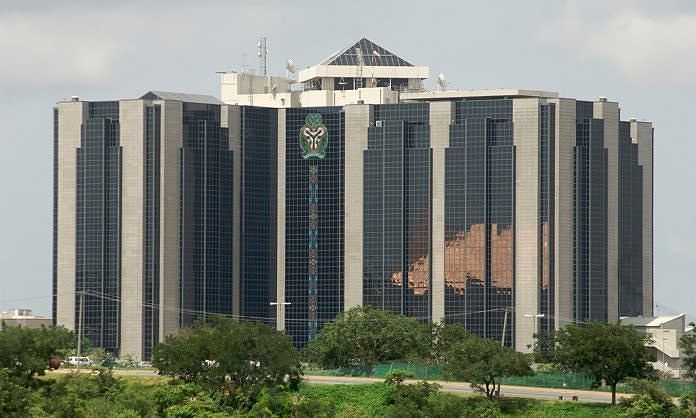
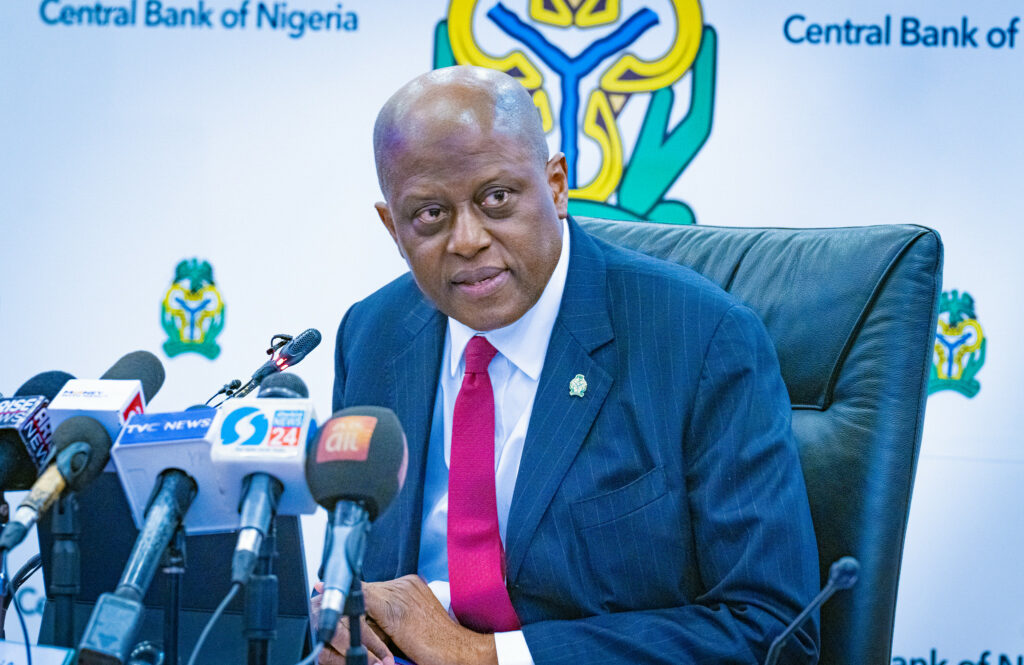
The Central Bank of Nigeria (CBN) hopes to lift agricultural lending above the current level of less than five per cent of banks’ credit, with Governor Olayemi Cardoso declaring that agriculture must receive its “rightful place in our financial system and national priorities.”

Cardoso spoke in Abuja on Tuesday at the inauguration of the newly constituted Board of the Agricultural Credit Guarantee Scheme Fund.

He told the audience that the event marked “a defining moment — a bold statement of intent that signals a new dawn for agricultural financing in Nigeria.”

He said agriculture remained the backbone of the economy, contributing more than one-fifth of GDP and employing most Nigerians, yet “it receives only a small fraction of formal credit — less than 5 per cent of banks’ lending goes to the agricultural sector.

According to him, this chronic underfunding has stifled productivity and expansion for millions of farmers.

“It is a reassessment of norms: we will no longer accept business-as-usual,” he said. “Instead, we embrace a future where agriculture is accorded its rightful place.”

Cardoso said the fund, which guarantees up to 75 per cent of the value of agricultural loans, had helped banks lend to farmers for decades, including those considered “unbankable.”

He noted that the scheme had been strengthened following a 2019 amendment that expanded its share capital from N3bn to N50bn and broadened its mandate.

He said the reform was designed to deepen inclusivity, adding that the revised Act now provides for a board composed not only of government officials but also of farmers’ representatives.

“Such inclusivity is strategic: it enshrines partnership between policymakers, financiers, and the farming community in guiding the Scheme’s activities,” he said.

Cardoso described the sector as standing at the “crossroads of unprecedented opportunity” under the Federal Government’s Renewed Hope agenda.

He said the vision was to build a resilient, technologically advanced and inclusive agricultural economy that “ensures food security, reduces poverty, and creates wealth for millions of Nigerians.”

According to him, smallholder farmers constitute 80 per cent of Nigeria’s farmers and produce about 90 per cent of food, yet they continue to face high barriers to credit.

“Many lack collateral or credit history — a situation we can no longer afford, given that these same smallholders feed our nation and drive our rural economy,” he said.

See also  Why cooking gas prices are rising – Marketers

He urged the new board to focus on strategic priorities that could unlock value quickly.

He called for deeper financial inclusion to reach women and young farmers, noting that rural women were key actors in agriculture but often had less access to credit and technology.

“Studies indicate nearly 60 per cent of rural women do not use mobile internet, limiting their access to emerging digital services,” he said.

He asked the board to collaborate with microfinance banks, cooperatives, and fintech firms, and to use group lending, mobile money, and agent banking to ensure that “a lack of collateral or a remote location is no longer an insurmountable barrier to financing.”

Cardoso also tasked the board with establishing stronger oversight, monitoring, and evaluation systems using technology and data.

He said modern tools, including satellite imagery and digital dashboards, should be deployed to track loan performance, crop progress and emerging risks.

“Every naira guaranteed must deliver real value on the farm and in the marketplace,” he said.

The governor warned that the task ahead may appear daunting, given the size and complexity of agricultural value chains.

But he insisted that success depended on “innovation, integrity, and unyielding dedication.”

“With today’s inauguration, we have filled a void and renewed our commitment to a prosperous, food‑secure Nigeria,” he said. “Let us cultivate a future where every farmer can easily access the financing they need, every field yields its full potential, and every Nigerian can enjoy affordable, plentiful food on their table.”

Cardoso congratulated the newly inaugurated board and assured them of the central bank’s support.

Also speaking, the chairman of the newly inaugurated board, Dr Olusegun Oshin, said the scheme must focus on the grassroots, where the majority of farmers struggle without credit or storage facilities.

He told the gathering that “those that feed us are those weak, poor farmers very far away in the villages and who don’t have access to credit,” adding that even when they manage to raise funds, “they don’t even store it properly because they don’t have the capacity for storage.”

Oshin said the board would ensure the fund was impactful at the level of peasant farmers and smallholders.

“This fund… will be focused on ensuring that it is impactful at the grassroots level, at that level where Nigeria is faced, the level of the peasant farmers,” he said.

See also  Yuletide: Local flights break N300,000 mark

He also welcomed the inclusion of agribusiness and allied sectors, noting that technology and accountability would be central to implementation.

Oshin noted that proper reporting must show that money given to clusters of farmers produced measurable results.

He added that detailed monitoring and evaluation would strengthen the case for more resources, while stressing that reaching more farmers efficiently would improve food supply nationwide.

Oshin thanked the apex bank for the opportunity and assured that board members would uphold ethical standards.

The PUNCH earlier reported that the agricultural sector contributed N30.5tn, in nominal terms, to the Gross Domestic Product in the third quarter of 2025.

Crop production drove the agro-sector’s growth, which stakeholders attributed to improved investor confidence.

The figure from the National Bureau of Statistics represents one of the sector’s strongest quarterly showings in recent years, with crop production alone accounting for N20.13tn or 65.99 per cent.

The sector also posted a real GDP growth rate of 3.79 per cent year-on-year, surpassing its Q3 2024 performance of 2.55 per cent by 1.24 percentage points, and outperforming its 2.82 per cent growth in Q2 2025 by 0.97 points amid poor access to bank credit.New Nigeria People’s Party, Femi Aina, has been re-elected for another term of four years.

Aina, according to a statement on Tuesday, was elected alongside other executives during the state party’s congress held at the party’s secretariat at Adatan, Abeokuta, the capital of the state.

Prof Tajudeen Gambo, Chairman of the Organising Committee of the state congress, alongside the Secretary of the committee, Abdullahi Dogonnama, as well as Alhaji Ibrahim Sai Kure, and Alhaji Hamza Masu, who are members of the committee, supervised the congress.

The congress was also monitored by INEC officials and security agents.

Aina, in his acceptance speech, said that his re-election marked a new dispensation for the state chapter of the party to begin massive mobilisation ahead of the 2027 elections.

The party chairman pledged to foster unity, bringing everyone on board irrespective of tribes, tongues and religion, with the sole aim of strengthening the party membership in the state.

Aina said, “This is no doubt a new dispensation for Ogun NNPP. We are going to ensure equal representation of various groups within the party. We are going to kick off massive mobilisation ahead of 2027 because everyone is important to our resolve to chase APC out in 2027.

See also  Nigeria’s World Bank debt to hit $9.65bn

“We will reach out to the Kwa Kwa Siya group, we will reach out to women, and we will make sure that women decide issues affecting women. It will be a new leadership with renewed dedication and vigour to serve and deliver Nigerians from the incompetent government of the APC.”

He thanked the delegates for the confidence reposed in him and other executive members promising to provide a leadership that will further help deepen democratic ideals of fairness, justice and good governance.

Other executive members include  Alhaja Sakirat Arowolo, the Deputy Chairman, Rasaq Segun Sofowora as Secretary, as well as Mrs Yetunde Akindele, Women Leader, among others.

Speaking earlier, Gambo commended the resilience of  NNPP members in the state despite challenges, urging the newly elected and sworn-in executives to be determined to push NNPP stronger come 2027.

He disclosed that the intention of the party to take over the leadership of Nigeria across all levels comes 2027, lamenting that the present APC administration is not mass-oriented

Gambo said, “Our strong intention is to take over Nigeria in 2027.  We are determined, and we are working very hard, because the present government is running the affairs of the country to address the needs of the masses.

“Whereas NNPP is for the masses, it is free education for everybody; everybody must be educated, so we are really confident that we are going to succeed in 2027 by the special grace of God. That’s our dream and vision, and we call on all Nigerians to team up with us on this rescue mission.”

Opposition parties have always faulted the APC-led government, accusing it of foisting hardship on Nigerians, particularly with the subsidy removal, as well as the rising wave of insecurity across the country.

They have always threatened massive mobilisation ahead of 2027, with the sole aim of getting the party out of power.

punch.ng

FOLLOW US ON:

FACEBOOK

TWITTER

PINTEREST

TIKTOK

YOUTUBE

LINKEDIN

TUMBLR

INSTAGRAM

Continue Reading
Click to comment

Leave a Reply

Your email address will not be published. Required fields are marked *

Business

EFCC Begins Probe Of Ex-NMDPRA Boss After Dangote’s Petition

Published

on

The Economic and Financial Crimes Commission (EFCC) has commenced an investigation into a petition filed against the former Managing Director of the Nigerian Midstream and Downstream Petroleum Regulatory Authority (NMDPRA), Farouk Ahmed, by the President of Dangote Group, Aliko Dangote.

It was gathered that Dangote formally submitted the petition to the EFCC earlier this week through his legal representative, following the withdrawal of a similar petition from the Independent Corrupt Practices and Other Related Offences Commission (ICPC).

Dangote had initially approached the ICPC, asking it to investigate Ahmed over allegations that he spent about $5 million on his children’s secondary education in Switzerland, an expense allegedly inconsistent with his known earnings as a public officer.

Although the petition was later withdrawn, the ICPC had said it would continue with its investigation.

Confirming the new development, a senior EFCC officer at the commission’s headquarters in Abuja, who spoke on condition of anonymity because he was not authorised to speak publicly, said the petition had been received and investigations had commenced.

“They have brought the petition to us, and an investigation has commenced on it. Serious work is being done concerning it,” the source said.

In the petition signed by Dangote’s lead counsel, Dr O.J. Onoja (SAN), the businessman urged the EFCC to investigate allegations of abuse of office and corrupt enrichment against Ahmed and to prosecute him if found culpable.

The petition further stated that Dangote was ready to provide documentary and other evidence to support claims of financial misconduct and impunity against the former regulator.

See also  Reps probes tax deductions, multiple charges by banks

“We make bold to state that the commission is strategically positioned, along with sister agencies, to prosecute financial crimes and corruption-related offences, and upon establishing a prima facie case, the courts do not hesitate to punish offenders,” the petition read, citing recent court decisions.

Onoja also called on the EFCC, under the leadership of its chairman, Olanipekun Olukoyede, to thoroughly investigate the allegations and take appropriate legal action where necessary.

When contacted, the EFCC spokesperson, Dele Oyewale, declined to comment on the matter but promised to respond later. No official reaction had been received as of the time of filing this report.

FOLLOW US ON:

FACEBOOK

TWITTER

PINTEREST

TIKTOK

YOUTUBE

LINKEDIN

TUMBLR

INSTAGRAM

Continue Reading

Business

IMPORTANT NOTICE REGARDING MONEY TRANSFERS IN NIGERIA (2026)

Published

on

Starting from *January 2026*, please ensure that *any money you send* to anyone — including me — comes with a *clear description* or *payment remark*. This is *very important* for tax purposes.

Use descriptions like:

– *Gift*
– *Loan*
– *Loan Repayment*
– *House Rent*
– *School Fees*
– *Feeding*
– *Medical*
– *Support*,
– School fee etc.

*Why this matters:*

In 2026, any money entering your account *without a description* may be treated as *income*, and *IRS (or relevant tax authority)* could tax it — or even worse, ask you to explain the source.

The *first ₦800,000* may be *tax-free*, but after that, any unexplained funds might attract up to *20% tax*, or in extreme cases, lead to legal issues.

So please:

– *Always include a payment remark.*
– *Avoid using USSD or apps that don’t allow descriptions.*
– *Ask the receiver for the correct description BEFORE sending.*

As for me, *do not send me any money* without discussing it with me first.
And no, I don’t want to hear “Sir/Ma, I used USSD” – if you can’t add a description, *hold your money*.

From now on, *I will tell you exactly what to write in the payment remark.*
Let’s all form the habit of *adding payment descriptions now* to avoid problems later.

FOLLOW US ON:

FACEBOOK

TWITTER

PINTEREST

TIKTOK

YOUTUBE

LINKEDIN

TUMBLR

INSTAGRAM

See also  Tinubu shifts 15% fuel import duty to Q1 2026
Continue Reading

Business

FG earmarks N1.7tn in 2026 budget for unpaid contractors

Published

on

The Federal Government has budgeted the sum of N1.7tn in the 2026 Appropriation Bill to settle outstanding debts owed to contractors for capital projects executed in 2024.

A breakdown of the proposed 2026 national budget shows that the amount is captured under the line item titled “Provision for 2024 Outstanding Contractor’s Liabilities,” signalling official recognition of delayed payments to contractors amid recent protests over delayed settlements.

This budgetary provision follows mounting pressure from indigenous contractors and civil society groups who, in 2025, raised alarm over unpaid contractual obligations allegedly exceeding N2tn.

Some groups under the All Indigenous Contractors Association of Nigeria had also staged demonstrations in Abuja, lamenting the severe impact of delayed payments on their operations, with many contractors reportedly unable to service bank loans taken to execute government projects.

Earlier, Minister of Works David Umahi had promised to clear verified arrears owed to federal contractors before the end of 2025. However, only partial payments were made amid revenue constraints, prompting the inclusion of the N1.7tn line item in the 2026 budget as a catch-up mechanism.

In addition to the N1.7tn for 2024 liabilities, the government has also budgeted N100bn for a separate line item labelled “Payment of Local Contractors’ Debts/Other Liabilities”, which may cover legacy debts from previous years, smaller contract claims, or unsettled financial commitments that were not fully verified in the current audit cycle.

The total N1.8tn allocation is part of the broader N23.2tn capital expenditure in the 2026 fiscal plan, which seeks to ramp up infrastructure delivery while cleaning up past obligations.

See also  Nigeria’s World Bank debt to hit $9.65bn

Nigeria’s contractor debt backlog has been a recurring fiscal issue, worsened by delayed capital releases, partial cash-backing of budgeted projects, and underperformance in revenue targets.

Speaking with journalists at the entrance of the Federal Ministry of Finance in December 2025, the National Secretary of the All Indigenous Contractors Association of Nigeria, Babatunde Seun-Oyeniyi, said the government’s failure to release funds after multiple assurances had forced contractors to resume protests. He said members of the association were owed more than N500bn for projects already completed and commissioned.

He explained that despite recent assurances from the Minister of Finance, Wale Edun, no payment had been made. “After the National Assembly intervened, they told us that they will sit the minister down over this matter.  And we immediately stopped the protest,” he said.

According to him, repeated follow-up meetings with the minister had produced no tangible progress. “They have not responded to our request,” he said. “In fact, more than six times we have come here. Last week, we were here throughout the night before the Minister of Finance came.”

Oyeniyi said that although some payment warrants had been sighted, no funds had been released. “Specifically, when we collate, they are owing more than N500bn for all indigenous contractors. We only see warrants; there is no cash back.”

He accused officials of attempting to push the payments into the next fiscal year. “The problem is that they want to put us into a backlog. They want to shift us to 2026; that 2026, they are going to pay,” he alleged. “They will turn us into debt, and we don’t want that. We won’t leave here until we are paid.”

See also  FG defers 70% of 2025 capital projects to 2026

However, The PUNCH observed that earlier in August 2025, the Federal Government claimed that it had cleared over N2tn in outstanding capital budget obligations from the 2024 fiscal year, with a pledge to prioritise the timely release of 2025 capital funds.

The Minister of Finance and Coordinating Minister of the Economy, Wale Edun, disclosed this at a ministerial press briefing in Abuja, where he also declared that Nigeria is “open for business” to global investors on the back of improved economic stability.

“In the last quarter, we did pay contractors over N2tn to settle outstanding capital budget obligations. That is from last year,” Edun said. “At the moment, we have no pending obligations that are not being processed and financed. And the focus will now shift to 2025 capital releases.”

By December 2025, The PUNCH reported that President Bola Tinubu expressed “grave displeasure” over the backlog of unpaid federal contractors and set up a high-level committee to resolve the bottlenecks and fund repayments.

Briefing State House correspondents after the Federal Executive Council meeting in Abuja, Special Adviser on Information and Strategy, Bayo Onanuga, said the President was “upset” after learning that about 2,000 contractors are owed. “He made it very, very clear he is not happy and wants a one-stop solution,” Onanuga told journalists.

Tinubu directed the setting up of a committee to verify all claims from federal contractors. The new budget’s provisions are expected to draw from the outcome of that verification exercise and may be disbursed in tranches based on confirmed and certified claims.

See also  Price Of Bag Of Dangote, BUA, Other Cement This Week

The total proposed 2026 national budget stands at N58.47tn, with N23.2tn earmarked for capital expenditure, N15.9tn for debt servicing, N15.25tn for recurrent spending, and N4.09tn for statutory transfers.

punch.ng

FOLLOW US ON:
FACEBOOK

TWITTER

PINTEREST

TIKTOK

YOUTUBE

LINKEDIN

TUMBLR

INSTAGRAM

Continue Reading

Trending