Connect with us

Business

Agriculture must get ‘rightful place’ in financial system – CBN

Published

on

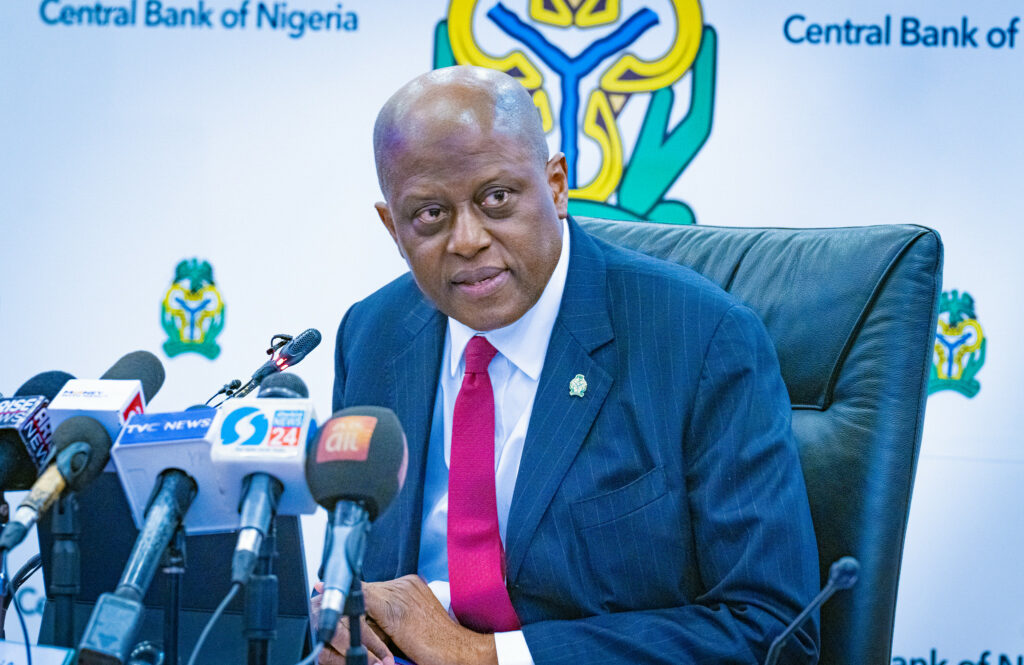
The Central Bank of Nigeria (CBN) hopes to lift agricultural lending above the current level of less than five per cent of banks’ credit, with Governor Olayemi Cardoso declaring that agriculture must receive its “rightful place in our financial system and national priorities.”

Cardoso spoke in Abuja on Tuesday at the inauguration of the newly constituted Board of the Agricultural Credit Guarantee Scheme Fund.

He told the audience that the event marked “a defining moment — a bold statement of intent that signals a new dawn for agricultural financing in Nigeria.”

He said agriculture remained the backbone of the economy, contributing more than one-fifth of GDP and employing most Nigerians, yet “it receives only a small fraction of formal credit — less than 5 per cent of banks’ lending goes to the agricultural sector.

According to him, this chronic underfunding has stifled productivity and expansion for millions of farmers.

“It is a reassessment of norms: we will no longer accept business-as-usual,” he said. “Instead, we embrace a future where agriculture is accorded its rightful place.”

Cardoso said the fund, which guarantees up to 75 per cent of the value of agricultural loans, had helped banks lend to farmers for decades, including those considered “unbankable.”

He noted that the scheme had been strengthened following a 2019 amendment that expanded its share capital from N3bn to N50bn and broadened its mandate.

He said the reform was designed to deepen inclusivity, adding that the revised Act now provides for a board composed not only of government officials but also of farmers’ representatives.

“Such inclusivity is strategic: it enshrines partnership between policymakers, financiers, and the farming community in guiding the Scheme’s activities,” he said.

Cardoso described the sector as standing at the “crossroads of unprecedented opportunity” under the Federal Government’s Renewed Hope agenda.

He said the vision was to build a resilient, technologically advanced and inclusive agricultural economy that “ensures food security, reduces poverty, and creates wealth for millions of Nigerians.”

According to him, smallholder farmers constitute 80 per cent of Nigeria’s farmers and produce about 90 per cent of food, yet they continue to face high barriers to credit.

“Many lack collateral or credit history — a situation we can no longer afford, given that these same smallholders feed our nation and drive our rural economy,” he said.

See also  Cheers In Abuja As Price Of Cooking Gas Per Kg Drops

He urged the new board to focus on strategic priorities that could unlock value quickly.

He called for deeper financial inclusion to reach women and young farmers, noting that rural women were key actors in agriculture but often had less access to credit and technology.

“Studies indicate nearly 60 per cent of rural women do not use mobile internet, limiting their access to emerging digital services,” he said.

He asked the board to collaborate with microfinance banks, cooperatives, and fintech firms, and to use group lending, mobile money, and agent banking to ensure that “a lack of collateral or a remote location is no longer an insurmountable barrier to financing.”

Cardoso also tasked the board with establishing stronger oversight, monitoring, and evaluation systems using technology and data.

He said modern tools, including satellite imagery and digital dashboards, should be deployed to track loan performance, crop progress and emerging risks.

“Every naira guaranteed must deliver real value on the farm and in the marketplace,” he said.

The governor warned that the task ahead may appear daunting, given the size and complexity of agricultural value chains.

But he insisted that success depended on “innovation, integrity, and unyielding dedication.”

“With today’s inauguration, we have filled a void and renewed our commitment to a prosperous, food‑secure Nigeria,” he said. “Let us cultivate a future where every farmer can easily access the financing they need, every field yields its full potential, and every Nigerian can enjoy affordable, plentiful food on their table.”

Cardoso congratulated the newly inaugurated board and assured them of the central bank’s support.

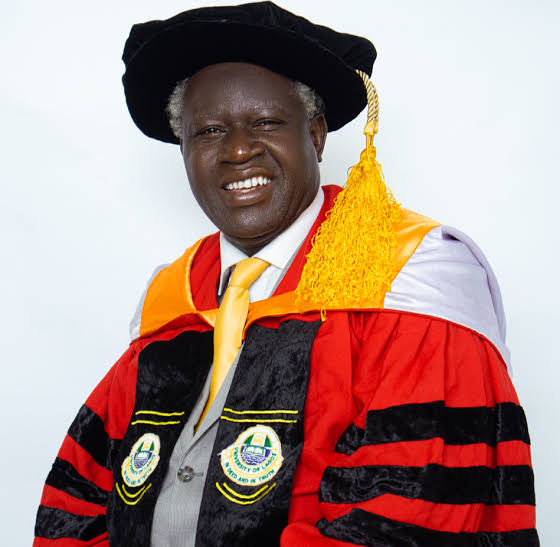
Also speaking, the chairman of the newly inaugurated board, Dr Olusegun Oshin, said the scheme must focus on the grassroots, where the majority of farmers struggle without credit or storage facilities.

He told the gathering that “those that feed us are those weak, poor farmers very far away in the villages and who don’t have access to credit,” adding that even when they manage to raise funds, “they don’t even store it properly because they don’t have the capacity for storage.”

Oshin said the board would ensure the fund was impactful at the level of peasant farmers and smallholders.

“This fund… will be focused on ensuring that it is impactful at the grassroots level, at that level where Nigeria is faced, the level of the peasant farmers,” he said.

See also  CBN pumps $1.25bn into fuel import, others

He also welcomed the inclusion of agribusiness and allied sectors, noting that technology and accountability would be central to implementation.

Oshin noted that proper reporting must show that money given to clusters of farmers produced measurable results.

He added that detailed monitoring and evaluation would strengthen the case for more resources, while stressing that reaching more farmers efficiently would improve food supply nationwide.

Oshin thanked the apex bank for the opportunity and assured that board members would uphold ethical standards.

The PUNCH earlier reported that the agricultural sector contributed N30.5tn, in nominal terms, to the Gross Domestic Product in the third quarter of 2025.

Crop production drove the agro-sector’s growth, which stakeholders attributed to improved investor confidence.

The figure from the National Bureau of Statistics represents one of the sector’s strongest quarterly showings in recent years, with crop production alone accounting for N20.13tn or 65.99 per cent.

The sector also posted a real GDP growth rate of 3.79 per cent year-on-year, surpassing its Q3 2024 performance of 2.55 per cent by 1.24 percentage points, and outperforming its 2.82 per cent growth in Q2 2025 by 0.97 points amid poor access to bank credit.New Nigeria People’s Party, Femi Aina, has been re-elected for another term of four years.

Aina, according to a statement on Tuesday, was elected alongside other executives during the state party’s congress held at the party’s secretariat at Adatan, Abeokuta, the capital of the state.

Prof Tajudeen Gambo, Chairman of the Organising Committee of the state congress, alongside the Secretary of the committee, Abdullahi Dogonnama, as well as Alhaji Ibrahim Sai Kure, and Alhaji Hamza Masu, who are members of the committee, supervised the congress.

The congress was also monitored by INEC officials and security agents.

Aina, in his acceptance speech, said that his re-election marked a new dispensation for the state chapter of the party to begin massive mobilisation ahead of the 2027 elections.

The party chairman pledged to foster unity, bringing everyone on board irrespective of tribes, tongues and religion, with the sole aim of strengthening the party membership in the state.

Aina said, “This is no doubt a new dispensation for Ogun NNPP. We are going to ensure equal representation of various groups within the party. We are going to kick off massive mobilisation ahead of 2027 because everyone is important to our resolve to chase APC out in 2027.

See also  NBS announces 4.23% economic growth, labour disagrees

“We will reach out to the Kwa Kwa Siya group, we will reach out to women, and we will make sure that women decide issues affecting women. It will be a new leadership with renewed dedication and vigour to serve and deliver Nigerians from the incompetent government of the APC.”

He thanked the delegates for the confidence reposed in him and other executive members promising to provide a leadership that will further help deepen democratic ideals of fairness, justice and good governance.

Other executive members include  Alhaja Sakirat Arowolo, the Deputy Chairman, Rasaq Segun Sofowora as Secretary, as well as Mrs Yetunde Akindele, Women Leader, among others.

Speaking earlier, Gambo commended the resilience of  NNPP members in the state despite challenges, urging the newly elected and sworn-in executives to be determined to push NNPP stronger come 2027.

He disclosed that the intention of the party to take over the leadership of Nigeria across all levels comes 2027, lamenting that the present APC administration is not mass-oriented

Gambo said, “Our strong intention is to take over Nigeria in 2027.  We are determined, and we are working very hard, because the present government is running the affairs of the country to address the needs of the masses.

“Whereas NNPP is for the masses, it is free education for everybody; everybody must be educated, so we are really confident that we are going to succeed in 2027 by the special grace of God. That’s our dream and vision, and we call on all Nigerians to team up with us on this rescue mission.”

Opposition parties have always faulted the APC-led government, accusing it of foisting hardship on Nigerians, particularly with the subsidy removal, as well as the rising wave of insecurity across the country.

They have always threatened massive mobilisation ahead of 2027, with the sole aim of getting the party out of power.

punch.ng

FOLLOW US ON:

FACEBOOK

TWITTER

PINTEREST

TIKTOK

YOUTUBE

LINKEDIN

TUMBLR

INSTAGRAM

Continue Reading
Click to comment

Leave a Reply

Your email address will not be published. Required fields are marked *

Business

Dangote Refinery Raises Petrol Price To ₦1,245 Per Litre

Published

on

The Dangote Refinery has increased the gantry price of Premium Motor Spirit (PMS), also known as petrol, by ₦70 per litre.

The new price has been adjusted from ₦1,175 to ₦1,245 per litre, with the change set to take effect from 12:00 a.m. on March 21, 2026.

According to the refinery, the revised rate will apply to all outstanding and unloaded volumes.

In a notice sent to marketers on Friday night, the Refinery said customers with pending orders are expected to comply with the new pricing structure.

In addition to the pump price adjustment, the refinery also raised its coastal supply price.

The new rate now stands at ₦1,606,518 per metric tonne, up from ₦1,512,648.

“The refinery raised its coastal price from N1,512,648 per metric tonne to N1,606,518 per metric tonne, while the gantry price increased from N1,175 per litre to N1,245 per litre.

“Please note that the revised price will apply to all unloaded gantry and coastal volumes and is effective from 12am on the 21st of March 2026,” it stated.

The refinery attributed the increase to persistent global geopolitical tensions, which continue to impact crude oil prices and supply chains.

The company stated that customers operating under valid Bank Guarantees may continue loading products under existing agreements.

“For customers with a valid Bank Guarantee with DPRP, loading will continue with existing ATCs/PRN (if any) provided the BG credit balance covers the price change differential,” the notice added.

However, such customers are required to pay the price difference arising from the adjustment.

See also  Dangote Set To Become World’s Largest Refinery As It Increases Capacity

The refinery set March 23, 2026, as the deadline for settling all differential payments.

The latest price hike is expected to exert additional pressure on fuel prices across the country, with possible implications for transportation costs and inflation.

FOLLOW US ON:

FACEBOOK

TWITTER

PINTEREST

TIKTOK

YOUTUBE

LINKEDIN

Continue Reading

Business

Uber reports N6.1bn annual driver earnings amid Lagos strike

Published

on

Uber Technologies Inc. has highlighted that its platform supports N6.1bn in collective annual earnings for drivers in Nigeria, as app-based transport operators staged a strike in Lagos, the country’s most populous city and commercial hub. The walkout, which began on Monday, continued on Tuesday, and remained ongoing on Wednesday, has affected ride-hailing platforms including Uber, Bolt, and inDrive.

According to union statements, the strike was triggered by rising operational costs, low fares, and challenging working conditions. Drivers logged off their apps, temporarily reducing ride availability across the city and underscoring tensions in Lagos’s fast-growing ride-hailing sector.

The company stressed that drivers are central to the platform’s operations. “Drivers are at the heart of our business, and we remain committed to engaging constructively with them through regular roundtable discussions.”

The N6.1bn figure represents the total additional income generated for drivers using the Uber platform nationwide, according to Uber’s 2023 Economic Impact Report for Nigeria. It does not reflect individual earnings, which vary based on trips completed, hours worked, and operating costs.

“Uber’s 2023 Economic Impact Report for Nigeria revealed that the platform continues to play a meaningful role in supporting earning opportunities. In total, drivers are estimated to earn an additional N6.1bn annually in higher income through their use of the Uber app.”

Uber began operations in Nigeria in 2014, starting in Lagos before expanding to Abuja, Port Harcourt, and Ibadan. The company has become one of the leading ride-hailing platforms in the country alongside Bolt and inDrive.

See also  How Are People With Minimum Wage Surviving In This Economy? – Chimamanda Raises Alarm Over Mass Suffering

This is not the first strike by Lagos drivers, who have previously walked off the job over low fares, high commission charges, and rising operational costs. The recurrence highlights the ongoing friction between platforms and drivers, despite the substantial earnings generated.

Uber said it is committed to dialogue with drivers, signalling a preference for negotiation over confrontation. The outcome of discussions could influence fare structures, commissions, and operational practices across Lagos’s ride-hailing market.

punch.ng

FOLLOW US ON:

FACEBOOK

TWITTER

PINTEREST

TIKTOK

YOUTUBE

LINKEDIN

Continue Reading

Business

Nigeria spends N9tn importing petrol

Published

on

Nigeria’s dependence on imported petrol persisted in 2025, with oil marketers spending N8.96tn on Premium Motor Spirit (petrol) imports between January and December, despite increased investments in domestic refining capacity.

An analysis of the latest foreign trade data released by the National Bureau of Statistics on Thursday showed that petrol, code-named “Motor spirit ordinary,” remained one of the most imported commodities throughout the year, reflecting ongoing supply gaps in the downstream sector.

The NBS said petrol import costs were N8.96tn in 2025, but represented a decline of N6.46tn or about 41.9 per cent from the N15.42tn recorded in 2024, but still stood N1.45tn or roughly 19.3 per cent higher than the N7.51tn posted in 2023 when fuel subsidy was eliminated by the current administration.

This latest development comes days after The PUNCH exclusively reported that Domestic refineries imported crude oil worth N5.734tn between January and December 2025, exposing a deepening supply paradox in the country’s oil sector and an obsession for imports.

The fuel import expenditure came at a time when expectations were high for a decline in reliance on foreign supply following significant investments in local refining.

This trend persisted despite the commencement of operations, steady ramp-up in production and distribution of petrol by domestic refineries, notably the Dangote Petroleum Refinery, alongside state-owned refineries and several modular facilities.

Data from the Nigerian Midstream and Downstream Petroleum Regulatory Authority published recently revealed that total petrol consumption stood at 18.97 billion litres in 2025, with 11.85 billion litres, representing 62.47 per cent, supplied through imports.

While domestic refineries contributed about 7.54 billion litres, accounting for 37.53 per cent of total consumption.

But in the new NBS document, which focuses on the value of products, the data showed a fluctuating but sustained petrol import pattern, with expenditure rising by N0.62tn, or about 35.2 per cent, from N1.76tn in the first quarter to N2.38tn in the second quarter, before dropping sharply by N1.09tn, or roughly 45.8 per cent, to N1.29tn in the third quarter.

See also  Cheers In Abuja As Price Of Cooking Gas Per Kg Drops

However, imports rebounded strongly in the fourth quarter, surging by N2.25tn, or about 174.4 per cent, to N3.54tn, the highest quarterly expenditure recorded in the year.

Overall, the fourth-quarter spike accounted for nearly 40 per cent of total annual imports, underscoring persistent supply pressures and seasonal demand fluctuations. The statistics agency didn’t provide a breakdown of the value imported monthly.

Breakdown of the figures showed that petrol was the second most imported product in the first quarter at N1.76tn, and also ranked as the second highest import from African countries, with N89.18bn largely sourced from Togo within the ECOWAS sub-region.

By the second quarter, petrol had risen to become Nigeria’s top imported product at N2.38tn, maintaining its dominance across African, West African, and ECOWAS trade corridors, where imports stood at N208.76bn.

However, the trend shifted in the third quarter, when import value dropped to N1.29tn, making petrol the third most imported product globally during the period. Notably, no imports were recorded from African or ECOWAS countries in that quarter, indicating a shift towards alternative international suppliers.

In the fourth quarter, petrol imports rebounded strongly to N3.54tn, reclaiming its position as the most imported commodity. Within Africa, it ranked as the second-highest import at N84.69bn, with Togo again featuring prominently among regional suppliers.

In the fourth quarter, petrol imports from Brazil were valued at N221.15bn, while the Netherlands emerged as one of Nigeria’s largest suppliers with shipments worth N1.22tn in the same period.

Overall, the product’s share of total trade reflected a fluctuating but rising trend, accounting for 11.42 per cent in the first quarter, increasing to 15.54 per cent in the second quarter, before dropping to 7.98 per cent in the third quarter and rebounding sharply to 20.52 per cent in the fourth quarter.

See also  Dangote Set To Become World’s Largest Refinery As It Increases Capacity

Further analysis showed that Nigeria sourced petrol from a diverse mix of countries, including the Netherlands, the United States, Belgium, Brazil, and Togo, highlighting the global nature of its fuel supply chain.

Despite the operational take-off of the Dangote Refinery and ongoing rehabilitation of state-owned refineries, import dependence remains deeply entrenched.

Over the past five years, Nigeria’s petrol import bill has steadily risen. In 2020, the country spent N2.01tn on fuel imports, more than doubling to N4.56tn in 2021.

By 2022, the figure further increased to N7.71tn before slightly declining to N7.51tn in 2023. However, in 2024, fuel import expenditure surged to an all-time high of N15.42tn, marking the largest petrol import bill in Nigeria’s history.

The figures highlight a structural imbalance between refining capacity and actual output, noting that while installed capacity has improved, feedstock constraints, logistics challenges, and market dynamics continue to limit performance.

Energy analysts warn that the continued reliance on imports, despite increased refining capacity, raises concerns about energy security, foreign exchange pressure, and the sustainability of the downstream market.

Commenting, the Managing Partner at Energy Consulting Practice, Kelvin Emmanuel, accused the Presidency of maintaining tight control over licensing decisions in Nigeria’s oil and gas sector, in what he described as a violation of the provisions of the Petroleum Industry Act.

Speaking in a telephone interview on Thursday, Emmanuel said, “The State House has refused to hand off its control in dictating to the authority who gets a licence or not, and has ignored calls consistently to comply with Sections 317, and 7 to 11 of the PIA.”

See also  NBS announces 4.23% economic growth, labour disagrees

He further raised concerns over crude supply challenges facing the Dangote Refinery, noting that the facility was still heavily reliant on imports despite its scale.

“Dangote is currently importing about 10 million barrels out of the 18 million barrels he processes monthly. The one fortunate part of this crisis is that Lagos sits on the Atlantic Basin, so he can easily ship in crude from Houston or Brazil,” he said.

Emmanuel criticised the Federal Government’s much-publicised naira-for-crude initiative, arguing that structural issues within the oil market were undermining its effectiveness.

“The government keeps touting the naira-for-crude initiative, when in reality it’s either the NNPC is not giving him crude because most of it is locked in forwards that have been pre-sold, or commercial operators are routing their feedstock at extra commissions outside the fiscal oil price,” he stated.

He added that Nigeria must take deliberate steps to safeguard domestic refining by establishing a national buffer stock. “The Nigerian Government needs to develop a strategic petroleum reserve that is codified through an Act of Parliament, to serve domestic refiners,” Emmanuel said.

The sustained reliance on foreign petrol supply underscores the challenges facing Nigeria’s energy transition, as the country grapples with aligning its upstream resources with downstream capacity.

As Africa’s largest oil producer, the paradox of importing a majority of its refined fuel needs continues to define Nigeria’s petroleum sector, a trend that policymakers say must be urgently reversed to achieve true energy independence.

punch.ng

FOLLOW US ON:

FACEBOOK

TWITTER

PINTEREST

TIKTOK

YOUTUBE

LINKEDIN

Continue Reading

Trending