The Senate on Tuesday approved President Bola Tinubu’s request to deploy Nigerian troops to the Republic of Benin as part of a rapid regional peace mission aimed at restoring democratic order after an attempted coup in the neighbouring country.
The Senate’s approval comes as the Economic Community of West African States expressed worry over the security and political challenges eroding democracy in the sub-region during the 55th Session of the Mediation and Security Council at the ministerial level in Abuja on Tuesday.
Benin Republic was thrust into turmoil on Sunday after soldiers operating under the Military Committee for Refoundation seized the state-owned television station in Cotonou and announced the removal of President Patrice Talon.
The mutineers, led by Lt. Col. Pascal Tigri, claimed to have deposed the government, raising urgent security alarms across the sub-region.
Loyalist forces, however, regained control after a brief standoff, aided by the rapid mobilisation of Nigerian troops.
The Presidency described the intervention as proof of President Tinubu’s resolve to safeguard constitutional order in West Africa and prevent another democratic collapse within the ECOWAS region.
The Senate granted Tinubu’s request following the consideration of the President’s letter in the Committee of the Whole, after Senate President Godswill Akpabio read the communication during plenary.
In the letter, Tinubu—who also chairs ECOWAS—urged lawmakers to endorse the deployment to “help restore governance” in Benin, where a faction of soldiers had attempted to topple President Patrice Talon.
But the chamber erupted into a rare open disagreement among senior lawmakers shortly after the Senate assented to the request.
Deputy Senate President and First Deputy Speaker of the ECOWAS Parliament, Senator Jibrin Barau, opened the floor with effusive praise for the President’s swift intervention.
He declared, “Democracy is the best form of government. All ECOWAS members are proud of what the president did. Mr President is a true democrat and showed leadership. We will support and stand by him.”
His remarks, however, immediately drew objections from former Bayelsa State governor, Senator Seriake Dickson, who insisted the matter ought to be debated openly.
“I actually felt there is a need for lawmakers to debate this action,” Dickson protested.
Akpabio promptly shut down the suggestion, insisting the Senate had already given its consent.
“We have given the president consent. Every person was in agreement. All the senators are aware and wouldn’t have given consent if otherwise,” he ruled.
He added that the Senate’s position was unanimous, stressing that Tinubu acted in the interest of national and regional security.
“Whatever the president has done, the Senate is in total agreement. That means he is also protecting the borders of the Federal Republic of Nigeria. The president is not going to war.”
Former Edo State governor, Senator Adams Oshiomhole, backed Akpabio’s position and reinforced the argument that the matter had been concluded.
“Mr President, we unanimously consented to it, including Senator Dickson. It is not up for debate. He has acted well and in good faith. The Senate has endorsed and sealed it. Therefore, it cannot be opened.”
Senate Leader Opeyemi Bamidele also weighed in, providing the legal justification for the Senate’s action.
“The standing order says that in the event of a threat or national security, Mr President can intervene and seek the consent of the Senate within seven days,” he explained.
He thanked senators for acting swiftly. “We believe democracy should not be endangered in Africa.”
Dickson later clarified that he did not oppose the approval but insisted ECOWAS must also address governance deficits that often trigger coups.
“Mr President has done the right thing because democratic institutions are collapsing around us. But it has to be done the right way,” he said.
Dickson added, “We must also warn the leaders of the nations around us to stem the tide and run good governance and popular government in accordance with the constitution they run.”
Senator Jimoh Ibrahim described Nigeria’s intervention as consistent with its long-standing leadership role on the continent.
“Peace is not the opposite of war and war is not the opposite of war… Nigeria is also in line to intervene to save democracy among its close neighbours,” he argued.
He added, “I think this action is quite commendable. President Tinubu is a liberal and democrat.”
Akpabio later expanded the historical context, recalling Nigeria’s roles in Liberia and South Africa.
“Nigeria went into Liberia when it was late. That was why we lost so many soldiers. But we are glad peace was eventually restored. In South Africa, we supported the end of apartheid and brought a lot of South Africans to Nigeria to support our brothers and sisters in Africa.
“But the swiftness of this action is why the Senate gave its consent. I think it is commendable,” he noted.
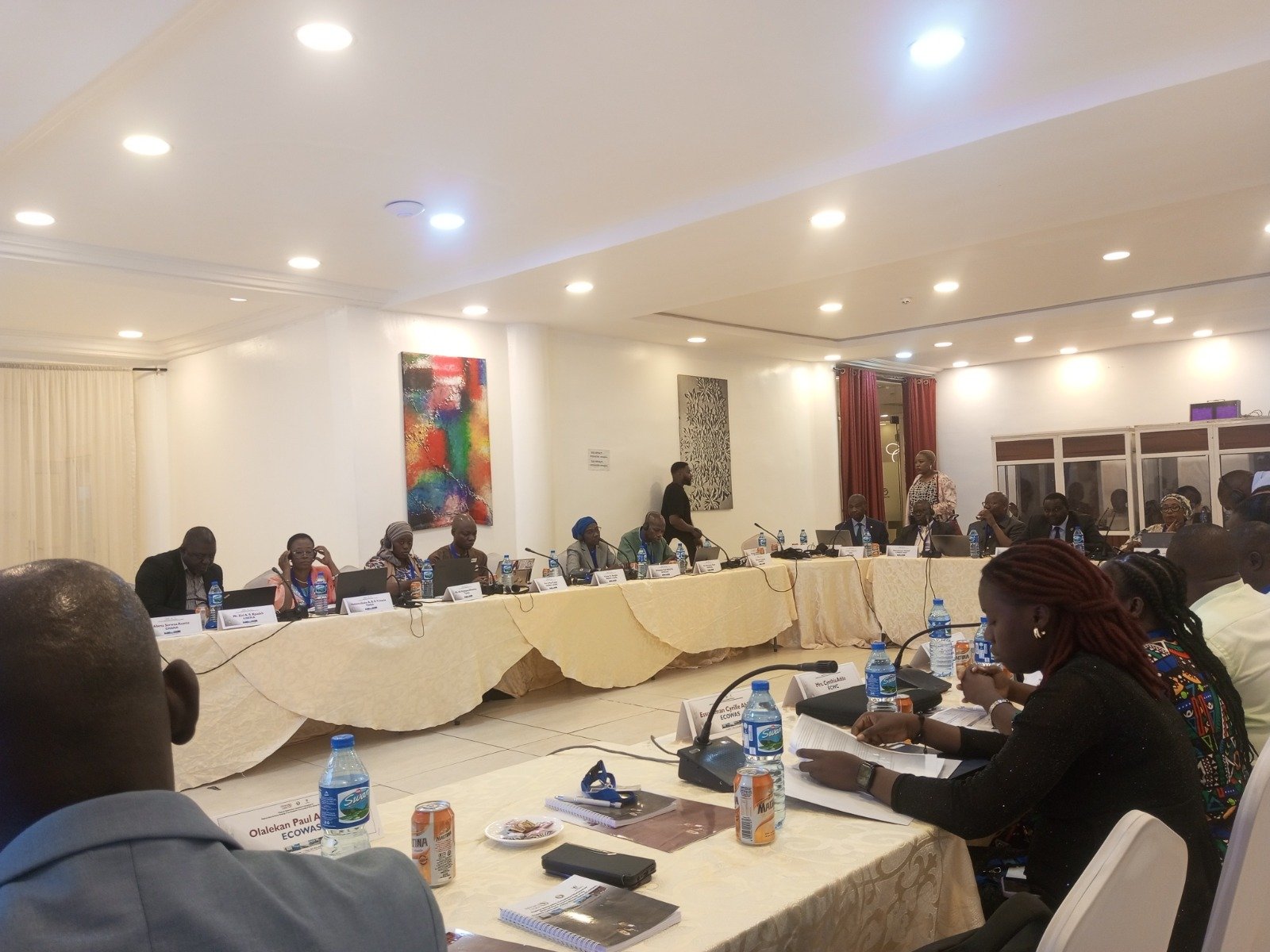
Addressing the 55th Session of the Mediation and Security Council at the Ministerial level in Abuja on Tuesday, the President of the ECOWAS Commission, Dr Omar Touray, warned about escalating political instability and security threats across the region.
Addressing ministers, diplomats and senior officials, Touray painted a picture of West Africa’s political climate, citing recent developments as evidence of a deteriorating environment.
The commission’s president described ECOWAS as facing an average of high risk across its member states.
“Events of the last few weeks have shown the imperative of serious introspection on the future of our democracy and the urgent need to invest in the security of our community.
“As you would have seen in the memoranda before you, the country-by-country analyses of our member states show different risk levels across our community, from high to medium, with an average of high risk for our community, thereby demanding immediate and concerted action.
“The risk factors are: the persistence of military interventions (Guinea-Bissau and the Republic of Benin just days ago) and non-compliance with transition norms in Guinea, as we face a military leader turning into a civilian leader;
“Growing erosion of electoral inclusivity across multiple states; expanding influence of terrorists and armed groups and criminal networks threatening regional stability; and increasing geopolitical pressures affecting member states’ diplomacy and cohesion,” he explained.
Among the most concerning developments, he emphasised that “Elections have become a major trigger of instability in our community.”
Several ECOWAS states, such as Guinea, Benin, The Gambia and Cape Verde, are headed into elections in the coming months, raising concerns about electoral tensions and constitutional violations.
Touray also cited recent attempted coups and ongoing negotiations with the Alliance of Sahel States, stressing the urgent need for a united regional response to terrorism and cross-border criminal networks.
Declaring the situation unprecedented, Touray warned, “Faced with this situation, Excellencies, it is safe to declare that our community is in a state of emergency.”
He urged that sessions of the Mediation and Security Council be convened more frequently over the next year, insisting that ECOWAS must “pool our resources to confront the threats of terrorism and banditry, which operate without respect for territorial boundaries.”
He outlined key priorities requiring constant ministerial oversight, including managing the crisis in Guinea-Bissau, ensuring peaceful transitions, addressing growing political exclusion and protecting regional unity amid external pressures.
The ECOWAS commission president also highlighted worsening humanitarian conditions across West Africa, referencing recent UNHCR data. He noted that “as of October 2025, approximately 7.6 million individuals are forcibly displaced across the region,” including over 6.5 million internally displaced persons.
Still referring to the data, the largest displaced populations are found in Nigeria, Burkina Faso, Niger and Mali, while countries such as Niger, Mali, Nigeria, Côte d’Ivoire and Togo host the highest numbers of asylum seekers.
Touray stressed, “We must therefore take decisions and actions that will reverse this trend.”
Despite the daunting challenges, Touray pledged ECOWAS’s continued commitment to the region’s citizens.
“Let me assure our community citizens that we will not rest on our oars. We will continue to work harder to promote a peaceful, stable and stronger region for the overall benefit of community citizens,” he noted.
He called on member states to uphold constitutional norms and maintain unity: “Let us all remain committed to preserving regional unity, advancing peace and upholding the community’s constitutional convergence principles.”
He praised President Bola Tinubu for his prompt military response in the Benin Republic following the failed coup attempt.
Concluding his address, he welcomed new ministerial representatives attending for the first time.
“May I extend a warm welcome to the new Ministers of Defence of Nigeria, Rtd. General Christopher Musa, and Foreign Affairs of Cabo Verde, José Luis Livramento, who are joining today for the first time,” he concluded.
In his remarks, Sierra Leone’s Minister of Foreign Affairs and Chair of the Council of Ministers, Timothy Kabba, urged West African leaders to take decisive action to protect democratic governance in the region amid recent political instability.
Kabba highlighted the fragility of democracy in West Africa, pointing to recent political crises in Guinea-Bissau and Benin.
“The recent coup in Guinea-Bissau and the attempted coup in the Benin Republic are sobering reminders of the fragility of our democratic gains,” Kabba said.
He detailed Sierra Leone’s diplomatic efforts, noting that he and a high-level delegation visited Guinea-Bissau on December 1, 2025, to engage with the military leadership and political stakeholders.
“His Excellency’s engagement helped ease tensions and opened the door for continued dialogue under ECOWAS’s guidance.
“These actions reflect our collective position. ECOWAS cannot and will not accept this development. They undermine everything our community stands for, and they threaten the peace and security of our citizens,” he explained.
The minister stressed the urgent need for practical outcomes from the summit.
“The discussions we have today must move beyond just reaffirming principles. They must generate decisions that offer real hope and strengthen the credibility of our institutions.
“Our people no longer have patience for commitments that remain unpaid. They expect us to confront these challenges with seriousness, unity and purpose,” Kabba said.
The meeting of the Mediation and Security Council precedes the gathering of ECOWAS Heads of State and Government, who are expected to deliberate on the Council’s recommendations amid mounting pressure to restore stability in a deeply troubled region.
West Africa is facing escalating political instability and security challenges, with several ECOWAS member states experiencing coups, attempted coups and fragile political transitions.
Mali, Niger and Burkina Faso remain under military rule, while Guinea-Bissau recently joined this group following a military intervention. On Sunday, an attempted coup in the Benin Republic was foiled, further highlighting the fragility of democratic governance across the region